Korean Convenience Store Food, from Rice Balls to Lunch Boxes
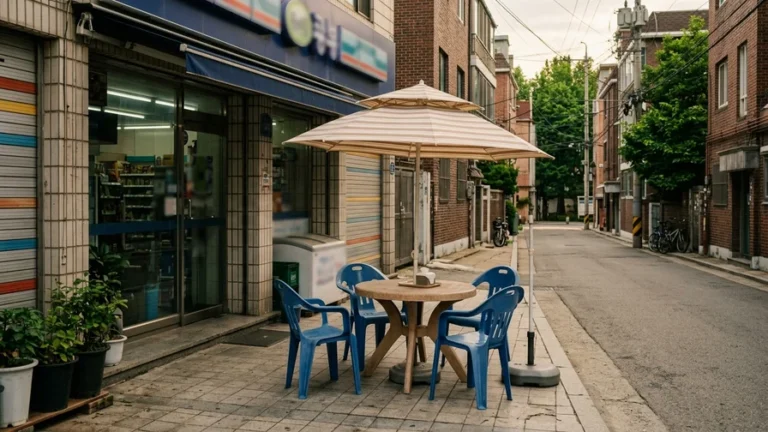
Korean convenience stores aren’t just 24-hour shops where you grab a few essentials — they double as casual eateries where you can sort out a cheap, quick meal. Major chains like CU, GS25, 7-Eleven, and emart24 sit on practically every street corner across the country. A triangle kimbap runs about 1,200 won and a lunch box around 5,000 won, and the microwaves and hot-water dispensers are free to use.
Key information at a glance
- Signature items: Triangle kimbap (around 1,200–2,000 won), lunch boxes (3,900–6,000-plus won, with the mainstays around 5,000 won), cup noodles (around 1,200–2,500 won)
- Payment: Foreign credit cards (Visa, Mastercard), cash, and the T-money transit card are all accepted
- Facilities: Microwaves and hot-water dispensers are free, and larger stores even have self-service Korean Instant Noodles (라면, ramyeon) cookers
- Heads-up: Ingredient labels are mostly in Korean only, and a high share of products contain pork — using a translation app to check labels is recommended
- Information note: Prices in this article are based on June 2026, and since convenience store products turn over quickly, they may vary by store and season
Korean Convenience Store Food: Triangle Kimbap, Lunch Boxes, and Ramyeon for Travelers
The Big Three: Triangle Kimbap, Lunch Boxes, and Ramyeon
The foundation of Korean convenience store food comes down to triangle kimbap, lunch boxes, and ramyeon. These three are the most closely tied to everyday Korean life, and for travelers they’re the fastest, cheapest way to taste Korea.
1. Triangle Kimbap (Samgak-gimbap / Triangle Kimbap)
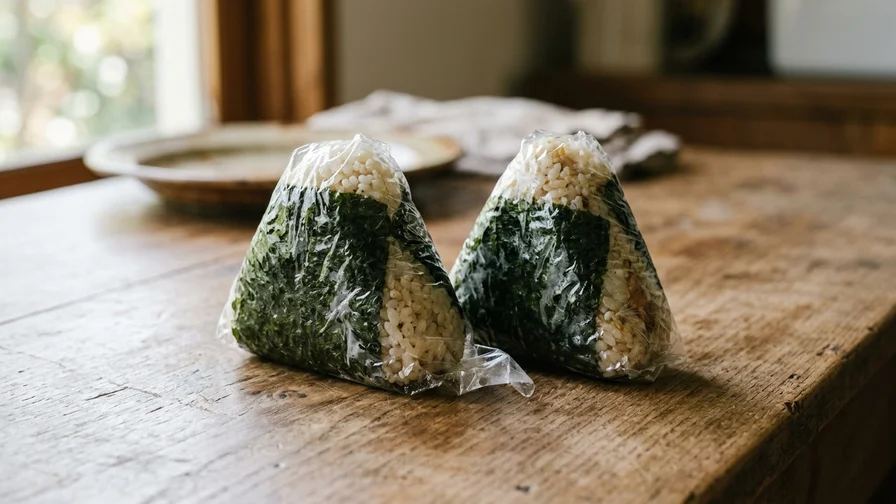
This is rice pressed into a triangle, filled with a savory center and wrapped in dried seaweed (gim). It’s one of Korea’s most popular grab-and-go foods, beloved as a breakfast or quick snack. Basic versions run from about 1,200 to 2,000 won, while supersized doubles or premium versions can top 2,000 won (as of June 2026).
There’s a set order for opening the wrapper. Just follow the numbers 1, 2, and 3 printed on the plastic.
- Step 1: Grab the tab marked “1” at the top point and pull straight down to split the wrapper lengthwise
- Step 2: Slide the wrapper out from the right corner
- Step 3: Pull the wrapper out from the left corner, and the seaweed stays neatly wrapped around the rice as it comes free
Doing it this way keeps the seaweed crisp instead of soggy. It feels awkward the first time, but you’ll get the hang of it after a try or two.
- Tuna Mayonnaise (Chamchi-mayonnaise / Tuna Mayo): The most basic and popular flavor. It’s not spicy and has a savory richness, making it an easy first choice.
- Jeonju Bibim (Jeonju-bibim): A triangle-kimbap take on Mixed Rice Bowl (비빔밥, bibimbap). It’s defined by a slightly spicy gochujang (red chili paste) seasoning.
- Buldak Mayo (Buldak-mayo / Spicy Chicken Mayo): A blend of fiery buldak (spicy chicken) and rich mayonnaise. Recommended if you love spicy food.
- Kimchi Cheese (Kimchi-chijeu / Kimchi Cheese): A combo of stir-fried Kimchi (김치, kimchi) and cheese. It mixes Korean and Western flavors.
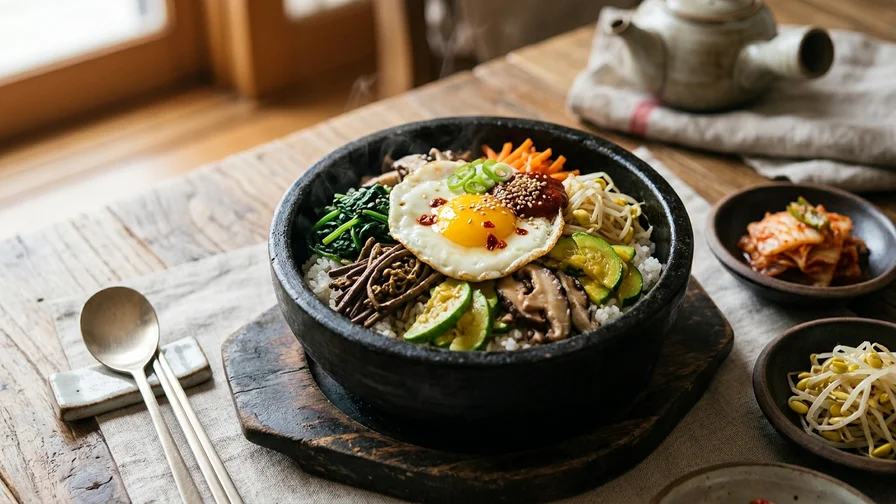
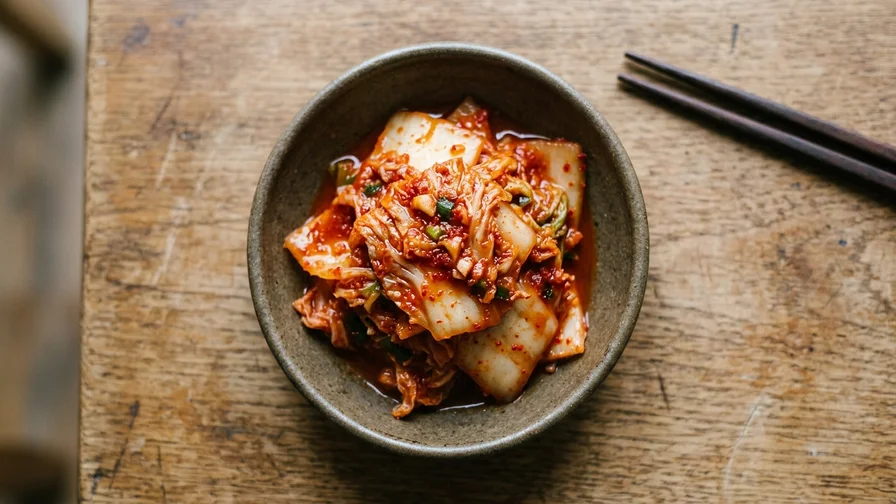
Triangle kimbap is often eaten alongside cup noodles. A spicy Korean Instant Noodles (라면, ramyeon) broth pairs beautifully with the savory rice ball.
2. Lunch Box (Dosirak / Lunch Box)
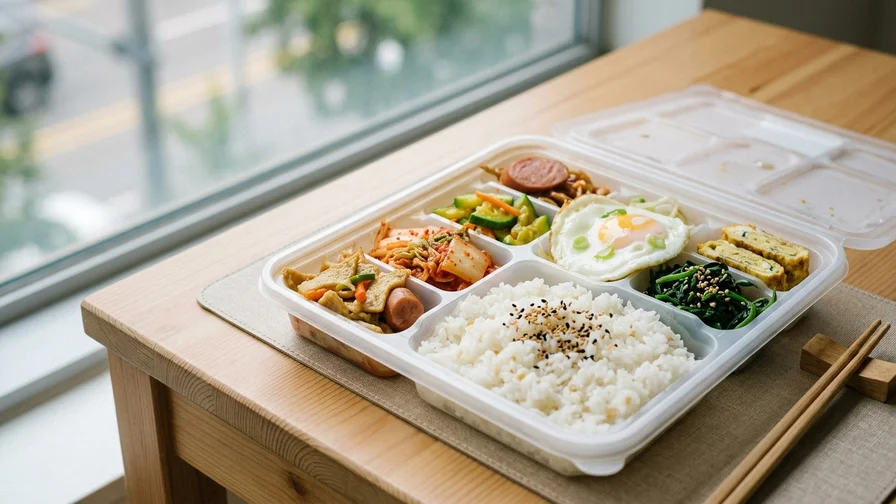
A convenience store lunch box is a complete meal made up of rice, a main dish, and three to five side dishes (banchan). It’s a great way to experience a Korean home-style set meal (baekban) on the cheap. Prices range from a budget line at 3,900 won up to premium boxes in the 6,000-won range, with the mainstays around 5,000 won (as of June 2026).
After buying one, just heat it in the microwave provided in the store. The basic move is to peel back one corner of the plastic lid before heating. The packaging lists heating times by microwave wattage (700W, 1000W), but since convenience store microwaves run fairly powerful, the shorter time (around 1 minute 30 seconds to 2 minutes) is usually enough.
Each convenience store brand has its own flagship lunch box series. The individual products within a series turn over quickly and change with the season, but the brands themselves were all still on sale as of June 2026.
- GS25’s “Hyejaroun” series: A value-focused lunch box named after actress Kim Hye-ja. Its generous portions and lineup even spawned the slang term “hyeja-seureopda” (meaning great value for money). After its 2023 relaunch, it became a steady seller, racking up 100 million cumulative units in just three years. The menus center on Korean favorites like Marinated Grilled Beef (불고기, bulgogi) and Spicy Stir-fried Pork (제육볶음, jeyuk-bokkeum).
- CU’s “Baek Jong-won” series: Convenience store meals based on recipes from Baek Jong-won, a famous Korean chef and food entrepreneur. Since its 2015 launch it has sold over 460 million units in ten years and got a 10th-anniversary makeover in 2025. It’s praised for suiting mainstream tastes well.
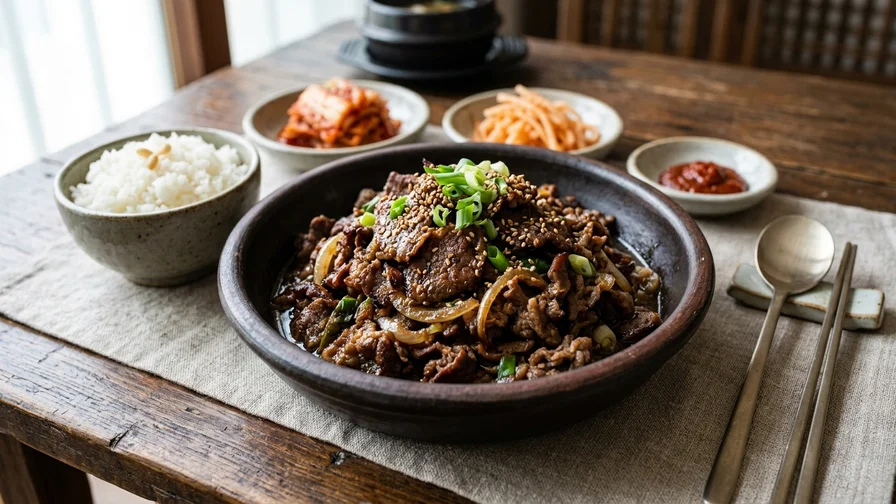
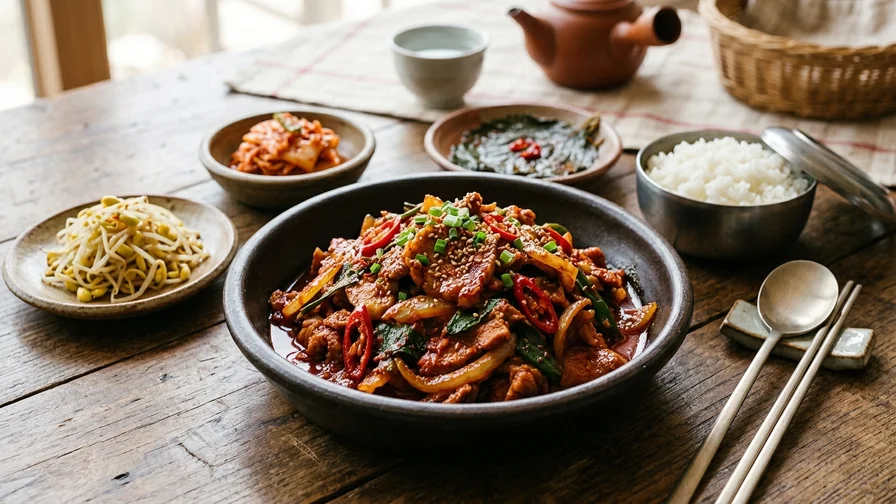
Popular lunch box menus include the following.
- Marinated Grilled Beef (불고기, bulgogi) Lunch Box (Bulgogi Dosirak): The main is Marinated Grilled Beef (불고기, bulgogi) — beef marinated in a sweet soy-based sauce. Since it isn’t spicy, it’s the safest choice for foreign travelers.
- Spicy Stir-fried Pork (제육볶음, jeyuk-bokkeum) Lunch Box (Jeyuk-bokkeum Dosirak): The main is pork stir-fried in gochujang sauce. One of the dishes Koreans enjoy most, it’s defined by its spicy kick.
- Dak-galbi Lunch Box (Dak-galbi Dosirak): Comes with spicy marinated chicken (dak-galbi) and vegetables.
Lunch boxes and kimbap items are restocked two or three times a day, with exact timing varying by store. Generally the shelves are freshest and most varied just before lunch (after 11 a.m.) and dinner. Conversely, the popular lunch boxes are often sold out in the late-night and early-morning hours.
3. Ramyeon (Ramyeon / Instant Noodles)
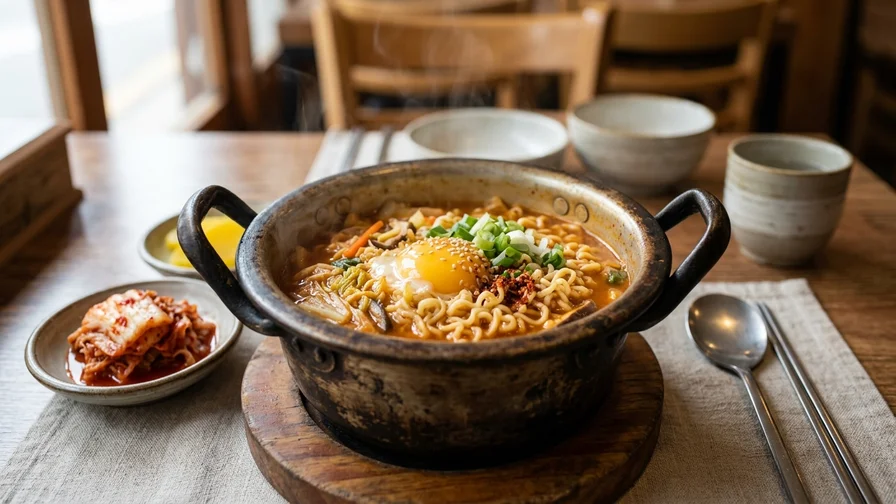
Korean convenience stores are a great place to try a wide range of Korean Instant Noodles (라면, ramyeon). There are two kinds: cup noodles and packet noodles.
Cup Noodles (Keop-ramyeon / Cup Noodles)
Prices run from about 1,200 to 2,500 won (as of June 2026). After buying, you can use the store’s hot-water dispenser for free and eat right away. Open the lid halfway, add the seasoning, pour hot water up to the fill line inside the cup, replace the lid, and wait 3 to 4 minutes. The dispenser releases water while you hold down a lever or button, and the water is very hot, so be careful of burns.
- Shin Ramyun: Korea’s signature spicy ramyeon. World-famous.
- Jin Ramen: Comes in two versions — spicy (red lettering on the package) and mild (blue lettering) — giving you a wider choice.
- Ansungtangmyun: Defined by a savory, nutty broth with a Soybean Paste (된장, doenjang) (fermented soybean paste) base. Less spicy than Shin Ramyun.
- Buldak Bokkeum Myeon (Buldak-bokkeum-myeon / Hot Chicken Flavor Ramen): Brothless stir-fried noodles. Famous for being extremely spicy and known as a “spicy challenge” food.
Packet Noodles (Bongji-ramyeon / Packet Noodles)
Some larger stores have a “self ramyeon cooker” where you boil packet noodles yourself. Here’s how to use it.
- Choose a ramyeon that comes in a cooker-ready container, or use the foil bowls placed next to the machine along with your packet noodles (how the container is provided varies by store)
- Put the noodles in first and sprinkle the seasoning on top — the order matters, because laying the seasoning on the bottom can cause it to scorch
- Place the bowl on the machine, scan the bowl’s barcode or press the button for the noodle type, and water comes out automatically and boils it in about 4 minutes
The noodles come out chewier and tastier than cup noodles. These machines are only found at some larger stores.
Other Popular Items
Beyond triangle kimbap, lunch boxes, and ramyeon, there’s plenty more to eat. Prices are as of June 2026.
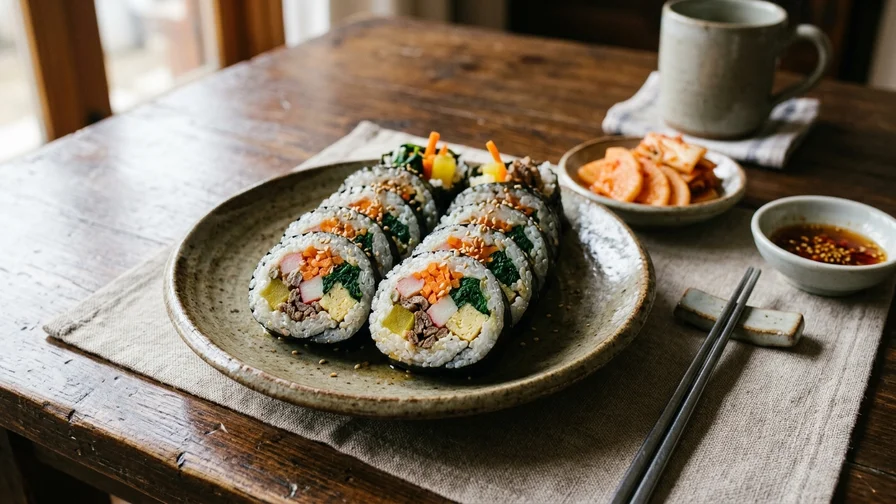
- Seaweed Rice Roll (김밥, gimbap) (Gimbap / Seaweed Rice Roll): A longer, cylindrical Seaweed Rice Roll (김밥, gimbap) than the triangle version. A roll costs about 2,500 to 4,500 won. With fillings like beef, tuna, and vegetables, even a single roll is filling.
- Sandwiches and Hamburgers: About 2,500 to 4,500 won. Especially famous is the so-called “Inkigayo Sandwich” — layered with strawberry jam, egg salad, and coleslaw. It originated as the sandwich that idols loved to eat at the staff snack bar of SBS’s music show “Inkigayo” (a popular Korean TV music program), and since 2018 GS25 has sold an “Idol Sandwich” based on that recipe, making it available at convenience stores too.
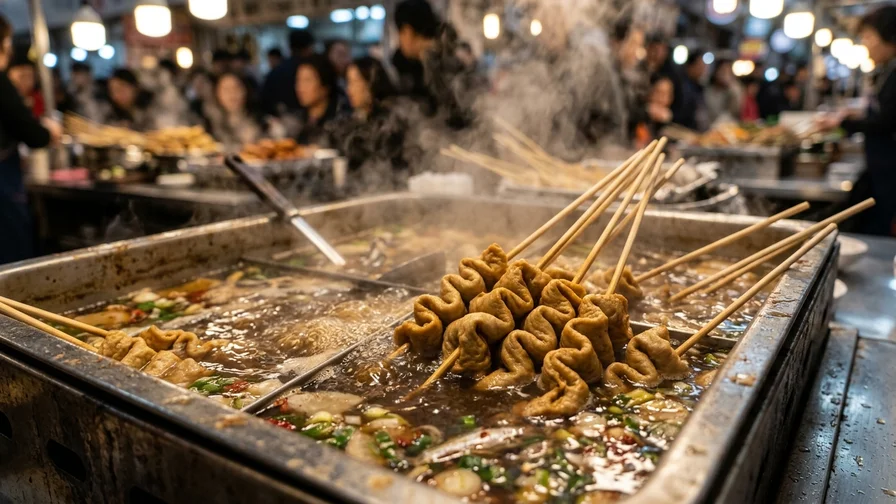
- Hot Bar and Fried Chicken (Hot-bar and Fried Chicken): Sold from the warmer next to the checkout counter. A hot bar — sausages, Fish Cake (어묵, eomuk) (fish cake) and the like skewered on a stick — runs 1,000 to 2,500 won, while freshly fried drumsticks and chicken skewers run about 2,400 to 4,000 won.
- Cup-bap and Instant Rice (Cup-bap and Instant Rice): A cup holds rice and a rice-bowl sauce, so you just heat it in the microwave. Instant rice like “Hetbahn” pairs nicely with side dishes or ramyeon broth.
A Practical Guide to Using Convenience Stores
Here’s a step-by-step guide for travelers using a Korean convenience store for the first time.
- Finding a store: The most common chains in Korea are CU, GS25, 7-Eleven, and emart24. Search the brand name on Google Maps to find nearby stores instantly.
- Choosing food and paying: Pick what you want and take it to the counter. Both foreign credit cards (Visa, Mastercard) and cash are accepted, and you can also pay with the T-money transit card. It’s a handy way to use up any remaining balance on your T-money.
- Eating in the store: Most stores have a small dine-in area with tables and chairs. Microwaves and hot-water dispensers are free to use. If you’re not sure how something works, just ask a staff member for help.
- Cleaning up: After eating, dispose of leftover food and trash in the designated bins. Separating general waste, plastics, and cans is standard. Pour ramyeon broth separately into the food-waste container or the sink.
Mix and match instead of eating items solo (Kkul-johap)
Koreans love to mix and match convenience store items to create new flavors rather than eating them on their own. This is called a “kkul-johap” (literally a “honey combo,” meaning a winning combination). Here are a few popular ones.
- Spicy Korean Instant Noodles (라면, ramyeon) + tuna mayo triangle kimbap + banana-flavored milk: Dip the triangle kimbap into the spicy ramyeon broth, then soothe your mouth with sweet banana milk. The most classic combo of all.
- Spicy Stir-fried Pork (제육볶음, jeyuk-bokkeum) lunch box + string cheese: Before heating the lunch box, tear up some string cheese over it and heat them together. The spicy jeyuk-bokkeum and savory cheese come together nicely.
- Buldak bokkeum myeon + sausage + soft-boiled egg: Add salty sausage and a tender soft-boiled egg to the intensely spicy buldak bokkeum myeon to mellow the heat and round out the nutrition.
Convenience stores also frequently run “1+1” or “2+1” promotions on drinks, snacks, and more — get two for the price of one, or three for the price of two. Make good use of items with promo stickers and you can save a fair bit, and it applies right at the counter with no separate membership sign-up needed.
Important Information for Travelers
Allergies and Dietary Restrictions
Ingredient labels on convenience store food are mostly in Korean only. Travelers with allergies or dietary restrictions need to be careful. The safest approach is to check the label using your smartphone’s photo translation feature (such as the Google Translate app).
Finding vegetarian and vegan options is very difficult. Most lunch boxes and Seaweed Rice Roll (김밥, gimbap) contain meat or egg, and Kimchi (김치, kimchi) often contains jeotgal (fermented fish sauce). For vegetarians, the realistic choices are things like instant rice, roasted sweet potatoes, nuts, fruit, and plant-based drinks such as soy milk.
Muslim travelers also have a lot to watch out for. Convenience store ready meals contain a particularly high share of pork — jeyuk-bokkeum, pork cutlets, ham, sausage, and bacon frequently appear in lunch boxes, gimbap, and triangle kimbap. Halal-certified products are virtually impossible to find at Korean convenience stores, and ramyeon seasoning sold domestically may also contain meat ingredients. The safe bet is to choose products with simple ingredients — like tuna mayo triangle kimbap, eggs, dairy, fruit, and nuts — and to use a translation app to check for “pork (dwaeji-gogi)” on the label.
Below are the Korean labels for major allergens.
| 한국어 (Korean) | 영어 (English) |
|---|---|
| 새우 (sae-u) | Shrimp |
| 게 (ge) | Crab |
| 우유 (u-yu) | Milk |
| 계란/달걀 (gyeran/dalgyal) | Egg |
| 땅콩 (ttangkong) | Peanut |
| 밀 (mil) | Wheat |
| 대두 (daedu) | Soybean |
| 돼지고기 (dwaeji-gogi) | Pork |
| 쇠고기, 소고기 (soe-gogi, so-gogi) | Beef |
| 닭고기 (dak-gogi) | Chicken |
Tips for Breakfast and Late Nights
- As a breakfast substitute: If your hotel doesn’t include breakfast, you can sort out a morning meal for around 3,000–5,000 won with a triangle kimbap or sandwich plus a cup of coffee. Even in the early morning before cafés open, the convenience store’s bean-coffee machine (around 1,500 won) is available.
- Check late-night hours: Convenience stores are open 24 hours by default, but lately more stores are closing during the late-night hours (typically 1–6 a.m.), especially in residential and office districts. If you plan to visit late at night, it’s safest to check the store’s hours on Google Maps in advance.
- Prepare for late-night sellouts: In the early-morning hours, lunch boxes and gimbap are often sold out. Cup noodles, frozen foods, instant rice, and hot bars are almost always available even late at night, so keep them in mind as alternatives.
Transport and Other Information
Convenience stores are everywhere, so they’re easy to reach by public transit. If you need a taxi, you can use the Kakao T app — you can now register a foreign-issued card as a payment method — and there’s also “k.ride,” an app exclusively for foreigners (launched by Kakao Mobility in 2024, supporting English, Chinese, and Japanese, with automatic foreign-card payment). The Uber app you use back home also works as-is in Korea.
If you have questions or need help during your trip, you can use the 1330 Korea Travel Helpline operated by the Korea Tourism Organization. It runs 24/7 year-round and offers service in various languages including English, Japanese, and Chinese.
Find the nearest store on Google Maps, and check ingredient labels in advance with a translation app.