How Travelers Use Korea’s 24-Hour Convenience Stores
Contents
A Korean convenience store (Pyeonuijeom) is far more than a simple retail shop — it’s closer to a 24/7 piece of everyday infrastructure. With the four major chains alone running roughly 55,000 stores (as of the end of 2024), you can handle almost everything a traveler needs in one place, from meals to topping up transit cards, withdrawing cash, and shipping parcels. Prices and policies are current as of June 2026.
Basic Information on Korean Convenience Stores
Major Convenience Store Brands
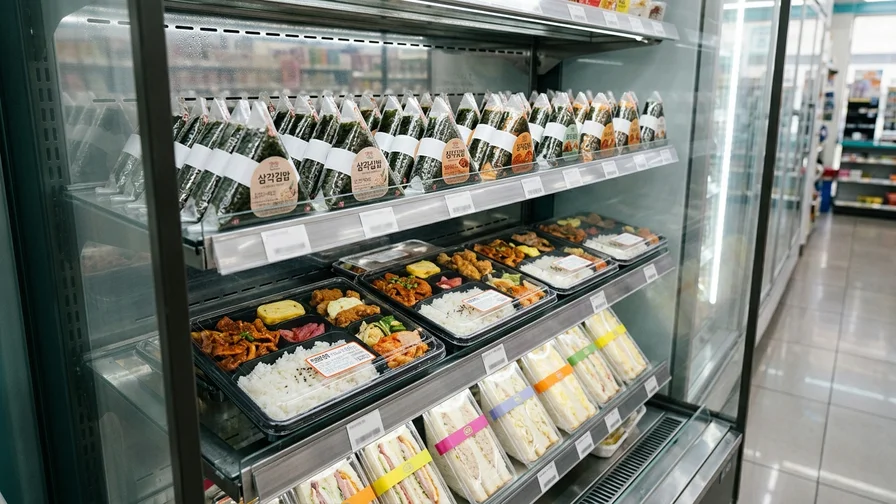
Korea has four major convenience store chains. Each brand has its own private-label products (PB, Private Brand) and promotions, but their core services are mostly similar. Store counts are as of the end of 2024.
| Brand | Stores | Features |
|---|---|---|
| CU | About 18,500 | No. 1 in the industry by store count. Its private brand ‘HEYROO’ is well known, and it carries a wide range of trendy ready-meals and desserts. |
| GS25 | About 18,000 | No. 2 by store count (neck-and-neck with CU in sales). It has its own brand ‘YOUUS’ and is known for good-quality lunch boxes and gimbap. Some stores run 24-hour currency-exchange kiosks. |
| 7-Eleven | About 12,200 | A global brand. It has its own coffee label called ‘Seven Cafe.’ Store numbers have been declining recently, and many of its outlets tend to be smaller. |
| emart24 | About 6,100 (end of 2024; verified October 2026) | Operated by the Shinsegae Group. Its strengths include the private brand ‘I’m e’ and the wine-focused brand ‘COMO,’ giving it a strong alcohol lineup. Many stores have well-equipped seating areas for eating in. |
Operating Hours
Most stores are open 24 hours, 7 days a week. That said, not every store is 24/7 — outlets in special locations like office buildings, universities, subway stations, and parks may close around midnight or 1 a.m. and reopen in the morning, and the number of stores that skip overnight operation is growing. To be safe, check the opening hours on Google Maps before you go.
Payment Methods
Korean convenience stores accept a variety of payment methods.
- Cash (KRW): Accepted at all stores.
- Credit/Debit Cards: VISA and Mastercard work without issue at most stores. American Express (AMEX) may not be accepted at some stores.
- Transportation Cards: You can make small payments with topped-up transit cards like T-money and Cashbee.
- Mobile Pay: Apple Pay has been available at major Korean convenience stores since 2023, and cards issued overseas that are registered to it generally work on NFC terminals. If you see an EMV Contactless mark, tap-to-pay with overseas cards is also possible. There are exceptions depending on the store and terminal, so keep some cash or a physical card on hand as well.
Making Full Use of Core Services
1. Solving Meals: From Dosirak to Instant Ramen
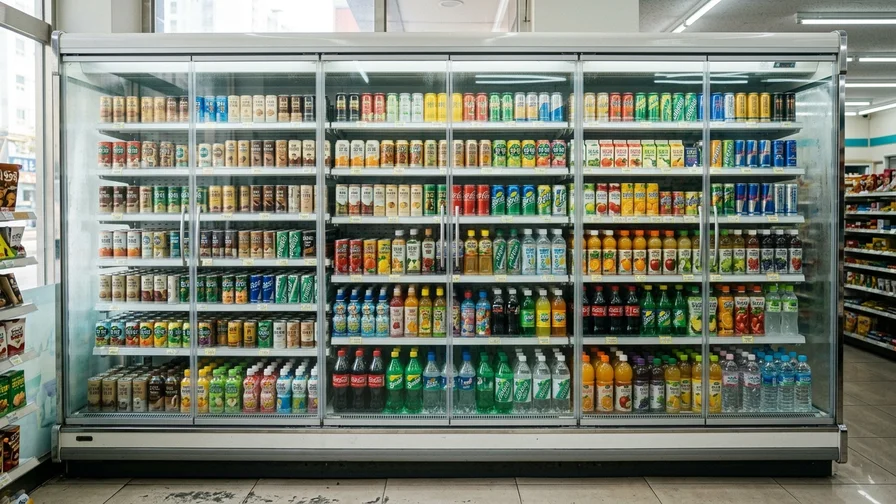
Convenience stores are the perfect place to grab a quick, cheap meal. Every store has a free microwave and hot water available. For menu-by-menu recommendations and how to eat each item, see Korean convenience store ready-meals for the full rundown.
Dosirak (Lunch Box)
You’ll find a wide variety of options — Korean, Western, Chinese, and more. Prices run around 4,500 to 6,900 won, with popular items mostly in the 5,000-won range (as of June 2026). Just crack the lid slightly and heat it in the in-store microwave for 1 minute 30 seconds to 2 minutes before eating.
Samgak Gimbap (Triangle Kimbap)
This is one of the iconic items of Korean convenience stores. There’s a huge range — tuna mayo, Jeonju bibimbap, and more — priced around 1,100 to 2,000 won, averaging about 1,500 won (as of June 2026). It’s important to peel off the wrapper in the numbered order — there are illustrations on the packaging explaining how.
Ramen (Instant Noodles)
There are two kinds: cup noodles and bagged noodles.
- Cup Noodles: Open the lid, add the soup powder, then fill with hot water up to the line from the in-store dispenser and eat after 3–4 minutes.
- Bagged Noodles: Some stores have an instant ramen cooking machine. Put the noodles and soup powder in the container, press the button, and water is dispensed and heated automatically. There’s no separate fee for the machine — you just pay for the ramen (dedicated containers are either provided free or sold separately, depending on the store).
Fried Chicken and Other Foods
Some stores sell hot, freshly cooked items like fried chicken and corn dogs next to the register. For example, GS25’s ‘Chicken25’ corner sells a whole order of fresh fried chicken for 11,900 won, or 8,900 won during weekend discounts (as of June 2026, at participating stores only). Beyond that, sandwiches, burgers, salads, hot bars (sausage skewers), boiled eggs, fruit, and desserts are common, and Korean convenience stores are famous for their wide selection of ice cream and dairy products.
2. Purchasing and Topping Up T-money
The T-money transit card, a Korea travel essential, is easy to buy and top up at convenience stores. For more on the digital features of convenience stores overall, including pickup services, see smart ways to use convenience stores.
- Purchase: Just tell the cashier “T-money card juseyo.” The card itself usually costs 2,500 to 4,000 won, with the top-up amount charged separately.
- Top-up: Hand the staff your card and cash and say “T-money chungjeon-haejuseyo.” You can top up in 1,000-won increments, up to 90,000 won per transaction. Important: Foreign-issued cards cannot be used to top up T-money at convenience stores, so bring cash (KRW). At GS25, only cards issued by Woori Bank are accepted (verified October 2026). Some stores (GS25, CU) will even load your leftover change from a purchase onto your card.
For reference, the feature to add T-money to your Apple Wallet (introduced in July 2025) requires a Korea-issued card to top up, so for foreign travelers, a physical card plus cash top-up remains the most reliable method.
3. Cash Withdrawal from ATMs
Most convenience stores have an ATM. Not every machine supports overseas-issued cards, so look for a ‘Global’ or ‘International Cards’ label.
- Fee: The Korean-side machine fee is about 3,500 to 6,000 won per transaction (as of June 2026), and your card issuer’s foreign withdrawal fee (typically 1–3%) may apply on top of that.
- Withdrawal Limit: Convenience store ATMs tend to have a low limit, around 300,000 won per transaction. For larger amounts, a bank ATM is better.
- Cards Accepted: You can withdraw with cards bearing partner logos such as VISA, Mastercard, and UnionPay.
Overseas ATM withdrawals: Before arriving in Korea, check with your own card issuer (bank) in advance about whether overseas ATM use is supported and what the fees are.
4. Purchasing USIM and eSIM
Prepaid USIM cards are sold at convenience stores inside Incheon International Airport and in areas with lots of foreign tourists like Myeongdong and Hongdae. There’s a range of plans — data-only, with calls included, and so on — and the number of eSIM products you activate via QR code is growing too. Be sure to confirm compatibility with your own phone (including whether it’s unlocked) before buying.
5. Parcel Service
You can send items from a convenience store to another address within Korea. You enter the address at an in-store self-service kiosk, print a shipping label, and pay at the register.
- Standard Parcel: Around 4,000 to 7,000 won depending on weight and distance (as of June 2026).
- Store Pickup Parcel: GS25’s ‘Half-Price Delivery’ and CU’s ‘Half-Price Delivery’ let you send from a convenience store and have the recipient pick it up at a convenience store too — as cheap as about 1,800 to 1,900 won for up to 500g, but delivery takes several days (CU has cut this to a maximum of 3 days since January 2026 with unified Lotte Global Logistics delivery; verified October 2026).
Since the kiosks are mostly in Korean and require a domestic address and phone number, the process can be a bit complicated for foreign travelers to use.
6. Other Lifestyle Services
A convenience store is like a small department store for daily life. You can find most of the items you might need while traveling.
- Basic Medicine: Under the Pharmaceutical Affairs Act, only 24-hour, always-open stores may sell the designated over-the-counter safety medicines (13 items are designated, but two children’s Tylenol products are discontinued, so 11 are on sale; verified October 2026) — fever/pain relievers (such as Tylenol), cold remedies (Pancol A, Panpyrin), digestive aids (Bearse, Festal), and pain-relief patches. You can only buy a one-day supply at a time. Quasi-drugs like adhesive bandages can be bought at any store.
- Daily Supplies: They sell umbrellas, power banks, phone charging cables, travel adapters (the “pig nose” type), toiletries, masks, sanitary pads, and more.
- Wi-Fi: Many stores pick up carrier Wi-Fi (KT, SKT, LG U+), but access is often restricted unless you’re a subscriber of that carrier. It varies by store, so don’t count on it — it’s safer to come prepared with your own data (USIM/eSIM).
Special Tips for Travelers
Using ‘1+1’ and ‘2+1’ Promotions
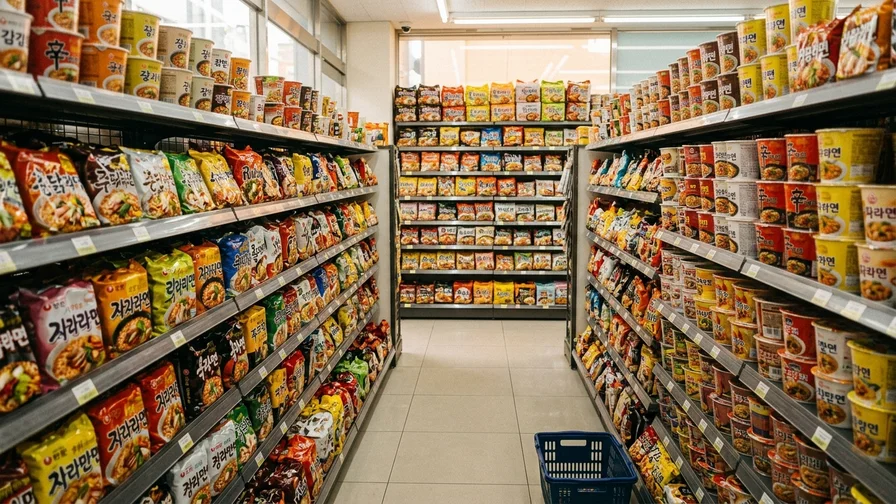
Korean convenience stores almost always run ‘1+1’ (buy one, get one free) or ‘2+1’ (buy two, get one free) promotions. They apply to a wide range of items like drinks, snacks, and ice cream, and they’re marked on the shelf price tags. Here are the key rules:
- The free item applies only to the same product (e.g., two of the same drink + one free).
- You take the free item with you right there at checkout — no extra steps needed.
- The “save for later” feature in the membership apps Koreans use (Pocket CU, Our Neighborhood GS, etc.) requires verification with a Korean phone number, so it’s hard for short-term travelers to sign up. That said, you still get the exact same promotional prices and free items without the app.
Seasonal limited-edition products and events like Pepero Day are covered separately in convenience store seasonal limited editions.
Private Brand Products
Each convenience store chain has its own private-brand (PB) products — CU’s ‘HEYROO,’ GS25’s ‘YOUUS,’ emart24’s ‘I’m e,’ and so on. They’re 10–30% cheaper than regular manufacturer products while still offering decent quality. They’re a great choice when you’re looking for good value on snacks, drinks, ramen, tissues, and more.
Stores Specialized for Foreigners
Convenience stores in major tourist areas like Myeongdong, Hongdae, Itaewon, and Gangnam Station have been beefing up their services for foreign travelers.
- Popular items up front: They display souvenirs that are popular with foreigners — seaweed snacks, chips, K-pop goods, and so on — so they’re easy to find. For shopping for goods, see convenience store goods.
- Multilingual signage: Many stores have notices in English, Chinese, and Japanese.
- Currency exchange and tax refund: Since 2025, GS25 has been expanding 24-hour currency-exchange kiosks to some stores — you can exchange 15 currencies including USD, JPY, and EUR into won. Some stores also offer instant VAT tax refunds. Since the stores that have them are limited, you’ll need to check before visiting.
You can easily find them by searching for things like ‘CU Myeongdong’ or ‘GS25 Hongdae’ on Google Maps.
Search for CU in Myeong-dong on Google Maps
Korean phrases you’ll use often at convenience stores
A little bit of Korean makes using convenience stores much smoother.
Situation Korean Pronunciation Greeting 안녕하세요 / 감사합니다 Annyeonghaseyo / Gamsahamnida Asking Price 이거 얼마예요? Igeo eolma-yeyo? Requesting a Bag 봉투 하나 주세요. Bongtu hana juseyo. T-money Top-up 티머니 충전해주세요. T-money chungjeon-haejuseyo. Microwave 이거 데워주세요. Igeo dewo-juseyo. Due to environmental regulations, most Korean convenience stores do not hand out single-use plastic bags for free (verified October 2026). Instead, you can buy a paper bag or reusable bag for about 100–500 won (varies by store). If you have a lot to carry, it’s handy to bring a tote bag or backpack.
Additional Good-to-Know Information
Purchasing Alcohol and Tobacco
To buy alcohol (soju, beer, etc.) and tobacco, you must verify that you’re an adult with your passport. Korea’s purchasing age is 19 based on “calendar age” — meaning you can buy from January 1 of the year you turn 19, regardless of your actual birthday. For how to choose convenience store drinks like soju, makgeolli, and highballs, see convenience store drinks and alcohol for the full details.
The sight of people drinking canned beer at tables inside and outside convenience stores (a so-called “convenience store beer garden”) is common in Korea. Korea doesn’t ban public drinking outright, and drinking at convenience store tables is, in principle, not illegal. However, the eat-in areas of some stores that sell freshly cooked food may legally prohibit drinking, so it’s best to follow the store’s notices, and causing a disturbance late at night can be punishable as a minor offense. Some areas designated by local governments, such as Han River parks, have drinking restrictions, so check the on-site signs.
Waste Disposal
After eating food bought at a convenience store, you can usually toss the trash in the bins placed inside or outside the store. They’re often separated into general waste and recyclables (cans, plastic, paper), so check and sort accordingly. Since street trash cans are rare, convenience store bins are essentially a traveler’s lifesaver.
Transportation and Navigation
In Korea, Google Maps works well for walking and public transit directions, but its car navigation feature is limited. We recommend also using the Naver Map or Kakao Maps app.
The taxi-hailing app Kakao T supports registering overseas-issued cards and use by foreigners (as of June 2026), so travelers can use it just fine. Uber also works in Korea. If the apps feel difficult, you can flag down a taxi on the street directly or ask your hotel to book one for you.
Travel Information Support
If you have questions or need help while traveling, you can call the 1330 Korea Travel Helpline. Operated by the Korea Tourism Organization, it offers 24/7 multilingual service in English, Japanese, Chinese, and more. (Phone: dial 1330 directly, no area code needed.)
Currency Exchange Service
As mentioned earlier, some GS25 stores run 24-hour self-service currency-exchange kiosks (supporting 15 currencies), but not all stores have them yet. They’re useful as a backup option late at night or in a pinch, but in terms of exchange rates, banks or authorized private exchange offices are often more favorable. Which stores have them and which currencies are supported may change, so check the latest information at the time of your visit.
Get cash (KRW) and a physical T-money card first, and check opening hours of nearby convenience stores on Google Maps before you visit.