
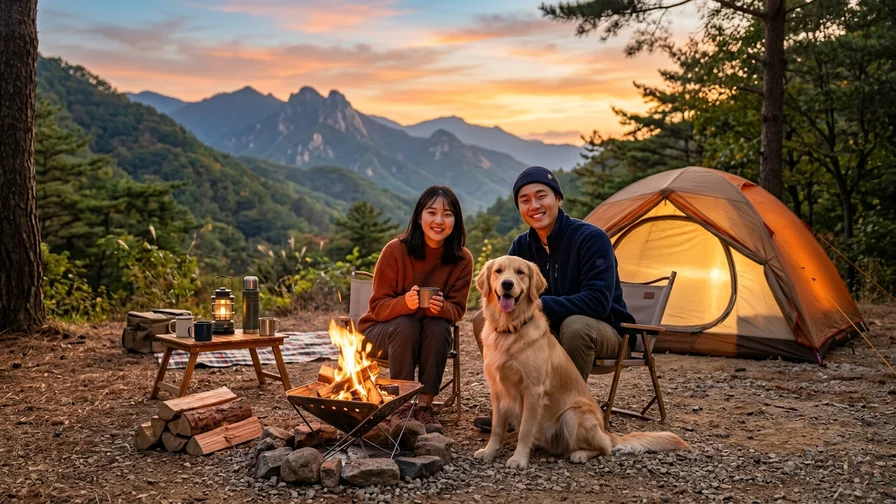
Pet-Friendly Camping in Korea, Campgrounds to Bring Your Dog
목차
As more Koreans come to see their pets as family members — a group often called “pet-fam” (Pet + Family) — travel culture that includes furry companions is taking root fast. Korea’s pet-owning population is estimated at around 15 million depending on the source, and the fastest-growing trend among them is pet-friendly camping in Korea. That said, pets are in principle banned from national parks here, and foreigners bringing a pet into the country must clear a quarantine process — so advance preparation matters. This article is a practical guide for your first trip with a pet, covering how to choose a campground, what to pack, pet etiquette, and the import quarantine process for international travelers. For the broader picture of camping culture here, check out Korean camping culture.
Quick Summary
- National parks are off-limits by default: Under the Natural Parks Act, pets are banned from national parks. Only a few designated pilot-program zones are exceptions, so you’ll need to use a private campground or a designated facility.
- Pet facilities are the key to choosing a campground: Check before booking whether there’s a fenced play area, a dedicated washing station, and similar amenities. Small pet-only campgrounds can close down, so confirm they’re still operating using official data.
- Pet etiquette is written into law: Leashes must be 2m or shorter (fines apply for violations), waste must be picked up immediately, and dangerous breeds are required to wear muzzles. International travelers also need to sort out import quarantine (microchip + rabies antibody titer) ahead of time.
Camping with Pets in Korea: Where It’s Actually Allowed
Leaving your pet at home while you travel is becoming a thing of the past. Pet-friendly camping is popular in Korea too, but the first thing visitors need to understand is this: you can’t do it just anywhere.
Pets Are Banned from National Parks by Default
Under Korea’s Natural Parks Act, national parks generally prohibit pets such as dogs and cats from entering, with the exception of service dogs for people with disabilities. The goal is to protect the ecosystem. “Korea’s national parks are beautiful, so let’s go camping with the dog” is a common misconception — show up unprepared and you may waste the trip or be turned away.
- Exception — the dog-accompaniment pilot program: Since November 2023, Bukhansan (walking allowed on parts of the barrier-free trail) has been part of a limited program, and since December 2023, Gayasan and Gyeryongsan (overnight stays allowed at designated campgrounds and eco-education centers) have joined.
- Requirements: Only registered dogs with proof of a rabies vaccination within the past year are allowed. Dangerous breeds are restricted, and there’s a limit on the number of dogs.
- Note: Because it’s a pilot program, the eligible zones and dates can change. Before you go, be sure to check current availability on the National Park reservation system’s dog-accompaniment page (as of June 2026).
The bottom line: assume that ordinary pet-friendly camping happens at private campgrounds or the designated facilities above.
Strengthening the Bond in Nature
In a residential environment dominated by apartments, pets often lack space to run freely. Pet-friendly camping gives a dog the chance to sniff the earth, roll in the grass, and run around freely. Exploring an unfamiliar environment together and falling asleep side by side in a tent is said to deepen the bond between owner and pet.
A Guide to Choosing a Pet-Friendly Campground
The first step toward successful pet-friendly camping is picking the right campground. Even places labeled “pets welcome” vary enormously in facility quality, and small pet-only campgrounds often close or pause operations — so confirming they’re still open is especially important.
Check for a Dedicated Play Area and Washing Station
The first thing to check is dedicated pet facilities.
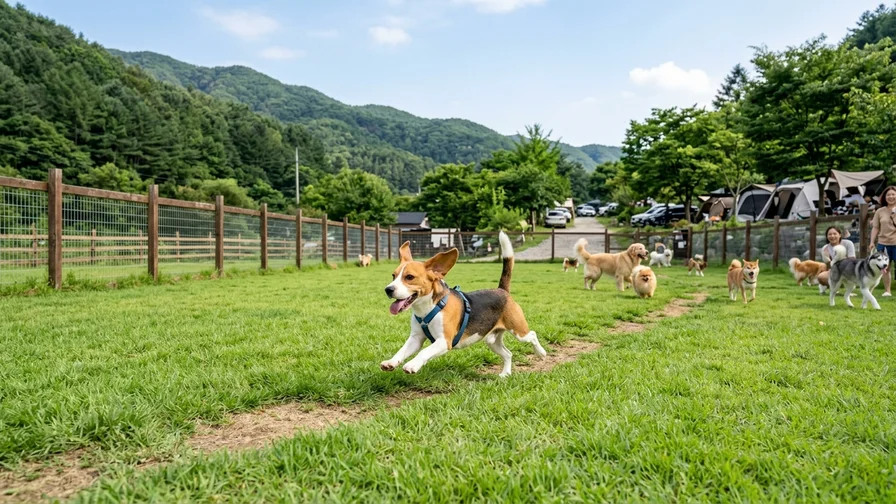
- Fenced play area: A fenced enclosure where your dog can be safely off-leash and run around is a big plus.
- Washing and paw-cleaning stations: Check whether there’s a pet-only shower room or sink to clean dirty paws and bodies after play.
- Drying room: Some campgrounds offer a drying room, which is handy on rainy days or after water play.
Verified Campground Recommendations
The places below are confirmed to be operating through official sources such as the Korea Tourism Organization’s GoCamping and VisitKorea. Detailed pet rules (allowed breeds, number of dogs, extra fees) can change, so reconfirm on the official website or by phone before booking.
| Name | Region | Key Features | Best For |
|---|---|---|---|
| Mongsanpo Ocean Camping Ground | Taean, Chungcheongnam-do | Sites among pine woods near the beach, pets welcome, with a dog shower room and sink | Pet-owning families who want both the sea and the forest |
| Around Village | Boeun, Chungcheongbuk-do | A charming space converted from a former school, grass sites, plus amenities like a cafe and gallery | Campers who prefer a unique atmosphere and a relaxed stay |
※ The information above is current as of June 2026. Pet policies and whether pets are allowed at both locations may change over time, so always reconfirm on the official website before booking.
How to Find Campgrounds You Can Trust
The “dog-only campground” lists floating around blogs often fail to reflect closures or temporary shutdowns. It’s safer to use official channels where operating status is updated relatively quickly.
- Korea Tourism Organization’s GoCamping: On gocamping.or.kr, filter by the “pets” category tag to find campgrounds by region based on public data. Closures are reflected relatively quickly.
- Reservation platform filters: In camping booking apps, turn on the “pets allowed” filter to search. Actual user reviews can give you a sense of current operating status.
- Call before booking: Even where pets are listed as welcome, restrictions and surcharges can vary by breed, size, and number of dogs — so a quick phone call right before booking is the surest way to avoid a wasted trip.
A Packing Checklist for Camping with Pets
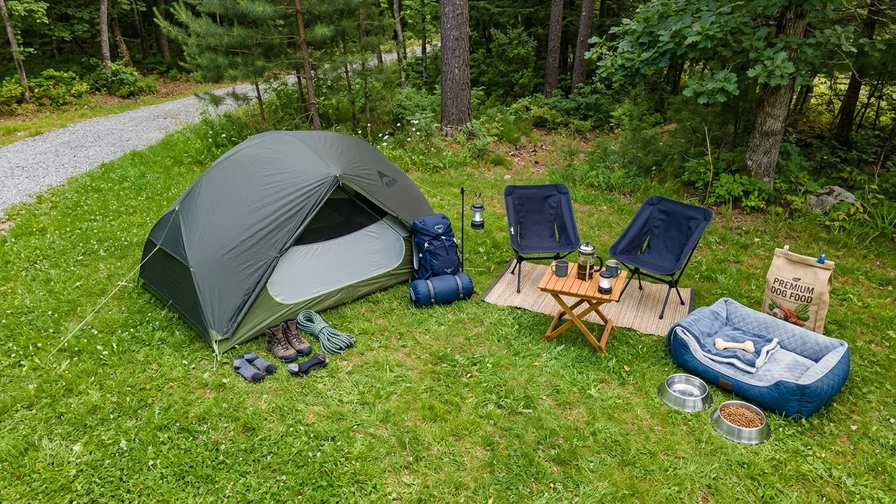
On top of your own camping gear, you’ll want to pack carefully for your pet too. Check the list below so they stay comfortable and safe even in an unfamiliar setting. For basic gear, also see K-camping gear.
Food, Treats, and Supplies
- Their usual food and treats: Bring plenty of the food they normally eat. The stress of a change in environment can cause digestive upset.
- Bowls and a water bottle: Pack a dedicated food bowl and a portable water bottle so you can offer clean water anytime.
- Toys and a blanket: A blanket or toy that carries a familiar scent goes a long way toward keeping them calm.
Carrier, Leash, and Waste Bags
- Kennel or carrier bag: Essential for keeping them in a safe space during car travel and inside the tent.
- Leash and ID tag: A leash is the default inside the campground. Bring an ID tag with their name and a contact number too.
- Waste bags and deodorizer: Picking up waste immediately is both basic etiquette and a campground rule. Pack plenty.
Medical Supplies
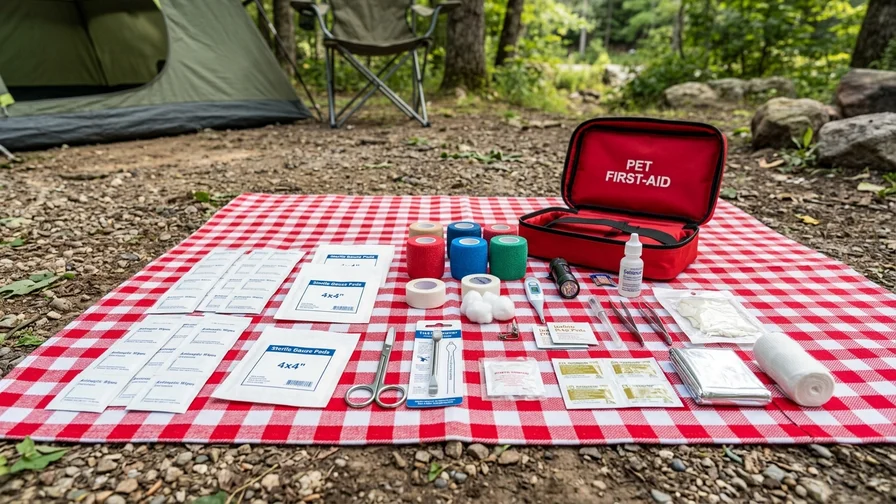
- Emergency first-aid kit: Bring basics like antiseptic and wound ointment.
- Insect repellent: A dedicated repellent is recommended to protect against ticks and mosquitoes.
- Vet info: Look up the contact details and location of vet clinics near the campground — especially 24-hour ones — in advance so you can respond quickly in an emergency.
Editor’s Tip
Before you leave, portion out single servings of food into small zip-lock bags. At the campground you can feed your dog right away without measuring — convenient and hygienic. Packing a few special treats like freeze-dried bites or homemade jerky will boost your dog’s camping experience.
Pet Etiquette for Camping: The Standards Set by Law
For pet-friendly camping to keep being welcomed, good pet etiquette is essential. In Korea, some of these aren’t just recommendations but legal obligations, so international travelers should be aware of them too (as of June 2026).
Leash 2m or Shorter — A Legal Standard
Under the Animal Protection Act, a leash or harness lead must be 2m or shorter when out with your dog. Violations carry fines that escalate: 200,000 KRW for a first offense, 300,000 KRW for a second, and 500,000 KRW for a third or more. At campgrounds, your dog must always be leashed except in designated pet-free zones (such as fenced play areas). “My dog is gentle” can be dangerous to other campers and their dogs, so always keep your pet under control.
Muzzles Are Mandatory for Dangerous Breeds
When taking a dangerous breed aged three months or older out in public, you must put on a muzzle in addition to a leash. Failing to use the required safety gear can result in a fine of up to 3 million KRW.
Pick Up Waste Immediately
Pet waste must be cleaned up completely the moment you see it. Always carry waste bags, and either dispose of used bags in designated trash bins or take them home. This is the most basic — and most important — point of etiquette.
Managing Barking
Dogs often bark when they’re sensitive to unfamiliar surroundings and sounds. Persistent barking is the single biggest cause of disturbing other campers’ rest. Work on barking training beforehand, and if it gets bad, step away for a moment or redirect their attention with a treat. You can find more on pet-related regulations and information at the National Animal Protection Information System.
Must-Read for International Travelers: Import Quarantine for Pets
To bring a pet into Korea from abroad, you must pass animal import quarantine. Preparation can take several months, so this is the very first thing to handle at the trip-planning stage (as of June 2026, per Animal and Plant Quarantine Agency guidance).
- Microchip: The animal must have an individual microchip implanted, and the chip number must be recorded on the quarantine certificate.
- Rabies antibody titer test: The rabies neutralizing antibody titer must be 0.5 IU/mL or higher, and the blood draw must have taken place within 24 months of the arrival date in Korea. The antibody test takes time to produce results, so start preparing well before departure.
- Quarantine certificate: You’ll need a quarantine certificate issued by a government agency of the exporting country. If departing from an EU member state, an EU PET PASSPORT can be used instead.
- Arrival procedure: On entry, you’ll undergo document review, microchip number verification, and a clinical examination at the Quarantine Agency office inside the airport. If requirements aren’t met, the animal may be held in quarantine (isolation) or returned. For nine animals or fewer, no advance notification is required.
Check the detailed requirements and latest procedures by country at the Animal and Plant Quarantine Agency’s dog and cat quarantine guide, and cross-check with the animal quarantine authority of your departure country before leaving.
Camping Activities to Enjoy with Your Pet
Camping is about more than sleeping outdoors. There’s plenty you can do together with your pet.
- Walking together: Strolling along trails or forest paths near the campground exposes your pet to new smells and scenery — great stimulation (note that pets may be banned on national park sections, so check ahead).
- Frisbee and ball games: If there’s a spacious pet-free zone, burn off energy by throwing a frisbee or ball.
- The “stay” challenge: Turning “stay” training into a game in front of camping food can make for a fun memory.
- Relaxing by the campfire: After sunset, quietly watching the fire with your pet brings a sense of calm.
With thorough preparation, mature pet etiquette, and Korea’s rules sorted out in advance (no pets in national parks, a 2m leash, and import quarantine if you’re a foreigner), you can spend time bonding deeply with your pet in nature. If you’re curious about the wider world of K-camping, take a look at the full Korean camping culture guide.