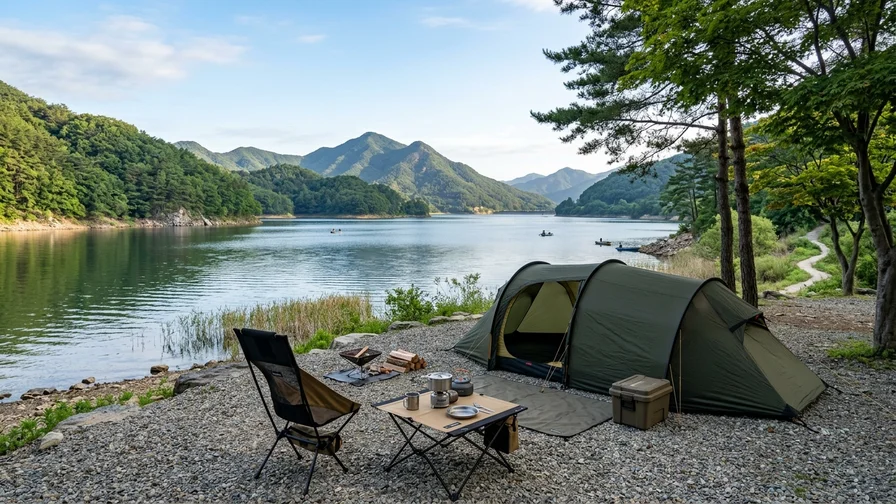
Buying and Renting K-Camping Gear So You Can Travel Light
목차
If you want to experience Korea’s nature up close in 2026, camping is the best choice. But hauling heavy camping equipment all the way from overseas is a real burden. With this single guide, you can prepare for K-camping the easy way, right here in Korea. We’ve covered everything from a list of must-have Korean camping gear to rental services, trendy items locals love, and even butane gas safety—the one thing foreigners overlook most often.
If you’re curious about Korea’s diverse camping culture and hotspots, start with our overview of camping in Korea. This article is the hands-on edition focused on gear preparation.
Korean Camping Essentials: A Checklist for Beginners
Key Takeaways
- Know your essential gear: Shelter and cooking equipment suited to Korea’s four-season climate is key
- Safety first: A first-aid kit, bug repellent, and a power bank are basics. See the separate section for butane gas safety
- Pack light: Feel free to leave out items easily found locally (butane gas, bottled water, ice)
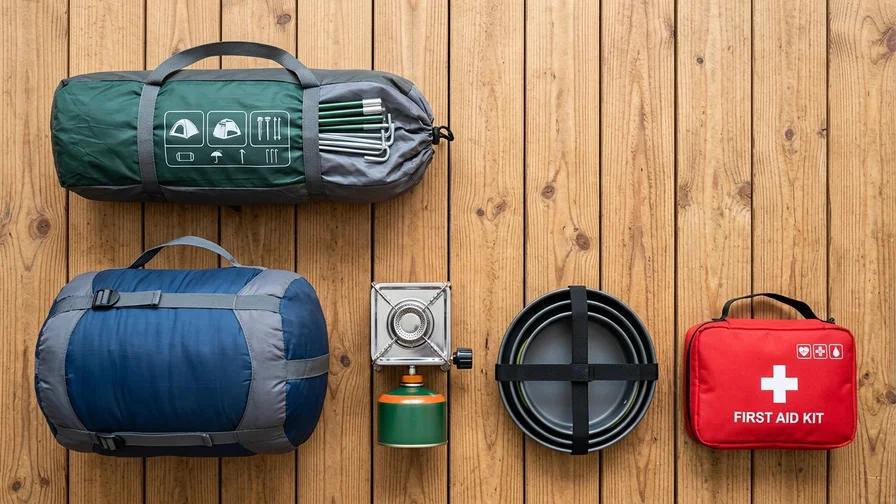
For your first camping trip in Korea, it can be hard to know where to start. Just follow the checklist below and you’ll stay comfortable and safe at any campsite.
Shelter Gear (Tents, Sleeping Bags)
Korea has four distinct seasons, so choosing gear suited to the time of year matters. Spring and fall have big temperature swings, summer is hot and humid, and winter is cold.
- Tent: A three-season (spring, summer, fall) waterproof tent is the safest all-rounder. Tents from Korean brands like Kolon Sport or K2 are easy to find domestically and convenient for after-sales service. Easy-to-pitch one-touch or pop-up tents are especially popular with beginners.
- Sleeping bag: Check the lowest temperatures for the season of your visit and prepare a suitable sleeping bag. Even in late spring or early fall, nights can drop below 10°C. Choose based on the listed Comfort Temperature.
- Sleeping pad: Essential for blocking cold and moisture from the ground. A compact foam pad or an inflatable air mattress works well.
Cooking Gear (Burner, Cookware)
Food is inseparable from the joy of camping. Korean campers are serious about eating. Here’s the basic gear for simple yet delicious K-camping cuisine.
- Portable burner: A small, lightweight butane gas burner is the most popular choice. The Kovea Cube burner in particular, with its all-in-one stainless steel design, is beloved by Korean campers. You can easily buy butane gas at local marts or convenience stores, so don’t bring it from home. (가스 주세요 / Gaseu juseyo)
- Kopel (nesting cookware set): A Korean-style camping cookware set where the pot, frying pan, and bowls stack into one. It’s easy to store and dramatically cuts down on luggage.
- Utensils and tableware: In Korea, people typically use a spoon and chopsticks. Packing a reusable utensil set helps cut down on single-use waste.
⚠️ Butane Gas Safety — The Thing Foreigners Overlook Most
The number one cause of accidents at Korean campsites is butane gas burner explosions. They’re 100% preventable once you understand how they happen, so be sure to follow these three rules.
- Never use a griddle or grill plate larger than the burner’s base. Placing a large grill plate for whole pork belly or a heavy pot on a small burner sends radiant heat straight to the gas canister and causes an explosion. Keep grill plates no wider than the inside of the burner’s legs.
- Don’t wrap or heat the canister. Surrounding the entire burner with a windscreen traps heat and overheats the canister. Always keep the gas canister exposed to open air.
- Never use it inside a tent. There’s a dual risk of carbon monoxide poisoning and explosion. Always cook outside the tent in a well-ventilated spot.
The ideal storage temperature is 5–40°C. Below freezing, the flame weakens; above 40°C, the explosion risk rises. Never leave it in a car trunk or in direct sunlight.
If you’re wondering what to cook with this gear, check out our Korean food ideas to enjoy at the campsite. From samgyeopsal barbecue to budae-jjigae, they’ll make your camping trip even richer.
Safety and Hygiene Items
Even in beautiful nature, safety comes first. Run through the list below to be ready for anything.
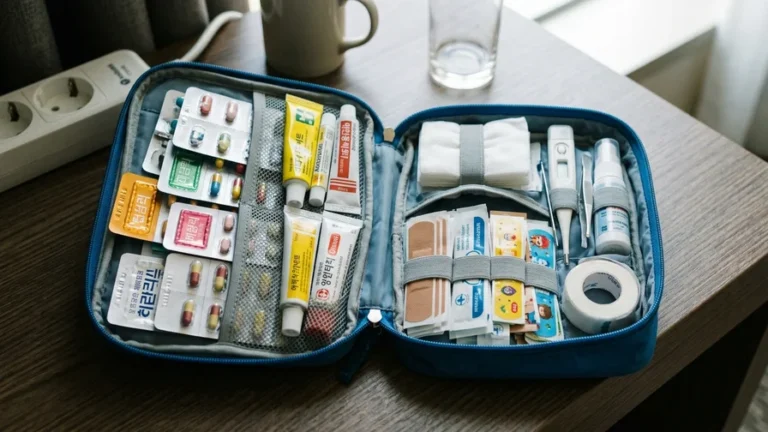
- First-aid kit: Basic antiseptic, bandages, painkillers, anti-itch cream for bug bites, and so on.
- Lantern or headlamp: Korean campsites get very dark at night. Personal lighting is a must.
- Power bank: Your smartphone is a key tool for navigation and emergency contact. In an emergency, Korea’s hotlines are 119 (fire/ambulance), 112 (police), and 1330 for tourist interpretation assistance.
- Bug repellent: Mosquitoes and bugs are abundant, especially in summer (June–August), so be sure to bring some.
- Wet wipes and hand sanitizer: Handy when the washing station is far or for a quick cleanup.
Renting Camping Gear Locally: Convenient and Practical
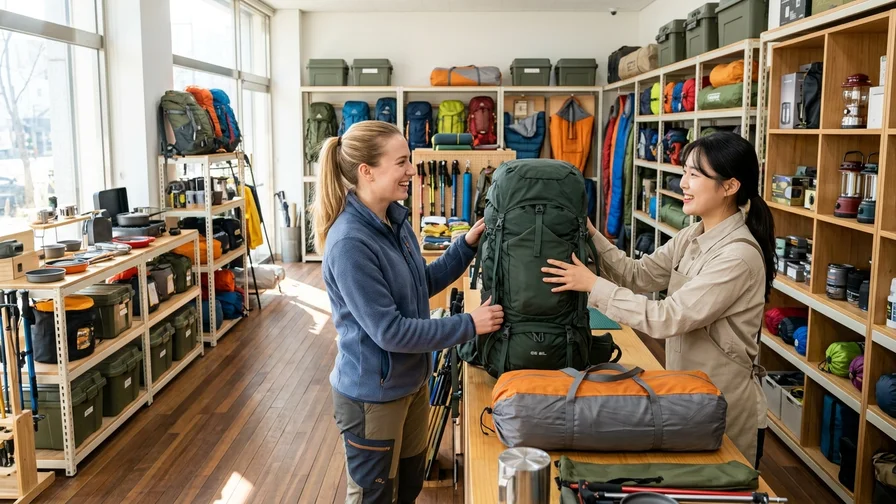
If buying all your gear feels like too much, or if you’re a short-term traveler, renting is the smart move. Korea has a large camping population, so the rental system is well established. You can show up empty-handed, rent a full set, and enjoy your trip.
Major Rental Companies
Options range from large chains with nationwide branches to companies that specialize in tourist destinations. Most allow online reservations.
- Camping Trunk (Camping Trunk): Korea’s first dedicated used-camping shop, offering both used gear sales and rentals. With several branches nationwide, it’s easy to access and lets you rent products from various brands at reasonable prices.
- Gorilla Camping (Gorilla Camping): A large discount retail chain with around 50 stores nationwide. Their main focus is selling new products, and whether they offer rentals varies by branch—so if you plan to rent, check with the specific store before visiting.
- Local rental shops: Tourist areas like Jeju Island or Gangwon Province have plenty of region-specific rental shops. Just search the destination name plus “camping gear rental.”
Rental Tips and Costs
Here’s what to check when using a rental service.
- Book in advance: Demand is especially high on weekends and holidays, so reserving at least 1–2 weeks ahead is safest.
- Inspect the gear: Carefully check for any issues upon pickup and familiarize yourself with how to use everything in advance.
- Deposit and return policy: Most require a deposit, and you’ll be charged for damage or loss. Confirm the exact return time and location.
- Cost (as of June 2026): A basic full set for two—tent, sleeping bags, mats, table, chairs—for one night usually runs about 50,000–100,000 KRW. It varies by company and gear grade.
A simple Korean phrase to use at a rental shop: “이거 대여하고 싶어요.” (Igeo dae-yeo hago sipeoyo / I’d like to rent this.)
Trending Korean Camping Gear: The Latest Must-Have Items
Camping in Korea has grown beyond simply sleeping outdoors—it’s become a culture of expressing your own style and aesthetic. Knowing the latest trends makes your trip even more special.
Aesthetic Camping Items
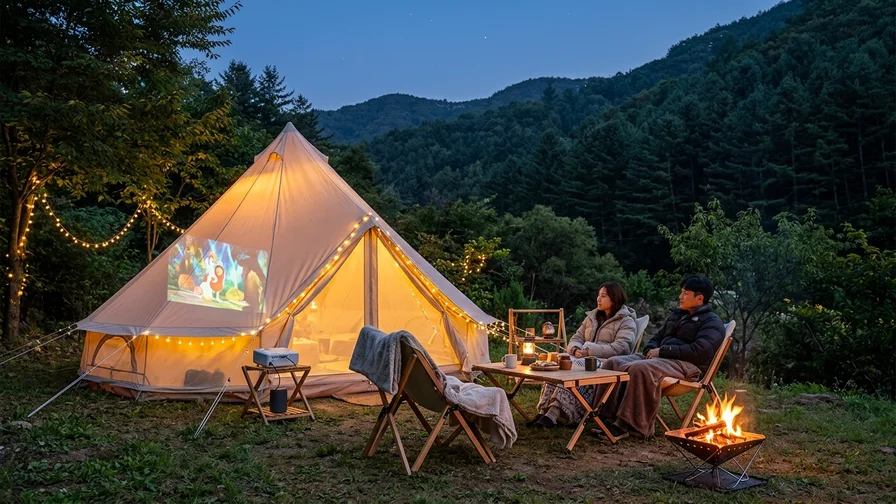
“Gamseong camping” (aesthetic camping) is a core keyword in K-camping. Items that offer not just function but visual satisfaction are popular.
- Wood roll tables & cotton canvas chairs: Natural wood furniture is the foundation of aesthetic camping. The lightweight chairs from Helinox are a prime example—and interestingly, Helinox is a Korean brand made by Dong-A Aluminium (DAC), a renowned tent-pole maker. It’s a fun fact that this homegrown brand is sought after by campers worldwide for its ultralight build and durability.
- String lights (mood bulbs): When the sun goes down, they bathe the area around your tent in a warm glow and set the mood.
- Bluetooth speaker: Enjoy your favorite music alongside nature. Just be sure to keep the volume in check so you don’t disturb other campers. (조용히 해주세요 / Joyeonghi hae juseyo / Please be quiet)
- Mini beam projector: An outdoor movie theater with your tent wall as the screen makes for an unforgettable memory.
Smart Camping Devices
As you’d expect from an IT powerhouse, smart devices have made deep inroads into Korean camping.
- Power bank / portable generator: A high-capacity portable power station that can charge multiple devices and run small electric appliances. Brands like EcoFlow are popular. People use them to power electric blankets for winter car camping or fans in summer.
- Portable air purifier / circulator: Keeps the air inside your tent fresh and provides a cooling breeze in summer.
- Smart lantern: Beyond adjustable brightness, some models even let you change colors via your smartphone.
Buying Tips: How to Get Both Value and Safety
If you plan to camp often in Korea, buying your own gear is a great option too. Here are tips for choosing safe products at reasonable prices.
Where to Buy (Online/Offline)
- Online shopping malls: At major platforms like Coupang, Gmarket, and 11st, you can compare multiple brands and buy at low prices. Rocket Delivery (next-day delivery) is incredibly convenient.
- Large supermarkets: You can also buy basic gear at the camping sections of E-mart and Homeplus. Aim for end-of-season sales for great deals.
- Specialty stores: Warehouse-style stores like Decathlon or the aforementioned Gorilla Camping let you see products in person before buying. In a pinch, you can also grab consumables like tableware, rain ponchos, and disposable gas at Daiso or a convenience store.
Editor’s Pro Tip
The most important thing when buying camping gear in Korea is to check for the “KC certification mark.” The KC mark (Korea Certification) indicates the product has passed the Korean government’s safety standards. For items directly tied to safety—like gas burners, electric lanterns, and power banks—always make sure the KC mark is present. You can never emphasize safety too much.
Safety Certification and Quality Checks
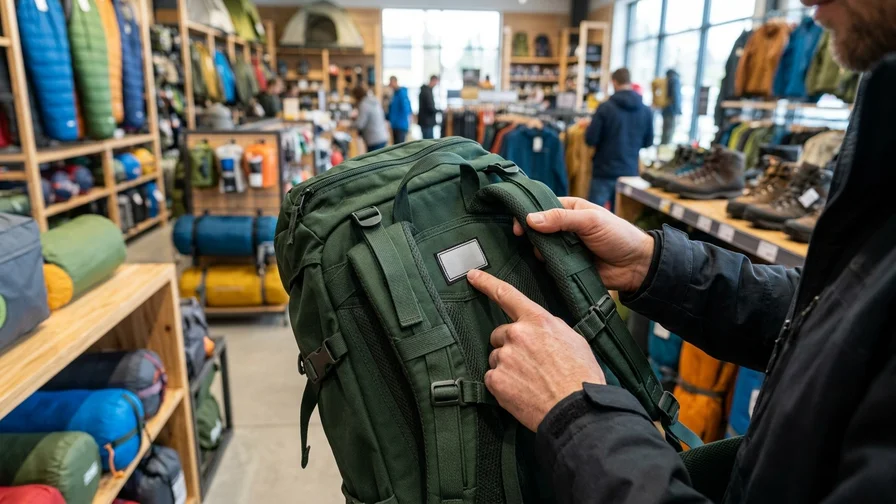
As stressed in the tip above, the KC certification mark is a must-check. Read product reviews carefully too. Korean consumers are very discerning, so online reviews are a great way to learn the real pros and cons. It’s also wise to check the after-sales service (A/S) policy ahead of time.
A Care Guide for Safe and Enjoyable Camping
Once you’ve bought or rented good gear, maintaining it properly is key to using it safely for a long time. Korea’s humid summers and cold winters are environments that call for extra attention to gear care.
- Tent care: After use, shake off any dirt or debris, and if it got wet, be sure to dry it completely in the sun before storing to prevent mold.
- Sleeping bag care: Removing moisture is important for sleeping bags too. After camping, air it out in a well-ventilated spot, and follow the product label instructions for washing.
- Gas equipment care: Always detach the butane canister from the burner after use, cap it, and store it—never inside the tent. An empty canister must be punctured outdoors to fully release any remaining gas before recycling. (Puncturing a canister that still has gas is dangerous, so always do this outdoors in a ventilated area.)
- Gear storage: When not in use for a long time, store everything in a cool, moisture-free place.
For more detailed information on Korea’s product safety standards, check the official portal.
Now you’re all set to enjoy camping in Korea. We hope this guide helps you wisely prepare your Korean camping gear, take advantage of the convenience of local purchases and rentals, and create unforgettable memories in Korea’s beautiful nature. If you’d like a deeper understanding of Korea’s camping culture as a whole, be sure to check out our comprehensive guide to Korean camping culture.