Breaking Down Genre Boundaries — The Sonic Experiments of K-Indie
목차
Key Takeaways
- Deconstructing and Fusing Genres: The K-indie sound moves freely between rock, folk, hip-hop, and electronic, blending traditional Korean instruments with modern ones to forge an entirely new musical identity through unpredictable combinations.
- Arrangements Built on Space and Storytelling: A keen sense of spatial instrument placement, dynamic shifts in intensity, and the deliberate use of ambient textures and noise go far beyond simple melody, delivering the cinematic immersion at the heart of the K-indie sound.
- Influence on the Mainstream: The experimental K-indie sound is inspiring the K-pop scene as well, serving as a creative wellspring that enriches the sonic palette of mainstream idol music.
If you scroll through the playlists on your favorite music streaming service, you’ll occasionally stumble upon a song with a uniquely captivating charm that’s hard to pin to any single genre. Dreamy yet sharp, lyrical yet experimental—chances are, that sound is “K-indie.” As of 2026, Korean indie music has moved beyond simply being the voice of the underground; with its distinctive sound design, it’s capturing the ears of listeners around the world. In this post, we’ll take a deep dive into the world of the innovative K-indie sound and explore how Korean indie music creates something so wholly original. If you’d like a broader overview of K-indie music first, we recommend starting with that article.
The “Sound” Experiments of K-Indie: The Aesthetics of Genre Fusion
In the K-indie scene, “genre” isn’t a rule to follow but a toy to break and play with. If a particular genre’s clothing best expresses their message and emotion, musicians will boldly throw it on—whatever it may be. This free-spirited attitude is the first secret behind the unpredictable charm of the K-indie sound.
Harmony Between Traditional Instruments and Modern Sounds
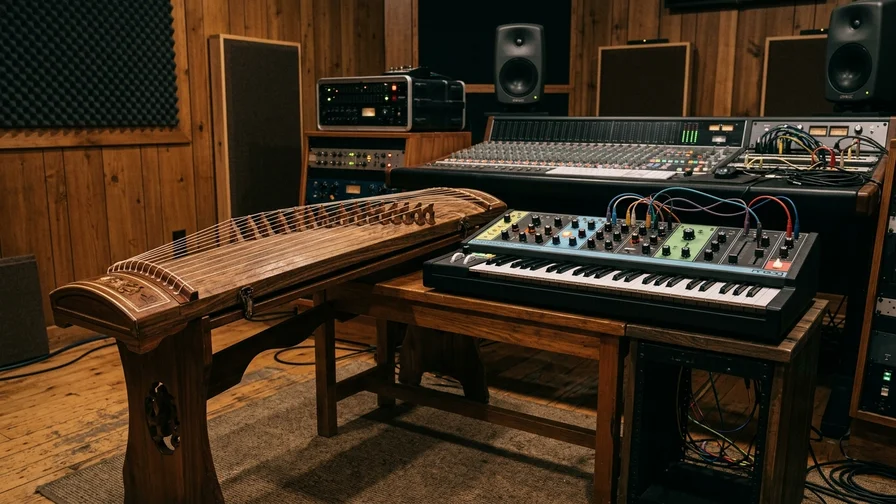
One of K-indie’s most fascinating experiments is weaving traditional Korean instruments into a modern musical vocabulary. The post-rock band Jambinai stunned the world by fusing the impassioned melodies of the geomungo and haegeum (traditional Korean string instruments) with heavy guitar riffs. Likewise, Leenalchi took pansori—a traditional form of Korean narrative singing—and laid it over two funky basslines and drums to create dance music that is at once the most Korean and the most contemporary. With no lead guitar or synthesizer, the core of the Leenalchi sound lies in transposing the traditional pansori structure of singers and a gosu (drummer) onto bass and drums. This goes well beyond simply “sampling” traditional Korean music; it’s a process of chemically fusing the textures of two sounds to create something no one had ever imagined.
Unexpected Genre Combinations
The K-indie scene is like a vast musical laboratory. Combinations such as layering the noise-soaked guitar of shoegaze over the dreamy vocals of dream-pop (Se So Neon), or adding the texture of lo-fi (a deliberately rough, vintage-sounding aesthetic) hip-hop to the breeziness of city pop, are now common finds. These experiments shatter the clichés inherent in each genre and offer listeners a fresh auditory experience. This is also deeply connected to the creative philosophy of K-indie musicians who pursue truly original work.
The Inventive Arrangements That Create the K-Indie “Sound”
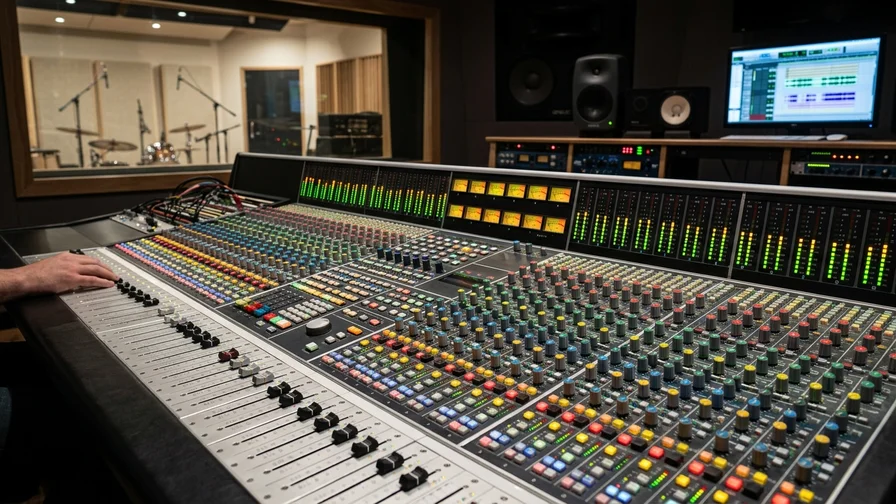
Even with the same melody and chords, a song’s mood can flip 180 degrees depending on how it’s arranged. K-indie musicians are remarkably skilled at building their own narratives through instrumentation and sonic placement. The depth of the K-indie sound comes precisely from this delicate arrangement.
Instrument Placement and a Sense of Space
When you listen to K-indie music through a good pair of headphones, you’ll often feel as though the sound isn’t simply coming from the left and right, but filling the entire space around your head. That’s because these artists make active use of sonic “space” (reverb). The guitar leaves behind a reverberation that seems to echo from afar, while the vocals are placed right up close, as if whispering directly into your ear—painting a three-dimensional soundscape. Bands like Silica Gel are a prime example of creating musical space by precisely designing the position and texture of each instrument.
Dynamic Builds and Lyricism
Starting with a quiet, murmured passage and then erupting into an emotional release as every instrument explodes is one of the hallmarks of K-indie rock. This broad use of dynamics—the range between soft and loud—maximizes a song’s lyrical impact. As in the music of Jannabi, an arrangement that begins with just piano and vocals before grandly layering in strings and a full band toward the back half becomes a powerful weapon that grips and sways the listener’s emotions.
Editor’s Tip
If you want to experience the true appeal of the K-indie sound, be sure to listen through high-quality headphones or speakers. In particular, when you put on SE SO NEON’s “A Long Dream”, you’ll fully sense how the vocals, guitar, bass, and drums each move with such subtlety within their own space to create that dreamy atmosphere. There’s a level of detail hidden in there that you could never catch through a smartphone speaker.
Using “Sound” Effects Like Ambience and Noise
Music isn’t built solely from melody and rhythm. In the K-indie scene, even sounds once dismissed as “non-musical”—such as ambience (the background sound that fills a space) or noise—are embraced as important musical elements. These sounds work to complete a song’s atmosphere and add depth.

Elements That Deepen Musical Immersion
The technique of faintly layering “field recording” sounds—real-world audio captured on location, like the patter of rain, the noise of a city, or the crackle of a worn LP—beneath a track instantly transports the listener into a specific place or moment. This is an auditory device that turns listening into experiencing a scene rather than simply hearing music. The effect dramatically heightens a song’s immersive quality and reinforces the cinematic character of the K-indie sound.
Background Sounds That Shape a Song’s Mood
Before the vocals or main instruments come in, a low-lying synthesizer drone (a sustained low tone) or deliberately crafted white noise can determine the entire mood of a track. Such background sounds sometimes stir up unease and other times bring a sense of calm, serving as clues for the story about to unfold. This process—like sketching the underdrawing on an auditory canvas—reveals K-indie producers’ obsession with detail.
How the K-Indie “Sound” Has Influenced K-Pop
In the past, the indie and major scenes were clearly separated, but now that boundary is gradually dissolving. The creative and experimental K-indie sound of the indie scene is breathing fresh inspiration into the massive K-pop industry as well. It’s no longer rare to see top-tier K-pop artists reaching out to the originality of the indie scene—IU collaborating with Hyukoh’s Oh Hyuk on “Love Poem,” or BTS’s RM joining indie musician eAeon on “Don’t.”
The number of cases where K-pop idol albums borrow sounds popular in the indie scene—lo-fi textures, band sounds, dreamy synth-pop, and more—has also grown significantly. This proves that K-indie is becoming an important reference point as K-pop broadens its musical spectrum and pursues deeper artistry.

The K-Indie “Sound” Earning Recognition in the Global Music Market
K-indie’s distinctive sound is now drawing attention not just in Korea but across the entire global music market. Hyukoh took the stage at Coachella in 2019, and Se So Neon performed at South by Southwest (SXSW) in 2024, connecting with overseas fans. Jambinai, too, has toured numerous international festivals and even gave a geomungo performance at the closing ceremony of the 2018 PyeongChang Winter Olympics. Overseas critics give high marks to K-indie for its raw energy and refined sound design—something distinctly different from the glossy spectacle of K-pop.
Outlets like the world-renowned music webzine Pitchfork have reviewed Korean indie albums and spotlighted their musical achievements. In fact, the unpredictable blending of genres and the original sonic textures are precisely what come up again and again in many music critics’ analyses of K-indie. This is powerful evidence that the K-indie sound possesses a universal musical appeal not confined to any one region.
In conclusion, the K-indie scene of 2026 has become a playground for artists who go beyond crafting good melodies to design and sculpt sound, creating entirely new auditory experiences. An experimental spirit that freely crosses genre boundaries, delicate arrangements that capture space and narrative, and the boldness to embrace even noise as music—these are the essence of the K-indie sound we should be paying attention to right now. If you’d like to fall even deeper for the charm of the K-indie sound, check out more stories in our K-indie music coverage.