
Architectural Cafes in Korea, From Hanok to Old Factories
Contents
Seoul has cafes where the building itself becomes the destination: spaces built from renovated traditional hanok houses, spaces reworked from old factories and warehouses, and spaces set inside art museums. For each cafe, the address, opening hours, signature menu, prices, and subway route are organized into a table. The hours and prices in the text were verified as of June 2026, and since trendy venues change often, we recommend double-checking the official Instagram or website right before your visit.
Transportation and Inquiry Info for International Travelers (as of June 2026)
Korea’s taxi-hailing app Kakao T supports registering foreign-issued cards and offers a global version for visitors (k.ride), so you can use it without a Korean phone number. The Uber app also works in Korea as-is. If you need help while using public transit or have questions about tourist information, call the Tourism Information Hotline 1330 (24 hours, with interpretation in English, Japanese, Chinese, and more); for inquiries about Seoul city services, call the Dasan Call Center 120.
1. Hanok Cafe: A Reinterpretation of the Traditional House
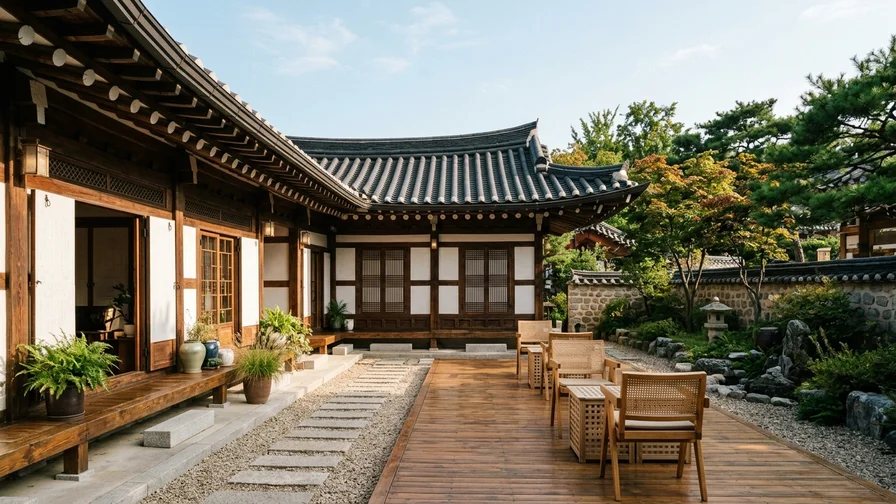
A hanok is a traditional Korean house characterized by wooden columns and rafters, a tiled roof, earthen walls, and hanji (Korean paper) windows. The hanok cafes in Seoul’s Bukchon and Ikseon-dong neighborhoods preserve the wooden framework of old hanok houses while adding contemporary design inside. Most are arranged in a ‘ㅁ’ (square) or ‘ㄷ’ (U-shape) layout around a central courtyard. Some areas have floor seating where you remove your shoes before stepping up, so check the guidance when you enter.
Onion Anguk
Onion Anguk 📍 is a bakery cafe set in a roughly 100-year-old hanok believed to have been built in the 1920s. The wooden bones of the old hanok—once used as a Korean restaurant and a tea house—are left exposed, and broad platform-style seating is laid out in the courtyard. The ordering area, bread display, and the space where you drink your beverage are split across separate wings, so the very act of crossing the courtyard after ordering becomes a hanok experience. The Italian breads Pandoro and salt bread are the signature items.
| Item | Details |
|---|---|
| Address | 5, Gyedong-gil, Jongno-gu, Seoul |
| Hours | Mon–Fri 07:00 – 22:00, Sat–Sun 09:00 – 22:00 (last order 21:30, as of June 2026) |
| Signature Menu | Pandoro (5,000 KRW), Salt Bread (4,000 KRW) |
| Price Range | Drinks 5,000 – 7,000 KRW, Bakery 4,000 – 8,000 KRW |
| Transportation | Anguk Station (Subway Line 3), Exit 3, 1–2 min walk |
| Map | Search on Google Maps |
To skip the line, go on weekday mornings right after opening (07:00–09:00)
Onion Anguk is within walking distance of Gyeongbokgung Palace and Bukchon Hanok Village. Tour the palace in the morning, rent a hanbok (traditional Korean dress), and stop by afterward for great photos that capture both the hanbok and the hanok together. Weekend mornings often see a queue, so if you’d rather skip the line, weekdays right after opening (07:00–09:00) are the quietest.
Cheongsudang
Cheongsudang 📍 in the Ikseon-dong hanok district is a photo spot from the very entrance, with its bamboo grove and stone bridge. Inside, a garden with flowing water sits at the center, and seating is arranged around it. The lighting is on the dim side, and the space has an oriental atmosphere built from water, plants, and stone. The signatures are stone-drip coffee, brewed with beans ground in a traditional millstone, and a soufflé castella baked to order. Right next door, it also runs Cheongsudang Bakery as an annex.
| Item | Details |
|---|---|
| Address | 31-9, Donhwamun-ro 11na-gil, Jongno-gu, Seoul |
| Hours | Daily 10:30 – 21:00 (last order 20:30, as of June 2026) |
| Signature Menu | Stone Drip Coffee (around 6,000 KRW), Soufflé Castella (Original 17,800 KRW, verified October 2026; seasonal flavors are priced differently) |
| Price Range | Drinks 6,000 – 9,000 KRW, Desserts 15,000 – 20,000 KRW |
| Transportation | Jongno 3-ga Station (Subway Lines 1, 3, 5), Exit 6, 5 min walk through the Ikseon-dong alleys |
| Map | Search on Google Maps |
2. Industrial Cafe: The Beauty of the Raw and Unfinished
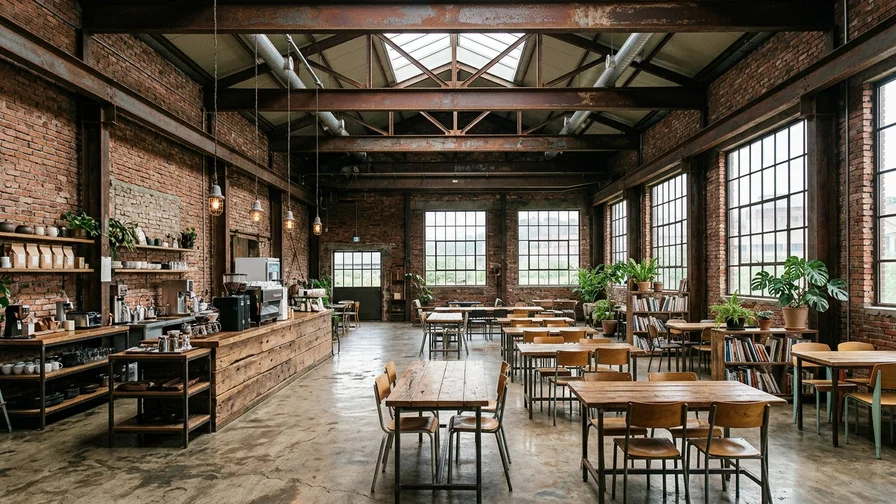
This type spread mainly through Seongsu-dong and Mullae-dong, areas once packed with factories, warehouses, and repair shops built during Korea’s industrialization in the 1970s and ’80s. The hallmark is keeping rough concrete walls, rusted steel doors, high ceilings, and old machinery as interior elements. Because the spaces are large, many of them also run a gallery or a select shop.
Onion Seongsu
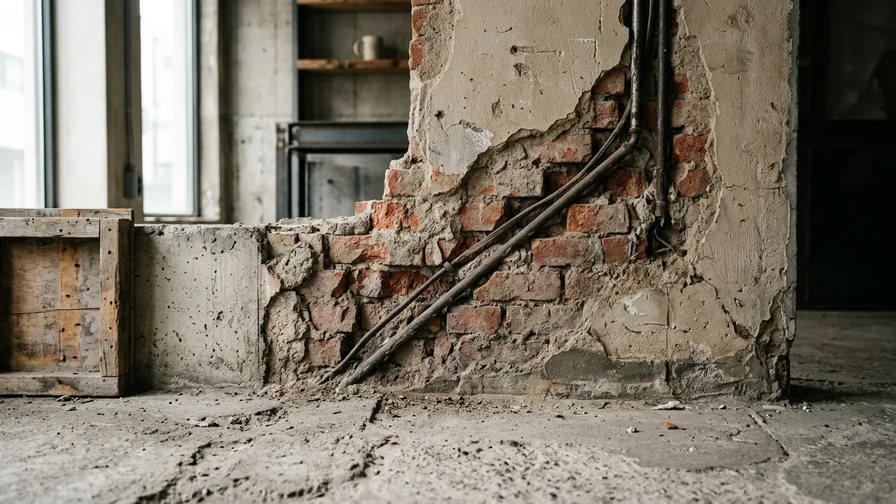
Onion Seongsu 📍 occupies a building from the 1970s that served as a supermarket, restaurant, home, and repair shop before ending its life as a metal factory. The architectural heart of this cafe is that the design studio Fabrikr renovated a building slated for demolition while preserving the crumbling walls, worn tiles, and even the rusted steel doors as-is. The first floor holds the ordering area and bakery, with seating on the second floor and the rooftop. The contrast between the rough former-factory space and the refined bakery is striking, and it offers the same bakery lineup as the Anguk branch.
| Item | Details |
|---|---|
| Address | 8, Achasan-ro 9-gil, Seongdong-gu, Seoul |
| Hours | Mon–Fri 08:00 – 22:00, Sat–Sun 09:00 – 22:00 (last order 21:30, verified October 2026) |
| Signature Menu | Pandoro, Cream Cheese Garlic Bread |
| Price Range | Drinks 5,000 – 7,000 KRW, Bakery 4,000 – 8,000 KRW |
| Transportation | Seongsu Station (Subway Line 2), Exit 2, 3 min walk |
| Map | Search on Google Maps |
Daelim Changgo Gallery Cafe
Daelim Changgo 📍 is essentially the original that sparked Seongsu-dong’s industrial cafe boom. Starting out as a rice mill in the 1970s, the red-brick building was later used as a warehouse before being converted into a gallery-cum-cafe. Large-scale installation art and paintings hang throughout the high-ceilinged hall, so wandering the exhibition with a drink in hand is part of the appeal itself. Beyond coffee and bakery, it also serves meals like brunch and pasta. Prices and the exhibition schedule can be checked on the official Instagram (@daelimchanggo_gallery).
| Item | Details |
|---|---|
| Address | 78, Seongsui-ro, Seongdong-gu, Seoul |
| Hours | Daily 11:00 – 22:00 (as of June 2026) |
| Highlight | Red-brick building (a former rice mill), gallery-cum-cafe, full meal menu |
| Transportation | Seongsu Station (Subway Line 2), Exit 3, 4 min walk |
| Map | Search on Google Maps |
NUDAKE TEAHOUSE (Haus Nowhere Seoul)
This is the Seongsu outpost of NUDAKE, the dessert brand run by eyewear label Gentle Monster. A blend of “New, Different, Cake,” it’s famous for desserts that look like works of art. Note: the former NUDAKE Seongsu flagship on Seongsui-ro 7-gil has closed, and since September 2025 it has reopened as “NUDAKE Teahouse” on the 5th floor of Gentle Monster’s multi-purpose space, Haus Nowhere Seoul (a newly built building, 433 Ttukseom-ro). It isn’t an old-factory adaptive reuse building, but it’s hard to leave off a tour of Seongsu’s dessert spaces, so we include it here. The concept centers on the signature cake Peak—matcha cream wrapped in a squid-ink pastry—enjoyed with the feel of a tea course, and it’s a tea-focused space that doesn’t serve coffee. On the 1st–3rd floors of the same building, you can view the Gentle Monster and Tamburins stores and their installation art for free.
| Item | Details |
|---|---|
| Address | 433, Ttukseom-ro, Seongdong-gu, Seoul, 5F |
| Hours | Daily 11:00 – 21:00 (as of June 2026) |
| Signature Menu | PEAK SMALL (28,000 KRW), Tea (12,500 – 13,500 KRW) |
| Note | No coffee (tea-focused). No separate reservation system; entry is managed by headcount at the door. Weekend waits after 1 p.m. are common. |
| Transportation | From Seongsu Station (Subway Line 2), about 8 min walk toward Ttukseom-ro (check the map link for the route) |
| Map | Search on Google Maps |
3. Museum Cafe: Art Appreciation and a Rest
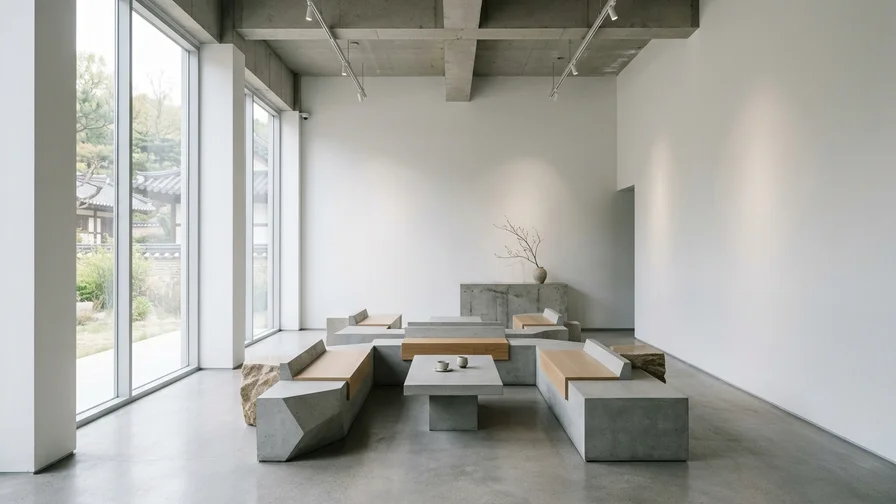
A cafe inside a museum offers a rest as an extension of viewing an exhibition. They often follow the museum’s own architecture and design concept. Both of the venues below can be enjoyed without an exhibition ticket. Their closing days differ from each other (Leeum closes on Mondays, while MMCA Seoul is open on Mondays), so pick according to your schedule.
Leeum Museum of Art Cafe
This is the cafe in the lobby of the Leeum Museum of Art in Hannam-dong, currently operated by the Seoul specialty-coffee brand Camel Coffee (as of June 2026). The museum building itself—designed by three architects, Mario Botta, Jean Nouvel, and Rem Koolhaas—is a sight to behold, with the cafe and art shop set within the lobby’s circular zone. Drinks can be enjoyed in the lobby and lounge but cannot be brought into the galleries. The lobby and cafe are accessible without an exhibition ticket, and the permanent traditional-art exhibition is free (special exhibitions are paid, around 12,000 – 20,000 KRW). Reservations are recommended but on-site ticketing is also available.
| Item | Details |
|---|---|
| Address | 60-16, Itaewon-ro 55-gil, Yongsan-gu, Seoul |
| Hours | Tue–Sun 10:00 – 18:00, closed Mondays (also closed Jan 1, and on Seollal and Chuseok day, as of June 2026) |
| Note | Permanent exhibition free; reservations recommended but on-site ticketing available. Cafe accessible without a ticket. Check drink prices on-site. |
| Transportation | Hangangjin Station (Subway Line 6), Exit 1, about 5 min walk |
| Map | Search on Google Maps |
MMCA Seoul Cafe
On the first floor of the National Museum of Modern and Contemporary Art, Seoul (MMCA Seoul) is Terarosa, a specialty-coffee brand from Gangneung. It features large windows overlooking the museum courtyard and high ceilings, and you can use it freely without an exhibition ticket. The museum itself is a piece of contemporary architecture built on the former grounds of the Defense Security Command, sitting right beside the eastern wall of Gyeongbokgung Palace, so it pairs nicely with a palace visit. It’s open as usual on Mondays when Leeum is closed, and on Wednesdays and Saturdays it has extended hours until 21:00 (exhibitions are free from 18:00 to 21:00).
| Item | Details |
|---|---|
| Address | 30, Samcheong-ro, Jongno-gu, Seoul |
| Hours | Mon, Tue, Thu, Fri, Sun 10:00 – 18:00 / Wed, Sat 10:00 – 21:00 (closed: Jan 1, and on Seollal and Chuseok day, as of June 2026) |
| Note | Cafe accessible without an exhibition ticket. Serves coffee, tea, and bakery items. |
| Transportation | Anguk Station (Subway Line 3), Exit 1: turn right and walk straight about 500 m, then turn right at Dongsipjagak and walk about 500 m more (about 1 km total, 12-15 min walk, verified October 2026) |
| Map | Search on Google Maps |
4. Photography Etiquette
Architectural cafes are also places people visit to take photos, but keeping a few basic manners makes things comfortable for everyone.
- Order first: Grabbing a seat and starting to shoot before ordering is rude. The basic rule is to take photos after ordering a drink.
- Be considerate of other guests: Avoid compositions where another guest’s face appears prominently. Awareness of portrait rights is growing in Korea too.
- Equipment limits: Flash, tripods, and selfie sticks are prohibited in the Leeum and MMCA galleries. Even in cafes, refrain from setting up a tripod and occupying a spot for long stretches of shooting. Commercial photography requires prior permission.
- Quiet in the hanok alleys: The area around Bukchon Hanok Village is a residential neighborhood where people actually live. When shooting in the alleys early in the morning or late at night, don’t make loud noises, and don’t peer inside gates or enter properties without permission.
5. Suggested Route: A Day Built Around Architectural Cafes
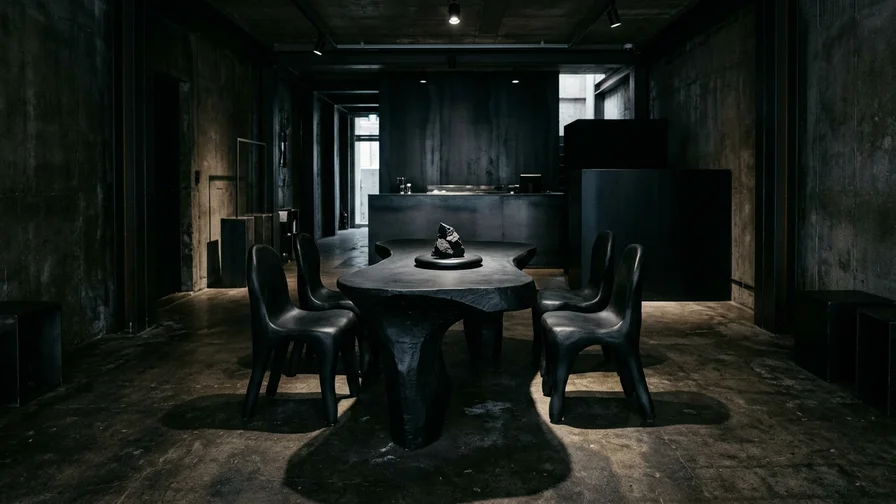
The hanok cafes are clustered in Anguk and Ikseon-dong, while the old-factory cafes are concentrated in Seongsu-dong. Here’s a sample one-day route linking the two areas.
- Morning (10:00 – 13:00): Anguk & Bukchon Area
- Enjoy brunch or coffee at Onion Anguk. (To avoid the wait, go earlier—right after opening is recommended.)
- After the cafe, take a stroll through the alleys of Bukchon Hanok Village on foot, or tour Gyeongbokgung Palace. If it’s not a Monday, you could also work in a visit to MMCA Seoul.
- For lunch, just pick a Korean meal in Samcheong-dong or Insa-dong.
- Afternoon (14:00 – 18:00): Seongsu-dong Area
- Depart from Anguk Station on Subway Line 3, transfer to Line 2 at Euljiro 3-ga Station, and get off at Seongsu Station. (About 30 minutes, roughly 1,550 KRW base fare.)
- Explore Onion Seongsu and Daelim Changgo, and if you’re into desserts, head on to NUDAKE Teahouse on the 5th floor of Haus Nowhere Seoul.
- Seongsu-dong has small galleries, select shops, and a handmade-shoe street, all great to explore together.
- Evening (after 19:00): Han River or City Night View
- One stop from Seongsu Station on Subway Line 2, get off at Ttukseom Station to reach Ttukseom Hangang Park.
- Or head to Gangnam or Myeongdong and wrap up the day at a rooftop bar taking in Seoul’s night view.

