6 Quiet Small Train Stations in Korea Where Time Stands Still
목차
Seoul’s dazzling skyline and Busan’s lively beaches are wonderful, but sometimes you want to escape to a place where time seems to have paused. Korea’s tiny small train stations are more than just spots to wait for a train; they are like living museums where layers of local history and people’s stories have accumulated. That said, some of the stations covered in this article are closed stations (former stations) where trains no longer stop, while others see trains only on weekends, so it’s worth checking before you go. Below, I’ve clearly noted for each station whether you can reach it “by train or whether you’ll need to drive.” (If you want general train travel information first, take a look at Korea train travel.) The timetables, fares, and operating details below are accurate as of June 2026; for time-sensitive information, it’s best to double-check on Korail (korail.com).
The Charm of Korea’s Small Train Stations, Where Past and Present Coexist
Key Takeaways
- Korea’s small train stations are special destinations that go beyond mere transit facilities, preserving an analog mood and the region’s own distinctive culture.
- Even closed stations where trains no longer stop have been reborn as cultural spaces, galleries, and rest stops along cycling paths. Note that closed stations must be reached by car rather than by train.
- The stations below vary in their stop status (always in service / weekends only / closed), so checking whether trains stop is the single most important thing to do before visiting.
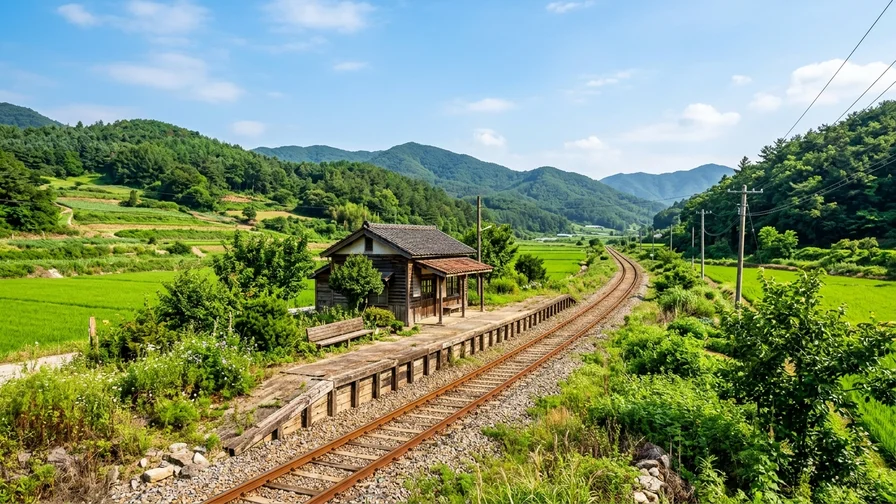
In an age where speed and convenience reign, the phrase “small train station” stirs up a tender nostalgia. These places once served as regional hubs where people and goods came and went, but many have now become quiet spaces where a train may or may not stop just a few times a day. Some have closed entirely as the tracks were relocated, yet those sites have been given a new look as cycling-path rest stops or open-air railway parks, still drawing visitors today.
A Recommended Local Tour Route to Small Train Stations by K-train
Among the small train stations tucked away across the country, here are some carefully selected spots that are relatively easy for international travelers to reach and each carry their own story. For each station, check first whether trains actually stop there.
Closed Stations Transformed into Cultural Spaces: Neungnae and Hwarangdae
Both are closed stations where trains no longer stop. In other words, these aren’t places to buy a train ticket; rather, you reach them by subway or car to wander, stroll, and take photos.
- Neungnae Station, Namyangju (closed station): Closed in 2008. It’s a rest stop you reach by following the Bukhangang River cycling path from Ungilsan Station on the Gyeongui-Jungang Line. The interior of the old station building is decorated as a space of memories filled with black-and-white photos, and out front there’s a photo zone made from a converted train car.
– Photo spot: The faded “Neungnae Station” sign makes a great backdrop for a souvenir shot, and the sunset at dusk is especially beautiful.
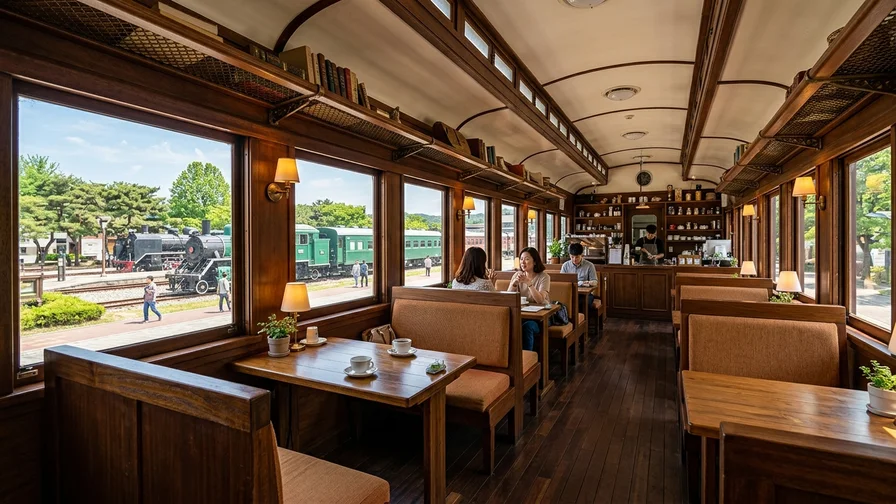
– Getting there: Get off at Ungilsan Station on the Gyeongui-Jungang Line, then rent a bike at the Balgeun Gwangjang bike rental near Exit 1 (run by Jinjung 1-ri, 031-577-7848); it’s about a 10-minute ride or roughly a 20-minute walk. You can rent a bike on-site even if you don’t bring your own. Trains run at wide intervals, so it’s a good idea to check departure times with a transit app. - Hwarangdae Railway Park, Seoul (Hwarangdae Railway Park, closed station): An open-air railway museum built on the site of the former Hwarangdae Station on the Gyeongchun Line, displaying trams and trains from countries around the world such as the Czech Republic and Japan. At night it transforms into the “Nowon Light Garden” as the lights come on.
– Hours (as of June 2026): The Light Garden is illuminated 18:00–22:00, and the Hwarangdae Station Museum is open 10:00–18:00, closed Mondays, with free admission.
– Photo spot: The exotic trams and trains make great backdrops, and the best time is after sunset when the Light Garden is lit.
– Getting there: About a 5-minute walk from Exit 4 of Hwarangdae Station on Subway Line 6.
Finding Peace in Nature: Bangok Station in Wonju and Samtan Station in Chungju
Both are stations set amid the quiet nature of Gangwon and Chungcheong, but their stop status is the complete opposite. Bangok is a closed station where trains no longer run, while Samtan is still active, with Mugunghwa trains stopping there.
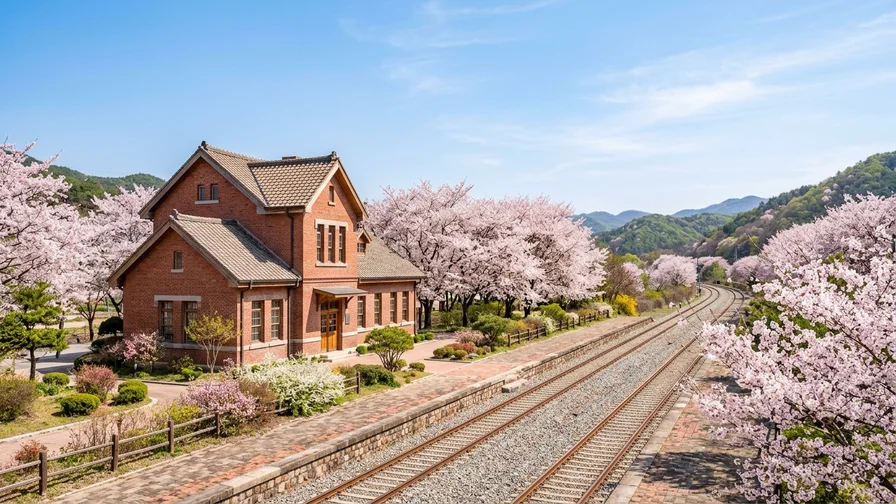
- Bangok Station, Wonju (closed station, Registered Cultural Heritage): A 1941 building that looks like something from a storybook, with red brick and a pointed roof, designated as Registered Cultural Heritage (No. 165). In spring, cherry blossoms bloom in full around the station. Note: On January 5, 2021, the tracks were relocated as part of the Jungang Line’s double-track electrification, and the station was closed. No trains stop here now, so don’t try to reach it by train.
– Photo spot: The station building makes a lovely backdrop in spring when the cherry blossoms are in full bloom, and it looks even more dreamlike in the early morning fog.
– Getting there: About a 15-minute taxi ride from Wonju Station (the new station building in Musil-dong) on the KTX line. Public transit runs infrequently, so a taxi is recommended. It’s best to confirm the location of Bangok Station before setting off. - Samtan Station, Chungju (active station): Located on the Chungbuk Line and right beside Chungjuho Lake, earning it the nickname “the station on the lake.” It’s an active station where Mugunghwa trains actually stop, so you can reach it by train.
– Photo spot: Framing Chungjuho Lake together with the surrounding mountains from the platform is a popular composition, and dawn, when mist rises off the water, is the highlight.
– Getting there (as of June 2026): It’s a Mugunghwa stop on the Chungbuk Line (stops maintained as of the timetable revised on 2024-05-01). However, the number of daily stops is small, so check the timetable on Korail (korail.com) and plan your round-trip times accordingly. Note that a proposal to close Samtan Station is included in the Chungbuk Line high-speed upgrade plan, so this could change in the long term.
Small Stations Along the East Coast Embracing the Sea: Jeongdongjin and Chuam
Stepping off the train to find the blue sea spread out before you is the greatest charm of an East Coast small-station journey. Just keep in mind that Jeongdongjin has trains stopping at all times, while Chuam has trains only on weekends and public holidays, so you’ll need to factor that in when planning your itinerary.
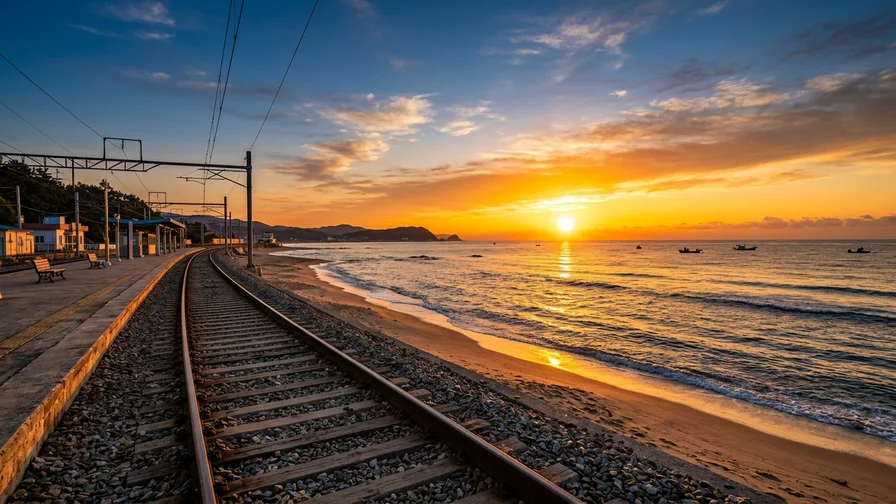
- Jeongdongjin Station, Gangneung (active station): Listed in Guinness World Records as the station closest to the sea anywhere in the world. The sandy shore of Jeongdongjin Beach is right beside the platform, so you can capture the train and the sea in a single frame. It’s famous as a spot for the New Year’s sunrise.
– Photo spot: A shot capturing a silhouette while sitting on a platform bench at the moment of sunrise, and a shot with the sea beside the tracks as the backdrop, are both must-takes.
– Getting there (as of June 2026): Take the KTX-Eum direct service from Cheongnyangni Station (about 3 hours 55 minutes, first train around 07:16) to Jeongdongjin Station. (Following the Jungang Line double-track electrification on 2024-12-20, the direct Cheongnyangni–Donghae Mugunghwa service was discontinued and replaced by KTX-Eum/ITX-Maeum.) Check the timetable on Korail. - Chuam Station, Donghae (stops on weekends and public holidays only): A small station near “Chuam Chotdaebawi Rock,” famous as the backdrop of the opening line of the Korean national anthem. Unlike the bustle of Jeongdongjin, here you can quietly take in the scenic beauty of the East Sea. Note: No trains stop on weekdays. The former “Sea Train” (a tourist train) ceased operation in December 2023.
– Photo spot: The coastal scenery you take in while walking from Chuam Station to Chuam Sculpture Park, and the moment the sun rests atop Chotdaebawi Rock, are both worthwhile.
– Getting there (as of June 2026): On weekends and public holidays, the weekend train departing from Jeongdongjin stops at Chuam Station twice a day (Jeongdongjin 10:30/14:10 → Chuam Station 11:42/15:22; times may change, so check Korail). To visit on a weekday, take a taxi from Donghae Station, about a 10-minute ride.
Special Cultural Experiences at Small Train Stations
A small-station journey offers more than just scenery; it gives you the pleasure of experiencing the local culture firsthand. Here’s a roundup of things to enjoy at the stations and their surroundings.
Learning the Story of Trains at Railway Museums and Station Halls
Like Hwarangdae Railway Park, some stations serve as small museums that display old railway equipment and photographic records. Looking at old timetables, staff tokens, and station attendants’ uniforms lets you feel the history of Korean railways up close. The Hwarangdae Station Museum is free and closed on Mondays, so it’s wise to check your visiting day.
Visiting the Creative Spaces and Galleries of Local Artists
Some small stations that have grown quiet have turned into creative spaces for local artists, thanks to their low rents. That said, these studios and galleries often operate on irregular schedules, so to avoid a wasted trip, check whether they’re open in advance with the relevant city or county’s culture and tourism office or their social media.
Editor’s Tip
Weekend markets and cultural events near small stations are mostly held on irregular schedules. Before visiting, check the calendar on the website of the relevant city or county’s culture and tourism office. The smaller the market, the more likely it is to be cash-only, so it’s good to bring a little cash. Also, the stations in this article differ in their stop status (always / weekends only / closed), so confirming on Korail one more time before departure whether your station has stopping trains is the surest way to avoid a wasted trip.
Local Specialties and Handicrafts at Weekend Markets
On weekends or certain days, a modest market sometimes pops up in the plaza in front of a small station. Vegetables and fruit grown by local elders, handmade crafts, and snacks you can only taste in that region all come together. Since these markets are held irregularly, though, you’ll need to check the dates in advance. There’s a real pleasure in seeking out “local flavors” and small keepsakes amid a warmth you won’t find at a large supermarket.
Restaurants and Accommodations Near Small Train Stations
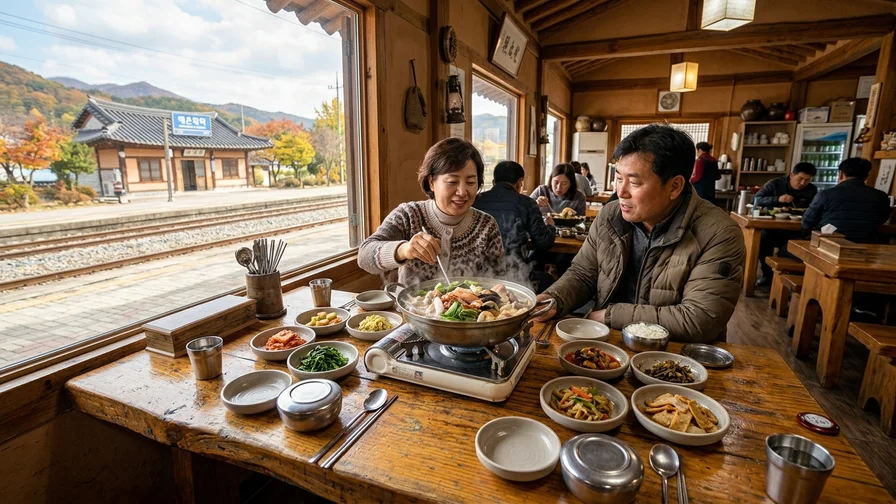
A truly local trip is complete only when you experience the region’s flavors and character. That said, since small stations often have almost no restaurants right out front, with dining areas clustered in the nearby town or city center, here’s an honest rundown.
- Around Neungnae Station, restaurants serving cyclist-friendly makguksu (buckwheat noodles)
and tofu dishes are scattered along the Bukhangang River cycling path. The station itself is mostly simple cafés and rest spots, so it’s better to handle meals at restaurants along the cycling path or in the town toward Yangsu-ri.
- Around Jeongdongjin Station, in the Jeongdongjin Beach area close to the station, you’ll find clusters of restaurants serving soft tofu stew, jang-kalguksu (a spicy gochujang-based knife-cut noodle soup)
, snow crab, and raw fish (many are listed on DiningCode, Siksin, and the like). Specific shops open and relocate frequently, so check recent reviews on-site before going in.
- Around Chuam Station, restaurants are clustered toward Mukho in Donghae and the Donghae port area, so there are few options within walking distance of the station. The realistic approach is to drive into Donghae city to find seafood restaurants. Note that seobguk (a Gangwon regional spicy stew made with mussels)
is a fiery, broth-based dish distinct from a plain mussel soup.
For accommodations, rather than large hotels, places like a sea-view pension in Jeongdongjin, a guesthouse converted from an old hanok, or a campground near Chungjuho Lake suit the mood of a small-station journey. That said, there’s almost no lodging right next to the closed stations (Neungnae, Bangok, Hwarangdae), so it’s easier to base yourself in a nearby city or tourist area and make a day trip.
A journey to Korea’s small train stations reveals another face of the country that often gets hidden behind its “fast, fast” culture. Before the romance, though, remember one practical point. The stations in this article fall into three groups: always in service (Samtan and Jeongdongjin), weekends only (Chuam), and closed (Neungnae, Bangok, Hwarangdae), so checking stop status on Korail before departure will help you avoid both wasted trips and boarding the wrong train. You can find more information on small train stations on the Korea Tourism Organization’s small-station travel theme page. If you’d like to know more about train travel in Korea overall, see Korea train travel, and for more Korea travel information, visit Come On Korea.