Korea’s Ethical Cafes, a Vegan and Eco-Friendly Cup
목차
Cafes in Seoul are evolving beyond places that simply sell coffee into spaces where you consume beliefs and values. This guide introduces vegan cafes, zero-waste shops, and social enterprise cafes for travelers who care about animal welfare, environmental protection, and social solidarity — all verified as of June 2026. Places that have closed or relocated have been filtered out, and all addresses and closing days have been re-confirmed.
Understanding Korea’s Ethical Consumption Cafes
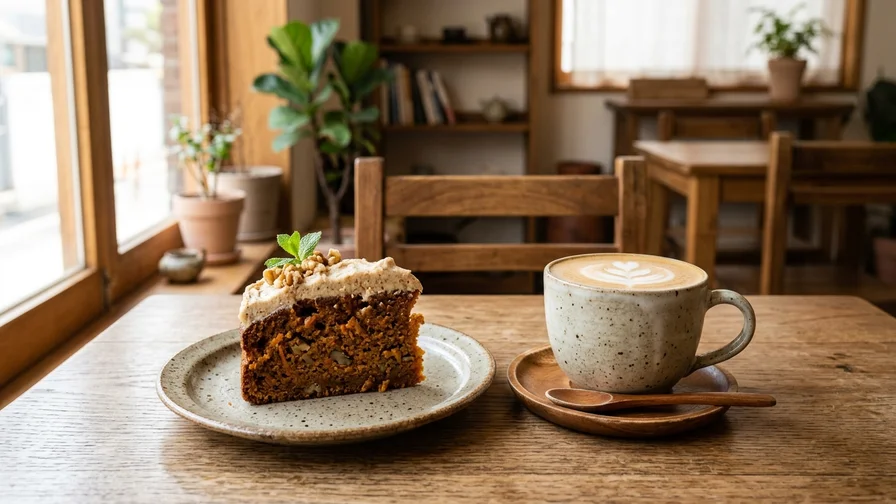
Value consumption refers to a form of consumption where you choose products and services that align with your personal values. It’s a trend that has become especially pronounced among Korea’s younger generation, and it’s reflected directly in the cafe scene. It broadly divides into three types.
- Vegan Cafe: Makes drinks and desserts without animal-based ingredients like milk, butter, or eggs. Plant-based milks such as soy and oat milk are the default.
- Eco-Friendly, Zero Waste Cafe: Minimizes or completely eliminates single-use items. Some offer discounts for bringing your own tumbler, and some only allow takeout if you bring your own reusable container.
- Social Enterprise Cafe: Creates employment for vulnerable groups such as people with disabilities or seniors, or uses fair trade beans. Fair trade beans are often indicated by certification marks like that of Fairtrade International.
What to Know First: Korea’s Single-Use Cup Rules
When a Korean cafe asks “Are you drinking in?”, there’s an institutional reason behind it. Since it’s something foreign travelers actually encounter, here’s a summary (as of June 2026).
- Ban on single-use plastic cups for dine-in: In effect since April 2022. If you drink in the store, your drink comes in a mug or glass by default, and single-use cups are only allowed for takeout.
- Single-use cup deposit system: A system where you pay a 300 KRW deposit per cup and get it back when you return it. It was piloted in Sejong and Jeju in December 2022, but the nationwide mandate lost momentum, and in 2025 the government shifted it to voluntary implementation by local governments. Currently you can only experience it at a handful of stores in Jeju.
- Tumbler discount: The culture of getting a discount on your drink for presenting your own cup is firmly established. It’s usually 300–500 KRW, and Starbucks offers a 400 KRW discount.
Basic Information to Know Before Your Visit
| Item | Details |
|---|---|
| Price range | Drinks 5,000–9,000 KRW, vegan desserts 7,000–12,000 KRW (as of June 2026) |
| Opening hours | Independent cafes often open around noon, and Monday or Tuesday closures are common. It’s safest to check for temporary closure notices on Instagram before you go. |
| Tumbler discount | A 300–500 KRW discount for using your own cup is common. |
| Allergy information | Vegan bakeries often use nuts, soy, and gluten. If you have allergies, always check with staff before ordering. Some places label menus with gluten-free (GF) and vegan (VG) tags. |
| Foreign-language menus | Areas with frequent foreign visitors, such as Itaewon, Hongdae, and Gangnam, often have English menus. |
A Guide to Recommended Ethical Consumption Cafes by Area
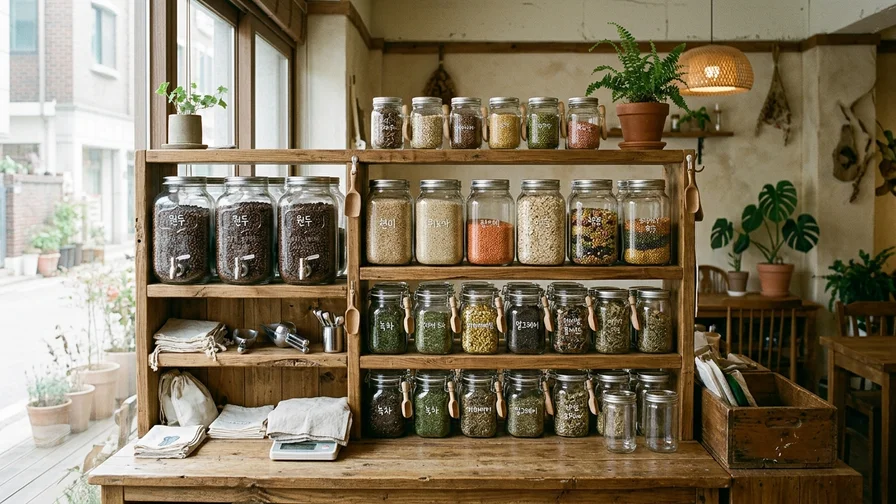
These are grouped by area with your travel route in mind. Click any name to be taken to a Google Maps search.
1. Itaewon: The Starting Point of Seoul’s Vegan Scene
With its high proportion of foreign residents, Itaewon is a neighborhood where vegan culture developed early on. It’s a great area to explore alley cafes by walking from Exit 4 of Itaewon Station toward Haebangchon (HBC).
Plant
- Category: 100% vegan cafe and restaurant, bakery
- Location: Plant 📍 — 2F, 117 Bogwang-ro, Yongsan-gu, Seoul (about a 5-minute walk from Exit 4 of Itaewon Station). It moved from its former location on Itaewon-ro 16-gil to its current spot, so don’t follow old map information.
- Highlights: Opened in 2013, it’s one of Seoul’s first-generation vegan restaurants. It offers both American-style vegan bakery items like cakes and cookies, and meal options like burgers, bowls, and pasta, making it great for a full meal. It also operates branches in areas such as Yeonnam-dong.
- Must-try: Avocado burger (with fries, 16,500 KRW), Earl Grey cake (7,000 KRW), kale colada smoothie (7,500 KRW) — prices as of June 2026.
- Opening hours: Tuesday–Sunday 11:00–22:00 (last order 21:00), closed Mondays.
2. Hongdae, Yeonnam, Mangwon: The Heartland of Zero Waste
The Yeonnam-dong and Mangwon-dong areas along the Gyeongui Line Forest Park are packed with distinctive small cafes and eco-friendly shops. It’s the neighborhood where Seoul’s zero-waste experiments are most active.
earth us
- Category: Zero-waste cafe
- Location: earth us 📍 — 150 Seongmisan-ro, Mapo-gu, Seoul (about a 10-minute walk from Exit 3 of Hongik University Station toward Yeonnam-dong)
- Highlights: Famous as a cafe with no single-use items in the store. There aren’t even boxes for packing cakes, so if you want takeout, you have to bring your own reusable container. Its signature is the seasonal cake topped with seasonal fruit, and waits are frequent — remote queuing via Catch Table opens at 10 a.m.
- Must-do: The “bring your own container” takeout experience, where you carry your cake home in a container. It’s the easiest way to experience Korea’s zero-waste culture firsthand.
- Opening hours: Wednesday–Monday 12:00–21:00, closed Tuesdays (changes frequently, so check Instagram @earth__us).
Urban Plant Hapjeong
- Category: Brunch cafe with vegan options
- Location: Urban Plant Hapjeong 📍 — 3 Dokmak-ro 4-gil, Mapo-gu, Seoul (about a 3–5 minute walk from Hapjeong Station)
- Highlights: A concept of an urban garden, with the interior filled with plants. Not every item is vegan, but you can switch to plant-based milk and there are vegetable-focused brunch options, making it great for vegans and non-vegans to visit together. Just ask the staff whether a vegan option is available when ordering.
- Opening hours: Daily 10:00–22:00.
Almang Market
- Category: Refill station (zero-waste shop)
- Location: Almang Market 📍 — 3F, 47 World Cup-ro 25-gil, Mapo-gu, Seoul (near Mangwon Station and Mangwon Market)
- Highlights: A pioneering shop that opened the way for Korea’s refill station culture. It’s not a cafe, but you can buy cosmetics, detergent, tea, coffee beans, and spices into your own empty container without packaging. It’s also great for picking up zero-waste travel souvenirs like solid shampoo bars and bamboo toothbrushes. Pairing it with a stroll through Mangwon Market makes for a tidy route.
- Opening hours: Tuesday–Sunday 12:00–20:00, closed Mondays.
3. Seongsu, Seoul Forest: Where Ethical Consumption Meets Trends
Seongsu-dong is Seoul’s fastest-changing commercial district, and also a neighborhood where social enterprises and health-oriented bakeries gather. It’s great as a half-day course paired with a walk through Seoul Forest.
Sunny Bread
- Category: Gluten-free, vegan, low-carb bakery
- Location: Sunny Bread 📍 — 24-8 Seoul Forest 2-gil, Seongdong-gu, Seoul (near Seoul Forest Station on the Suin-Bundang Line). It relocated from Itaewon to Seoul Forest, so don’t follow the old Hannam-dong address.
- Highlights: Makes bread and desserts with rice flour, brown rice flour, and almond flour instead of wheat flour. The menu is labeled GF (gluten-free), VG (vegan), and LC (low-carb), making it easy for travelers with dietary restrictions to choose. The concept is bread that even people with diabetes or gluten intolerance can eat.
- Opening hours: As a small shop, its hours change frequently. Be sure to check Instagram for that day’s opening status before visiting.
HISBEANS Coffee Seongsu
- Category: Social enterprise cafe (employing people with disabilities)
- Location: HISBEANS Seongsu 📍 — 1F, Cow & Dog Building, 20 Wangsimni-ro 2-gil, Seongdong-gu, Seoul (near Seoul Forest Station on the Suin-Bundang Line)
- Highlights: The coffee brand of “Hyanggi Naneun Saramdeul” (People Who Spread Fragrance), a social enterprise that supports the employment and independence of people with mental disabilities. Aside from the manager, the baristas are people with disabilities who have received professional training, and the long-term retention rate exceeds 90%. There are about 38 stores nationwide, but many of them are in-house corporate cafes, so for a general visit go to a publicly open store like the Seongsu branch.
- Opening hours: As it’s housed in an office building, it mainly operates on weekday daytimes. For weekend visits, check the store guide on the official website.
4. Gangnam: Vegan Dining and Premium Vegan Desserts
The Gangnam area is stronger in vegan dining inside large malls and hotels than in small vegan cafes. If you’re looking for premium vegan desserts as a gift, this is the place to go.
Plantude COEX
- Category: Vegan-certified restaurant (also serves cafe menu)
- Location: Plantude COEX 📍 — B1, Starfield COEX Mall, 513 Yeongdong-daero, Gangnam-gu, Seoul (directly connected to Samseong Station on Subway Line 2)
- Highlights: A vegan-certified restaurant opened in 2022 by the food company Pulmuone. It was the first dining establishment by a major Korean food company to receive vegan certification, and you order 100% plant-based dishes like pasta and rice bowls via tablet, where you can also check ingredient and nutrition information. There’s a second location at Yongsan I’Park Mall.
- Opening hours: Operates within COEX Mall’s business hours. We recommend checking the mall guide or Naver Map before visiting.
JW Marriott Hotel Seoul Pâtisserie
- Category: Hotel dessert boutique (vegan cake options)
- Location: JW Marriott Hotel Seoul Pâtisserie 📍 — 176 Sinbanpo-ro, Seocho-gu, Seoul (directly connected to Express Bus Terminal Station on Subway Lines 3, 7, and 9)
- Highlights: A hotel-operated dessert boutique that sells vegan-option whole cakes like vegan carrot cake (No. 1 size 58,000 KRW, as of June 2026). It’s suitable as a gift for special occasions, and since stock varies, it’s safest to inquire with the hotel before visiting.
Practical Information for Foreign Travelers
1. Searching for Cafes and Confirming Information
- HappyCow app: An app with information on vegan and vegetarian restaurants worldwide. It’s the most useful for checking whether a Seoul vegan cafe has closed and for reading user reviews. The same method works for confirming whether the venues in this article are still in business.
- Naver Map / Kakao Map: The most accurate map apps in Korea. Searching in Korean for “비건 카페” (vegan cafe) or “제로 웨이스트” (zero waste) brings up more local information.
- Instagram: Most independent cafes announce their closing days, new menus, and changes to opening hours on Instagram. Checking right before you visit is the surest way to avoid a wasted trip.
2. Transportation and Getting Around
All the places introduced here are reachable on foot from a Seoul subway station. The subway has English signage across all lines, making it easy for travelers to use.
Using Taxi Apps (as of June 2026)
Kakao T is the most common taxi-hailing app in Korea. In the past it was hard for travelers to use because it required a Korean phone number and a Korean card, but things changed in 2024 when Kakao Mobility launched k.ride, an app exclusively for foreigners. You can sign up with just an email without a Kakao account, payments are made automatically with an overseas-issued card, and it supports English, Chinese, and Japanese. The main Kakao T app also supports registering an overseas-issued card, and the Uber app can be used in Seoul as well.
3. Emergencies and Inquiries
If you need help during your trip, call the 1330 Korea Travel Helpline. Operated by the Korea Tourism Organization, it provides 24-hour travel information in foreign languages including English, Japanese, and Chinese. Just dial 1330 with no area code.
The venue information in this guide was verified as of June 2026. Since independent cafes frequently close and relocate, we recommend checking each cafe’s Instagram or official channels once more for the latest operating information before you head out. We hope that the experience of putting your values into practice with a single cup of coffee becomes another cherished memory of your trip to Seoul.
Related Reads on This Topic
- 6 Trending Unique Cafes in Korea and How to Get There
- Korean Robot Cafes Where Robots Brew Your Coffee at Unmanned Shops
- Architectural Cafes in Korea, From Hanok to Old Factories
- Step Into Your Favorite K-Drama at These Collab Cafes in Korea
- Make Your Own Desserts and Latte Art at a Korean Workshop Cafe