A Night at a Mountain Temple, Booking Your Korea Templestay
Contents
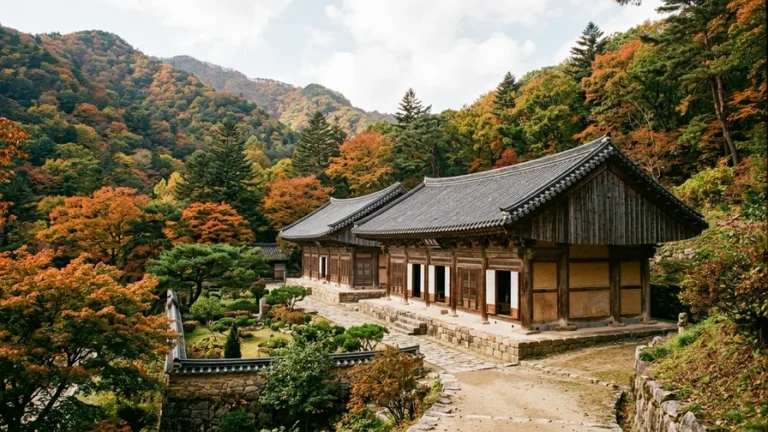
A temple stay is a program where you stay at a Korean Buddhist temple and experience the daily rhythms of temple life and the lifestyle of practitioners. Run officially since 2002 by the Cultural Corps of Korean Buddhism under the Jogye Order of Korean Buddhism, it goes far beyond simple lodging—it has steadily drawn the attention of travelers worldwide as a way to experience Korea’s spiritual culture.
Quick Summary
- Booking: A single channel through the official site templestay.com (Korean and English supported)
- Types: Day-trip, Experiential, and Relaxation types + Group type (offerings vary by temple)
- Cost: For one night and two days, Relaxation type runs about KRW 50,000–80,000, Experiential type about KRW 70,000–100,000 (as of June 2026, per person)
- Scale: Around 120 temples officially run programs nationwide (as of 2026)
- Foreign languages: Some temples run programs in English and other languages (e.g., Woljeongsa, Bongeunsa)
1. Types of Korean Temple Stay and Costs
A Korean temple stay is broadly divided into three types—Day-trip, Experiential, and Relaxation—depending on your purpose and schedule (there is also a Group type reserved for groups). Since the cost and program structure differ, choosing the type that matches your travel style is the first step. All the costs below are per person and as of June 2026, and they vary from temple to temple.
Experiential Temple Stay
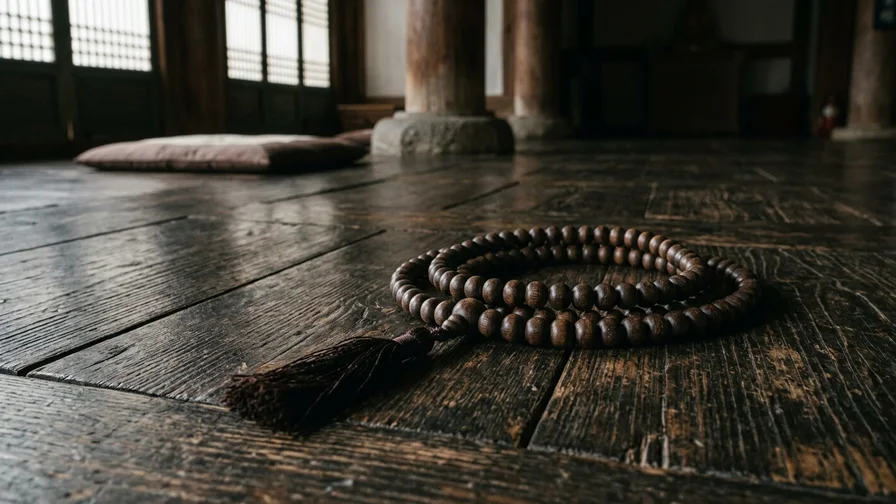
In addition to the temple’s basic daily routine (ceremonial services and meals), this type lets you experience Buddhist cultural programs—108 prostrations, prayer bead making, tea talks with a monk, Seon meditation, and more—along a set schedule. It usually runs over a weekend (check-in Saturday, check-out Sunday) as one night and two days. Since you move according to a fixed schedule, it suits travelers who want an active experience.
- Schedule: Mostly weekends (one night, two days)
- Features: A well-structured program with a variety of Buddhist cultural experiences
- Cost: About KRW 70,000–100,000 per night, up to KRW 120,000 at some temples (as of June 2026)
Relaxation Temple Stay
Apart from the required ceremonial services and meal times, you spend most of your time freely. You can stroll through the temple grounds or read a book in quiet rest. It mainly runs on weekdays and is recommended for travelers who need time alone, away from a hectic daily life.
- Schedule: Mostly weekdays (one or more nights possible)
- Features: Plenty of free time, focused on personal rest and reflection
- Cost: About KRW 50,000–80,000 per night (as of June 2026)
Day-Trip Temple Stay
A program for travelers who find an overnight stay too much, letting you experience temple culture over a few hours. It’s made up of a temple tour, a lunch meal, a tea ceremony experience, and the like.
- Schedule: 2–3 hours
- Features: Core cultural experiences in a short time
- Cost: Varies by temple and program—check the official site for each program. During promotional periods, there have been cases of KRW 15,000 for foreign visitors
Special Discount Event: Double Happiness Temple Stay
In partnership with the Ministry of Culture, Sports and Tourism’s “Travel Month” campaign, the Cultural Corps of Korean Buddhism holds the “Double Happiness Temple Stay” every spring and fall (typically around May and November). For the spring 2026 event, throughout the month of May, both Korean and foreign participants could take part in a one-night, two-day temple stay for KRW 30,000 per person, and foreign visitors could join the day-trip type for KRW 15,000. All roughly 120 participating temples nationwide took part, and with spots limited to about 10,000 on a first-come, first-served basis, they filled up quickly on the booking open date (10:00 a.m. on April 7 for the spring 2026 event). The November 2026 event is open to Korean residents only and runs one-night, two-day programs only, so foreign visitors are not eligible for it (verified October 2026). Foreign visitors should look for the separate “Special Templestay for Foreigners”: in 2026 it ran for all of September for foreigners only at KRW 30,000 for a one-night, two-day stay, with applications through Reservation > Event Templestay on the English templestay.com site. Check the official website notices in advance for the next event’s eligibility and schedule.
2. How to Book a Korean Temple Stay
Booking online through the official website is the most accurate and convenient. Booking by phone can be difficult due to the language barrier.
- Visit the official website: Go to the official temple stay booking site, templestay.com. It supports Korean and English, and you can go straight to the English page at templestay.com/en.
- Search for a temple: Search by your preferred region, program type (Experiential, Relaxation), or temple name. Around 120 temples officially run programs nationwide (as of 2026).
- Select dates and number of people: Check available dates on the calendar, then choose the number of participants.
- Enter your details and pay: Enter your name, nationality, and email, then pay by credit card. Once you receive the booking confirmation email, you’re done.
Tips on finding temples that run in English and the details of the booking process for foreign visitors are covered separately in A Foreigner's Templestay in English, No Korean Needed.
When to Book
For popular temples or weekend programs, booking at least a month in advance is recommended. Spots fill up especially fast during the spring and fall peak seasons. As soon as your travel plans are set, book right away.
Refund Policy — It Varies by Temple
Refund rules are not standardized and differ by temple. For example, Tongdosa refunds 100% at 5 days before, 70% at 3–4 days before, and 50% at 2 days before, with no refund for cancellations 1 day before or same-day (verified 2026-10-20). Some temples are even stricter, so before paying, be sure to check the relevant temple’s cancellation policy at the bottom of the booking page, and pay only once your schedule is confirmed.
3. Standard One-Night, Two-Day Itinerary
Most temples follow a similar daily routine, though it varies slightly by temple and program. Below is the most common Experiential one-night, two-day itinerary. The actual flow of a day—including the dawn ceremonial service and Baru Gongyang formal monastic meal—is covered in detail, hour by hour, in A Templestay Day, From Pre-Dawn Service to Baru Gongyang.
| Section | Time | Activity | Description |
|---|---|---|---|
| Day 1 | 15:00 | Check-in and room assignment | Register on arrival and get a tour of your lodging |
| 17:30 – 18:10 | Evening meal | A vegetarian meal provided by the temple | |
| 18:20 – 19:00 | Evening ceremonial service | A rite where everyone gathers in the main hall to pay respects to the Buddha | |
| 19:30 – 21:00 | Experiential program | 108 prostrations, meditation, tea talk with a monk, and other programs that vary by temple | |
| 22:00 | Lights out | All activities end and the lights go out | |
| Day 2 | 04:00 | Wake-up | The day begins with the sound of the moktak (wooden gong) that opens the temple grounds |
| 04:30 – 05:40 | Dawn ceremonial service | A service held in the most solemn atmosphere of all | |
| 06:00 – 08:00 | Breakfast, communal work | After the meal, take part in communal labor (ullyeok) cleaning the temple grounds | |
| 11:00 | Check-out | The program ends; pack up and check out |
4. Core Programs and Temple Etiquette
The heart of a temple stay is following, however briefly, the life of a Buddhist practitioner. Here’s a rundown of the main programs, etiquette, and what to bring, all worth knowing before you go.
Main Programs
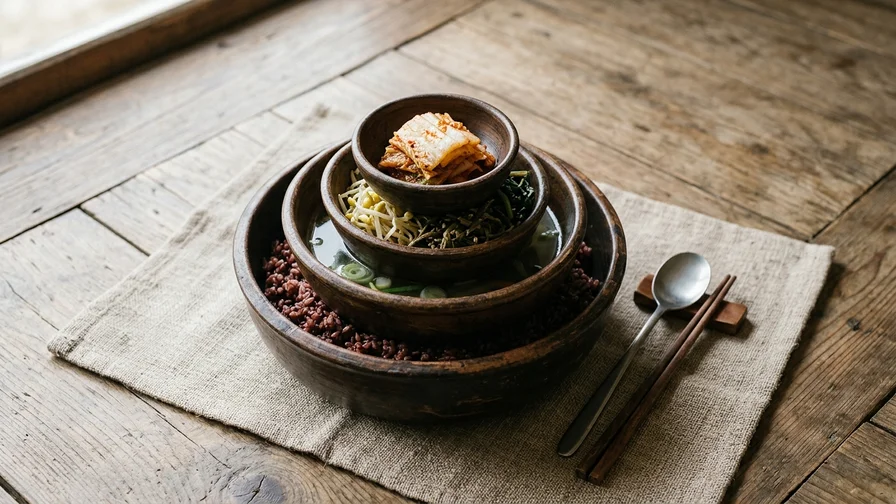
- Baru Gongyang (formal monastic meal): A traditional way of eating using baru, a set of four wooden bowls. Each bowl is designated for rice, soup, side dishes, and clear water. The principle is to leave no food behind, and after the meal you clean the bowls with the water from the last bowl and a piece of kimchi, then drink even that water. It’s a process for learning the preciousness of nature and food.
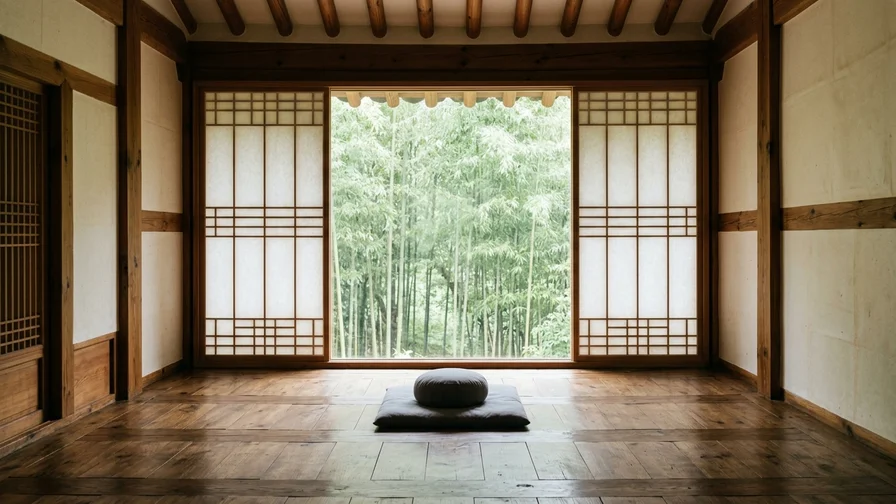
- Seon Meditation: A practice of sitting in a set posture, steadying your breath, and observing your inner self. It usually alternates between seated meditation (jwaseon) and slow walking meditation (haengseon) (e.g., 50 minutes of sitting + 10 minutes of walking).
- 108 Prostrations: A practice of bowing 108 times, signifying the letting go of 108 worldly afflictions. It can be physically demanding, but as you bow you empty your stray thoughts and focus on yourself.
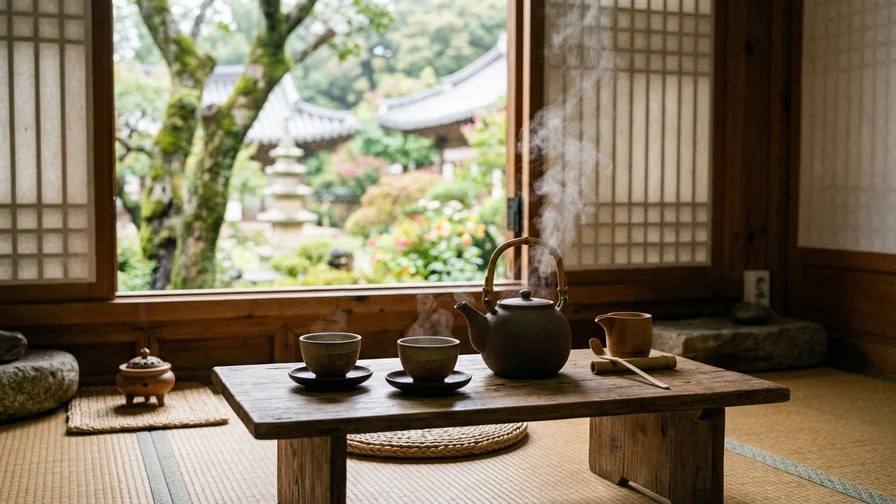
- Tea Talk with a Monk (Chadam): A time to drink tea and converse with a monk. You can freely ask anything you’re curious about regarding Buddhism or life. What you might ask and the kinds of conversations that take place are covered in detail in Tea Talk with a Monk and Meditation.
- Ullyeok (communal work): Communal labor where temple members sweep the yard or weed the fields together. The meaning of working together is valued over the work itself.
Basic Temple Etiquette
- Clothing: Modest clothes that are easy to move in. Long pants and a top that covers the arms are standard; avoid revealing clothing.
- Hapjang (palms together): When you meet a monk or enter the main hall, press your palms together and bow at the waist in greeting.
- Silence: Keep silence during meal times and designated practice times.
- Entering the main hall: The central door of the main hall, called the eogan gate, is used only by senior monks. General participants use the side doors on either end.
What to Bring
- Training clothes: Provided by most temples. You’ll receive them at check-in and wear them throughout the program.
- Personal items: Many temples don’t provide toiletries or towels, so it’s safest to bring your own. Socks are essential, since wearing socks rather than going barefoot is proper etiquette in the main hall.
- Seasonal preparation: Mountain temples are cooler than the city. In winter, bring thermal underwear; even in summer, a light outer layer is recommended.
- Check: The list of items to bring comes separately in each temple’s guide (the booking confirmation email), so check it before check-in.
5. Five Recommended Temples for Foreign Visitors
Among the temples running programs nationwide, here are five distinctive ones with high satisfaction among foreign participants. Of these, the architecture and history of three mountain temples—Tongdosa, Haeinsa, and Songgwangsa—are covered in depth in A Night in the Old Temples of Tongdosa, Haeinsa and Songgwangsa.
1. Haeinsa Temple
Haeinsa is the Dharma-treasure temple that houses the Tripitaka Koreana, a UNESCO Memory of the World; the Janggyeong Panjeon depositories that store the Tripitaka are themselves a UNESCO World Heritage Site. Located within Gayasan National Park in Hapcheon, South Gyeongsang Province, it runs a practice-centered program. It suits those who want to experience serious practice and the documentary culture of Korean Buddhism.
- Features: The Tripitaka Koreana, a deep-mountain practice setting, with both Relaxation (weekdays) and Experiential types
- Address: 122 Haeinsa-gil, Gaya-myeon, Hapcheon-gun, South Gyeongsang Province
- Getting there (as of June 2026): There’s no direct bus from Seoul. Take the KTX from Seoul Station to Dongdaegu Station (about 1 hour 40 minutes) → transfer to Daegu Subway Line 1 to Seobu Jeongnyujang Station → board an intercity bus to Haeinsa at the directly connected Daegu Seobu Bus Terminal. Intercity buses run 14 times a day (first bus 06:40, last bus 20:00), take about 1 hour 20 minutes, and cost KRW 9,700 (verified October 2026).
2. Tongdosa Temple
Tongdosa is called the Buddha-treasure temple because it enshrines the Buddha’s true relics (sari). A distinctive feature is that its main hall has the Diamond Precept Platform (an altar) instead of a Buddha statue. It was inscribed on the UNESCO World Heritage List in 2018 as part of “Sansa, Buddhist Mountain Monasteries in Korea.” Set at the foot of Yeongchuksan Mountain in Yangsan, South Gyeongsang Province, the temple is large in scale with outstanding surrounding scenery.
- Features: The Buddha’s true relics, a main hall without a Buddha statue, a UNESCO World Heritage Site
- Address: 108 Tongdosa-ro, Habuk-myeon, Yangsan-si, South Gyeongsang Province
- Getting there (as of June 2026): From KTX Ulsan Station, take Bus 13 toward Tongdosa (Sinpyeong Terminal), about 30 minutes—check the schedule on Ulsan Bus Information at its.ulsan.kr. From Busan Central Bus Terminal, intercity buses to Tongdosa Sinpyeong Bus Terminal run 24 times a day (first bus 06:20, last bus 21:30), taking about 30–40 minutes and costing KRW 3,000 (verified October 2026).
3. Songgwangsa Temple
Songgwangsa is the Sangha-treasure temple that carries on the monastic lineage of Korean Buddhism, having produced many eminent monks throughout history. Located on Jogyesan Mountain in Suncheon, South Jeolla Province, its serene mountain-temple atmosphere is unmatched. It’s recommended for travelers who want to feel the history of Korean Buddhism in a calm setting. There is another temple of the same name, Songgwangsa, in Wanju, North Jeolla Province, so be sure to confirm it’s “Suncheon Songgwangsa” when booking.
- Features: The Sangha-treasure temple, long history and tradition, a Seon-meditation-centered program
- Address: 100 Songgwangsaan-gil, Songgwang-myeon, Suncheon-si, South Jeolla Province
- Getting there (as of June 2026): From the stop at Suncheon Station or Suncheon Intercity Bus Terminal, take city bus 111 and get off at the last stop, Songgwangsa. It takes about 1 hour 10 minutes. Buses run about every 55–70 minutes on weekdays (around 17 runs a day) and every 55–100 minutes on weekends (around 13 runs a day), and the last bus from Songgwangsa leaves at 20:20, so check the timetable and allow extra time (verified October 2026; timetables can change).
4. Bongeunsa Temple
Bongeunsa is a 1,200-year-old urban temple (founded in 794) in the heart of Seoul’s Gangnam, right across from COEX. Its biggest draw is that you can experience a temple stay by carving out a little time even amid a busy travel itinerary. It runs a separate temple stay program for foreign visitors.
- Features: An urban temple, excellent accessibility, programs tailored for foreign visitors
- Address: 531 Bongeunsa-ro, Gangnam-gu, Seoul
- Getting there: About 100 m from Exit 1 of Bongeunsa Station on Seoul Subway Line 9, a 2-minute walk.
5. Woljeongsa Temple
Woljeongsa is located within Odaesan National Park in Pyeongchang, Gangwon Province, and is famous for the dense fir-tree forest path leading from the Iljumun gate to the temple. The octagonal nine-story stone pagoda on the grounds is a National Treasure. It runs special foreign-language temple stays in English, Chinese, and Japanese, so you can take part without any language worries (foreign-language inquiries: 033-339-6607).
- Features: The fir-tree forest path, programs run in foreign languages (English, Chinese, Japanese)
- Address: 374-8 Odaesan-ro, Jinbu-myeon, Pyeongchang-gun, Gangwon State
- Getting there (as of June 2026): From KTX Jinbu (Odaesan) Station, a taxi is the simplest option and takes about 15 minutes. The bus (No. 225, 226, or 227) leaves from the Jinbu Intercity Bus Terminal stop; get off at the Woljeongsa stop. Since buses run infrequently, check the timetable before you arrive (Jinbu Intercity Bus Terminal 033-335-6307, or the tourist information line 1330) (verified October 2026).
Transportation to Regional Temples
At rural mountain temples, buses run far apart and the last bus is early, so checking the timetable in advance is essential. For taxi-hailing apps, Kakao T supports registration of overseas-issued cards and has a global version (k.ride), so foreign visitors can use it, and the Uber app also works in Korea. That said, in mountainous areas there are very few empty taxis around, so hail one ahead of time to match your check-out. If you need help, you can get transportation guidance from the tourist information line for foreign visitors, 1330 (24 hours, multilingual). If you’re renting a car, you’ll need an International Driving Permit (IDP).
6. Temple Cuisine: Vegan-Friendly Meals
Temple food is itself a part of practice. Every meal is served vegetarian, making it an excellent choice for vegan travelers.
The most notable feature is the absence of the five pungent vegetables (osinchae). The osinchae are five stimulating vegetables—green onion, garlic, chives, wild chives, and asafoetida (a plant similar to onion)—which are forbidden as they’re believed to hinder practice. Instead of artificial seasonings, flavor comes from natural ingredients like mushrooms, kelp, and perilla seeds. The Baru Gongyang procedure and the principles behind an osinchae-free diet are covered in detail in Temple Cuisine and Baru Gongyang.
If you want to experience temple cuisine without doing a temple stay, go for Balwoo Gongyang 📍, the temple-food restaurant on the 5th floor of the Templestay Information Center across from Jogyesa Temple in Seoul, Balwoo Gongyang. Run directly by the Jogye Order of Korean Buddhism and featured in the Michelin Guide Seoul, it lets you taste the essence of temple cuisine through a course menu. All seating is in private rooms, so reservations are essential (02-733-2081, open 11:30–21:00).
| Course | Price (as of June 2026) | Notes |
|---|---|---|
| Seonsik (禪食) | KRW 36,000 | Weekday lunch only |
| Wonsik (願食) | KRW 50,000 | Standard course |
| Maeumsik (心食) | KRW 70,000 | Higher-tier course |
| Huisik (喜食) | KRW 120,000 | Reservation-only menu |
A temple stay is not a hotel or a resort. It’s a space for cultural experience where you live communally, following set rules and a daily routine. There may be some discomfort, but through that process you can come to understand Korea’s spiritual culture more deeply and have time to look back on yourself. Before your visit, check each temple’s latest program information and rules once more on the official site.