Tea and Quiet Talk with a Monk at a Korean Temple
Contents
A tea talk is usually not included in “rest-style” programs, so if you want one with a monk, book an “experience-style” program or a special program that explicitly lists dadam. Book at the official site templestay.com and check whether the tea talk is included on the program detail page.
Key Points at a Glance
- Dadam (tea talk): a free-flowing conversation with a monk over tea, open to everyone regardless of religion, usually 30 minutes to 1 hour
- The single most important choice: “rest-style” programs usually do NOT include a tea talk—if you want one, book an “experience-style” program or a special program that explicitly lists dadam
- Booking: the official site templestay.com (in English: eng.templestay.com); check whether the tea talk is included on the program detail page
- Leading temples that offer English: Bongeunsa (Seoul), Woljeongsa (Pyeongchang), Jingwansa (Seoul)
- Information accuracy: all fees, schedules, and programs in this article were verified against official sources as of June 2026
A Conversation With a Monk (Dadam): What It Is and How It Works
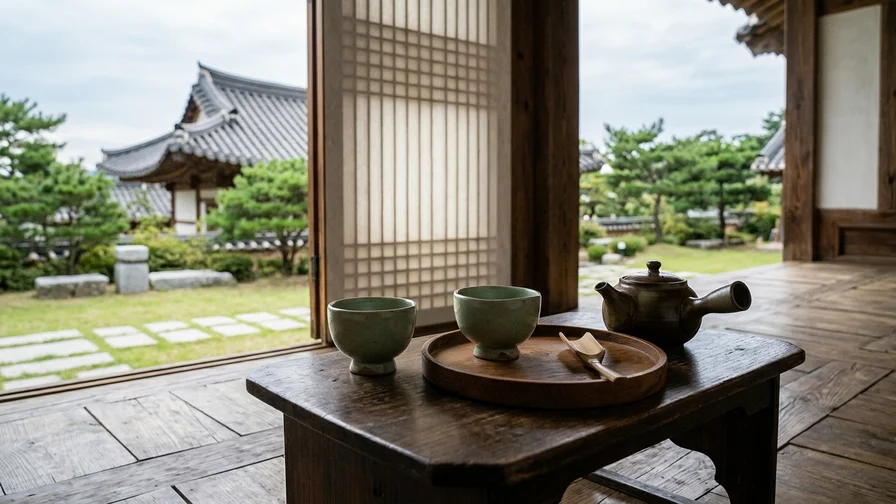
A tea talk with a monk—also called dadam—is a time during a temple stay when participants sit with a monk and talk over tea. It is not a setting where religious teachings are forced on you; the focus is on listening to and discussing the participants’ own questions and worries. It is often held in small groups, and at some temples it takes place one-on-one.
Definition and Purpose
The point of a dadam is to work through the questions or life concerns you’ve been carrying through a conversation with a monk. Anyone can join, regardless of faith, and the talk can cover a wide range of topics—Buddhist teachings, the temple’s history, meditation techniques, and more. Conversations usually last between 30 minutes and an hour.
Typical Time Slots
Dadam timing varies by temple. A common arrangement looks like this:
- Day 1 evening: during the free time after evening service (roughly between 19:30 and 21:00)
- Day 2 morning: after the morning meal (roughly between 09:00 and 10:30)—Woljeongsa’s experience-style program, for example, places the dadam on the morning of the second day
For the exact time, check the schedule on the official temple stay program detail page for the temple you plan to book. Note: in “rest-style” programs, all the time outside meals and services is free time, so a dadam usually isn’t included at all. If the tea talk is your goal, choose an experience-style or special program whose schedule explicitly lists “dadam” or “tea talk.”
Topics and Question Etiquette
You’re free to ask whatever you like. The most common topics include:
- personal life concerns (work, relationships, the future, and so on)
- questions about the basics of Buddhist teaching
- the history and culture of that particular temple
- how to meditate effectively
- how someone became a monk and what life at the temple is like
There are also topics best avoided. As a matter of courtesy, steer clear of political arguments, questions that ask the monk to judge other religions, and overly private questions about the monk’s personal background (family history before ordination, for instance). Asking what led someone to become a monk is a common, perfectly fine question—just ask in a way that doesn’t pressure them for an answer.
Meditation: Types and Methods
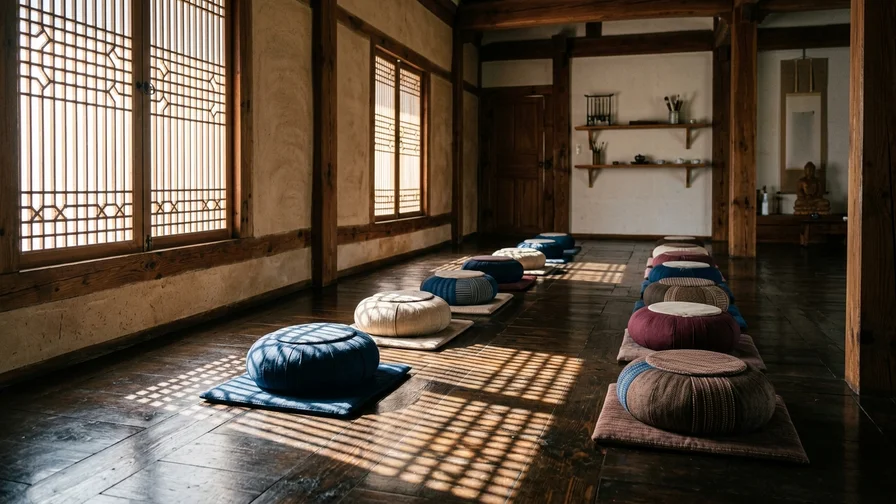
Meditation in a temple stay is training in observing the mind and staying present. There are several types, and most are guided by an instructing monk, so even beginners can follow along easily.
Jwaseon (Seated Meditation)
This is the most basic form. You sit on the floor in a full or half lotus posture and keep your back straight. With your eyes half-closed, you gaze toward the tip of your nose and focus on your breath—the inhale and the exhale. Depending on the temple, a session runs 30 to 50 minutes, and its start and end are signaled by the sound of a jukbi (a bamboo stick). If the posture gets uncomfortable, it’s fine to shift your legs to something more relaxed.
Haengseon (Walking Meditation)
This is meditation focused on the act of walking itself. It’s usually done during the break in the middle of seated meditation (about 10 minutes). You walk slowly within a set space, concentrating on matching your steps to your breath—breathing in on one step and out on the next.
108 Prostrations
This is a practice of bowing 108 times. Each prostration represents setting down one of life’s afflictions. It is not mere exercise; it’s a meditation in which you reflect on yourself while concentrating on each individual bowing movement. The whole process takes about 30 minutes.
Other Meditation Programs
- Tea Meditation: meditation focused on the sensations of every step of preparing, pouring, and drinking tea
- Mandala Coloring: an activity of coloring in intricate mandala patterns to focus and calm the mind
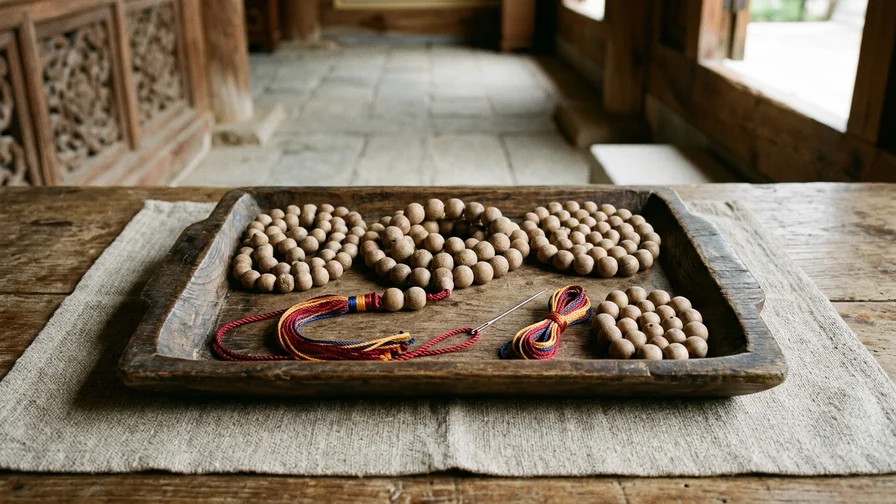
- Rosary Making: a meditation in which you string 108 beads to make a prayer bead chain, bowing or making a wish with each bead
How to Sign Up: A 3-Step Guide
To join a tea talk with a monk and the meditation programs, you’ll need to book in advance. Just follow these three steps.
- Step 1: Check the program
Go to the official temple stay booking site templestay.com (English version: eng.templestay.com). Select the temple you want, then check the schedule on the program detail page to see whether it lists an item such as “conversation with a monk,” “tea talk,” or “dadam.” Programs labeled “rest-style” usually leave the tea talk out—choose an “experience-style” program or a special program that explicitly lists the dadam. - Step 2: Book online
On the booking page, pick the date you want and complete your reservation. During the process it helps to write in the “requests” field something like, “we would like to take part in the tea talk with a monk.” Some temples run the dadam as a separate sign-up. And many temples—Woljeongsa among them—only accept bookings through their website and take no phone or walk-in reservations, so read the booking notice all the way through. - Step 3: Confirm on arrival
When you check in for the temple stay, double-check with the program coordinator that a dadam is scheduled. There may be a participant cap, so signing up in advance is the surest route.
Information for International Participants

Here’s some information for international travelers who hesitate over the language barrier. Of all the temples that run temple stays nationwide, around 30 offer English programs, and these are marked as “temples for foreigners” on the official booking site.
Major Temples That Can Run Programs in English
The temples below have plenty of experience with international participants and relatively smooth communication in English. That said, availability can change depending on the schedule of English-speaking monks, so always confirm directly with the temple before booking.
-
Bongeunsa Temple, Seoul
- Address: 531 Bongeunsa-ro, Gangnam-gu, Seoul
- Highlights: Located in the heart of Gangnam, so it’s the easiest to reach (right outside Exit 1 of Bongeunsa Station on Subway Line 9). It runs a regular monthly English temple stay and a day Temple Life program, both including dadam (tea meditation).
-
Woljeongsa Temple, Pyeongchang
- Address: 374-8 Odaesan-ro, Jinbu-myeon, Pyeongchang-gun, Gangwon State
- Highlights: A temple specializing in foreign visitors, set inside Odaesan National Park. Its English daily program lists “conversation with a monk over tea” among the activities. English inquiries: 033-339-6607, [email protected]
-
Jingwansa Temple, Seoul
- Address: 73 Jingwan-gil, Eunpyeong-gu, Seoul
- Highlights: Famous for its temple cuisine (it has its own temple food institute) and set in the quiet surroundings at the foot of Bukhansan. It frequently hosts both foreign groups and individuals and runs English-supported programs.
Two channels to use when calling is hard
If it’s difficult to contact a temple directly to check on English availability, you have two channels.
1. Templestay Information Center (02-2031-2000, 56 Ujeongguk-ro, Jongno-gu, Seoul, operated by the Cultural Corps of Korean Buddhism)—the official point of contact for temple stays in general and for questions about specific temple programs.
2. 1330 Travel Hotline (24 hours, in English, Japanese, Chinese, and more)—you can ask for interpretation help while you travel. Within Korea, just dial 1330, no area code needed.
Etiquette and Tips for the Programs
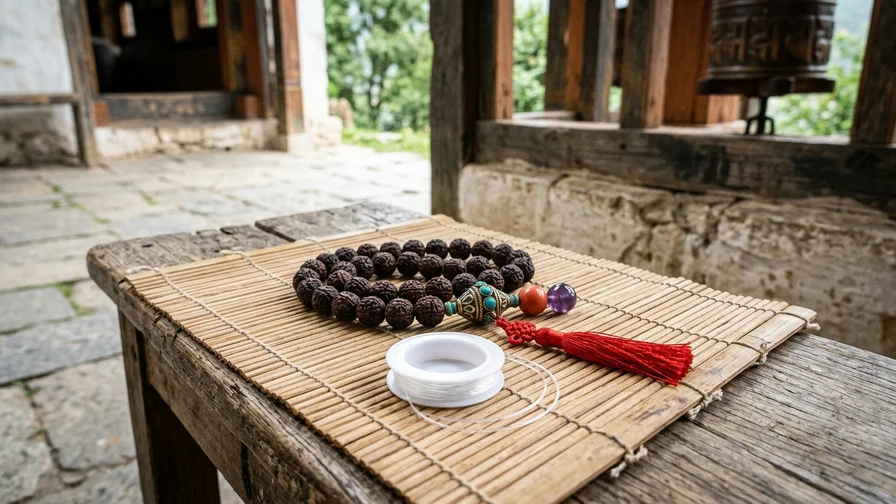
If it’s your first time joining a tea talk or meditation, knowing a few basics of etiquette will help you feel much more at ease.
Tea Talk Etiquette
- Posture: when sitting on the floor, sit cross-legged or kneel
- Receiving tea: when the monk pours your tea, receive the cup politely with both hands
- Greeting: at the start and end of the conversation, press your palms together (hapjang) and bow your head slightly
- Dress: wearing socks is standard in the Dharma hall and the tea talk space (Woljeongsa has an official rule barring entry to the Dharma hall without socks)
Tips for First-Time Meditators
- Start short: don’t try to sit through a long meditation from the very start—aim for 15 to 20 minutes of focus
- Breath over posture: rather than obsessing over a perfect lotus position, it matters more to keep your back straight, stay relaxed, and focus on your breath
- Let thoughts pass: stray thoughts arising during meditation is completely natural. Don’t try to force them away—just notice them and bring your attention back to the breath
A simple breathing technique to settle the mind
A breathing method you can try when your mind feels cluttered.
1. Breathe in slowly through your nose for 5 seconds.
2. Hold your breath briefly for 2 seconds.
3. Breathe out slowly through your mouth for 7 seconds.
Repeat this 3 to 5 times.
A Model Itinerary: A 2-Day, 1-Night Temple Stay at Woljeongsa
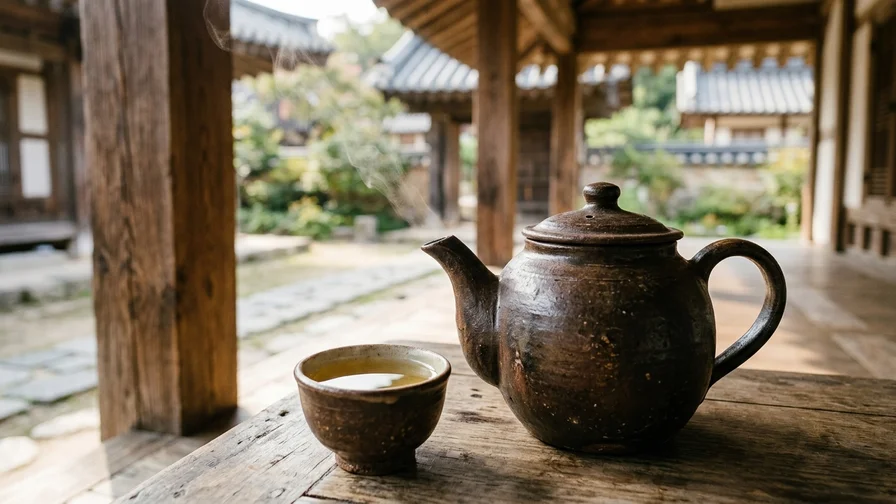
Here’s a concrete example for an actual visit. It’s built around Woljeongsa—which has plenty of experience running English programs—covering program choice, costs, and transport. All fees and schedules are as of June 2026.
Basic Information
- Temple: Woljeongsa Temple
- Address: 374-8 Odaesan-ro, Jinbu-myeon, Pyeongchang-gun, Gangwon State
- Phone: Temple stay office 0507-1484-6606 (09:00–17:00), English inquiries 033-339-6607
- Email: [email protected]
- Website: woljeongsa.org/templestay
- Admission: free entry to the grounds (the cultural heritage viewing fee was abolished in May 2023). Temple stay participants can show their check-in text message at the ticket booth for free parking as well
Choosing a Program — This Is the Fork in the Road If the Tea Talk Is Your Goal
As of June 2026, Woljeongsa runs two lines of regular programs. Because whether you get to join a dadam depends on which program you pick, this is the most important part.
- Rest-style “Rest in Moonlight”: 100,000 KRW per adult per night (based on 1–2 person rooms; 70,000 KRW for middle/high schoolers and elementary students). Apart from the temple orientation, meals, and services, all your time is free rest. The 108 prostrations and the tea talk with a monk are NOT included (as stated on the official booking page). Choose this when your goal is simply to rest quietly.
- Seon Meditation temple stay “Looking Within”: a 2-night, 3-day special program run by Woljeongsa (ages 20 and over, two people to a room by default, a single room costs 50,000 KRW more per night). Seon practice, meditation, and services are included, and the tea talk with a monk is part of the schedule. As of October 2026 it is not on the templestay.com booking list, so check the notices on the official Woljeongsa site (woljeongsa.org) for the schedule and fee (verified October 2026).
Booking Rules (Woljeongsa, as of June 2026)
- Bookings can only be made through the templestay.com website—no phone, walk-in, or same-day reservations
- After applying, you must pay within 24 hours to confirm (unpaid bookings are automatically cancelled)
- Check-in is recommended between 15:00 and 15:30, and you must arrive by 16:30 at the latest (no check-in or refund after that)
- Check-out is 11:30–12:00
- Minors and those aged 75 and over cannot participate alone (a guardian or companion is required); children under 5 cannot participate
- Refund policy: 100% up to 4 days before, 70% at 3 days before, 50% at 2 days before, and no refund the day before or on the day
Getting There (departing from Seoul, as of June 2026)
- By KTX (most recommended)
– Take the Gangneung Line KTX from Seoul Station or Cheongnyangni Station and get off at Jinbu (Odaesan) Station
– Service: about 12 times a day
– Fare: about 21,900 KRW in standard class from Seoul Station and about 20,300 KRW from Cheongnyangni Station (before the September 2026 KTX fare cut, so the current fare may be a little lower; check the exact amount for the Seoul or Cheongnyangni to Jinbu section at letskorail.com or in the KORAIL Talk app)
– Travel time: about 1 hour 15 minutes from Cheongnyangni, about 1 hour 40 minutes from Seoul Station
– From Jinbu (Odaesan) Station to Woljeongsa: about 15 minutes by taxi (around 20,000 KRW), or take a rural bus that stops at Jinbu Station - By intercity bus (Seoul → Jinbu)
– Departure: Dong Seoul Bus Terminal
– Arrival: Jinbu Bus Terminal
– Service: 8 times a day (first bus 06:40, last bus 20:20)
– Travel time: about 2 hours
– Fare: 18,700 KRW for premium (udeung) was the fare through September 2026. The intercity bus fare cap rose 9% on October 1, 2026, so it is likely a little over 20,000 KRW now; look up the confirmed fare at txbus.t-money.co.kr (verified October 2026) - By rural bus (Jinbu → Woljeongsa)
– Boarding point: Jinbu Bus Terminal
– Routes: No. 225, 226 (passing Woljeongsa, toward Sangwonsa; verified October 2026)
– Travel time: about 20 minutes
– Fare: 1,000 KRW (flat fare for Pyeongchang-gun rural buses, since September 2024)
– Frequency: about 10 times a day. Check the exact schedule on the Pyeongchang-gun bus information system (pyeongchang-pti.kr) - By taxi (Jinbu → Woljeongsa)
– About 15 minutes and roughly 20,000 KRW from Jinbu Bus Terminal or Jinbu (Odaesan) Station
– The Kakao T app supports overseas credit card registration and an English interface, so foreigners can use it too. That said, rural areas like Jinbu have few taxis that respond to calls, so the surest bet is to take one of the taxis waiting outside the terminal and the station
Official Schedule for the Rest-Style 2-Day, 1-Night Program
Below is the official schedule for Woljeongsa’s rest-style temple stay (verified October 2026, subject to change due to temple circumstances). All services are optional, and the rest of the time is free. If you want a schedule that includes a tea talk and meditation guidance, book the Seon Meditation program above.
| Time | Program | Details |
|---|---|---|
| Day 1 | ||
| 15:00 ~ 15:30 | Check-in and room assignment | Receive your practice clothes; you must arrive by 16:30 at the latest |
| 16:30 ~ 17:00 | Temple orientation | Tour of the grounds and explanation of temple etiquette |
| 17:00 ~ 17:30 | Evening meal | Temple-style dinner |
| 18:20 ~ 18:50 | Evening service | Optional |
| 21:00 ~ | Lights out and sleep | All other time is free rest |
| Day 2 | ||
| 04:20 ~ 04:50 | Dawn service | Optional |
| 06:30 ~ 07:00 | Morning meal | Temple-style breakfast |
| 07:00 ~ 11:00 | Free time (the 09:30 ~ 11:00 midmorning service is optional) | A walk along the fir tree forest path is recommended (see below); tidy your room |
| 11:00 ~ 11:30 | Lunch meal | Temple-style lunch |
| 11:30 ~ 12:00 | Check-out | Tidy your room and check out at your own pace |
The Fir Tree Forest Path
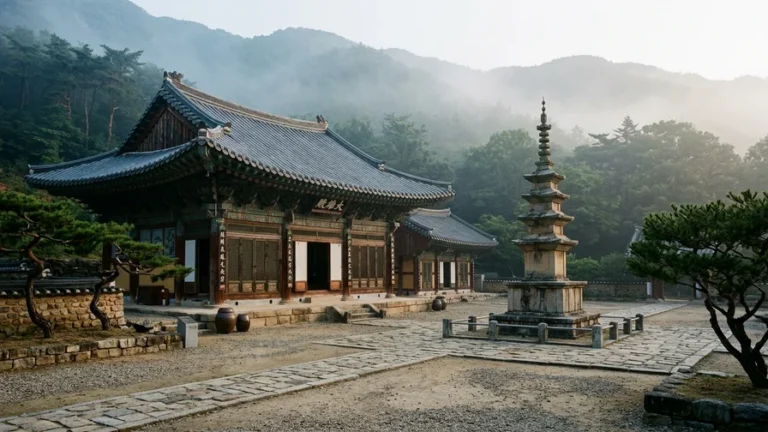
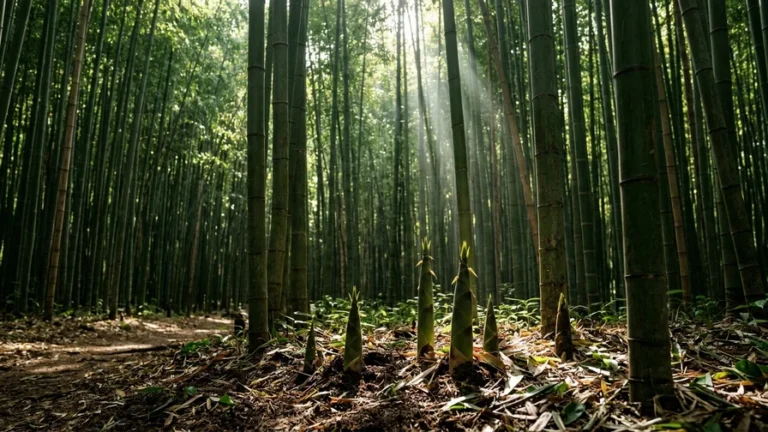
The Woljeongsa Fir Tree Forest Path is a stretch of towering firs running about 1 km from the Iljumun gate to the Geumgang Bridge. If you’re on the rest-style program, it’s perfect for the free time on the morning of the second day, and since it’s flat, sneakers are plenty. Don’t miss the National Treasure Octagonal Nine-Story Stone Pagoda on the grounds, either.
Nearby Restaurants
If you’d like a separate meal before or after the temple stay, you can use the restaurants around the entrance to Woljeongsa and in the Odaesan food village area. The mainstay is vegetable-centered Korean food such as sanchae bibimbap and sanchae jeongsik (set meals). Sanchae means wild mountain greens, and the Odaesan area is famous for them. The prices below are as of June 2026.
-
Sandeul Sanchae Sikdang 📍
- Address: 95 Odaesan-ro, Jinbu-myeon, Pyeongchang-gun, Gangwon State
- Signature dishes: sanchae jeongsik 25,000 KRW (a full table of wild-greens side dishes, with a name tag for each green at every seat—especially welcoming for foreign visitors), sanchae bibimbap 13,000 KRW
- Hours: 10:00–17:00 (last order 16:00)—note that it does not open for dinner
-
Odaesan Gamasot Sikdang 📍
- Address: 152 Odaesan-ro, Jinbu-myeon, Pyeongchang-gun, Gangwon State (Odaesan food village)
- Signature dishes: sanchae jeongsik (some 30 kinds of wild-greens side dishes), hwangtae gui set meal, sanchae dolsot bibimbap (mixed rice with wild greens served in a sizzling stone pot)
- Hours: roughly 08:00–20:00 (varies by season, so it’s best to check before you go); the food village’s shared parking lot is available
Temple stay programs can change without notice depending on the temple’s circumstances. Before you go, always check the latest information on the temple’s official website or the temple stay booking site. Before booking, check the program detail page schedule for a “dadam” item, and if there’s none, switch to an experience-style or Seon meditation program.