Korean Traditional Market Souvenirs to Pack — Ginseng, Hanbok & Hahoe Masks
Contents
Quick Summary
- Namdaemun Market 📍 is strong on wholesale prices for ginseng
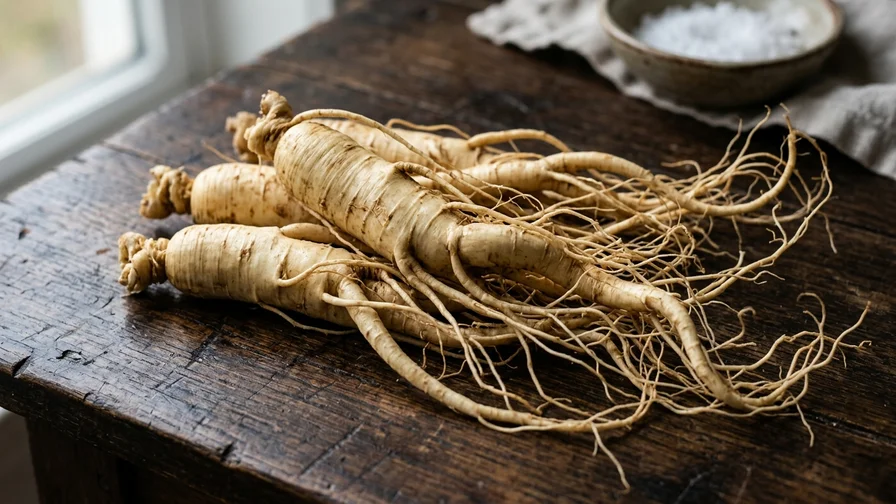 , red ginseng
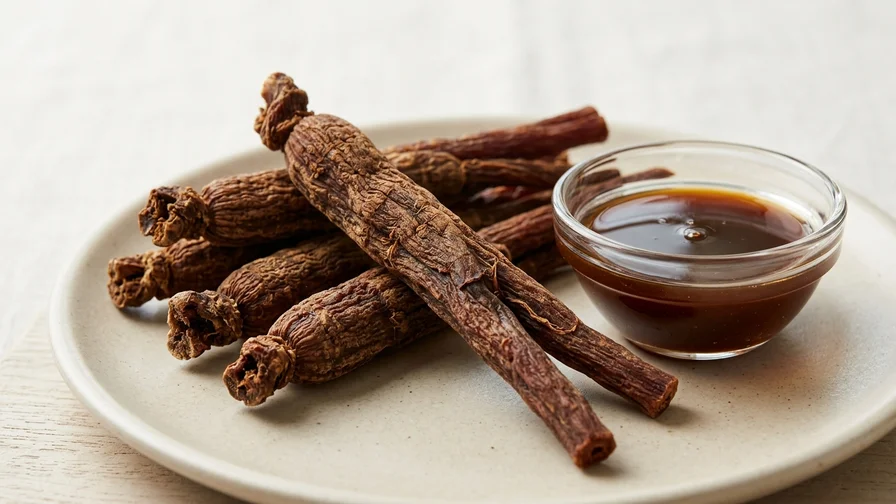 , seaweed, and accessories, while Gwangjang Market 📍 is your spot for hanbok
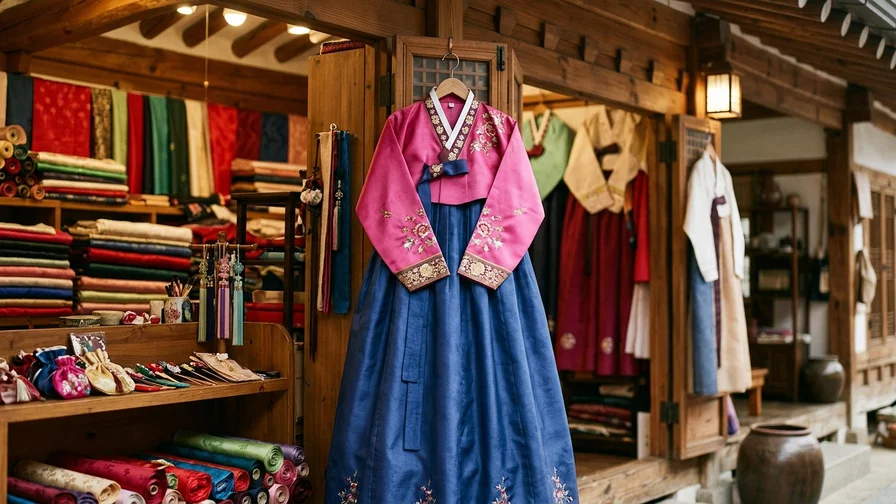 and vintage finds, and Tongin Market 📍 is known for its brass-coin lunchbox experience.
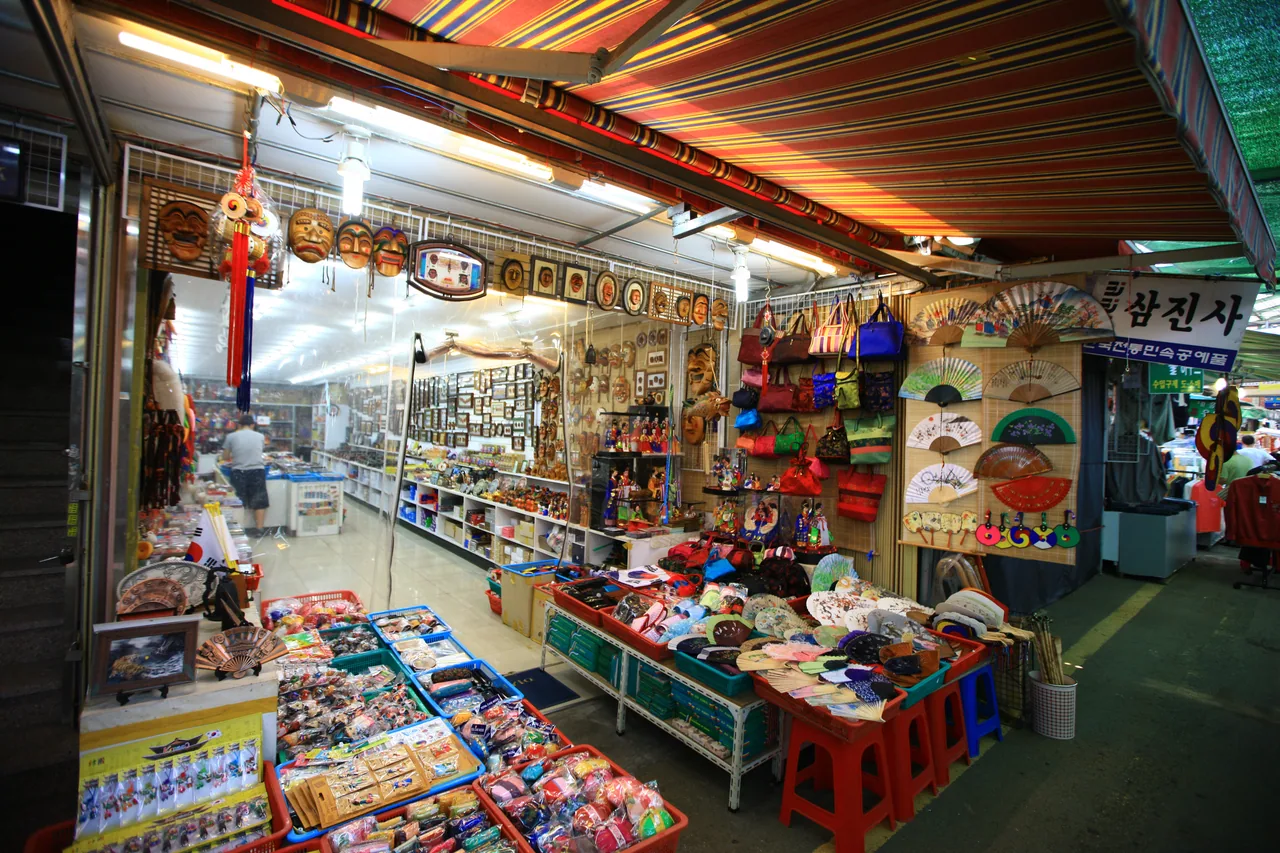
 - Regional specialties like Andong Hahoe masks
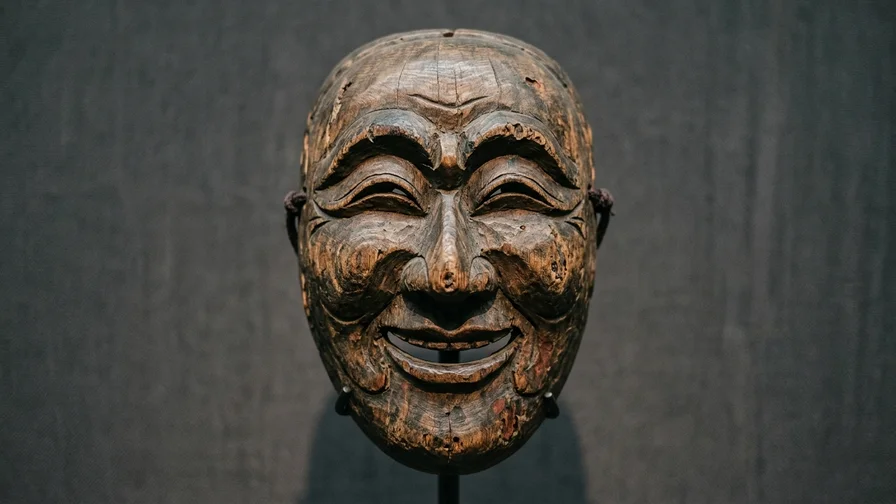 , Icheon ceramics
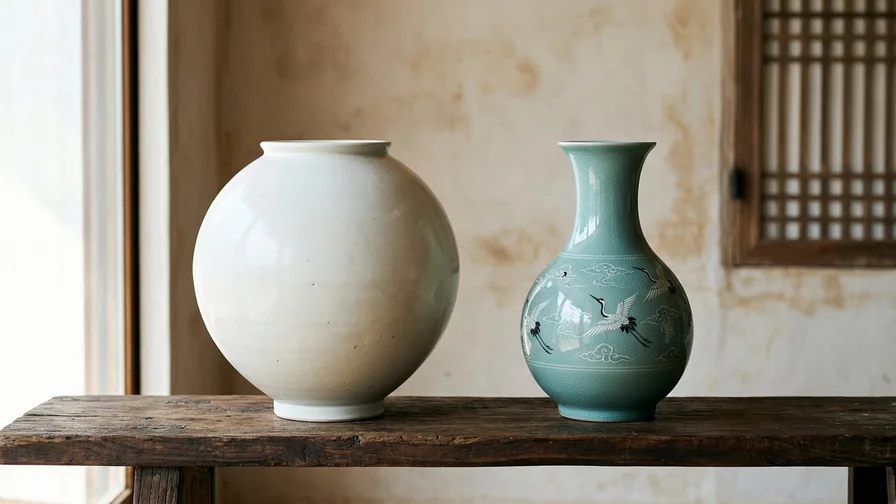 , and Ganghwa flower mats
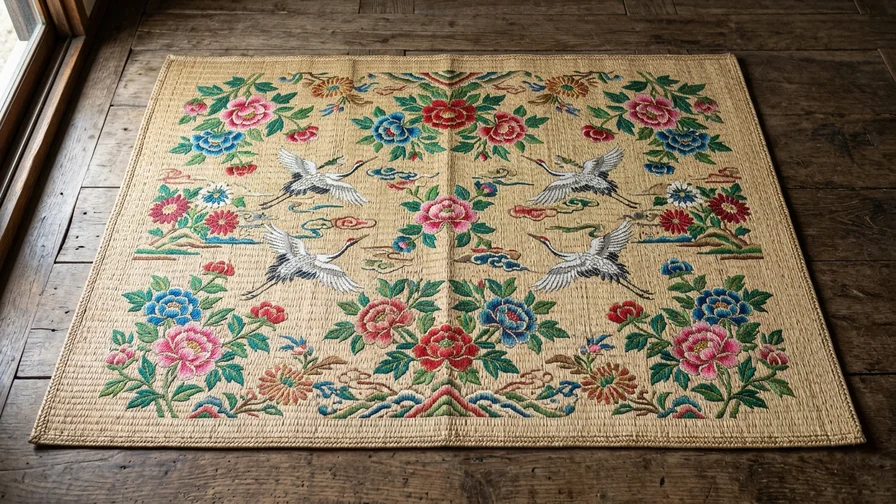 are best chosen in person at the markets, where you can find the real deal.
 - We cover bargaining, packing, tax refunds, and the carry-on and quarantine rules that trip up foreign travelers the most, all in order. Schedules and prices are current as of June 2026.
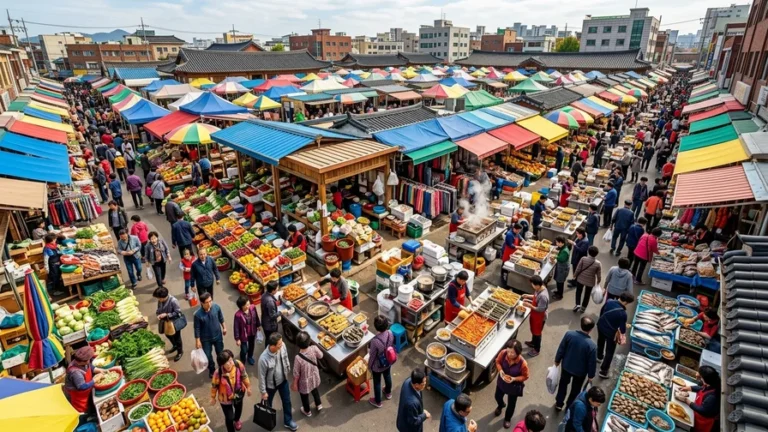
The most Korean gifts aren’t in duty-free or department stores; they’re in the traditional markets. Korean traditional market souvenirs come down to where, what, and how to buy, market by market, so here are the locations, opening hours, closing days, and how to keep your kimchi from getting confiscated at the airport.
If you want a broader market itinerary, see our tour of Korean traditional markets
Regional Specialties That Capture Local Flavors and Aromas
The specialties you can only find in traditional markets fill your suitcase with something meaningful. We’ve focused on items that are light, won’t spoil, and carry the scent of Korea.
Namdaemun Market: Home of Ginseng, Red Ginseng, and Seaweed
Namdaemun Market 📍 sits at 21 Namdaemunsijang 4-gil, Jung-gu, Seoul, just a 1–2 minute walk from Exit 5 of Hoehyeon Station on Subway Line 4. Retail shops generally open from around 9 a.m. to 5 p.m., and since many close on Sundays, a weekday or Saturday visit is best (as of June 2026; varies by shop).
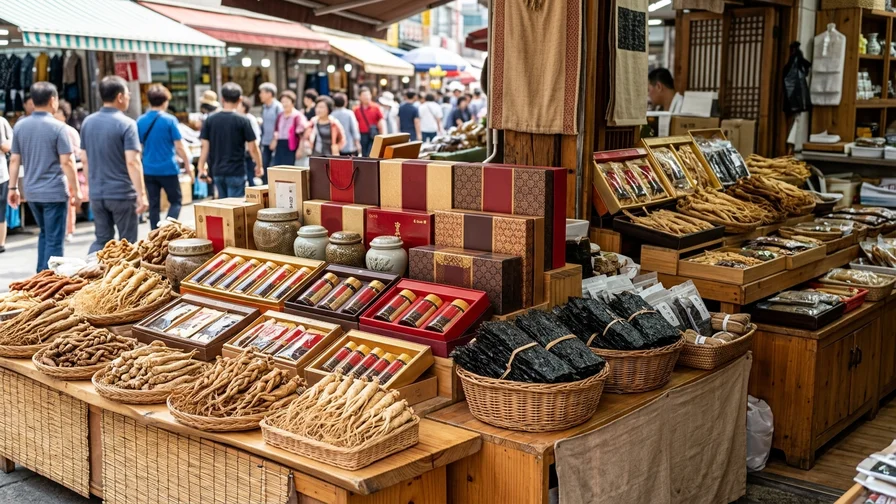
- Ginseng and red ginseng are Korea’s signature health foods for immunity and vitality, making them the top pick for gifts to parents. The Namdaemun Ginseng Market 📍 in the central walkway gathers some 20 ginseng specialty shops. Because they deal directly with growers and processors, prices tend to run 20–30% below retail, and you can compare processed goods like ginseng tea, powder, and candied ginseng all in one place.
- Seasoned seaweed is light and compact, so it fits perfectly in a suitcase. A vacuum-packed gift set spares you worries about both breakage and hygiene.
- Accessories and kitchen goods can be bought by the armful at wholesale prices, making them ideal group gifts to share among several people.
Geumsan Ginseng Market: A Market Built on Ginseng
Getting to Geumsan (from Seoul, as of June 2026): An express bus runs six times a day from Seoul Express Bus Terminal (Gyeongbu Line) to Geumsan Terminal (departing 06:30, 08:05, 11:30, 13:30, 15:05, 18:40). The trip takes about 2 hours 30 minutes, with premium seats at 20,400 won. Since the last bus is early, for later departures you can ride to Daejeon Complex Terminal and transfer to an intercity bus to Geumsan: the Daejeon–Geumsan route runs over 30 times a day, takes about 50 minutes, and costs 5,000 won. From Geumsan Terminal it’s about a 10-minute walk to the ginseng market. You can check schedules on the express bus booking site (kobus.co.kr).
If you want to buy ginseng done right, Geumsan Insam Market 📍 is the answer. Around Insamgwangjang-ro in Geumsan-eup, Geumsan-gun, Chungcheongnam-do, ginseng-specialty facilities like the Geumsan Fresh Ginseng Center and the Geumsan Ginseng Shopping Center cluster together, offering the freshness and prices you’d expect from a growing region. Hours vary by shop, but most open from morning to evening. The most lively time is during the annual autumn Geumsan World Ginseng Festival, held October 2–11 in 2026 (the 44th edition) and usually running about ten days from late September to early October, so check the dates for your year on the official festival site (insamfestival.co.kr) and book your lodging and buses ahead during that period (verified October 2026).
Before You Go
Always confirm whether ginseng is “fresh ginseng (raw)” or “red ginseng (steamed).” Fresh ginseng is a live plant subject to plant quarantine, and depending on the country, you may need a phytosanitary certificate or be barred from bringing it in at all. For gifts to take abroad, processed goods like red ginseng extract, ginseng tea, and candy are the practical choice. Before departure, check the rules at the Animal and Plant Quarantine Agency (qia.go.kr) and the customs site of your destination country.
A Quick Table of Regional Specialties
| Specialty | What it is |
|---|---|
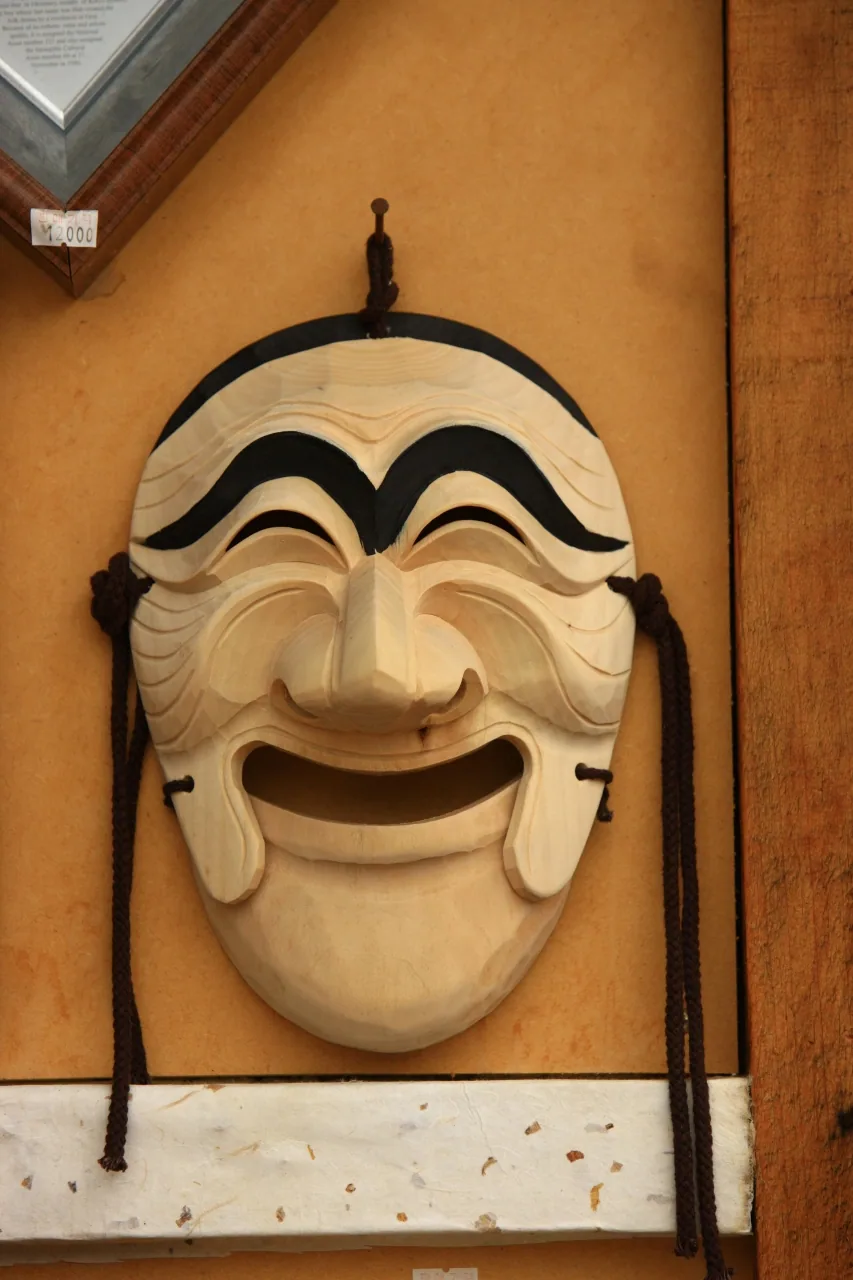
| Andong Hahoe mask |
Wooden mask used in traditional mask dances, popular as wall decor |
| Icheon ceramics |
Fine white and celadon porcelain; great as teacups or plates |
| Ganghwa flower mat |
Floral-patterned mat woven from sedge, a natural-material decor piece |
Hansan ramie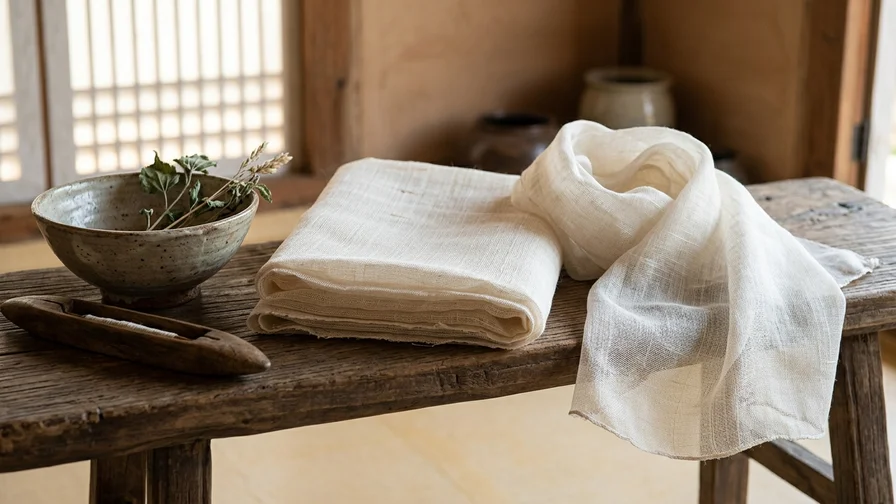 |
Fine summer fabric, made into scarves or handkerchiefs |
Jeonju hanji paper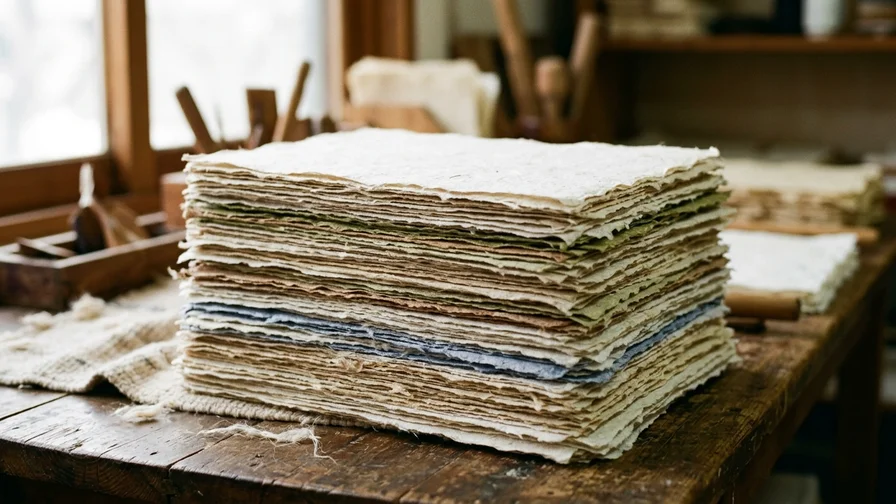 |
Natural mulberry paper for crafts and stationery |
Boseong green tea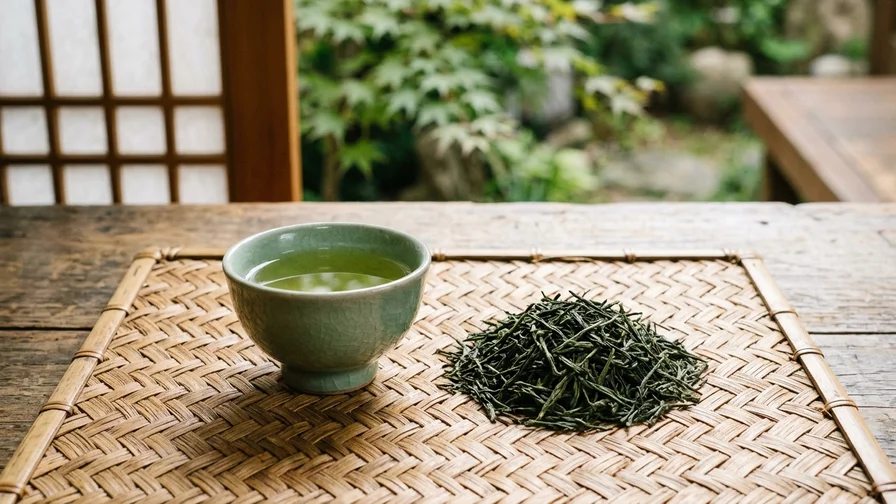 |
Tea from the vast green tea fields; a light, fragrant gift |
Prices shift with quality and season, so it’s wise to compare two or three shops before deciding.
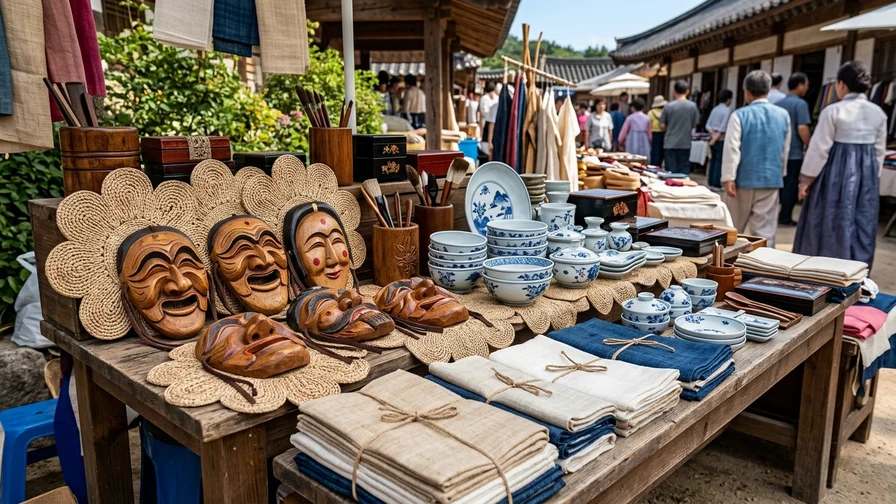
More Than Souvenirs: Handmade Goods Carrying the Soul of Korea
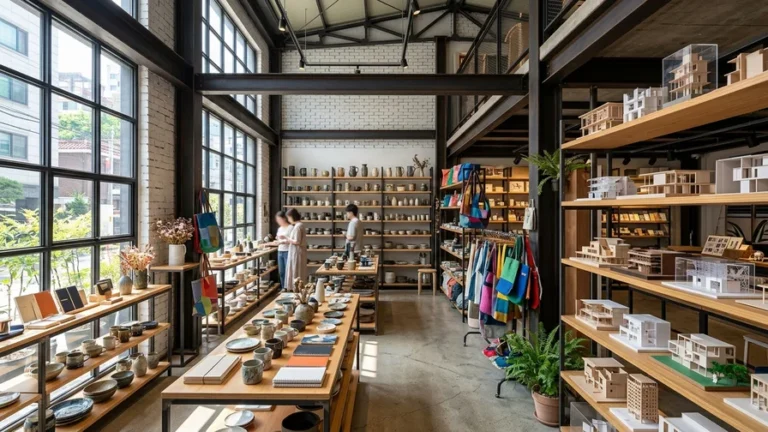
A handcrafted piece holds a maker’s touch and a story, and the recipient remembers it for a long time. This is the section where the fun lies in seeing and touching things before you choose.
Gwangjang Market: Where Hanbok Meets Vintage
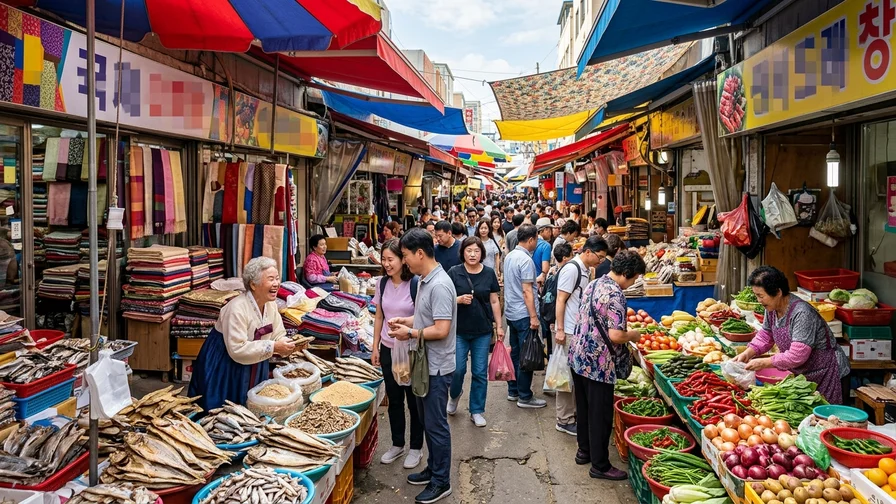
Gwangjang Market 📍 sits at 88 Changgyeonggung-ro, Jongno-gu, Seoul, right in front of Exit 8 of Jongno 5-ga Station on Subway Line 1. The food alleys stay busy late, but the hanbok and fabric stalls generally open from 9 a.m. to around 6 p.m., and many close on Sundays (as of June 2026).
- Hanbok and everyday-style hanbok can be seen from fabric to finished garment in one go along the market’s hanbok street. Start with long-standing, officially registered Gwangjang Market shops like Silla Hanbok 📍 or the wholesale hanbok specialist Dodam Hanbok 📍 to get a feel for the going rates. These days, everyday-style hanbok worn as casual wear is especially popular with foreign visitors.
- Vintage clothing is gathered in the imported-secondhand arcade on the second floor. Most shops open 10:00–19:00, and since Sunday hours are at each owner’s discretion, many close that day; the most shops are open around midday. There’s real fun in hunting for one-of-a-kind vintage clothes and accessories.
If you’re curious about the lively young-merchant culture of Gwangjang Market 📍, it’s worth reading the story of young merchants in Korean traditional markets too.
Tongin Market and Insadong: A Craft Stroll on a Single Brass Coin
Tongin Market 📍 sits at 18 Jahamun-ro 15-gil, Jongno-gu, Seoul, about an 8-minute walk from Exit 2 of Gyeongbokgung Station on Subway Line 3.
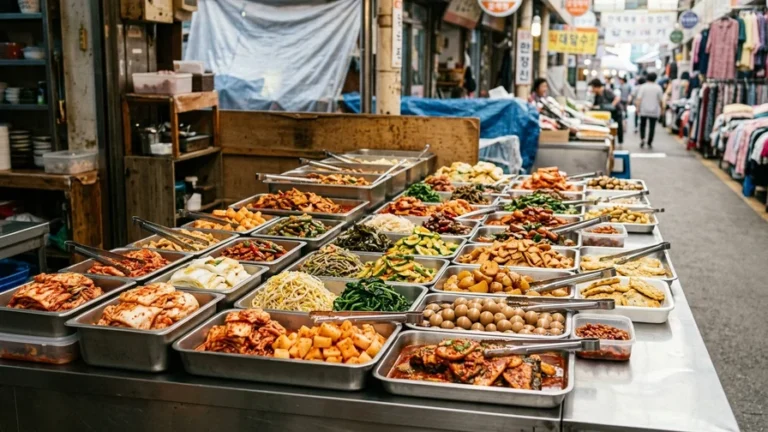
The market’s signature draw is the brass-coin lunchbox experience. On the second floor of the lunchbox café, you pay 10,000 won per person for 20 brass coins, then carry an empty lunchbox tray around the market, picking up side dishes like oil tteokbokki, sweet-and-spicy fried chicken, and grilled short-rib patties. It rolls market sightseeing and lunch into one. The lunchbox café runs Monday–Friday 11:00–16:00 and Saturday–Sunday 11:00–17:00, with coin sales ending at 15:00 on weekdays and 16:00 on weekends. It’s closed every Tuesday and the third Sunday of each month, so plan around those days (verified October 2026; leftover coins are refundable).
Dietary tip: Vegetarians and travelers with allergies should take care. Even dishes that look like vegetable side dishes often contain jeotgal (a fermented-seafood seasoning) or meat broth. The safest move is to ask before buying: “Does this contain meat or seafood?” (Gogi-na haesanmul-i deureo-ganayo?).
After your meal, head over to Insadong. From Tongin Market to Insadong Ssamzigil 📍 is about a 25-minute walk, or if you’d rather not walk, it’s one stop on Subway Line 3 from Gyeongbokgung Station (to Anguk Station). It’s packed with traditional crafts like hanji paper, brushes, ceramics, and mother-of-pearl items, perfect for picking out a handmade gift.
Packing fragile souvenirs
For fragile items like ceramics or mother-of-pearl, ask the shop to “Please wrap it well” (Pojang jal hae juseyo). Most will wrap it snugly in bubble wrap. Tucking it between clothes inside your suitcase keeps it even safer.
K-Culture Gifts for Foreign Friends: What to Choose?
For friends who’ve fallen for Korea through K-dramas and K-pop, a gift with culture behind it hits the mark. We’ve gathered items that aren’t heavy but say “I just got back from Korea.”
- Traditional-pattern items like hanji bookmarks, mother-of-pearl hand mirrors, and lucky pouches are light and pretty, so they’re easy to buy in multiples.
- Andong Hahoe mask miniatures can hang on a wall and make a great conversation piece as a symbol of Korean tradition.
- A green tea and traditional-tea set, with teas like Boseong green tea, yuja tea, or jujube tea, brings a bit of Korea into everyday life.
- A norigae to pair with an everyday hanbok is a hanbok accessory that’s small but ornate, perfect for attaching to a bag or phone.
A note on traditional teas: Unlike green tea, drinks like yuja tea, jujube tea, and ginger tea are mostly sweet beverages made by stirring honey- or sugar-cured fruit syrup into hot water. If you’re diabetic or watching your sugar intake, check whether an unsweetened option is available. Fruit syrup in glass bottles counts as a liquid, so it can’t go in carry-on and must be checked.
Busan’s Gukje Market: K-Souvenirs from a Paradise of Goods
If you stop in Busan, you can’t miss Gukje Market 📍. It’s in Jung-gu, Busan, a 5–10 minute walk from Exit 7 of Jagalchi Station on Subway Line 1 or from Nampo Station. It generally opens from 9 a.m. to around 7 p.m., and many shops close on the first and third Sundays (as of June 2026).
Souvenirs cluster along Arirang Street 📍, designated a theme street back in 2001. You can compare everything from traditional crafts like fans, bojagi wrapping cloths, and mother-of-pearl items to Hallyu (Korean Wave) celebrity merchandise along a single alley, and a plus is that with so many foreign visitors, there are plenty of multilingual signs and merchants who can communicate in foreign languages. After shopping, head to the adjacent Kkangtong Market to fill up on Busan street food and round off the route nicely. For market snacks, see traditional market snacks.
Smart Shopping Know-How for Korean Traditional Market Souvenirs
Souvenir price ranges (as of June 2026, for reference): Hahoe mask decorations and hanbok miniatures from around 10,000 won; seasoned seaweed gift sets 10,000–20,000 won; ginseng and herbal tea sets 10,000–30,000 won; ceramic tea bowls 30,000–100,000 won; and a 100g box of six-year-old red ginseng extract typically 50,000–150,000 won. Exact prices vary by shop and grade, so compare two or three places before buying.
To buy good items at reasonable prices, just keep a few steps in mind. Follow them in order and you can shop with ease, free of worries about being overcharged.
How to Bargain and Pay
- At fixed-price shops (places with price tags, like ginseng specialty stores), bargaining is impolite. For general goods or fabric, though, you can smile and ask, “Could you take a little off?”
- When buying several items at one shop, ask “Do I get a discount if I buy more?” to request a bundle deal.
- Small shops sometimes offer a slight discount for cash, and some street stalls don’t take cards, so carrying some cash makes things easier.
Handling Tax Refunds, Packing, and Shipping
- A tax refund (VAT refund) is only possible at affiliated stores displaying the ‘Tax Free’ logo, with a purchase of 15,000 won or more at a single store (the minimum was lowered from 30,000 won to 15,000 won starting in 2024). Honestly, though, most street stalls and small shops in traditional markets are not affiliated, so it’s accurate not to expect a refund on market shopping. Check the Tax Free sticker at a store’s entrance, and for purchases at affiliated stores, bring your receipt and passport to the airport refund counter or kiosk.
- For fragile ceramics and mother-of-pearl, ask for extra cushioning, and where possible, carry them on board for safety.
- For bulky items like flower mats or large ceramics, ask the shop about international shipping first, and if that’s not an option, use EMS at a nearby post office.
Carry-On and Quarantine: The Traps That Catch Foreigners Most
- Kimchi, gochujang, sesame oil, honey, and fruit syrup are all classified as liquids. Carry-on is limited to containers of 100ml or less, so in practice they must be checked. Over 10 tons of kimchi a year is confiscated during security screening at Incheon Airport alone. Ask for vacuum packing, wrap it in clothes, and place it in the middle of your suitcase.
- Processed meats like jerky, sausage, and ham are banned for travelers in most countries, including the US, Australia, and the EU. Getting caught means hefty fines, so for gifts to take abroad, it’s safest not to buy them at all.
- Fresh produce like raw ginseng and fresh fruit is subject to plant quarantine. Your destination country often requires a phytosanitary certificate or bans entry outright, so you’ll have peace of mind sticking to processed foods like red ginseng products, tea, and seaweed.
- If you’re unsure about the rules, check the Animal and Plant Quarantine Agency (qia.go.kr) and your destination country’s official customs site before departure.
Before You Go
For food items, check your destination country’s quarantine rules first. And a single “Thank you” (Kamsahamnida) goes a long way in easing the mood when bargaining, so be sure to use it.
When choosing Korean traditional market souvenirs, the most important thing is not to rush. Take a lap to gauge prices, then settle on a shop you like, and you’ll have no regrets. If you’re curious about deeper cultural-experience routes, it’s worth a look at our traditional market tour course.
Before you set out, double-check the closing days and opening hours of the market you’re headed to via official notices or a map app, and look up the subway lines in advance. If you want the full local routes for each market, continue with First Time at a Korean Traditional Market? 6 Local Routes in Seoul, Busan, and Jeonju.
Some photos © Korea Tourism Organization (KOGL Type 1)