Korean Traditional Market Tour by Subway — 5 Markets in One Day
목차
- The Appeal of a Korean Traditional Market Tour: More Than Just Shopping
- Recommended Korean Traditional Market Tour Routes by Theme: Your Own K-Travel Plan
- Tips to Get the Most Out of Your Market Tour: Walking the Market Like a Local
- K-Culture Experiences on Your Korean Traditional Market Tour: Hidden Gems in the Market
- Linking Up Nearby Attractions After Your Korean Traditional Market Tour: A Full K-Travel Day
Quick Summary
- A Korean traditional market tour is most rewarding when you start with the brass-coin lunchbox at Tongin Market 📍 and move on to the mung bean pancakes
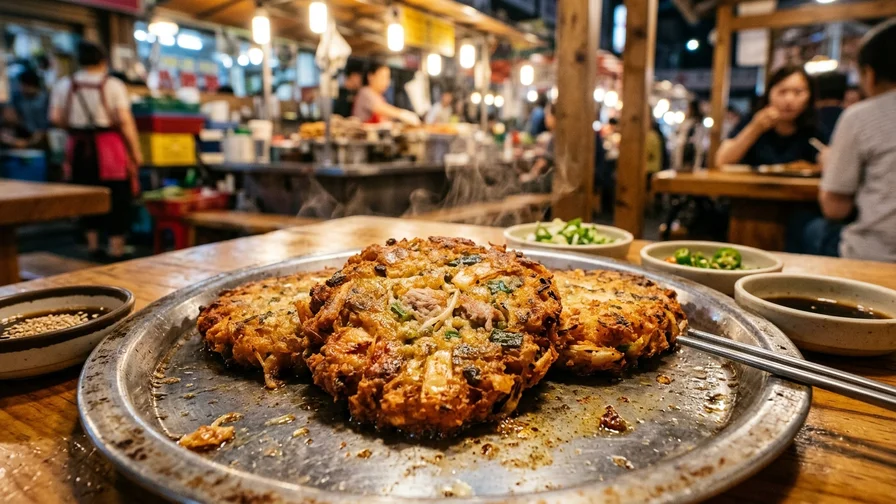 at Gwangjang Market 📍. This half-day route through Jongno is the perfect loop. The two markets are about 15 to 20 minutes apart, including a subway transfer.
 - Each market has its own closing days. Gwangjang Market’s general shops close on Sundays, the Seoul Folk Flea Market closes on the second and fourth Tuesday, and Busan’s Gukje Market closes on the first and third Sunday (as of June 2026). Lining up your dates before planning the route is the key step.
- In Busan, Gukje Market 📍 connects to Bupyeong Kkangtong Market 📍 in a 5-minute walk and to Jagalchi Market in under 10 minutes, so you can cover them all in a single loop.
Today we’re laying out an entire Korean traditional market tour route. We’ll tell you which market to eat what at, and exactly how to get to the next one, right down to the station and exit numbers, so you can follow this single post step by step. If you want a deeper look at the history and background of these markets, you can find comprehensive information about Korean traditional markets here.
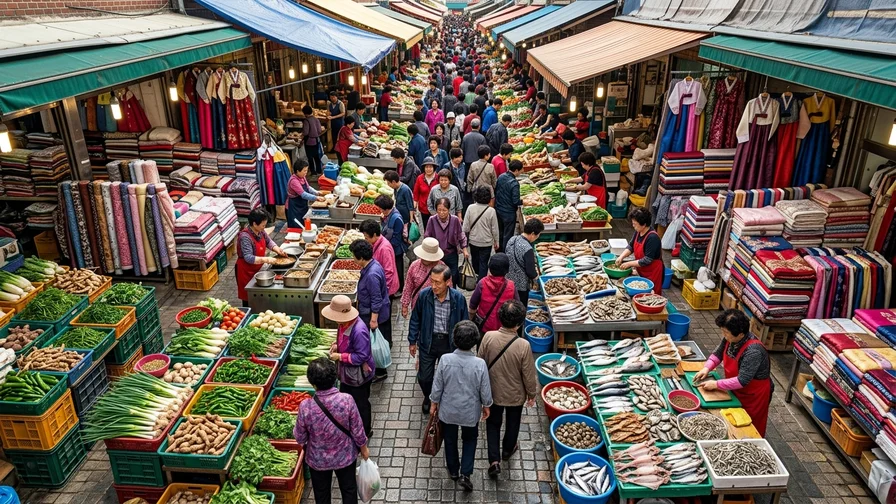
The Appeal of a Korean Traditional Market Tour: More Than Just Shopping
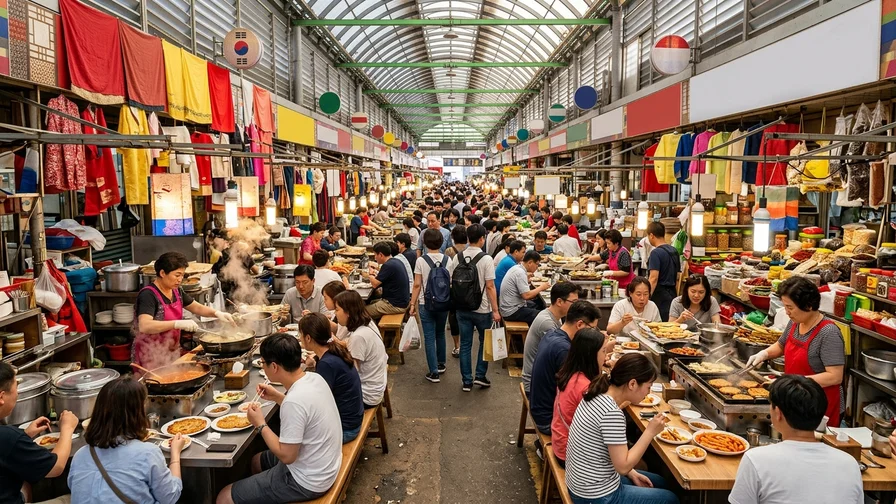
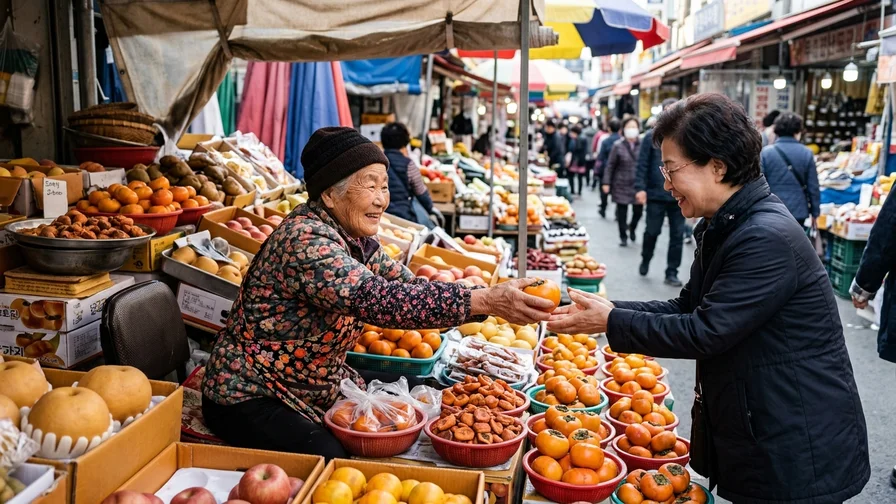
A traditional market isn’t simply a place to buy things. The way the vendors talk, the colors laid out on the stalls, the smells drifting through every alley: it’s all one piece of living culture. For travelers who want to see “the real Korea,” the market is the first place we’d recommend.
A Window into K-Lifestyle
The market stalls hold exactly what Koreans eat and use every day. Walk past the side-dish shops, the rice-cake stores, and the dried-seafood vendors, and the daily life you’ve only seen in dramas suddenly feels within reach. Ask a vendor just once, “How do you eat this?” and you’ll get an on-the-spot cooking lesson.
Local Culture for All Five Senses
The sizzle of oil-fried rice cakes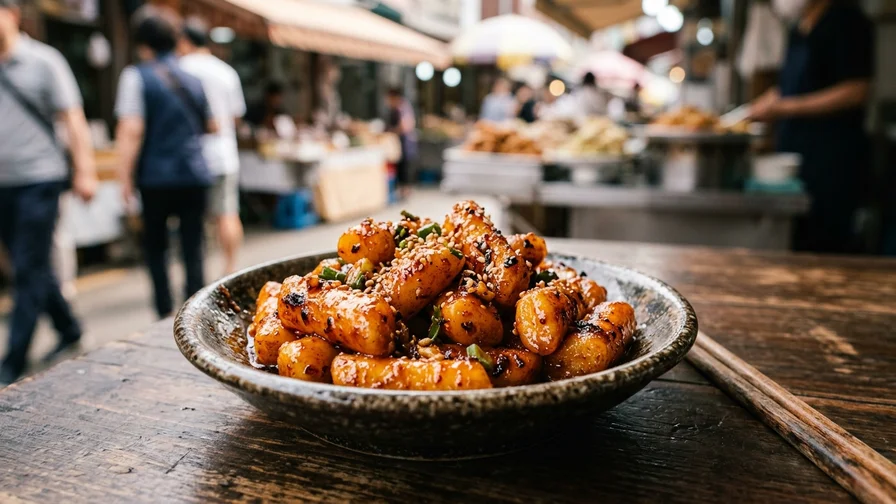 on the griddle, the savory smell of mung bean pancakes frying, the bright colors of hanbok
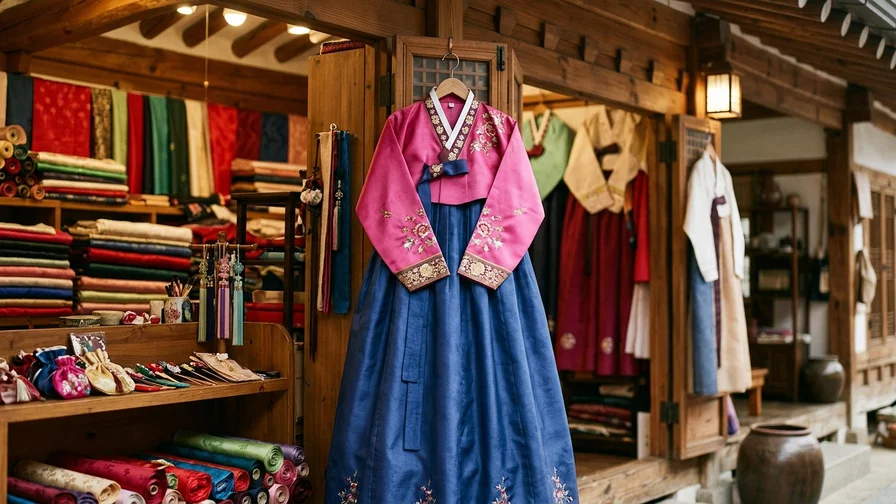 fabric: it’s a space that wakes up every sense. There are details tucked into every alley that are too good to just photograph and walk past.
Recommended Korean Traditional Market Tour Routes by Theme: Your Own K-Travel Plan
Grouping the routes by your interests makes the experience far more satisfying. We’ve organized the itineraries into three tracks: food, history, and art. If you’re curious about the special treats at each market, check out our list of must-try snacks at each market to plan your tour. And if you’re interested in the markets that open every five days rather than the permanent ones, the Korean five-day markets are worth a look too.
The Food Track: A Feast Worth Filling Up For
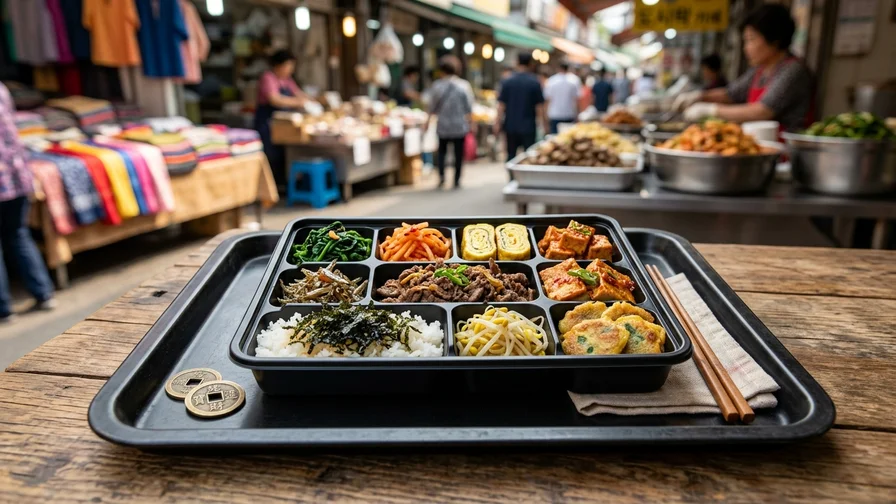
If you’re going to the market to eat, this is the route. Start in the morning at Tongin Market 📍 (Tongin Market, 18 Jahamun-ro 15-gil, Jongno-gu, Seoul). It’s about an 8-minute walk from Exit 2 of Gyeongbokgung Station on Subway Line 3. The signature experience here is the brass-coin lunchbox: at the lunchbox café inside the market, you swap your money for old coin-shaped tokens (yeopjeon, 500 won each, or 5,000 won for a strip of 10) and walk the stalls picking out side dishes. A single lunchbox usually takes about 10 to 20 coins, so 5,000 to 10,000 won is plenty (as of June 2026). The lunchbox café runs 11:00 to 16:00 on weekdays and 11:00 to 17:00 on weekends, with coin sales ending at 15:00 on weekdays and 16:00 on weekends.
A note on the Tongin Market lunchbox menu: The side dishes you pick with the coins often include items based on fish, shellfish, and egg, such as jeotgal (fermented seafood), fish fritters, jinmichae (seasoned dried squid), and egg fritters. If you follow a vegetarian, halal, or kosher diet, or have a seafood or egg allergy, confirm at the stall by asking “gogi/saengseon eopseoyo?” (“no meat or fish?”) and feel free to stick to kimchi pancakes, japchae, and seasoned vegetables.
The oil-fried tteokbokki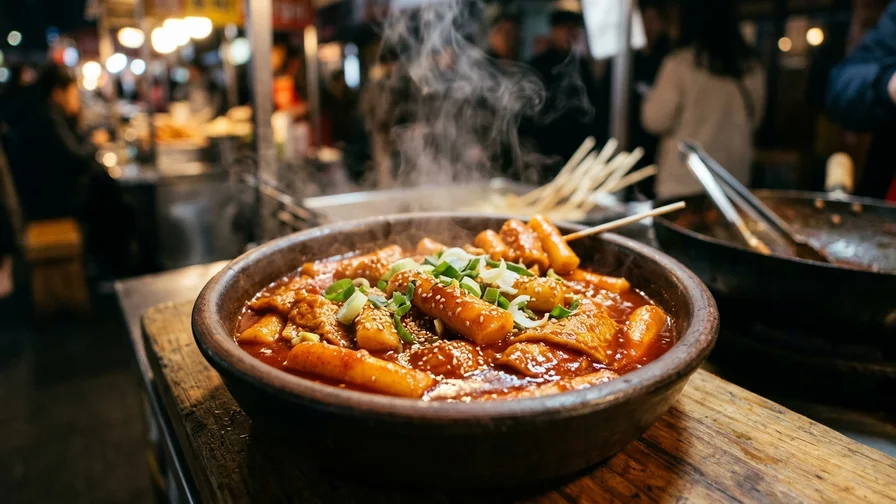 here is stir-fried on a griddle and has a savory taste quite different from the soupy kind, so be sure to try it. Inside the market, two spots are famous for their oil-fried rice cakes: Wonjo Jeong Halmeoni Gireum Tteokbokki 📍, running since 1956 and designated a Seoul Future Heritage site, and right next door, Hyojadong Yetnal Tteokbokki 📍. This is the old-school style with no broth, where rice cakes marinated in soy sauce and gochujang are stir-fried in oil.
Here’s how to get from Tongin Market to Gwangjang Market: from Gyeongbokgung Station, take Line 3 for two stops (Anguk, Jongno 3-ga), transfer to Line 1 at Jongno 3-ga Station, and ride one stop to Jongno 5-ga Station. It’s about 15 to 20 minutes including the transfer, or roughly 10 minutes by taxi. Gwangjang Market 📍 (Gwangjang Market, 88 Changgyeonggung-ro, Jongno-gu, Seoul) is a 2-minute walk from Exit 8 of Jongno 5-ga Station on Line 1 to reach the food alley. For lunch, mung bean pancakes are a must: the thick pancakes made from ground mung beans, the mayak gimbap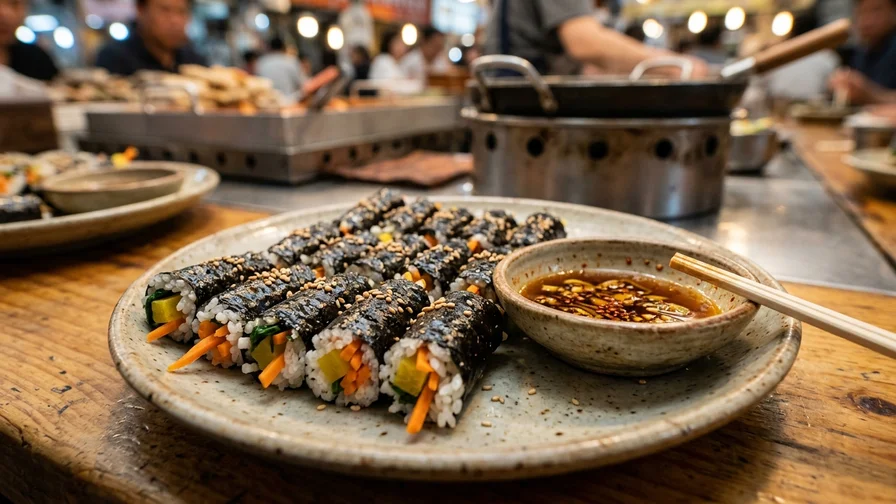 (tiny seaweed rice rolls brushed with sesame oil and cut), and fresh yukhoe
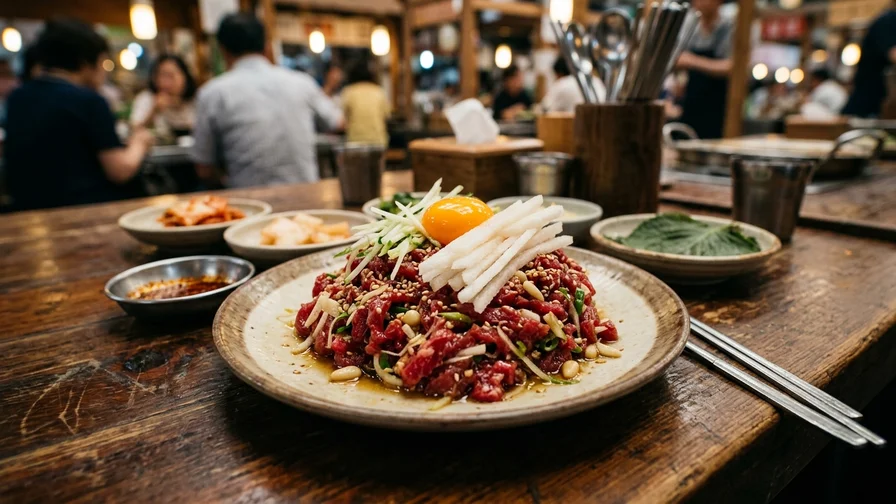 are Gwangjang Market’s big three.
If you’re not sure where to eat, start with three proven veterans and you can’t go wrong: Sunhuine Bindaetteok 📍, where a mung bean pancake costs 5,000 won; Monyeo Gimbap 📍, considered the originator of mayak gimbap (3,000 to 4,000 won per serving); and Buchon Yukhoe 📍, a yukhoe specialist run by the third generation since 1956 (prices as of June 2026).
A Tip for Our Foreign Visitors: Here’s some helpful context on these popular Gwangjang Market foods:
- Bindaetteok (Mung Bean Pancake): Traditionally, it’s fried in oil, but some vendors may use pork lard for extra flavor. If you have dietary restrictions (e.g., Halal, Kosher), it’s a good idea to ask the vendor if pork is used.
- Mayak Gimbap (Mini Seaweed Rice Rolls): “Mayak” literally means “drug,” but don’t worry! It’s just a nickname implying the gimbap is so delicious it’s “addictive.”
- Yukhoe (Beef Tartare): This is a dish of seasoned raw beef, similar to a steak tartare. It’s a delicacy in Korea but please be mindful if you are not accustomed to eating raw meat.
The History and Culture Track: A Trip Back in Time
If you love old things, the Seoul Folk Flea Market 📍 (Seoul Folk Flea Market, 21 Cheonho-daero 4-gil, Dongdaemun-gu, Seoul) is a treasure trove. It’s a 2- to 3-minute walk from Exit 9 or 10 of Sinseol-dong Station, where Lines 1 and 2 meet. Vintage LP records, old antiques, and nostalgic snacks are stacked floor by floor, and just browsing can easily fill half a day. It runs 10:00 to 19:00 and is closed on the second and fourth Tuesday of each month, so be sure to check the day (as of June 2026).
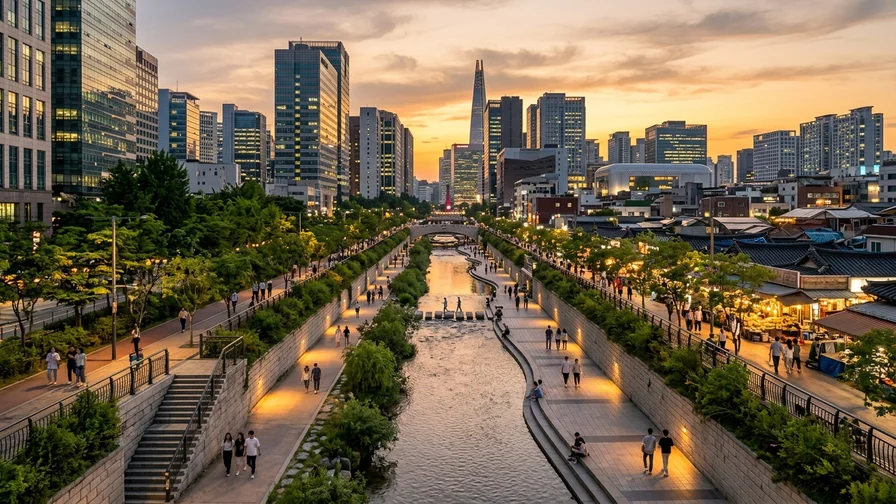
This route works well as a stroll along the Cheonggyecheon stream. From the flea market, head down to the stream and follow the water for about 2 km to the DDP (Dongdaemun Design Plaza), a roughly 30-minute walk. Namdaemun Market 📍 (Namdaemun Market, 21 Namdaemun-sijang 4-gil, Jung-gu, Seoul) is also essential to a history route. To get there from the flea market, take Line 1 two stops from Sinseol-dong to Dongdaemun, transfer to Line 4, and ride four stops to Hoehyeon Station: about 25 minutes total. The market connects directly to Exit 5 of Hoehyeon Station on Line 4. The highlights are the hairtail alley, where restaurants serve set meals of spicy braised hairtail fish, the palm-sized hotteok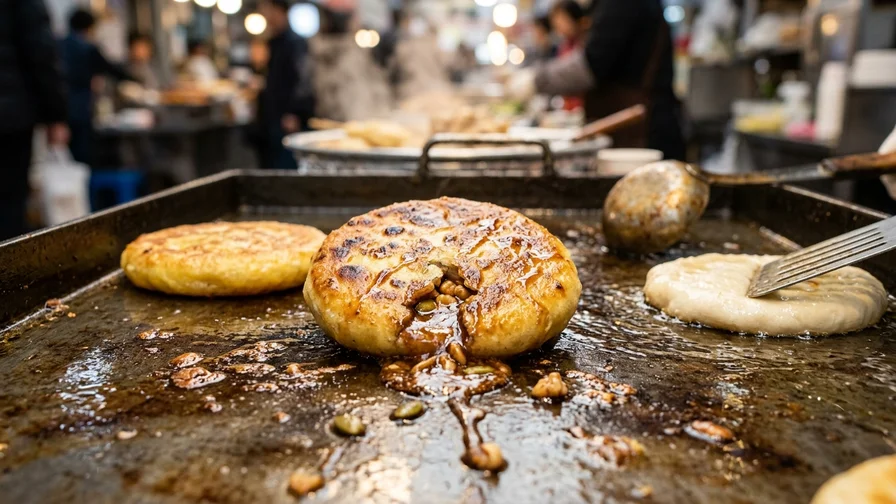 , and the endless rows of accessory shops. The king-sized steamed dumplings at Gamegol Son Wangmandu Main Branch 📍, which has been folding dumplings since 1978, are another draw worth lining up for (big steamed dumplings packed with a meat-and-vegetable filling). Note that many of the hairtail-alley restaurants close on Sundays, so a weekday or Saturday visit is best.
The Art and Workshop Track: A Hidden Artisan’s Touch
The second floor of Gwangjang Market is a haven for hanbok and secondhand clothing. Half the fun is touching the vintage fabrics yourself and haggling over them. From Gwangjang Market, it’s about 1.3 km to Insadong Ssamzigil, around a 20-minute walk. If you’d rather not walk, take Line 1 one stop from Jongno 5-ga to Jongno 3-ga Station and head into Insadong-gil. It’s a good route to wrap up your day browsing traditional crafts and handmade goods. If you need more ideas for souvenirs to buy at the markets, our Korean Traditional Market Souvenirs to Pack — Ginseng, Hanbok & Hahoe Masks is worth a read too.
Editor’s Tip
The golden window for the Tongin Market brass-coin lunchbox is right after the lunchbox café opens at 11:00 a.m.: no lines, and the side dishes at the participating stalls are at their fullest. Beyond the third Sunday, there’s also one weekday closing day. The Seoul city guide lists it as Tuesday, but it has also been listed as Monday in some cases, so if you plan to visit on a Monday or Tuesday, it’s safest to call 1330 (the tourist interpretation hotline) before you go to confirm whether it’s open (as of June 2026).
Tips to Get the Most Out of Your Market Tour: Walking the Market Like a Local
To enjoy it properly, a little preparation helps. Let’s start with the key information that keeps you from making a wasted trip.
Check Closing Days and Avoid the Crowds
Be sure to check before you go: regular closing days (as of June 2026): Every market has its own day off.
- Gwangjang Market: General shops (drapery, secondhand, hanbok) close on Sundays. The food alley runs nearly every day, 09:00 to 23:00, so you can still enjoy the food even on a Sunday.
- Seoul Folk Flea Market: Closed on the second and fourth Tuesday of each month; open 10:00 to 19:00.
- Tongin Market lunchbox café: Closed on the third Sunday and one weekday (listed as either Tuesday or Monday). See the tip above.
- Namdaemun Market: Varies by shop, and many hairtail-alley restaurants close on Sundays.
- Busan Gukje Market: Closed on the first and third Sunday; open roughly 09:30 to 19:30. Bupyeong Kkangtong Market is open year-round (varies by shop), while Jagalchi Market closes every other Tuesday, so it’s safest to avoid Tuesdays.
Before setting out, check whether the market is open using a map app or the 1330 Korea Travel Helpline (24 hours, English available). It also helps to avoid peak times. From noon to 2 p.m. on weekends, the Gwangjang Market food alley is at its most crowded. To enjoy it in calm, aim for weekday mornings between 10 and 11, or after 3 p.m. Parking around the markets is tricky, so public transit is strongly recommended.
Have Cash and Mobile Payments Ready
Price guide (as of June 2026, for reference): A mung bean pancake at Gwangjang Market runs about 5,000 won, mayak gimbap is 3,000 to 4,000 won per serving, and a Tongin Market brass-coin lunchbox typically falls between 5,000 and 10,000 won. Converted to dollars, with roughly 1,500 won to the dollar, a mung bean pancake is a little over 3 dollars. Exchange rates change daily, so treat these as rough figures only.
More and more shops now take cards and mobile payments, but small stalls and hotteok carts are still quicker and easier with cash. Bring some small bills (1,000 and 5,000 won notes) in advance and both haggling and paying go smoothly.
How to Connect with the Vendors
- Make eye contact and say “this looks delicious!” and the portions tend to get generous.
- If you buy several items, a little bargaining like “could you add just a bit more?” is a natural part of the culture.
- When taking photos, it’s polite to ask once, “may I take a photo?”
K-Culture Experiences on Your Korean Traditional Market Tour: Hidden Gems in the Market
Markets don’t stop at food and daily goods. Hands-on experiences are tucked away all over.
Cooking Classes and Traditional Craft Experiences
The brass-coin lunchbox at Tongin Market is the signature participatory experience, and on the second-floor hanbok street at Gwangjang Market you can pick out fabric and even consult on a made-to-order piece on the spot. Workshop experiences held around the markets, such as rice-cake making or traditional knotwork, change operators and schedules frequently, so it’s most accurate to check the current programs and costs on Seoul’s official tourism site (visitseoul.net) or via 1330 and book ahead.
Busking and Pop-Up Performances
On weekend evenings, impromptu busking often happens at the entrance of Gwangjang Market or along the Cheonggyecheon. It’s not on a fixed schedule, so it comes down to luck, but if you catch one over a glass of makgeolli, it becomes the highlight of the day’s tour. If you’re curious about the young vendors bridging tradition and innovation, the story of young merchants in Korean traditional markets is worth a read too.
Linking Up Nearby Attractions After Your Korean Traditional Market Tour: A Full K-Travel Day
It would be a shame to call it a day after just the market. Here’s how to pair them with nearby attractions to fill out your day.
Recommended Nearby Attractions, Restaurants, and Cafés
Tongin Market is a 10-minute walk from Gyeongbokgung Palace, so it’s natural to put on a hanbok and tour the palace after a morning at the market. Namdaemun Market is a 5-minute walk from Sungnyemun Gate and 10 minutes from Myeongdong, letting you combine shopping and the night views in one go. Pair Gwangjang Market with Insadong Ssamzigil and you’ll have food and crafts covered at once.
In Busan, it’s a different story. Start at Gukje Market 📍 (Gukje Market, 56-4 Sinchang-dong 4-ga, Jung-gu, Busan) and walk 5 minutes to the adjoining Bupyeong Kkangtong Market 📍 (Bupyeong Kkangtong Market, 82 Bupyeong-dong 2-ga, Jung-gu, Busan). Kkangtong Market’s bibim dangmyeon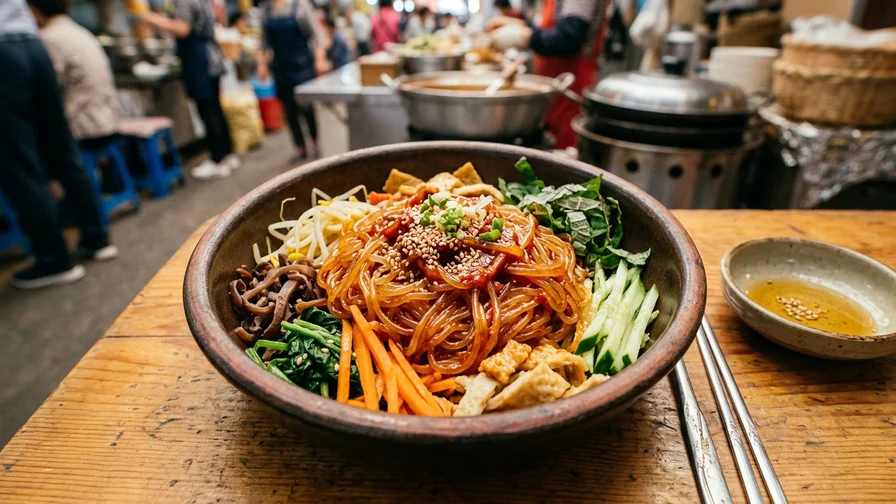 is a local specialty of Busan’s Jung-gu, boiled glass noodles tossed in a savory sauce, while ssiat hotteok
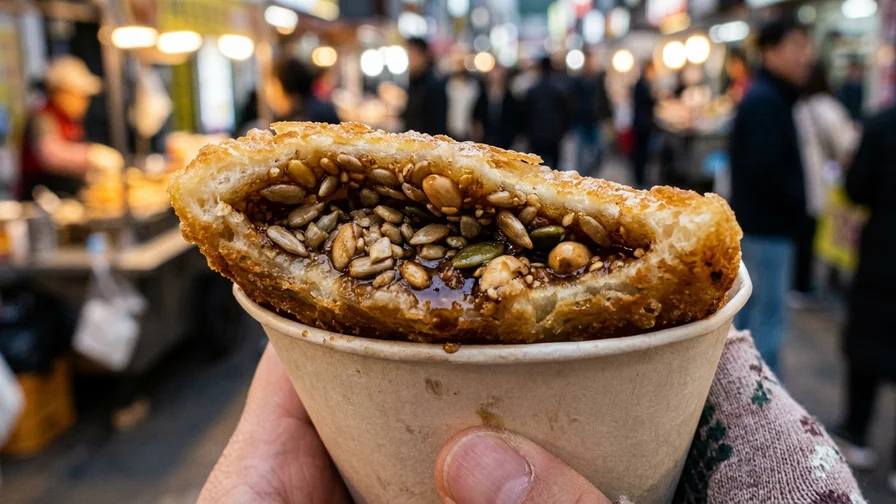 is a Busan favorite, a hotteok stuffed with plenty of nuts and seeds like sunflower seeds. The stalls famous as the originators cluster around BIFF Square in Nampo-dong, and you can find them on the Kkangtong Market side too. Don’t skip a cup of street eomuk
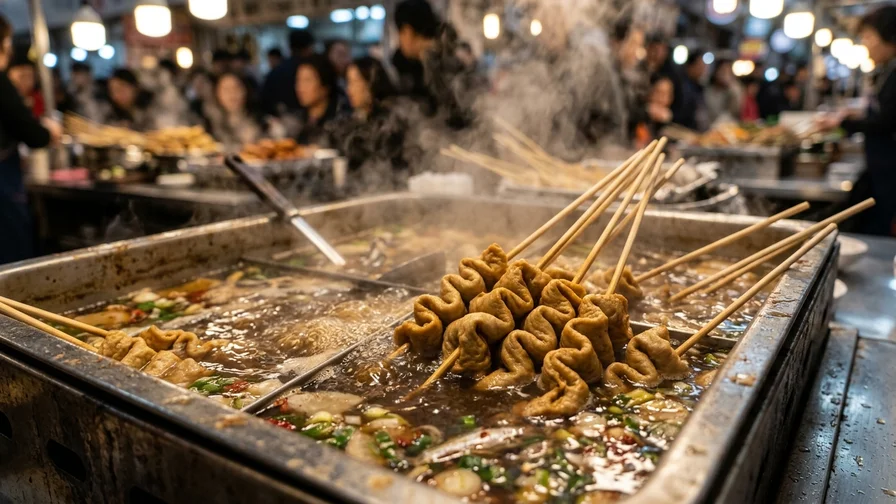 broth, either. Kkangtong Market has a night market (19:30 to 23:30) that opened in 2013, the first of its kind in the country, so it’s a good place to carry the evening on, and from here Jagalchi Market and Nampo-dong are within a 10-minute walk, so you can cover it all in one loop.
Getting There by Public Transit
| Market | Nearest Station | Walk |
|---|---|---|
| Gwangjang Market 📍 | Line 1, Jongno 5-ga Station, Exit 8 | About 2 min |
| Tongin Market 📍 | Line 3, Gyeongbokgung Station, Exit 2 | About 8 min |
| Namdaemun Market 📍 | Line 4, Hoehyeon Station, Exit 5 | About 1 min |
| Seoul Folk Flea Market 📍 | Lines 1 and 2, Sinseol-dong Station, Exit 9 or 10 | About 3 min |
| Gukje Market 📍 | Busan Line 1, Jagalchi Station, Exit 7 | About 7 min |
The exits and walking times are as of June 2026, and operating hours and exit details may change, so check once more with a transit app before you set out.
That’s the Korean traditional market tour route we recommend most often. Start at Tongin and move to Gwangjang, or go from Busan’s Gukje to Kkangtong. The exits and walking times are all marked, so you only have to follow along. Put away the map for a moment and try walking this route once. If you’re curious about more market itineraries, continue with the First Time at a Korean Traditional Market? 6 Local Routes in Seoul, Busan, and Jeonju, and enjoy more on Come On Korea as well.
Related reads in this series
- First Time at a Korean Traditional Market? 6 Local Routes in Seoul, Busan, and Jeonju
- Korean Traditional Market Souvenirs to Pack — Ginseng, Hanbok & Hahoe Masks
- Open Only Once Every 5 Days — 6 Korean Five-Day Markets, from Jeongseon to Moran
- Bindaetteok in One Hand, Hotteok in the Other — A Korean Traditional Market Snack Bucket List
- A New Face for Old Markets — 6 Traditional Markets Powered by Young Vendors