Bindaetteok in One Hand, Hotteok in the Other — A Korean Traditional Market Snack Bucket List
Contents
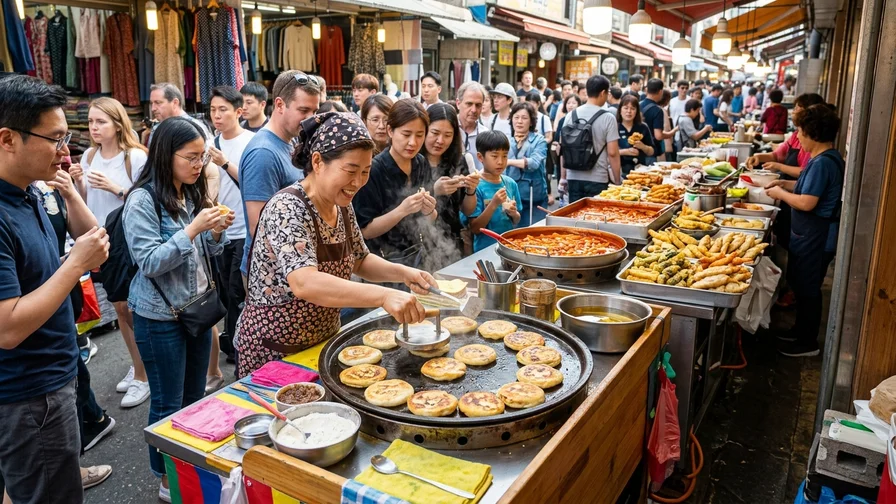
The sound of ground mung beans sizzling on the griddle, the steam rising off a hotteok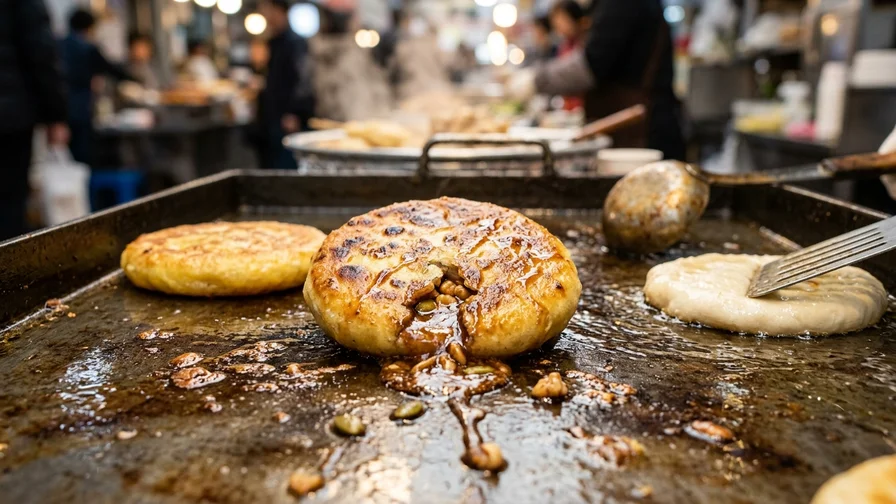 hot plate, the jokes shared between vendors and customers: a snack alley in a Korean traditional market is a place where you taste the alley itself, not just the menu. A single snack runs roughly 2,000 to 7,000 won, and the best times to eat are freshly griddled pancakes around 11 a.m. and hotteok hot off the plate in the late afternoon. What follows is laid out in the order you’d actually line up and buy. For the bigger picture, see also the food of Korea’s traditional markets.
Quick summary
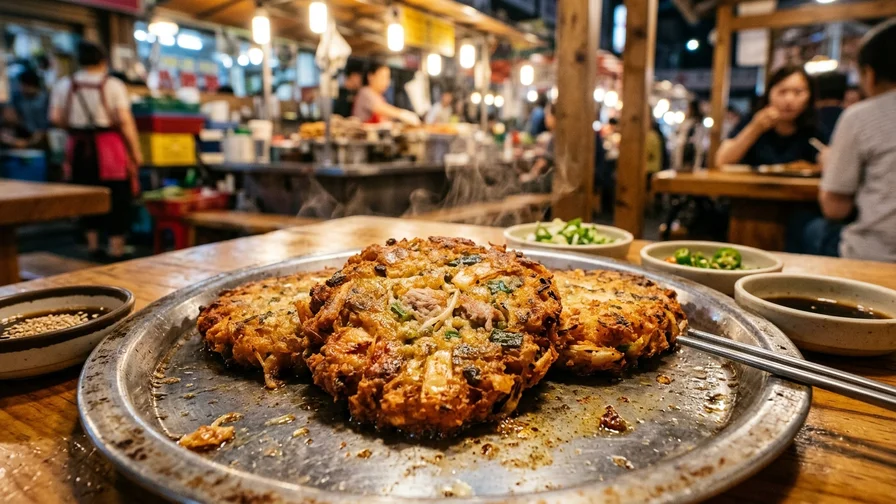
- The bindaetteok
 and mini kimbap
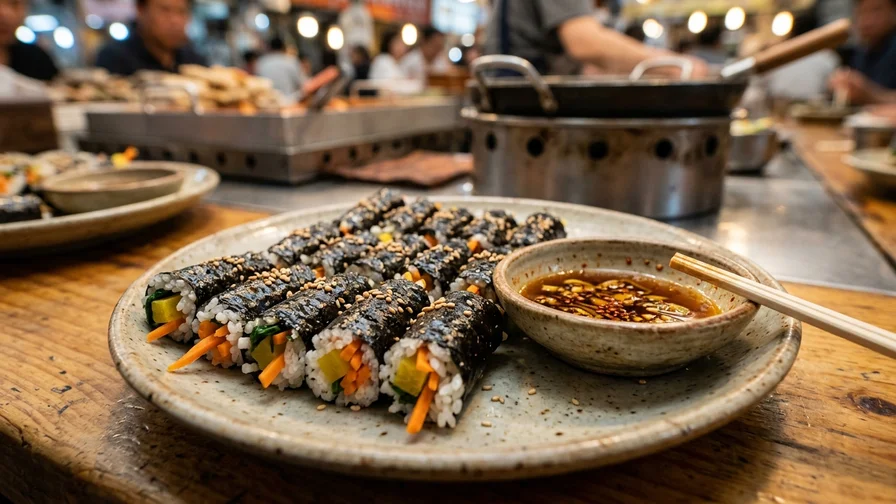 (every sign in the market now reads “kkoma kimbap”; see the name-change note below) at Gwangjang Market 📍, the oil-stir-fried tteokbokki
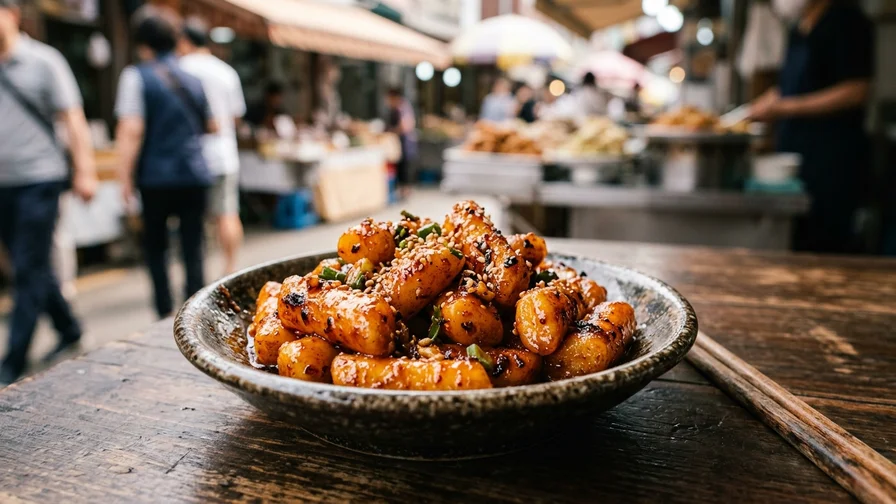 at Tongin Market 📍, and the seed hotteok
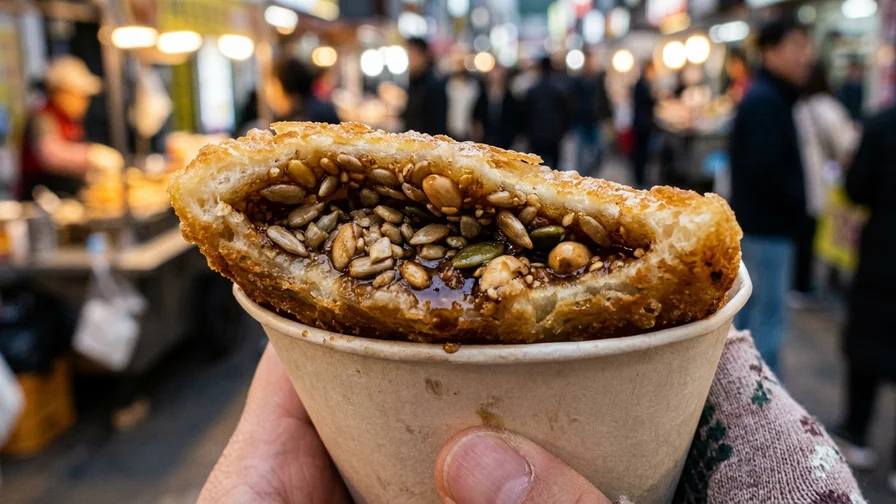 at BIFF Square next to Busan’s Gukje Market 📍 are the headliners of Korean market snacking.
 - A single snack runs roughly 2,000 to 7,000 won (as of June 2026: seed hotteok 2,000 won, bindaetteok 5,000 won, a plate of mini kimbap 4,000 won, bibim dangmyeon 7,000 won; only raw beef dishes are an exception at around 20,000 won). More shops take cards now, but keeping some cash under 10,000 won for the street stalls makes things much easier.
- Street hotteok and bungeoppang (fish-shaped pastry) stalls are mostly a winter treat, appearing from late autumn to early spring. Go in summer and you may not find them. Permanent shops like Busan’s BIFF Square seed hotteok are open year-round.
- The best times to eat are freshly griddled pancakes around 11 a.m., and hotteok hot off the plate in the late afternoon.
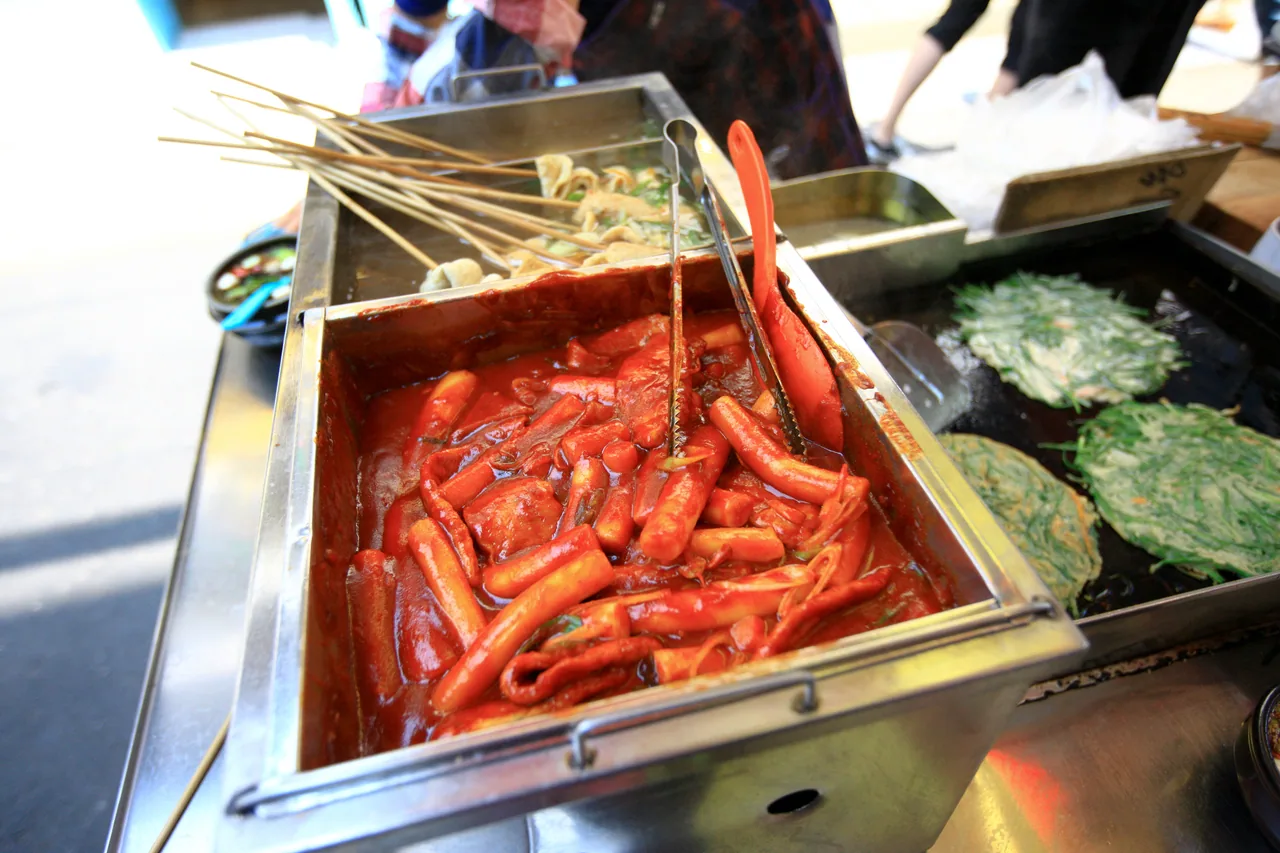
The world of Korean market snacks: the heart of K-food
With traditional market snacks, a single bite carries the whole history of that shop. Even the same tteokbokki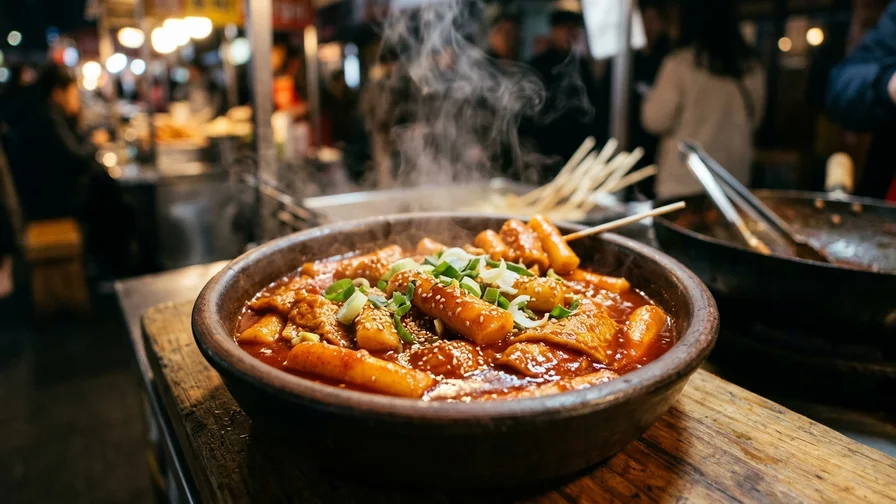 has a different sauce from market to market, and the filling of hotteok changes from one neighborhood to the next.
The signature snacks worth trying at any market
If it’s your first time at a market, start with these five. Even when the lines are long, they move fast, so you won’t wait long.
- bindaetteok: a nutty, crispy pancake made from ground mung beans. The edges are crisp and the inside stays moist.
- mini kimbap: finger-sized rolls of kimbap dipped in a mustard-soy sauce, a Gwangjang Market specialty. They used to be nicknamed “mayak kimbap” (literally “drug kimbap,” meaning addictively good), but in January 2024 the Gwangjang Market merchants’ association resolved to stop using the word “mayak,” so all the market’s signs and menus were changed to read kkoma kimbap (“mini kimbap”). When looking for a shop on-site, watch for the “kkoma kimbap” signs.
- oil-stir-fried tteokbokki: an old-style tteokbokki stir-fried in soy sauce and oil instead of a gochujang broth. It’s spicy but never heavy.
- seed hotteok: the Busan-style hotteok, where a griddled pancake is split in half and packed with seeds and nuts like sunflower and pumpkin seeds. Crisp, chewy, and nutty all at once.
- yukhoe
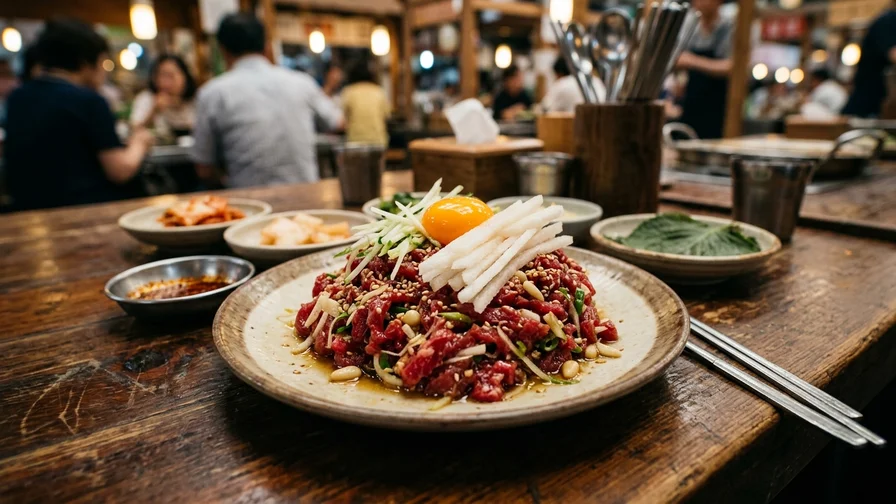 : fresh beef sliced into thin strips and seasoned with sesame oil. You can taste it in the full market atmosphere along Gwangjang Market’s yukhoe alley.
A heads-up for visitors: Yukhoe (육회) is a raw beef dish, similar to a Korean-style steak tartare. It’s a beloved delicacy made with fresh, high-quality meat, but please be aware that it is served uncooked.
If you have allergies or dietary restrictions: a snack-by-snack checklist
Market stalls don’t have ingredient labels, and there’s a real chance of cross-contamination since several foods are cooked together on the same oil and griddle. If you have severe allergies or follow a religious diet, a shop with an English menu is safer than a street stall. Here are the essentials in a table.
| Snack | Ingredients to watch | Notes |
|---|---|---|
| Bindaetteok | Mung beans (legume), minced pork and pork fat | Mung beans are the main ingredient, but many shops add meat. Ask “Is there meat in it?” |
| Hotteok, seed hotteok | Wheat flour, nuts and seeds (sunflower, pumpkin, peanut, etc.) | If you have a nut allergy, avoid seed hotteok and check whether regular hotteok has nut toppings |
| Kkoma kimbap | Mustard sauce | A mustard-soy dipping sauce comes as standard; with a mustard allergy, order it without the sauce |
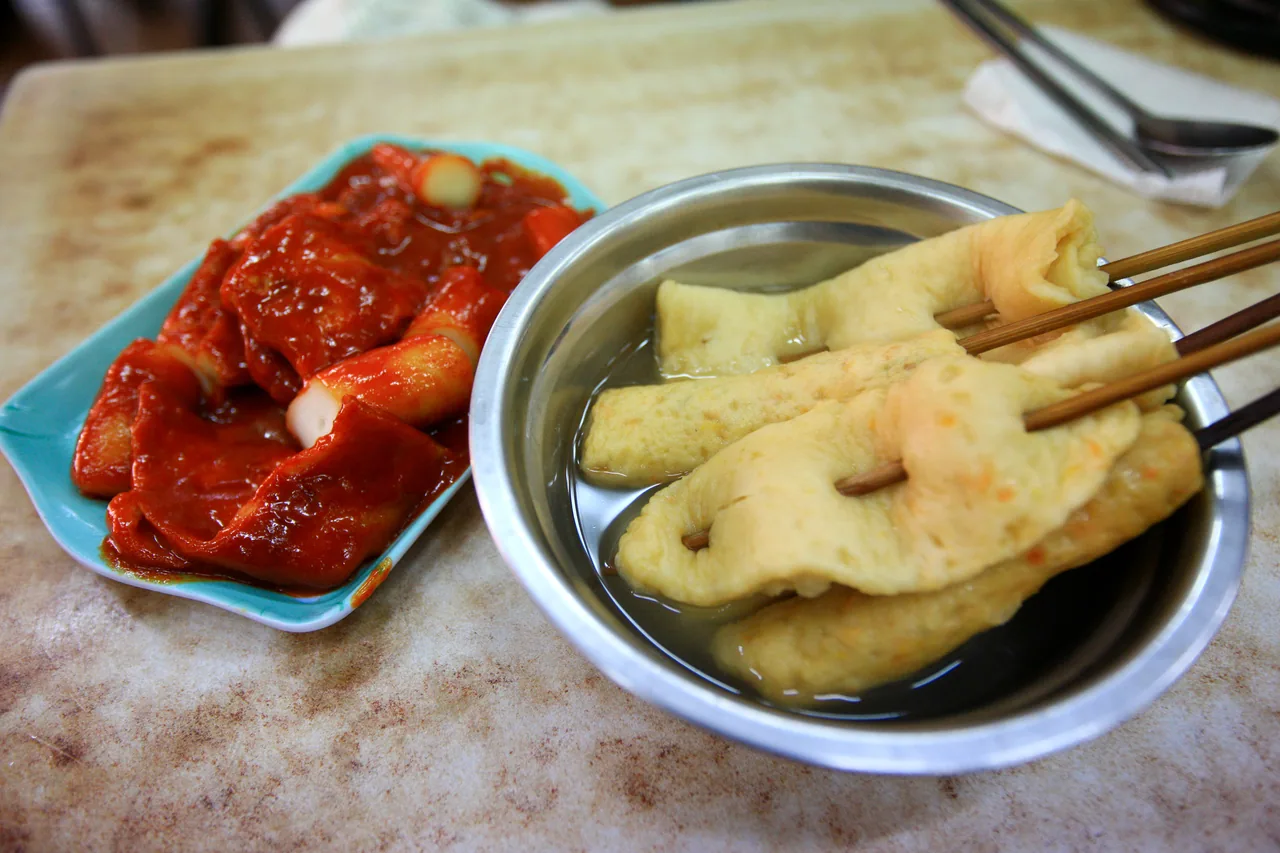
| Eomuk (fish cake) | Fish paste, wheat | The broth is often free for refills, but it’s made from anchovy and fish stock |
| Sundae | Pork intestine, pork blood, glass noodles | A Korean-style sausage made with pork blood; note for religious diets |
| Tteokbokki | Gochujang (fermented soybeans), anchovy stock | Many shops use an anchovy broth base, so strict vegetarians should check |
Snacks by season and region: hotteok is a winter food
Market snacks have their seasons too. Hotteok and bungeoppang in particular can lead to a wasted trip if you go at the wrong time of year.
- Winter (roughly November to March): the season when street hotteok and bungeoppang stalls set up. Steaming hotteok and eomuk
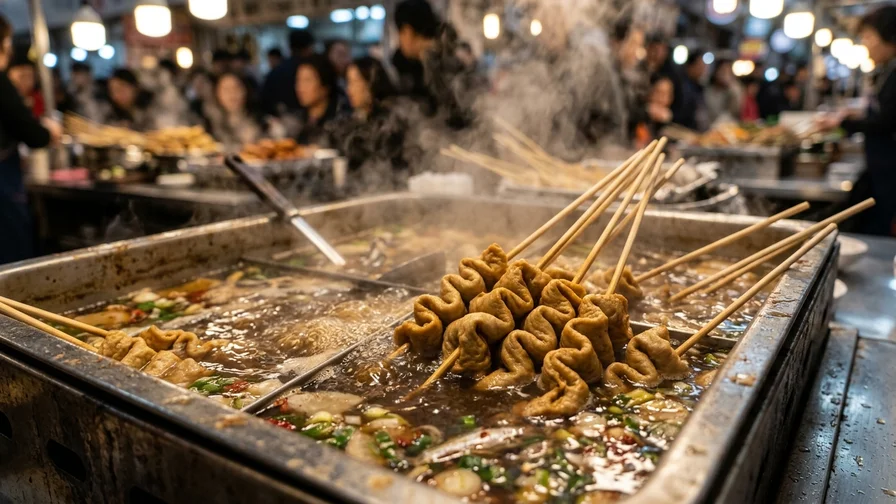 broth are at their best. Once spring arrives, most of the stalls disappear.
 - Summer: the cool, tossed bibim dangmyeon
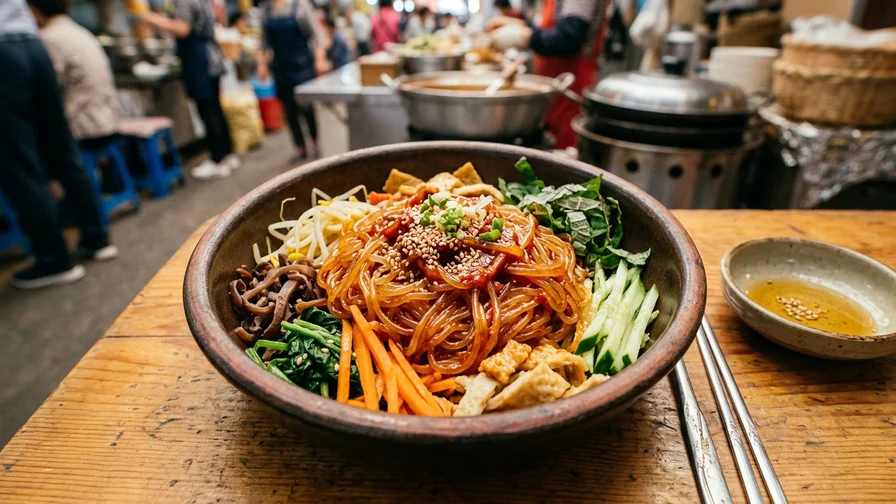 revives the appetite.
 - Spring and autumn: a freshly griddled bindaetteok with a glass of makgeolli hits the spot.
- Year-round: famous shops that griddle on a permanent basis, like the seed hotteok at Busan’s BIFF Square, and indoor market shops serving bindaetteok and tteokbokki, can be enjoyed in every season.
These days more shops keep the traditional framework while offering new combinations, so don’t miss the new snacks introduced by young merchants.
The flavors and stories of regional market snacks
Even the same snack has a different character at each market. Here are four signature markets in Seoul plus Busan, in order. The prices and hours below are as of June 2026 and may change.
Gwangjang Market, Seoul: the home of bindaetteok and kkoma kimbap
Gwangjang Market 📍 (88 Changgyeonggung-ro, Jongno-gu, Seoul) is a 1–2 minute walk from Exit 7 or 8 of Jongno 5-ga Station on Subway Line 1. Come out of Exit 8 and the market’s North Gate 2 is right there.
| Shop | Signature menu and price (as of June 2026) | Hours and closing days |
|---|---|---|
| Sunhuine Bindaetteok 📍 | Mung bean bindaetteok 5,000 won, meat patties 3,000 won: Gwangjang Market’s signature bindaetteok, griddled thick with crisp edges | Daily 10:00–21:00 (last order 20:30) |
| Bakgane Bindaetteok 📍 | Stone-mill bindaetteok 5,000 won: a third-generation shop griddling with mung beans ground on a stone mill | 08:00–22:00, closed the third Wednesday of each month |
| Monyeo Kimbap 📍 | A plate of kkoma kimbap 4,000 won: mini rolls packed firm with pickled radish and carrot, dipped in mustard-soy sauce | Daily 09:00–21:00 |
| Yukhoe Jamaejip 📍 | Yukhoe around 20,000 won: raw beef tossed in fragrant sesame oil, a fixture of the yukhoe alley | Closed Mondays |
By the way, if you go looking for a “mayak kimbap” sign at Gwangjang Market, you won’t find one. With the merchants’ association resolution in January 2024, the word “mayak” was dropped from every sign and menu in the market, and everything now reads “kkoma kimbap.” The Ministry of Food and Drug Safety has also advised against using drug-related terms for food, so the same change is underway at other markets.
Tongin Market, Seoul: oil-stir-fried tteokbokki and the brass-coin lunchbox
Tongin Market 📍 (18 Jahamun-ro 15-gil, Jongno-gu, Seoul) is about an 8-minute walk from Exit 2 of Gyeongbokgung Station on Subway Line 3. It pairs nicely with a stroll through Seochon, west of Gyeongbokgung Palace.
- Wonjo Halmeoni Tteokbokki 📍: the original oil-stir-fried tteokbokki, running since 1956 and designated a Seoul Future Heritage site. It’s about 30 meters in from the market entrance. You can try both the soy-sauce and gochujang versions at 4,000 won each, which makes comparing them part of the fun.
- The brass-coin lunchbox experience: at the market’s customer service center, you receive a bundle of brass coins (from 5,000 won for 10 coins; 10,000 won for 20 coins is a common amount) and an empty lunchbox, then walk around to member shops choosing oil-stir-fried tteokbokki, dakgangjeong, jeon and more, paying one coin (500 won) for each item. Any leftover coins are refunded. The lunchbox café runs 11:00–16:00 on weekdays (coins sold until 15:00) and 11:00–17:00 on weekends (coins sold until 16:00), and is closed on the third Sunday of each month. The weekly closing day is listed as Tuesday in a Seoul city media article and as Monday elsewhere, and temporary closures are frequent, so call the Tongin Market customer center at 02-722-0911 before your visit (verified October 2026).
Mangwon Market and Namdaemun Market, Seoul
Mangwon Market 📍 (14 Poeun-ro 8-gil, Mapo-gu, Seoul) is a snack paradise with a young, lively neighborhood feel. Come out of Exit 2 of Mangwon Station on Subway Line 6 and walk 5 minutes; following World Cup-ro 13-gil behind Exit 2 is the fastest route.
- Uirak 📍: a shop that became nationally famous for its deep-fried whole asagi peppers. The gentle heat balances nicely with the crisp batter, and they sell various jeon too, so it’s great for eating on the go.
- Q’s Dakgangjeong 📍: a shop selling sweet, crispy Korean-style fried chicken by the cup. A signature Mangwon Market snack featured on many TV shows.
- Hongdukkae Son Kalguksu 📍: kalguksu (a Korean noodle dish of wheat noodles in anchovy broth) made with hand-rolled noodles boiled to order right there. At market-friendly prices, it makes for a filling meal.
Namdaemun Market 📍 (21 Namdaemun Market 4-gil, Jung-gu, Seoul) connects directly to Exit 5 of Hoehyeon Station on Subway Line 4. It’s famous for its braised hairtail alley and kalguksu alley, and in winter a single street hotteok makes a hearty fix while you explore the market.
Gukje Market, Kkangtong Market, and BIFF Square in Busan
Busan’s Gukje Market 📍, Bupyeong Kkangtong Market, and BIFF Square are all one walkable neighborhood. From Exit 7 of Jagalchi Station on Busan Subway Line 1, it’s about a 3-minute walk to BIFF Square and 5–10 minutes to Gukje Market.
- Seunggi Seed Hotteok 📍: an original-grade seed hotteok stall at BIFF Square, right next to Gukje Market. They split a freshly griddled hotteok in half and fill it with a generous heap of seeds, and when you cut into it, the hot syrup and nutty seeds flow out together. One for 2,000 won, open 11:00–22:00 year-round (as of June 2026). Unlike most street hotteok, it can be enjoyed in all four seasons, which is its appeal.
- Kkangtong Golmok Wonjo Bibim Dangmyeon 📍: a fixture of the food alley in Bupyeong Kkangtong Market. The bibim dangmyeon (7,000 won), chewy glass noodles tossed in a sweet-and-sour sauce, is a local snack of Jung-gu, Busan, dating back to the Korean War refugee era. Open 10:00–20:30.
Market snacks at home: K-food home cooking
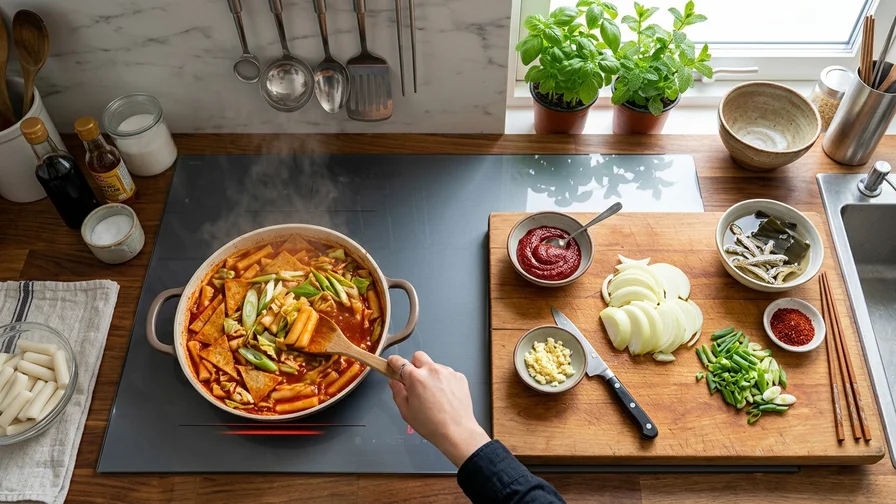
When you miss the flavors you tasted on your trip, you can recreate them to a degree in your own kitchen. Rice cakes and fish cakes are freshest bought at the market in the morning, and it’s worth picking up a good amount of seeds from the dried-goods section.
Easy tteokbokki and sundae
Oil-stir-fried tteokbokki is surprisingly easy. Blanch the rice cakes and drain them, then add oil to a pan and stir-fry quickly with soy sauce and chili powder. That’s it. It’s less heavy than gochujang tteokbokki, so fewer people dislike it. For sundae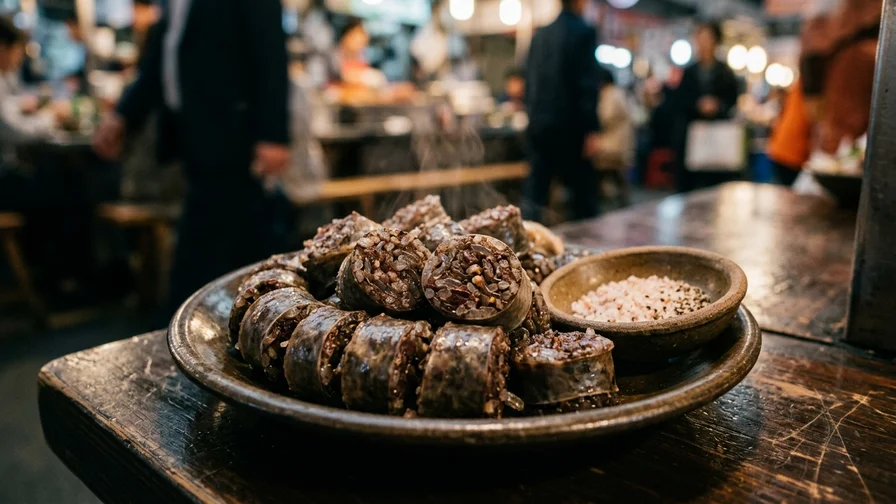 , lightly steam what you bought at the market and dip it in salt or perilla seed powder to get close to that market taste.
Fusion-style market snacks
If you’re with friends from abroad, a little twist works well too. Add more of your favorite vegetables to the kkoma kimbap, or griddle the hotteok dough with cheese inside. The key is to follow the market principle: griddle it crisp, and eat it right away while it’s hot.
Eat pancakes fresh off the griddle
The five minutes right after a pancake is griddled is the prime window for the best flavor. When you buy bindaetteok at the market, try asking them to “just cut us one slice” so you can eat it on the spot where it was made. Packing it up makes it soggy and you lose about half that crispness.
Resting in the market over snacks: K-culture spots
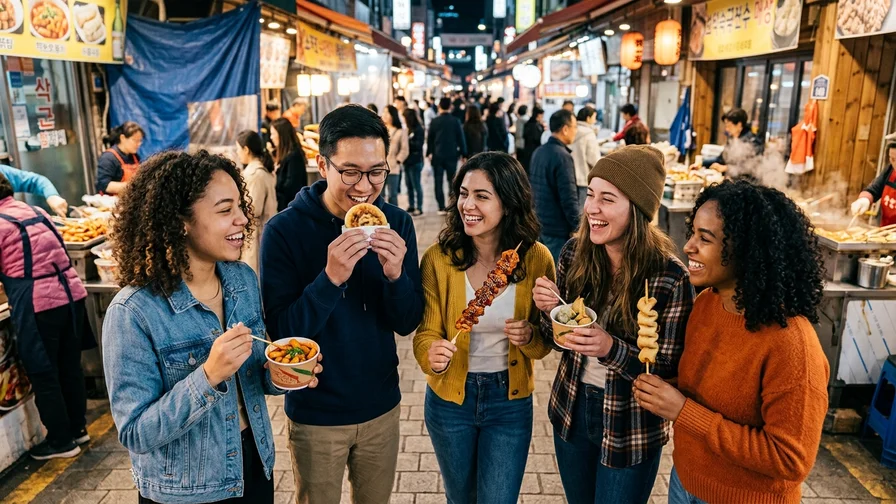
A market is a place to eat and a place to rest. Even the time spent waiting in line becomes part of the show.
Finding the snack spots worth lining up for
The easiest way to pick a good shop is to follow the local lines. In the bindaetteok alley at Gwangjang Market 📍, look for the shop with the strongest smell of oil; at Tongin Market 📍, look for the one whose tteokbokki griddle never stops turning. Cramped stalls mean sharing tables is the norm, and a single nod of greeting to the elder beside you quickly warms up the mood.
Tips for touring the market over snacks
It would be a shame to leave after eating only snacks. Once you’ve gone through the food alleys, it’s a good time to browse small gifts like bowls, handkerchiefs, and dried goods. For details, see our recommended Korean traditional market souvenirs, and if you’re curious about the charm of the five-day markets held once every five days, the Korean five-day market guide will make your market trip even richer.
A Note on Souvenirs: When buying food items like dried fish (건어물) or ginseng (인삼) as souvenirs, please be aware that they may be subject to customs and quarantine restrictions in your home country. To avoid confiscation or legal issues, it’s wise to check your country’s import regulations before you buy.
Tips for enjoying K-snack culture: a fuller market experience
Finally, here are a few small tricks for enjoying market snacks like a local.
Useful local phrases for buying snacks
| Situation | Korean phrase |
|---|---|
| Ordering | Igeo hana juseyo (One of these, please) |
| Asking the price | Eolmayeyo? (How much is it?) |
| Describing taste | Masisseoyo / Gosohaeyo (It’s delicious / It’s nutty) |
| Less spicy | Deol maepge hae juseyo (Please make it less spicy) |
| Asking for takeout | Pojanghae juseyo (Please pack it to go) |
| Checking for allergies | Ttangkong (gyeonryu) deureo isseoyo? (Does it have peanuts/nuts?) |
Even a word or two in Korean often earns you a little something extra from the vendors.
Enjoying snacks like a local
The secret to enjoying it like a local is to hold back a little and taste many things in small amounts. Rather than filling up at one shop, share half a bindaetteok, a few pieces of kkoma kimbap, and one hotteok, and a single loop around the market turns into a course meal. Carry cash and small bills, and slightly avoiding the lunch peak (12–1 p.m.) gives you more room to breathe. If planning a route feels daunting, our market tour course for enjoying it like a local will be your guide.
Save the shop locations to your map before you set out and check their closing days and whether they’re open to avoid a wasted trip. For a wider market journey, follow the local routes for six markets at the Korean traditional markets page.
Some photos © Korea Tourism Organization (KOGL Type 1)