Korean BBQ for First-Timers — How to Choose and Order Like a Local
Contents
Korean BBQ restaurants usually require a minimum order of at least two portions, and in Seoul one portion of samgyeopsal runs about 17,000 to 22,000 won. This covers the types of restaurants, the cuts of meat on the menu, how to order, dining etiquette, and price information. All prices are current as of June 2026.
1. Three Types of K-BBQ Restaurants
Korean BBQ restaurants generally fall into three categories, differing in the type of meat, price, and atmosphere.
General BBQ Restaurant (Gogitjip)
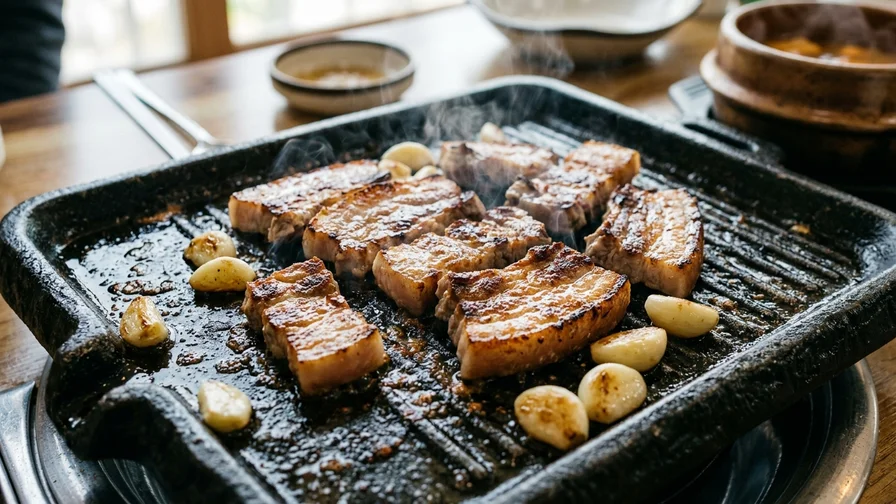
This is the most common type. They serve a wide range of dishes centered on pork (such as samgyeopsal and moksal) or beef (galbi, sirloin, and more). The atmosphere is lively, with plenty of office workers and groups of friends enjoying drinks alongside dinner. At many places, the staff will grill the meat for you or help you grill it. This may feel unfamiliar to foreign visitors, but it’s a natural part of the service in Korea, so feel free to leave it to them. Prices fall in the mid range.
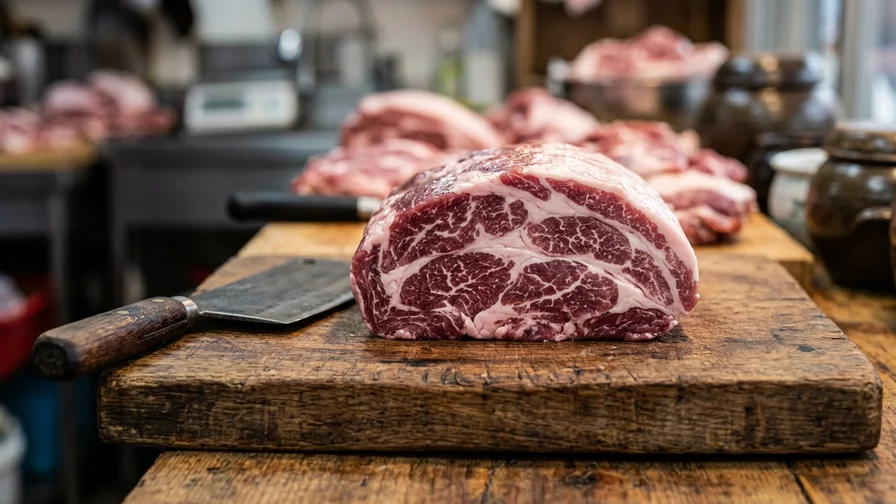
Butcher Restaurant (Jeongyuk-sikdang)
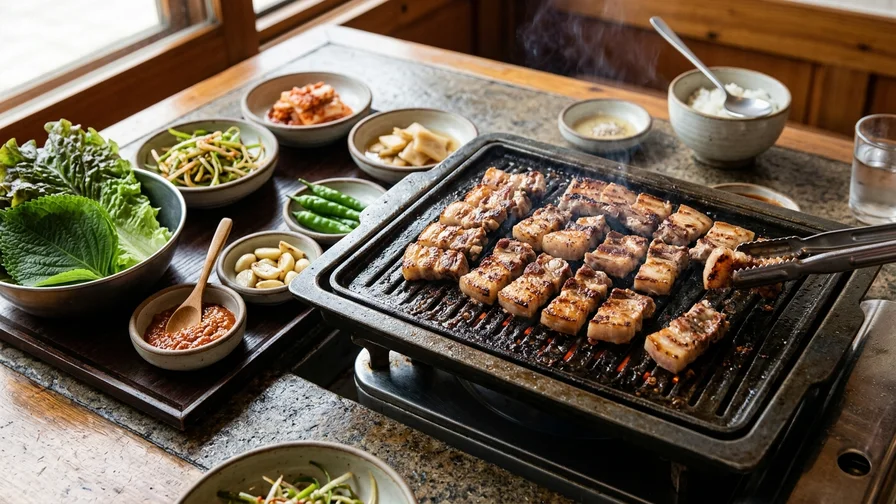
This is a restaurant that also runs its own butcher shop. You pick out the meat you want at the butcher counter and pay for it, then take it to your table to grill yourself. On top of the cost of the meat, there is a per-person “table setting fee,” usually around 3,000 to 7,000 won (about $2 to $5) per person, though some places charge less or nothing at all (as of June 2026). Vegetables, sauces, and basic side dishes are included. The advantage is that with fewer steps in the supply chain, you can eat the same quality of meat for less than at a general BBQ restaurant. The biggest place in Seoul to experience this style is the Majang Meat Market in Seongdong-gu, where you buy meat from a butcher in the market and then pay a table setting fee at a nearby restaurant to grill it. This system draws plenty of foreign visitors too.
Korean Beef Specialty Restaurant (Hanwoo-jip)
These restaurants specialize exclusively in Hanwoo, Korea’s native cattle breed. Hanwoo is graded by quality, and the top 1++ grade is very expensive. People mainly go to these places for important business meetings or special occasions, and the atmosphere is quiet and upscale. At many of these restaurants, the staff grill the meat to its optimal state from start to finish.
2. Understanding the Menu: Types of Meat
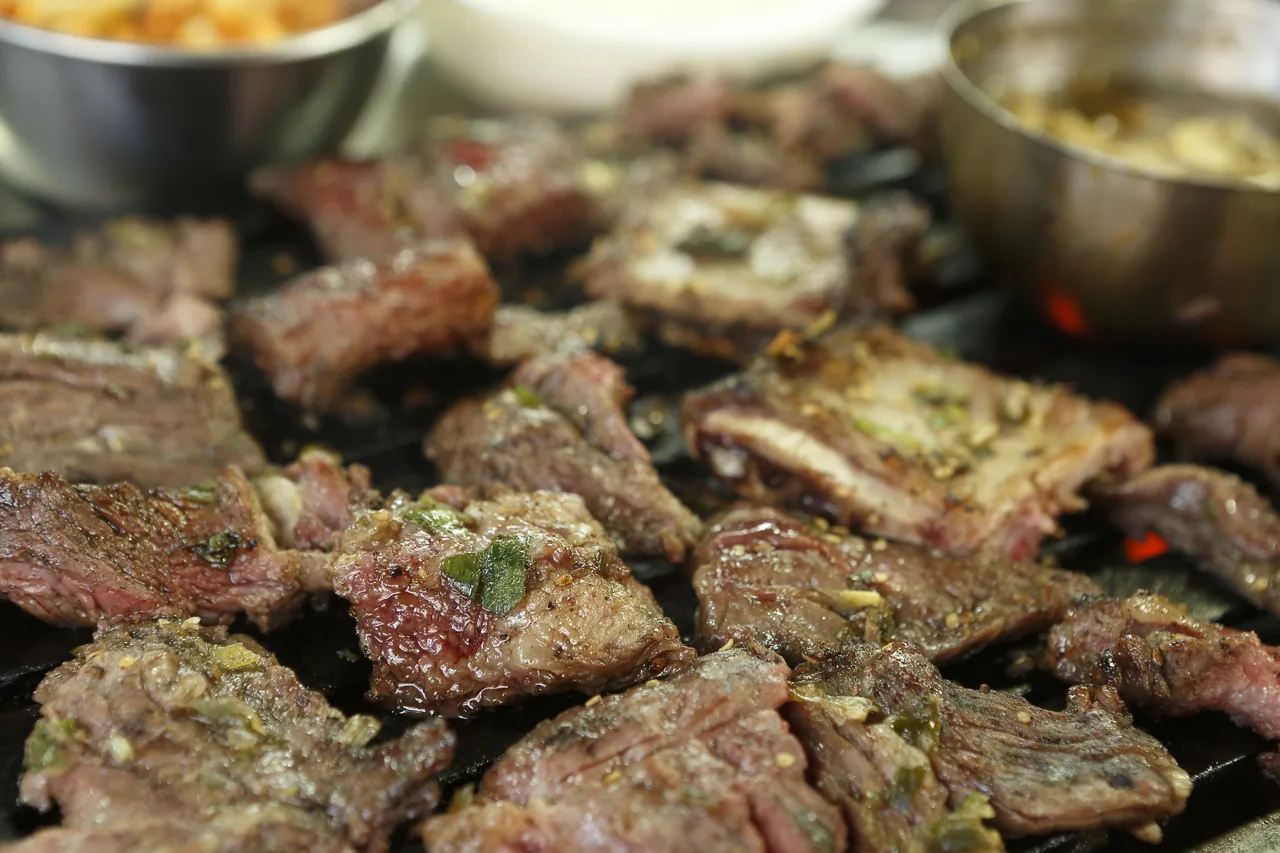
Menus are usually divided into pork and beef. The weight of one portion (il-inbun) varies from restaurant to restaurant, but it typically falls between 120g and 180g. Two portions at the same price can differ in grams, so it’s a good idea to check the weight listed on the menu and compare.
Pork Menu
Pork is the BBQ meat Koreans enjoy most, and it’s relatively reasonable in price.
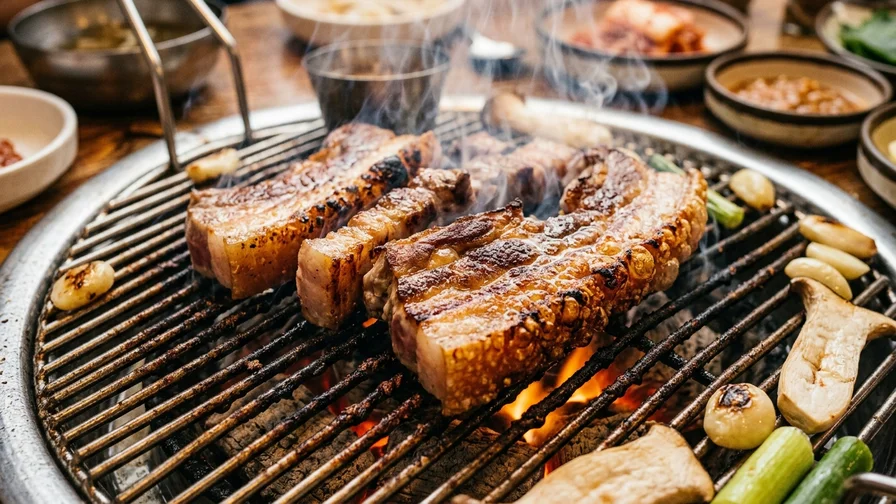
- Samgyeopsal: Pork belly. The fat and lean meat form three distinct layers. It’s the signature dish of Korean BBQ, known for its rich, savory flavor. In Seoul, one portion runs about 17,000 to 22,000 won (roughly $12 to $16), and when converted to 200g, the average tops 20,000 won at 2026 prices.
- Ogyeopsal: Samgyeopsal with the pork skin still attached. When grilled, the skin turns chewy, giving it a unique texture.
- Moksal: Pork from the neck. It has less fat than pork belly, so it’s lean and tender. The price is similar to samgyeopsal.
- Dwaeji-galbi: Pork ribs marinated in a sweet, soy-sauce-based seasoning. Because of the marinade, it burns easily on the grill, so it needs to be flipped often. It’s a favorite with kids and foreign travelers. One portion is about 17,000 to 25,000 won (roughly $12 to $18).
- Hangjeongsal: The cut from between the pig’s neck and shoulder (under the jowl). The fat is evenly distributed, giving it a chewy, savory bite. It’s a premium cut, with only a small amount available from each animal, so it costs a bit more.
- Galmaegisal: Meat from the pig’s diaphragm. Although the name contains “galmaegi” (seagull), it isn’t poultry. The texture is similar to beef, and it’s full of juices.
- Gabrisal: A thin layer of muscle covering the top of the loin (the loin cap). It’s a premium cut known for its tender flavor.
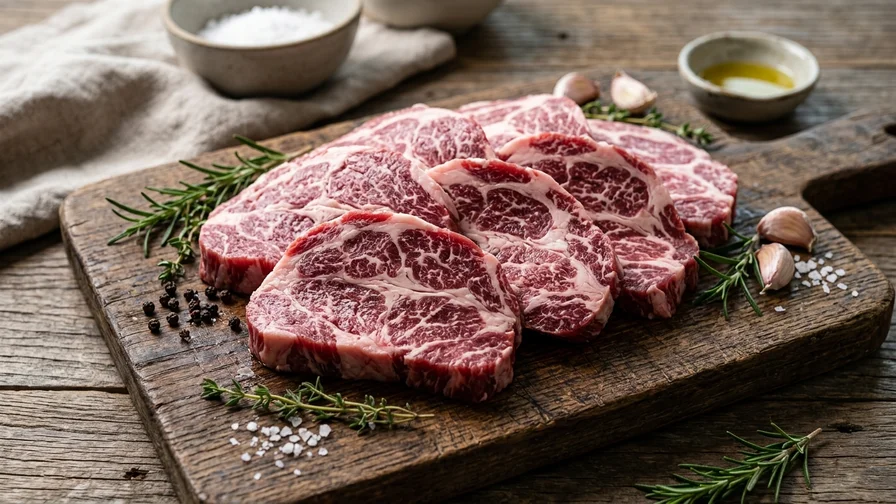
Beef Menu
Beef is more expensive than pork, but its strengths are tender texture and rich flavor.
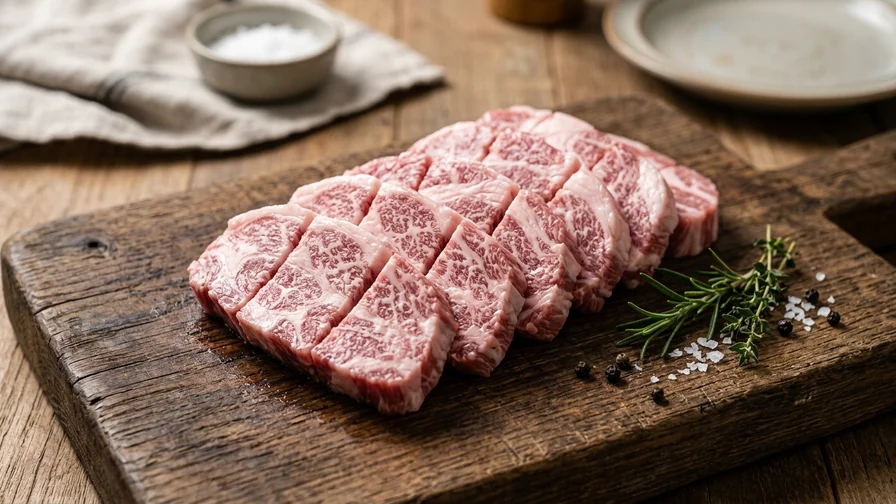
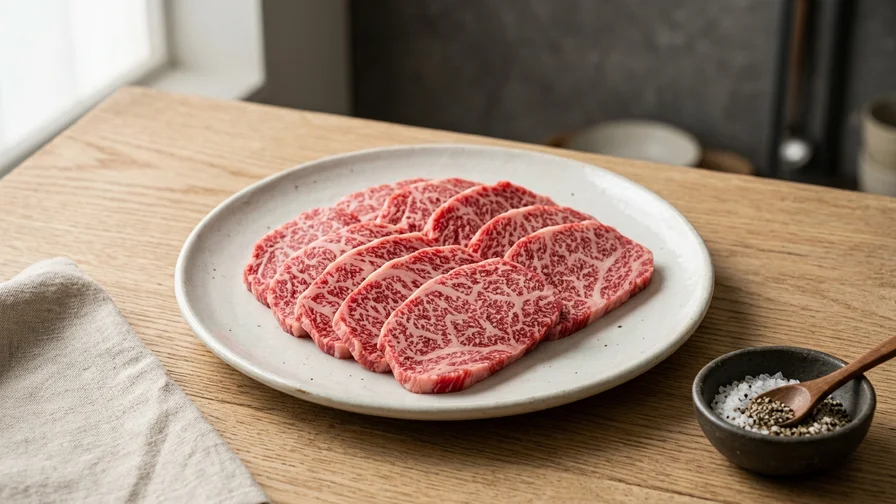
- Hanwoo: Korea’s native cattle breed. It has excellent marbling and tender meat. The quality grades, in order, are 1++, 1+, 1, 2, 3, with 1++ being the highest. The price varies widely by cut and grade; one portion of 1++ sirloin (around 150g) can cost 60,000 to 120,000 won (roughly $43 to $86) or more. For how Hanwoo came to hold its current status, see our separate piece on the history of Korean meat cuisine.
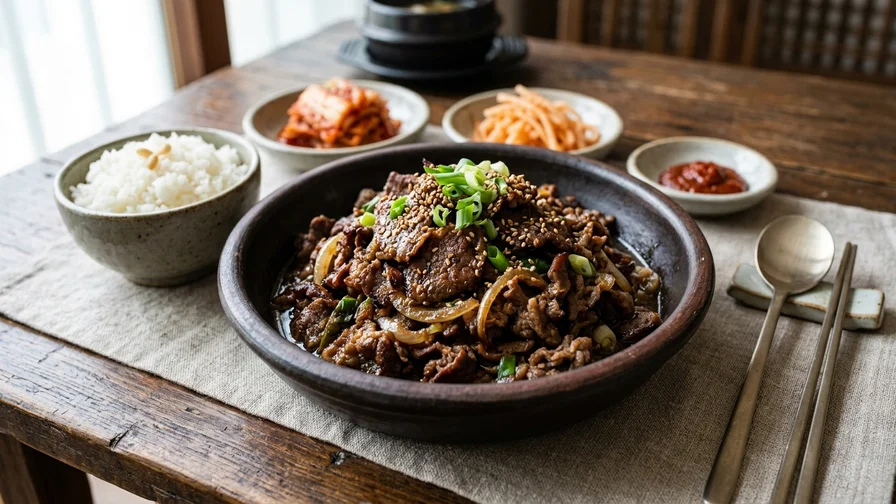
- Bulgogi: Thinly sliced beef marinated in a sauce of soy sauce, sugar, and pear juice, then grilled or simmered with a little broth. Sweet and tender, it’s the dish most often recommended as an introduction to Korean food. Rather than at BBQ restaurants, it’s more commonly found at bulgogi specialty shops or on general Korean restaurant menus.
- Saeng-galbi: Unmarinated beef short ribs. You can enjoy the natural flavor of the meat, and it’s usually dipped in salt.
- Yangnyeom-galbi: Beef short ribs marinated in a sauce made from soy sauce, sugar, garlic, and more. Its sweet and savory taste makes it very popular. Two regions are famous for galbi: Suwon, home to wang-galbi (the large marinated short ribs that originated at “Hwachunok,” a restaurant opened in 1945), and Idong in Pocheon, home to Idong-galbi (a generous style where the ribs are cut into thin strips). Both make for great day-trip food destinations from Seoul.
- Chadolbagi: Very thinly sliced fatty meat from the brisket (chest). It cooks the instant it hits the grill and has a rich, savory flavor.
- Deungsim: Meat from the back (sirloin). Juicy and tender, it’s one of the cuts Koreans favor most.
- Ansim: A cut with less fat than sirloin and exceptionally tender. It’s also widely used for steaks.
Special Cuts and Offal
These are offal dishes for those who enjoy unique textures and flavors. As a genre that developed alongside old-school drinking culture, it can be a challenge for some travelers, but knowing what these look like and what they actually are ahead of time makes them much easier to enjoy.
- Gopchang: Beef small intestine. It has a chewy texture and savory flavor, and is usually grilled.
- Makchang: The fourth stomach of a cow or the last section of a pig’s intestine. It’s chewier than gopchang and is grilled until crispy.
- Daechang: Beef large intestine. It’s high in fat, making it very rich and intensely savory.
Beyond grilled dishes, two signature meat dishes are jokbal and bossam. Jokbal is pig’s trotters slowly braised in soy sauce and spices, while bossam is boiled pork wrapped in kimchi and vegetables. Both are covered in detail in our separate guide, Chewy Jokbal and Bossam — Where to Eat in Jangchung-dong and Jongno.
3. Practical Guide: From Ordering to Eating
How to Order
Korean BBQ restaurants usually have a “minimum order” rule. Typically you need to order at least two portions, and even if you visit alone, you’ll often still have to order two.
- Take a seat and choose from the menu.
- Call the staff. Just raise your hand and say “Jeo-gi-yo” or “Yeo-gi-yo.”
- State the dish and amount you want. The format is “name of dish + quantity + juseyo.”
- Additional orders work the same way.
Ordering phrase box: if it’s hard to say, just show this screen to the staff
- Samgyeopsal i-inbun juseyo. — Two portions of samgyeopsal, please.
- Moksal il-inbun-irang galbi il-inbun juseyo. — One portion of moksal and one of galbi, please.
- Yeogi samgyeopsal il-inbun chuga-yo. — One more portion of samgyeopsal here, please.
- Gonggibap hana juseyo. — One bowl of rice, please.
Table Setting: Basic Side Dishes and Sauces
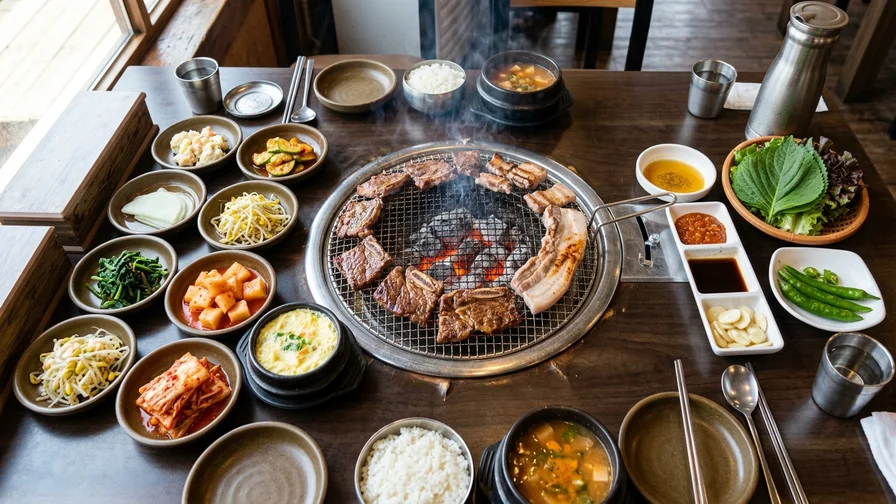
Once you’ve finished ordering, the staff will set up the grill and lay out the basic side dishes (banchan). Most banchan are free and refillable.
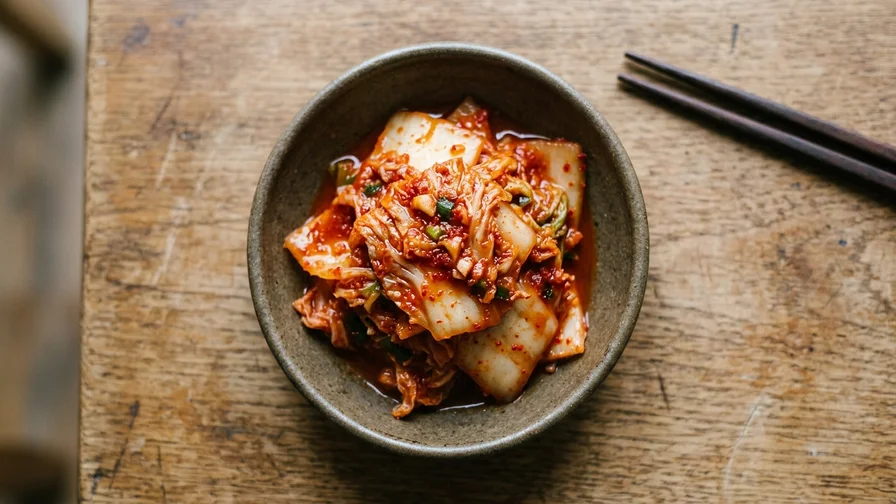
- Kimchi: Napa cabbage kimchi. It’s sometimes grilled on the pan along with the rendered meat fat.
- Pa-jeori: A salad of thinly sliced scallions dressed with gochujang, vinegar, and sesame oil. It cuts through the richness of the meat.
- Yangpa-jeorim: Onions pickled in a soy-sauce dressing. They pair well with the meat.
- Sangchu and Kkaennip: Fresh leafy greens for wrapping the meat (lettuce and perilla leaves).
- Maneul and Gochu: Raw garlic and green chili peppers. Add them to your ssam or grill them on the pan.
- Ssamjang: Korea’s signature BBQ sauce, a blend of doenjang (soybean paste) and gochujang.
- Sogeum and Gireumjang: A sauce of salt, pepper, and sesame oil. It’s mainly used for dipping beef.
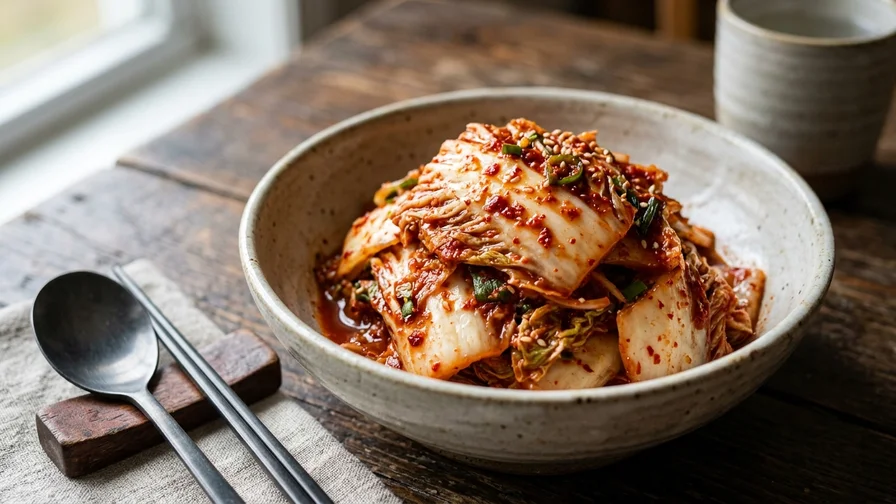
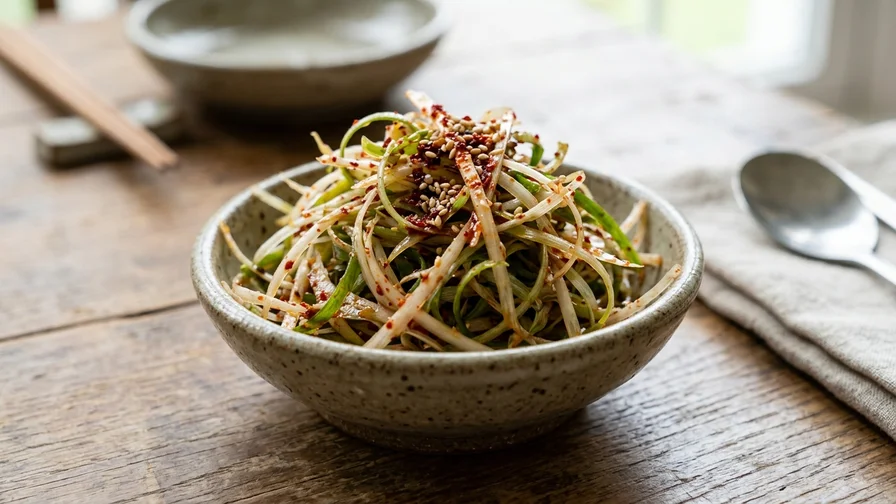
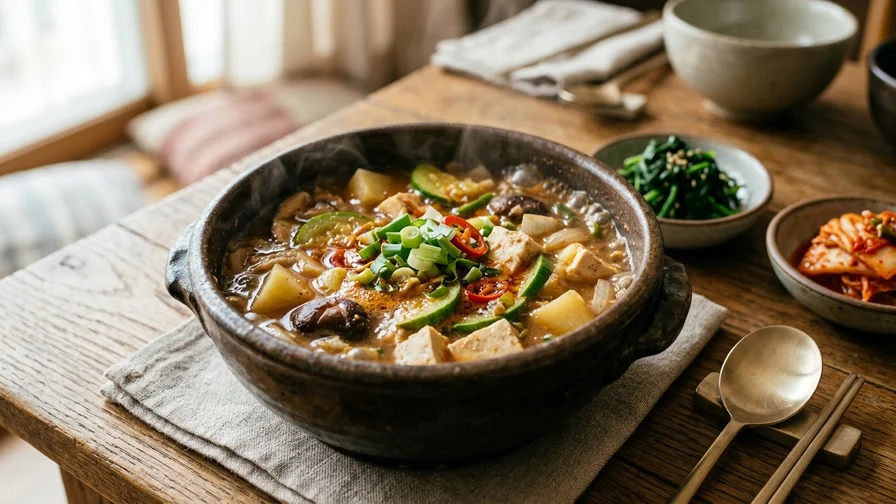
Many restaurants have a “self-bar” where you can grab more side dishes yourself when you run low.
How to Grill the Meat
Depending on the restaurant, the staff may grill for you, or you may grill it yourself. If you’re not sure, just watch the tables around you or ask the staff.
- Heat the grill thoroughly. The method varies, including charcoal, gas, and electric.
- Place the whole piece of meat on the grill. At first, lay it down uncut and sear both surfaces. Once the outside turns brown, less of the juice is lost.
- Cut it into bite-sized pieces. Use the scissors and tongs provided at the table. About 1.5cm wide is right for samgyeopsal.
- Cook the cut sides. Flipping too often lets the juices escape, so it’s best to flip just once or twice.
- Move the fully cooked meat to the edge of the grill so it doesn’t burn.
If you’d like to try everything yourself at home, from choosing the cut to the grilling temperature, we’ve laid it out step by step in Korean BBQ at Home.
How to Make a ‘Ssam’
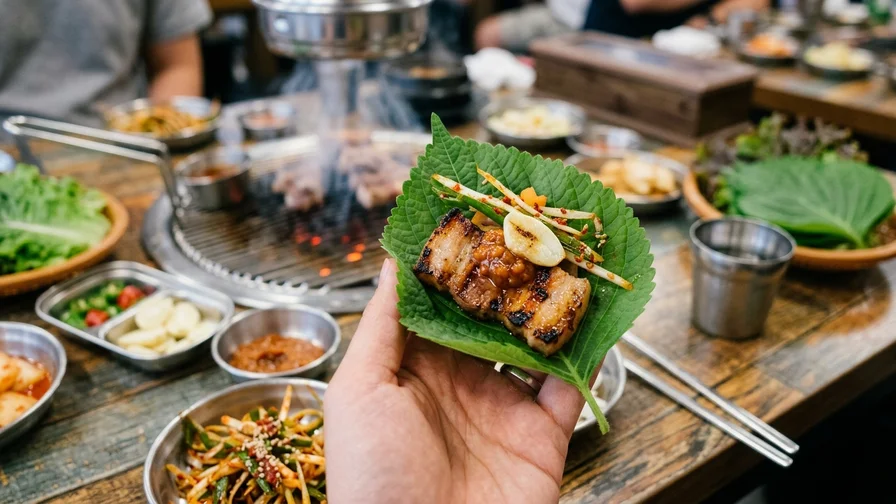
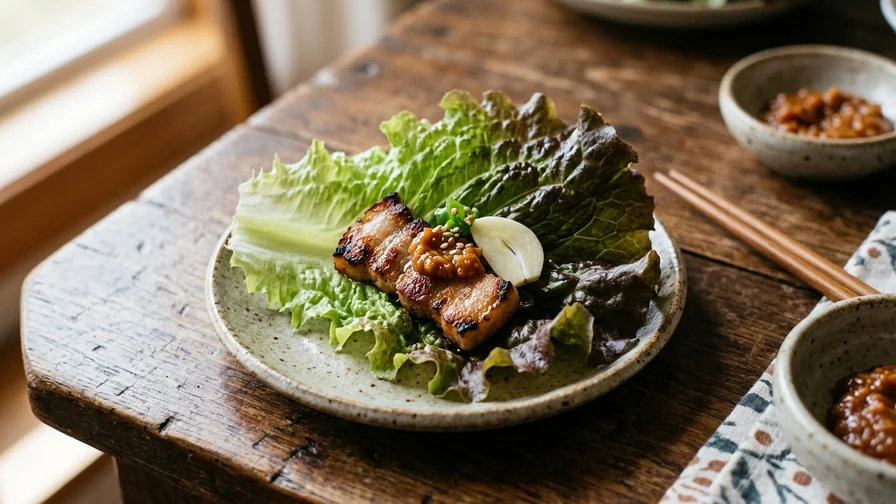
A “ssam” is a way of wrapping meat and various ingredients in a leafy green to eat in one bite. It’s at the heart of Korean BBQ culture.
- Place one or two lettuce leaves, or one perilla leaf, in your palm.
- Dip a piece of well-cooked meat in ssamjang or gireumjang and set it on top.
- Add grilled garlic, pa-jeori, rice, and so on to taste.
- Wrap it up well so nothing falls out, and pop it in your mouth in one go. The custom is to eat a ssam in a single bite rather than splitting it up.
4. Completing the Meal
After the meat, it’s customary to wrap up the meal with a carbohydrate dish.
Meal Dishes
- Gonggibap: A bowl of steamed white rice. 1,000 to 2,000 won (about $1).
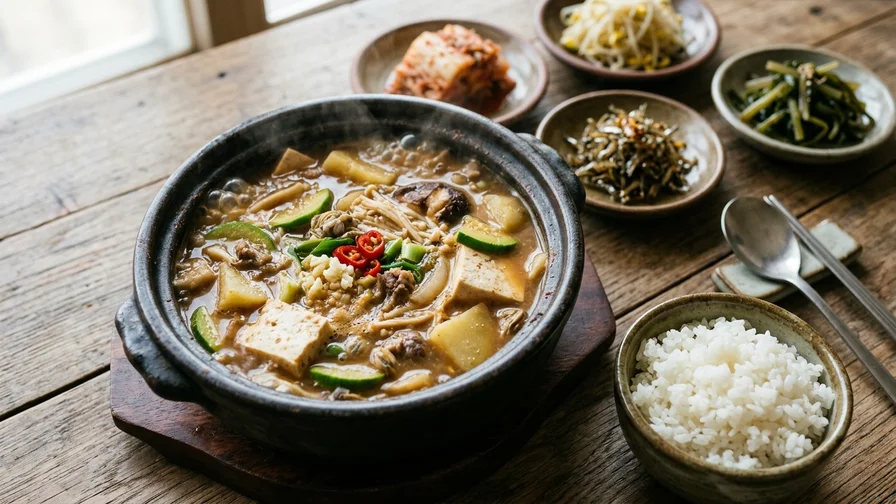
- Doenjang-jjigae: A stew made with Korean doenjang (soybean paste). It contains tofu, vegetables, and sometimes meat. Eat it with rice, either partway through the meat or afterward.
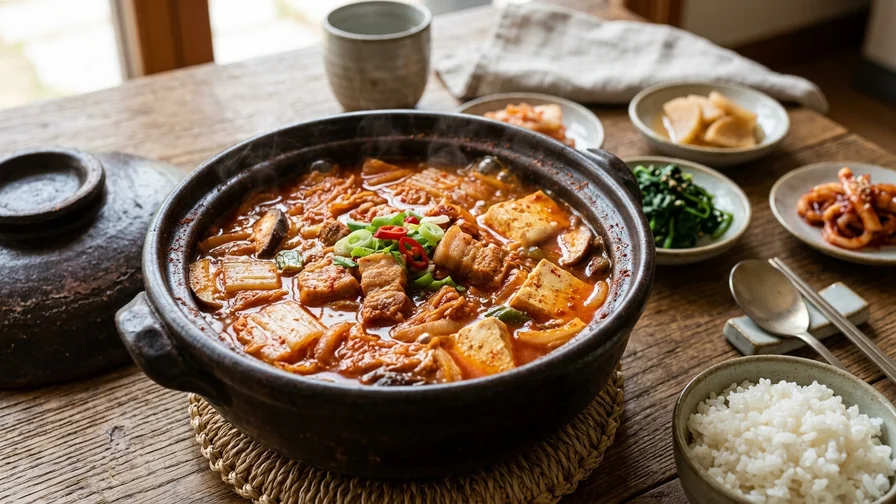
- Kimchi-jjigae: A spicy stew made by simmering kimchi with pork or tuna.
- Naengmyeon: A chewy noodle dish served in a cold broth. It’s a beloved palate cleanser after grilled meat. There are two types: mul-naengmyeon (with a chilled broth) and bibim-naengmyeon (with a spicy mixing sauce). At BBQ restaurants it commonly runs 9,000 to 12,000 won, while famous naengmyeon specialty shops can charge over 15,000 won (as of June 2026).
Alcohol and Beverages
Korean BBQ is often enjoyed with a drink. The pairing of meat and alcohol is practically a culture of its own.
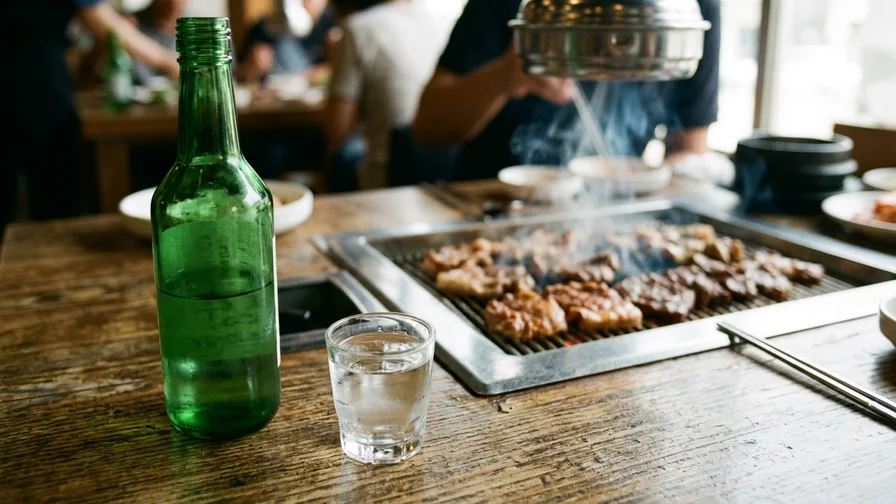
- Soju: Korea’s signature distilled-and-diluted spirit. The flagship products are generally 15.7% alcohol, with some over 20% (verified October 2026). It’s the most common companion to fatty grilled meat.
- Maekju (beer): Restaurants serve Korean beers (Cass, Terra) and imports. “Somaek,” a mix of soju and beer, is a hugely popular combination.
- Makgeolli: A traditional Korean fermented rice wine. Low in alcohol at 6 to 8%, with a slightly sweet taste.
5. Key Information for Travelers
Price Information
These are average prices for a typical BBQ restaurant in central Seoul (as of June 2026). They can vary by area or restaurant tier, and the dollar conversions assume $1 = about 1,400 won, so they’ll fluctuate with the exchange rate.
| Item | Korean Won (KRW) | US Dollars (USD, approx.) | Notes |
|---|---|---|---|
| Pork (1 portion) | 17,000 – 22,000 won | $12 – $16 | Based on samgyeopsal and moksal. Per-portion weight (120–180g) varies by restaurant. |
| Marinated Galbi (1 portion) | 25,000 – 45,000 won | $18 – $32 | Pork or beef short ribs |
| Hanwoo (1 portion) | 45,000 – 120,000 won | $32 – $86 | Wide range depending on cut and grade |
| Meal (stew, naengmyeon, etc.) | 9,000 – 16,000 won | $6.5 – $11.5 | Naengmyeon averages around 12,000 won in Seoul |
| Soju | 5,000 – 8,000 won | $3.5 – $6 | Per bottle. Tends to be pricier in areas like Gangnam. |
| Beer | 6,000 – 9,000 won | $4 – $6.5 | Per bottle |
Is Solo Dining Possible?
Most K-BBQ restaurants require a minimum order of two portions, which can be a hurdle if you’re traveling alone. There are three alternatives.
- Solo BBQ restaurants: There’s a growing number of “hon-gogi” (eating meat alone) concept restaurants with seating designed for single diners and orders by the single portion. Just search “혼고기” or “solo BBQ” on Google Maps or Naver Map.
- Use a butcher restaurant: Since you buy only as much as you want at the butcher counter and grill it, solo dining is relatively easy. To be sure, confirm whether they accept single diners before you go.
- Lunch specials: Many BBQ restaurants serve single-serving meat set meals (meat + stew + rice) at lunch.
Dietary Restrictions: Halal, Vegetarian, Allergies
K-BBQ is a pork-centered culture, so travelers with dietary restrictions should know a few things in advance.
- Halal: BBQ restaurants with halal certification are extremely rare in Korea. The beef at a general BBQ restaurant isn’t slaughtered halal, and cross-contamination is a given, since the same grill and tongs are used with pork. Muslim travelers will be on safer ground around Usadan-ro near the Seoul Central Mosque in Itaewon, where halal restaurants are concentrated. A good example is Eid 📍, a halal Korean restaurant that serves dishes like bulgogi and bibimbap as halal. It’s best to check that it’s open on Google Maps before you visit.
- Vegetarian/Vegan: BBQ restaurants themselves have essentially no vegetarian options. Doenjang-jjigae is often made with anchovy or beef broth, and kimchi usually contains fermented seafood. If you’re with a vegetarian, the practical move is to seek out a temple-cuisine restaurant or a dedicated vegetarian spot instead of a BBQ place.
- Allergies: The marinades for yangnyeom-galbi and bulgogi contain soy sauce (soy, wheat), pa-jeori contains sesame oil (sesame), and ssamjang contains soy. If you have a shellfish or seafood allergy, also be careful with kimchi (fermented seafood) and seafood-broth stews. You can let them know in advance by saying “Jeoneun ○○ allergy-ga isseoyo” (I have a ○○ allergy).
Recommended Areas
- Myeongdong: With its many tourists, lots of places offer menus in English, Chinese, and Japanese. There’s plenty of choice, though prices may be slightly higher than in other areas. Search for Myeongdong K-BBQ restaurants on Google Maps
- Hongdae: Being near a university district, it has many young, lively restaurants. You’ll find good-value spots and BBQ places with unique concepts. Search for Hongdae K-BBQ restaurants on Google Maps
- Gangnam: As a business district, it has many clean, modern restaurants, ranging from high-end Hanwoo specialty shops to popular BBQ spots aimed at office workers. Search for Gangnam K-BBQ restaurants on Google Maps
- Jongno: With its many long-standing favorites and old-school eateries, you can feel a traditional atmosphere here. In the evenings, the alley BBQ spots come alive. Search for Jongno K-BBQ restaurants on Google Maps
- Itaewon: A gathering place for people of many nationalities, so there are many foreigner-friendly restaurants where communicating in English tends to be easy. Search for Itaewon K-BBQ restaurants on Google Maps
If you’d like a more specific look at vetted restaurant picks by area, our piece Best Korean BBQ in Seoul — Gangnam, Itaewon & Jongno Picks is the hands-on companion to this guide.
Payment and Tipping
Nearly every restaurant in Korea accepts credit cards. After your meal, take the bill to the counter to pay. Korea has no tipping culture, so you only pay the amount on the bill.
Transportation and Reservations
Most BBQ restaurants are near subway stations, so they’re easy to reach by public transport. Kakao T accepts overseas-issued cards, but sign-up needs SMS verification and some overseas SIMs don’t receive the code (verified October 2026). If you need help, call the 24-hour tourist information line at 1330, where you can get interpretation services in English and other languages.
Popular restaurants can have long waits during dinner hours. If possible, it’s a good idea to book by phone or online, though most general BBQ restaurants are fine to visit without a reservation. Check the opening hours on the official site or Google Maps before you go.
Cut costs with butcher restaurants and lunch specials
- For the best value, go to a butcher restaurant: If you want good-quality meat at a low price, look for a butcher restaurant. Even with the table setting fee, the total cost is often lower.
- Take advantage of lunch specials: Many BBQ restaurants offer a “lunch special” on weekdays (usually 11:30 to 14:00). You can enjoy meat along with a meal dish (stew, rice, etc.) at a lower price than dinner.
- Ask for help: If you don’t know how to grill the meat or need a side-dish refill, don’t hesitate to call the staff. A simple “Dowajuseyo” (Please help us) is usually enough to get a friendly hand.
- Curious about what’s beyond tradition: A new wave of meat dishes blending Korean and Western styles is covered in K-Meat Fusion Trends.
Some photos © Korea Tourism Organization (KOGL Type 1)