A New Face for Old Markets — 6 Traditional Markets Powered by Young Vendors
목차
- How Young Vendors Came to Traditional Markets: A New Source of Energy
- What Young Vendors Are Selling, and Their Success Stories: Fresh K-Business
- The Role of Young Vendors in Reviving Traditional Markets: A Bridge to the Future
- Connecting with Young Vendors: Sharing in Korean Jeong (Warmth)
- The Vision of Young Vendors Leading Future Markets: Sustainable K-Culture
The story of young vendors in traditional markets is one of the most worthwhile scenes to catch on a trip to Korea. As cafes, craft studios, and dessert shops moved into hanbok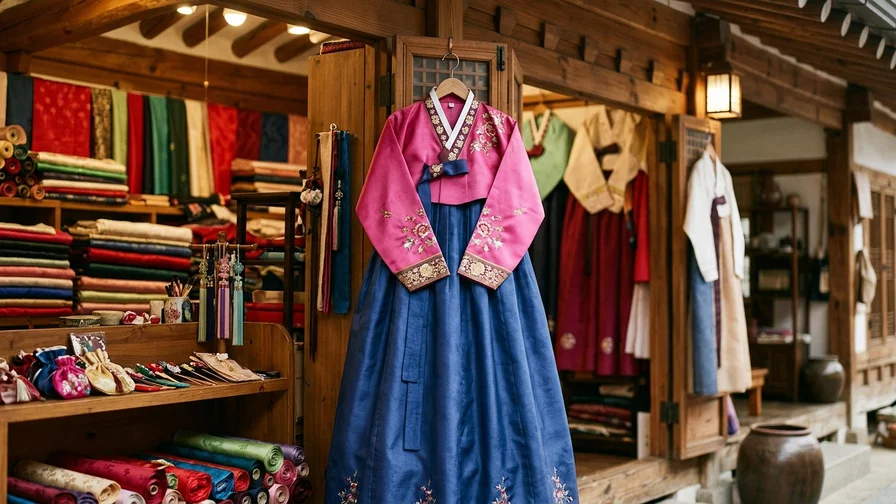 stalls in market alleys that go back a century, the look of these markets changed completely. That said, youth malls open and close at a rapid pace, so this article honestly lays out the places that are still genuinely worth visiting as of June 2026, how to get there, and what to watch out for.
Quick Summary
- The main hubs are Jeonju Nambu Market 📍, Gwangju’s 1913 Songjeong Station Market 📍, Seoul’s Tongin Market 📍 and Gyeongdong Market 📍, Daegu’s Bangcheon Market 📍, and Busan’s Gukje Market 📍 area
- The anchors that are reliably alive and well are Tongin Market’s brass-coin lunchbox, Gyeongdong Market’s converted old-theater cafe, the Jeonju Nambu Market night market (Fri & Sat), and Daegu’s Kim Kwang-seok Memorial Road
- Tenants in youth malls turn over very quickly, so don’t go aiming for one specific shop; it’s safer to plan your route around the market itself and its fixed anchors
- For travel between cities, Seoul to Busan is about 2 hours 30 minutes by KTX, so an overnight stay or longer is recommended over a day trip
How Young Vendors Came to Traditional Markets: A New Source of Energy
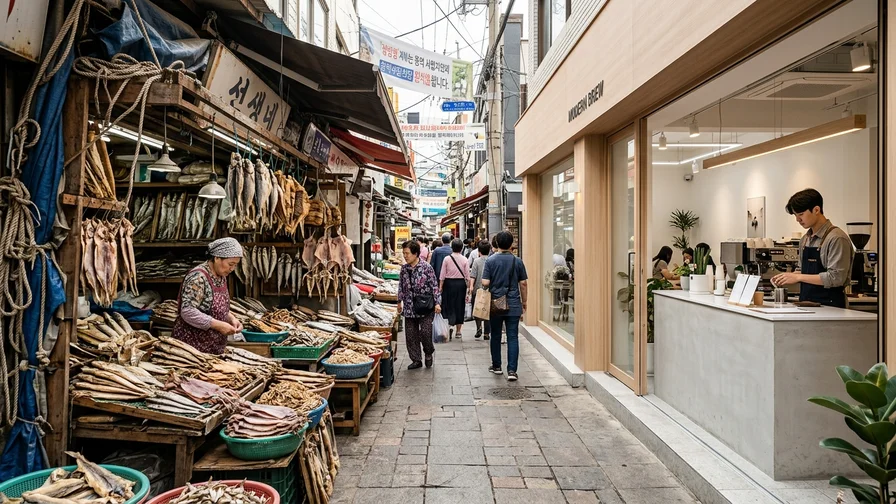
Traditional markets were once widely seen as places with dwindling customers and empty stalls. The atmosphere began to shift as young people moved into those vacant spaces. You can read more about the cultural meaning of Korea’s traditional markets here.
Where Revitalization Programs Met Young Entrepreneurs
- From the mid-2010s, the national and local governments rolled out youth mall programs nationwide, renting empty stalls cheaply to young founders
- Low rent gave young people room to try bolder concepts like cafes, craft studios, and fusion street food
- That said, many youth malls across the country failed to become self-sustaining once the support period ended. As of 2026, a good number have shrunk or sit empty, so checking the latest status before you visit is essential
- Related government support programs (run by the Small Enterprise and Market Service) can be checked on the Gov24 portal
A Generational Shift in Traditional Markets
The result is a picture of seasoned merchants’ know-how meeting young people’s sensibility in the same alley. Within one market, a grandmother’s rice-cake shop might sit right next to a young vendor’s latte bar. A market survives long-term only when generations mix, and the gap between markets that found that balance and those that didn’t is now clearly emerging.
What Young Vendors Are Selling, and Their Success Stories: Fresh K-Business
What young vendors in traditional markets do best is layer a new experience onto a familiar space. The three places below are prime spots to see that trend firsthand, with their current status noted honestly.
Jeonju Nambu Market: The Ups and Downs of the Original Youth Mall, Plus the Night Market
- Nambu Market 📍: 49 Pungnammun 2-gil, Wansan-gu, Jeonju, Jeollabuk-do, a 5-minute walk from the Jeonju Hanok Village
- The 2nd-floor youth mall “Real New Town” is the original of Korea’s youth malls (launched in 2011), but as of 2026 fewer than half its stalls remain occupied, and which shops actually open varies day to day, so don’t make the youth mall itself your destination
- Instead, the Nambu Market Night Market is the sure draw: every Friday and Saturday from 17:00 to 23:00 (as of June 2026; subject to change during holidays and winter), food stalls line the market’s central crossroads with plenty of young sellers taking part
- Getting there: from the stop in front of Jeonju Station, city bus 999 and others take about 25 minutes; get off at Jeondong Cathedral (Hanok Village). Bus 999 passes Nambu Market directly. A taxi takes about 15 minutes
- Routing tip: the most efficient course is the Hanok Village during the day, then heading over to the Nambu Market night market around dusk
Gwangju’s 1913 Songjeong Station Market: 30 Minutes Before Your Train
- 1913 Songjeong Station Market 📍: a 2-minute walk across the road from Gwangju Songjeong KTX Station, also connected to Gwangju Subway Line 1’s Gwangju Songjeong Station
- A market dating back to 1913 that young vendors and designers renovated in 2016, with traces of that work still visible in the signage and shop design
- An honest update: it’s quieter than its heyday (around 4,000 visitors a day) and some stalls are empty (as of June 2026). Still, with many food shops open for business, it remains a good choice for filling 30 minutes to an hour of train waiting time
- It’s a single narrow, short, straight alley, so there’s no risk of getting lost. It’s one of the rare markets you can browse even while pulling a suitcase
Seoul’s Tongin Market: The Brass-Coin Lunchbox Experience
In Seoul, Tongin Market 📍 offers the most beginner-friendly experience for international visitors. It’s about an 8-minute walk from Exit 2 of Gyeongbokgung Station on Line 3, right in the middle of Seochon west of Gyeongbokgung Palace, so it pairs well with a palace itinerary.
- Brass-coin lunchbox experience (as of June 2026): at the lunchbox cafe inside the market, you buy brass coins (yeopjeon) with cash or card. Each coin is 500 won, so 10,000 won gets you 20
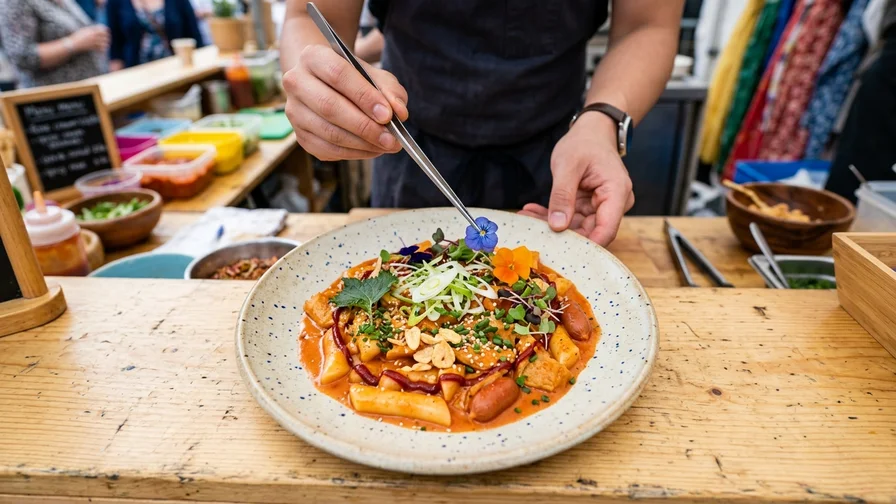
- At shops marked as “yeopjeon partner stores,” you use the coins to pick side dishes and snacks onto a disposable tray, perfect for sampling market specialties like gireum tteokbokki (oil-fried rice cakes) in small portions
- Hours: Mon–Fri 11:00–16:00 (coin sales until 15:00), Sat & Sun 11:00–17:00 (coin sales until 16:00)
- Closed: every Tuesday plus the third Sunday of each month, the number-one reason for a wasted trip, so be sure to double-check the day
- Any leftover coins are fully refundable
Linking Up with Online Marketing
Young vendors make active use of social media, delivery apps, and online stores. Even with few people at the storefront, it’s a setup that pulls customers in through Instagram and map-app reviews. Market souvenirs are increasingly going online too; for unusual gift ideas, take a look at our traditional market souvenir recommendations.
- Customs and quarantine warning: fresh produce, fish, raw vegetables, and raw nuts bought at the market are banned from entry in most countries
- Processed meats (sweet-and-spicy fried chicken, blood sausage, jerky) are also subject to quarantine, with a risk of confiscation and fines
- For souvenirs to take home, fully processed and sealed items like jam, tea, snacks, and traditional liquor are safe. For medicinal herbs and herbal teas, check your home country’s regulations in advance
- Before departure, also check your home country’s duty-free allowance (typically within USD 800 and 1–2 L of alcohol for the U.S.)
The Role of Young Vendors in Reviving Traditional Markets: A Bridge to the Future
Young vendors don’t just open a single shop; they change the image of the whole market. When younger customers show up, the entire alley starts bustling again.
Drawing New Customers and Improving the Market’s Image: Daegu’s Bangcheon Market
- Daegu’s Bangcheon Market 📍: in Daebong-dong, Jung-gu, Daegu, where the embankment path beside the market is the Kim Kwang-seok Memorial Road, a mural street themed around the late singer Kim Kwang-seok
- Kim Kwang-seok Road is a living landmark named to the Korea Tourism Organization’s “100 Must-Visit Tourist Spots in Korea,” a 350m alley walk lined with murals, statues, and an outdoor performance stage
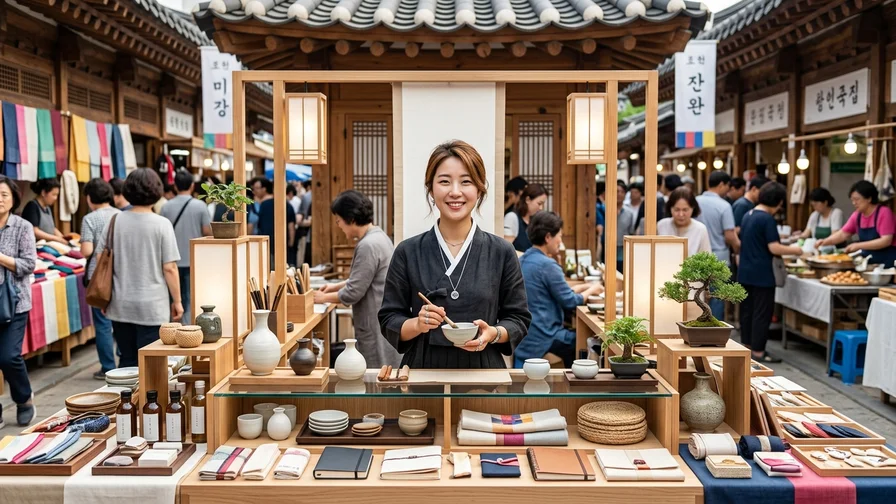
- The market side is quieter than the road, with cafes and craft studios run by young vendors scattered here and there along the alley, making it natural to take a break while walking the mural street
- Getting there: from Exit 3 of Kyungpook National University Hospital Station on Daegu Subway Line 2, walk about 5 minutes toward Suseong Bridge; once you enter the Bangcheon Market entrance, you’ll see signs for Kim Kwang-seok Road
A Harmonious Coexistence of Old and New: Seoul’s Gyeongdong Market
- Seoul’s Gyeongdong Market 📍: in Jegi-dong, Dongdaemun-gu, Seoul, right in front of Exit 2 of Jegi-dong Station on Subway Line 1, Korea’s largest market for medicinal herbs
- On the market’s 3rd floor is Starbucks Gyeongdong 1960, a remodel of the old Gyeongdong Theater, which closed in 1994 and sat abandoned for 28 years (opened December 2022, open 09:00–22:00, as of June 2026)
- The interior, which keeps the theater’s seating layout and stage intact, is the highlight. When you place an order, the order number is projected onto the wall beside the stage like film credits. It’s a profit-sharing store where part of the revenue goes to a market co-prosperity fund
- The combination of stumbling onto a converted old-theater cafe in the middle of a traditional market thick with the smell of herbs exists nowhere else in Seoul. Many herbal-medicine market shops close on Sundays, so go on a weekday or Saturday if you want to browse the market too
Editor’s Tip
Youth malls and youth-run shops open later than regular market stalls (usually after 11 a.m.) and see frequent closures and tenant turnover. Plans built around finding one specific shop by name have a high chance of falling through, so center your route on the market itself and this article’s fixed anchors (the brass-coin lunchbox, Gyeongdong 1960, the night market, Kim Kwang-seok Road), and treat youth shops as a “stop if it’s open” bonus. Making a habit of checking a map app for whether a place is open before you set out will save you a wasted trip.
Connecting with Young Vendors: Sharing in Korean Jeong (Warmth)
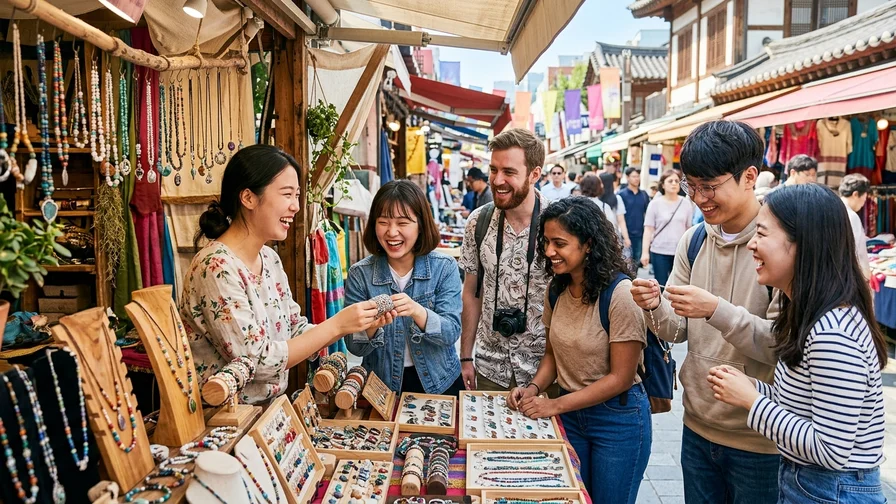
The real charm of young vendors in traditional markets is the people. Chatting directly with shop owners, watching things being made, and getting their recommendations are the heart of a market trip.
Joining Young Vendor Markets and Festivals
- Some markets hold weekend flea markets or small performances, where you can see and buy handmade goods and desserts in one place, which makes them popular with families too
- Schedules are often seasonal rather than fixed, so checking each market’s official Instagram account (for example, Jeonju Nambu Market @nambooman) is the most accurate way to confirm whether an event is on
- Visit young vendors’ shops on a market tour course done like a local
Unique Experience Programs and Workshops
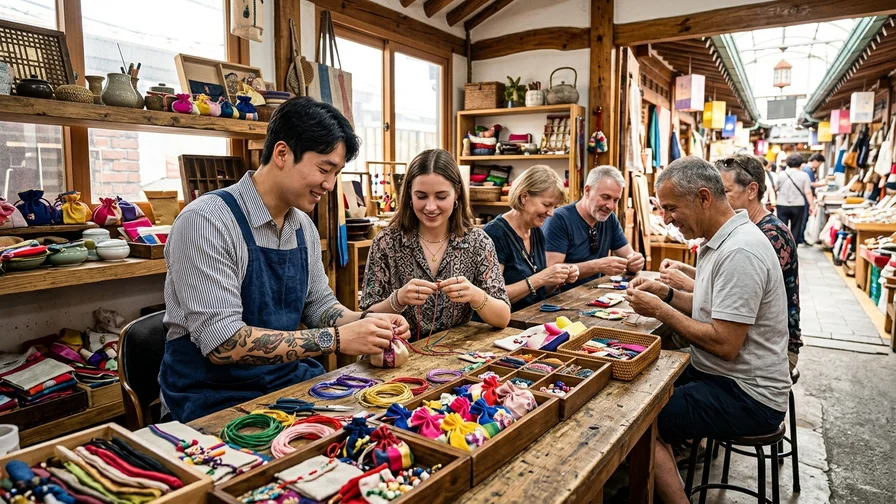
Some young shops run one-day classes in things like leather crafts, pottery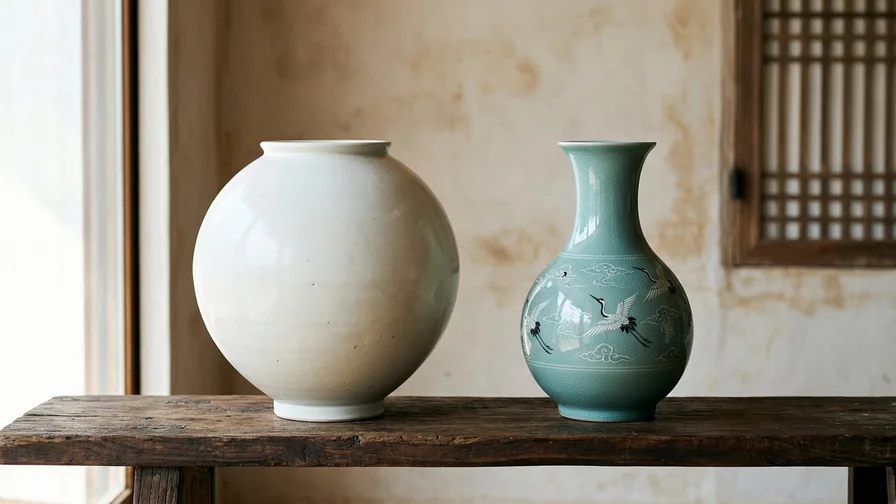 , and candle making. Even if the language barrier is a bit tricky, hands-on making is something you can enjoy without pressure. Classes are usually by reservation, so book ahead via Instagram DM or Naver reservation. If you want to wander the alleys while snacking on market treats, it helps to keep our guide to traditional market snacks handy too.
If you have a food allergy or follow a special diet such as vegetarian or halal, be sure to tell the staff before ordering.
Cross-contamination note: many market stalls fry dumplings, fritters, and fish cakes in the same oil and share cutting boards and tongs. If you have a nut, shellfish, or gluten allergy, choose shops with a visible separate cooking area over open stalls, and if you keep a religious diet, check in advance whether the same knife and board were used for other proteins.
It’s safest to use a translation app to ask something like, “Does this food contain [peanuts / shrimp / meat]?” Market foods often contain salted seafood (jeotgal) or meat ingredients, so take care.
The Vision of Young Vendors Leading Future Markets: Sustainable K-Culture
Young vendors in traditional markets dream not of a passing fad but of local brands that last. Their vision is markets standing once again as cultural hubs for their regions.
Building Local Brands and Contributing to the Regional Economy: Busan’s Gukje Market
- Busan’s Gukje Market 📍: in Sinchang-dong, Jung-gu, Busan, about a 5-minute walk from Exit 7 of Jagalchi Station on Subway Line 1, a flagship Busan market also famous from film
- On the 2nd-floor arcade is a youth-shop space called “609 Youth Mall,” focused on items like goods, photo studios, and customizable trinkets, though the tenant situation varies a lot, so manage your expectations when you stop by (as of June 2026)
- Gukje Market itself divides into themed alleys for electronics, kitchenware, vintage clothing, and more, giving you plenty to browse for half a day regardless of the youth mall. The classic route is to combine it with the neighboring Bupyeong Kkangtong Market and Jagalchi Market
- If you’re curious about Korea’s traditional five-day market culture, the Korean five-day market (oiljang) makes for an interesting comparison
Young Vendors Reaching for Global Markets
As more young shops add foreign-language menus, card payment, and online ordering, visiting has become much easier for international travelers. These young vendors are the very ones bringing the appeal of Korea’s traditional markets to the world. With this a transitional moment where some places thrive and others struggle, a traveler’s single visit and bit of spending offer real encouragement to these alleys.
The alleys built by young vendors in traditional markets are among the most vivid scenes you’ll find on a trip to Korea. Checking each market’s hours and closing days on a map app before you go, and looking up the subway routes in advance, will make your route far smoother. If you’d like to do all six markets as one flow, continue with the First Time at a Korean Traditional Market? 6 Local Routes in Seoul, Busan, and Jeonju, and be sure to check out more on Come On Korea as well.
Related reads in this series
- First Time at a Korean Traditional Market? 6 Local Routes in Seoul, Busan, and Jeonju
- Korean Traditional Market Souvenirs to Pack — Ginseng, Hanbok & Hahoe Masks
- Open Only Once Every 5 Days — 6 Korean Five-Day Markets, from Jeongseon to Moran
- Bindaetteok in One Hand, Hotteok in the Other — A Korean Traditional Market Snack Bucket List
- Korean Traditional Market Tour by Subway — 5 Markets in One Day