
The Foreigner Korail Pass and How to Save on Train Fares
목차
The Bottom Line Up Front
For any savvy traveler heading to South Korea in 2026, the K-Train Pass is your golden ticket. With this one pass, you can explore Korea’s major cities with incredible convenience and at a fraction of the cost. But to truly make the most of it, you need to know the ins and outs. This guide covers everything from the different types of passes and how to buy them to seat reservations and hidden perks. For a broader overview of train travel in the country, you can check out our Korea by Train — How to Ride Everything from the KTX to the Mugunghwa.
Why Do You Absolutely Need a K-Train Pass?
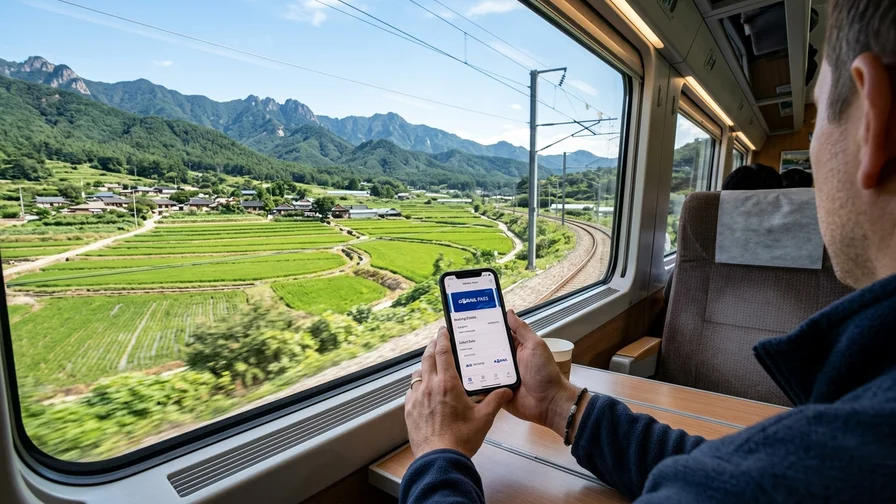
From the dazzling urban landscape of Seoul to the chilled-out beaches of Busan, the ancient history of Gyeongju, and the foodie paradise of Jeonju, Korea’s cities each offer a unique charm. To experience it all, you’ll need to travel between them, and that’s where transportation costs can really add up. For example, a one-way KTX (Korea’s high-speed train) ticket from Seoul to Busan costs around ₩60,000 (about $45 USD) as of 2026. A round trip alone would set you back over ₩120,000.
This is where the K-Train Pass comes in. It’s a rail pass exclusively for foreign visitors that grants you unlimited rides on most KORAIL-operated trains, including the super-fast KTX, for a set period. If you plan on visiting two or more cities, the K-Train Pass is almost guaranteed to be more economical than buying individual tickets. Beyond the savings, it offers immense freedom, allowing you to build a flexible itinerary without the hassle of buying a ticket for every single journey.
A Deep Dive into Korea’s Rail Passes for Foreigners
The rail pass for foreigners in Korea is most commonly known as the ‘KORAIL Pass’ or ‘KR Pass’. Let’s break down the options to help you find the perfect fit for your travel style.
KR Pass: Your Guide to Consecutive vs. Flexible Options
The K-Train Pass is broadly divided into two categories: ‘Consecutive Pass’ and ‘Flexible/Select Pass’. See which one matches your itinerary in the table below.
| Pass Type | Duration | Features | Recommended For |
|---|---|---|---|
| Consecutive Pass | 3-day, 5-day | Unlimited use for 3 or 5 consecutive days from the designated start date. | Travelers on a tight schedule who want to see multiple cities quickly. |
| Flexible/Select Pass | 2-day, 4-day (within a 10-day period) | Choose any 2 or 4 days for travel within a 10-day window from your first use. | Travelers who prefer to stay in one city for a few days before moving to the next. |
The passes are also priced based on age and group size:
- Adult: Ages 28+
- Youth: Ages 13-27 (or anyone holding an International Student Identification Card – ISIC)
- Child: Ages 6-12
- Saver: For groups of 2-5 people traveling on the same itinerary (offers an additional discount on Adult/Youth fares)
The pass covers Economy Class seats. While you can upgrade to First Class by paying an extra fee, sticking with Economy is the most cost-effective way to use the pass.
Is the K-Train Pass Always the Best Choice?
The K-Train Pass isn’t a one-size-fits-all solution. If your entire trip is confined to Seoul, or you’re only planning a single day trip to a nearby city, buying individual KTX tickets will likely be cheaper. However, if your itinerary includes hopping between major cities like Seoul, Busan, Jeonju, and Gangneung, the economic benefits of the pass are undeniable. The savings become even greater if you qualify for the Youth or Saver discounts.
Editor’s Pro Tip
Here’s how to get 200% value out of your Flexible Pass. Let’s say you bought a 4-day pass (valid within 10 days). On Day 1, activate it by taking the KTX straight from Incheon Airport to Busan. Spend the next 2-3 days exploring Busan without using the pass. On Day 4 of your trip, use your pass again for a ride to Gyeongju. By only using the pass on days you’re traveling between cities, you can maximize the 10-day validity period and enjoy a more relaxed journey. On non-pass days, use the local subway or buses to save even more on transportation!
From Purchase to Boarding: Your Step-by-Step Guide
Decided to get the pass? Great! Here’s how to navigate the process from online booking to actually riding the train.
How to Buy Online and Exchange Locally
While you can buy the K-Train Pass upon arrival in Korea, purchasing it online in advance is far more convenient and guarantees you’ll have it ready.
- Book Online: Go to an official partner website, choose your pass type, select a start date, fill in your personal details (your name must match your passport exactly!), and complete the payment.
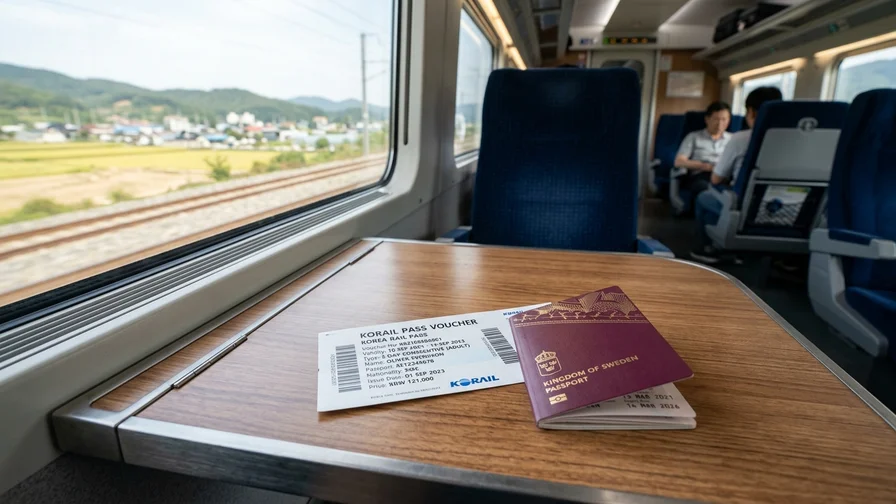
- Receive Your Voucher: Once payment is confirmed, an e-voucher will be sent to your email. Print it out or save it on your smartphone.
- Exchange in Korea: After arriving, head to a ticket counter at a major train station like Incheon Airport, Seoul Station, or Busan Station. Present your passport and e-voucher to receive your physical pass. You can make the process smoother by saying the simple Korean phrase, “코레일 패스 바꿔주세요 (Ko-re-il pae-sseu ba-kkwo-ju-se-yo),” which means “I’d like to exchange my Korail Pass, please.”
Seat Reservations and Key Things to Remember
This is the most common mistake first-time visitors make: assuming the pass itself is a ticket. It is not! The K-Train Pass is a free-ride coupon, but it does not guarantee you a seat. You absolutely must reserve a seat before boarding.
- How to Reserve a Seat: You can reserve your seat through the ‘My Reservation’ section on the official KORAIL website (LetsKorail) or by showing your pass at any train station ticket counter.
- Usage Limits: You can make up to two seat reservations per day with the pass. For additional journeys on the same day, you can use standing (Ip-seok) or non-reserved (Ja-yu-seok) tickets without limit, but this is not recommended for long-distance routes.
- Important Exclusions: The K-Train Pass is not valid on SRT trains (run by a different company), subways, or certain premium tourist trains. Also, be extremely cautious about planning your trip during Korea’s biggest holidays: Seollal (Lunar New Year) and Chuseok (Korean Thanksgiving). Train tickets sell out months in advance during these periods, making it nearly impossible to get a seat, even with a pass. It’s best to avoid train travel during these peak times.
Hidden Gems and Extra Perks with Your Pass
The K-Train Pass does more than just save you money on transport; it enriches your entire travel experience. Pass holders can sometimes get small discounts at select hotels, museums, and restaurants partnered with KORAIL. Ask for a leaflet with partner deals when you exchange your voucher at the station.
Why not use your pass to create a unique itinerary off the beaten path? You could take the Jeolla Line from Seoul on a West Coast foodie tour, stopping in Jeonju (the home of bibimbap) and Gwangju (a city of arts), all the way to the port city of Mokpo. Alternatively, ride the Jungang Line from Seoul for an East Coast history and culture trip, visiting Gangneung (the coffee capital), Andong (the heart of Korean spiritual culture), and Gyeongju (the ancient Silla Kingdom capital) before arriving in Busan. You can even use your pass for some of the routes featured in our guide to Overnight Train Travel in Korea — Haerang, the Jeongdongjin Special, and Late-Night Trains.

In conclusion, if you’re planning to explore more than one city in Korea in 2026, the K-Train Pass isn’t just an option—it’s essential. It will dramatically cut your travel costs and give you the freedom and flexibility to create the adventure of a lifetime. We hope this guide has answered all your questions. For more details and to book your pass, visit the official KORAIL Pass website.
For more Korea travel tips, be sure to visit Come On Korea. And don’t miss our comprehensive Korea by Train — How to Ride Everything from the KTX to the Mugunghwa, which covers everything you need to know.