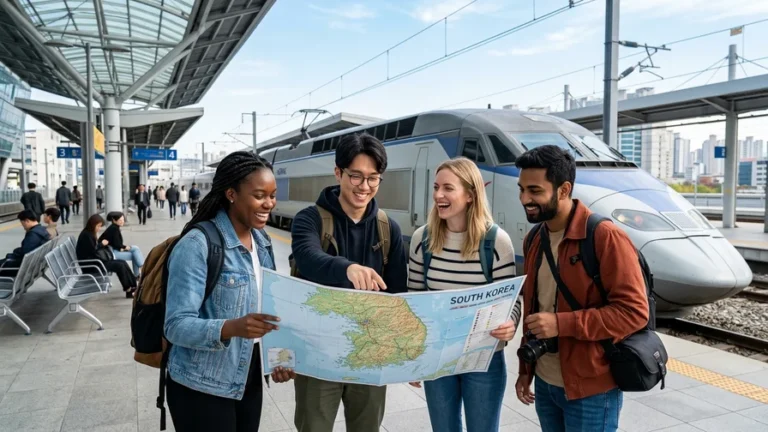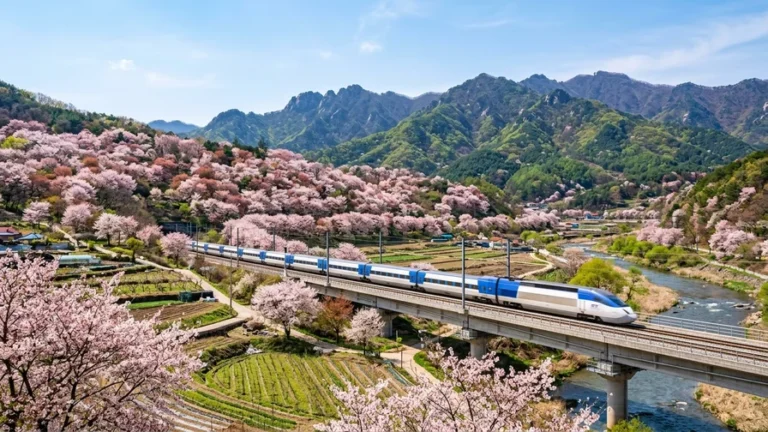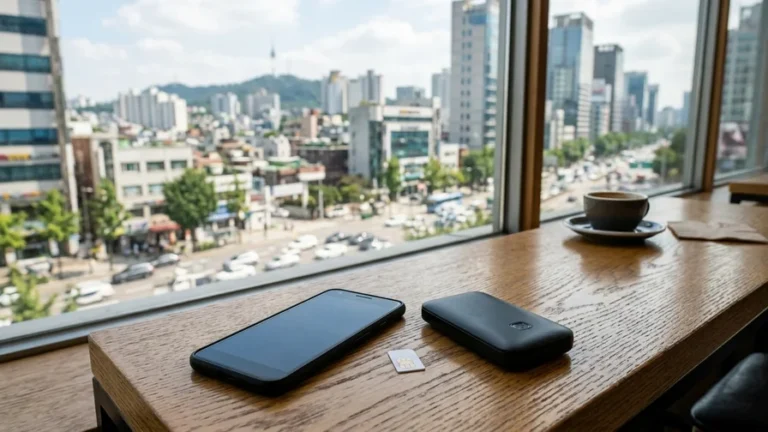
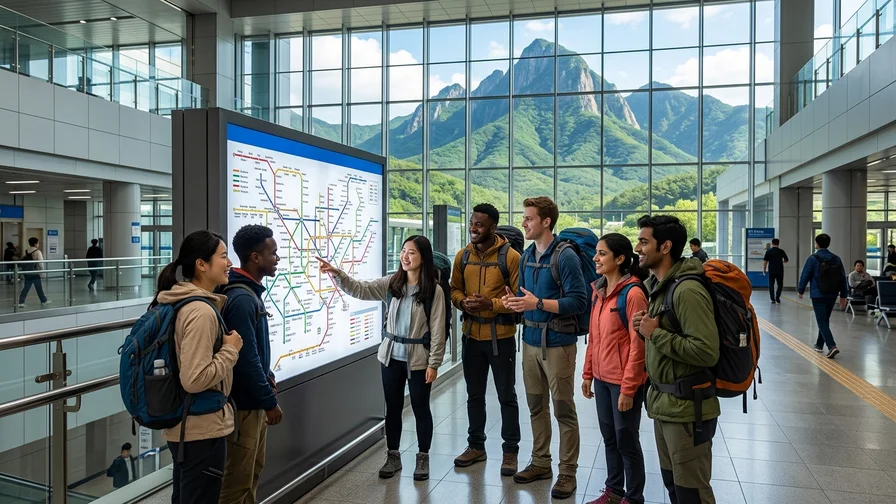
Reach Korean Mountains by Public Transport, No Car Needed
목차
- Touring Korea’s Famous Peaks Without a Car: Why Public Transport Wins
- Reaching Korean Mountains by Public Transport in 3 Stages
- Major Peaks You Reach by Train and Express Bus: Routes and Booking Tips
- Korean Mountains by Public Transport at a Glance
- Connector Buses and Shuttles by Region: Straight to the Trailhead
- Making the Most of Public Transport with Smartphone Apps
- Stays and Eats for Carless Travelers: Optimizing Your Route
- Frequently Asked Questions
Want to climb Korea’s mountains without a driver’s license or a rental car? Reaching Korean mountains by public transport is easier than you’d think once you know the basics. String trains, buses, and the subway together the right way and you can get from Bukhansan 📍 in central Seoul all the way to Hallasan 📍 on Jeju Island — no car required. In this guide we’ll lay out the train stations, bus numbers, fares, and travel times peak by peak in a table, and we’ll walk you step by step through the spots where foreign travelers most often get stuck, like payment and last-bus timing.
Honestly, we think Korea’s mountains are even more appealing if you don’t have a car. One subway ride from downtown can drop you right at a trailhead. If you want the bigger picture first, check out our full pillar guide to trekking Korea’s famous peaks.
Quick Summary
- Getting to a Korean peak breaks down into three stages: ride a KTX or express/intercity bus to the gateway city, then take a city bus from the city to the trailhead.
- Three apps — Naver Map (English supported), Korail Talk, and TmoneyGO — plus one physical T-money card cover almost everything a foreign traveler needs.
- Last buses run early in the mountains, so the safety key is working backward from your descent time to set your trailhead start time.

Touring Korea’s Famous Peaks Without a Car: Why Public Transport Wins
About 70% of Korea’s land is mountainous, so cities and mountains sit close together. That means the transit network reaches deep toward trailheads. To rent a car, foreign visitors must obtain an International Driving Permit (IDP) in their home country before departure — you can’t get one after you land in Korea. If you haven’t prepared that, public transport is realistically your only option anyway.
Convenient access
The biggest perk of hiking by public transport is that you can start at one trailhead and finish at a completely different one. A car forces you back to where you parked, but buses and trains let you climb up at point A and come down at point B. That makes ridge-traverse routes easy to plan without stress. And for city peaks like Bukhansan and Gwanaksan in Seoul, which connect straight from a subway station, a single tap of your transit card is all it takes — transport costs almost nothing on those hikes.
Helping protect the environment
During fall foliage season or peak periods, park lots fill up early, and some places like Naejangsan in Jeongeup even close the park interior to vehicles. In those situations public transport is actually faster and far less stressful. The lower carbon footprint is a nice bonus too. Mountains are spaces built around preservation, so bringing one fewer car inside is itself a small step toward caring for the peak.
Reaching Korean Mountains by Public Transport in 3 Stages
It looks complicated, but the structure is always the same. Follow it in order and any mountain solves the same way.
- Stage 1: travel to the city. Reach the gateway city by KTX (booked in the Korail Talk app) or by express/intercity bus (booked in the Bustago or TmoneyGO apps). Many trips start from Seoul, so Yongsan Station, Cheongnyangni Station, and the Dong Seoul Bus Terminal are common departure points.
- Stage 2: travel from the city to the trailhead. Once you step off at the station or terminal, you take a city bus or a national-park connector bus to the trail entrance. This leg is the trickiest for finding the right bus number, so we’ve pinned them down peak by peak in the table below.
- Stage 3: work backward from the last bus and transfers. Mountain buses run their last service early, so set your descent-completion time first, then count backward from there to fix your trailhead start time. Sort this out in advance and you’ll thank yourself.
Hyejin’s checklist
Before you set out, confirm just these four things on your phone. (1) The last bus to the trailhead, (2) the last train or bus back to your gateway city, (3) at least 10,000 won topped up on your T-money card, and (4) at least 1 liter of water per person, since there are almost no toilets, shops, or drinking water mid-mountain. Cover these four and you’ll have far fewer wrong turns from day one.

Major Peaks You Reach by Train and Express Bus: Routes and Booking Tips
Let’s unpack Stage 1, getting to the gateway city. Booking is where foreign travelers get stuck most often, so we’ve laid it out app by app.
Using Korail KTX
The Korail Talk app is the easiest way to book trains. It’s free in the app store and supports English. For Sobaeksan, take a KTX-Eum from Cheongnyangni Station to Punggi Station or Danyang Station — about 1 hour 40 minutes to 2 hours. For Naejangsan, a KTX from Yongsan Station to Jeongeup Station takes about 1 hour 40 minutes. Foreign-issued cards are sometimes declined in the app; if that happens, buy your ticket at the station counter or the in-station vending machine with cash or a card in person. You can find more on Korail’s KTX network on Wikipedia.
Booking express bus tickets
For buses, book through the Bustago or TmoneyGO apps. For Seoraksan 📍, an intercity or express bus from the Dong Seoul Bus Terminal to Sokcho takes about 2 to 2.5 hours and runs frequently. For Jirisan, a bus from Seoul to Gurye or Jungsan-ri takes about 3.5 to 4 hours. There’s one direct intercity bus a day from Dong Seoul to Seongsamjae (the Nogodan trailhead); otherwise you transfer via Gurye, so check the timetable ahead of time. If the app’s identity verification blocks you, you can buy a ticket straight from the terminal ticket window with cash, so don’t worry too much.

Korean Mountains by Public Transport at a Glance
Here are Stages 1 and 2 bundled together by mountain. For exact real-time schedules and fares, search “from your start point to the trailhead” in Naver Map and it’ll show live bus numbers and frequency, so treat the table as the big picture and double-check once more right before you leave.
| Mountain / City | Getting to the trailhead | Fare / time |
|---|---|---|
| 북한산 — Bukhansan (Seoul) | Ui-Sinseol Line to Bukhansan Ui Station (Uidong trailhead), or Line 3 Gupabal Station for bus 704 or 34, or Line 4 Suyu Station Exit 3 for bus 120 or 153 | City bus by card around 1,500 won (about US$1.10), straight from downtown |
| 관악산 — Gwanaksan (Seoul) | Line 2 Seoul Nat’l Univ. Station Exit 3 for bus 5511, 5513, or 5515 to the campus terminus, or Line 2/4 Sadang Station Exit 4 and walk to the Sadang ridge trailhead | City bus by card around 1,500 won (about US$1.10), straight from downtown |
| 설악산 — Seoraksan (Sokcho) | Intercity/express bus from Dong Seoul Bus Terminal to Sokcho, then city bus 7 or 7-1 to Seorakdong Sogongwon | About 2 to 2.5 hours from Seoul (frequent service) |
| 한라산 — Hallasan (Jeju) | Trunk bus 281 from Jeju International Airport or Jeju Bus Terminal to Seongpanak | Bus 281 runs frequently, transit card accepted |
| 소백산 — Sobaeksan (Danyang, Yeongju) | KTX-Eum from Cheongnyangni Station to Punggi Station (bus 25 to Huibang), or Danyang Station (city bus toward Jungnyeong rest stop) | KTX about 1 hour 40 minutes to 2 hours |
| 내장산 — Naejangsan (Jeongeup) | KTX from Yongsan Station to Jeongeup Station, then city bus 171 (park interior closed to cars in foliage season) | KTX about 1 hour 40 minutes |
| 지리산 — Jirisan (Gurye, Sancheong) | Bus from Seoul to Gurye or Jungsan-ri, one direct intercity bus a day from Dong Seoul to Seongsamjae, otherwise transfer via Gurye | Bus about 3.5 to 4 hours |
Connector Buses and Shuttles by Region: Straight to the Trailhead
Let’s dig deeper into Stage 2, the city-to-trailhead leg. It’s easy to miss the right stop here, so memorizing the exit number in advance really helps.
National park shuttle buses
For Hallasan, trunk bus 281 essentially serves as the shuttle. Catch the 281 at Jeju International Airport or Jeju Bus Terminal and it drops you at the Seongpanak trail entrance. Hiker demand is high, so it runs frequently and feels dependable. For Naejangsan, the park interior is closed to cars in foliage season, so riding city bus 171 in from Jeongeup Station is actually faster and easier. Get off at Jeongeup Station and catch the 171 at the stop out front. The Korea National Park Service website lists trail closures during wildfire-watch periods (typically spring, March to May, and fall, November to December), so if you’re going then, be sure to check before you set out.
Local city bus routes
For Seoraksan, after arriving in Sokcho you transfer to city bus 7 or 7-1 and get off at Seorakdong Sogongwon. For Sobaeksan, take bus 25 from Punggi Station to the Huibang trailhead, or approach from Danyang Station on a city bus toward the Jungnyeong rest stop. For Bukhansan, the Uidong trailhead connects right as you exit Bukhansan Ui Station on the Ui-Sinseol Line; from Gupabal Station take bus 704 or 34, and from Suyu Station Exit 3 take bus 120 or 153. When the exact frequency confuses you, search “from XX Station to XX Mountain” in Naver Map and trust the live bus numbers and timing it gives you.

Making the Most of Public Transport with Smartphone Apps
For getting around in Korea, Google Maps alone is weak on bus info. Naver Map and KakaoMap are far more accurate here. Here are the apps and transit card a foreign traveler should have.
How to use KakaoMap and Naver Map
Naver Map supports English and has the most accurate real-time bus arrival info. You can type your start and destination in English and search, and tapping the transit route shows which bus to catch where and how many stops until you get off. KakaoMap works much the same way. In confusing spots like mid-mountain stops, leave the map’s “arrival info” on and it shows how many minutes until the next bus in real time — a real relief. If you need a taxi, there’s the Kakao T app, but signing up and paying often requires a Korean phone number and a domestically issued card. For short-stay travelers, it’s more realistic to use airport taxi ranks or hail one on the street.
How to use T-money and Cashbee
For buses and the subway, one physical transit card is the cleanest option. Buy a T-money or Cashbee card at a convenience store (GS25, CU, and the like) for about 3,000 won (about US$2.20) and top it up with cash at the same store. Foreign-issued cards often fail identity verification, so loading cash onto a physical card from the start means you won’t get stuck every time you board. A city bus fare by card is about 1,500 won (about US$1.10), and transfer discounts apply automatically. We’d top up a generous 10,000 won or more, because there are no top-up points in the mountains. (Fares can change, so confirm before you visit.)
Editor’s pro tip
Memorizing one Korean phrase to ask the driver about the trailhead is reassuring. “Does this bus go to XX Mountain?” is “i beoseu XX-san gayo?”, and to ask to get off, “we’ll get off here” is “yeogiseo naeryeoyo.” When someone helps you, a simple “thank you” — “Kamsahamnida” — is plenty.
Stays and Eats for Carless Travelers: Optimizing Your Route
For public-transport hiking, the smoothest plan is to sleep one night in the gateway city and head into the mountain early the next morning. You can leave early without worrying about the last bus, and you can shake off the fatigue in that same city afterward.
Sokcho is where the buses to the Seoraksan trailhead gather, so booking lodging near the terminal keeps your morning trip short. After descending, the area around Sokcho Tourist and Fishery Market — 속초관광수산시장 — is a great spot to warm up with a hot bowl of soup. Danyang has plenty of lodging between Danyang Station and the intercity bus terminal, handy for staying before and after a Sobaeksan hike. In Jeongeup, staying near Jeongeup Station shortens your bus 171 route.
Lodgings and restaurants tucked below remote mountains may not be well served by buses. In that case, check the walking time with Google Maps directions and see whether English assistance is available beforehand. Plenty of traditional-market stalls and old eateries take cash only and don’t accept cards, so carrying a little cash keeps your mind at ease. Reservations and phone calls run mostly in Korean, so Google Maps’ photo menus and opening hours are especially useful for foreign travelers. (Hours can change by season and day of the week, so confirm before you visit.)
Frequently Asked Questions
Can foreigners book KTX and intercity buses through apps?
Korail Talk supports English so you can book, but foreign-issued card payments or identity verification sometimes fail. When that happens, just buy your ticket at the station counter or terminal ticket office with cash or a card in person.
What if I miss the last bus on the mountain?
Mountain buses run their last service early, so the safest approach is to set your descent-completion time first and work your start time backward from it. If you do miss it, hail a street taxi — but taxis are rare at remote trailheads, so stick to the last-bus time whenever you can.
Can I ride the bus with cash instead of a transit card?
Cash boarding is possible, but many buses don’t give change and you lose the transfer discount. Buying a T-money card at a convenience store and topping it up with cash is far more convenient and cheaper.
Follow this and you can reach Korea’s famous peaks safely without a car. Before you head out, just check the last bus to the trailhead one more time in Naver Map and you’re set. If you’d like the peak-by-peak route details all in one place, continue to the full pillar guide to trekking Korea’s famous peaks. For more travel info, find more on Come On Korea.
Related reads in this series
- Hiking Mountains in Korea, How to Pick Your First Peak
- Bukhansan by Subway from Seoul — Baegundae Route and How to Get There
- Seoraksan from Sokcho — Cable Car to Daecheongbong Peak
- National Park Trekking in Korea, Reservations, Closures and Shelters
- Hot Springs After Hiking — Recovery Spots Near Korea's Peaks
- Jirisan Hiking — Trails and Access from Nogodan to Cheonwangbong
- Hallasan Hiking to Baengnokdam via Seongpanak and Gwaneumsa
- Naejangsan Autumn Hiking by Train, Seoraebong and Sinseonbong
- Sobaeksan Hiking — Shortest Route to Birobong Peak and the Azalea Ridge
- Baekdudaegan Mountain Range, Korea's Spine and One Hike