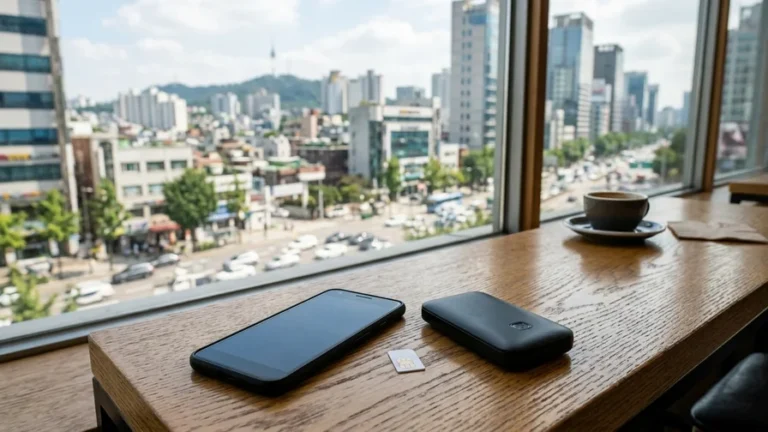
Korea by Train — How to Ride Everything from the KTX to the Mugunghwa
목차
- Why Korea Train Travel Is Where K-Culture Begins
- Korea’s Major Train Types and Routes: From the KTX to the Mugunghwa
- From Booking to Boarding: A Step-by-Step Guide for Global Travelers
- Food and Culture On and Off the Train: Tips for a Special Rail Trip
- A Safety and Etiquette Guide for Successful Korea Train Travel
Quick Summary
For travelers visiting Korea in 2026, Korea train travel is the most efficient and most authentically Korean way to get around. This guide covers every train class currently in service, from the KTX, KTX-Eum, and SRT to the ITX-Maeum and Mugunghwa, along with booking methods including the foreigner-only KORAIL PASS, fares for major routes (as of June 2026), and the food and culture you can enjoy both on and off the train. Get ready to leave the bustle of Seoul behind and discover the real beauty of Korea unfolding outside your window.
Beyond Seoul’s high-rises and dazzling neon, there’s one truly special way to travel straight through the heart of Korea: Korea train travel aboard the K-Train. The train is far more than a way to get from A to B. It’s a moving cultural exhibit that captures Korea’s four seasons and the everyday lives of its people in the scenery rolling past the window. In 2026, let us guide you into the world of the K-Train and turn your trip to Korea into an unforgettable experience.
Why Korea Train Travel Is Where K-Culture Begins
Many travelers experience only Korea’s big cities and then leave, but the train is the perfect channel to discover hidden-gem landscapes and culture. You’ll feel the warmth of small towns you could never see from a plane, panoramas where mountains and rivers come together, and the sentiments of the Koreans living among them, all up close.
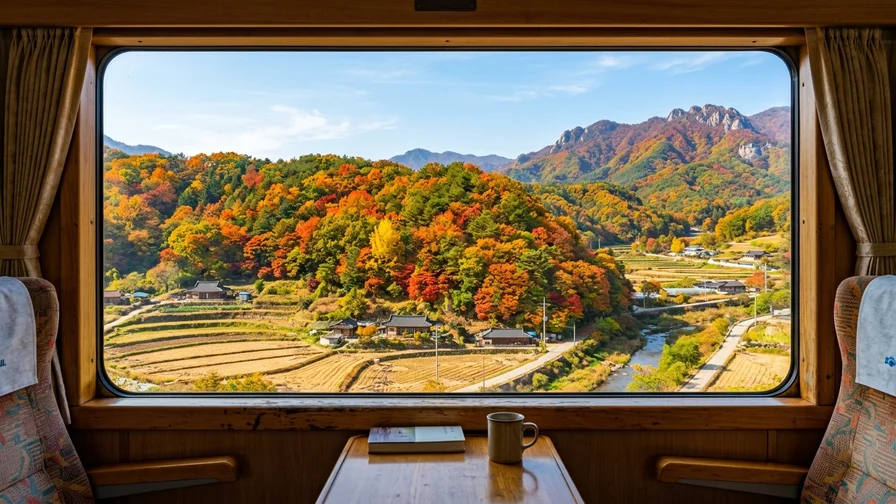
Korea’s Four Seasons, Seen Through the Train Window
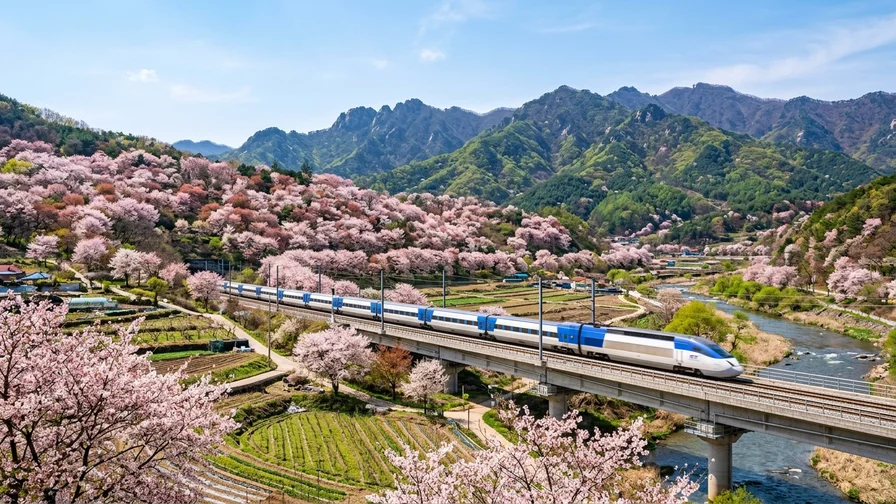
- Many routes run through showers of falling cherry blossoms in spring, with the Gyeongjeon Line and Jungang Line especially famous.
- In summer, lush green rice paddies and fields stretch on and on.
- In autumn, trains cut through mountain sections where fiery foliage creates stunning scenery; the Jungang Line and Taebaek Line are good picks.
- In winter, snow-covered countryside opens up, and the ride along the Gangneung Line toward the East Sea is the highlight.
All of this is a living painting that unfolds from your seat on a Korea train travel journey. If you’re curious about the time-frozen whistle stops between cities, we cover them in depth separately in Korea’s small train stations.
The Sentiment and Culture of Koreans You’ll Meet on Board
The train is a space where the lives of all kinds of people intersect: families heading home for the holidays, couples and friends off on weekend getaways, office workers on business trips. In these small everyday scenes, you can catch a glimpse of “Jeong,” a uniquely Korean sentiment. In the sight of someone quietly reading or gazing out the window, you’ll see the calm and romance that lie beneath the famous “ppalli-ppalli” (hurry-hurry) culture. If you’re curious about the view after sunset, be sure to also read Korea night train travel.
Korea’s Major Train Types and Routes: From the KTX to the Mugunghwa
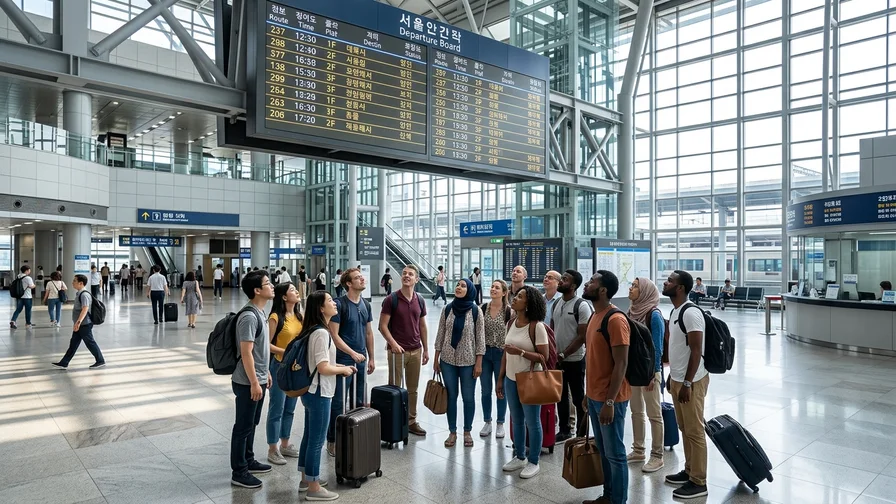
Korea’s railways are operated by two companies, KORAIL and SR. Choosing the train class that fits your travel goals and budget is the first step to successful Korea train travel.
The High-Speed KTX, KTX-Eum, and SRT: For Time-Saving Travelers
- The KTX runs Seoul to Busan in about 2 hours 30 minutes at speeds up to 300 km/h, and on newer trains every seat comes with free Wi-Fi and a power outlet.
- The KTX-Eum is a newer semi-high-speed KTX (up to 260 km/h) that debuted in 2021, serving the Gangneung Line (Seoul to Gangneung and Donghae) and the Jungang Line. With the full opening of the Jungang Line on December 20, 2024, the KTX-Eum now runs directly from Cheongnyangni Station to Busan’s Bujeon Station (about 3 hours 56 minutes, 49,800 won), a new route that enters eastern Busan via Gyeongju and Andong.
- The SRT is a high-speed train operated not by KORAIL but by a separate company, SR. It departs from Suseo Station in southern Seoul’s Gangnam area and runs toward Busan and Mokpo. It’s about 10% cheaper than the KTX, but it has its own separate booking site and app (srail.kr), and you cannot ride it with the KORAIL PASS.
If you’re traveling with kids, check out family KTX travel, which covers everything from picking seats to tips for traveling with infants.
Romance and a Slower Pace: The Charm of the ITX-Saemaeul, ITX-Maeum, and Mugunghwa
If you value the joy of the journey over speed, conventional trains are the answer.
- The ITX-Saemaeul is an express on major trunk lines like the Gyeongbu Line and Honam Line. It’s slower than the KTX but comfortable and affordable.
- The ITX-Maeum is the newest conventional train, in service since September 2023. It’s gradually replacing aging Mugunghwa trains and runs on the Gyeongbu, Honam, Jeolla, Jungang, and Donghae Lines. Fares are the same as the ITX-Saemaeul, and with a power outlet and USB port at every seat, it’s the most comfortable of the conventional trains.
- The ITX-Cheongchun runs exclusively on the Yongsan to Chuncheon route (Gyeongchun Line) and is handy for day trips to Nami Island and Chuncheon.
- The Mugunghwa is the cheapest and stops at almost every station. With its fleet steadily shrinking, it’s a classic you should ride while you still can.
Spots like Jeongdongjin Station, which has a platform right beside the sea, are romance itself. From Seoul, the Donghae-bound KTX-Eum on the Gangneung Line stops at Jeongdongjin.
| Train Type | Features | Main Routes | Best For |
|---|---|---|---|
| KTX / SRT | Fastest, connects major cities, comfortable facilities (the SRT is run by a separate company, SR) | Gyeongbu Line (Seoul/Suseo to Busan), Honam Line (Yongsan/Suseo to Mokpo), etc. | Short-trip travelers who want to save time |
| KTX-Eum | New semi-high-speed KTX, power outlet at every seat | Gangneung Line (Seoul to Gangneung/Donghae), Jungang Line (Cheongnyangni-Andong-Bujeon) | Travelers heading to the East Coast or inland North Gyeongsang |
| ITX-Saemaeul / Maeum / Cheongchun | Cheaper and comfortable than KTX, more stops (the Maeum is the newest train, debuting in 2023) | Gyeongbu Line, Honam Line, Jeolla Line, Gyeongchun Line (Yongsan-Chuncheon), etc. | Travelers who want a comfortable trip at a reasonable price |
| Mugunghwa | Cheapest, stops at most stations, romantic atmosphere | Jeolla Line (Iksan-Yeosu), Gyeongjeon Line (Bujeon-Suncheon), etc. | Long-stay travelers who want to take it slow without watching the clock |
Major Route Fares at a Glance (As of June 2026, adult standard class, one-way)
- Seoul to Busan on the KTX is 59,800 won and takes about 2 hours 30 minutes.
- Suseo to Busan on the SRT is 52,600 won, with slight differences depending on the day of the week.
- Seoul to Busan on the ITX-Saemaeul and ITX-Maeum is 42,600 won.
- Seoul to Busan on the Mugunghwa is 28,600 won.
- Cheongnyangni to Andong on the KTX-Eum is 25,100 won and takes about 2 hours.
- Cheongnyangni to Bujeon (Busan) on the KTX-Eum is 49,800 won and takes about 3 hours 56 minutes.
You can check fares in real time on the official KORAIL site (korail.com English page) and the official SRT site (srail.kr).
From Booking to Boarding: A Step-by-Step Guide for Global Travelers
Korea’s train booking system is very convenient, though it can feel a little unfamiliar to foreign travelers. With just a few pointers, anyone can buy a ticket and board with ease.
How to Book Online and Use the Mobile App
- The old letskorail.com has been merged into korail.com, where you can now select seats on the English page, so watch out for outdated blog posts pointing to the old address.
- The official KORAIL app, KorailTalk, supports English, Chinese, and Japanese, and lets you choose an Overseas Credit Card option at the payment step. It issues a mobile ticket (QR) right away, so there’s no need to exchange it for a paper ticket at the station.
- SRT trains departing from Suseo Station can’t be booked on KorailTalk, so book them on the SR website (srail.kr) or the SRT app; foreigners can pay online with an overseas card.
- Standard tickets go on sale starting one month before departure.
- If card payments keep failing, an official partner platform like Klook makes a good workaround.
The Foreigner-Only Pass: Making the Most of the KORAIL PASS
If you want unlimited rides on KORAIL trains for a set period, we recommend the foreigner-only KORAIL PASS.
- As of June 2026, adult prices are 131,000 won for a 2-day pass, 186,000 won for 3 days, 234,000 won for 4 days, and 275,000 won for 5 days. Every pass is a flexible type that lets you pick your travel days within a 10-day validity window.
- It covers all KORAIL trains, including the KTX, KTX-Eum, ITX, Mugunghwa, and tourist trains, but the SRT and subway are excluded.
- You can reserve seats up to twice a day; after that you ride on standing or open-seating tickets.
- Buy it online before entering Korea on the official KORAIL site or a partner platform. It can be used immediately as a mobile voucher, so a physical exchange isn’t required.
- The “KORAIL PASS Plus,” launched in December 2025, adds a prepaid transit card function for subways and buses nationwide for an extra 8,000 won. You pick up the card at kiosks in major locations like Incheon Airport, Seoul Station, and Busan Station.
A round-trip Seoul-Busan KTX (119,600 won) alone gets close to the price of a 2-day pass, so two or more long-distance trips usually make it worthwhile. For break-even calculations by pass type and screenshots of the purchase process, see our detailed K-Train pass guide.
Editor’s Tip
During Korea’s biggest holidays, Seollal (Lunar New Year, around January-February) and Chuseok (around September-October), train tickets sell out weeks in advance. Holiday tickets have a separate advance-sale period apart from regular booking, so if you’re planning Korea train travel during these times, check the advance-sale schedule on KORAIL’s notices ahead of time and book the moment it opens. KORAIL PASS holders still need to reserve seats, so it’s wise to lock in seats early during the holidays.
Baggage Rules and a Pre-Boarding Checklist
- Korean trains have fairly relaxed baggage rules, with none of the strict weight or size limits you’d find on flights.
- Use the luggage storage areas at both ends of the car for large suitcases.
- When putting bags on the overhead rack, it’s nice to say “Sillyehamnida” (Excuse me) to the passenger next to you.
- Many stations have no ticket gates and tickets are checked randomly on board, so be ready to show your mobile ticket right away.
Food and Culture On and Off the Train: Tips for a Special Rail Trip
Another joy of train travel is the food. The K-food you encounter at stations and on board makes the trip all the richer.
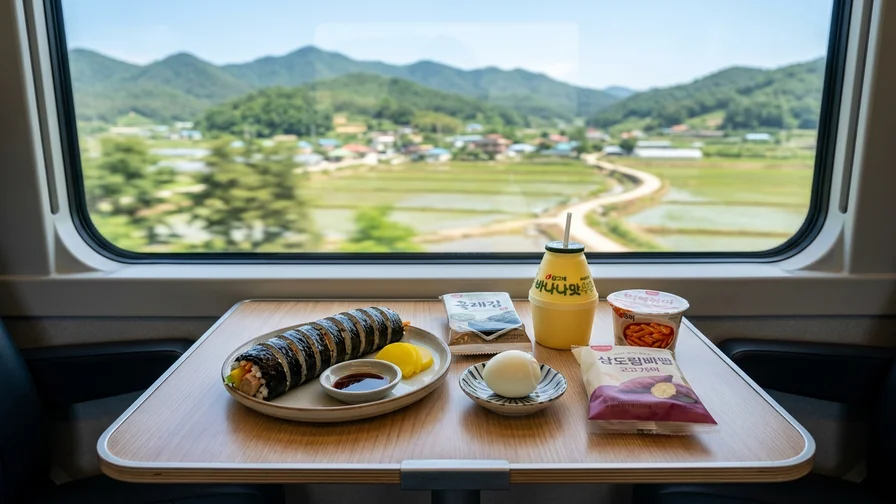
Station Eateries and Treats with Local Flavor
- Korea’s major train stations are more than transit hubs; they’re food destinations where you can find the area’s famous eateries and specialties.
- At Sungsimdang Daejeon Station branch 📍, the line is always long for Twigim Soboro (Sungsimdang’s signature deep-fried streusel bun filled with red bean paste). It’s open daily 07:00-22:30 (as of June 2026), so you can stop by for both early and late trains.
- At Busan Station, try Busan’s famous Eomuk (Korean fish cake).
- We recommend arriving at the station a little early to explore the local flavors before your train.
We’ve also prepared a Korea train station food trail that rounds up each station’s signature treats.
The Snacking Culture On Board: Discovering K-Food
- Eating snacks on the train is a very natural part of Korean culture.
- The classic snack lineup is Gimbap, Salmeun Gyeran (boiled eggs), and a cold cider.
- Onboard cart sales have all but disappeared, so buying snacks in advance at the station convenience store is the standard move.
- Enjoy the passing scenery along with an iconic Korean drink like Banana-mat Uyu (banana-flavored milk).
A Safety and Etiquette Guide for Successful Korea Train Travel
For a trip that’s pleasant and comfortable for everyone, it’s important to follow basic safety rules and etiquette. Understanding and respecting Korea’s public transit culture makes you an even better traveler.
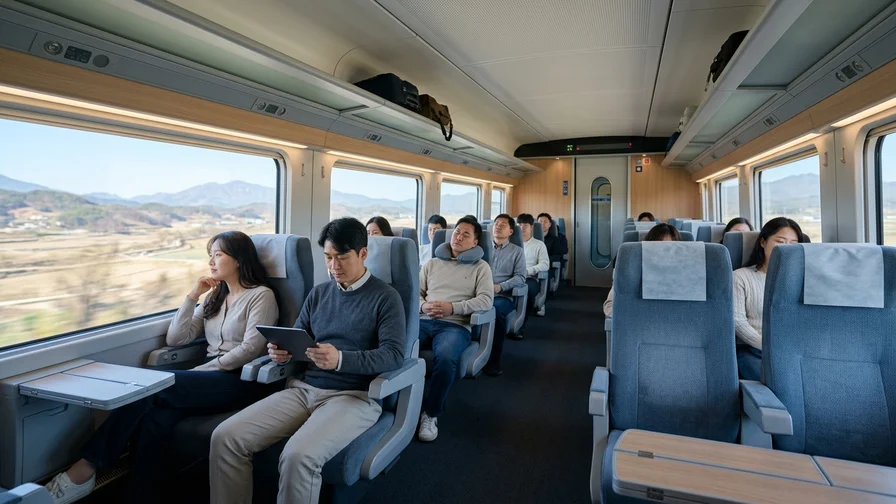
Safety Rules When Riding the Train
- When the train pulls in, always wait behind the yellow safety line.
- The gap between the train and the platform can be wide, so watch your step, and be extra careful if you’re with children or elderly travelers.
- Check the locations of the emergency button and fire extinguisher in the car ahead of time in case of an emergency.
- Secure the luggage on the overhead rack so it won’t fall, and keep valuables on you at all times.
Korean Public Transit Etiquette: Quiet and Consideration
It’s common to keep things relatively quiet inside Korean trains.
- Keep phone calls short and step out into the vestibule, and always use earphones for videos or music.
- Speak with your companions at a volume that won’t carry to those around you.
- Avoid eating strong-smelling food on board.
- Offer your seat to passengers who need it (the elderly, pregnant women, those traveling with children), and if someone helps you, don’t forget to say “Kamsahamnida” (Thank you).
Now you’re fully prepared to explore Korea by K-Train. With its convenient booking system, beautiful scenery, delicious food, and warm culture, Korea train travel is sure to be one of your best memories of 2026.
For another side of train travel, if you’re curious about Korea’s hidden-gem themed tourist trains, check out Korea tourist trains. And whenever you need more Korea travel information, feel free to visit our website. See more at Come On Korea
More articles in this topic
- Slow-Rolling Korea Tourist Trains — Local Scenery Beyond the Window
- Korea Family Train Travel — Making the Most of the KTX with Kids
- Overnight Train Travel in Korea — Haerang, the Jeongdongjin Special, and Late-Night Trains
- The Foreigner Korail Pass and How to Save on Train Fares
- 6 Quiet Small Train Stations in Korea Where Time Stands Still
- A Different Flavor at Every Stop — A Korean Train Station Food Tour