Hwadamsup Autumn Foliage Walk Near Seoul, No Car Needed
Contents
- What You’ll See on a Hwadamsup Autumn Foliage Walk Right Now
- How to Get to Hwadamsup by Public Transit (No Car)
- Advance Booking and the Monorail — Know This Before You Enter
- When Foliage Peaks and the Best Times to Visit
- Best Photo Spots and the Order to Walk Them
- A Meal Nearby and Quick Facts at a Glance
- Wrapping Up
Quick Summary
- At Hwadamsup (화담숲) in Gwangju, Gyeonggi-do, foliage usually peaks from mid-October to early November, and the color spreads from the upper ridge down toward the valley floor because of the elevation difference.
- Hwadamsup runs on advance reservations during the busy foliage season, so walk-in visitors are turned away on many days. Booking through the official site before you go is effectively required.
- By public transit you combine subway with a local bus or a taxi from Gonjiam Station, and if you skip the steep stretch on the monorail and stick to the gentle deck trail, even families with kids can manage it comfortably.
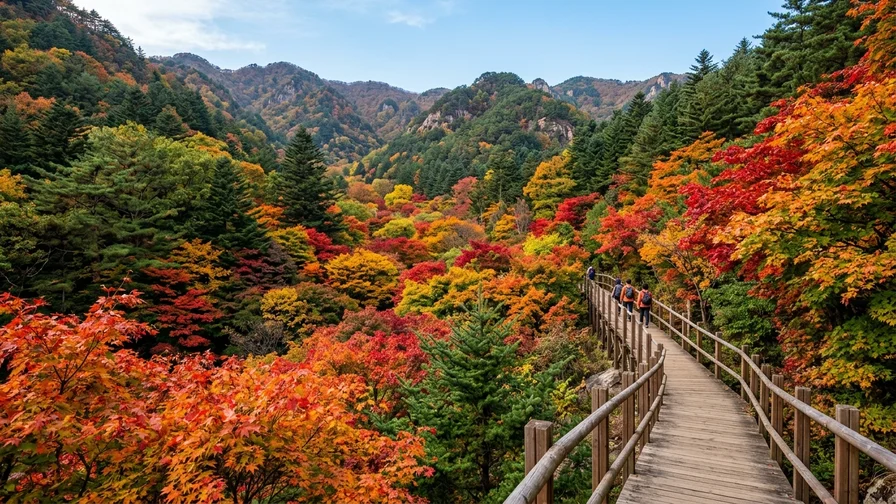
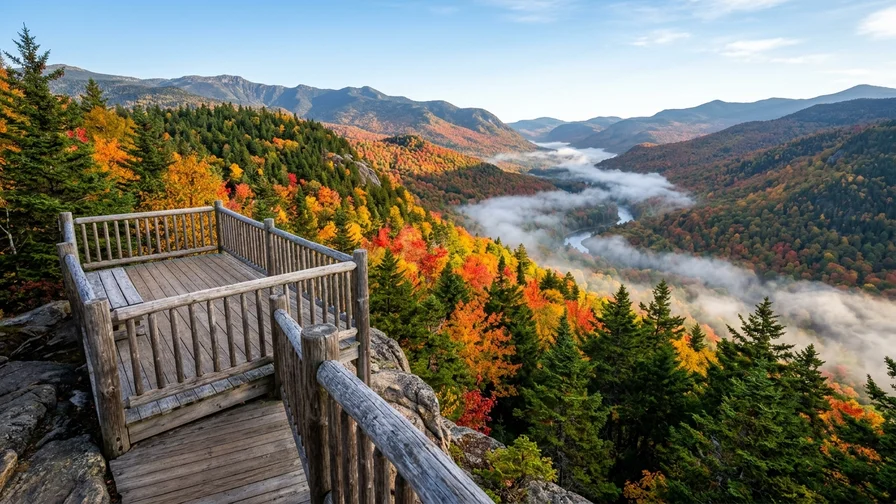
Color reaches the ridge around 300 meters first, and about three days later it settles all the way down to the moss garden on the basin floor. A Hwadamsup autumn foliage walk sits only about an hour and a half from central Seoul, with roughly 5.7 km of wooden boardwalk laid across the whole park — which means you can loop the entire forest in sneakers, no hiking boots required.
What You’ll See on a Hwadamsup Autumn Foliage Walk Right Now
Hwadamsup (화담숲) is an ecological arboretum in Docheok-myeon, Gwangju, Gyeonggi-do, built and operated by the LG Evergreen Foundation. Around 4,300 species of native and overseas plants are planted across 17 themed gardens, and the whole trail follows a gentle boardwalk. In autumn, maples, Korean maple (bokjagi) and winged spindle trees blaze red along the valley, setting up a sharp contrast with the deep green of the conifer garden so the layers of color read clearly.
The trail breaks down into the pine garden, the maple forest path, the moss garden, the birch forest, and the bonsai garden, among others. The valley view from the maple forest section and from the deck above the moss garden is the signature autumn scene. The flat boardwalk means strollers and wheelchairs can cover much of the route, but a few uphill stretches are steep enough that many people pair the walk with the monorail.
Admission and operating details can change, so it’s safest to check the day’s reservation availability and prices on the official Hwadamsup website before you go (verified October 2026). Adult admission runs roughly in the 10,000 won range (about $7–8 USD), and the monorail is a separate fare. Prices and hours shift by season.
How to Get to Hwadamsup by Public Transit (No Car)
Hwadamsup sits back inside the hills, and on some days the bus stop doesn’t pull all the way up to the entrance. So the most reliable combination for a foreign traveler is subway plus shuttle or taxi. Pick whichever of the three routes below fits your path (fares and intervals can change, verified October 2026).
1) Take the Gyeonggang Line to Gonjiam Station
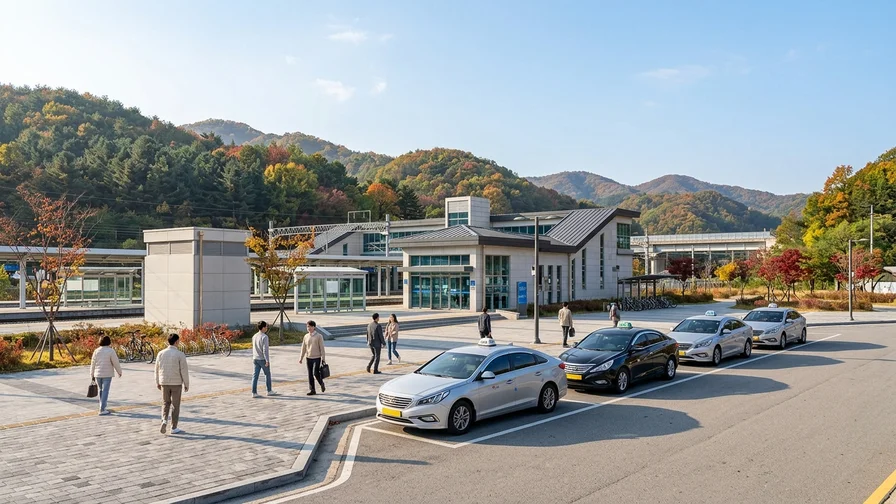
From Seoul, transfer to the Gyeonggang Line at Pangyo Station and ride to Gonjiam Station (곤지암역). From the Gangnam area, the usual move is the Shinbundang Line to Pangyo, then the Gyeonggang Line transfer. Gonjiam Station to Hwadamsup is about 7 km, roughly 10–15 minutes by taxi, with a fare around 9,000–13,000 won (about $7–10 USD). You can grab one straight from the taxi stand in front of the station.
2) Intercity Bus Plus Local Bus
From the East Seoul Bus Terminal or around Gangbyeon Station, you can take a Gwangju-bound bus, get off in central Gonjiam, and then head toward Hwadamsup from there. That said, routes that run directly to the Hwadamsup entrance come at long intervals and shift by season, so search “Gonjiam Station → Hwadamsup” in Naver Map or KakaoMap to get the exact bus number, interval, and travel time running that day. Korean-only stop names trip up foreign travelers easily, so keep Google Maps directions open at the same time to avoid missing your stop.
3) Official Shuttle Bus (Peak Season)
During the busy foliage season there are periods when a paid shuttle runs between Gonjiam Station (or a nearby hub) and Hwadamsup. Whether it runs, plus the timetable and fare, changes year to year, so check the notices on the official Hwadamsup website in advance. On days with no shuttle, the taxi combination above is the fastest.
Confirm your return taxi and the last shuttle time as you enter
Taxi-hailing apps like Kakao T often require a Korean phone number and a locally issued card to register and pay, so they’re hard for short-term travelers to use. Grabbing a taxi directly at the stand in front of Gonjiam Station is more dependable. For the trip back, ask the driver at the Hwadamsup entrance to return at a set time, or confirm the last shuttle time to the station as you enter — that way you’re not stranded after the walk.
If you plan to drive, foreign visitors need an International Driving Permit, and that permit cannot be issued after you arrive in Korea — you must get it in your home country before departure. The parking lot is large, but on foliage weekends it’s common for it to fill by late morning, so public transit is actually the easier call.
Advance Booking and the Monorail — Know This Before You Enter
The thing that trips people up most on a Hwadamsup autumn foliage walk isn’t transport — it’s the entry reservation. During peak season (especially the mid-October to early-November foliage stretch), the park caps visitor numbers with an advance reservation system, and if you show up without a booking you often can’t get in. The rule is to reserve a date and entry time slot on the official website (operating method can change, verified October 2026).
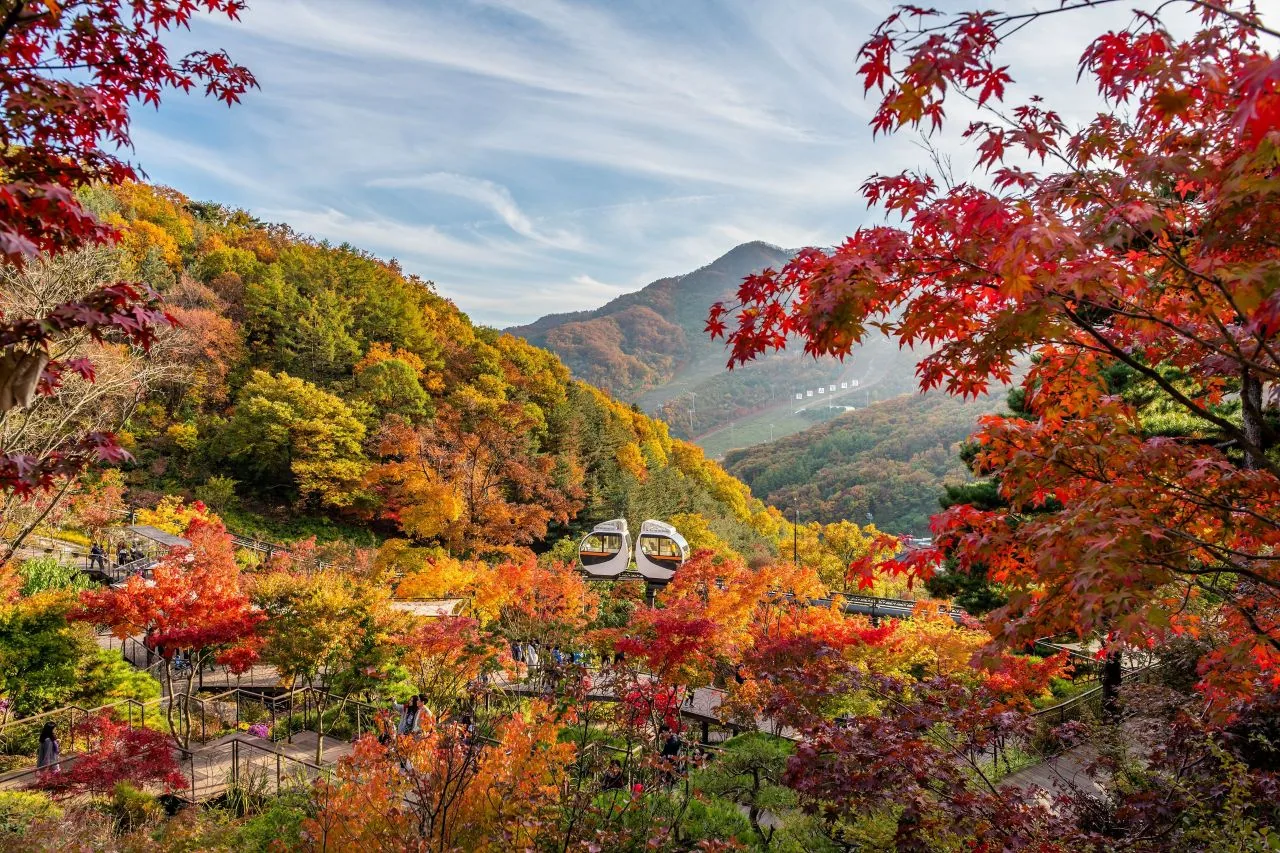
The monorail is a mountain rail car that climbs and descends the steep section, running from the base station up to the upper platform. If walking is tough for you or you’re with older travelers or young kids, riding the monorail up and then walking the deck trail back down is easiest on the knees. The monorail queues get long in peak season too, so it’s worth confirming whether you buy on-site or pre-book, separately from your entry reservation. Service may be adjusted depending on weather.
There are snack kiosks and restrooms along the trail, but they get crowded on peak-season weekends, so it’s handy to bring a bottle of water and a light snack ahead of time. A slow full loop takes around two hours, and if you skip the uphill on the monorail you can see the core sections in one hour to an hour and a half.
When Foliage Peaks and the Best Times to Visit
Because the Hwadamsup ridge colors before the lower-lying areas around the capital, it typically starts on the upper ridge in mid-October and reaches full peak across the whole basin from late October into early November. Depending on that year’s temperatures it can run about a week earlier or later, so checking the Korea Meteorological Administration’s foliage forecast or the current foliage photos in the official Hwadamsup notices before you set out cuts down on wasted trips.
For timing, early morning, right after opening, is the most pleasant. Morning light passes through the maple leaves and glows in backlight, and with relatively few people, the deck is good for photos. Weekend afternoons bring crowds, so monorail queues and deck congestion drag out. If you can make time on a weekday, a weekday morning is the best bet for both easier walking and lighter crowds.
Autumn air in the hills drops sharply morning and evening, so wear thin layers you can adjust and comfortable walking shoes. The deck can get slippery from dew or fallen leaves, so skip smooth-soled footwear.
Best Photo Spots and the Order to Walk Them
These are the sections where you’ll reach for your camera most on a Hwadamsup autumn foliage walk. They flow naturally along the boardwalk, so walking them in the order below lines up the light direction with your route.
- From the viewing deck above the moss garden, the green moss on the valley floor and the red maples above fit into one frame for the strongest color contrast. In morning backlight the maple leaves glow translucent.
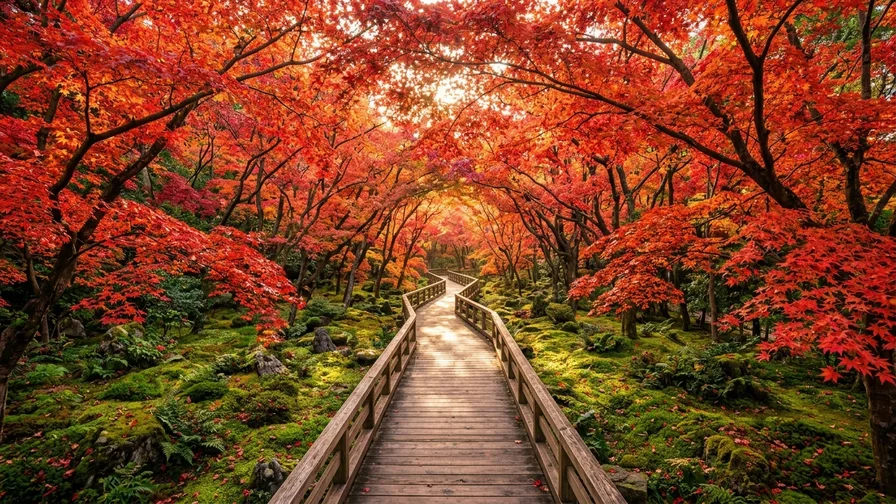
- On the maple forest path, branches arch overhead like a tunnel, so standing in the middle of the path and shooting upward from below gives you that maple-tunnel shot.
- The boundary between the pine garden and the maples is where the deep evergreen green meets the red leaves and the colors split cleanly.
- From the viewpoint near the upper monorail platform, the whole basin opens up below you — great for a wide-angle shot of the full forest.
- In the birch forest, the white trunks pair with the yellowing leaves for a bright, clean-toned photo.
If it’s your first time, take the monorail to the top to capture the panorama first, then walk down through the maple forest path and the moss garden shooting the details on the way. It’s a mostly downhill route, so it’s easier on the knees, and you walk without the morning light behind you.
A Meal Nearby and Quick Facts at a Glance
You can grab a light bite at the kiosks inside Hwadamsup, but most people handle a proper meal over in central Gonjiam. Gonjiam in Gwangju is known for someori gukbap — ox-head soup with rice — and old-school eateries serving it cluster around Gonjiam Station and the town center. Someori gukbap is a hot soup where ox-head meat and offal are simmered for hours into a milky broth, with rice stirred in — perfect for warming up after the walk. Have it with cubed radish kimchi or napa kimchi, and adjust the heat by stirring in a little of the minced seasoning on the table.
The someori gukbap street in Gonjiam has several long-running spots, and each has its own character — a place with a rich broth from simmered ox bones, a place where you order the boiled meat (suyuk) separately to go with soju, and so on. Plenty of these traditional eateries are cash-only or have no English menu, so bring a little cash and use the menu photos in Google Maps or a translation app to make ordering easier.
Handy Korean phrases for the restaurant
- Someori gukbap (so-meo-ri-guk-bap) — say “someori gukbap hana juseyo” to order one bowl.
- An maepge haejuseyo — ask them to make it less spicy.
- Hyeon-geum-do doe-na-yo — ask whether cash payment is accepted.
At a glance (subject to change, verified October 2026)
| Item | Details |
|---|---|
| Place | Hwadamsup (Docheok-myeon, Gwangju, Gyeonggi-do) |
| Foliage peak | Mid-October to early November (varies by year) |
| Access | Get off at Gonjiam Station on the Gyeonggang Line, then 10–15 min by taxi or a peak-season shuttle |
| Reservation | Advance booking effectively required in peak season (official website) |
| Time needed | About 2 hours on foot / 1–1.5 hours with the monorail |
Gonjiam someori gukbap can be packed to go, but most countries restrict meat and broth on international flights for quarantine reasons, so if you were thinking of taking it home, it’s safer to drop that idea. If you want a souvenir to carry, shelf-stable processed local goods clear customs more easily.
Wrapping Up
A Hwadamsup autumn foliage walk is a route that packs the capital region’s autumn into a single pair of sneakers, no hiking gear needed. Aim for a weekday morning between mid-October and early November as color spreads from ridge to basin, check the day’s reservation availability and foliage status on the official website before you leave, and save your subway route to Gonjiam Station on the map in advance — do that and the day runs smoothly. Add a bowl of someori gukbap on the way back and even a short day trip feels full. Before you go, check open booking slots on the official Hwadamsup website and save the route from Gonjiam Station on your map.
Some photos © Korea Tourism Organization (KOGL Type 1)