Night Tours and Shuttle Buses at the Muju Firefly Festival
Contents
If you’re wondering where in Korea you’re most likely to actually see fireflies, the answer is Muju. The 30th Muju Firefly Festival runs for nine days, from Friday, September 4 to Saturday, September 12, 2026. Fares and schedules reflect official sources confirmed as of June 2026.
Muju Firefly Festival: The Essentials
Here’s the core information to anchor your trip planning. Note that some official notices list the end date as Sunday, September 13, so be sure to confirm the final schedule on the official website right before you set off.
| Item | Details |
|---|---|
| Official Name | 30th Muju Firefly Festival |
| Dates | Friday, September 4 – Saturday, September 12, 2026 / 9 days |
| Main Venue | Muju-eup, Muju-gun, Jeonbuk State — centered on Jinam Park and the riverside of Namdaecheon Stream, with linked events at Bandiland and several villages |
| Address (for Navigation) | 326-17 Hanpungnu-ro, Muju-eup, Muju-gun, Jeonbuk (Google Maps) |
| Admission | Free (only select programs, such as the Firefly Exploration tour, charge a fee, as of June 2026) |
| Official Website | firefly.or.kr |
| Contact | Muju Firefly Festival Committee 063-324-2440 (inquiries 10:00–17:00) / Muju-gun Office 063-320-5003~6 |
Why Muju? A Natural Monument Firefly Habitat
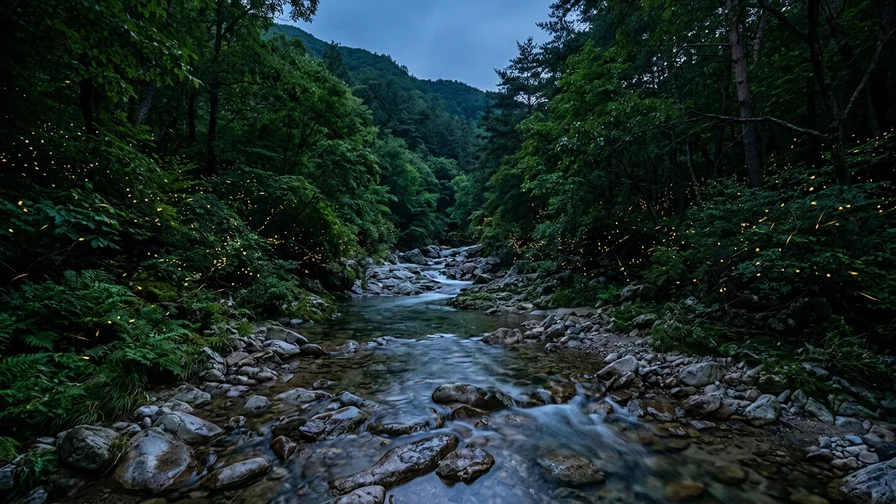
Muju-gun is one of Korea’s most pristine regions and a major large-scale habitat for fireflies. The “Firefly and Its Prey Habitats in the Muju Area” was designated a Natural Monument (former designation No. 322) in 1982 and is legally protected. The key thing to understand is the difference between species.
- Aquatic firefly (aebandidbul-i): Appears from mid-June to mid-July. The larvae grow in water, feeding on freshwater snails.
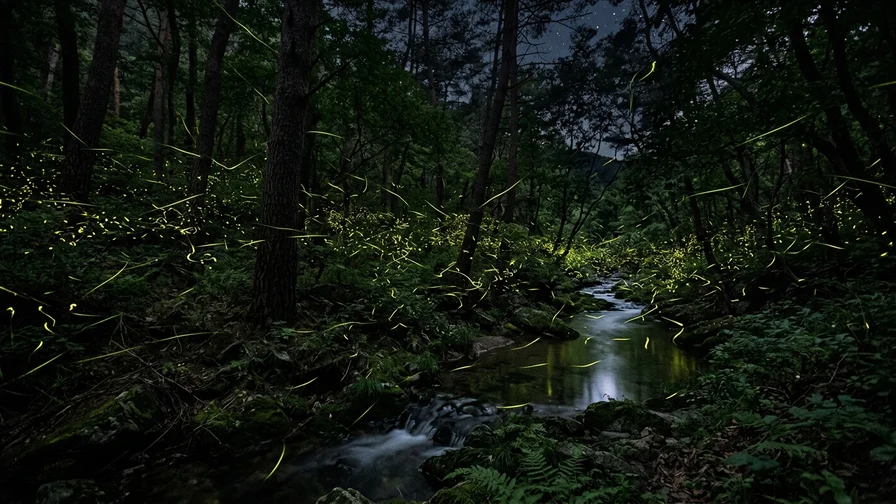
- Late firefly (neutbandidbul-i): Appears from mid-August to mid-September. The larvae grow in grassy areas, feeding on snails. This is the very species you’ll see at the September festival — larger in body and brighter in glow than the aquatic firefly.
The festival isn’t just a local event; it’s an environmental celebration designed to raise awareness of and preserve the ecological value of this protected area. That’s why the signature program — the nighttime exploration tour — is run in a controlled environment under the guidance of trained interpreters.
The Highlight: Firefly Exploration Night Tour
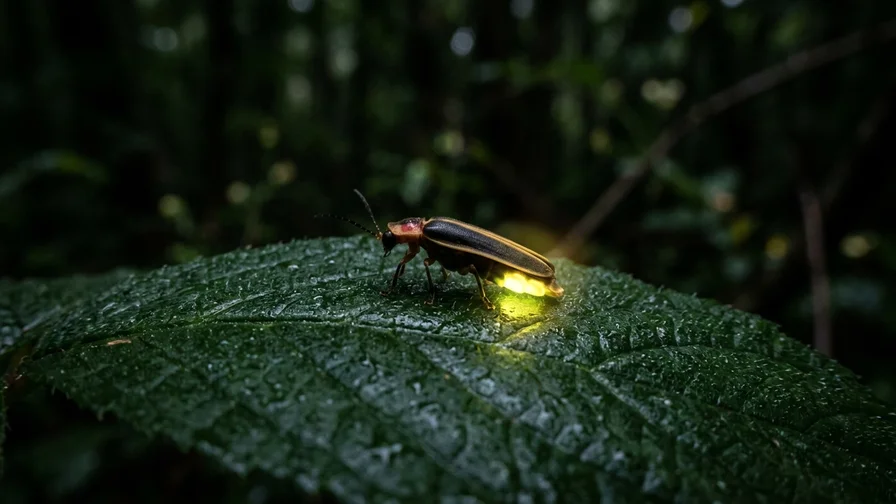
The most important program at the festival is the Firefly Exploration tour. This nighttime tour takes you by shuttle bus to a designated habitat to observe fireflies firsthand, and advance booking is essential. The 2026 sessions were timed to the appearance of the late firefly and ran a total of 15 times from September 4 to September 20 (no sessions on September 14 and 15); they have already ended (verified October 2026).
How It Works
- Format: Board the shuttle bus at the designated gathering point → travel to a habitat where light and noise are controlled → move as a group along a set route while observing, guided by an eco-interpreter. Free movement is not permitted.
- Timing: Runs once per night. Boarding check-in was 20:00–20:30 in 2025 and 18:40 in 2026 (it shifts with sunset and is confirmed by text message; verified October 2026), with the whole experience lasting roughly 1.5 to 2 hours.
- Capacity: Up to 400 people per day, based on 2025.
- Gathering Point: Provided at the time of booking. In 2025, departure was from the P1 parking lot in Dangsan-ri, Muju-eup; in 2026 it was the “Zone 3 Bandi Exploration Zone” at 1170 Dangsan-ri (verified October 2026).
How to Book
- Where to book: First-come, first-served online registration on the official Muju Firefly Festival website, firefly.or.kr.
- Fee: 20,000 KRW per person (about $13). Of this, 10,000 KRW is refunded as a Muju Sarang gift voucher usable at the festival grounds (children under 36 months are free, based on 2025).
- When it opens: Registration dates for each session are announced in advance on the website. Sessions sell out fast every year, so it’s safest to check the opening date and time ahead and log in right on the dot.
- For international travelers: The booking page is primarily in Korean, so if you get stuck, you can call the 1330 Travel Hotline (available 24/7 in English, Japanese, Chinese, and more) for interpretation support.
- Refunds: If the event is canceled due to rain, refunds are available even after the day in question (2025 policy — reconfirm when booking).
What to Bring & Important Rules
When observing fireflies, ecological protection comes first. The rules below must be followed without exception.
- Dark-colored long clothing: Fireflies are extremely sensitive to light. White or bright clothing disrupts their activity and disturbs other observers. Dark long-sleeved tops and long pants in black, navy, etc. are mandatory.
- Prepare for insects: The habitat is a damp area near streams and grassland. Cover up with long clothing to minimize exposed skin, but insecticides and mosquito repellents are prohibited — their chemical components are deadly to fireflies.
- No light of any kind: Flashlights, smartphone screens, camera flashes, even light-up shoes — all prohibited. Even flash-free photography may be restricted because of screen glow, so follow the on-site interpreter’s instructions. Wait 10–15 minutes for your eyes to adjust to the dark and you’ll see plenty with the naked eye.
- Stay quiet: No loud conversation or running. Fireflies only reveal themselves when you observe quietly.
Catch the Exploration Tour Early, in June
If a September visit is difficult, there are sessions in June. In 2026, the Unmunsan Firefly Exploration runs a total of 10 times from June 3 to 14, overlapping with the Muju Mountain Film Festival (June 4–7), making it easy to bundle the two. Registration is on the same official website.
Other Programs & Facilities at the Festival
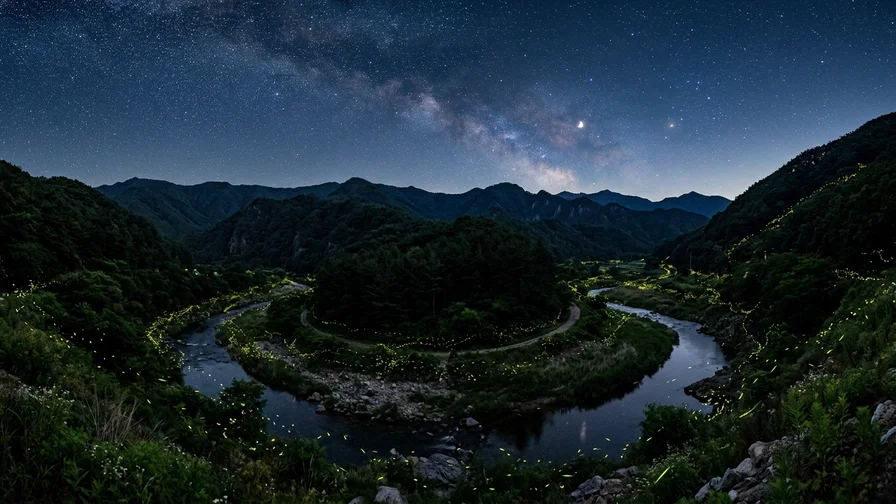
Beyond the night tour, daytime programs run throughout Jinam Park and the Namdaecheon riverside. Highlights include the Firefly Theme Hall, the children’s Bandi Kids World, water activities on Namdaecheon, and cultural arts performances (the lineup varies by year — check the schedule on the official website). At the Bandigol Traditional Crafts Culture Village on Choebuk-ro in Muju-eup, you’ll find craft workshops and exhibitions.
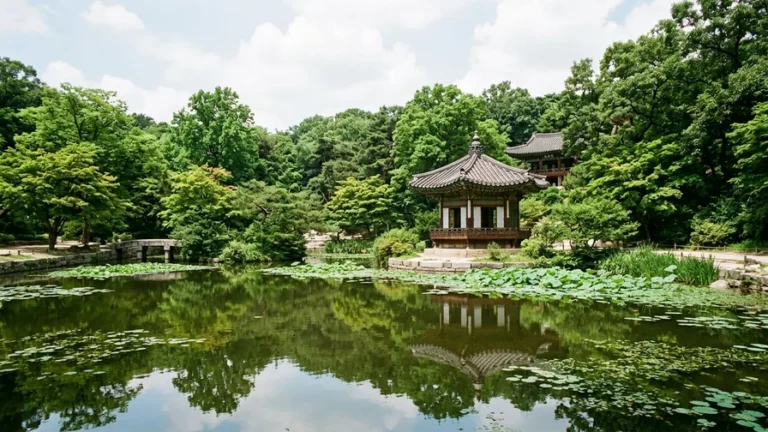
One must-see: Standing within the festival grounds at Jinam Park is Hanpungnu Pavilion. This two-story pavilion was praised by Joseon-era literati as the “finest pavilion in Honam” and was designated a Treasure in 2021. After being burned down during the Japanese invasions of 1592, it was rebuilt, relocated, and finally moved to its current spot in 1971. Spend just five minutes during your festival visit and you’ll get to see a national Treasure as a bonus.
A Side Trip to Bandiland
Bandiland in Seolcheon-myeon is a firefly-themed ecological complex and one of the festival-linked venues. At its Insect Museum you can see live fireflies and specimens of rare insects from around the world even during the day, making it the perfect primer before your night tour.
- Insect Museum admission: Adults 5,000 KRW, teens 4,000 KRW, children 3,000 KRW.
- Hours: March–October 09:00–18:00 (last ticket 17:00), closed every Monday (as of June 2026, official page).
- Location: About 20 minutes by car from Muju-eup. Public transit is inconvenient, so a taxi is recommended.
Where to Eat: Verified Local Muju Restaurants
Food stalls open at the festival grounds, but if you’ve come all the way to Muju, a dedicated local-cuisine restaurant is the way to go. Muju’s signature dish is eojuk, a hearty, spicy porridge made by slow-simmering freshwater fish caught in the upper Geumgang River (mainly bagre catfish), bones and all, with rice and hand-torn noodles. The flavor isn’t fishy — it’s closer to a peppery maeuntang (spicy fish stew), so even visitors from abroad can enjoy it easily. The restaurants below are all real, confirmed to be open (as of June 2026).
- Geumgang Restaurant 📍 (102 Dancheon-ro, Muju-eup): One path, eojuk, since 1987. Its signature is bbaga eojuk, with broth simmered for four hours from bagre catfish and Korean catfish. Near the county office, so it’s within walking distance of the festival.
- Seommaeul 📍 (126 Naedo-ro, Muju-eup, 063-322-2799): Famous for its bbaga eojuk, eotang guksu (fish soup noodles), and doribaengbaengi — a Muju specialty of freshwater minnows arranged in a circle in a frying pan, pan-fried until crispy, then brushed with a spicy sauce. Open 10:00–20:00, break time 15:00–16:00.
- Muju Eojuk 📍 (119 Naedo-ro, Muju-eup, 063-322-9610): An eojuk specialist listed in Muju-gun’s official “The Restaurant” certification. It’s in the same Naedori riverside village as Seommaeul, so you can compare the two and take your pick.
Prices run roughly 10,000 KRW for a single serving of eojuk. If your itinerary heads toward Deogyusan, Byeolmi Garden 📍 in Gucheondong (Seolcheon-myeon, 063-322-3123, 11:30–20:00) is a great choice — it specializes in Gucheondong sanchae jeongsik, a set meal with some 30 wild-vegetable side dishes the owner forages personally, and sanchae bibimbap (mixed rice with wild mountain greens).
How to Get to the Muju Festival Grounds
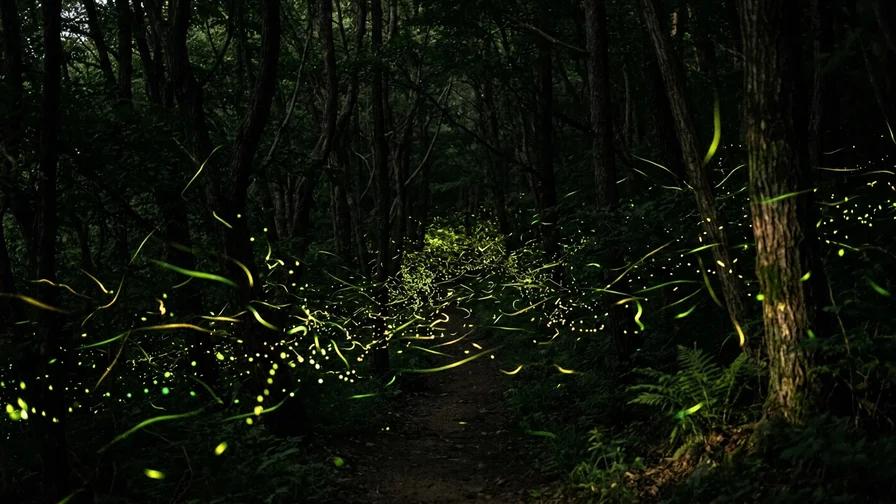
Muju is a mountainous area with no train station. From Seoul, there are two routes, and all timetables and fares are as of June 2026.
Route 1: Direct Bus from Seoul Nambu Terminal (No Transfers, Recommended)
- Route: Seoul Nambu Terminal (Exit 5, Nambu Terminal Station, Subway Line 3) → Muju Public Bus Terminal
- Service: 4 times daily — 07:40, 10:05, 14:35, 17:05
- Travel time: About 2 hours 30 minutes
- Fare: Premium (udeung) 23,800 KRW (about $16) (verified October 2026)
- Booking: The integrated intercity bus booking site (txbus.t-money.co.kr, English supported) or the terminal counter. Advance booking is recommended for festival weekends.
Route 2: KTX + Transfer at Daejeon (Frequent Service, Flexible Timing)
Useful when the direct bus times don’t suit you. Going via Daejeon is overwhelmingly advantageous in terms of frequency.
- Seoul Station → Daejeon Station / KTX
- Travel time: About 1 hour, with 50+ departures daily
- Fare: Standard class about 23,700 KRW (about $16)
- Booking: The official Korail site korail.com (English booking supported; the former letskorail.com has merged into this address)
- Daejeon Station → Daejeon Express Bus Terminal / Taxi
- About 4 km, 10–15 minutes, roughly 8,000 KRW. A taxi is the simplest option for international travelers.
- Daejeon Express Bus Terminal → Muju Public Bus Terminal / Intercity Bus
- Service: 19 times daily (first bus 07:10, last bus 21:00) — effectively every 30 minutes to 1 hour
- Travel time: About 50 minutes
- Fare: 6,000 KRW. Available for purchase on-site at the terminal (verified October 2026).
- Muju Public Bus Terminal → Festival Grounds
- The terminal and the Jinam Park festival grounds sit on the same Hanpungnu-ro. A roughly 10-minute walk is all it takes — no separate transport needed.
By Car
- Travel time: About 3 to 3.5 hours from Seoul (without traffic)
- Main route: Gyeongbu Expressway → Tongyeong-Daejeon Expressway → Muju IC
- Parking: Temporary parking lots operate around the venue during the festival. Weekends get very crowded, so arriving early in the morning is recommended.
- Rental car: A valid International Driving Permit (IDP) is required.
Transport Tips for International Travelers
Taxi apps: Kakao T supports overseas-issued card registration and a service for international travelers (k.ride), so short-term visitors can use it too. That said, in county-level areas like Muju there are simply few taxis that respond to calls, so within Muju-eup it’s faster to use the taxi stand in front of the terminal or to ask your accommodation or restaurant to call a taxi for you.
1330 Travel Hotline: If you need help checking transport or with interpretation, dial 1330 with no area code. Available 24/7 in English, Japanese, Chinese, and more — a number worth saving.
Where to Stay & a Recommended Itinerary
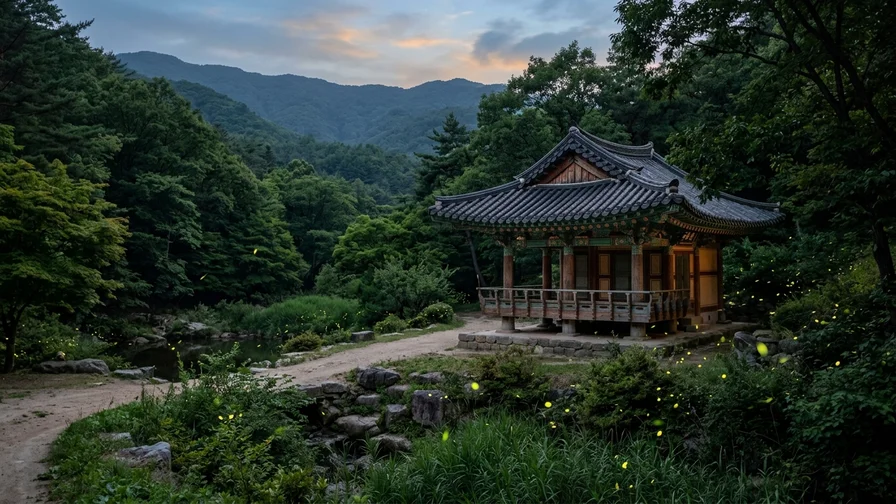
Accommodation in Muju fills up fast during the festival. Booking at least 1–2 months ahead is recommended.
Types of Accommodation
- Muju Deogyusan Resort: Muju’s largest lodging facility. With hotel and condo-style rooms, it’s well suited to families. About 20 minutes by car from the festival grounds.
- Pensions: Many small pensions dot the area around the resort and along Gucheondong Valley. Many have cooking facilities, making them economical for larger groups.
- Lodging in Muju-eup: Motels and small hotels within walking distance of the festival grounds. You can walk straight back after the night tour, making this the most practical option for those using public transit.
Recommended 3-Day, 2-Night Itinerary (Public Transit)
- Day 1: Arrive in Muju, the festival, and the night tour
- 14:35 Depart Seoul Nambu Terminal → arrive in Muju around 17:00, check in
- 18:00 Dinner (eojuk at Geumgang Restaurant or the festival food stalls)
- 30 minutes before check-in, head to the Firefly Exploration gathering point (check the location and time in your booking confirmation text)
- Around sunset, [Highlight] join the Firefly Exploration tour (check-in was 18:40 in 2026 and 20:00–20:30 in 2025; confirm the time in your booking text)
- Around 22:00 return to your accommodation after it ends
- Day 2: Deogyusan and the Meoru Wine Cave
- 09:00 Head to Muju Deogyusan Resort (about 20 minutes by taxi)
- 10:00 Reach Seolcheonbong Peak via the sightseeing gondola — 25,000 KRW round trip for adults (about $17). Advance booking applies only on weekends and public holidays from October to February; from March to September, tickets are sold on-site without reservation. On-site ticketing is available during the September festival, but check the resort’s official site for operating status (verified 2026-10-20).
- 10:30 Trek the deck trail from Seolcheonbong to Deogyusan’s summit, Hyangjeokbong Peak (1,614 m) — about 40 minutes round trip; sneakers are enough.
- 13:00 Lunch with a sanchae set meal at Byeolmi Garden in Gucheondong
- 15:00 Visit the Muju Meoru Wine Cave — 2,000 KRW admission includes one tasting glass of Muju’s specialty wild-grape (meoru) wine; a wine foot bath is 3,000 KRW. April–October 10:00–17:30, closed Mondays, so be sure to check the day of the week.
- 18:00 Return to Muju-eup, dinner of doribaengbaengi and eotang guksu at Seommaeul
- Day 3: A stroll through Jinam Park, then back to Seoul
- 10:00 Check out, store your luggage. Stroll through Jinam Park, the Treasure Hanpungnu, and along the Namdaecheon Stream.
- 12:00 Lunch
- Afternoon: From Muju Public Bus Terminal, take the direct bus to Seoul Nambu (the return departure times mirror the 14:35 or 17:05 Muju departures — confirm at the terminal) or a bus to Daejeon → KTX from Daejeon Station back to Seoul.
Final Checklist Before You Go
Run through the items below before departure to avoid a wasted trip.
- Confirm your tour booking: Save or print your confirmation text or email and reconfirm the gathering point.
- Confirm your accommodation: Address, contact number, check-in time.
- Confirm your transport: Whether you’ve booked the direct bus or KTX. Festival weekends often sell out.
- Pack the right clothing: Dark-colored long sleeves and long pants are essential. Muju nights in early September can drop below 15°C, so bring a light jacket too.
- Check the day of the week: The Meoru Wine Cave and the Bandiland Insect Museum are closed on Mondays.
- Check the weather: Check Muju’s forecast 1–2 days before departure. Heavy rain may cancel the night tour, and refunds are available if it’s canceled.
- Recheck the official site: Just before your visit, confirm any changes to the schedule or venue on the official website.
The number of fireflies visible varies day to day depending on the weather and temperature. Rather than seeing them on a single day and leaving, we recommend staying at least one night to experience Muju’s nights twice. All information is subject to change, so checking the official channels before your visit is always the safest bet.