Strolling Korea’s Gardens, the Beauty of Biwon, Anapji and Soswaewon
Contents
Changdeokgung Huwon cannot be visited freely and can only be seen in guided sessions; online reservations open at 10:00 a.m. six days before the visit date and sell out within minutes on spring and autumn weekends. Gyeongju Donggung and Wolji is open 09:00–22:00, with the night lighting being the main draw, and Damyang Soswaewon has poor public-transport access, so you’ll want to use Gwangju as a base. All fee and time information is accurate as of June 2026.
Understanding the Basics of the Korean Garden
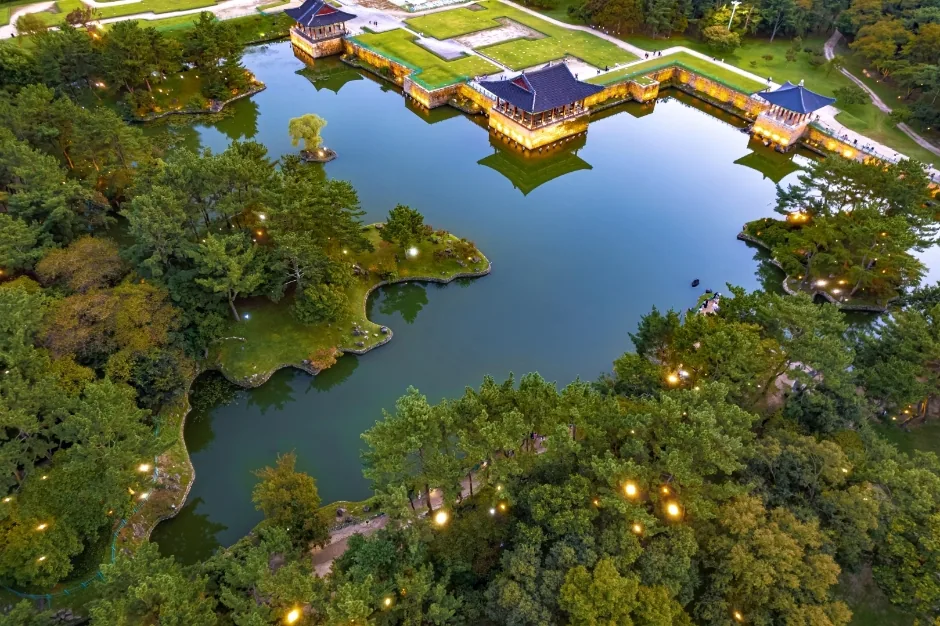
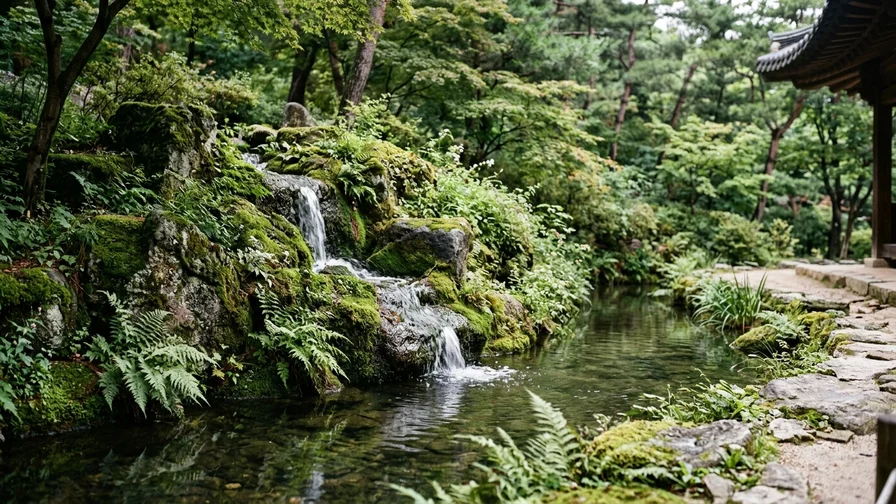
The starting point of the Korean garden is the idea of “not altering nature.” The existing terrain and waterways are preserved as they are, and human intervention is kept to a minimum. This is what sets it apart from Japanese gardens, which recreate nature in miniature, and Chinese gardens, which create grandeur with strange rocks and artificial mountains. The key technique is chagyeong (借景, Borrowed Scenery) — drawing the mountains, sky, and valleys beyond the wall into the garden as part of it. So with a Korean garden, if you only look within the walls you’ve seen only half of it; the moment you sit in a pavilion and gaze outward is when it becomes complete.
A Quick Comparison of Korean, Chinese, and Japanese Gardens
- Korean Garden: Preserves and makes the most of the existing natural terrain and scenery. Minimizes artificial elements and draws the surrounding landscape (mountains, rivers) into the garden (chagyeong).
- Chinese Garden: Focuses on artificially recreating the grandeur of nature. Features large lakes, artificial mountains (gasan, 假山), and oddly shaped rocks (taihu stones, 太湖石) placed deliberately throughout.
- Japanese Garden: Expresses nature in a symbolic and miniaturized form. The karesansui (枯山水) dry landscape garden, which represents the flow of water with sand and gravel, and the use of moss are classic examples.
1. A Place of Royal Repose: Changdeokgung Huwon (Biwon)
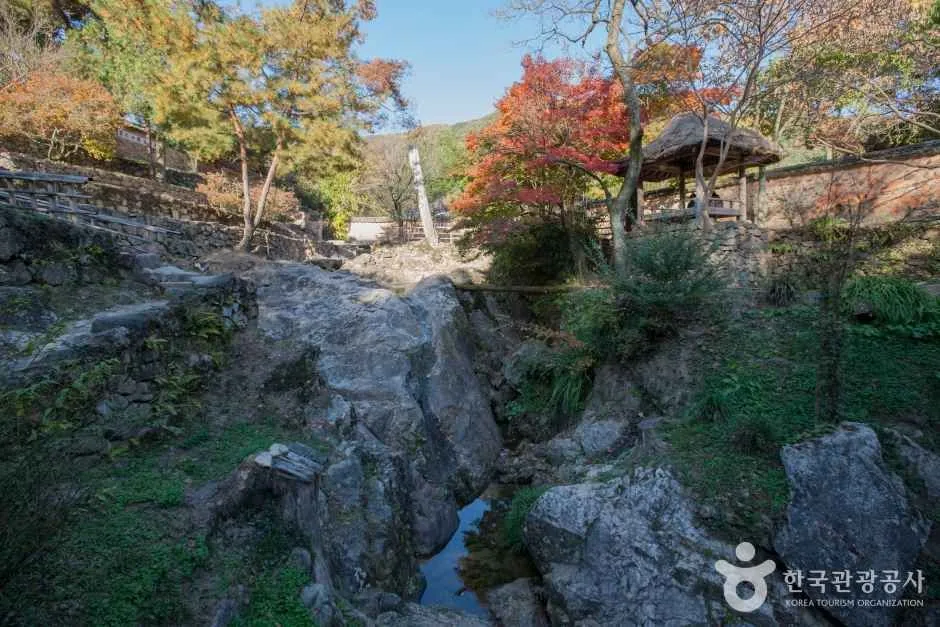
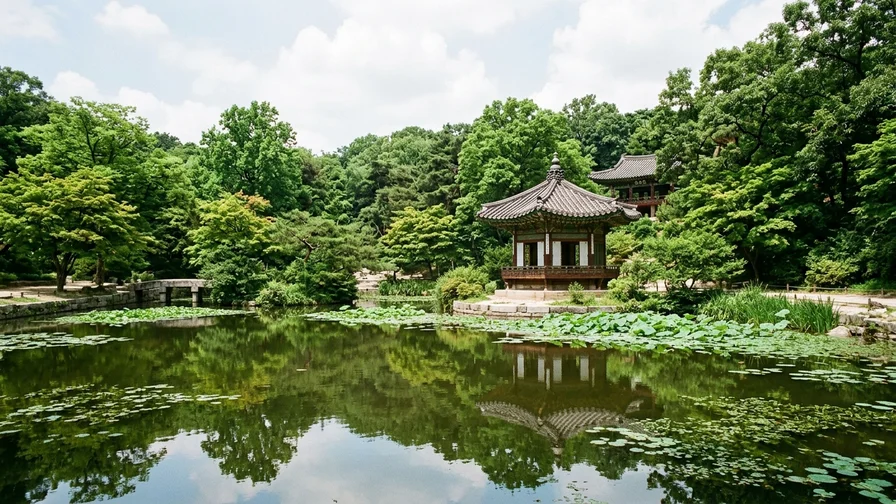
Changdeokgung Palace Huwon (Secret Garden, Biwon)
The Huwon of Changdeokgung was the back garden of the palace where the kings of the Joseon dynasty rested and discussed scholarship. It is more widely known by the name “Secret Garden (Biwon),” and it is the heart of Changdeokgung, which was inscribed as a UNESCO World Heritage Site in 1997. The pavilions and ponds were arranged while leaving the natural valley and forest terrain almost untouched. Free admission is not allowed; it can only be viewed in scheduled sessions accompanied by a guide, on a walk of about 70 minutes (verified October 2026).
Essential Information
| Item | Details |
|---|---|
| Location | 99, Yulgok-ro, Jongno-gu, Seoul |
| Area | About 320,000㎡ (roughly 60% of all of Changdeokgung) |
| Key Features | Buyongji Pond, Juhamnu Pavilion, Aeryeonji Pond, Gwallamjeong Pavilion, Jondeokjeong Pavilion |
| Hours | Guided sessions only — Korean on the hour 10:00–16:00 (until 15:00 Nov–Feb); English at 10:30, 11:30, 14:30 (additional 15:30 Mar–Nov). As of June 2026 |
| Closed | Every Monday (open if it falls on a public holiday) |
| Admission | Changdeokgung main palace 3,000 KRW + Huwon 5,000 KRW (a palace ticket is required to visit the Huwon). The 6,000 KRW integrated pass covering the four palaces and Jongmyo Shrine (valid for 6 months) does not include the Huwon. As of June 2026 |
| Website | royal.khs.go.kr/cdg (Royal Palaces and Tombs Center) |
Main Points of Interest
- Buyongji Pond and Juhamnu Pavilion: The first major space you encounter in the Huwon. There is a square pond, “Buyongji,” and a two-story pavilion on the hill, “Juhamnu.” Juhamnu served as the royal library (Gyujanggak). The one scene you must not miss — the moment you round the corner of the forest path after entering and Buyongji first opens up before you, with Juhamnu looking down from the hill beyond the pond. It is the most famous view in the entire Huwon, so as you follow the guide, take your time to linger here.
- Aeryeonji Pond and Uiduhap: A pond named “Aeryeon (愛蓮, loving the lotus)” by King Sukjong, who loved the lotus flower, and the modest building beside it.
- Gwallamjeong and Jondeokjeong Pavilions: Beside a pond said to be shaped like the Korean Peninsula stand Gwallamjeong, built on a fan-shaped floor plan, and Jondeokjeong, with its double-layered hexagonal roof. This is a spot where you can compare various forms of pavilion architecture in one place.
- Ongnyucheon Stream: The valley in the deepest part of the Huwon, currently closed for conservation work until further notice (verified October 2026). There is a small waterfall and a curved water channel carved into the rock during the reign of King Injo, and this is the spot where the king and his officials enjoyed yusang-goksu-yeon (流觴曲水宴), a gathering in which they floated wine cups along the water and composed poems.
Practical Guide: Reservations and Transportation
How to Reserve — As of June 2026
The Huwon operates with a capacity of 100 people per session. The structure is 50 online reservations + 50 on-site sales. Online reservations open at 10:00 a.m. (Korea time) six days before the desired visit date, and on spring and autumn weekends they often sell out within minutes.
- Online Reservation: Select the Huwon tour on the integrated booking site of the Royal Palaces and Tombs Center (royal.khs.go.kr). An English page is available.
- Language Selection: Korean and English tours run daily, Japanese on Wednesday, Friday, and Sunday, and Chinese on Tuesday, Thursday, and Saturday (days may change, so confirm on the booking screen). Be sure to choose a session in your preferred language.
- On-Site Purchase: 50 tickets per session are sold same-day on a first-come, first-served basis. During peak season they run out in the morning, so don’t rely on this as your guaranteed option.
Transportation
- Subway: About a 5-minute walk from Exit 3 of Anguk Station on Line 3. Also about a 10-minute walk from Jongno 3-ga Station on Lines 1, 3, and 5.
- Bus: Many routes stop at the “Changdeokgung” or “Changdeokgung, Korea Sori Museum” stops. The base fare for a Seoul city bus is 1,500 KRW with a transit card (as of June 2026).
Nearby Restaurants
A cluster of well-regarded long-established eateries can be found around Anguk Station and the Bukchon area. They’re all within a 10–15 minute walk.
- Hwangsaengga Kalguksu 📍 — Kalguksu (knife-cut noodles boiled in a beef-bone broth) and royal-style dumplings. Near the entrance to Bukchon Hanok Village, a regular pick for the Michelin Bib Gourmand. 11:00–21:30, open year-round.
- Samcheongdong Sujebi 📍 — Sujebi (hand-torn dough flakes boiled in an anchovy broth) and potato pancakes. A 2026 Michelin Bib Gourmand. The lunchtime queue gets long, so a visit around 11 a.m. is recommended.
- Keungiwajip 📍 — A hanjeongsik (set meal) restaurant known for ganjang-gejang (raw crab marinated in soy sauce, a Korean delicacy). An upscale hanok restaurant with a Michelin-starred history, budgeting around 50,000 KRW per person. 11:30–21:00, break time 15:00–17:30.
Bring comfortable shoes and a bottle of water
The Huwon tour is a walk of about 70 minutes. There are uphill and downhill sections, so comfortable shoes are a must. The most recommended time is late October to early November, when the autumn foliage is at its peak. Bring a bottle of water with you. Wearing hanbok exempts you from the palace admission fee, so renting and wearing a hanbok in Bukchon makes for a nice itinerary too.
2. A Banquet Site of the Silla Kingdom: Gyeongju Donggung and Wolji (Anapji)
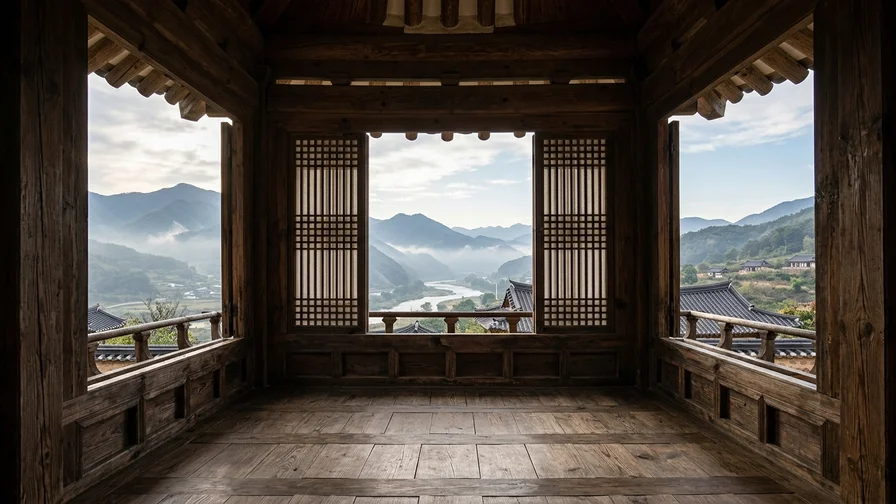
Gyeongju Donggung Palace and Wolji Pond (Anapji)
A palace garden from the Unified Silla period (676–935). “Donggung” was the palace where the crown prince resided, and “Wolji” is the name of the pond. It was a place where banquets were held when there were national celebrations or when distinguished guests were received. Before excavation surveys, it was called “Anapji,” meaning a pond where wild geese and ducks frolic, and this name is still widely used today. Donggung and Wolji are part of the Wolseong District of the Gyeongju Historic Areas UNESCO World Heritage Site, inscribed in 2000, and after night lighting was installed it became one of Gyeongju’s signature nighttime attractions.
Essential Information
| Item | Details |
|---|---|
| Location | 102, Wonhwa-ro, Gyeongju-si, Gyeongsangbuk-do |
| Built | 674 CE (King Munmu of Silla) |
| Key Features | Three artificial islands, three reconstructed pavilions, night lighting |
| Hours | 09:00 – 22:00 (last admission 21:30), open year-round. As of June 2026 |
| Admission | Adults 3,000 KRW, teens 2,000 KRW, children 1,000 KRW. As of June 2026 |
| Website | Gyeongju Culture & Tourism admission info |
Main Points of Interest
- Night Lighting and Reflection: The heart of Donggung and Wolji is the night view. After sunset, when the reconstructed pavilions are lit, their image is mirrored perfectly on the surface of the pond. The lighting comes on at sunset and stays on until closing. The one scene you must not miss — the composition from the western shore of the pond capturing all three pavilions and their reflection in a single frame. The calmer the wind at night, the more the water becomes like a mirror.
- Artificial Islands and Buildings: There are three artificial islands within the pond, and excavation confirmed the sites of several buildings, three of which were reconstructed. It was designed so that the whole cannot be seen at a glance from any single point on the pond, creating the effect of making a small space feel like a vast sea.
- Excavated Artifacts: In 1975, about 30,000 artifacts were excavated from the bottom of the pond. These include dice, metal crafts, and a wooden boat that reveal the daily life of the Silla people, and most are on display in the Wolji Hall of the Gyeongju National Museum. The museum is about a 15-minute walk from Wolji.
Practical Guide: Transportation and Visiting
Transportation — As of June 2026
- Coming by KTX: Get off at Gyeongju Station on the KTX (formerly Singyeongju Station — renamed Gyeongju Station in December 2023, about 8 km west of downtown) and take a city bus such as Route 700 or 331 from the stop in front of the station to downtown (toward the Gyeongju Express Bus Terminal), about 25–30 minutes.
- Bus: From the stops in front of the Gyeongju Express Bus Terminal and the Intercity Bus Terminal, take bus 11, 602, 604, 605, or 607 and get off at the “Donggung and Wolji” stop (per the Korea Tourism Organization’s January 2025 update, verified October 2026). Since July 2025, Gyeongju city buses have used a flat fare of 1,500 KRW cash / 1,450 KRW transit card for adults.
- Taxi: About 10 minutes from downtown spots such as Daereungwon or the terminal. The fare on the meter is generally under 10,000 KRW.
Recommended Itinerary
It’s recommended to enter just before sunset so you can see both the daytime view and the night view. Nearby are Daereungwon (free admission since May 2023), Cheomseongdae, and Gyochon Village all clustered together, so an efficient itinerary is to walk this area during the day and move to Wolji in time for sunset. The entire route can be done on foot.
Nearby Restaurants
Restaurants and cafés are clustered along Hwangnidan-gil, next to Daereungwon. Gyeongju-style ssambap (a spread in which assorted side dishes and meat are wrapped in lettuce and other leafy greens) is the signature dish of this neighborhood.
- Dosolmaeul 📍 — A traditional hanjeongsik spread (wraps, pancakes, braised fish, soybean-paste stew). A hanok restaurant on Hwangnidan-gil offering good-value Korean course meals. Closed Tuesdays and Wednesdays.
- Sigol Ssambap 📍 — Specializes in bulgogi ssambap. Located on the ssambap street near Daereungwon, with long hours of 07:00–22:00, making it convenient for an early breakfast or a meal before the night view.
- Gyori Gimbap Main Branch 📍 — A long-established spot famous for gimbap (rice and fillings rolled in seaweed) topped generously with egg ribbons. Near Gyochon Village. Closed Wednesdays, and it often sells out of ingredients early in the afternoon.
Bring a tripod and arrive about an hour before closing
If you want to take good night photos, bring a tripod. To capture a clear reflection on the pond, a windless day is ideal. Check the day’s sunset time before visiting and arrive at least 30 minutes early to claim a shooting spot. It’s busiest between 7 and 9 p.m., so to avoid the crowds, around an hour before closing is more relaxed.
3. A Joseon Scholar’s Utopia: Damyang Soswaewon
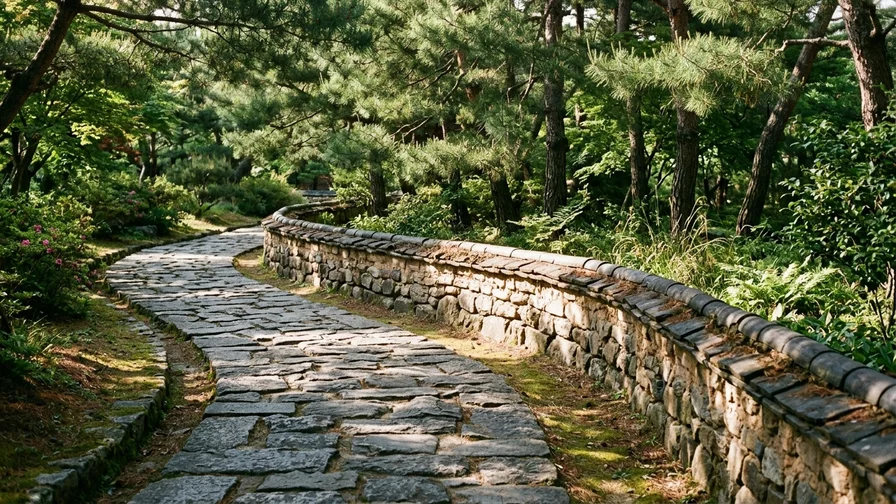
Damyang Soswaewon Garden
Soswaewon is a private garden created by Yang San-bo, a scholar of the mid-Joseon period (16th century). After his teacher Jo Gwang-jo met his death amid political strife, a shocked Yang San-bo returned to his hometown and built the garden while living in seclusion amid nature. “Soswae (瀟灑)” means “clear and pure.” Preserving the flow of the natural valley as it was and placing only a few essential buildings, it is a representative example of a private Joseon garden and is designated a Scenic Site under national heritage.
Essential Information
| Item | Details |
|---|---|
| Location | 17, Soswaewon-gil, Gasamunhak-myeon, Damyang-gun, Jeollanam-do |
| Built | Around 1530 (King Jungjong of Joseon) |
| Key Features | Gwangpunggak, Jewoldang, Ogokmun Gate, natural valley |
| Hours | Mar, Apr, Sep, Oct 09:00–18:00 / May–Aug 09:00–19:00 / Nov–Feb 09:00–17:00. No separate regular closing day announced (check locally for holidays, etc.). As of June 2026 |
| Admission | Adults 2,000 KRW, teens 1,000 KRW, children 700 KRW. As of June 2026 |
| Website | VisitKorea (Korea Tourism Organization) Soswaewon page |
Main Points of Interest
- Gwangpunggak Pavilion: A reception room right beside the valley where guests were received. Open on all sides, so when you sit there the sound of the valley stream and the breeze come right in.
- Jewoldang Pavilion: A space reserved for the owner, located higher up than Gwangpunggak. Its name means “the refreshing moon after the rain has cleared,” and it is where the owner stayed to read and reflect.
- Wall and Ogokmun Gate: Rather than dividing a boundary, the wall of Soswaewon was built low with earth and stone so that it looks like part of nature. The one scene you must not miss — the section beside the Ogokmun Gate where the valley water flows in freely beneath the wall. This detail, in which the wall lifts up and lets the waterway pass through without cutting it off, shows the Korean garden philosophy of “not altering nature” in a single frame.
Practical Guide: Transportation and Nearby Info
Transportation — As of June 2026
Soswaewon has relatively poor public-transport access, so it’s common to use Gwangju as a base.
- Getting to Gwangju: From Seoul (Yongsan Station), the KTX to Gwangjusongjeong Station takes about 1 hour 40 minutes to 2 hours. By express bus, it’s about 3 hours 30 minutes from Seoul to Gwangju’s U-Square terminal.
- From Gwangju to Soswaewon:
- Bus: Damyang rural bus Route 225 (marked 225 on the front of the vehicle) departs from Gwangju’s Gwangcheon Terminal (near U-Square), passes Seobang Market, Munhwa-dong, and Gwangju Lake, and heads into Gasamunhak-myeon, stopping at the “Soswaewon” stop. It takes about 1 hour to 1 hour 20 minutes. Buses run roughly once an hour and there are time slots with no service, so search for the “Soswaewon” stop on the KakaoMap or Naver Map app to check the real-time bus arrival before you move. Also check the time of the last bus back as soon as you arrive.
- Taxi: About 40–50 minutes from Gwangjusongjeong Station or U-Square, roughly 30,000–40,000 KRW on the meter. Worth considering if you’re traveling as a group.
Recommended Itinerary
Soswaewon itself isn’t large, so an hour is plenty to look around. It’s efficient to plan a one-day course combining it with other Damyang attractions like Juknokwon (a bamboo forest) or Gwanbangjerim. However, Soswaewon (Gasamunhak-myeon) and downtown Damyang are 20–25 minutes apart by car, so you’ll need a taxi or local bus to move between sections.
Nearby Restaurants
There are almost no restaurants around the entrance to Soswaewon. It’s safest to have your meal in downtown Damyang (about 25 minutes by car). The town has a cluster of restaurants serving Damyang’s signature dishes, tteokgalbi (minced and seasoned short-rib meat that is grilled) and daetongbap (rice cooked in a bamboo tube).
- Deoginkwan 📍 — The representative long-established spot for Damyang tteokgalbi. Korean-beef tteokgalbi, pork tteokgalbi, and a tteokgalbi set around 19,000 KRW per person. The large parking lot makes it easy to access.
- Seungil Sikdang 📍 — Specializes in charcoal-grilled pork ribs. Famed nationwide for ribs with a deep briquette-grill aroma. 09:30–21:00, closed on major holidays.
- Hansanggeun Daetongbapjip 📍 — Known as the original daetongbap house. A spread of rice cooked in a bamboo tube along with bamboo-shoot side dishes. Hours vary by day, so calling ahead is recommended before visiting.
Soswaewon is best when visitors are few
The true charm of Soswaewon reveals itself on a rainy day or on a misty early morning. Go at a time when there are few visitors and you can fully take in the atmosphere of a garden where you hear only the sound of water and birdsong. The valley breeze is lovely in summer, and the foliage in autumn. You have to pass through the bamboo forest path at the entrance before you reach the garden, and this approach itself is part of the experience, so don’t rush.
Extra Information for International Travelers
Transit Apps and Phone Assistance
The standard for hailing a taxi is the “Kakao T” app. Since 2024 it supports registering foreign-issued credit cards, and there is also a separate k.ride app for international travelers (operated by Kakao Mobility) that you can use without a Korean phone number. The Uber app also works as-is in Korea. When you need help with transportation, interpretation, or the like during your trip, you can call the 1330 Korea Travel Helpline. It operates 24 hours with multilingual support, including English, Japanese, and Chinese.
Best Times to Visit the Gardens
- Spring (April–May): The season when flowers bloom. The Changdeokgung Huwon in particular has a variety of spring blossoms such as azaleas and cherry blossoms.
- Autumn (October–November): The season when the foliage is most beautiful. All three sites have their own distinct autumn scenery, making it ideal for photography. That said, it is also the season when competition for Huwon reservations is fiercest.
If you’d like to stay in a hanok alongside the gardens and experience a traditional space in full, check out a hanok stay; and if you enjoyed the atmosphere of old villages with gardens, take a look at 7 Korean traditional villages as well.
Quick Comparison of the Three Gardens
| Garden Name | Location | Type | Key Features | Recommended Time |
|---|---|---|---|---|
| Changdeokgung Huwon (Biwon) | Seoul | Palace garden | Natural terrain, varied pavilions, reservation required, closed Mondays | Morning (autumn foliage) |
| Donggung and Wolji (Anapji) | Gyeongju | Palace banquet site | Splendid night view, pond reflection | Evening after sunset |
| Soswaewon | Damyang | Private garden (scholar) | Natural valley, simplicity, sound of water, sparse bus service | Early morning |
Some photos © Korea Tourism Organization (KOGL Type 1)