Inside Korea’s Late-Night Culture in the City That Wakes Up at Night
목차
- The Social Background and Character of Korean Nightlife Culture
- How to Make the Most of PC Bangs, Noraebangs, and Jjimjilbangs
- All-Nighters and Late-Night Dates: How Koreans Spend Their Nights
- The Role of 24-Hour Convenience Stores and Late-Night Transit
- Enjoying Nightlife Safely and Joyfully as a Tourist
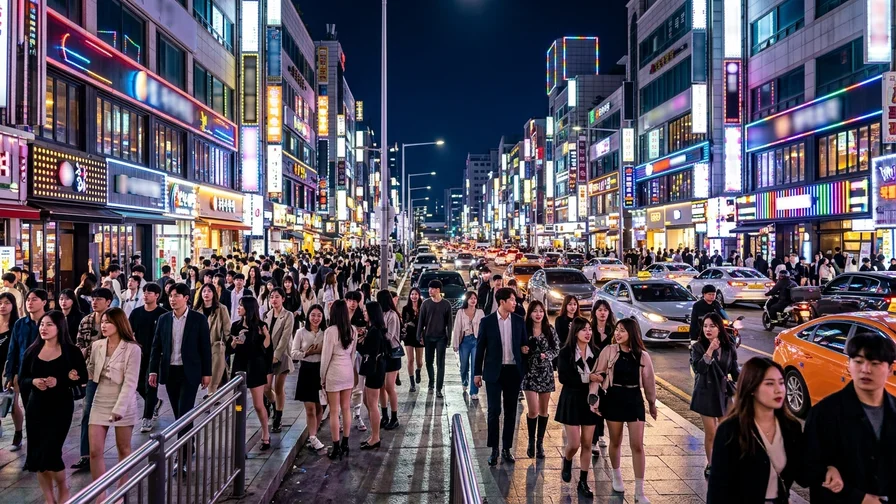
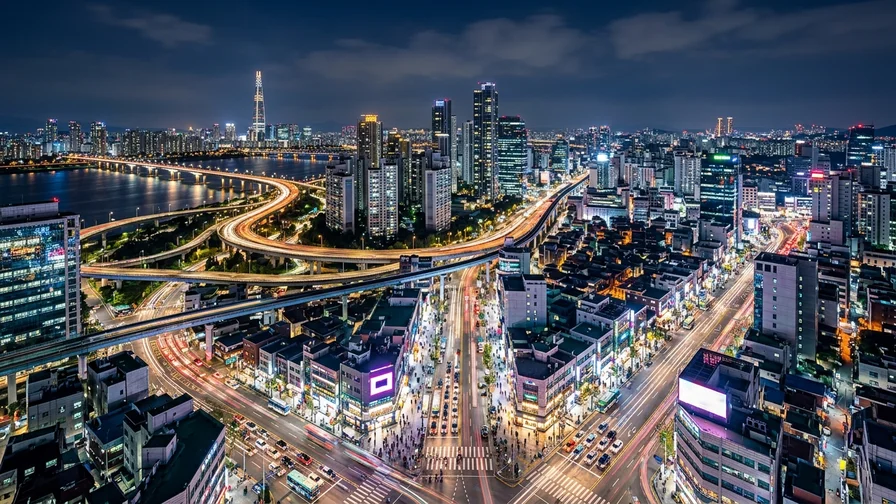
When the sun goes down, most cities get ready to sleep — but Korea’s big cities start a whole second day. From jjimjilbangs (Korean spas) and PC bangs that keep their lights on until dawn, to streets lined with pojangmacha (street tent bars), and the late-night buses that connect them all — Korean nightlife culture isn’t just about partying; it’s a way of life in Korea. This article is a practical guide for international travelers who want to enjoy Korea’s nights safely and to the fullest, with fares, places, and transit info verified as of June 2026.
Key Takeaways
- Social context: Korean nightlife isn’t limited to drinking. Gaming, singing, spa-going, studying, and late-night snacking all happen well into the night.
- Unique spaces: PC bangs (1,000–2,000 KRW per hour), coin noraebang (1,000 KRW for 3–4 songs), and 24-hour jjimjilbangs (around 12,000–15,000 KRW) are wallet-friendly nighttime playgrounds you’ll only find in Korea.
- Worth knowing: Rising labor costs and staff shortages are ending the era when everything was “open 24/7.” Roughly one in five convenience stores now closes overnight, and 24-hour cafes and large jjimjilbangs have shrunk dramatically. Always check opening hours on a map app before you head out.
- Infrastructure: Even after the last train, Seoul runs 14 dedicated late-night “Owl Bus” routes from 23:00 to 06:00 (2,500 KRW by card).
The Social Background and Character of Korean Nightlife Culture
There’s a deep connection between Korea’s social structure and why its nights are so lively. High population density, work and company-dinner culture that runs late, and the dynamism captured by the phrase “ppalli-ppalli” (hurry, hurry) all naturally stretch daytime activity into the night — and that fueled the growth of the many industries behind Korean nightlife culture.
Reinterpreting “Nightlife”
- While Western “nightlife” mostly means drinking at clubs and bars, the Korean version spans a much wider spectrum.
- Gaming with friends at a PC bang, blowing off steam at a noraebang, relaxing at a jjimjilbang, studying and working at a cafe or study cafe — the night is used for both “personal leisure” and “social connection.”
- It’s an everyday pattern to move from dinner (the “first round”) to a cafe or bar (the “second round”) to keep the conversation going. Late-night date courses are varied, too — catching a midnight movie, strolling along the Han River, or taking in the city view from a rooftop bar.
The Shrinking 24-Hour Scene — Recent Trends
Here’s an important change to know before you plan your trip:
- With rising minimum wages and late-night staff shortages, more and more businesses are giving up round-the-clock hours. Even among the major convenience store chains, about one in five now closes overnight (roughly 1–6 a.m.).
- Many once-common 24-hour cafe franchises have dropped their overnight hours, with 24-hour unmanned study cafes increasingly filling the gap.
- Several large jjimjilbangs also shut down after COVID-19. Don’t take old guidebook info at face value — check for an “Open” status on Naver Map or Kakao Map before you set out.
How to Make the Most of PC Bangs, Noraebangs, and Jjimjilbangs
The biggest heroes that make Korea’s nights special are these unique leisure spaces that stay open 24 hours or until dawn. They may feel unfamiliar to travelers, but they’re cheap and easy to use.
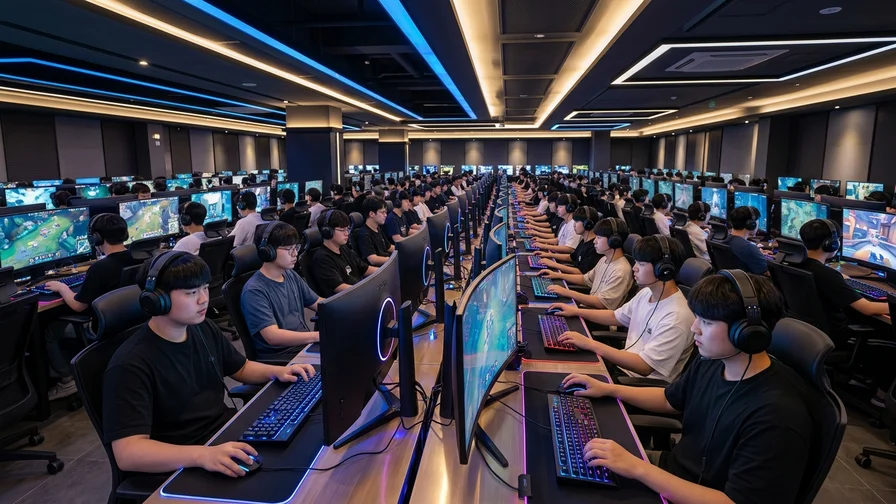
| Venue | Price (as of June 2026) | Hours |
|---|---|---|
| PC bang | 1,000–2,000 KRW per hour (cheaper with membership) | Mostly 24 hours |
| Coin noraebang | About 500 KRW per song, 1,000 KRW for 3–4 songs | Until dawn or 24 hours |
| Standard noraebang (room) | Charged by the room and time; varies by group size and time of day | Until dawn |
| Jjimjilbang | Entry around 12,000–15,000 KRW (late-night surcharge applies) | Overnight stays possible at 24-hour locations |
The Icon of K-Play: PC Bang Culture
- A Korean PC bang is far more than an internet cafe. With ultra-fast internet and high-spec computers, it’s a temple of e-sports and a social space where friends play team games like League of Legends or PUBG together.
- Rates typically run 1,000–2,000 KRW per hour. The usual system is to prepay, with time deducted as you use it, and membership makes it even cheaper (as of June 2026).
- You can order food right at your seat — ramyeon, fried rice, tonkatsu and more — so the “PC bang + mukbang” combo is a culture of its own.
- Large franchises like iSENS PC bang have comfortable facilities, so even foreigners can use them without worry. Many places let you use them as a non-member without a passport.
The Sanctuary of Stress Relief: Noraebang
- Korean-style noraebang, where you sing in a private room with just your own group, is the go-to space for venting emotions and relieving stress. You can search for the latest K-pop hits as well as English and Japanese songs.
- If you’re on your own, a 1–2-person “coin noraebang” is hassle-free. You insert coins or a card and sing by the song — typically 500 KRW for one song and 1,000 KRW for 3–4 songs (as of June 2026).
- Stylishly decorated large venues like Su Noraebang 📍 in the bustling Hongdae area are popular as a date course, too. Expect a wait on weekend evenings.
Spending the Night at a Jjimjilbang — Where You Go Matters
- A jjimjilbang is a 24-hour complex with saunas, kiln rooms, sleeping rooms, and a restaurant — a cheap alternative for spending the night.
- Heads-up: Dragon Hill Spa in Yongsan, a regular feature in older foreign-language guides, closed in 2021 and has still not reopened as of June 2026. Don’t bother going.
- A verified 24-hour alternative: Spa Lex Good Morning City 📍 in Dongdaemun — a 24-hour jjimjilbang in the basement of Good Morning City, near Exit 14 of Dongdaemun History & Culture Park Station. Admission is around 12,000 KRW by day and 15,000 KRW at night (20:00–05:00) (as of June 2026). It pairs nicely with late-night Dongdaemun shopping.
- Busan’s famous spa, Spa Land Centum City 📍, has top-tier facilities but runs 09:00–22:00 with a maximum 4-hour limit per visit, so overnight stays aren’t possible. The “jjimjilbang = 24 hours” formula doesn’t apply everywhere, so if you plan to spend the night, always confirm whether it’s truly open around the clock.
Editor’s tip: Getting the most out of a jjimjilbang
When you enter, you’ll get an electronic key used for both your shoe locker and clothes locker. Charges at the in-house restaurant and shop get billed to this key and settled all at once when you leave, so you don’t need to carry a wallet around. The signature jjimjilbang snacks are sikhye (a sweet traditional rice drink) and eggs roasted on hot maekban stone — a cold glass of sikhye after sweating it out in a hot kiln is the classic move.
All-Nighters and Late-Night Dates: How Koreans Spend Their Nights
Korean nights aren’t only for partying. They’re put to active use for self-improvement and relationships, too.
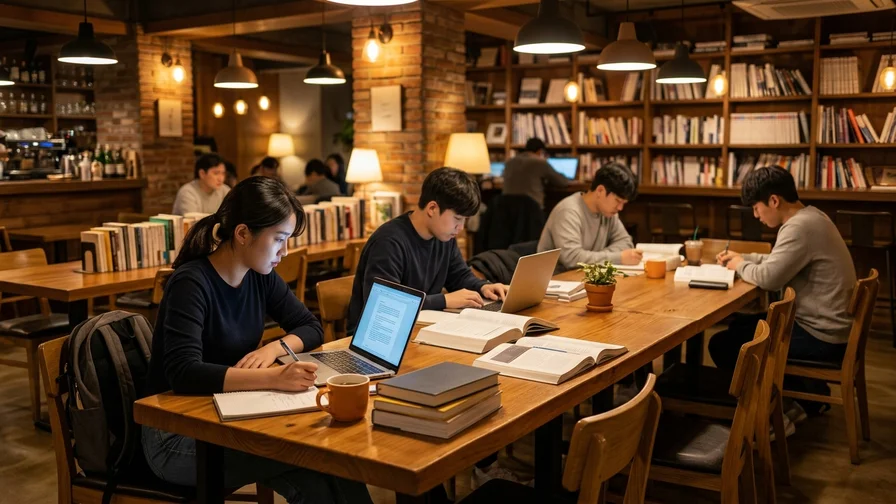
The Night of the “Cafe Studier”
- “Kagongjok,” meaning “people who study at cafes,” is one window into Korea’s fierce passion for learning. Around college and academy districts, cafes fill up with students studying late into the night during exam season.
- That said, the once-common 24-hour cafe franchises have mostly dropped their overnight hours due to labor costs. What now absorbs the demand for all-night studying is the 24-hour unmanned study cafe — you pay for a time pass at a kiosk, and many can be used even if you don’t speak Korean.
- If you need a cafe to work in late at night, search “24-hour cafe” on Naver Map or Kakao Map, check the hours, and then head over. Even places with “24 hours” on the sign sometimes actually run shortened hours.
Spending the Night on a Pocha Street — Two Seoul Alleys
- Jongno 3-ga Pojangmacha Street: Around the exits of Jongno 3-ga Station, pojangmacha (tented street bars) line up from evening until dawn — Seoul’s signature open-air drinking street. The fare ranges from seafood like sannakji (live octopus) and meongge (sea squirt) to udon and ramyeon, with a plate of snacks running around 15,000 KRW (as of June 2026). The lively mix of office workers fresh off the clock and foreign tourists is the real charm.
- Euljiro Nogari Alley: Near Euljiro 3-ga Station, this alley is packed with hof (draft beer) bars that pair draft beer with nogari (dried pollack snack). It’s one of the epicenters of the “Hipjiro” craze. That said, redevelopment in the area and crackdowns on outdoor tables have shrunk the old scene where tables covered the whole alley, and these days it’s mostly indoor seating. If you’re curious about the vibe, an early weekday evening visit is recommended.
- Both spots have a mix of stalls that take cash only, so keep some small bills on hand.
The Role of 24-Hour Convenience Stores and Late-Night Transit
Behind a thriving Korean nightlife culture lies the infrastructure that supports a 24-hour society. Convenience stores and late-night transit are at the heart of it.
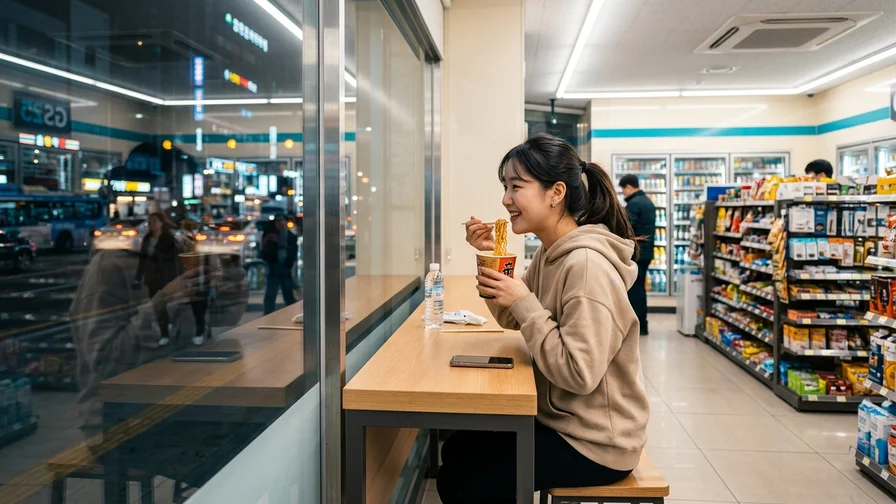
Late-Night Snacks at the Convenience Store
- Korean convenience stores are so versatile they’re called “little life platforms.” You can enjoy quick K-food like triangle gimbap, lunchboxes, and cup ramyeon cheaply all night long, and many have in-store eating areas with hot water dispensers and microwaves.
- Creating new menus by combining convenience store items — the so-called “convenience store golden combos” — is a fun culture in itself. A classic is adding string cheese and triangle gimbap to Buldak (spicy fire) ramyeon.
- Just note that not every convenience store is open 24 hours — due to labor costs, the share of stores that close overnight (around 1–6 a.m.) has risen to about one in five. Stores in busy districts and near stations are mostly open 24 hours, but in residential areas it’s safer to check a map app.
After the Last Train — The Owl Bus and Late-Night Taxis
The last Seoul subway trains and city buses generally stop running around midnight. Here are your options after that (as of June 2026):
- Owl Bus (N-Bus): A late-night city bus operated by the Seoul city government. An “N” is added in front of the route number. Its 14 routes run from 23:00 to 06:00, connecting major hubs like Gangnam, Hongdae, and Dongdaemun. The fare is 2,500 KRW by card, with intervals of 10–40 minutes depending on the route. You can check route maps and timetables on the official Seoul Owl Bus guide. Real-time bus locations are also available on Kakao Map and Naver Map.
- Late-night taxi: The base fare for a Seoul mid-size taxi is 4,800 KRW (1.6 km). A late-night surcharge applies from 22:00 to 04:00, and from 23:00 to 02:00 in particular there’s a 40% surcharge, so the base fare starts from 6,700 KRW. Keep in mind that for the same distance, the meter climbs faster at night.
- Taxi-hailing apps: “Kakao T” is the standard. It supports overseas-issued card registration and English service for foreigners, so it’s handy to install it before you fly out. The Uber app also works in large cities like Seoul. Hailing through an app is safer than flagging one down on the street, since it leaves a record of your route.
Hopping on the Owl Bus to one of the spots featured in Korea’s Top 7 Night View Spots can make for a special experience, too.
Enjoying Nightlife Safely and Joyfully as a Tourist
Korea’s nights are appealing, but they can feel unfamiliar to foreigners. Knowing just a few things will make your experience far safer and more enjoyable.
Tips for Enjoying It Like a Local
- Use Naver Map / Kakao Map: In Korea, Naver Map and Kakao Map are far more accurate than Google Maps. You can search for 24-hour venues and check late-night bus routes and real-time locations — essential when you’re out late.
- Bring cash: Most places take cards, but pojangmacha and some small shops are cash only. Keep some small bills handy.
- Mix and match activities: Dinner → a pocha street or PC bang → convenience store late-night snack → coin noraebang → wrapping up at a jjimjilbang. Bundling several activities like a local is the real way to experience a Korean night.
- 1330 Travel Hotline: The Korea Tourism Organization’s foreigner helpline, open 24/7 year-round. It offers multilingual support in English, Japanese, Chinese, and more, and also handles travel complaints and interpretation assistance. If you get lost or hit a communication wall late at night, dial 1330 (from overseas, +82-2-1330).
Safety Notes
- Korea is relatively safe and the streets are busy even late at night, but stick to the basics — avoid excessive drinking in entertainment districts, and don’t walk alone down secluded alleys late at night.
- Especially if you’re a woman traveling alone: plan your route home along busy main roads and station areas, and rather than flagging a taxi on the street, call one through an app like Kakao T so the vehicle number and route are on record. If you want to save money late at night, the Owl Bus is a safe alternative with a driver and other passengers around.
- In an emergency, the police line is 112, and ambulance/fire is 119. Both can connect you to interpretation services.
As we’ve seen, Korean nightlife culture is a fascinating window beyond mere nighttime fun — one that reveals the dynamism and way of life of Korean society. Opening hours and prices change often, so double-check on a map app before heading out, and for broader travel info, check the Korea Tourism Organization’s official site.
And the charms Korea’s nights have to offer don’t stop here. From night views and night markets you can only catch after dark, to the evening openings of the historic palaces — check out Korea Night Tour Courses and plan the perfect night trip.