Korea Night Tour Routes from Seoul to Busan After Dark
Contents
When the sun goes down, the real second round of a trip to Korea begins. Illuminated palaces, sweeping views of Seoul from observation decks, night markets that buzz until midnight, and media-art exhibitions spreading across the country—there are scenes that only open up after dark. If you’re planning Korea at night for the first time, start with the practical details: last-train times, late-night taxi surcharges, and venue-by-venue night hours, all verified as of June 2026. Theme-by-theme deep dives continue in the individual articles linked throughout.
Exploring Korea at Night: Why You Should Go After Dark
Even a place you saw during the day shows a completely different face at night, so you essentially get to use the same route to enjoy one day twice over.
A Cityscape That Transforms After Dark
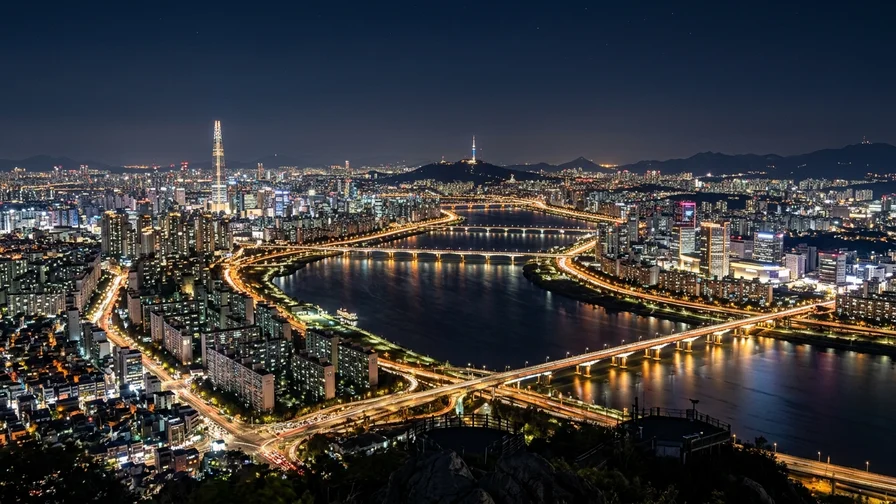
Seoul’s skyline turns into millions of lights after nightfall. Here is the operating info for two of the most popular viewpoints (as of June 2026).
- N Seoul Tower Observatory: Open 10:00–22:30 on weekdays and 10:00–23:00 on weekends, with last entry 30 minutes before closing (22:00 on weekdays, 22:30 on weekends and holidays; verified October 2026). Observatory admission is KRW 29,000 for adults (official on-site price—online vendors are often cheaper) (online advance purchase offers a sizable discount). Check the latest hours and prices on the official N Seoul Tower website.
- Lotte World Tower Seoul Sky (floors 118–123, 500m above ground): Open until 22:00 Monday–Thursday and Sunday, and until 23:00 on Friday and Saturday. Ticket sales end one hour before closing. See the official Seoul Sky website for detailed schedules.
Add in the headlights threading through the forest of buildings and the lighting along the leisurely Han River and its bridges, and you have the perfect starting point for a classic Korea at night travel guide.
The Calm and the Energy You Can Only Feel at Night
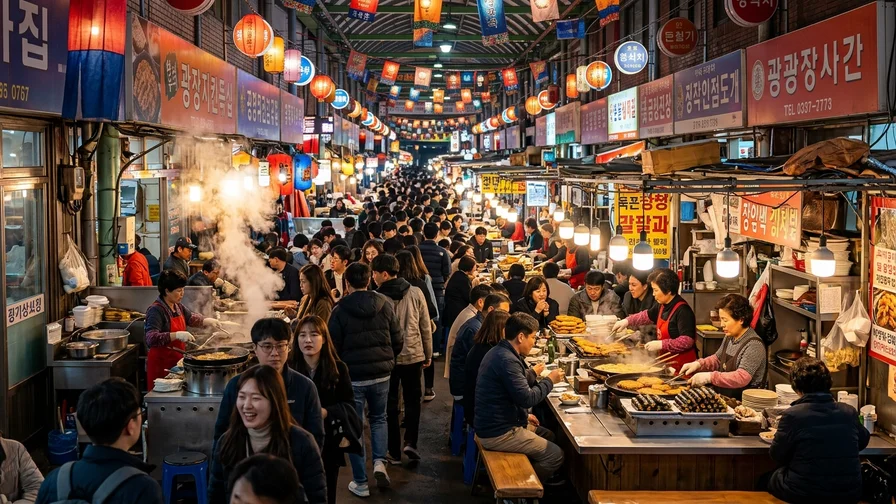
A Korean night has two sides. On one hand, the food alleys of Gwangjang Market and the street stalls of Myeongdong buzz with life until around 11 p.m.; on the other, palaces like Gyeongbokgung and Changdeokgung take on a quiet, mysterious atmosphere during their limited-period night openings. If you’re curious about Korea’s distinctive night culture of 24-hour cafés, jjimjilbang (Korean sauna and bathhouse complexes), and convenience stores, see Korea’s late-night culture for the full story.
Essential Considerations: Safety, Transport, and Hours
At night, public transit schedules and venue hours differ from the daytime. Just keep the information below in mind and you’ll rarely get stranded on your evening route.
A Guide to Late-Night Public Transit (Seoul, June 2026)
| Mode | Operating Info | Tips |
|---|---|---|
| Subway | The last weekday train is generally between 23:30 and 24:00 (varies by line, station, and direction; earlier on weekends and holidays) | Be sure to check the last-train time on Naver Map or KakaoMap before you set out. Some last trains terminate partway rather than running to the end of the line, so check the displayed destination |
| Late-night buses (Owl Bus, N-Bus) | 14 city bus routes dedicated to Seoul’s late-night hours. Roughly 23:00–06:00 the next morning, with intervals of 30–40 minutes. Fare is KRW 2,500 by card | Route numbers begin with “N” (N15, N26, etc.). They connect major downtown areas (Hongdae, Gangnam, Dongdaemun) with residential districts. Check route maps on the Seoul bus information site (bus.go.kr) |
| Taxi | 24-hour service. Base fare KRW 4,800 (1.6km). Late-night surcharges are 20% from 22:00–23:00 and 02:00–04:00, and 40% from 23:00–02:00 the next morning (base fare starts at KRW 5,800 and KRW 6,700 respectively) | The Kakao T app supports overseas-issued cards and the foreigner-friendly k.ride service, and the Uber app also works in Seoul. During the late-night peak (23:00–02:00), competition for rides is fierce, so book with plenty of lead time |
You can check subway operating info by line on the official Seoul Metro website.
Enjoying the Streets Safely After Dark
Korea is relatively safe at night, but it’s still wise to follow the basics.
- Avoid deserted alleys late at night and stick to bright, main streets.
- For late-night returns, we recommend the Owl Bus or an app-hailed taxi. Hailed taxis record the vehicle number and route, making them safer.
- For emergencies, dial 112 (police); for medical emergencies, 119. Emergency call bells are installed in many places.
- If you hit a language barrier, the 24-hour tourist help line 1330 can assist in English, Japanese, Chinese, and more.
Themed Night Itineraries: A Night to Match Your Taste
Just as every traveler has different tastes, there are many ways to enjoy a Korean night. Pick the Korea at night travel guide that suits your style.
A Night Market Tour of Food and Culture
Take food out of a Korean night and you’ve only seen half of it. Here are the go-to routes.
- Gwangjang Market food alley: Open 09:00–23:00 (open year-round; varies by stall). Bindaetteok (mung-bean pancakes), yukhoe (Korean-style beef tartare), and kkoma gimbap (mini seaweed rice rolls) are the signature dishes. The mini gimbap was once called “mayak gimbap,” but the whole market changed the name in 2023, so don’t look for “mayak” on the signs. For bindaetteok, Sunhuine Bindaetteok 📍 is the famous old-timer, open 10:00–21:00 (last orders 20:30). Go in the early-evening hours rather than late at night for more options.
- Myeongdong street food: Stalls generally run from around 4–5 p.m. on weekdays until about 11 p.m., and open earlier in the afternoon on weekends. Expect snacks like dak-kkochi (grilled chicken skewers), tornado potatoes, and hotteok (sweet filled pancakes).
Seasonal tips and dish-by-dish strategies for night markets nationwide continue in Korean night markets.
Taking in City Night Views
If you’d like to stroll while watching the city lights twinkle, here are two recommended routes.
- Naksan Park fortress wall trail: A free route that follows the Seoul City Wall. About a 15-minute walk from Exit 2 of Hyehwa Station (Subway Line 4). You can see both the wall lighting and the city’s night view at once, making it a low-key spot for an evening walk.
- Han River cruise: E-Land Cruise departs from the Yeouido pier (5–10 minutes on foot from Exit 3 of Yeouinaru Station, Subway Line 5). In the evening there’s the Moonlight Music Cruise (departing daily at 19:00, KRW 32,900) and the Starlight Cruise (departing daily at 22:00, KRW 25,900), among others (verified October 2026; varies by seat class). The bridge lighting and skyline seen from the water are a completely different picture from anything on land.
A detailed comparison of seven city night-view points is covered in Korea’s Top 7 night-view spots.
Sharper night shots, no camera shake
For smartphone night shots, keeping the phone steady matters more than “night mode.” Rest it on a railing or your bag and use the timer to eliminate camera shake for a much sharper result. On the cruise, the vibration makes the long shutter speeds of night mode work against you, so it’s better to use burst mode and take several frames.
A Night That Travels Back Through History
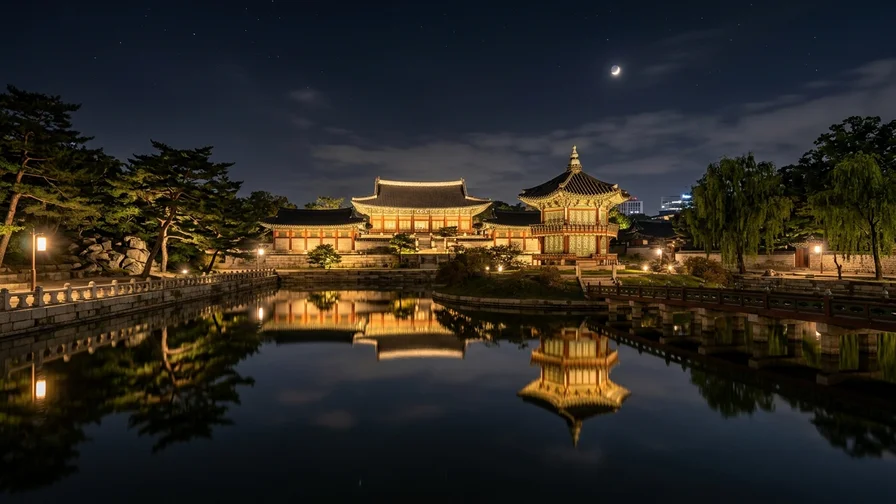
The palaces, freed from the daytime crowds, only open at night for limited periods, so booking is fiercely competitive (as of 2026).
- Gyeongbokgung night viewing: Held only in spring and fall. For the first half of 2026, it runs May 13–June 14, 19:00–21:30 (last entry 20:30), closed Mondays and Tuesdays, admission KRW 3,000. With timed online advance booking, slots often sell out right after they open.
- Changdeokgung Moonlight Tour: A program where you walk all the way to the rear garden under the moonlight with a professional guide. For the first half of 2026 it runs April 16–May 31, fee KRW 30,000, booked via a lottery entry on Ticketlink followed by first-come, first-served sales of remaining seats.
Schedules and booking details are announced by the Royal Palaces and Tombs Center, Korea Heritage Service. Comparisons of each palace’s night opening and booking strategies are covered in depth in palace night openings.
Night Spots by Region
If Seoul’s night is dazzling and dynamic, the nights in other cities each carry their own color. A true Korea at night travel guide extends beyond Seoul.
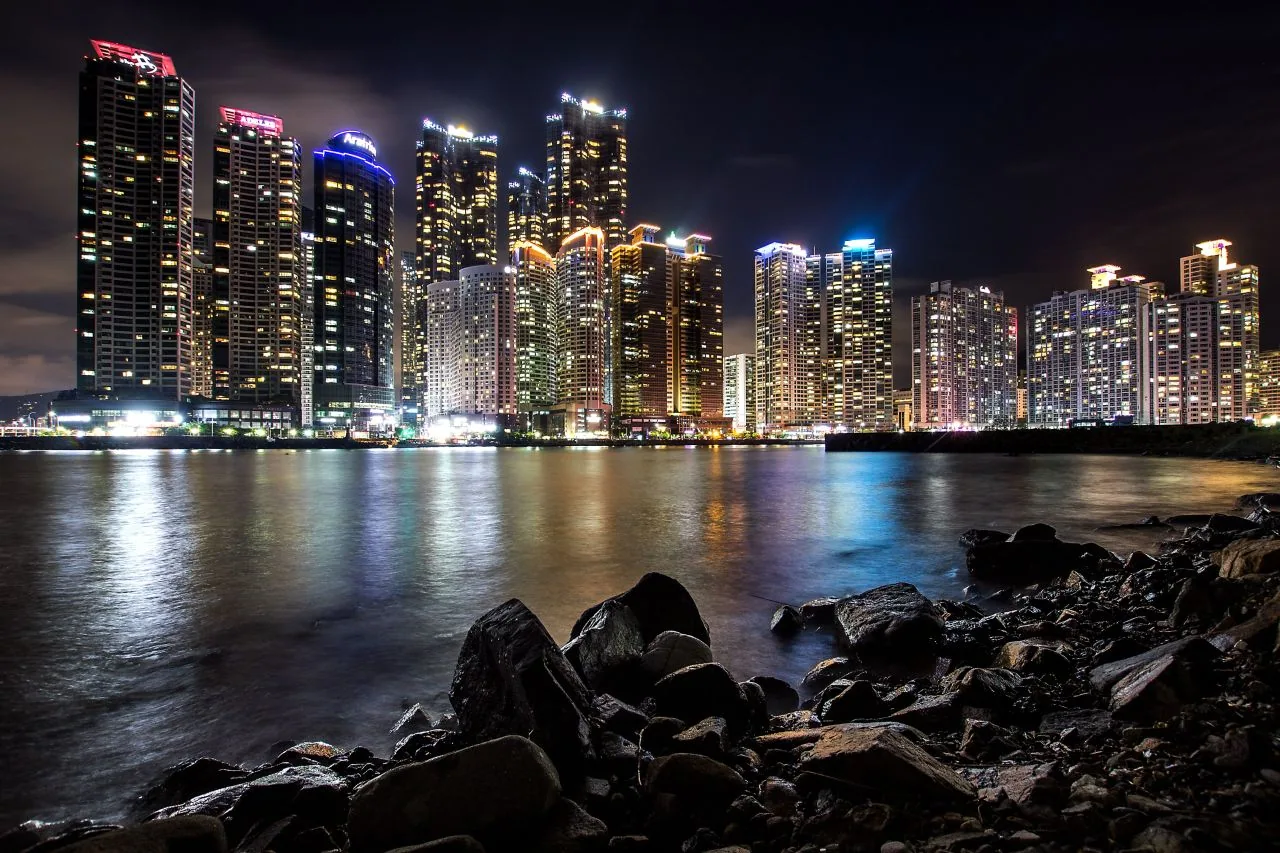
The Nights of Busan, Daegu, and Jeonju
- Busan: The high-rise night view of Marine City seen from The Bay 101 (at the entrance of Dongbaekseom in Haeundae, with shops generally open roughly 08:00–24:00) is the signature scene. On top of that, the free “Gwangalli M Drone Light Show” is held every Saturday evening at Gwangalli Beach (about 12 minutes per show, usually twice at 19:00 and 21:00, with times shifting by season—check the schedule on the official website). The picture created by the Gwangan Bridge lights and hundreds of drones has become a defining scene of Busan at night.
- Daegu: Anjirang Gopchang Alley fills with energy and the smell of grilling gopchang (grilled beef or pork intestines) after dark, while Kim Kwang-seok Street (a mural-lined street honoring the late beloved Korean singer-songwriter) becomes an evocative evening walking route beneath its murals and lights.
- Jeonju: The serene alleys and tile-roof silhouettes of the illuminated Jeonju Hanok Village truly come into their own once the daytime crowds have thinned.
Night Programs That Showcase Local Character
Each region runs night programs that are possible only in that particular city.
- Tongyeong DPIRANG: A nighttime digital theme park that turns the entire Nammangsan Sculpture Park into a single experience. The route is about 1.3km of paved road and forest path, taking 50–80 minutes (verified 2026-10-20). It opens after sunset (starting around 18:30 in winter, 19:30 in spring and fall, and around 20:00 in summer), closed on Wednesdays, KRW 15,000 for adults (as of June 2026). See the official DPIRANG website for detailed times.
- National Heritage Night Tours (formerly Cultural Property Night Tours): On spring-to-fall evenings, this program bundles night openings and performances at historic sites in cities nationwide. The host cities and schedules change every year, so check the relevant regional tourism site to match your travel dates.
The Latest Night-Travel Trends: What Not to Miss
In 2026, Korea’s night is expanding beyond traditional night-view watching into new forms of Korea at night travel guide that merge with technology.
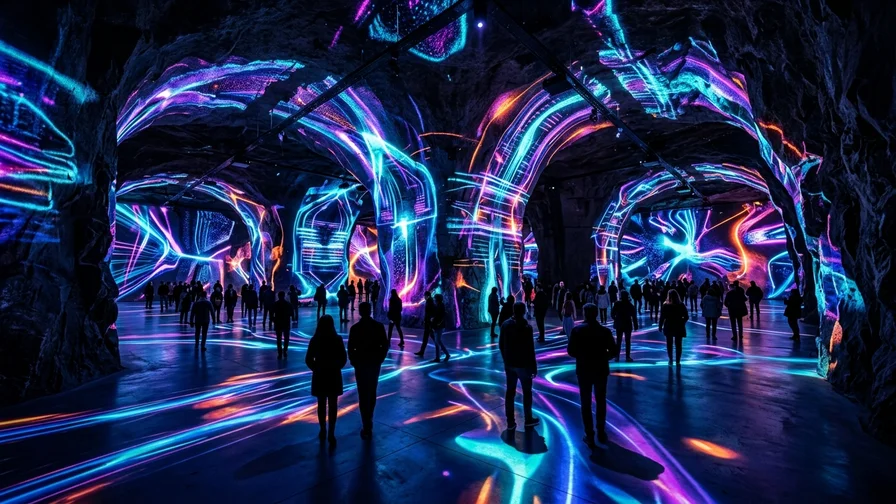
Immersive Night Exhibitions and Media Art
The hottest trend of recent years has been immersive media-art exhibitions.
- ARTE MUSEUM: Operating four locations in Jeju, Yeosu, Gangneung, and Busan. As a darkened indoor exhibition filled with light and sound, it’s unaffected by the time of day or the weather. Hours are 10:00–20:00 (last entry 19:00, open year-round), so it’s not exactly late-night, but it’s perfect to slot into an after-dark evening plan. See the official website for location-specific details.
- Seoul Light DDP: A free media-façade show that uses the entire curved exterior wall of the Dongdaemun Design Plaza (DDP) as a screen. It isn’t on year-round but runs seasonally (about three times a year), so check the official DDP site to see whether it overlaps with your visit.
Booking tips and the latest lineups for each exhibition are organized in Korea’s night exhibition trends.
A Night Enjoying Nature Within the City
Stepping away from the dazzling lights for a moment to enjoy the night in nature is another option.
- Easy night hikes: Seoul’s Ansan Jarak-gil is a gently sloping deck path that’s easy to walk at night, and the Inwangsan fortress-wall course looks down over Gyeongbokgung and the city’s night view. That said, some sections have no lighting, so bring a flashlight (your phone’s light) and a companion.
- Nights at Han River Park: Enjoying chimaek (fried chicken and beer) in the river breeze, or instant ramyeon from a convenience store, is an everyday night ritual for Koreans. Note that the Han River night market isn’t a permanent fixture. It ran as the “Seoul Bamdokkaebi Night Market” from 2015 to 2019 before stopping, then revived from August 2022 as a seasonal event called the “Hangang Moonlight Night Market,” held at Banpo and Yeouido Han River Parks (verified October 2026). Whether it runs, and on which days and hours, changes from year to year. Check the 2026 schedule on the Seoul Han River Park site or Visit Seoul.
In 2026, Korea’s night is ready to welcome every taste—from the lively energy of markets to the stillness of palaces and the wonder of media art. Use this hub guide to grab the big picture, then fill in the details from the individual guides linked above on night markets, night views, late-night culture, palace night openings, and night exhibitions to build your own after-dark itinerary. Just keep track of your last-train time, and you’ll find a Korean night is longer—and safer—than you might think.
Some photos © Korea Tourism Organization (KOGL Type 1)