Getbol, Korea’s 4 Tidal Flats (UNESCO 2021)
목차
- Inscribed in 2021 — Why Korea’s Getbol Holds Global Value
- Comparing the Four Areas: Where Should You Go?
- Top Pick for Foreign Travelers — Suncheon Bay (Boseong-Suncheon)
- Sinan — Solar Salt Farms and Island Travel
- Gochang — The Home of Mudflat Experiences
- Seocheon — A Hub for Birdwatching and Eco-Education
- Mudflat Experiences — Booking a Fishing Village in Advance
- Seasonal Tips: When Is the Best Time to Go?
- Practical Tips for Foreign Travelers
- Frequently Asked Questions (FAQ)
In 2021, the vast tidal flats along Korea’s southwestern coast were inscribed on the UNESCO World Natural Heritage list. Registered under the name “Getbol, Korean Tidal Flats,” they span four areas: Seocheon in Chungcheongnam-do, Gochang in Jeollabuk-do, and Sinan and Boseong-Suncheon in Jeollanam-do. Counted among the world’s five great tidal flat systems, Getbol became Korea’s second natural site on the list, after Jeju Volcanic Island and Lava Tubes in 2007. This guide lays out exactly what foreign travelers need to actually visit all four areas — transport, fees, experience reservations, and how to check the tides.
- Key takeaway 1: The four areas (Seocheon, Gochang, Sinan, Boseong-Suncheon) are grouped together as a single heritage site. Each has its own character and level of accessibility.
- Key takeaway 2: The easiest place to visit from Seoul, whether as a day trip or an overnight stay, is Suncheon Bay (Boseong-Suncheon), reachable by KTX.
- Key takeaway 3: Mudflat experiences (clam digging, etc.) require advance booking with a fishing-village experience town. The best window to visit is the mild stretch from April through October.
- Key takeaway 4: The success of a tidal flat trip hinges on the tides. Both the experiences and the scenery depend on hitting low tide, so checking the tide schedule before you set out is essential (see how to do this below).
- Information accuracy: The fees, operating hours, and train details in this article were verified against official sources as of June 2026.
Inscribed in 2021 — Why Korea’s Getbol Holds Global Value
UNESCO inscribed the Getbol, Korean Tidal Flats on the basis of their value for biodiversity conservation (inscription criterion x). According to the official inscription records, 2,150 species of flora and fauna live here, of which 22 are globally endangered or near-threatened. As a critical stopover on the East Asian-Australasian Flyway, the flats host 118 migratory bird species that feed and rest here, eight of them globally endangered.
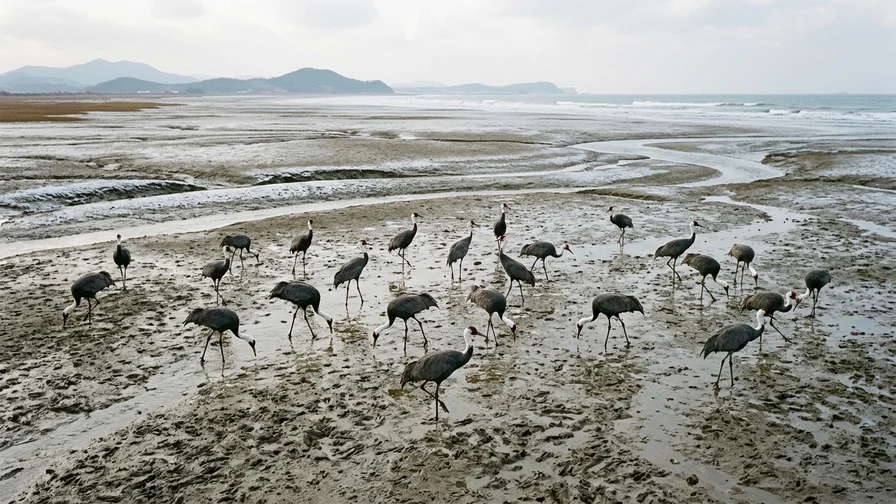
- Signature migratory birds: The Spoon-billed Sandpiper, a critically endangered species with only around 600 individuals left worldwide, depends on Korea’s tidal flats as an essential stopover. The Hooded Crane that winters at Suncheon Bay is another emblematic visitor.
- Geological significance: The thick Holocene sediment layers along the southwestern coast are regarded as important clues for studying global environmental change.
- Official information: The background to the inscription and an overview of the four areas are available on the official Getbol World Heritage website.
Comparing the Four Areas: Where Should You Go?
Each of the four tidal flats has its own appeal and level of accessibility. The table below should help you pick the spot that best fits your travel plans.
| Area | Location | Highlights | Accessibility for foreign travelers |
|---|---|---|---|
| Boseong-Suncheon Getbol (Boseong-Suncheon) | Suncheon City and Boseong County, Jeollanam-do | Suncheonman Wetland reed fields, Hooded Cranes (winter), the view from Yongsan Observatory | Excellent. About 2 hours 45 minutes by KTX from Yongsan Station in Seoul to Suncheon Station. From Suncheon Station, city bus No. 66 takes you straight there. |
| Sinan Getbol (Sinan) | Sinan County, Jeollanam-do | Taepyeong Salt Farm and the Salt Museum on Jeungdo Island, island travel | Moderate. About 2 hours 30 minutes by KTX from Yongsan Station to Mokpo Station, plus roughly 1 hour 30 minutes more from Mokpo to Jeungdo by bus or rental car. |
| Gochang Getbol (Gochang) | Gochang County, Jeollabuk-do | Mudflat experiences at the Hajeon and Mandol fishing villages, Ungok Ramsar Wetland, paired with dolmen sites | Low. Get off the KTX at Jeongeup Station or Gwangju Songjeong Station, take a bus to Gochang Terminal, then a taxi or rental car to the tidal flats. |
| Seocheon Getbol (Seocheon) | Seocheon County, Chungcheongnam-do | National Institute of Ecology, birdwatching (Yubudo Island), Janghang Skywalk | Moderate-low. No KTX service. About 3 hours 20 minutes on a Saemaeul or Mugunghwa train along the Janghang Line from Yongsan to Janghang Station. The National Institute of Ecology is a 2–3 minute walk from the station, but the tidal flat points require a car. |
Top Pick for Foreign Travelers — Suncheon Bay (Boseong-Suncheon)
For foreign travelers with limited time, the first place I’d recommend is Suncheon Bay. Transport is convenient and the tourism infrastructure is well developed, so you can manage the whole trip with public information alone. The Boseong side (around Beolgyo) is famous as a cockle-producing area, but access to the tidal flats for ordinary tourists is limited, so a plan centered on the Suncheonman Wetland Reserve is the realistic choice. Note that the Suncheonman Wetland Reserve is a separate site about 7 km from the Suncheonman National Garden — a single ticket admits you to both.
Reed Fields and Hooded Cranes
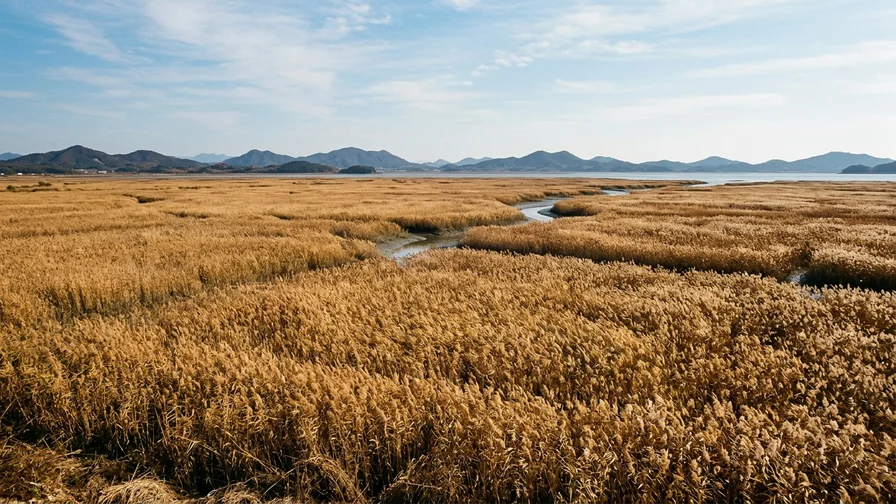
- Reed colony: Roughly 5.4 km² in size. A wooden boardwalk makes the walk easy for everyone.
- Wildlife watching: Along the trail you can watch small crabs and mudskippers crawling across the flats up close.
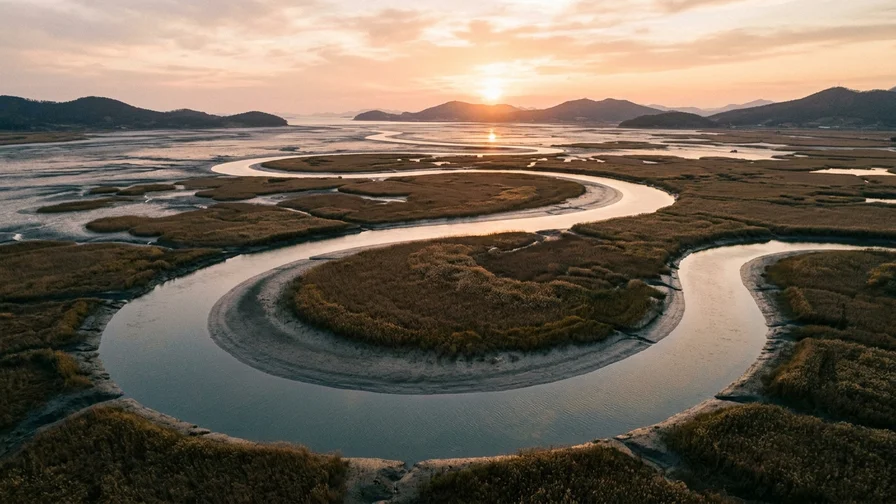
- Yongsan Observatory: A 30–40 minute uphill climb from the entrance rewards you with a sweeping view of the S-shaped waterway, the tidal flats, and the reed fields all together.
- Winter spectacle: From November to February, thousands of endangered Hooded Cranes arrive.
The one scene not to miss: the S-shaped waterway seen from Yongsan Observatory at dusk. The moment the channel glows gold across the mudflats exposed by the ebbing tide is the signature shot of Korea’s tidal flats — the trick is to head up about an hour before sunset and claim your spot.
Getting There, Admission, and Hours
- Transport:
- KTX: About 2 hours 45 minutes from Yongsan Station in Seoul to Suncheon Station. Around 44,000 won (about $32) for a standard seat.
- City bus: Bus No. 66 from in front of Suncheon Station reaches the Suncheonman Wetland entrance in about 30–40 minutes. It runs roughly every 25 minutes from 06:05 to 22:00; the adult fare is 1,700 won (about $1.20).
- Taxi: About 20 minutes from Suncheon Station, costing around 12,000–15,000 won (about $9–11). The Kakao T app supports English and lets you register overseas cards, so foreign visitors can hail rides too.
- Admission: 10,000 won (about $7.30) for adults, 7,000 won for teens, 5,000 won for children. It’s a combined one-day ticket with the Suncheonman National Garden and allows one re-entry the same day (as of June 2026).
- Hours: Opens at 08:00. The last ticket sale varies by season — 17:00 in Nov–Feb, 18:00 in Mar–Apr and Sep–Oct, and 19:00 in May–Aug. Visiting is allowed for up to one hour after the ticket office closes (as of June 2026). For the latest notices, including closed days, check the official Suncheonman Wetland website.
Recommended Restaurants
Editor’s tip: Restaurants around Suncheon Bay specialize in cockle and mudskipper dishes. Cockles are small clams blanched and tossed in a seasoning sauce, while jjangttungeo-tang is a rustic soup made from ground mudskippers that live in the mudflats — a great chance to taste the flavors particular to the tidal flat region.
- Suncheonman Jeongmun Restaurant 📍: Located at 492 Suncheonman-gil. Specializes in Korean tidal-flat seafood dishes like cockle bibimbap and mudskipper soup.
- Kkomak Jeongchandamu 📍: Located at 524 Suncheonman-gil. A full cockle course that brings together boiled cockles, seasoned cockles, and cockle pancakes.
- Suncheonman Jeollado Bapsang 📍: Located at 496-1 Suncheonman-gil. A Namdo-style set meal serving cockle bibimbap with a wide array of side dishes.
- Pair with Naganeupseong: Next to Suncheon’s Naganeupseong Folk Village, Choe Daegam Beolgyo Kkomak 📍 (63 Samil-ro) and Mihyang Restaurant 📍 (5 Samil-ro) serve a cockle set meal made with Beolgyo cockles. Both are a 3–4 minute walk from the Naganeupseong ticket office.
Sinan — Solar Salt Farms and Island Travel
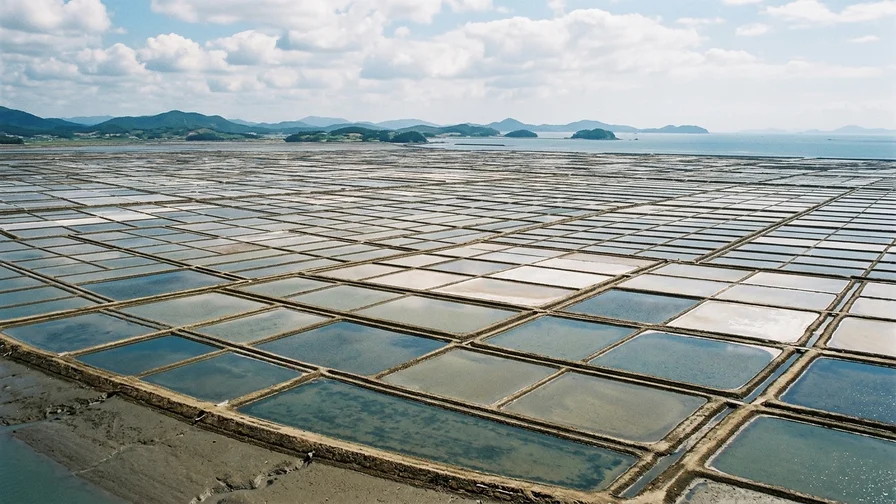
The Sinan Getbol is made up of more than 1,000 islands, giving it the largest tidal flat area of the four. The base for travel is Jeungdo Island — part of a UNESCO Biosphere Reserve (the Sinan Dadohae area, designated in 2009) and one of the first places in Asia to be named a Slow City, back in 2007. The heart of the trip is Taepyeong Salt Farm, a solar-salt production site.
Taepyeong Salt Farm and the Salt Museum
- Scale: Built in 1953, this is Korea’s largest single salt farm — about 1.4 million pyeong, roughly twice the area of Seoul’s Yeouido.
- Scenery: The endless salt fields and the rows of salt warehouses create a landscape you won’t find anywhere else.
- Experience: At the salt-farm experience site you can try harvesting salt yourself (availability varies with season and weather, so check ahead).
- Salt Museum: Housed in a converted stone salt warehouse that is a registered cultural property, the museum presents the history and science of salt. Admission is 3,000 won (about $2.20) for adults and 1,500 won for children, open 09:00–18:00 (as of June 2026).
The one scene not to miss: the path that runs dead straight into the middle of the salt fields in front of the Salt Museum. On afternoons during harvest season (spring to fall), you can watch salt workers gathering salt with a daepa (a salt-pushing tool) right from the path.
Getting There
The trip to Jeungdo is more involved than the one to Suncheon. Jeungdo is connected to the mainland by bridge, so no boat is needed.
- KTX: About 2 hours 30 minutes from Yongsan Station in Seoul to Mokpo Station.
- Bus: Buses run from Mokpo Intercity Bus Terminal to Jeungdo via Jido. There are only a few departures a day, so check the timetable before you leave — see the Sinan County public transport guide or ask at Mokpo Intercity Bus Terminal.
- Rental car: A rental car from near Mokpo Station is the most convenient option — about 1 hour 30 minutes from Mokpo to Jeungdo. An International Driving Permit (IDP) is required.
Recommended Restaurants on Jeungdo
- Anseong Restaurant 📍: In Jeungdo’s town center. A long-standing spot serving mudskipper soup and home-style set meals, which also runs a guesthouse.
- Ihak Restaurant 📍: At 39 Jeungdo Jungang-gil. Specializes in mudskipper soup made with mudskippers caught on the Jeungdo flats.
- Jjangttuine Restaurant 📍: At 17-12 Ujeon-gil, near Ujeon Beach. Specializes in mudskipper soup and nakji yeonpo-tang (a clear soup made by simmering whole octopus).
Gochang — The Home of Mudflat Experiences
The Gochang Getbol is hard to reach by public transport alone, but of the four areas it offers the best-organized experiences that take you right out onto the flats. Bundle in the Ramsar wetland and the dolmen sites and you have a full day’s itinerary.
The Hajeon and Mandol Fishing Villages
- Hajeon Fishing Village: 30 Seojeon-gil, Simwon-myeon. The country’s largest Manila clam producer, offering clam digging and rides on a “mudflat taxi” (a modified farm tractor). For bookings and tide guidance, see the official Hajeon village website (Korean) or call 063-564-8831.
- Mandol Fishing Village: Mandol-ri, Simwon-myeon. Along with mudflat experiences, it has lovely views toward the Ramsar wetland. For information and monthly tide tables, see the official Mandol village website (Korean).
- How they operate: At both villages, the experience times change daily with the tides, and operations stop entirely around high tide. Showing up with only a date fixed can leave you empty-handed, so always confirm the available experience times when you book.
The one scene not to miss: the moment the mudflat taxi (tractor) carries you several kilometers out into the heart of the flats. The view of nothing but tidal flat stretching to the horizon lies beyond walking distance, so the experience program is the only way to see it.
Transport and Nearby Attractions
- Transport: Get off the KTX at Gwangju Songjeong Station or Jeongeup Station, then take an intercity bus to Gochang Public Bus Terminal (about 30–50 minutes). Rural buses from the terminal to the Simwon-myeon flats are infrequent, so a taxi or rental car is the realistic choice.
- Adjacent wetland: You can pair this with the trails at Ungok Ramsar Wetland.
- Add-on sights: If you visit in spring (April–May), I recommend the Gochang Green Barley Field Festival and the World Heritage Gochang Dolmen Sites as well.
Recommended Restaurants in Gochang
There are almost no restaurants right by the tidal flats. About 15 minutes away by car, the entrance to Seonunsa Temple has a cluster of restaurants serving Gochang’s specialty, pungcheon eel — grilled freshwater eel cooked over charcoal and eaten with shredded ginger.
- Yeongi Restaurant 📍: 2727 Seonundae-ro, Asan-myeon. A long-established grilled-eel restaurant beside the Jujincheon (Pungcheon) stream.
- Sindeok Restaurant 📍: 8 Seonunsa-ro, Asan-myeon. A good place to pair grilled eel with bokbunja-ju (Gochang’s specialty black raspberry wine).
- Myeongga Pungcheon Eel 📍: 16-5 Seonunsa-ro, Asan-myeon. Focused on grilled-eel set meals and open until late.
Seocheon — A Hub for Birdwatching and Eco-Education
Sitting where it meets the Geum River estuary, the Seocheon Getbol tends to have the highest density of migratory birds among the four areas. That said, its key birdwatching site, Yubudo Island, is hard to reach, so advance preparation is essential.
Yubudo Island — Boat Arrangements Must Be Made in Advance
- The key fact: Yubudo Island has no regular ferry service. You can only get there by arranging a resident’s fishing boat in advance from the Janghang or Gunsan side (about a 15-minute crossing), and because the tidal range is large, both your arrival and departure have to be timed to the tides.
- Why it’s worth it: An internationally important birding site where rare migratory birds such as the Eurasian Oystercatcher and the Spoon-billed Sandpiper gather. The peak is during the great sandpiper migrations in spring (April–May) and fall (August–October).
- The practical approach: For foreign travelers who find it hard to arrange a private boat, it’s safer to visit through Seocheon County’s ecotourism programs or a domestic birding tour. For inquiries, use the 1330 Travel Hotline.
The National Institute of Ecology and Transport
- National Institute of Ecology: Home to “Ecorium,” a large exhibition hall that recreates the world’s five climate zones. Admission is 5,000 won (about $3.70) for adults, 3,000 won for teens, and 2,000 won for children; closed every Monday (as of June 2026). For details, see the official visitor information.
- Transport: Seocheon has no KTX service. From Yongsan Station in Seoul, take a Saemaeul or Mugunghwa train on the Janghang Line to Janghang Station — about 3 hours 20 minutes, with 14–15 departures a day. The west gate ticket office of the National Institute of Ecology is a 2–3 minute walk from Janghang Station.
- Tidal flat points: Spots like the Songnim mudflat and the Yubudo boat dock are some distance from the station and require a taxi or rental car.
The one scene not to miss: the seamless climate transition from the tropical hall to the polar hall along a single route inside Ecorium. It’s also the most reliable backup plan for a day when the weather at the tidal flats turns bad.
Recommended Restaurants in Seocheon
Seocheon’s specialty is bakdae — a flat fish caught in the West Sea and dried until firm; grilled, it’s mild and chewy. You can try it in the old downtown restaurant district of Janghang-eup.
- Seohaean Restaurant 📍: 21 Jangseo-ro 47beon-gil, Janghang-eup. Specializes in a bakdae set meal serving grilled and braised bakdae together.
- Halmae Onjeongjip 📍: 20 Jangseo-ro 47beon-gil, Janghang-eup. Specializes in agu-tang (a spicy soup of monkfish simmered with bean sprouts); closed every Monday.
- Janghang 6080 Food Alley: A food-focused street in Janghang-eup designated by Seocheon County. Old eateries, including the two above, are gathered here, so you can take your pick in one alley.
Mudflat Experiences — Booking a Fishing Village in Advance
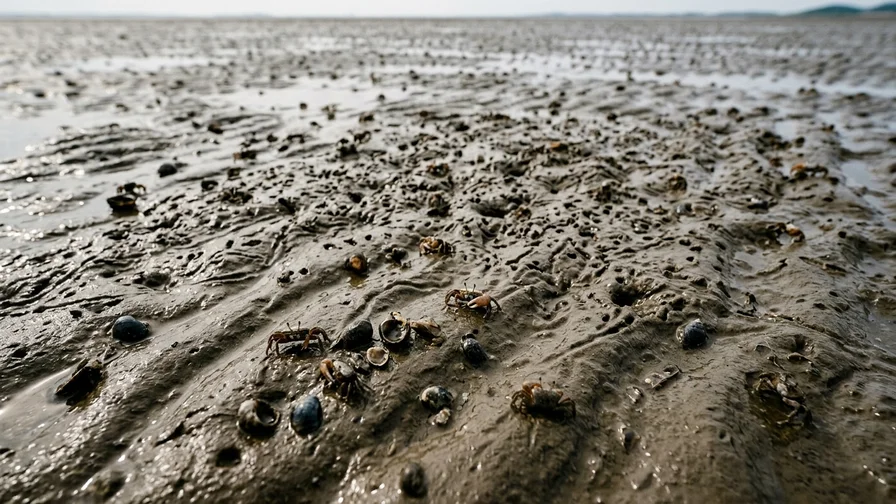
To go out onto the flats and dig for clams or catch crabs, you need to join a program at a local fishing-village experience town (Eochon Cheheom Maeul). For safety and to protect the ecosystem, these run only in designated areas.
- Booking required: Most require advance reservations, and weekends fill up quickly.
- How to book: Through each village’s official website (see the links in the Gochang section above) or by phone. Most of this is conducted in Korean, so we recommend enlisting a Korean-speaking friend, your hotel concierge, or the 1330 interpretation line.
- What to bring: Rubber boots (janghwa) and tools are often included in the fee, but confirm this. Bring clothes you don’t mind getting muddy, a change of clothes, and a towel.
How to Check the Tides
Mudflat experiences are only possible around low tide, and the time of low tide shifts about 50 minutes later each day. Get into the habit of checking the tides for your visit date before you leave.
- Korea Hydrographic and Oceanographic Agency – Badanuri Ocean Information: khoa.go.kr tide forecast — the government’s official tide forecast, giving high- and low-tide times by region.
- Badatime: badatime.com — a site that lays out regional tide tables in an easy-to-read format (Korean).
- The final check: Even at the same low tide, the available experience times differ from village to village, so give top priority to the times the village you’ve booked tells you.
Seasonal Tips: When Is the Best Time to Go?
The best time to visit is April through October, when the mild weather is ideal for outdoor activities.
- Spring and fall (April–May, August–October): Overlapping with the great migrations of birds such as sandpipers, this is the best time for birdwatching. September and October, with clear skies and pleasant temperatures, are also the best for walking.
- Summer (July–August): Hot and humid, but the mudflat creatures are at their most active.
- Winter (December–February): Cold and windy, so not suited to hands-on experiences. It is, however, the best time to observe winter migratory birds like the Hooded Cranes at Suncheon Bay.
Practical Tips for Foreign Travelers
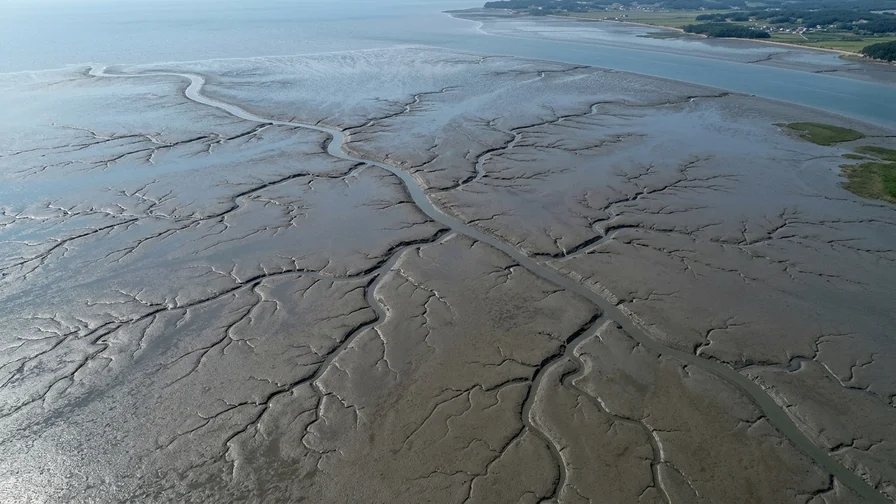
- What to wear: Winds can be strong, so bring a windproof outer layer. For footwear, comfortable sneakers you don’t mind getting dirty are recommended.
- Rental car: Except for Suncheon, a rental car is essentially a must for Sinan, Gochang, and Seocheon. Be sure to carry an International Driving Permit (IDP).
- 1330 Travel Hotline: If you need help with language, transport, or travel information, call “1330.” Run by the Korea Tourism Organization, it offers three-way interpretation and information services in English, Japanese, Chinese, and more (within Korea: 1330; from overseas: +82-2-1330). It can also help interpret when booking a fishing-village experience.
Frequently Asked Questions (FAQ)
- Q1: Can I make a day trip from Seoul?
- A1: Yes, for the Suncheon Bay Getbol. You can take an early KTX, arrive in the morning, look around, and return on an evening train. Sinan, Gochang, and Seocheon involve long travel times, so at least one overnight is recommended.
- Q2: Do I need to buy tickets in advance?
- A2: For general visitor sites like the Suncheonman Wetland Reserve, you can buy tickets on site. But for fishing-village experience programs such as clam digging, you must book in advance.
- Q3: Is it good to visit with kids?
- A3: Yes, it’s great. The Suncheonman Wetland Reserve has well-maintained walkways, and the National Institute of Ecology (Seocheon) has plenty of educational attractions, making both popular with families. Mudflat experiences are also a hit with children.
- Q4: What animals can I see?
- A4: It depends on the season and place. In general, you’ll easily spot small crabs, lugworms, and mudskippers. Birds include sandpipers, spoonbills, and ducks, and at Suncheon Bay in winter you can see Hooded Cranes.
- Q5: Can I swim in the tidal flats?
- A5: No, the tidal flats are not a place for swimming. The bottom is very soft and you can sink in deep, which is dangerous. Stay only within the designated trails or experience areas.
- Q6: What does “Getbol” mean?
- A6: It’s the romanized spelling of the Korean word for “tidal flat” (getbol). The official UNESCO inscription name is “Getbol, Korean Tidal Flats.”
- Q7: Where can I get official information on all four tidal flats?
- A7: You can find the meaning of the inscription and an overview of each area on the official Getbol World Heritage website and the UNESCO World Heritage Centre inscription page.
Korea’s tidal flats are a special place that shows a side of living nature quite different from the glittering cities. Get the tides right, and the information in this guide alone — even just printed out — will get you to all four.
Related Reading on This Topic
- 17 UNESCO World Heritage Sites in Korea
- The 40 Royal Tombs of the Joseon Dynasty (UNESCO 2009)
- Haeinsa Janggyeong Panjeon & Tripitaka Koreana (UNESCO 1995)
- Gyeongju UNESCO World Heritage (1995, 2000)
- 9 Korean Seowon Confucian Academies (UNESCO 2019)
- Jeju Volcanic Island and Lava Tubes (UNESCO 2007)
- Jongmyo Shrine (UNESCO 1995)
- Changdeokgung Palace & Secret Garden (UNESCO 1997)
- Suwon Hwaseong Fortress & Haenggung Palace (UNESCO 1997)
- Gochang, Hwasun & Ganghwa Dolmen Sites (UNESCO 2000)
- Andong Hahoe & Gyeongju Yangdong Villages (UNESCO 2010)
- Namhansanseong Fortress (UNESCO 2014)
- Baekje Historic Areas (UNESCO 2015)
- Sansa, 7 Buddhist Mountain Temples in Korea (UNESCO 2018)
- Gaya Tumuli, 7 UNESCO Sites (UNESCO 2023)
- Bangudae Petroglyphs (UNESCO 2025)