Korean Etiquette Through K-Dramas — Manners Worth Knowing Before You Visit
목차
The global obsession with K-dramas isn’t just about captivating storylines or charming actors. Woven into every scene is a deep look into the lives and values of Korean people. If you pay close attention to how characters interact, you’ll discover a crucial code that forms the foundation of Korean society: ‘Ye-ui’ (예의), or etiquette. This is your ultimate 2026 guide, designed for K-drama fans and anyone dreaming of a trip to Korea. We’ll use scenes from your favorite shows to demystify the often complex world of Korean etiquette, making it easy and fun. You’ll walk away with insider tips to help you navigate your trip like a local, not just a tourist. This is more than just learning manners; it’s the first step toward a deeper understanding of core Korean cultural values.
Key Takeaways
- Why K-Dramas Are Your Etiquette Guide: In Korea, ‘Ye-ui’ is more than just politeness; it’s the bedrock of mutual respect and relationships. K-dramas serve as a fantastic visual textbook for this culture.
- Real-World Scenarios: We’ll provide specific, actionable tips for dining, greetings, and public spaces—situations you’ll actually encounter on your trip, all explained with K-drama examples.
- Communicate Like a Local: Learn simple formal expressions and titles to build smoother, more positive connections with the Korean people you meet.
The Heart of K-Dramas: Why Etiquette is Everything in Korea
In Korean society, etiquette is the starting point for every relationship. When you see K-drama characters bow deeply to their elders or pass an item with two hands, it’s not just for dramatic effect. It’s a reflection of a culture deeply rooted in daily life. This Korean etiquette stems from values that emphasize age, social hierarchy, and the importance of community harmony. It’s closely tied to the concept of ‘Jeong’ (정), the unique Korean bond of affection, where maintaining the form of a relationship can sometimes take precedence over individual feelings.
Respect for Elders and How to Address People
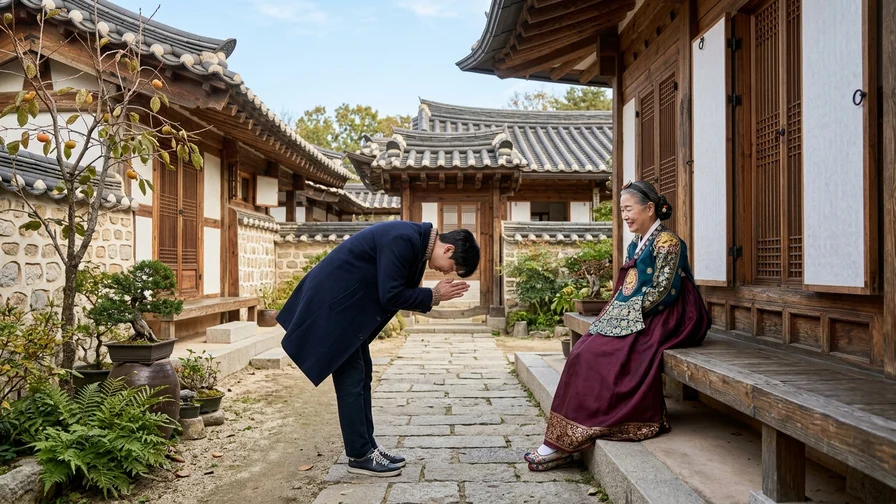
Shows like ‘Reply 1988’ and ‘Our Blues’ beautifully illustrate how younger generations treat elders in their community with immense respect. A simple bow of the head when meeting an elder is the absolute basic. When giving or receiving anything, especially from someone older, it’s customary to use two hands. Also, when addressing someone older or whom you’ve just met, it’s much more polite to use respectful titles instead of ‘uncle’ (‘ajeossi’) or ‘aunt’ (‘ajumma’). Opt for ‘Sajangnim’ (사장님, often used for a restaurant owner), ‘Seonsaengnim’ (선생님, a term of respect for teachers or professionals), or ‘Eoreusin’ (어르신, for a senior citizen).

Navigating Public Spaces
Have you ever noticed K-drama characters speaking quietly on their phones or avoiding calls altogether on the bus or subway? In Korea, talking loudly or taking calls in shared public spaces like public transport, libraries, or even quiet cafes is considered very rude. It’s a culture born from a shared respect for everyone’s space. And of course, queuing is a natural part of daily life. Whether you’re waiting for a famous restaurant, a bus, or the checkout counter, always wait your turn in an orderly line.
Dining Like a Local: Mastering Korean Table Manners from Your Favorite Shows
For Koreans, the phrase “Let’s grab a meal sometime” is more than just an invitation to eat; it’s a vital social ritual for building relationships and sharing ‘jeong’. Dramas that are serious about food, like the ‘Let’s Eat’ series, offer a fantastic window into Korea’s fascinating dining etiquette. These manners are a great way to experience Korea’s communal culture firsthand.
Utensil Placement and Pouring Drinks
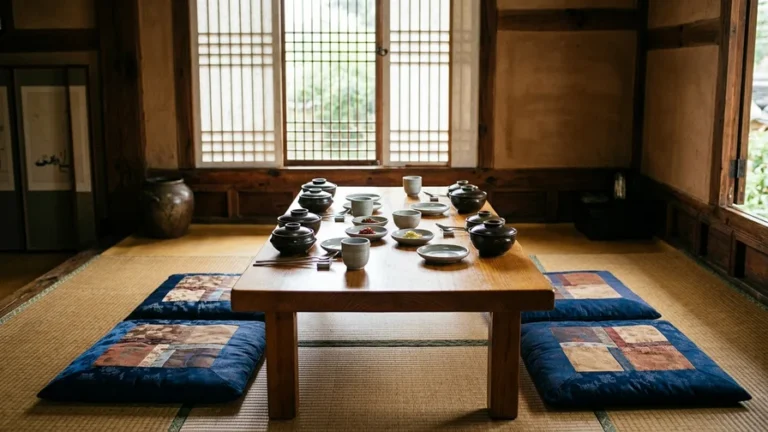
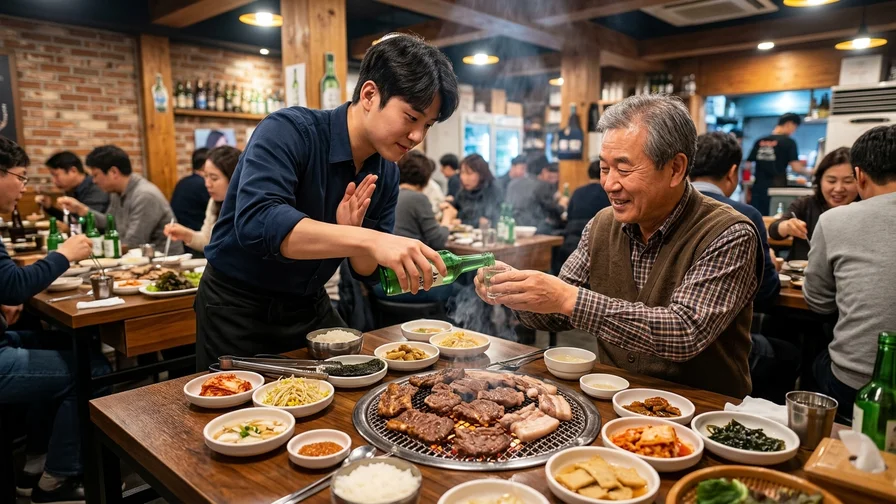
At a traditional Korean table setting, the rice bowl goes on the left and the soup bowl on the right. Your spoon and chopsticks are placed to the right of your rice bowl, with the spoon to the left of the chopsticks. If you find yourself drinking with elders, a few key rules apply. When a junior person pours for a senior, they should hold the bottle with their right hand and lightly support their right wrist or elbow with their left hand. When receiving a drink, it’s polite to hold your glass with two hands. It’s also a sign of respect to turn your head slightly away from the elders when you take a sip.
Key Points for Dining with Elders
The most important rule is to wait for the eldest person at the table to pick up their spoon or chopsticks before you begin eating. Think of the grand family meal scenes in K-dramas where everyone waits silently until the grandfather or father takes the first bite. It’s also good form to pace your meal with the elders. Finishing too quickly and leaving the table, or eating too slowly, can be seen as inconsiderate. When the meal is over, don’t forget to express your gratitude by saying “Jal meogeotseumnida” (잘 먹었습니다), which means “I ate well.”
Editor’s Pro Tip
In many Korean restaurants, especially at a Korean BBQ joint, it’s common for everyone to share a single stew (jjigae) from the same pot. If you’re not comfortable with this for hygiene reasons, don’t hesitate to ask, “Ap-jeobsi jom jusil su innayo?” (앞접시 좀 주실 수 있나요?), which means “Could I please have a small plate?” Requesting your own dish is not rude at all, and most restaurants will happily provide one. It’s a small gesture to ensure everyone enjoys the meal comfortably, so ask without worry!
Hello & Goodbye: How to Greet People Respectfully in Korea
Greetings are the beginning and end of every interaction. If you just observe how characters greet each other in K-dramas, you’ve already learned half of what you need to know about Korean etiquette. Mastering the subtle differences in greetings for different situations will make you a much more savvy traveler.
The Art of Bowing and Handshakes
Korean greetings range from a slight nod to a deep 90-degree bow. For peers or younger people, a quick nod of the head is common. For elders or people you’re meeting for the first time, a more formal bow of about 30-45 degrees is appropriate. When it comes to handshakes, the senior person usually initiates. The junior person should shake with two hands, or shake with their right hand while their left hand supports their right forearm. A slight bow of the head while shaking hands adds an extra layer of politeness.
Always Use Formal Language with Strangers
The Korean language has a clear distinction between formal speech (존댓말, jondaetmal) and informal speech (반말, banmal). Regardless of age or social status, it is basic etiquette to always use formal speech with someone you’ve just met. The easiest way to do this is by ending your sentences with ‘-yo’ (요) or ‘-seumnida/mnida’ (-습니다/ㅂ니다). For example, to say thank you, you should say “Kamsahamnida” (감사합니다) or “Gomapseumnida” (고맙습니다) instead of the informal “gomawo” (고마워).

Navigating Public Spaces and Work Culture Like a Pro
If you’re planning a longer stay or visiting for business, understanding etiquette in public and professional settings will be incredibly helpful. Dramas like ‘Misaeng: Incomplete Life’ or ‘Start-Up’ offer a great glimpse into Korea’s intense and unique work culture.
Public Transport Manners and Queuing Culture
As mentioned, noise on public transport is a big no-no. In Seoul’s subways, you’ll find designated priority seats for the elderly, pregnant women, and disabled passengers. It’s an unspoken rule to leave these seats empty. Even if you’re in a regular seat, giving it up to someone in need is seen very positively in Korea. On escalators, it’s standard practice to stand on one side (usually the right) to leave a clear path for people in a hurry to walk past.
The Senior-Junior Dynamic in the Workplace
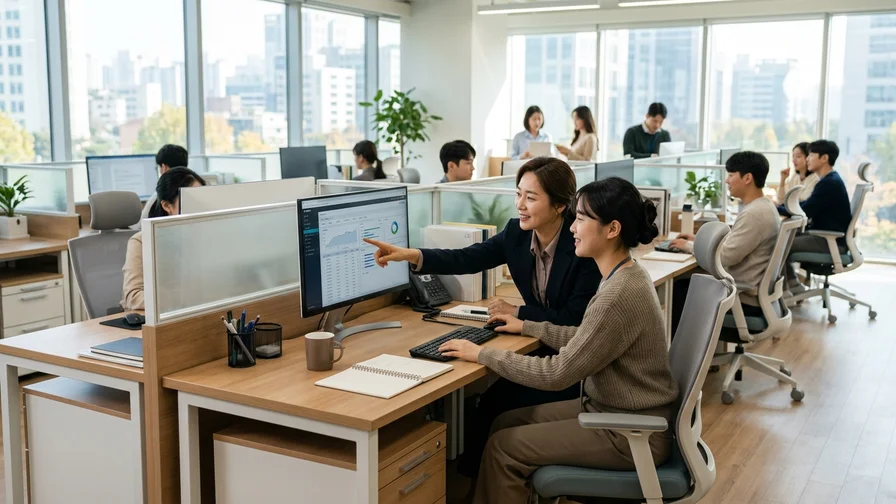
Korean office culture often has a clear hierarchy defined by the ‘sunbae’ (선배, senior) and ‘hubae’ (후배, junior) relationship. The culture is built on the idea that juniors respect their seniors, and seniors mentor and guide their juniors. You should always use formal language with superiors and senior colleagues, and it’s crucial to be clear and prompt with work-related reports and communication. While many companies are now moving towards a more horizontal culture, a fundamental attitude of respect remains highly valued.
So, what did you think of our K-drama-inspired look into Korean etiquette? It might seem complex and unfamiliar at first, but at the core of all these actions is a warm-hearted spirit of ‘respect and consideration for others’. By learning these basics of Korean etiquette, you’re now ready to be a welcome visitor anywhere you go in Korea. For more detailed and official information, referring to the Korea Tourism Organization’s etiquette guide is also a great idea. We hope every moment of your trip to Korea is brightened by mutual respect and understanding. This article is part of our comprehensive series exploring Korea’s core values through K-drama. To get the full picture, be sure to check out our Pillar Guide. Discover even more charms of Korean culture with Come On Korea!