Filial Piety in K-Dramas — A Traditional Value Korea Is Rethinking
목차
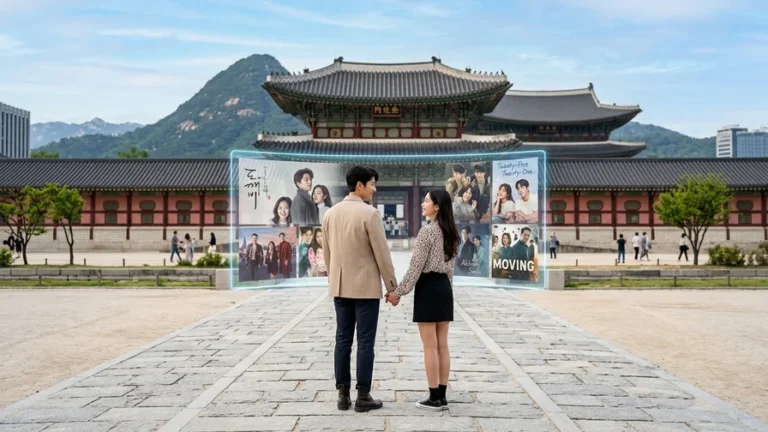
If you’re a fan of K-dramas, you’ve surely been captivated by the intense, heartfelt, and often complicated relationships between parents and their children. Whether it’s through tear-jerking sacrifices or explosive arguments, these family dynamics resonate with viewers worldwide. At the heart of these narratives lies a core tenet of Korean culture: ‘Hyo’ (효), a deeply ingrained concept of filial piety. Today, we’re diving deep into how filial piety in K-dramas is being reinterpreted in 2026, balancing the weight of tradition with the realities of modern life. Join us as we explore how ‘Hyo’ is more than just a moral code—it’s a pivotal force shaping the choices and destinies of the characters we love. (See our complete guide to Korean values in K-dramas)
Key Takeaways
- Modern Makeover for ‘Hyo’: K-dramas brilliantly showcase how the traditional idea of filial piety is evolving as it collides with modern values like individualism, career ambitions, and the nuclear family structure.
- Narratives of Conflict and Reconciliation: The clashes between parents and children often serve as a central plot device to question the true meaning of ‘Hyo’. These dramas suggest that true family love is built on communication and understanding, not just sacrifice.
- Forging a Global Connection: Through K-dramas, the Korean concept of ‘Hyo’ is being introduced to the world, finding common ground with the universal value of family love and resonating with audiences far beyond Korea’s borders.
The Roots of ‘Hyo’: Understanding Traditional Filial Piety in K-Dramas
Where does the profound sense of duty that drives K-drama characters to agonize over their parents’ words or even set aside their own dreams come from? The answer lies in centuries of Confucian values that have shaped Korean society, with ‘Hyo’ at its very core. It’s a concept that goes beyond simple respect, historically viewed as a child’s absolute duty and a cornerstone of social order.
A Concept Forged Through History
While the idea of honoring one’s parents has existed for millennia, it was during the Goryeo and Joseon dynasties, when Confucianism became the state ideology, that ‘Hyo’ was actively promoted by the government. Absolute obedience and devotion to one’s parents were a child’s primary responsibilities, acting as a fundamental principle for maintaining social harmony. In that era, ‘Hyo’ was an all-encompassing ideal that included not contradicting your parents’ wishes, maintaining your health, and achieving success to bring honor to the family name. This historical backdrop is often depicted in K-dramas today through the immense psychological pressure characters feel to live up to parental expectations. (Learn more from the Encyclopedia of Korean Folk Culture)
Why Parent-Child Bonds Remain Central Today
Even in 2026, as Western individualism has become more widespread in Korean society, the bond between parents and children remains profoundly important. The form may have changed, but the deep-seated instinct to worry about a parent’s well-being or an adult child’s future is a timeless emotion. K-dramas tap directly into this. The protagonists’ tendencies to weigh their family’s opinion heavily in major life decisions—like marriage or career choices—not only reflect a facet of Korean society but also create powerful, relatable moments that allow viewers everywhere to see their own lives mirrored on screen.
The Many Faces of ‘Hyo’ in Modern Dramas
K-dramas act as a prism, refracting the single concept of ‘Hyo’ into a spectrum of different stories. Today, filial piety is no longer just about one-sided obedience or sacrifice. It is reimagined as a source of unwavering love, and at times, the root of heartbreaking conflict, creating rich and multi-layered narratives.
From Financial Support to Emotional Connection
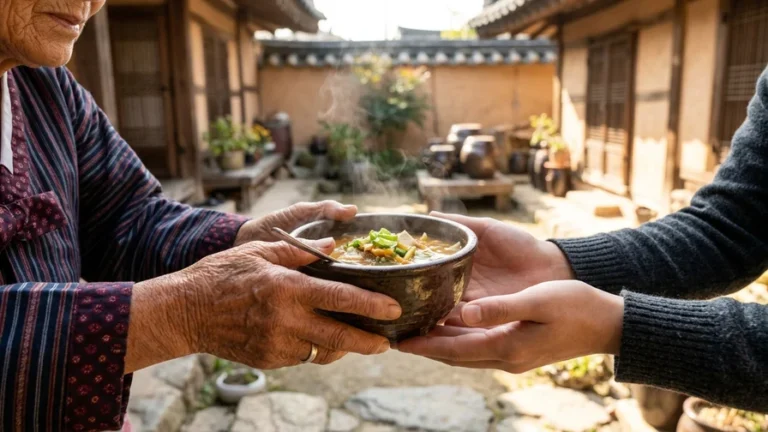
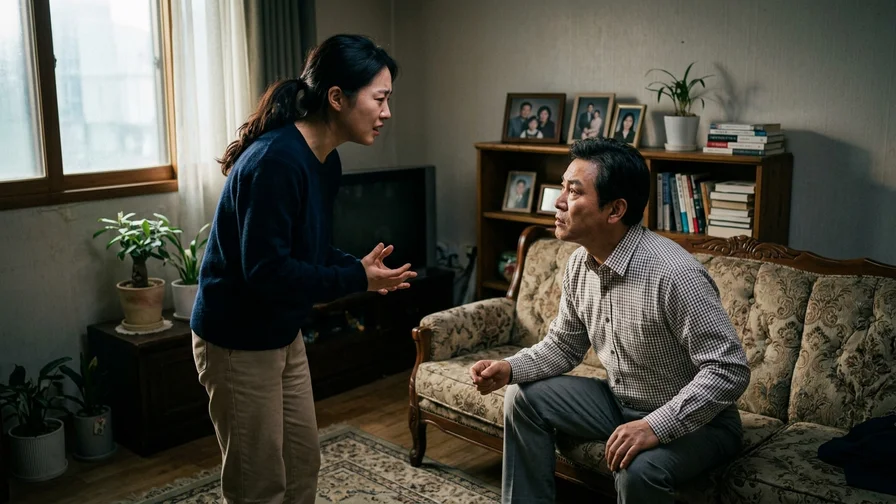
In the past, a significant part of ‘Hyo’ was providing for one’s parents materially—buying them nice clothes, ensuring they ate well, and giving them an allowance. However, modern K-dramas increasingly emphasize emotional connection and support as the truest form of filial piety. Characters who make time for frequent phone calls to ease a parent’s loneliness or who become a pillar of strength during a crisis resonate deeply with audiences. This sends a powerful message: economic success isn’t the only measure of a good child; genuine communication and understanding are what matter most.
Rediscovering Family Through Conflict
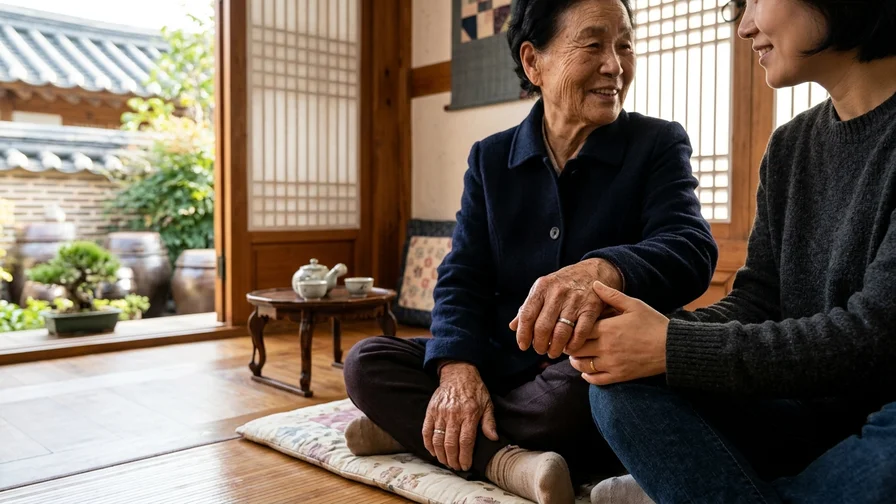
Interestingly, K-dramas often use conflict surrounding ‘Hyo’ to reveal an even deeper family bond. The clash between a parent’s lofty expectations and a child’s yearning for an independent life can, on the surface, look like disrespect. But these stories don’t stop there. By the end of these intense struggles, the characters often grow to understand each other’s perspectives, showing that true ‘Hyo’ begins not with blind obedience, but with the effort to respect and understand one another as individuals. These narratives masterfully capture the complex web of emotions that defines family.
The Evolution of ‘Hyo’ in Contemporary K-Dramas
In 2026, Korean society is changing faster than ever. In this dynamic environment, the traditional value of ‘Hyo’ is facing new challenges and expanding its meaning. Modern filial piety in K-dramas serves as a sensitive mirror reflecting these societal shifts.
Individualism and the Nuclear Family’s Impact
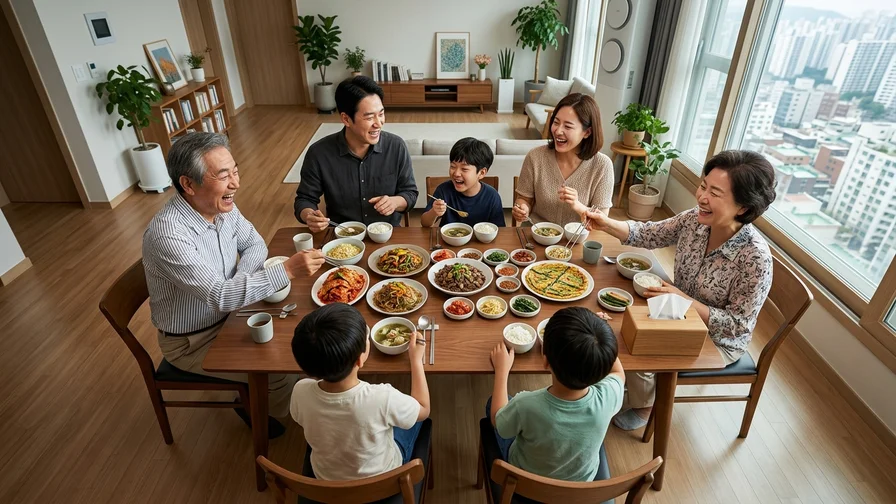
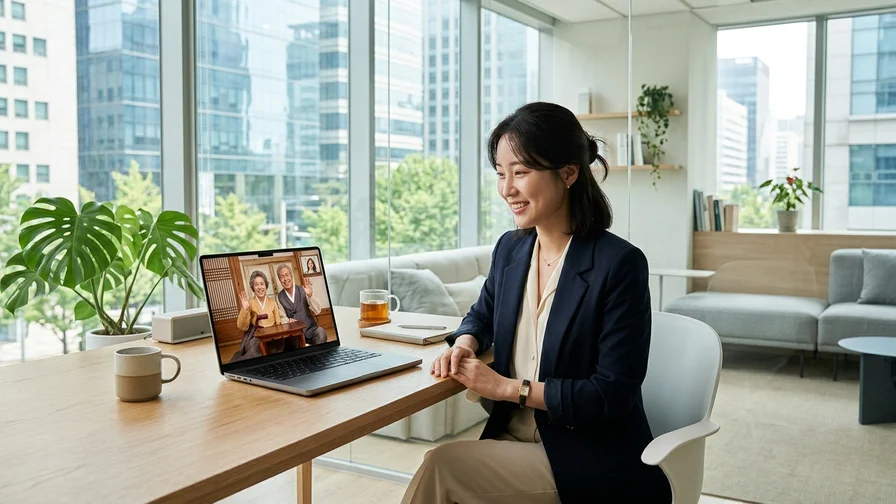
As personal happiness and self-fulfillment become central values, the traditional notion of ‘sacrificing for the family’ is being challenged. Younger generations in K-dramas are increasingly shown choosing their own dreams and partners over their parents’ wishes. While this often sparks intergenerational conflict, it also raises a fundamental question: ‘What is true happiness?’ Furthermore, with the rise of single-person households and nuclear families, the old model of ‘Hyo’ centered around large, extended families is also transforming. As explored in ‘The Culture of the Korean Dinner Table (‘Bapsang’)’, what matters now is the emotional connection that transcends physical distance.
Redefining ‘Hyo’ for a Global Audience
As K-dramas win hearts around the world, they are translating the uniquely Korean concept of ‘Hyo’ into a universal story about family. Viewers from diverse cultural backgrounds watch the family dynamics in these shows and see reflections of their own loved ones. In this process, ‘Hyo’ is expanding beyond its specific Confucian roots to represent the universal value of ‘love and respect between parents and children.’ The question K-dramas pose is no longer just ‘How can one be a dutiful child?’ but rather, ‘How can we build healthy, loving relationships with the people who matter most?’
Editor’s Pro-Tip
To better understand family relationships in K-dramas, pay close attention to the ‘titles’ characters use. Notice when someone uses a formal term like ‘Abeonim’ (Father) versus a more intimate ‘Appa’ (Dad), or how they address their in-laws. These subtle shifts in language can reveal the emotional distance or changing dynamics between them. Small details like this are often the key to unlocking a character’s true feelings!
Case Study: How ‘Reply 1988’ Perfected the Story of ‘Hyo’
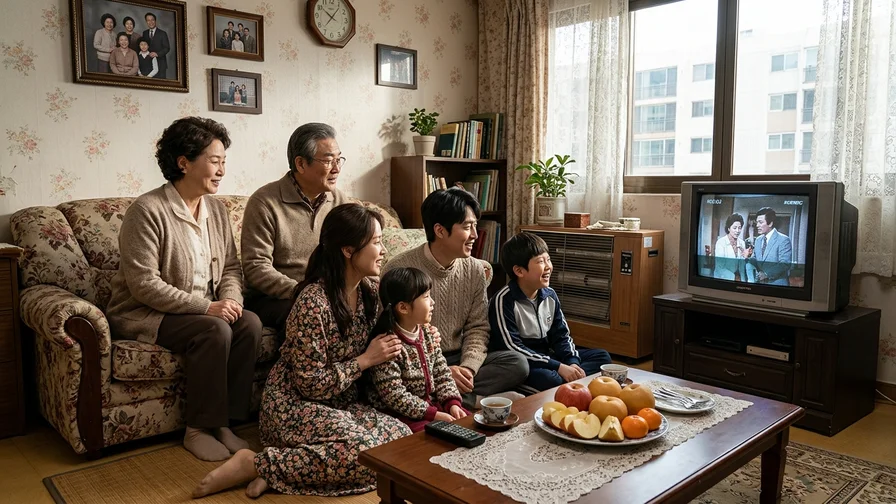
Among the countless K-dramas that explore family, ‘Reply 1988’ stands out for its warm and realistic portrayal of ‘Hyo’, earning it a special place in the nation’s heart. Set in the Ssangmun-dong neighborhood of 1980s Seoul, the drama tells the stories of five families, showcasing filial piety in its many different forms.
Character Choices and the Dilemma of Duty
The children in ‘Reply 1988’ practice ‘Hyo’ in their own unique ways. Sung Deok-sun, the classic middle child in a poor family, quietly puts her family first despite being overlooked. The stoic son, Kim Jung-hwan, wordlessly ensures his father takes his medicine. But the most striking example is the eldest daughter, Sung Bo-ra. Initially portrayed as cold and pragmatic, Bo-ra is ready to give up her dream of becoming a lawyer when it coincides with her father’s impending retirement, not wanting to be a financial burden. The resulting conflict and reconciliation with her father movingly portrays the clash between a parent’s desire for their child’s happiness and a child’s desire to ease their parent’s burden—a beautiful, heartbreaking portrait of ‘Hyo’.
The Question It Leaves for Viewers
The drama constantly asks its audience: ‘What is true filial piety?’ An iconic episode where a character buys their father new shoes, only to find they don’t fit and go unworn, serves as a powerful symbol that material gifts aren’t everything. Instead, it’s the smaller acts—waiting up for a parent coming home late, or giving a quiet shoulder rub—that deliver the greatest emotional impact. Ultimately, the ‘Hyo’ that ‘Reply 1988’ champions is not about grand sacrifices, but about sincere effort and attention—the clumsy, sometimes unspoken, attempts to understand each other’s hearts.
In conclusion, ‘Hyo’ in K-dramas is far from a historical relic. It is a living, breathing concept that evolves with the times. It’s moving away from a narrative of one-sided sacrifice toward one that emphasizes mutual respect, understanding, and communication between parents and children. Watching these stories unfold is more than just learning about Korean culture; it’s a journey to discovering universal truths about love and family that connect us all. To explore more of the rich values embedded in K-dramas, be sure to check out our other guides here at Come On Korea.