The Shadow of Education Fever in K-Dramas — The Cost of Chasing Success
목차
- Why Education is the Ultimate Status Symbol in K-Dramas
- The Dark Side of Educational Fever: Dreams, Despair, and Social Conflict
- Climbing the Ladder: K-Dramas on Social Mobility and Its Limits
- A Global Reaction: How International Viewers See Korea’s Education Craze
- Conclusion: A Story of Ambition, Its Light and Its Shadow
Key Takeaways
The ‘educational fever’ in K-dramas is more than just a plot device; it’s a mirror reflecting South Korea’s success myth, the deep-seated desire for social mobility, and the immense sacrifices individuals and families make along the way. This article delves into the intense reality of Korean education and its cultural roots, as seen through acclaimed series like ‘SKY Castle’ and ‘The Glory.’ We’ll explore why this powerful ambition for success has become a staple of K-drama storytelling and how it resonates with audiences worldwide.
What’s the secret behind the global obsession with K-dramas? You might think of the stunning visuals, unpredictable plots, and charismatic actors. But beneath the surface lies powerful storytelling that captures the sharp realities of Korean society and strikes a universal chord. Among these themes, one consistently appears in hits like ‘SKY Castle,’ ‘The Penthouse,’ and ‘The Glory,’ gripping viewers with its raw intensity: Korea’s passionate, and often grueling, ‘educational fever.’ In this piece, we’ll use the lens of K-drama educational fever to take a closer look at the Korean aspiration for success and the shadows it casts. This isn’t just a drama analysis; it’s a way to understand a key pillar of the core values in Korean society as seen in K-dramas.
Why Education is the Ultimate Status Symbol in K-Dramas
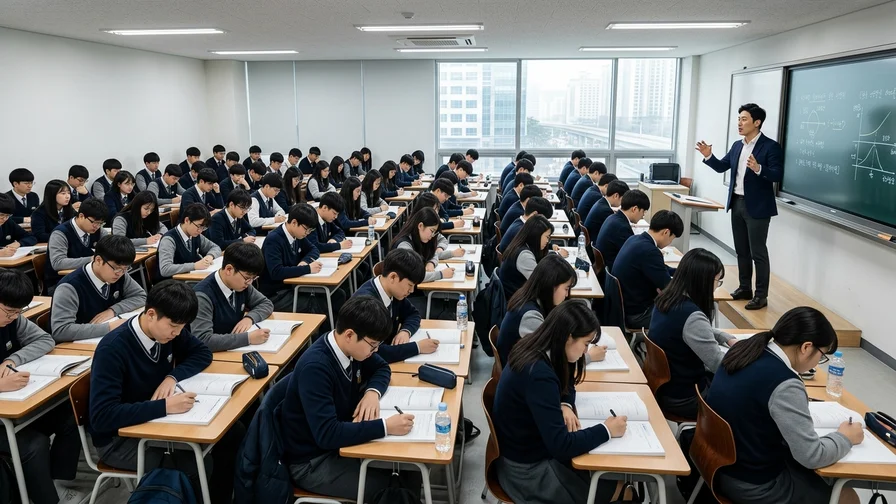
In the world of K-dramas, getting into a good university—especially one of the elite ‘SKY’ universities (Seoul National, Korea, and Yonsei)—is portrayed as more than a personal achievement. It’s the ultimate family honor and a golden ticket to a successful life. This narrative directly reflects a culture of gyoyuk-yeol (교육열), a term that translates to ‘education fever,’ which is deeply embedded in Korean society. A historical reverence for scholarship has evolved into a modern, high-stakes battle for college admissions. Dramas masterfully channel this social atmosphere, convincingly showing why Koreans pour everything they have into their children’s education.
The Fierce Competition for a Spot at the Top
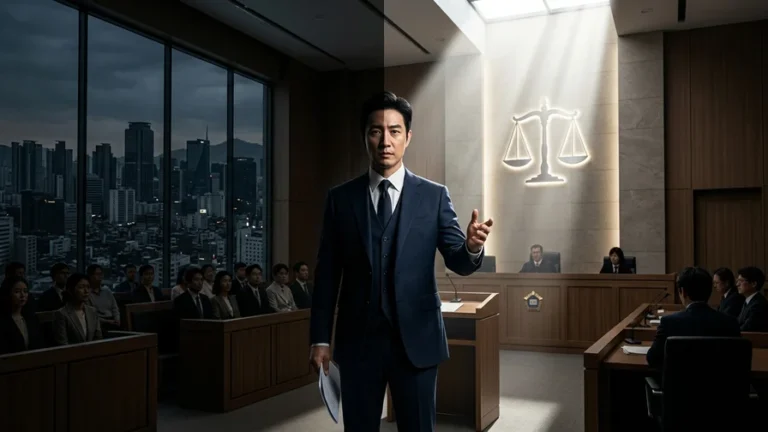
The drama ‘SKY Castle’ gives us a front-row seat to this battle, depicting an exclusive, ultra-wealthy residential community where the country’s top 0.1% wage an all-out war over college admissions. The parents hire elite admissions coordinators for billions of won (millions of USD) and even resort to illegal tactics to get their children into a top medical school. While dramatized, these scenes symbolize the crushing intensity of Korea’s admissions race. Every November, the entire country seems to hold its breath for the CSAT (College Scholastic Ability Test). On test day, flights are rerouted to reduce noise, and police escort late students to exam centers. For international viewers, this nationwide focus on a single exam is a fascinating and unique cultural spectacle.
The Depths of Parental Devotion
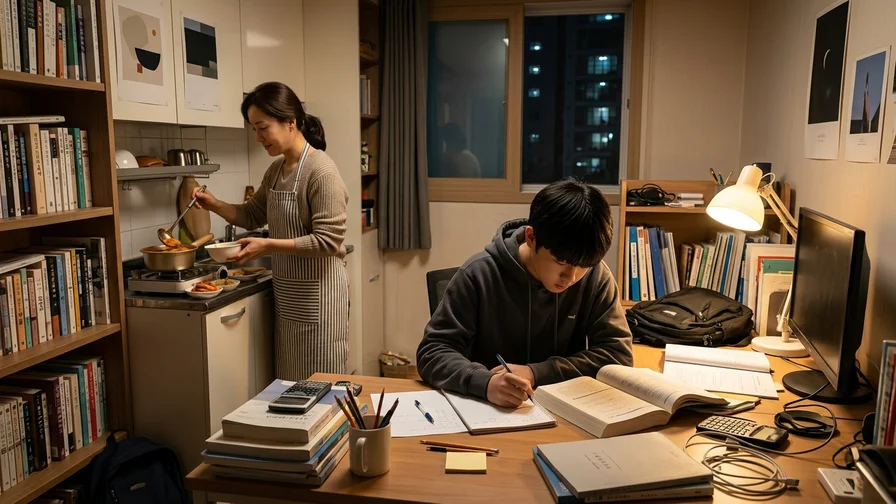
The dedication of Korean parents to their children’s education is almost unparalleled globally, and it’s a major theme in K-dramas. We often see the archetype of the mother who sacrifices her own life and ambitions for her child’s success, or the father who works tirelessly to afford exorbitant academy fees. This devotion is sometimes intertwined with the traditional value of hyo, or filial piety, and family expectations as seen in K-dramas. However, this can also place an immense burden of pressure and responsibility on the children’s shoulders.
The Dark Side of Educational Fever: Dreams, Despair, and Social Conflict
K-dramas don’t just glorify the success stories born from educational fever. They often focus on its dark side, masterfully capturing how the passionate pursuit of a dream can curdle into despair and fuel social conflict. This nuanced portrayal is precisely why the narrative of K-drama educational fever resonates so deeply with viewers around the world.
The Personal and Familial Cost
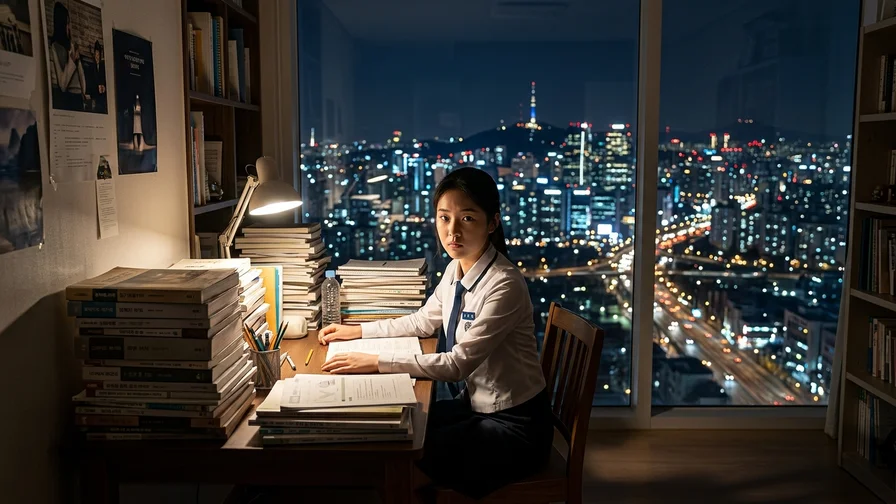
Characters in these dramas sacrifice sleep, friendships, and their youth to chain themselves to a desk. In this process, many teens experience extreme stress and depression, sometimes leading to tragic outcomes. Families also bear an incredible economic and emotional weight. The astronomical cost of private education, or *hagwon*, can strain household finances, and conflicts over a child’s grades can become a source of marital strife, sometimes even leading to family breakdowns. These portrayals force audiences to reflect on the true purpose of education.
The Overheated Private Education Market
Korea’s super-charged private education market is a common backdrop in K-dramas. ‘Crash Course in Romance’ comically yet realistically depicted parents lining up before dawn to secure a spot in a star tutor’s lecture. But these dramas don’t shy away from critiquing the reality: a system where private tutoring can overshadow public education, and where a family’s wealth often determines a child’s educational opportunities. Numerous research papers from the Korean Educational Development Institute (KEDI) have extensively studied the impact of private education on student stress and educational inequality.

Climbing the Ladder: K-Dramas on Social Mobility and Its Limits
Historically, education was seen as the great equalizer in Korea—the one ladder that allowed a ‘dragon to rise from a stream.’ The belief that hard work and study could lead to upward mobility, regardless of background, was a powerful engine for national development. K-dramas tap into this deep-seated desire for advancement, but they also pointedly ask whether that myth still holds true today.
The Myth of Meritocracy and Its Cracks
In ‘The Glory,’ the protagonist, a victim of horrific school violence, becomes a teacher as part of a long and meticulous revenge plot. For her, education isn’t just about acquiring knowledge; it’s the essential weapon she needs to change her class status and execute her vengeance. At the same time, the drama mercilessly exposes the harsh reality of the ‘spoon class theory’—the idea that one’s success is predetermined by the wealth and status of their parents. It suggests that there are structural barriers that individual effort alone cannot overcome.
The Message Behind the Drama
An admissions system that prizes results above all else, a competitive culture that ranks and files students, and an unequal playing field that reinforces inherited wealth—K-dramas weave these systemic problems into their dramatic narratives to deliver a powerful message. This isn’t just a critique of Korean society; it poses a universal question that resonates with global audiences: ‘What constitutes a truly meaningful education?’
Editor’s Insider Tip
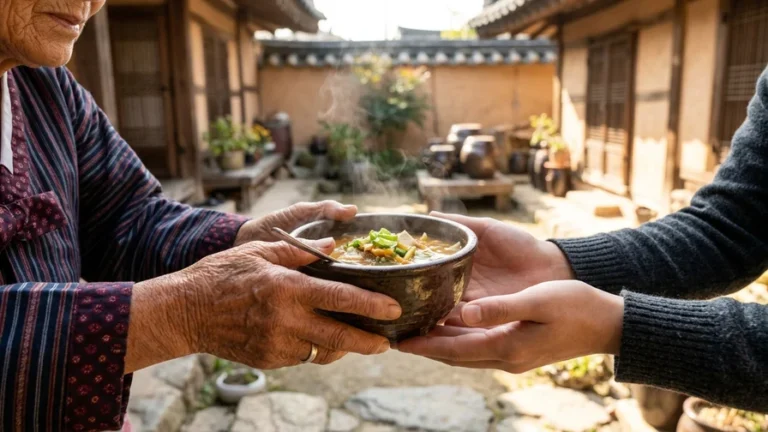
If you want to understand the theme of educational fever on a deeper level, pay close attention to the lunchboxes, or dosirak, in these dramas. From the extravagant, brain-boosting meals in ‘SKY Castle’ to the warm, home-cooked lunchboxes in ‘Crash Course in Romance,’ the dosirak is more than just a meal. It’s a powerful symbol of a parent’s love, devotion, and sometimes, their crushing expectations. This small detail offers a glimpse into how each drama views the pressures of education.

A Global Reaction: How International Viewers See Korea’s Education Craze
For many international viewers, Korea’s unique culture of educational fever is both shocking and deeply relatable. At first, they might be taken aback by parents who seem to control every aspect of their child’s life. But soon, they come to nod in understanding, recognizing the universal parental desire for a child to have a successful future.
Understanding Korean Society Through Its Dramas
Many global fans say that K-dramas have given them a deeper understanding of Korean society. The intense competition and educational drive depicted on screen offer a glimpse into the forces that powered South Korea’s miraculous economic growth. At the same time, these shows serve as a window into the complex facets of the culture, including the emphasis on material success and the resulting social pressures. It’s also interesting to consider how this drive connects with jeong (정)—a unique Korean concept of a deep, emotional bond—and the expectations that come with it.
Comparing Educational Systems
The theme of educational fever in K-dramas often prompts viewers to reflect on their own country’s education system. Whether comparing it to the more liberal approach in the U.S. or the standardized systems in parts of Europe, it sparks a conversation about the pros and cons of different educational philosophies. For viewers in other Asian countries with similarly competitive academic cultures, the Korean story feels particularly familiar, proving that this intense pressure is not an isolated phenomenon.
Conclusion: A Story of Ambition, Its Light and Its Shadow
In conclusion, the ‘educational fever’ depicted in K-dramas is a powerful narrative device that captures the dynamic and contradictory nature of Korean society. The burning desire for success has been a driving force for progress, but it casts a long shadow of excessive competition, stress, and inequality. Today, K-dramas continue to explore this light and shadow with a balanced perspective, posing a profound question to viewers worldwide: ‘What does it truly mean to be successful?’ If you’re interested in exploring Korean values further through its entertainment, check out our comprehensive guide. You can find more stories in What K-Dramas Reveal About the Korean Heart — Cultural Codes Across Generations.