Korean Tofu Dishes — From Pan-Fried Tofu to Stews and Cold Tofu
Contents
Tofu (dubu) is a plant-based protein food made from soybeans, and it is an essential ingredient on the Korean table. It comes in many forms, from soft silken tofu to firm block tofu for pan-frying, and different dishes call for different types: stews, pan-fried tofu, braised tofu, and more. In Korean markets the “for stew” type is the softer one and the “for pan-frying” type is the firmer one, so pairing them with the soft/firm labels at overseas markets makes choosing easier. Prices and operating hours are as of June 2026, so it is best to double-check before visiting.
Types of Korean Tofu
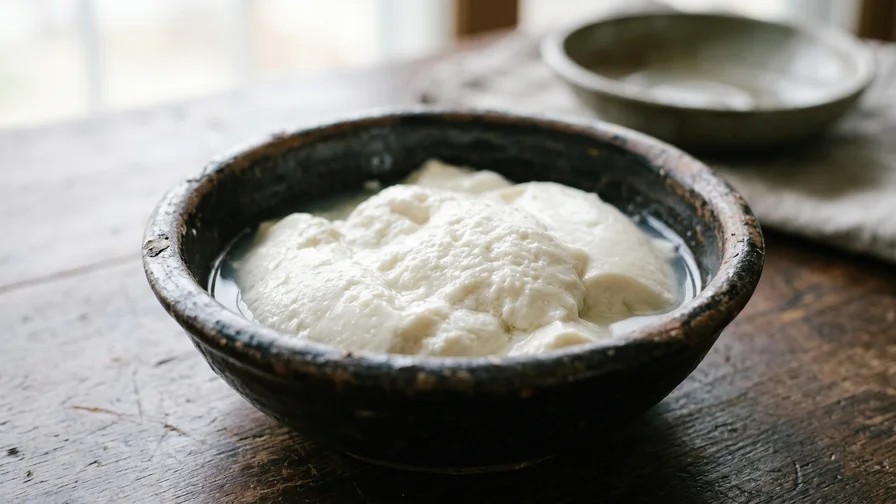
The tofu you see at restaurants or markets varies in texture and firmness depending on its intended use. One point that easily confuses people: in Korean markets, the “for stew” type is the softer one, while the “for pan-frying” type is the firmer one. If you pair these with the firm/soft labels at overseas markets, it makes it easier to recreate the dishes once you are back home.
1. Mo-dubu (Block Tofu)
The most common square-shaped tofu. It is sold packed in containers with water. It is divided into two types based on firmness.
- Jjigae-yong Dubu (Soft Block Tofu): Relatively soft with a high water content, making it well suited to soup dishes. When added to a stew and simmered, it absorbs the flavor of the broth well. The closest overseas equivalent is soft or medium tofu.
- Buchim-yong Dubu (Firm Block Tofu): Firmer and lower in water content than the stew type. It holds its shape well, so it is good for pan-frying in oil or for braising. It corresponds to firm or extra-firm tofu overseas.
2. Sundubu (Extra-soft Tofu)
The softest tofu, which has not been pressed in a mold. It has a characteristic soft, curd-like texture and is the main ingredient in soft tofu stew. It comes packaged in tubes or plastic packs. At Korean markets in English-speaking countries, it is sold under the name “Extra Soft Tofu” or “Soon Tofu.”
3. Yeon-dubu (Silken Tofu)
Smoother and bouncier than soft tofu, with a texture closer to pudding. It is used in cold salads, simple side dishes served with a soy sauce dressing, and baby food. It is almost identical to silken tofu found overseas.
| Korean Name | English Name | Key Characteristics | Main Uses | Buying Overseas |
|---|---|---|---|---|
| Jjigae-yong Mo-dubu | Soft Block Tofu (for stews) | Soft and high in water content | Stews, soups | soft / medium tofu |
| Buchim-yong Mo-dubu | Firm Block Tofu (for pan-frying) | Firm and low in water content | Pan-frying, braising | firm / extra-firm tofu |
| Sundubu | Extra-soft Tofu (“Soon Tofu”) | Very soft, not pressed | soft tofu stew | soon tofu tubes at Korean markets, or silken tofu if unavailable |
| Yeon-dubu | Silken Tofu | Pudding-like texture | Cold dishes, salads | silken tofu |
Representative Tofu Dishes
Here are the most common tofu dishes you will easily find at Korean restaurants, along with their price ranges. Prices are based on Seoul as of June 2026 and vary by region and restaurant.
1. Sundubu-jjigae (Soft Tofu Stew)
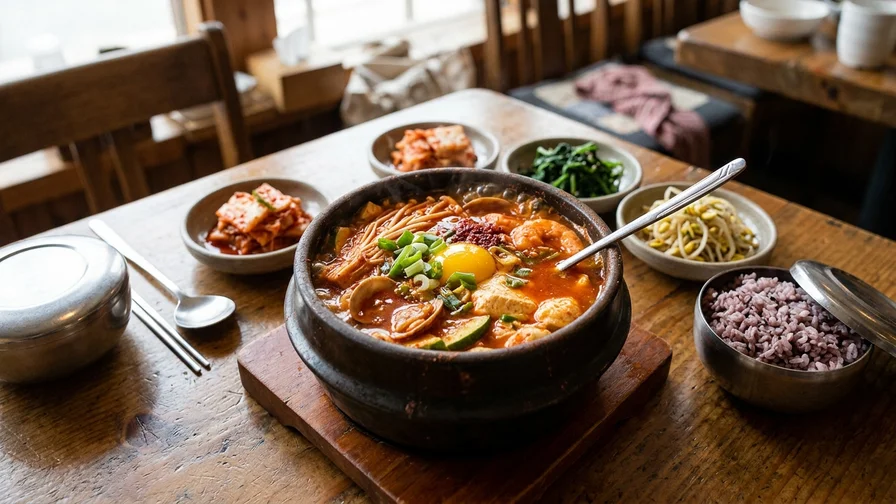
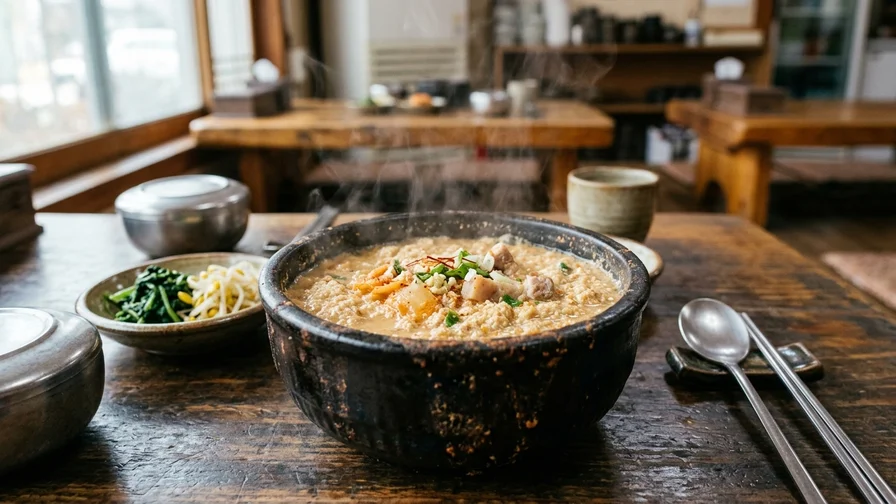
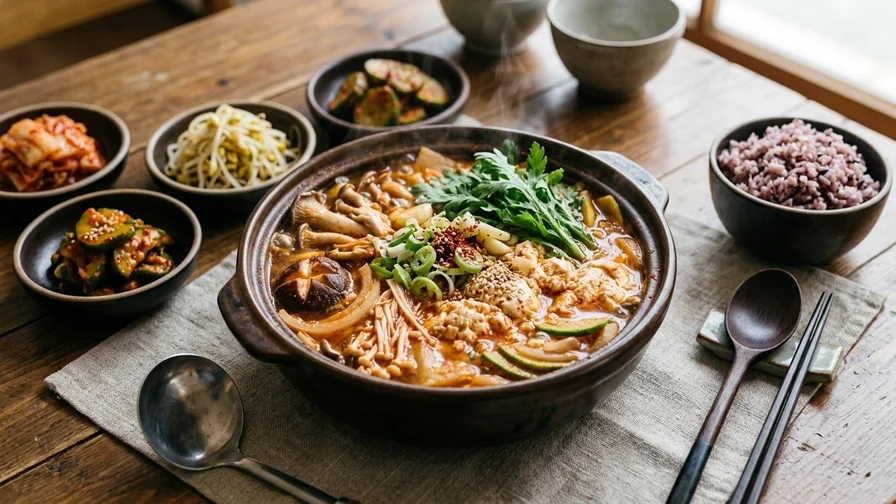
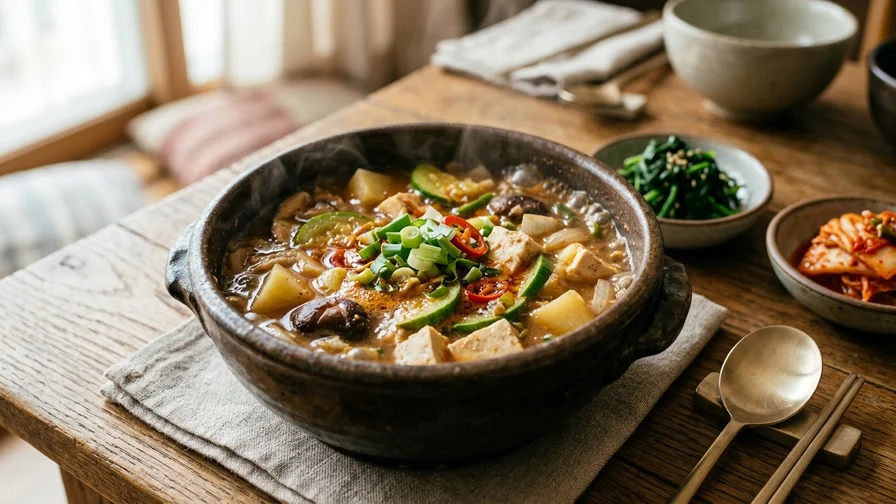
One of the most beloved stews among Koreans. Soft tofu is simmered in a ttukbaegi (a stone pot) with seafood (clams, shrimp) or meat and vegetables, made spicy with chili oil and red pepper powder. At restaurants, a raw egg is usually served alongside, which you crack into the stew while it is still bubbling. It comes with a bowl of rice and side dishes (banchan).
- Price: 9,000 to 13,000 won per serving (as of June 2026)
- Characteristics: The contrast between the hot, spicy broth and the extremely soft tofu is the heart of the dish. There are many varieties depending on the main ingredients, such as seafood, beef, pork, kimchi, and mushrooms.
- For vegetarians: Most versions are based on meat or seafood broth, so checking for a vegetarian option before ordering is essential. Vegetarian-focused restaurants and temple cuisine restaurants serve soft tofu stew flavored with mushrooms and vegetables.
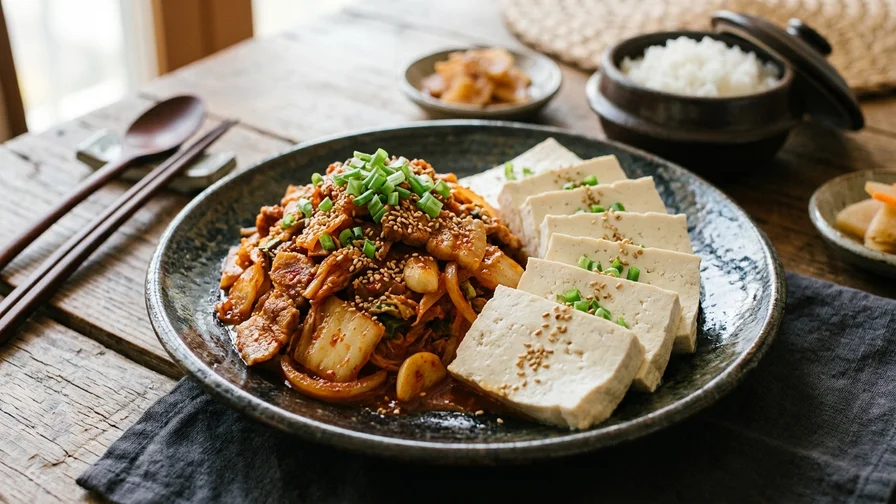
2. Dubu-kimchi (Tofu with Stir-fried Kimchi)
A dish of warm blanched block tofu, sliced and arranged around a plate, with stir-fried kimchi piled in the center. The stir-fried kimchi usually contains pork. It is often enjoyed with makgeolli (a Korean fermented rice wine).
- Price: 15,000 to 25,000 won per plate (as of June 2026)
- Characteristics: A combination of the mildness of tofu and the spicy, tangy flavor of kimchi. It is more often classified as a drinking snack than a meal.
- For vegetarians: Many restaurants will leave out the pork if you say “Gogi ppaego hae-juseyo” (please make it without meat). However, there are two more pitfalls for vegans: kimchi itself usually contains fermented fish sauce, and the dish may be cooked in the same pan used to fry meat (cross-contamination). For strict vegans, a vegetarian-focused restaurant that uses vegan kimchi is the safe choice.
3. Dubu-jorim (Braised Tofu)
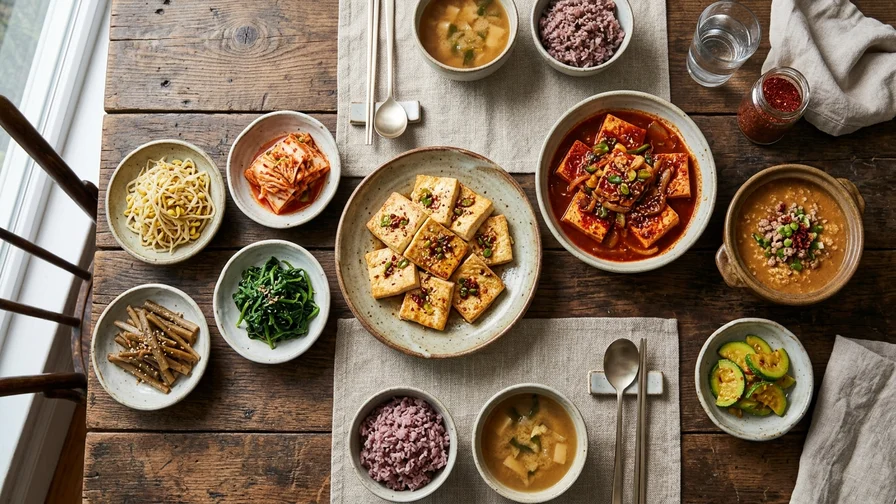
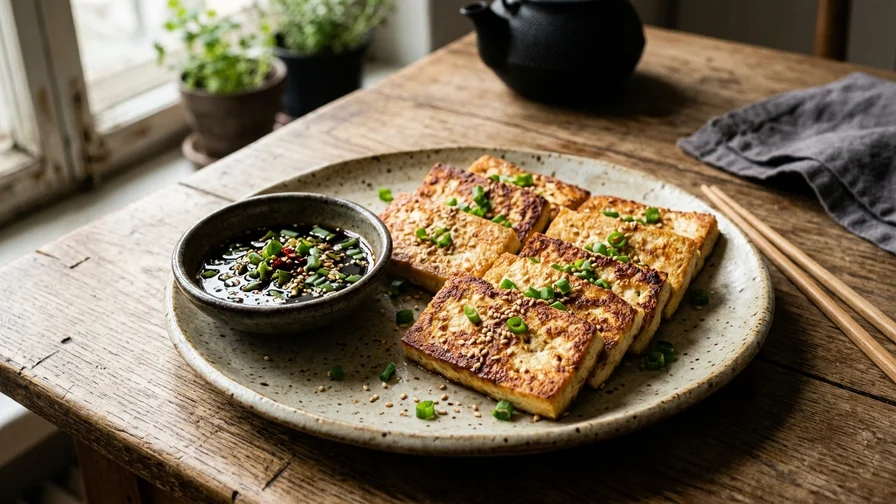
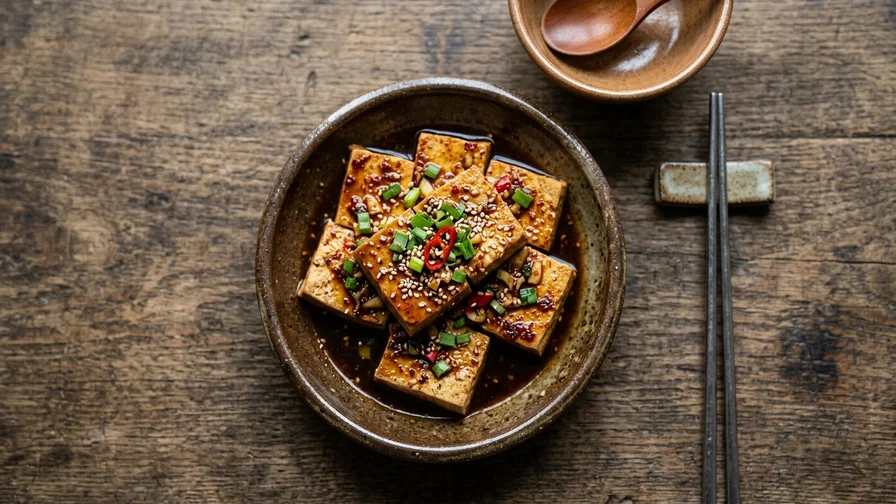
A side dish made by lightly pan-frying firm tofu, then simmering it in a sauce of soy sauce, garlic, and red pepper powder until almost no liquid remains. It often appears as one of the complimentary side dishes at restaurants.
- Price: Free when served as a complimentary side dish. It is rarely offered as a standalone menu item, and prices vary from place to place.
- Characteristics: The savory-sweet sauce soaks into the tofu, making it a great match with rice. It is also delicious eaten cold.
- For vegetarians: It may look vegetarian at first glance, but quite a few places use anchovy broth or fish sauce in the seasoning or base. If you are a strict vegetarian, it is safer to ask “Does this contain anchovy broth?”
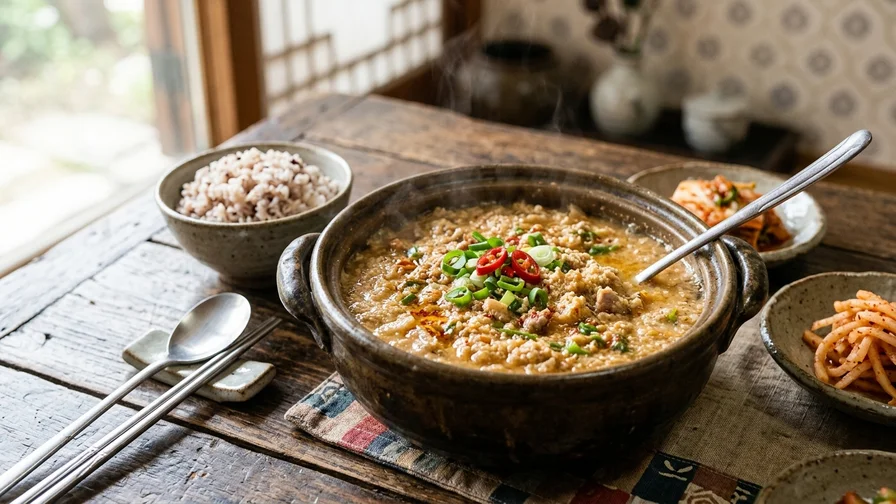
4. Kongbiji-jjigae (Ground Soybean Stew)
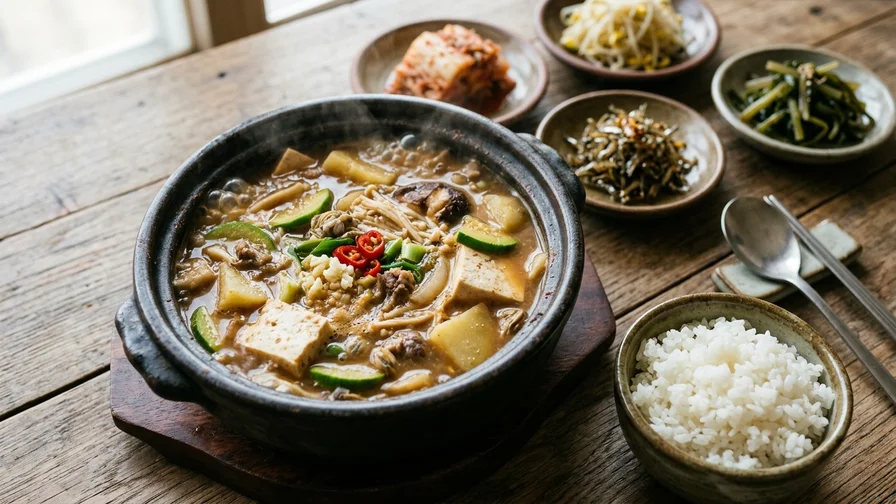
A stew made primarily from kongbiji (ground soybean pulp left over from making tofu). It is usually simmered with finely chopped kimchi and pork to make it thick and nutty.
- Price: 8,000 to 12,000 won per serving (as of June 2026)
- Characteristics: Much thicker and smoother in texture than an ordinary stew. The nutty flavor of the soybeans themselves comes through strongly.
- For vegetarians: If you order it without pork, you can enjoy something close to a vegetarian version. Temple cuisine restaurants and vegetarian restaurants serve meat-free ground soybean stew. When kimchi is included, the fish sauce issue is the same as with tofu with stir-fried kimchi.
Restaurant Guide for Tofu Dishes
Here are the types of restaurants and trusted spots where you can experience tofu dishes in Seoul. Operating information is as of June 2026.
Type 1: Sundubu-jjigae Specialty Restaurants
These are the places where office workers line up at lunchtime, specializing in a variety of soft tofu stews. They are great for a quick, reasonably priced meal.
Restaurant example: Jaedong Sundubu 📍
A long-established soft tofu specialty restaurant located near Anguk Station and the entrance to Bukchon Hanok Village, close to the Constitutional Court. Its home-style side dishes are self-serve and refillable, making it comfortable even for foreign travelers. The signature dish is the seafood soft tofu stew.
- Main menu: Seafood soft tofu and Chodang soft tofu, 12,000 won each; tofu with stir-fried kimchi 23,000 won
- Location: 6, Bukchon-ro 2-gil, Jongno-gu, Seoul
- Nearest subway station: About a 5-minute walk from Exit 2 of Anguk Station (Line 3)
- Hours: 11:00 to 21:00 (break time 15:00–17:00), closed Sundays
Type 2: Korean Temple Cuisine Restaurants
Temple cuisine is traditional Korean vegetarian cooking that does not use meat or osinchae (the five pungent vegetables: green onion, garlic, wild chive, leek, and asafoetida). Tofu is a key source of protein in temple cuisine, so you can experience tofu dishes that bring out the natural flavor of the ingredients without anything overpowering.
Restaurant example: Balwoo Gongyang 📍
A temple cuisine restaurant operated directly by the Jogye Order of Korean Buddhism. It was awarded one Michelin star for three consecutive years from 2017 to 2019, a world first for temple cuisine. Its course menus, built around seasonal ingredients, include several dishes that make use of tofu. It operates by reservation, so booking before your visit is essential.
- Main menu: Lunch courses from 30,000 to 95,000 won (depending on the course)
- Location: 5th floor, Templestay Information Center, 56 Ujeongguk-ro, Jongno-gu, Seoul (across from Jogyesa Temple)
- Nearest subway station: Walking distance from Jonggak Station (Line 1) or Anguk Station (Line 3)
- Hours: Mon–Sat 11:30 to 20:20 (break time 15:00–18:00), closed Sundays
- Reservations: Official website balwoo.or.kr or by phone (02-733-2081)
Type 3: Handmade Tofu Specialty Restaurants
These restaurants serve handmade tofu prepared on site, offering fresh tofu, tofu bossam, braised tofu, and stews all in one spread. They are the most efficient choice when you want to taste a range of tofu dishes at once.
Restaurant example: Hwanggeum Kongbat 📍
A tofu specialty restaurant in Ahyeon-dong, Mapo, that has been listed in the Michelin Guide (Bib Gourmand) for eight consecutive years from 2018 to 2025. It makes tofu daily with domestic soybeans, and its signature offering is a set that runs from warm, freshly made fresh tofu and bossam to braised tofu or soybean paste stew.
- Main menu: Set for two, 60,000 won (fresh tofu, bossam, pancake, braised tofu or soybean paste stew, and rice)
- Location: Ahyeon-dong, Mapo-gu, Seoul (between Gongdeok and Aeogae)
- Nearest subway station: Walking distance from Aeogae Station (Line 5)
- Hours: Mon–Fri 11:30 to 21:00, Sat–Sun 11:00 to 21:00 (per the Michelin Guide, verified October 2026; call 02-313-2952 to ask whether there is a mid-afternoon break)
- Note: Bossam contains pork, so if you are vegetarian, ask whether a tofu-only set can be arranged.
A Tofu Pilgrimage: Chodang Tofu Village, Gangneung
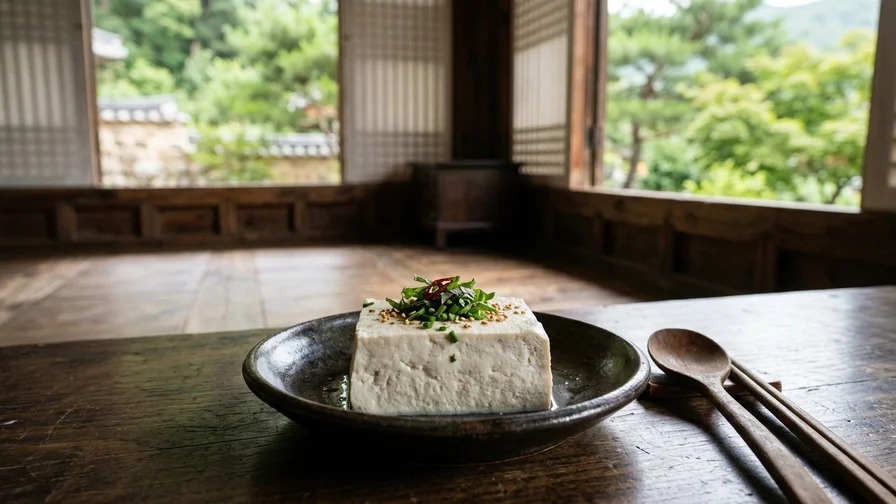
If you can travel beyond Seoul, the highlight of any Korean tofu journey is the Chodang Soft Tofu Village in Gangneung, Gangwon Province. This neighborhood keeps the traditional method of coagulating soybean milk with East Sea seawater instead of ordinary brine, and nearly 20 restaurants making soft tofu over generations are gathered here. The village’s name is said to come from “Chodang,” the pen name of the Joseon-era scholar Heo Yeop. The range is broad, from the classic of soft tofu topped with just a seasoned soy sauce, to the jjamppong soft tofu stew that started here and spread across the country.
- Donghwa Garden Main Branch 📍: The originator of jjamppong soft tofu stew (a hearty fusion stew combining spicy jjamppong broth with soft tofu). The original jjamppong soft tofu is 15,000 won and Chodang soft tofu is 10,000 won. Hours are 07:00 to 19:30 (break 16:00–17:00), closed Wednesdays. The wait can be long, so it is common to use a queuing app to join the line remotely.
- Todam Sundubu 📍: A village favorite whose signature dishes are soft tofu hot pot and block tofu. Open 08:00 to 19:00, so it is also a good choice for breakfast.
- Chodang Halmeoni Sundubu 📍: A second-generation shop that still makes soft tofu by hand the old-fashioned way. The menu centers on simple items like a soft tofu set meal. It often opens early in the morning and closes early in the afternoon, so it is best to call ahead before visiting (033-652-2058).
Getting there: It takes about two hours by KTX from Seoul Station to Gangneung Station. From Gangneung Station, the village is about 3 km away, and a taxi (around 10 minutes) is the simplest option. The number 230 city bus stops at the Chodang Soft Tofu Village stop, but it runs infrequently, so it is safer to check times in advance on the Gangneung bus information system (bis.gn.go.kr) before setting out. Since most restaurants open early in the morning, the standard route is to have a soft tofu breakfast and then continue on foot for about 15 minutes to Gangmun Beach.
Additional Information for Travelers
How to Order for Vegetarians and Vegans
It can be difficult to find vegetarian options at an ordinary Korean restaurant. Knowing the following Korean phrases can be helpful.
- “Gogi ppae-juseyo.” – Please remove the meat.
- “Jeo-neun chaesik-juuija-imnida.” – I am a vegetarian.
- “I eumsik-e gogi-na haesanmul deureo-ganayo?” – Does this dish contain meat or seafood?
- “Jeotgal deureo-ganayo?” – Does this contain fermented fish sauce? (the key question for deciding whether kimchi is included)
With tofu with stir-fried kimchi, it is easy to ask for the meat to be left out, but with soft tofu stew, many places use a pre-made broth, which can make changes difficult. Asking in advance is the safest approach. Even for a meat-free menu, if you are a strict vegan who also considers the fish sauce in kimchi, anchovy broth, and shared cooking utensils, then a temple cuisine restaurant or a vegetarian-focused restaurant is the reliable choice.
Buying Tofu at a Supermarket
You can easily buy tofu at large supermarkets (E-Mart, Lotte Mart, Homeplus) or convenience stores, and it is inexpensive.
- Mo-dubu, 1 block: 1,500 to 3,000 won (as of June 2026)
- Sundubu, 1 tube/pack: 1,000 to 2,500 won (as of June 2026)
The packaging is labeled “for stew” or “for pan-frying,” so just choose according to your use. Storage tips are as follows.
- Unopened: Keep refrigerated and follow the expiration date printed on the package.
- After opening: Place the tofu in an airtight container, submerged in clean water, and refrigerate, changing the water daily. Even so, it is safest to eat it within 2 to 3 days.
- Freezing: Possible, but the water is drawn out and the texture turns spongy. In Korea this is called “frozen tofu” (eondubu) and is sometimes used intentionally for stews.
Allergy Information
The main ingredient of tofu is the soybean. If you have a soy allergy, you need to be careful with tofu and any food containing it. Keep in mind, too, that most basic Korean seasonings such as soy sauce and soybean paste are fermented soy products, so even if you avoid tofu, you could still be exposed through seasonings.
Transportation and Navigation
The taxi-hailing app Kakao T supports registration of overseas-issued credit cards and an English interface, and there is also k.ride, an app designed for foreign travelers. In large cities such as Seoul, Uber is available too. The idea that “foreigners cannot use Korean taxi apps” is an old story (as of June 2026).
When you need help with travel information or directions, you can call the 1330 Korea Travel Helpline, which offers 24-hour interpretation services in English, Japanese, Chinese, and more. You can also ask them to relay communication with a taxi driver.
Crack the raw egg in while the stew is still bubbling
Soft tofu stew is served in a very hot ttukbaegi. Crack the raw egg that comes with it directly into the stew while it is still bubbling. If you cook it without breaking the yolk, you can enjoy it soft-set, and if you stir it in, the broth becomes smoother and nuttier. Mixing small amounts of rice into the stew broth is the common local way to eat it.