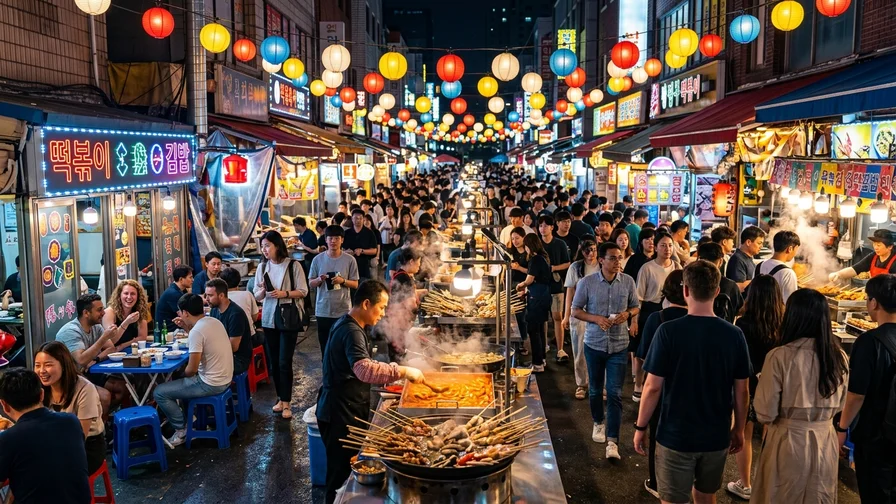
Korean Night Markets, Eat and Stroll the After-Dark Streets
목차
- Key Takeaways — Korean Night Markets Have the Most Volatile Schedules
- What Korean Night Markets Are — Traditional Markets Transformed After Dark
- Seoul’s Hangang Moonlight Market — A Beginner’s Intro to Korean Night Markets at the Food Truck Zone
- Busan’s Bupyeong Kkangtong Market — Open Every Day, Guaranteed Tonight
- Jeonju Nambu Market Night Market — A Fri-Sat Food Scene Next to the Hanok Village
- Daegu’s Seomun Market Night Market — Fri-Sat-Sun, the Home of Napjak Mandu
- Gwangju’s Daein Namdo Dalbam Night Market (Byeoljang) — A Seasonal Art Night Market
- Practical Tips for Foreign Visitors — Payment, Prices, Language, and Rain
Among all things to do in Korea, Korean night markets are the category whose operating schedules change the most. A spot that has a line out the door today might be closed a month later when its season wraps up. So instead of flowery language, this guide nails down the verified locations, signature foods, ballpark prices, and how to get there. The goal is simple: let a first-time visitor read this and decide right away where to head tonight. For the bigger picture of after-dark itineraries, you can map it out in our full guide to nighttime travel in Korea.
On the ground, this is what matters most: if your dates don’t line up, a seasonal night market is a wasted trip. So let’s lead with the key takeaways. The information below is current as of June 2026 and can shift depending on the season and individual vendors, so double-check each market’s official channels before you go.
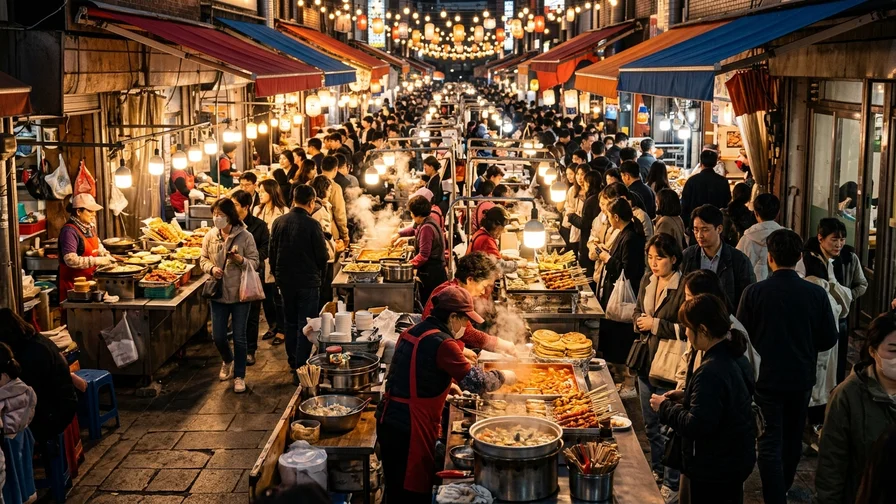
Key Takeaways — Korean Night Markets Have the Most Volatile Schedules
Here are the three things to remember first when planning a trip to Korean night markets. Just distinguishing between seasonal and year-round markets and bringing the right payment method goes a long way toward avoiding wasted trips and on-site headaches.
Bamdokkaebi Is Gone — It’s Hangang Moonlight Now
The Seoul Bamdokkaebi Night Market that shows up in foreign blogs and older articles no longer operates under that name. It was suspended between 2020 and 2021 due to COVID, and the old official site was shut down. Since 2022, it has been reorganized as the Hangang Moonlight Market 📍. If a Bamdokkaebi schedule pops up in your search, that’s outdated info, so don’t take it at face value. It’s generally held only on spring and fall weekends, so you must confirm the dates on Seoul city’s official channels.
If Your Dates Don’t Match, Bupyeong Is Open Every Day
Seasonal night markets (Seoul’s Hangang Moonlight, Gwangju’s Namdo Dalbam) are simply off-limits if you can’t match the dates. When that happens, the answer is Busan’s Bupyeong Kkangtong Market 📍. It’s a permanent night market open every evening until around midnight, so it’s guaranteed to be open tonight. If your schedule is tight or the trip is at the mercy of the weather, it’s safest to plan your route around Bupyeong as your default.
Bring Cash
Most night market stalls take cash only. Some accept Zero Pay, but many won’t take cards or bank transfers. Foreign-issued cards are even trickier. Bring about 20,000 to 30,000 won per person (roughly USD 15 to 22) in cash and you can enjoy most night markets without worry. It can vary with exchange rates and prices, so give yourself a little buffer.
Donghyun’s On-the-Ground Briefing
When it comes to night markets, I don’t think you can trust “search result = currently operating.” Seasonal markets shift their start and end dates every year, and same-day cancellations in the rain are common. Thirty seconds checking the official social media the night before you leave can save you a wasted trip.
What Korean Night Markets Are — Traditional Markets Transformed After Dark
Korean night markets aren’t newly built tourist facilities; in many cases, a traditional market that does business by day takes on a different face at night. Knowing this background gives you a better sense of what to eat and what to see.
Traditional Markets Doing Business at Night
A good number of Korea’s signature night markets are structured around food stalls that set up in the aisles of an existing traditional market every evening. In Busan, Bupyeong Kkangtong has rows of night-market stands right in the middle of a permanent market, while Daegu’s Seomun Market—which sells fabric and sundry goods by day—turns into a tented food village come evening. That’s the unique charm of Korean night markets: you experience the daytime market’s energy and the nighttime food in one place. For a foreign visitor, it’s like compressing “market sightseeing” and a “street food tour” into a single route.
An Icon of Local Revitalization
Night markets have taken root as local revitalization projects that breathe life back into struggling traditional markets and old downtown areas. Jeonju Nambu Market’s night market has many quirky stalls run by young merchants, and Gwangju’s Namdo Dalbam Night Market is a seasonal event that pairs young artists’ food with art experiences. As a result, even within the “night market” category, the vibe differs sharply from city to city. While Busan and Daegu center on hearty street food, Jeonju and Gwangju lean strongly into young entrepreneurs and cultural experiences. Just pick your destination based on the kind of night you want.
Seoul’s Hangang Moonlight Market — A Beginner’s Intro to Korean Night Markets at the Food Truck Zone
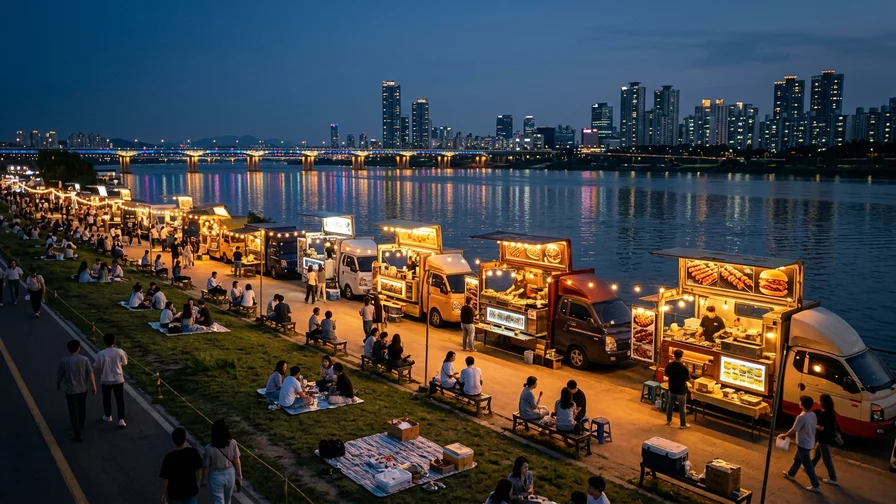
If you’re experiencing Korean night markets for the first time in Seoul, the Hangang Moonlight Market is your starting point. That said, it’s the spot with the biggest season and schedule variability, so let’s get the facts straight first.
From Bamdokkaebi to Hangang Moonlight
The Hangang Moonlight Market 📍 is the successor to the former Bamdokkaebi Night Market. The old Bamdokkaebi official site (bamdokkaebi.org) has been shut down, so ignore any page showing that address or that era’s schedule. It’s an outdoor market where food trucks and a handmade craft market set up against the backdrop of Hangang Park, so the very atmosphere of eating while the river breeze blows is part of the experience. It’s often held at spots like Yeouido Hangang Park.
Trendy Food Truck Eats
The food truck zone at Hangang Moonlight centers on trendy fare with a different feel from traditional-market-style night markets.
- Handmade Burger (수제버거, suje-beogeo) are a food-truck favorite where the patty is grilled on the spot, usually around 10,000 won (check on site).
- Taco (타코, tako), the Mexican dish of meat and vegetables wrapped in a tortilla, are a common sight at Korean food trucks.
- Grilled-to-order items like steak cubes or Grilled Shrimp (새우구이, saeu-gui) show up often too, served in cups or on skewers so they’re easy to carry around and snack on.
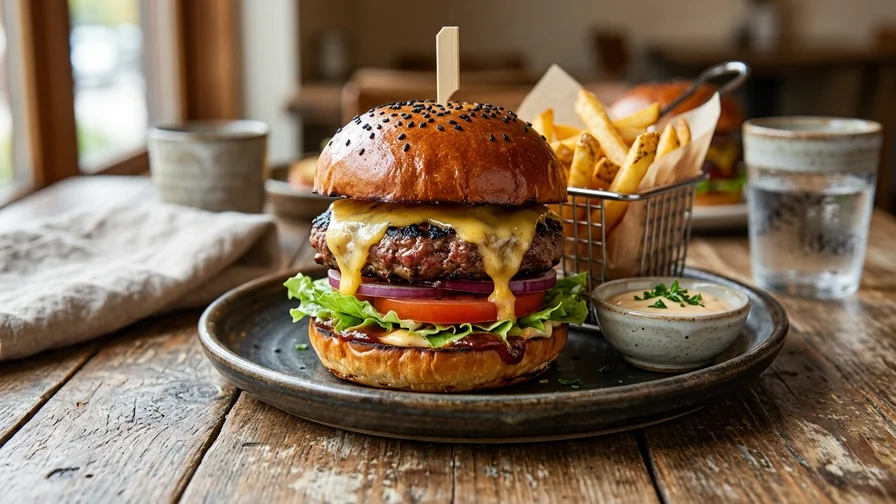
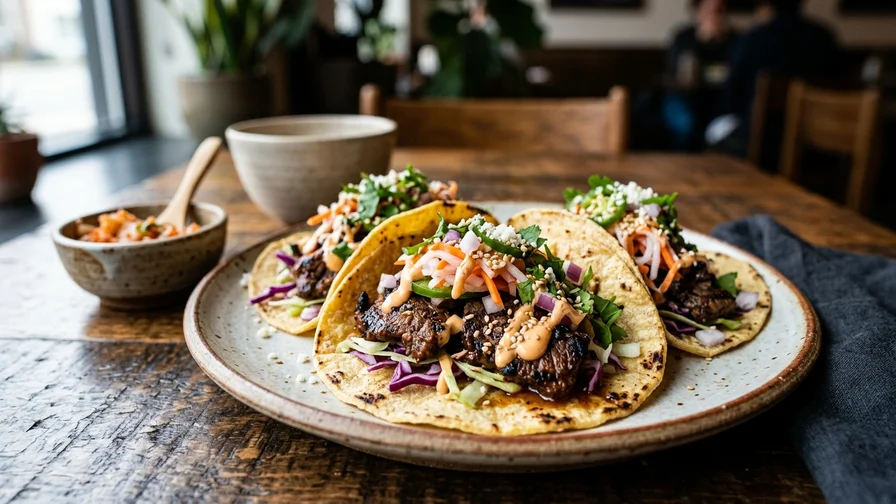
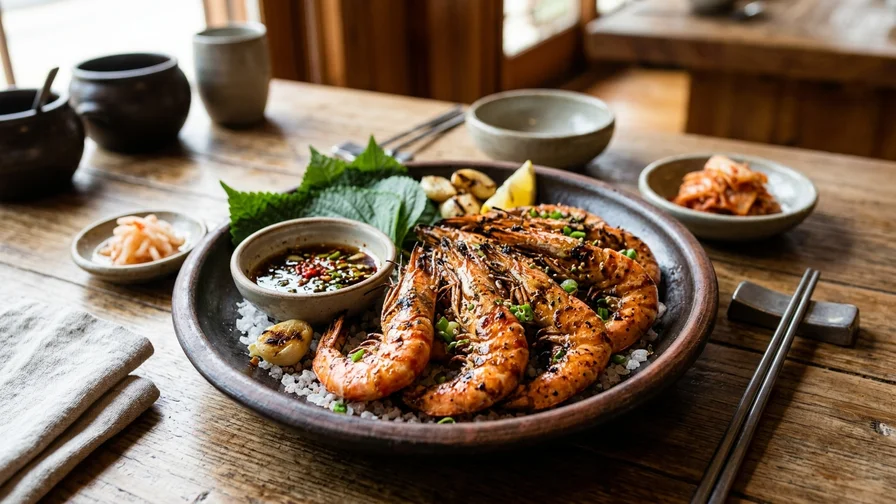
Prices vary by truck and season, but budgeting around 10,000 to 20,000 won (roughly USD 7 to 15) per meal is a safe bet. Since the menu lineup changes day to day, it’s more accurate to check on-site than to expect a fixed price list.
Schedule Changes and How to Get There
The Hangang Moonlight Market’s regular 2026 schedule hasn’t yet been officially confirmed, and the pattern is limited to spring and fall weekends. So before you go, you absolutely must check whether it’s running and on which dates via Seoul city’s official channels and Hangang Park’s official social media. Same-day cancellations in the rain are common, too. When it’s held at Yeouido Hangang Park, you can get off at Yeouinaru Station on subway Line 5 and walk over via the exit toward Hangang Park. The exact exit and venue change with each year’s announcement, so checking the notice comes first.
Busan’s Bupyeong Kkangtong Market — Open Every Day, Guaranteed Tonight
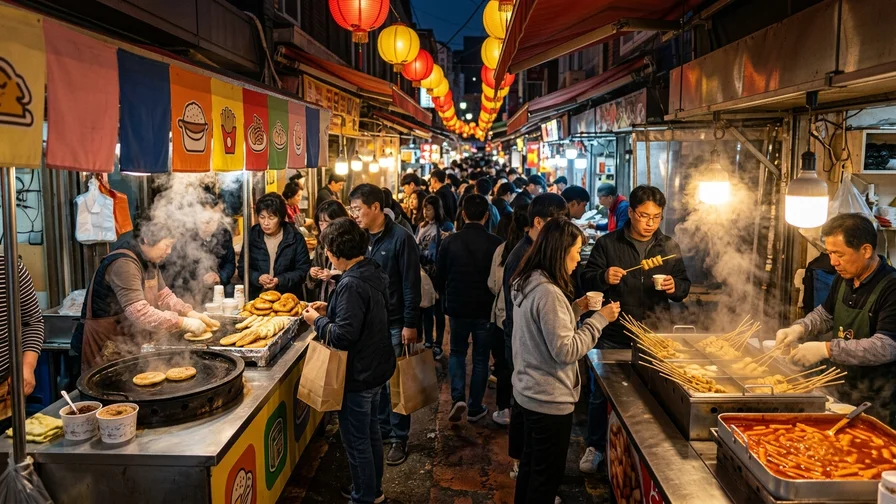
Among Korean night markets, the safest choice for foreign visitors is Busan’s Bupyeong Kkangtong Market 📍. It’s open every day regardless of season, and Busan’s signature street foods are all gathered in one place.
What Ssiat Hotteok, Yubu Jumeoni, and Bibim Dangmyeon Actually Are
Bupyeong Kkangtong Market 📍, along with the adjacent BIFF Square 📍 and Gukje Market 📍, effectively connect into one giant food belt. The signature eats are as follows.
- Seed-stuffed Hotteok (씨앗호떡, ssiat-hotteok) is a specialty of BIFF Square 📍: a pan-fried Sweet Syrup Pancake (호떡, hotteok) sliced in half and packed full of nuts and seeds like sunflower seeds. The outside is crisp while the inside oozes melted brown sugar. About 2,000 won each. The well-known shop Oppa Ssiat Hotteok is famous for it.
- Fried Tofu Pouch (유부주머니, yubu-jumeoni) are fried tofu pockets stuffed with glass noodles and the like, then simmered in Fish Cake (어묵, eomuk) (fish cake) broth and eaten broth and all. Savory and warm, they’re popular in winter. About 3,000 to 5,000 won a bowl.
- Mixed Glass Noodles (비빔당면, bibim-dangmyeon) is a cold snack of boiled glass noodles tossed with Busan-style seasoning and vegetables—spicy and sweet. About 3,000 to 4,000 won a bowl. There are several Mixed Glass Noodles (비빔당면, bibim-dangmyeon) stalls inside Bupyeong Kkangtong.
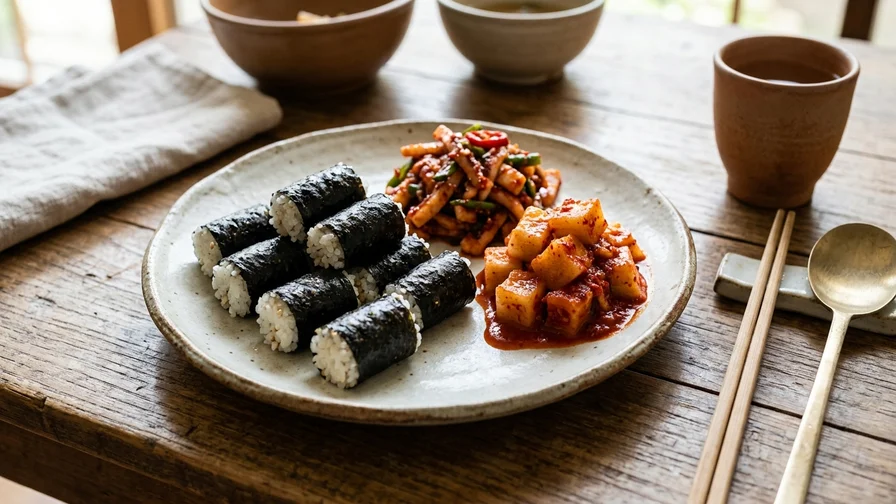
- Chungmu-style Gimbap (충무김밥, Chungmu-gimbap) is plain gimbap served with radish kimchi and seasoned squid on the side, and Busan Fish Cake (어묵, eomuk) is long strips of Fish Cake (어묵, eomuk) threaded onto skewers and sold with warm broth—an iconic Busan street food.
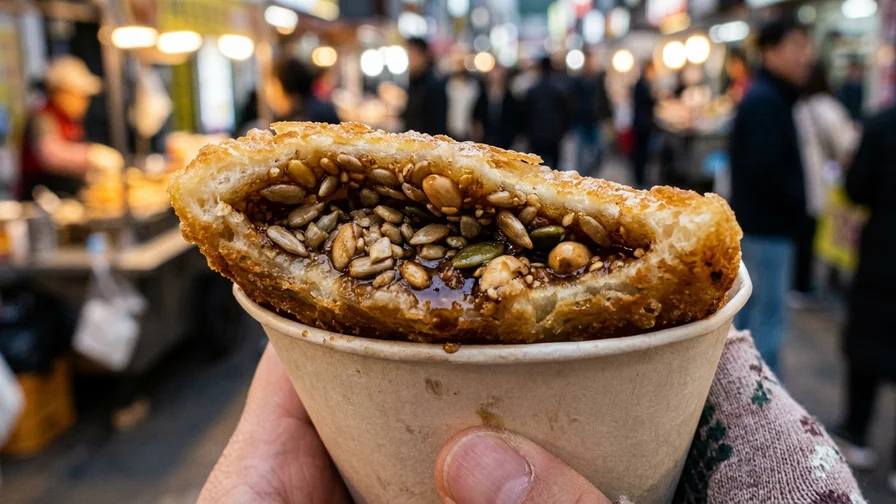
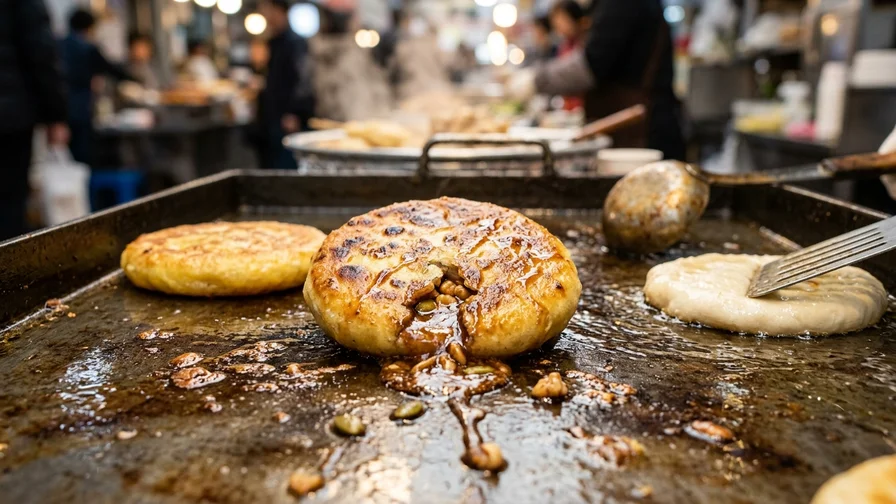
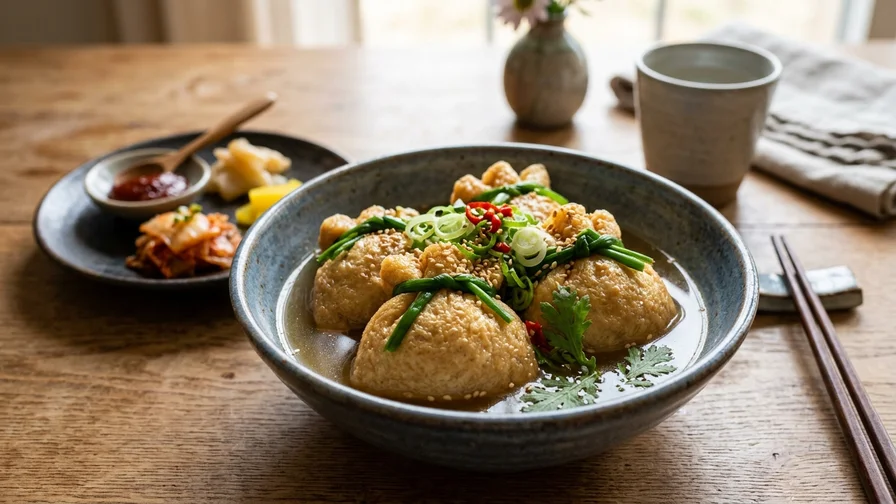
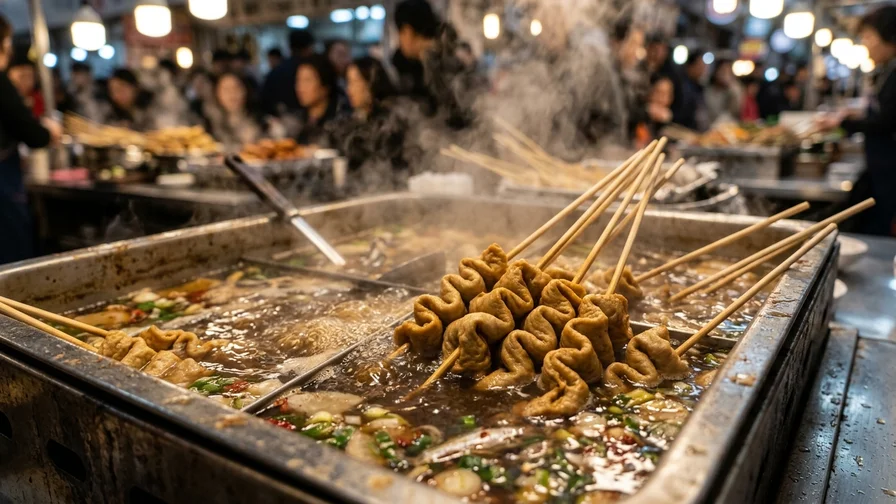
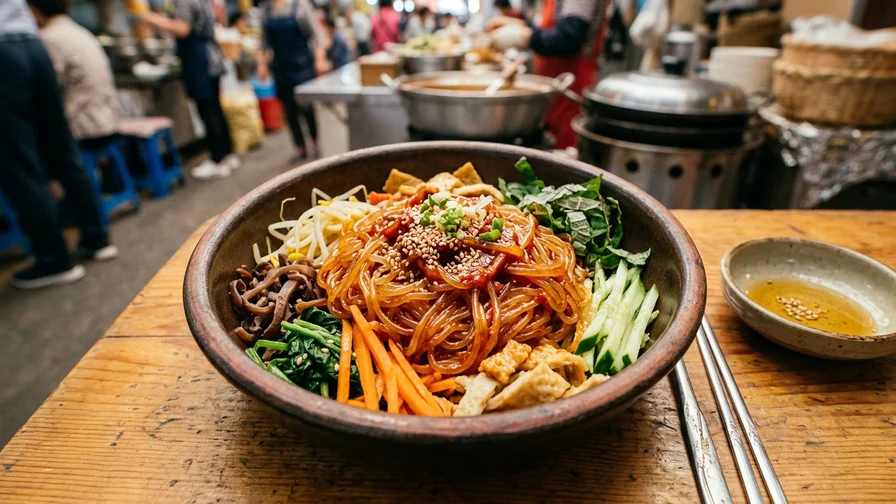
Here’s something foreigners easily get wrong. Seed-stuffed Hotteok (씨앗호떡, ssiat-hotteok) isn’t a “pancake” but closer to a filled dessert, and a fresh one has scorching-hot brown sugar syrup inside, so let it cool for a moment before biting in or you’ll burn the roof of your mouth. Eomuk is “fish cake” in English, but it has no cake-like sweetness—it’s a mild fish paste.
Hours and Keeping to the Right
Bupyeong Kkangtong Market is open every day from evening until around midnight. The closing time varies by vendor, though, and sources differ, so if you want to go late, treat around midnight as your cutoff and confirm on the official site (bupyeong-market.com) to be safe. It’s closed on the day of major holidays. The aisles are narrow and crowded, so the market asks visitors to keep to the right; walking on the right side lets you move comfortably without blocking the flow.
Directions and Price Range
The easiest route is Jagalchi Station on subway Line 1. Get off at Jagalchi Station and walk about 5 minutes toward Gukje Market 📍 and BIFF Square 📍 to reach the night market entrance. If you’re starting from Busan Station, the most intuitive route is to take subway Line 1 from in front of the station and get off at Jagalchi Station. For the exact exit and a real-time walking route, just search “Jagalchi Station → Bupyeong Kkangtong Market” on Naver Map or Google Maps and it’ll come right up. Many items run 2,000 to 5,000 won, so 10,000 to 15,000 won per person (roughly USD 7 to 11) lets you sample a good variety. Prices can change, so check the on-site labels.
Donghyun’s On-the-Ground Briefing
Bupyeong is open daily, but to dodge the crowds, around 7 p.m. on a weekday evening is the sweet spot. Around 9 p.m. on a weekend, the line for Seed-stuffed Hotteok (씨앗호떡, ssiat-hotteok) gets long. Breaking your cash into small bills ahead of time keeps the lines moving so you’re not holding things up waiting for change at each stall.
Jeonju Nambu Market Night Market — A Fri-Sat Food Scene Next to the Hanok Village
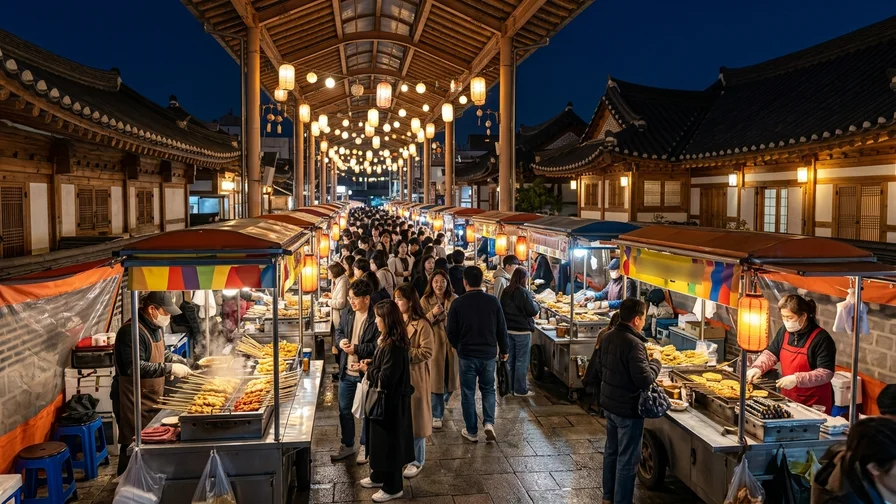
If you want to fit a night market into your Jeonju trip, check the day of the week first. The Jeonju Nambu Market night market is a young-merchant-driven food scene held only on Fridays and Saturdays.
Real-Stall Eats Like Gundaeria and Nakji Horong
The Jeonju Nambu Market Night Market 📍 shines with multinational menus and quirky street snacks. Based on the stalls actually operating, the signature eats are as follows.
- Gundaeria is a burger themed around military mess-hall food, and thanks to its catchy name it’s a popular, photo-worthy stall.
- Skewered Baby Octopus (낙지호롱, nakji-horong) is octopus wound around a skewer and torch-grilled, with smoky char added to a spicy seasoning.
- Chonggakne Sushi’s signature is seared beef sushi, and Jigeul Jigeul Pat grills teppanyaki steak to order.
- There are Southeast Asian options too, like Vietnamese pho and Laotian-style Dumplings (만두, mandu) (sakoo), so one lap around lets you taste food from several countries.
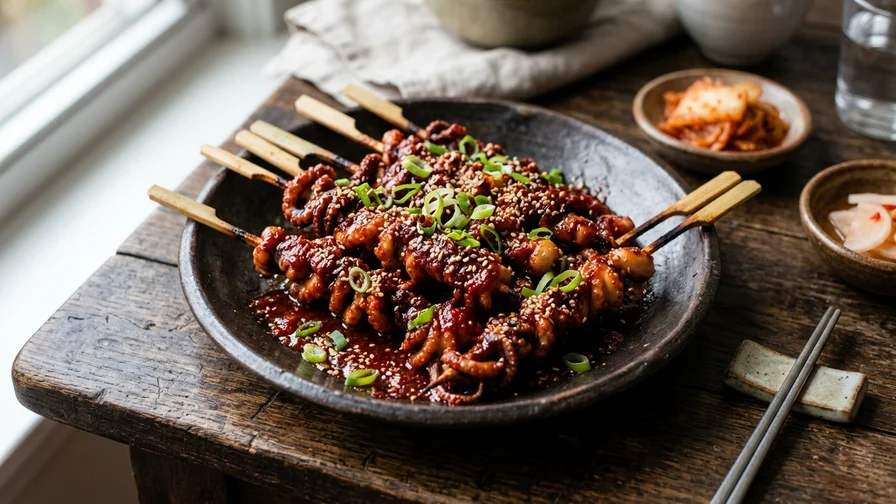
Octopus is a common ingredient in Korea, but unlike sannakji, which is served live, Skewered Baby Octopus (낙지호롱, nakji-horong) is grilled and fully cooked, so the texture is easier to handle. If you have a seafood allergy, note that octopus is a mollusk. Its allergens differ from crustaceans like shrimp and crab, but if you have a shellfish allergy it’s wise to be careful.
Prices and Hours
Per-item prices are generally cheap, around 3,000 to 5,000 won (roughly USD 2 to 4). Since the format is picking several small single-serving items, it’s low-pressure even if you come alone. It operates Fridays and Saturdays, and the start time is usually around 5 p.m. Some older listings say “starts around 6 p.m.,” which is inaccurate—even if you arrive early, you can expect stalls to start opening around 5 p.m. Closing is roughly around 11 p.m., but it varies with the season and individual vendors, so on rainy days or in the off-season, check whether it’s operating via Jeonju Nambu Market’s official channels.
How to Get There
The Jeonju Nambu Market night market is right next to Jeonju Hanok Village 📍, so the route is convenient. It’s about a 5-minute walk from Pungnammun on the south side of the Hanok Village to the market entrance. Jeonju has no subway, so when arriving from out of town, the usual flow is to take a taxi or city bus from Jeonju Express Bus Terminal or Jeonju Station to the Hanok Village and then walk over. For bus routes and real-time schedules, search “Jeonju Station → Jeonju Hanok Village” on Naver Map for exact results. Short-term foreign travelers may find it hard to sign up for Kakao T, so a handy method is to grab a taxi at the terminal or station taxi stand, pin your destination on Google Maps, and show it to the driver.
Daegu’s Seomun Market Night Market — Fri-Sat-Sun, the Home of Napjak Mandu
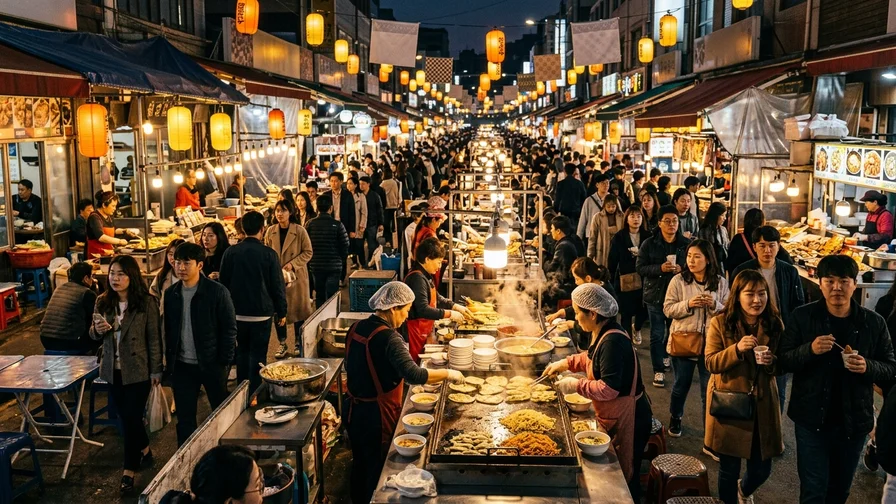
Daegu’s signature Korean night market is the Seomun Market night market. It’s large with a wide variety of food, making it a great place to go when you mean business about eating a full meal.
Napjak Mandu, Kaljebi, Makchang, and More
The signature eats at the Seomun Market Night Market 📍 mix Daegu local dishes with global menus.
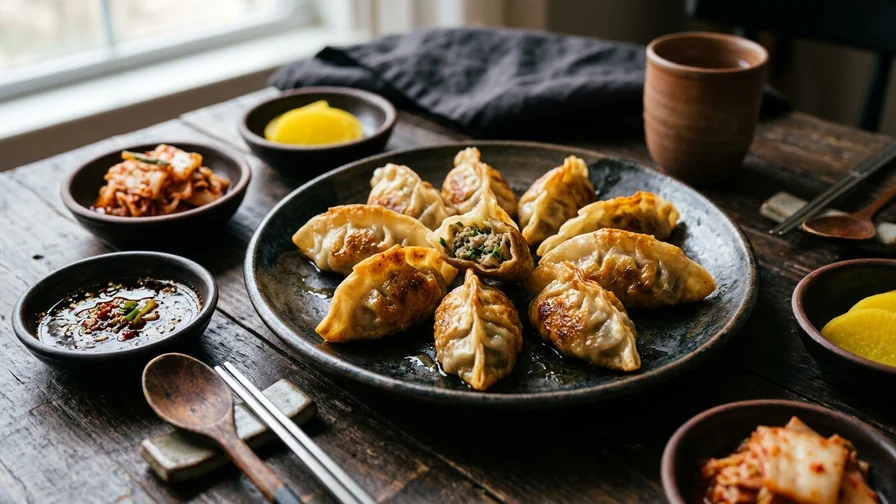
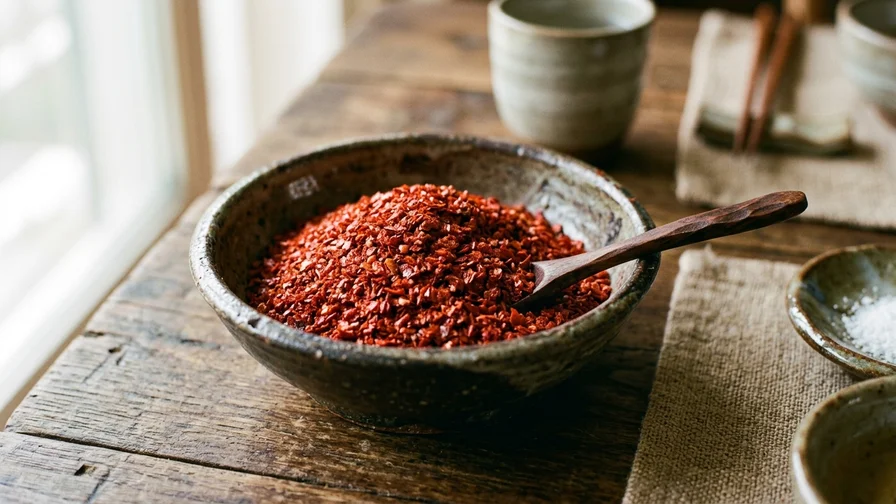
- Flat Dumplings (납작만두, napjak-mandu) are very thinly pan-fried Daegu-style Dumplings (만두, mandu), eaten topped with soy sauce, Chili Powder (고춧가루, gochutgaru), and finely chopped scallions. Their hallmark is a wrapper so thin the filling almost shows through, so they’re quite different from what you’d picture as ordinary Dumplings (만두, mandu). About 4,000 to 6,000 won a plate.
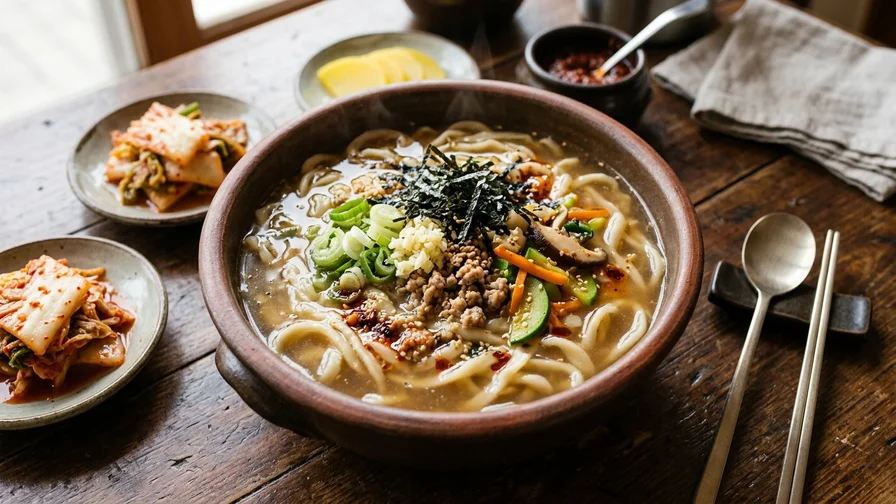
- Knife-cut Noodle and Dumpling Soup (칼제비, kaljebi) is a dish that combines Knife-cut Noodles (칼국수, kalguksu) and sujebi in one bowl, with both noodles and dough flakes in a hot broth for a filling meal.
- Grilled Beef Intestine (막창, makchang) is a grilled beef or pork intestine specialty of Daegu—chewy and rich. Some night market stalls sell it casually in cups or on skewers.
- Beyond that, there are plenty of flashy global menus like yakisoba, cheese-grilled lobster, buldak corn cheese Rolled Omelette (계란말이, gyeran-mari) (rolled omelet), and pad thai—great for snapshots.
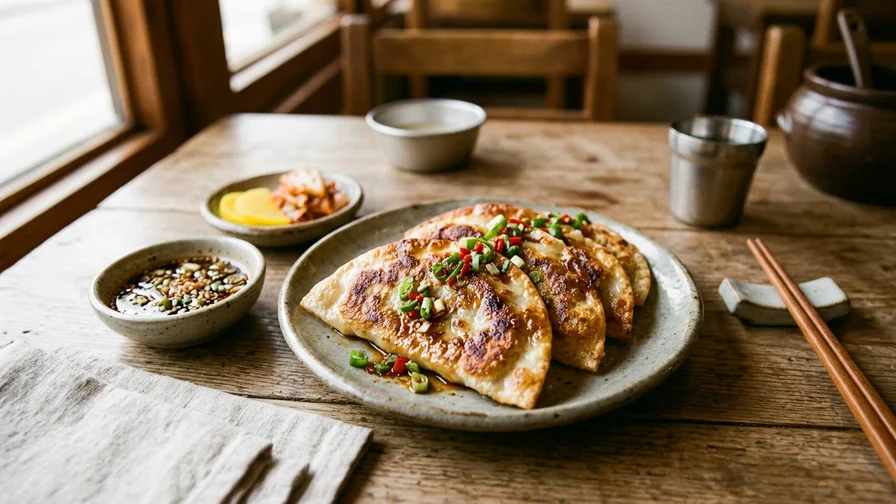
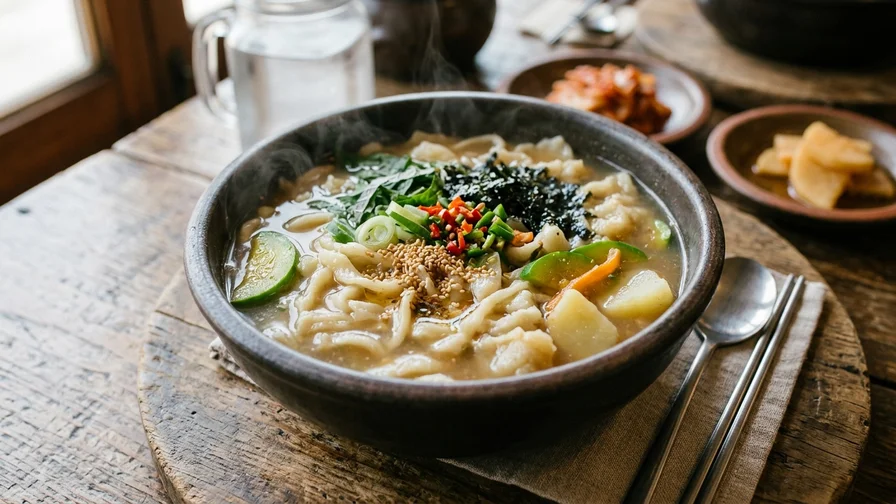
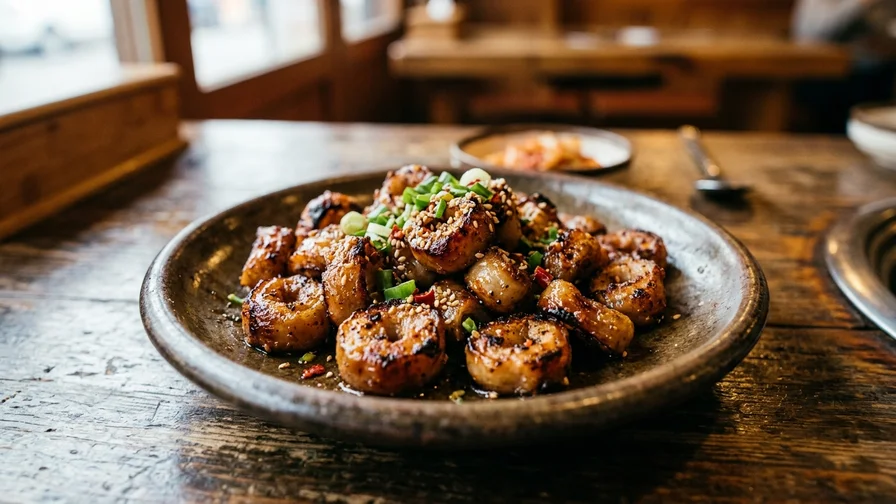
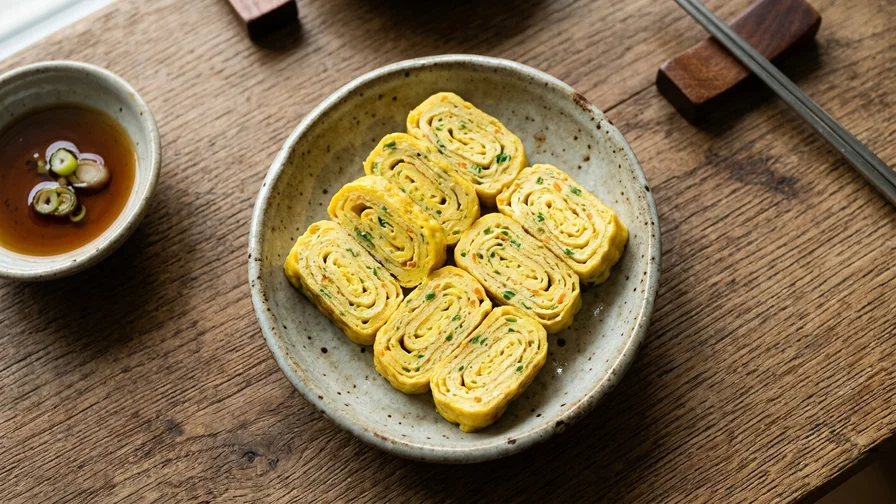
Grilled Beef Intestine (막창, makchang) has a distinctive flavor due to the cut, but grilling it well and dipping it in sesame-oil-and-salt makes it less off-putting. Cheese-grilled lobster and corn cheese Rolled Omelette (계란말이, gyeran-mari) often run over 10,000 won, so if you only want light snacks, stick with Flat Dumplings (납작만두, napjak-mandu) and Knife-cut Noodle and Dumpling Soup (칼제비, kaljebi). Prices can vary by vendor and season.
Operating Schedule
The Seomun Market night market runs from March through December on Fridays, Saturdays, and Sundays. Hours are 7:00 p.m. to 11:30 p.m. on Fridays and Saturdays, and 7:00 p.m. to 10:30 p.m. on Sundays. The year’s season opens in late March each year. In other words, the night market is closed in the dead of winter in January and February, so if you visit Daegu in winter, be sure to check the operating period to avoid a wasted trip. The schedule can change, so reconfirm via Seomun Market’s official channels before you go.
How to Get There
Access is very easy. From Exit 3 of Seomun Market Station on Daegu Metro Line 3, it’s about a 2-minute walk to the night market entrance. Line 3 is an above-ground monorail, so you get the bonus of viewing the Daegu cityscape as you ride. If you’re coming from the Dongdaegu Station direction, the easy route is to transfer to the subway and get off at Seomun Market Station on Line 3. For the exact transfer route, search “Dongdaegu Station → Seomun Market Station” on Naver Map or Google Maps for a real-time route.
Gwangju’s Daein Namdo Dalbam Night Market (Byeoljang) — A Seasonal Art Night Market
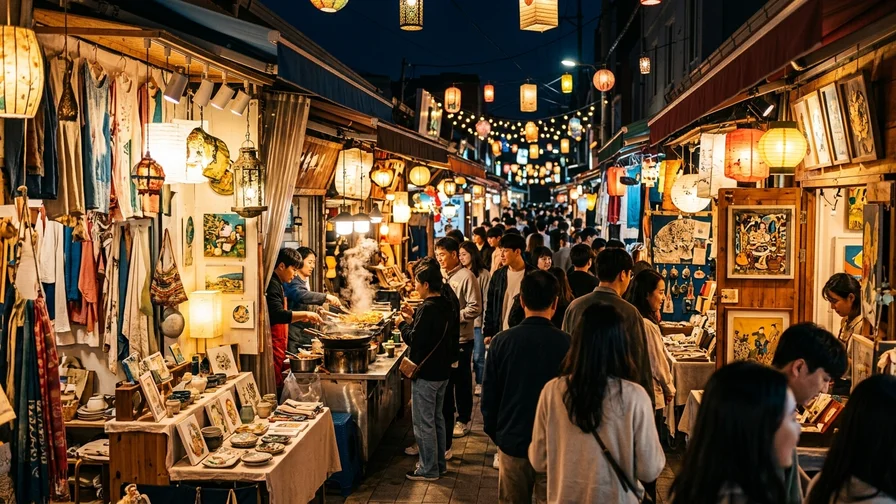
Gwangju’s Korean night market shines not just for eating but for the art experiences you can see and enjoy. That said, it’s not open every day—it’s seasonal, so confirming the schedule is essential.
Quirky Makgeolli and Youth Mall Eats
The Daein Namdo Dalbam Night Market 📍 is held inside Daein Art Market, and its nickname “Byeoljang” isn’t a typo—it’s the market’s actual name. It centers on a youth mall run by young artists, so the atmosphere is quite different from an ordinary food night market.
- The youth mall’s offbeat Rice Wine (막걸리, makgeolli) is a highlight. You can taste menus that infuse traditional makgeolli with novel flavors, like matcha Rice Wine (막걸리, makgeolli) and Earl Grey Rice Wine (막걸리, makgeolli). Makgeolli is a traditional Korean fermented rice wine—low in alcohol, slightly sweet, and cloudy.
- Creative foods and desserts made by young artists themselves vary from stall to stall.
- Beyond food, art experiences and a handmade craft market are held alongside, making it a cultural night market where you can enjoy sightseeing and hands-on activities at once.
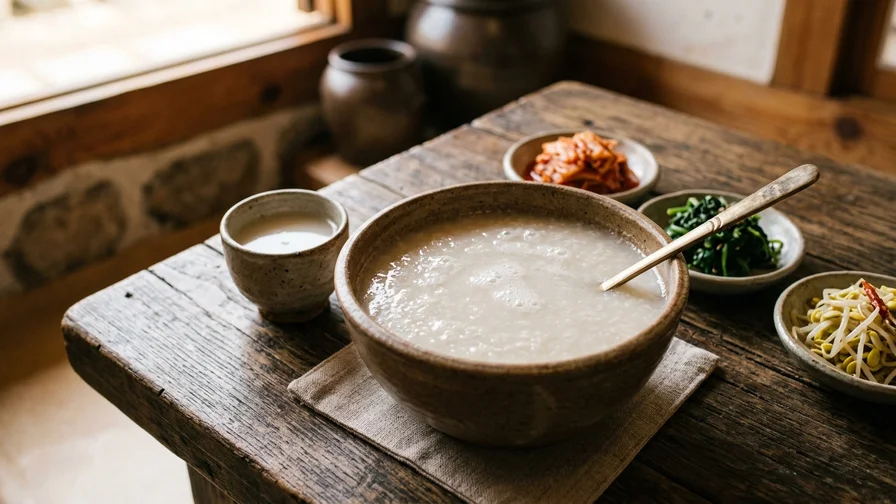
Since makgeolli is an alcoholic drink, readers who’d rather not drink can simply enjoy the youth mall food and art experiences—it’s plenty without alcohol. Drinks are entirely optional.
Seasonal Schedule
The Namdo Dalbam Night Market isn’t open year-round; it runs seasonally. In the second half of 2025, it was held a total of 10 times (excluding the Chuseok holiday) from September 6 to November 22, every Saturday from 6:00 p.m. to 10:00 p.m., and it also ran 3 times in July in the first half of the year. In other words, the number of sessions is limited, so if you can’t match the dates you can’t go. The 2026 schedule is announced separately, so before visiting Gwangju, be sure to confirm that year’s dates on the Daein Market 📍 official site (daeinmarket.kr). It’s also good to keep in mind that it may be canceled in the rain.
How to Get There
Daein Market 📍 is in downtown Gwangju, so it’s easy to reach. Get off at Geumnamno 4-ga Station on Gwangju Metro Line 1 and it’s a 5- to 10-minute walk to the market. If you start from Gwangju Songjeong Station or U Square Bus Terminal, take Line 1 or a city bus into downtown and then walk over. For exact bus routes and real-time schedules, search “Gwangju Songjeong Station → Daein Market” on Naver Map for instant results. Short-term foreign travelers may find taxi apps hard to sign up for, so we recommend grabbing a taxi at a station or terminal taxi stand, pinning your destination on Google Maps, and showing it to the driver.
Practical Tips for Foreign Visitors — Payment, Prices, Language, and Rain
Finally, here’s a rundown of the real barriers foreign visitors hit at Korean night markets and how to handle them. Just covering this section greatly reduces the chances of getting caught off guard on site.
Cash and Zero Pay
Cash is the default at night market stalls. Some accept easy-pay options like Zero Pay, but many won’t take cards or bank transfers, and foreign-issued cards are even more finicky. So before you head out, it’s safest to get about 20,000 to 30,000 won per person (roughly USD 15 to 22) in cash from an ATM or currency exchange. If you mix in small bills in 1,000- and 5,000-won denominations, you can buy and eat quickly without haggling over change at the stalls.
Price Range and English Menus
Most night market items run 2,000 to 6,000 won each, while global menus or grilled dishes can top 10,000 won. At 10,000 to 15,000 won per person (roughly USD 7 to 11), you can sample a good variety. Prices vary by season and vendor. As for English menus, tourist-heavy spots like Bupyeong Kkangtong and Seomun Market have some in places, but small stalls often have Korean-only menus. Pointing the Google Translate camera at a menu gives you instant translation, and pointing your finger at a photo of the food works well too.
Rain Cancellations and Crowd Times
The largely outdoor Seoul Hangang Moonlight, Gwangju Namdo Dalbam, and Jeonju Nambu can be canceled same-day or scaled down in the rain. Making a habit of checking each market’s official social media for the day’s operating notice before you leave will save you a wasted trip. To avoid crowds, skip the weekend-night peak between 8 and 9 p.m. and aim for weekday evenings or the time right after opening. For permanent markets that open daily like Bupyeong Kkangtong, around 7 p.m. on a weekday is the most relaxed.
Donghyun’s On-the-Ground Briefing
For anyone heading to a Korean night market for the first time, I suggest checking just three things before you leave: “cash, date, weather.” Get those three right and all that’s left is to eat and stroll happily.
Korean night markets have the most volatile schedules, so only those who check the info in time get to truly enjoy them. For seasonal markets, confirm that year’s dates on the official site, and if your dates don’t line up, reroute to Busan’s Bupyeong Kkangtong, which is open every day. You can continue with the bigger after-dark picture in our full guide to nighttime travel in Korea. For more detailed Korea information, find more on Come On Korea. If you’re curious about the background of night market culture, the encyclopedia entry on traditional markets is a helpful reference too. Mark tonight’s date on your calendar first, and get your cash ready.
Recommended Reads on This Topic
- Korea Night Tour Routes from Seoul to Busan After Dark
- 7 of the Best Night Views in Korea, Cities That Shine After Dark
- Inside Korea's Late-Night Culture in the City That Wakes Up at Night
- A Korean Palace Night Opening at Gyeongbokgung and Changgyeonggung
- Korea's Trending Night Exhibitions, Art After Dark