6 Unique Korean Festivals Across the Seasons, with Admission
목차
Korea has four distinct seasons, and across the country you’ll find hands-on regional festivals that can only be enjoyed at certain times of the year. This guide is a hub document that lays out dates, transportation, admission, and nearby dining in concrete detail, so a foreign traveler can show up on-site with nothing more than this article. For deeper dives into each of these unique Korean festivals, follow the individual guides linked throughout. Prices and dates were verified as of June 2026.
Things to Check Before Joining a Festival
2026 Schedule at a Glance
| Festival | 2026 Dates | Status (as of June 2026) |
|---|---|---|
| Hwacheon Sancheoneo Festival | Jan 10 – Feb 1 | Ended — next edition expected Jan 2027 |
| Goryeong Daegaya Festival | Mar 27 – Mar 29 | Ended — next edition expected spring 2027 |
| Damyang Bamboo Festival | May 1 – May 5 | Ended — next edition expected early May 2027 |
| Boryeong Mud Festival | Jul 24 – Aug 9 | Confirmed |
| Muju Firefly Festival | Sep 4 – Sep 13 | Confirmed (30th edition) |
| Jinju Namgang Yudeung Festival | Early–mid October (expected) | Dates unannounced (2025 ran Oct 4–19) |
| Jeonju Bibimbap Festival | 3 days starting Oct 2 (planned) | Announced as part of Jeonju Festa 2026 |
Confirm the Festival Dates
Festival dates shift slightly from year to year. Winter and summer festivals in particular are heavily weather-dependent and their schedules can change. Before planning a visit, always confirm the exact dates and program hours for the year on each festival’s official website. The following year’s dates are usually finalized and announced two to four months before the event.
Essential Info for Foreign Travelers
- 1330 Tourism Hotline: A 24-hour travel helpline for foreigners operated by the Korea Tourism Organization. It offers multilingual interpretation in English, Japanese, Chinese, and more, along with travel information and complaint support. If you hit a language barrier at a festival or need transit info, just dial 1330 (no area code needed) to connect.
- Taxi apps: In Korea, hailing a ride through the “Kakao T” app is the norm. It supports foreign-issued credit card registration and a service for foreigners (k.ride), so it’s convenient to install the app and register your card before you leave home. Uber also works in big cities like Seoul. That said, in the smaller provincial towns where these festivals are held, there are few app-hailable taxis, so it’s often faster to use the taxi stand at the bus terminal or train station.
- International Driving Permit (IDP): Most festival locations don’t have public transit networks as dense as the Seoul metropolitan area. If you want freedom to roam, renting a car is an option. To drive in Korea, you must carry a valid International Driving Permit (IDP), your home-country driver’s license, and your passport.
1. Hwacheon Sancheoneo Ice Festival
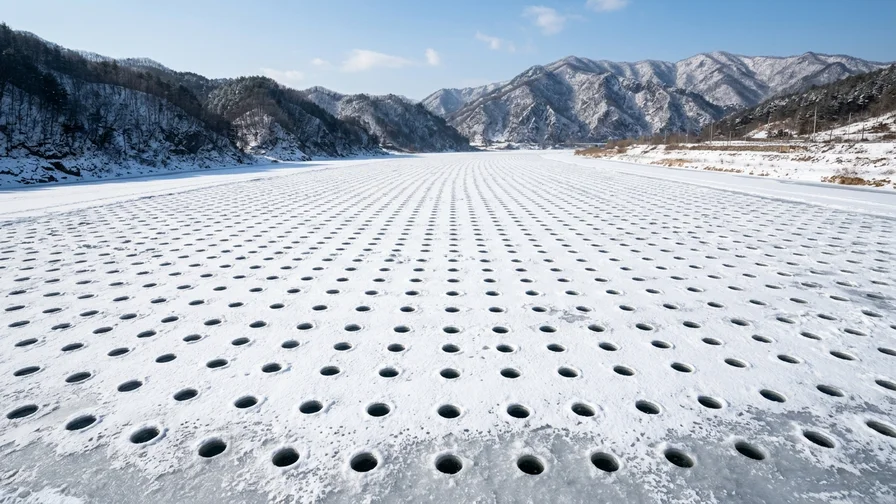
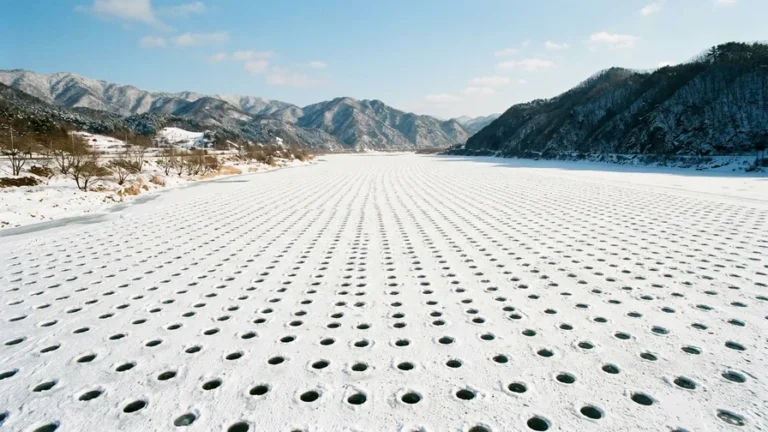
When the Hwacheoncheon Stream in Hwacheon-gun, Gangwon-do freezes over in winter, tens of thousands of people drill holes in the ice and fish for sancheoneo (Masu salmon) on top of it — Korea’s largest winter festival. Beyond fishing, there’s a wide range of winter activities like ice sledding and bare-hand catching.
Basic Information
| Item | Details |
|---|---|
| Dates | Early January – early February each year (in 2026 it ran Jan 10 – Feb 1, for 23 days, and has ended. The 2027 dates are usually announced in November–December of the previous year) |
| Location | Hwacheoncheon Stream and around the town center, Hwacheon-eup, Hwacheon-gun, Gangwon-do |
| Official Website | https://www.narafestival.com |
| Key Activities | Ice fishing, bare-hand sancheoneo catching, ice sledding, bobsledding |
Admission & Main Programs (2026)
Entry to the festival grounds is free, but the headline activity, ice fishing, is paid. There’s a separate fishing area set aside just for foreign tourists, so you can fish in relative comfort.
- Ice fishing: KRW 15,000 for general admission (middle school age and up); the foreigner-only fishing area (for those holding a foreign passport) is KRW 10,000. Rods and bait are bought or rented separately on-site. For detailed rules such as catch limits, follow the on-site guidance.
- Grill stations: You can have the sancheoneo you catch grilled fresh on the spot for a small fee at the grill stations near the fishing area. Prices may change each year, so check the official site.
- Bare-hand sancheoneo catching: Change into the short-sleeve top and shorts provided on-site, wade into the cold water, and catch the fish by hand. Open to those 14 and older; a foot-bath is available afterward. Check the official site for the fee and time slots.
How to book and how to make the most of the foreigner-only zone are covered in Hwacheon Sancheoneo Ice Festival, Ice Fishing and Foreigner Zone.
Getting There
A direct intercity bus is the most common way to get from Seoul to Hwacheon.
- From Seoul: Take an intercity bus bound for Hwacheon from Dong Seoul Bus Terminal.
- Travel time: about 3 hours
- Frequency: 8 times a day (first bus 06:45, last bus 18:10)
- Fare: KRW 14,400 one-way (as of June 2026)
- Arriving in Hwacheon: Get off at Hwacheon Bus Terminal; the festival grounds are about a 10-minute walk away. By taxi it’s within the base-fare distance.
Google Maps search address:
137 Sancheoneo-gil, Hwacheon-eup, Hwacheon-gun, Gangwon-do
Nearby Dining & Lodging
- Dining: Around Jungang-ro in Hwacheon-eup you’ll find Gangwon-do regional eateries serving dakgalbi, makguksu, and more. Restaurants right next to the festival grounds get crowded, so heading into the town center is recommended.
- Sangol Dakgalbi 📍 — A dakgalbi specialist (marinated chicken stir-fried with vegetables on a hot iron plate), located on Jungang-ro in the town center, within walking distance of the festival.
- Sincheonil Makguksu 📍 — A long-standing shop of over 30 years serving buckwheat makguksu (cold buckwheat noodles), near Hwacheon Market. Closes early when ingredients run out.
- Igane Chik Naengmyeon 📍 — Known for chik naengmyeon (cold noodles made with deep-brown arrowroot-starch noodles) and king-size pork cutlets, located in the town center.
- Lodging: There are plenty of motels and pensions in Hwacheon-eup. They fill up fast during the festival, so booking at least a month ahead is recommended.
Editor’s Tip
January in Gangwon-do can feel as cold as -20°C with wind chill. Winter boots, thick socks, gloves, a hat, and hand warmers are essential. A small folding chair or a waterproof cushion is handy for ice fishing.
2. Jinju Namgang Yudeung Festival
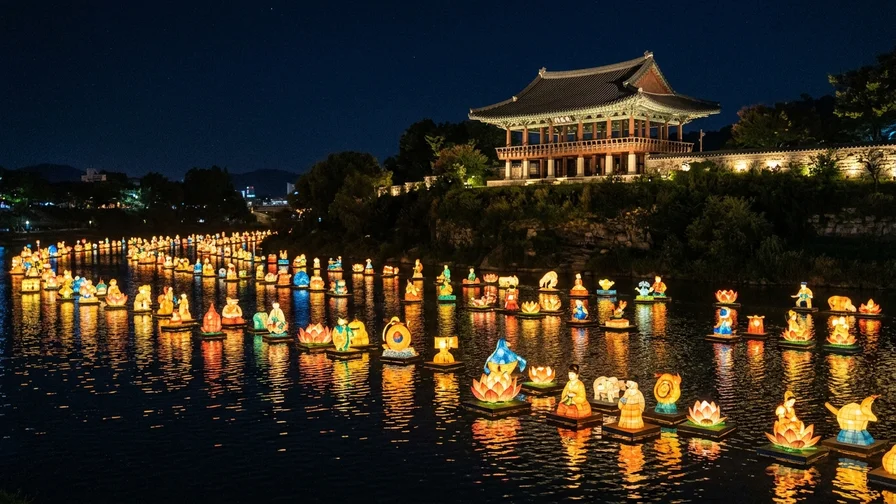
A nighttime festival where hundreds of large traditional lanterns are floated along the Jinju Namgang River. It traces its origins to the Siege of Jinju during the Imjin War (the 1592 Japanese invasions), and is known for the ornate, intricate lantern works set up on the river and inside Jinju Fortress.
Basic Information
| Item | Details |
|---|---|
| Dates | Early to mid-October each year, for about 2 weeks (in 2025 it ran Oct 4 – 19; the 2026 dates are unannounced as of June — be sure to check the official site) |
| Location | Jinju Fortress and around the Namgang River, Jinju-si, Gyeongsangnam-do |
| Official Website | https://yudeung.com |
| Key Activities | Lantern viewing, hanging wish lanterns, floating lanterns, crossing the pontoon (love) bridge |
Admission & Main Programs
Entry to the festival grounds is free (it became free starting in 2019). Only the hands-on programs are paid. The prices below are based on 2025 and may change each year.
- Lantern viewing: The heart of the festival is strolling through Jinju Fortress and along the Namgang riverside to admire the large lanterns. Lights are on from 18:00 to 24:00.
- Hanging wish lanterns: Write a wish and hang a lantern, KRW 10,000 each. Floating a small lantern out on the river costs KRW 3,000.
- Crossing the pontoon (love) bridge: Walk across the pontoon bridge laid over the Namgang River. KRW 2,000 one-way, KRW 6,000 for an all-day pass.
Getting There
The KTX is the fastest and most convenient way to get from Seoul to Jinju.
- From Seoul: Take a KTX from Seoul Station to Jinju Station.
- Travel time: about 3 hours 20 minutes – 3 hours 40 minutes
- Fare: KRW 57,200 one-way, standard class (as of June 2026)
- Arriving in Jinju: From Jinju Station to the festival site at Jinju Fortress, it’s about 15 minutes by taxi (around KRW 10,000) or about 30 minutes by city bus. Check city bus routes and real-time arrivals on the Jinju city bus information system (bis.jinju.go.kr).
Google Maps search address:
626 Namgang-ro, Jinju-si, Gyeongsangnam-do (Jinju Fortress)
Nearby Dining & Lodging
- Dining: Jinju is the home of yukhoe bibimbap and Jinju naengmyeon.
- Hayeonok Chokseongnu Branch 📍 — Right in front of Jinju Fortress. Signature dishes are Jinju naengmyeon (cold buckwheat noodles in a seafood broth) and yukjeon (beef coated in egg batter and pan-fried).
- Cheonhwang Sikdang 📍 — A century-old shop founded in 1915, within walking distance of Jinju Fortress. Its signature dish is yukhoe bibimbap (mixed rice topped with raw beef).
- Jeil Sikdang 📍 — A long-standing yukhoe bibimbap shop inside Jinju Jungang Market, about a 10-minute walk from Jinju Fortress. Its beef gukbap is also famous. Closed the 2nd and 4th Mondays.
- Lodging: There are many hotels and motels around Jinju Fortress and in the city center. During the festival, rooms book up as far out as nearby Sacheon-si and Hadong-gun, so hurry.
Editor’s Tip
Since this is a nighttime event, the riverside wind is chilly even in October. Bring a light jacket. The crowds are huge, so a weekday evening is more relaxed than the weekend. Tripod photography blocks foot traffic, so use the designated photo zones.
3. Boryeong Mud Festival
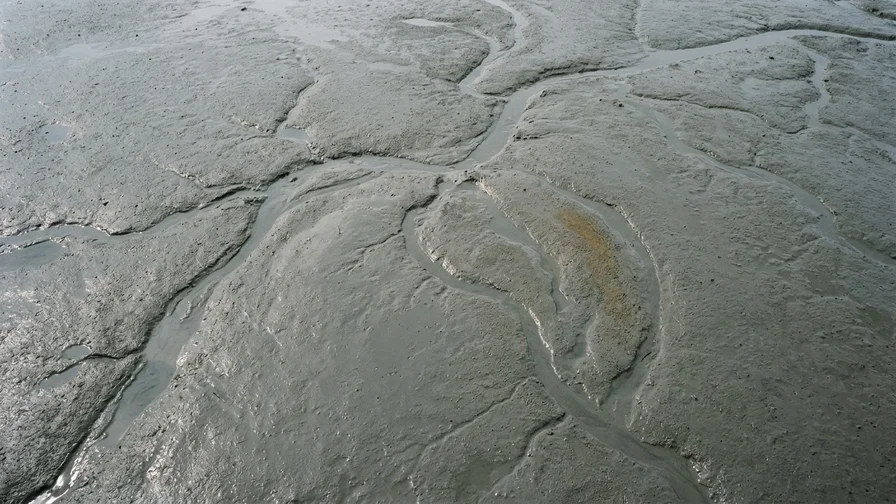
Korea’s signature summer festival, held at Daecheon Beach in Boryeong, Chungcheongnam-do. It centers on activities where you slather your whole body with Boryeong mud, said to be good for the skin, and is one of the most-visited Korean festivals among foreign tourists from around the world.
Basic Information
| Item | Details |
|---|---|
| Dates | Fri, Jul 24 – Sun, Aug 9, 2026, for 17 days (confirmed) |
| Location | Mud Plaza at Daecheon Beach, Boryeong-si, Chungcheongnam-do |
| Official Website | https://mudfestival.or.kr |
| Key Activities | Mud slides, mud baths, mudflat obstacle course, water park zone |
Admission & Main Programs (2026 Official Prices)
Entry to the beach and the festival plaza is free. Only the “Mud Experience Zone,” where the mud slides and other attractions are gathered, requires buying a paid wristband (hand ring) to enter.
- Mud Experience Zone ticket: Adults KRW 12,000 on weekdays (Mon–Thu), KRW 16,000 on weekends (Fri–Sun). Youth KRW 11,000 on weekdays, KRW 14,000 on weekends. 10% discount for online advance purchase by June 15.
- Operating hours: 13:00–18:00 on weekdays, 10:00–18:00 on weekends. On July 24 and August 6, hours are extended into the night until 21:30.
- Booking tip: Online presales account for only 30% of the daily allotment, with the rest sold on-site. If you bought online, bring your booking number and exchange it for a wristband at the dedicated advance-purchase counter on-site.
- Evening programs: During the festival, evenings feature K-pop concerts, EDM parties, and fireworks on a special stage on the beach. Check the official site’s event schedule for the day-by-day lineup.
Getting There
Both train and bus are convenient from Seoul to Boryeong. (Fares as of June 2026)
- By train: Take a Mugunghwa-ho or Saemaul-ho train from Yongsan Station to Daecheon Station (Janghang Line).
- Travel time: about 2 hours 30 minutes – 2 hours 50 minutes
- Fare: KRW 11,700 (Mugunghwa-ho), KRW 17,400 (Saemaul-ho)
- By bus: Take an express bus from Central City Bus Terminal to Boryeong Bus Terminal.
- Travel time: about 2 hours 10 minutes, running 19 times a day
- Fare: KRW 12,900 standard, KRW 18,900 premium
- After arriving in Daecheon: From Daecheon Station or Boryeong Terminal to Daecheon Beach, it’s about 20 minutes by city bus or 10 minutes by taxi.
Google Maps search address:
6 Haesuyokjang 4-gil, Boryeong-si, Chungcheongnam-do (Mud Plaza)
Nearby Dining & Lodging
- Dining: Daecheon Beach is famous for grilled shellfish (assorted clams grilled over charcoal or a gas brazier) and seafood kalguksu. Grilled-shellfish restaurants line the beach.
- Meokbone Jogae Gui 📍 — Assorted grilled shellfish and stir-fried comb pen shell, located on Haesuyokjang 4-gil near Mud Plaza.
- Cheongchun Jogae Pocha Daecheon Branch 📍 — All-you-can-eat grilled shellfish and a scallop tower. Great for groups who want to eat their fill.
- Daecheon Saeng Jogae Kalguksu 📍 — Kalguksu loaded with clams (hand-cut noodles boiled in a shellfish broth, a full meal in itself), open from 7 a.m., great for a hangover cure or breakfast.
- Lodging: Hotels, resorts, motels, and minbak are packed right in front of the beach. During the festival, rates rise sharply and rooms are hard to get, so booking at least 2–3 months ahead is safest.
Editor’s Tip
Bring old clothes and a swimsuit you don’t mind ruining. A waterproof pouch for your phone and valuables is essential. There are lockers and paid showers on-site, but they get very crowded, so pack light. Bring sunscreen and a hat as well.
4. Muju Firefly Festival
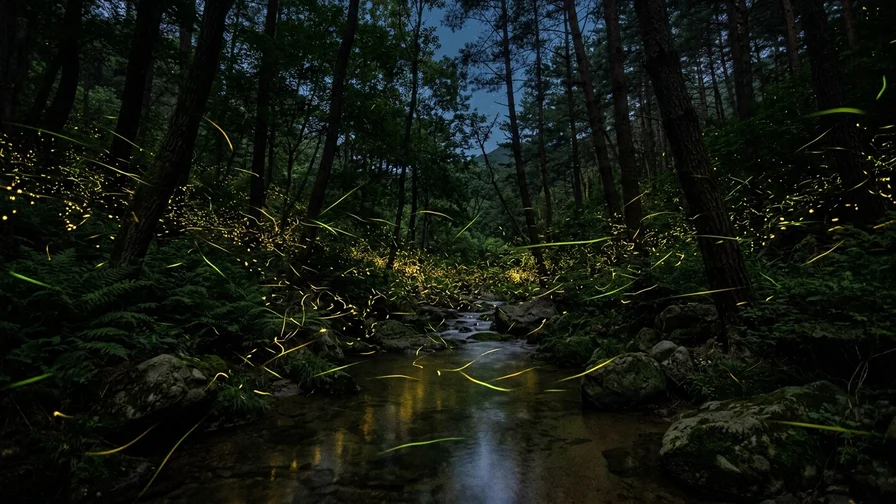
An eco-environmental festival held in Muju, Jeonbuk State, a habitat for fireflies, an indicator species of pristine nature. The highlight is the “Mystery Exploration” program, where after sunset you head to the habitat with an expert guide to watch fireflies light up the night sky.
Basic Information
| Item | Details |
|---|---|
| Dates | Fri, Sep 4 – Sun, Sep 13, 2026, 30th edition (confirmed) |
| Location | Deungnamu Stadium in Muju-eup, Muju-gun, Jeonbuk State, and around the firefly habitat |
| Official Website | https://www.firefly.or.kr |
| Key Activities | Firefly Mystery Exploration, nakhwanori, hands-on programs around the Namdaecheon Stream |
Admission & Main Programs
Entry to the main venue, Deungnamu Stadium, is free. The headline program, the “Firefly Mystery Exploration,” is a paid, 100% advance-online-reservation program.
- Firefly Mystery Exploration: Travel by shuttle bus with an expert guide to a designated habitat to observe the fireflies.
- Reservation: Online booking on the festival’s official website is required. It sells out very fast.
- Fee: KRW 20,000 per person, of which KRW 10,000 is refunded as Muju Love Gift Certificates (as of 2026).
- Note: A separate exploration program also runs in June (the season for the Unmun-mountain firefly), apart from the festival period. In 2026 it expands to 25 sessions a year.
- Nakhwanori: A traditional fire show where bags of hanji paper filled with charcoal powder are hung from a rope over the river and set alight, with sparks raining down onto the water. It only takes place on certain days during the festival, so be sure to check the schedule.
Tips for booking the exploration and the shuttle bus routes are covered in detail in Night Tours and Shuttle Buses at the Muju Firefly Festival.
Getting There
Muju has no train station, so the standard route is to transfer to a bus in Daejeon. (Fares as of June 2026)
- From Seoul: Take a KTX from Seoul Station to Daejeon Station. (About 1 hour, KRW 23,700 standard class)
- Transfer in Daejeon: From Daejeon Station, take a taxi or city bus to the Daejeon Bus Terminal Complex. (About 15 minutes)
- On to Muju: Take an intercity bus from the Daejeon Bus Terminal Complex to Muju Bus Terminal.
- Travel time: about 50 minutes
- Frequency: 19 times a day (first bus 07:10, last bus 21:00)
- Fare: KRW 5,500 one-way
- After arriving in Muju: You can walk from the terminal to the main venue, Deungnamu Stadium.
Google Maps search address:
326-14 Hanpungnu-ro, Muju-eup, Muju-gun, Jeonbuk State (Deungnamu Stadium)
Nearby Dining & Lodging
- Dining: Muju is known for regional dishes made with ingredients from its mountains and rivers.
- Cheonji Garden 📍 — Neungi mushroom hot pot (a richly aromatic wild-mushroom stew) and sanchae bibimbap (mixed rice with wild greens). Neungi is seasonal, so calling ahead before visiting is recommended.
- Geumgang Sikdang 📍 — A long-standing shop serving eojuk (a spicy porridge made by grinding freshwater fish) since 1987. Break time 14:30–17:00.
- Seommaeul 📍 — Eojuk and doribaengbaeng-i (small freshwater fish deep-fried in a ring in the pan and seasoned), plus eotang guksu (fish-soup noodles).
- Lodging: There are motels and pensions in Muju-eup, and large-scale accommodations at Muju Deogyusan Resort, about 20 minutes away by car. Since the firefly exploration ends late, it’s more convenient to stay within Muju.
Editor’s Tip
Fireflies are extremely sensitive to light, so all artificial light, including smartphones and camera flashes, is strictly prohibited during the exploration. Since you’ll be walking dark mountain paths, comfortable shoes are essential, and long sleeves are recommended for insect protection.
5. Damyang Bamboo Festival
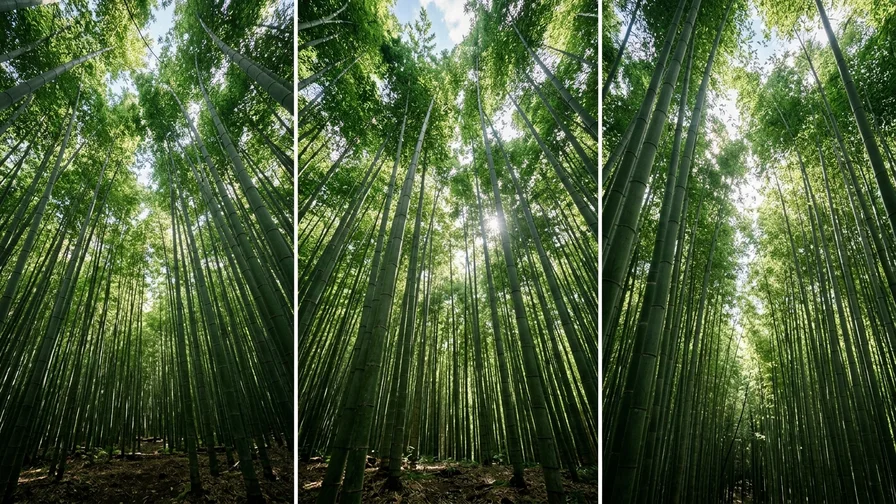
A festival held around Juknokwon Bamboo Forest in Damyang, Jeollanam-do, home to Korea’s largest bamboo grove. You can experience everything about bamboo at once — strolling through the bamboo forest, hands-on bamboo crafts, and bamboo cuisine.
Basic Information
| Item | Details |
|---|---|
| Dates | Early May each year, including the Children’s Day holiday (in 2026 it ran May 1 – 5 and has ended. The 2027 dates will be announced on the official site) |
| Location | Juknokwon and around Gwanbangjerim Forest, Damyang-gun, Jeollanam-do |
| Official Website | https://www.bamboofestival.co.kr |
| Key Activities | Strolling Juknokwon, hands-on bamboo crafts, tasting daetongbap and bamboo dishes |
Admission & Main Programs
The festival itself is free, and outdoor spaces like Gwanbangjerim Forest are open for free. Only the core space, Juknokwon, has an admission fee.
- Juknokwon admission: Adults KRW 3,000 (as of 2026). During the 2026 festival there was a cashback event that returned the admission amount as local coupons.
- Hands-on programs: Many paid activities such as making bamboo crafts. In 2026, Juknokwon added a night opening (until 21:00) and a bamboo-forest cinema.
- Food: Plenty of bamboo-themed dishes, like “daetongbap” (rice steamed inside a bamboo tube) and bamboo-leaf ice cream.
Bamboo-shoot dishes and walking routes are covered in detail in Walking the Bamboo Groves at the Damyang Bamboo Festival.
Getting There
Damyang has no train station, so you transfer to a bus in Gwangju.
- From Seoul: Take a KTX/SRT from Yongsan Station or Suseo Station to Gwangju-Songjeong Station. (About 1 hour 40 minutes)
- Transfer in Gwangju: From Gwangju-Songjeong Station, take a taxi (about 15 minutes) or city bus to the U-Square Gwangju Bus Terminal, then choose one of two options.
- Intercity bus: Take a direct bus from U-Square to Damyang Bus Terminal. (About 30 minutes)
- City bus 311: Board bus 311 at the Shinsegae Department Store (Gwangcheon Police Substation) stop right next to U-Square and get off at the “Juknokwon” stop. It runs every 10–20 minutes and drops you right in front of Juknokwon, making it the most convenient.
Google Maps search address:
119 Juknokwon-ro, Damyang-eup, Damyang-gun, Jeollanam-do (Juknokwon)
Nearby Dining & Lodging
- Dining: Damyang’s signature dishes are tteokgalbi (a grilled dish of minced, seasoned short-rib meat) and daetongbap.
- Deoginkwan 📍 — A famous Damyang tteokgalbi house on Gaksa 4-gil in Damyang-eup. Tteokgalbi and daetongbap set menus. Closed Wednesdays.
- Jinwoone Jip Guksu 📍 — The original shop on the Gwanbangcheon noodle street in front of Juknokwon. Anchovy-broth noodles and bibim guksu, perfect for a light bowl.
- Juknokwon Cheotjip 📍 — Within walking distance of the Juknokwon entrance; tteokgalbi and daetongbap.
- Lodging: There are hanok minbak, pensions, and guesthouses in Damyang-eup. If you want a hotel, staying in downtown Gwangju, 30 minutes away by car, is also a good option.
Editor’s Tip
Right next to Juknokwon, “Gwanbangjerim Forest” is a wooded trail of centuries-old trees lining the river, connecting directly to the festival grounds. We recommend exploring it too. Renting a bike and following the Yeongsangang River bike path to enjoy Damyang’s rural scenery is also a great route.
6. Jeonju Bibimbap Festival
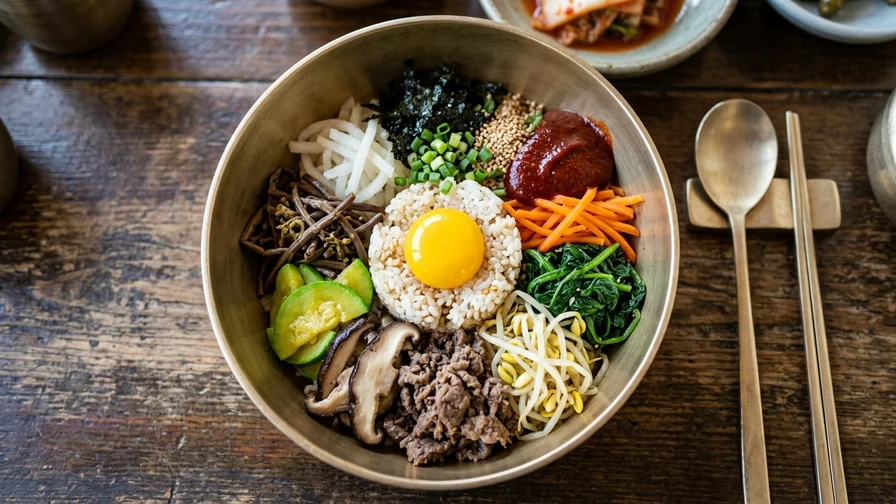
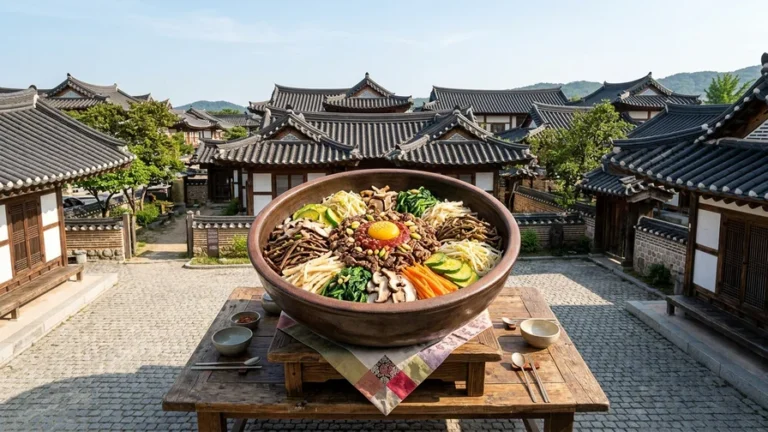
A food festival held in Jeonju, Jeonbuk State, a UNESCO Creative City of Gastronomy. Themed around bibimbap, the city’s signature dish, it features a giant bibimbap performance, cooking classes, and Jeonju food booths.
Basic Information
| Item | Details |
|---|---|
| Dates | Sometime in October each year, for about 3–4 days (in 2026 it was announced as 3 days starting October 2 — confirm the final dates through official channels) |
| Location | Announced as around Jeonju World Cup Stadium for 2026 (the venue has changed from year to year, so be sure to verify before visiting) |
| Official Info | Visit Jeonju (Jeonju city’s official tourism site) |
| Key Activities | Giant bibimbap performance, bibimbap cooking class, Jeonju food market |
Admission & Main Programs
Entry to the festival grounds is mostly free; only food purchases and some hands-on programs are paid.
- Communal bibimbap performance: The signature event, where bibimbap is mixed together in a giant bowl big enough to feed hundreds and shared among everyone. Free tastings available.
- Cooking class: A paid program where you learn to make bibimbap from a Jeonju bibimbap master. Advance reservation may be required.
- Food market: Beyond bibimbap, you can sample Jeonju fare like kongnamul gukbap, makgeolli, and street food all in one place.
Routes that pair the festival with Hanok Village are covered in detail in The Jeonju Bibimbap Festival in the Hanok Village.
Getting There
The KTX is the fastest way from Seoul to Jeonju. (Fares as of June 2026)
- From Seoul: Take a KTX from Yongsan Station to Jeonju Station.
- Travel time: about 1 hour 40 minutes
- Fare: KRW 34,400 one-way, standard class
- Arriving in Jeonju: From Jeonju Station to Hanok Village, it’s about 15 minutes by taxi (around KRW 10,000) or about 25 minutes by city bus. Jeonju World Cup Stadium, announced as the 2026 venue, requires separate travel, so check the Visit Jeonju notices, including whether shuttle buses will run.
Google Maps search address:
Jeonju World Cup Stadium (2026 festival venue)
99 Girin-daero, Wansan-gu, Jeonju-si, Jeonbuk State (Jeonju Hanok Village public parking lot)
Nearby Dining & Lodging
- Dining: Jeonju is called Korea’s culinary capital. All of these are well-established eateries within walking distance of Hanok Village.
- Hanguk Jip 📍 — The oldest Jeonju bibimbap shop, opened in 1952. Bibimbap and yukhoe bibimbap.
- Gajok Hoegwan 📍 — Jeonju bibimbap by a master of traditional foods. Closed Mondays, break time 15:00–17:00.
- Hyundaeok Nambu Market Branch 📍 — The originator of Nambu Market-style kongnamul gukbap (a hangover dish of soybean sprouts and rice in a piping-hot broth). Open only 06:00–14:00, so go in the morning.
- Waengijip 📍 — Famous for the combination of kongnamul gukbap and moju (a sweet, low-alcohol drink with a cinnamon aroma).
- Lodging: Inside Hanok Village there are many hanok stays converted from traditional houses. Modern hotels are on the outskirts of Hanok Village and in the city center. Booking is essential for weekend visits.
Editor’s Tip
The Bibimbap Festival pairs well with sightseeing in Jeonju Hanok Village. We recommend renting a hanbok to tour the village, or a route that also takes in Gyeonggijeon Shrine and Jeondong Catholic Cathedral. The Hanok Village area gets very crowded during the festival, so watch out for losing your belongings.
7. Goryeong Daegaya Festival
A history-experience festival held in spring in Goryeong-gun, Gyeongsangbuk-do. Set against the Jisan-dong Tumuli — the heart of the Gaya Tumuli inscribed on the UNESCO World Heritage list in 2023 — it unfolds hands-on activities and nighttime programs themed around ancient Gaya culture.
- Dates: In 2026 it was held March 27 – 29 under the theme “Daegaya Reborn: RE-BORN” and drew about 110,000 visitors (ended). The 2027 dates will be announced on the official site (festdgy.com).
- Location: The Daegaya History Theme Tourist Site, Daegaya Museum, and around Daegaya Munhwanuri. A nighttime trek of the Jisan-dong Tumuli, where some 700 burial mounds run along the ridgeline, is offered as a tie-in.
- Why it’s worth a visit: Selected as one of the Ministry of Culture, Sports and Tourism’s Culture & Tourism Festivals for 2026–2027, this festival offers the sight of the sun setting over a World Heritage tumuli cluster — a scene you won’t see at any other festival.
Tumuli-linked experiences and transportation are covered in Goryeong Daegaya Festival and the Gaya Tumuli (UNESCO 2023).
As the seasons change, so does Korea’s festival map. Pick the festivals from the schedule above that overlap with your travel dates, and just double-check the final schedule on the official site before you set off — and you’re all set.