Korean Bread — How Tradition and Modern Tech Created Its Flavor
목차
- The Roots of Korean Bread: Imported, Then Remade
- Three Dough Methods Behind Korean Bread
- Natural Starters: Deep Flavor Built from Korean Ingredients
- The Tools and Industrial Technology Supporting K-Baking
- How a Baker Is Made: Certifications, Schools, and a TV Drama
- The Baking Philosophy of Master Craftsmen: The Spirit Breathed into K-Bread
- Conclusion: An Art of Flavor Baked from Tradition and Innovation
The soft, chewy texture of K-bread that’s drawing attention around the world is no accident. Behind it lies a history of reshaping bread that arrived during the Japanese colonial period into a Korean style, dough methods like tangzhong and sponge, a state-managed certification system, and master bakers with decades of experience. This article gathers in one place the technical secrets behind how Korean bread became what it is today, covering everything from dough methods to baker training programs and trusted bakeries where you can taste it for yourself. Korean baking techniques are best understood when you trace this full story. You can find detailed information about Korean bakery culture as a whole here.
Key Takeaways
- Three dough methods give Korean bread its signature softness: the tangzhong method for chewy, moist white bread, the sponge method for fluffy, long-lasting sweet buns, and cold fermentation for deep flavor.
- Sweet red bean buns and soboro buns trace their origins to bread that came in by way of Japan, but Korea adopted them and reinvented them into its own lineup, including peanut soboro, vegetable buns, and garlic baguettes.
- A systematic training pipeline underpins K-bread quality: the national Confectionery Craftsman and Baking Craftsman certifications, the Korea Master Craftsman system, and the country’s first baking and pastry school, which opened in 1973.
The Roots of Korean Bread: Imported, Then Remade
Knowing the history of Korean bread accurately makes today’s K-bread all the more interesting. Bread arrived on the Korean peninsula by way of Japan during the late 19th-century opening and the colonial period. The iconic sweet red bean bun traces back to “anpan,” a Japanese-style bread born in 1874 at Kimuraya in Tokyo’s Ginza district, and the topping on soboro bread came in along the same route. So the starting point was an import, but the real story of Korean baking is what happened afterward.
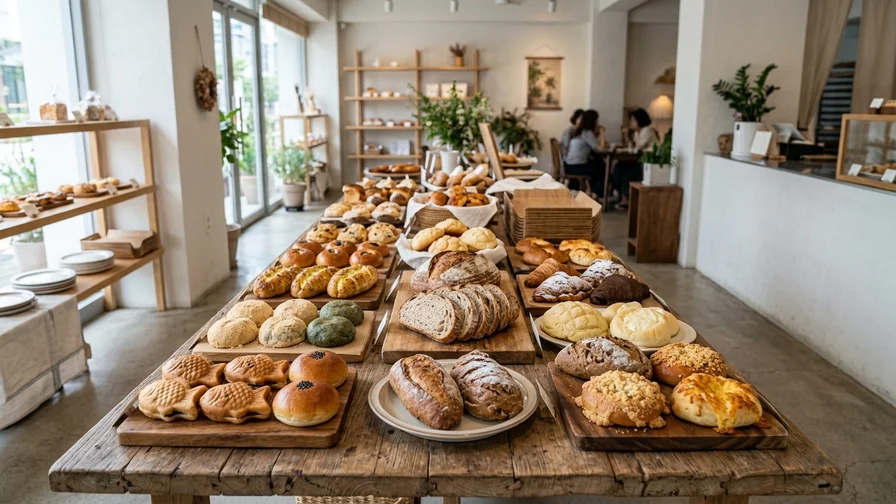
After liberation, Korean bakeries began remaking these breads in their own way. Korean-style soboro evolved into a savory, nutty topping made with peanuts, and original menu items rarely seen elsewhere appeared one after another, such as vegetable buns, garlic baguettes, and cream buns. Koreans tend to prefer soft, sweet bread made with milk and eggs over the firm, sour European style, a preference often explained by a food culture centered on rice and rice cakes, a palate accustomed to the chewy texture that comes from steaming and pounding. This taste for softness is the backdrop for why dough methods like tangzhong and sponge, discussed below, developed so distinctively in Korea. The latest example of rice culture carrying over into bread is covered in more detail in the rice flour bread trend.
Fermentation Tradition as Fertile Ground
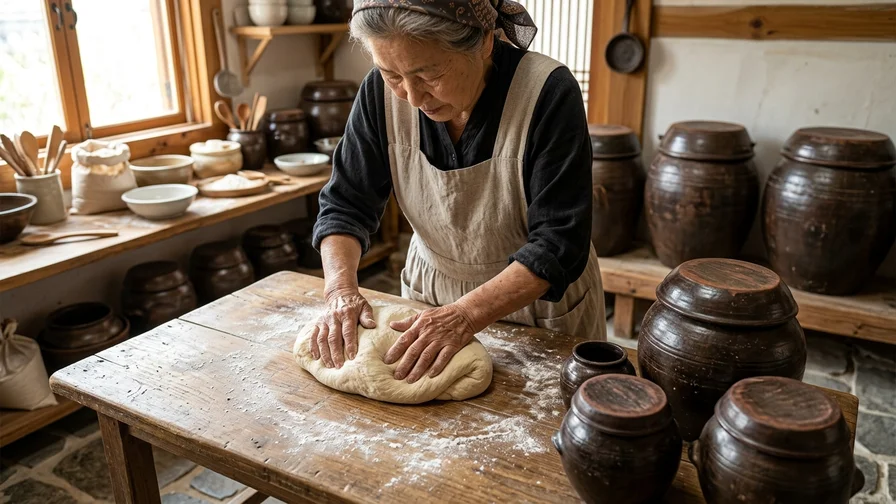
Korea is a country of fermented foods, represented by kimchi, doenjang, and makgeolli. That tradition has left its mark on baking too. Some bakeries make natural starters from nuruk (the fermentation starter used to brew makgeolli), rice, or makgeolli itself, achieving the savory, complex flavors that yeast alone cannot produce. The fact that a feel for handling fermentation was already deeply embedded in the food culture is seen as the fertile ground that allowed Western fermentation techniques to be absorbed and adapted so quickly.
Three Dough Methods Behind Korean Bread
The softness distinctive to Korean bread is the result of technique, not just taste. Knowing the three main dough methods actually used behind the bakery counter will change how you choose your bread.
The Tangzhong Method: The Secret to Chewy, Moist White Bread
The tangzhong method involves pre-cooking part of the flour with boiling water and mixing it into the dough. The hot water gelatinizes the starch, which greatly increases the dough’s water retention, resulting in remarkably moist, chewy bread. Widely used for premium white bread at Korean bakeries, tangzhong loaves are notable for staying soft for days. It’s considered the method that best matches the Korean palate’s fondness for the chewiness of rice cakes.
The Sponge Method: Making Sweet Buns Fluffy
The standard dough method for Korean-style sweet buns such as red bean buns and cream buns is the sponge method. Rather than mixing the dough all at once, it’s done in two stages: first a “sponge” is made from part of the flour, water, and yeast and allowed to ferment fully, then the remaining ingredients are added to complete the main dough. This produces stable fermentation for a fine, fluffy crumb that resists going stale. This is why sweet buns at Korean franchises and neighborhood bakeries are consistently soft.
Cold Fermentation: Time That Lifts the Flavor
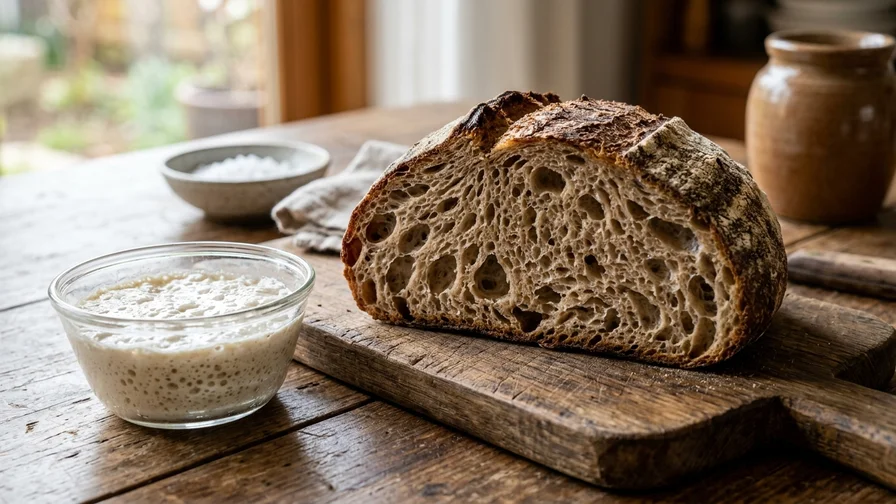
Rather than baking the dough right away, this method slowly ferments it at a low temperature of 4–10°C for more than 12 hours, sometimes for several days. During this process, the flour’s proteins and starches break down slowly, enriching the savory umami compounds and bringing out the natural sweetness of the wheat. The irregular, moist crumb you see when you slice the bread is the trace of cold fermentation. It’s mainly used for hearth-style breads and at artisan bakeries.
Editor’s Tip
Tangzhong and cold fermentation are different methods, so it helps to look at the labels separately. For moist, chewy white bread, look for a “tangzhong” label; for hearth bread with deep, savory flavor, check for “cold-fermented” or “naturally leavened.” Tangzhong loaves in particular stay soft for days, making them ideal to enjoy over several days at your accommodation.
Natural Starters: Deep Flavor Built from Korean Ingredients
As of 2026, health is a major theme in the Korean bakery scene. Artisan bakeries using their own cultivated natural starters (levain) instead of factory yeast are steadily growing, and some make their starters from seasonal fruits like grapes, figs, and apples, or from Korean ingredients like rice and makgeolli. These starters add a subtle fruity aroma or savory grain note to the bread, and by regulating acidity they also improve shelf life.
If you want to taste it for yourself in Seoul, May’s Bell 📍 in Hannam-dong is a prime example. Dedicated since 2004 to natural-leaven table breads, it’s located at 34 Itaewon-ro 45-gil, Yongsan-gu, open 11:00–18:00 and closed Sundays and Mondays (as of June 2026; please confirm before visiting). Plain table breads like cranberry baguette and olive fougasse run about 3,500–4,500 won each, reasonable given the bakery’s fame, and since popular items often sell out in the afternoon, it’s best to go early. To enjoy bread alongside coffee, Fritz Coffee Company Dohwa branch 📍 (17 Saechang-ro 2-gil) in Dohwa-dong, Mapo-gu is also a good choice; it’s a specialty coffee company, but it’s also counted among the best for the quality of its bread.
The Tools and Industrial Technology Supporting K-Baking
Traditional wisdom and an artisan’s touch alone can’t explain today’s K-bakery industry. Technological innovation was decisive in keeping flavor and quality consistent and in creating new textures.
Advances in Oven Technology
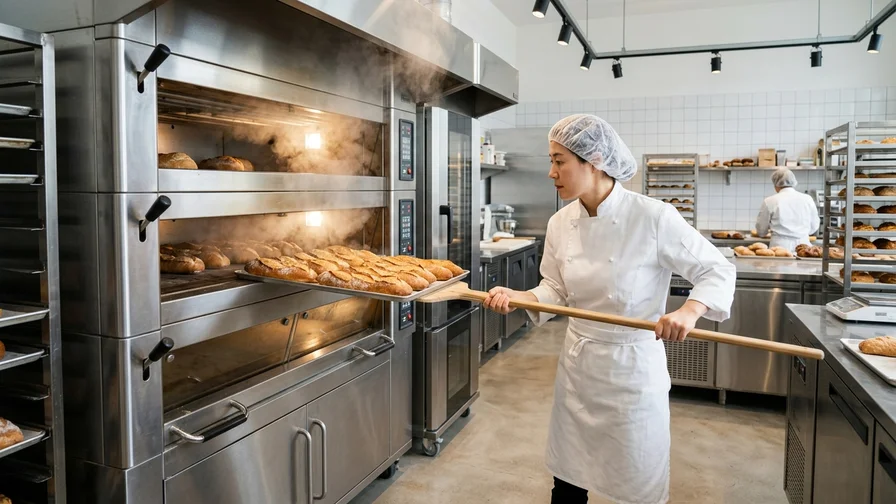
The final gateway that determines a bread’s flavor is the bake. Korea’s professional bakeries mainly use deck ovens with steam functions or fan-forced convection ovens. In particular, the technique of injecting high-temperature steam early in the bake is key to making the crust of hearth breads like baguettes and pain de campagne crisp while keeping the inside moist. This precise control of temperature and humidity makes possible the “crisp outside, soft inside” texture.
The Frozen Dough System: The Engine of Franchises
The secret behind how large franchises like Paris Baguette and Tous les Jours maintain consistent quality across thousands of stores nationwide is the frozen dough system. Dough that has been mixed and fermented at a central factory is flash-frozen and shipped to each store, where staff simply thaw and bake it. This approach standardizes quality while still letting every store offer freshly baked bread, and it’s credited as the engine of K-bakery’s rapid expansion. It’s a different path from window bakeries (neighborhood bakeries), which handle the entire process from mixing to baking on-site, but the two models coexist and have broadened the Korean bread market.
How a Baker Is Made: Certifications, Schools, and a TV Drama
Another secret of Korean baking lies in the system that trains people.
- Korea has two separate national certifications, Confectionery Craftsman and Baking Craftsman, which separately test pastry (handling cakes and confections) and bread (handling baked breads). Anyone, including foreigners, can apply without any education or experience requirements, and candidates must pass a written exam and a practical hands-on test where they actually make bread to be evaluated. The administering body is the Human Resources Development Service of Korea, and schedules and procedures can be checked on the Q-net official site.
- The Korea Institute of Baking, which opened in Seoul in 1973, is the country’s first specialized baking and pastry education institution and has produced working bakers for over half a century.
- “King of Baking, Kim Tak-gu,” a drama that aired on KBS2 in 2010, recorded a 50.8% rating for its finale, making it the last Korean drama to surpass a 50% rating. It’s regarded as a cultural event that etched the baker’s profession and the bread-making process into living rooms, raising nationwide interest in baking.
The Baking Philosophy of Master Craftsmen: The Spirit Breathed into K-Bread
The finest baking technique is ultimately completed at a person’s fingertips. The Korean government bestows the title of “Korea Master Craftsman” on artisans who reach the highest level in their field, and as of 2024 there are only 17 master craftsmen nationwide in the pastry field. A bakery bearing a master’s name is itself a mark of quality assurance, like Kim Young Mo Bakery 📍 in Seoul, run by Master Kim Young-mo (Pastry Master No. 6), who was named a pastry master craftsman in 2007.
Bread Rooted in the Region
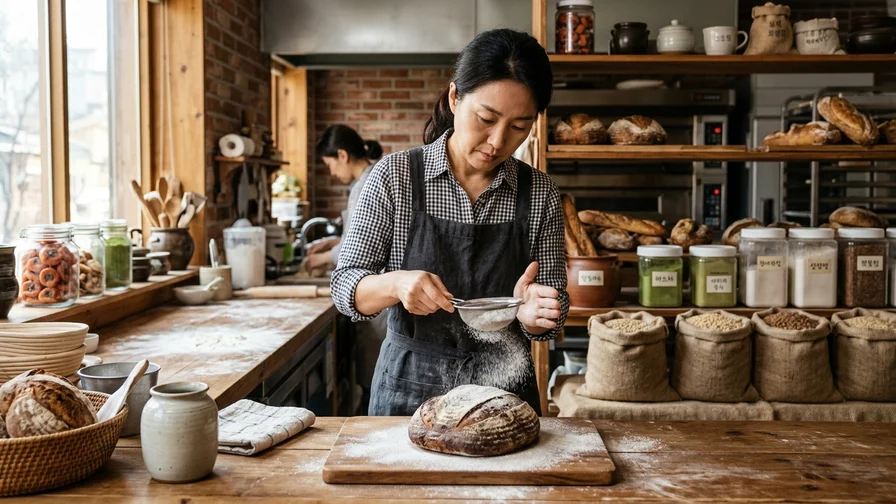
Another distinguishing feature of K-bread is its regional character. Sungsimdang 📍 in Daejeon is famous for its principle of operating stores only within Daejeon and never opening branches in other cities, and people travel from all over the country just to eat its signature fried soboro, first introduced in 1980, a soboro bun filled with red bean paste and deep-fried (it rarely closes, but checking the official channels before visiting is recommended). Bakeries on Jeju showcase menus using island specialties like Gujwa carrots and Udo peanuts. This trend of regional ingredients and regional identity melting into bread is enriching Korea’s culinary culture.
Recipes Evolving with the Times
Master bakers don’t simply preserve tradition; they continually evolve their recipes. As of 2026, new attempts keep coming to meet consumers’ changing demands, from lavish cream buns enjoyed like desserts and savory filled breads that make a full meal, to gluten-free and vegan options. The reason long-established bakeries are still crowded with young customers is this kind of innovation that refuses to rest on the legacy of the past.
Conclusion: An Art of Flavor Baked from Tradition and Innovation
The success of K-bread in capturing palates worldwide is no accident. It’s the result of an adaptability that reshaped imported bread by way of Japan into something of its own, dough techniques represented by tangzhong and sponge, the fertile ground of fermentation tradition, and a system that trains people through certifications and the master craftsman program. If you travel in Korea, try looking for labels like “tangzhong” or “naturally leavened” in front of the bakery shelves; the techniques you read about in this article are right there in the loaf before your eyes.
If you’d like to explore the many facets of Korean bakery culture in more depth, you can continue at Korean bakery culture.