K-Bakery Culture — A Tour of Korean Bread the World Is Watching
목차
- K-Bakery Wins Over Palates Worldwide
- The Birth and Evolution of Korean Bread: A Short but Eventful 140 Years
- The Korean Bakery Ecosystem: Franchises, Neighborhood Bakeries, and Old Institutions
- The Diverse World of K-Bread: Varieties, Features, and Prices
- Exploring K-Bakery Culture: An Experience Beyond Simple Eating
- The Future of a Sustainable K-Bakery
At a time when the world is obsessed with K-pop and K-dramas, another Korean wave is making its way into people’s taste buds: Korean bakery culture, often called “K-bread.” This article is an overview guide that brings together the history and present of Korean bread, the whole ecosystem from franchises to 70-year-old institutions, and practical bakery information that travelers can actually use.
Key takeaways
- Korean bakeries have a three-tier structure: nationwide franchises (Paris Baguette, Tous les Jours), neighborhood bakeries that compete on personality, and decades-old institutions with long lines (Sungsimdang, Leesungdang).
- Two long-standing institutions worth remembering are Sungsimdang in Daejeon (founded 1956, Twigim Soboro at 1,700 won) and Leesungdang in Gunsan (founded 1945, the oldest bakery in Korea, red bean bread at 2,000 won).
- Franchise red bean bread and soboro bread cost 1,500 won, signature items at old institutions run 1,700 to 2,500 won, and bread at specialty shops is in the 3,000 to 4,000 won range (as of June 2026).
- Bagels and salt bread exploded in 2023 and have since settled into everyday menus, becoming steady sellers that have outlasted short-lived fads.
K-Bakery Wins Over Palates Worldwide
Over the past few years, finding a Korean-style bakery in cities like Paris, New York, and London has become easy. Korean bread, with its distinctive textures and creative flavor combinations, is helping drive new dessert trends.

K-Bread in K-Dramas and Films
- Milk bread shown in dramas and cakes in date scenes spark curiosity among viewers around the world.
- Street snacks like gyeran-ppang (egg bread) and bungeoppang (fish-shaped pastry) have become regular fixtures on Korea travel wish lists.
- The popularity of K-content has acted as a catalyst for the globalization of K-bread.
What International Media Is Noticing
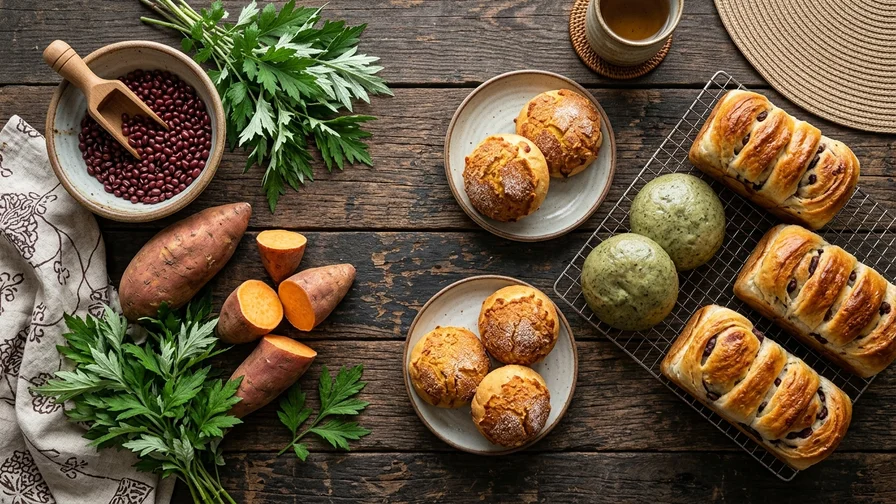
- Outlets like the BBC note that Korean bakeries have moved beyond imitating Western baking and opened up new flavor territory using Korean ingredients such as mugwort, injeolmi (rice cake), and sweet potato.
- Korean-style bread, centered on soft, fluffy textures, is being welcomed as a fresh appeal even by Western consumers.
- Korean franchises like Paris Baguette and Tous les Jours are expanding into North America and Southeast Asia, so the term “K-bakery” itself is being exported.
The Birth and Evolution of Korean Bread: A Short but Eventful 140 Years
Today’s diverse K-bread did not appear overnight. Korean bakery culture has a compressed history of roughly 140 years, beginning alongside the arrival of Western culture in the late Joseon era.
The Introduction of Modern Western Baking
- What is recorded as Korea’s first bread, in 1884, was served at the Jeongdong Club by Sontag, the sister-in-law of the Russian envoy Weber. At the time it was called “myeonpo,” a name of Chinese origin, and even earlier, bread that missionaries baked over charcoal and shared was nicknamed “urang-tteok.”
- During the Japanese colonial period, Japanese baking technicians opened confectioneries and bread spread through the cities. As of 1942, there were about 40 baking establishments nationwide. The Japanese confectionery “Izumoya,” the predecessor of Gunsan’s Leesungdang, was a shop from this era.
- After liberation and the Korean War, bread spread rapidly thanks to flour that arrived as aid, and a policy promoting flour-based foods in the early 1970s accelerated this trend.
The Fusion of Korean Ingredients and Flavors
- The prime example is red bean bread. Its original form was the anpan created at Tokyo’s Kimuraya in 1874; after entering Korea during the colonial period, it was adapted to Korean tastes and became a “national bread.” This history of adoption and reinterpretation is covered separately in red bean bread.
- Later, ingredients like corn, chestnut, yuzu, and black sesame made their way into bread, forging an identity unique to K-bakery.
- The formula of Western technique on the outside and Korean taste on the inside continues today in garlic bread, mugwort cake, and injeolmi cream bread. For the technical background of dough and fermentation, see the secrets of Korean baking technique.
The Korean Bakery Ecosystem: Franchises, Neighborhood Bakeries, and Old Institutions
In Korea, the experience of buying bread is completely different depending on which door you open. It is a three-tier structure that’s good for travelers to know.
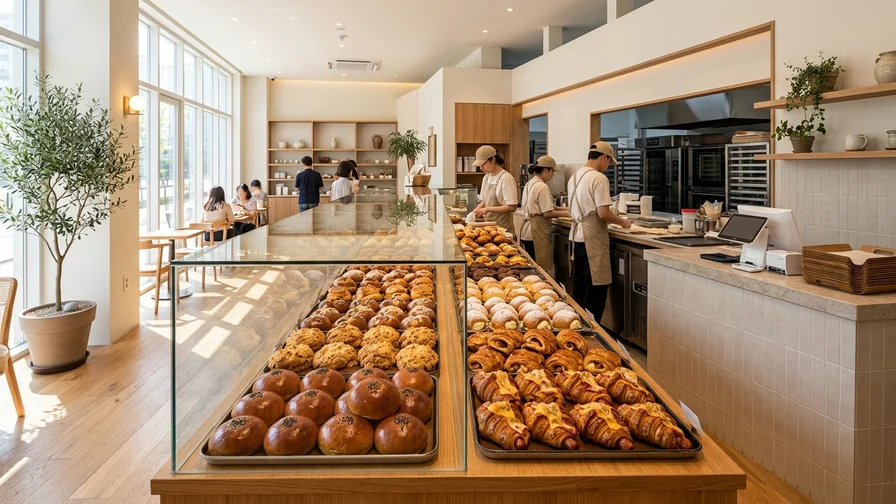
- For franchises, Paris Baguette operates about 3,400 stores and Tous les Jours about 1,300 stores domestically (as of June 2026). With uniform quality everywhere, operating hours from early morning to late at night, and card payment always accepted, they are the safest option for stocking up on emergency food while traveling.
- For neighborhood bakeries, as new openings by large corporations were limited by the “confectionery business coexistence agreement,” a structure emerged in which independent bakeries in the back streets survive with bread full of personality. The community role that neighborhood bakeries play in Korea is covered in detail in the story of Korea’s neighborhood bakeries.
- Old institutions are regional landmark bakeries with decades of history. Daejeon’s Sungsimdang and Gunsan’s Leesungdang are the leading examples, and these shops themselves have become travel destinations.
The Diverse World of K-Bread: Varieties, Features, and Prices
When you step into a Korean bakery, you’ll encounter dozens of types of bread displayed all at once. The standard is a self-service style where you pick up a tray and tongs, choose your own bread, and head to the register.
The Classic National Breads
These are steady sellers you can find at any bakery. At franchises, red bean bread and soboro bread cost 1,500 won, while at old institutions or specialty shops they run around 2,000 won (as of June 2026).
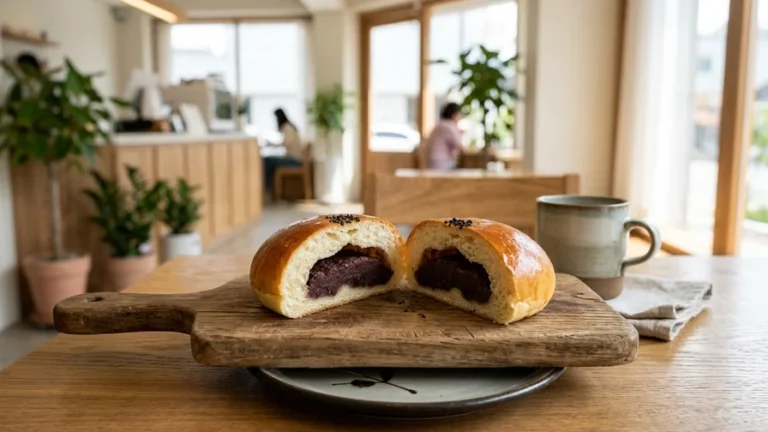
- Danpat-ppang (red bean bread) is the origin point of Korea’s popular bread, with soft dough filled with sweet red bean paste. It tastes even better with milk.
- Soboro-ppang is bread baked with a savory crumb topping made of peanut butter, sugar, and flour. The contrast between the crisp topping and soft interior is the key.
- Cream-ppang is a classic, with fluffy bread filled with custard or whipped cream.
- Yachae-ppang is a savory filled bread baked with minced vegetables and ham mixed in mayonnaise. It also works well as a hearty meal replacement.
Editor’s tip
With soboro bread, try pulling off a little of the soboro topping on top first, then eat it together with the rest of the bread, so you can experience the savory crunch and the softness in sequence. It’s a method locals commonly use.
Regional Specialty Breads
Another joy of traveling in Korea is bread you can only buy in a particular region. Prices are as of June 2026.
| Region | Notable Bakery | Signature Menu (Price) | Features |
|---|---|---|---|
| Daejeon | Sungsimdang 📍 | Twigim Soboro (1,700 won) | A whole soboro bread deep-fried and filled with red bean paste. A legend that has drawn lines for 46 years since its May 1980 launch. |
| Gunsan | Leesungdang 📍 | Red bean bread (2,000 won), vegetable bread | Founded in 1945, the oldest bakery in Korea. Its red bean bread, made with rice-flour dough and nearly 65% red bean paste, is one of its two signatures. |
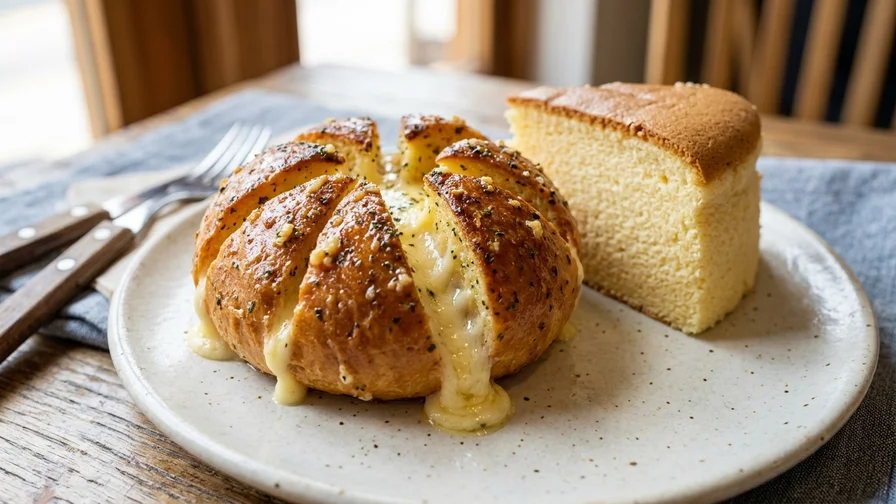
| Gangneung | Pain Famille 📍 | Six-clove garlic bread (4,000 won each) | A round bread scored in the shape of a garlic bulb, filled with garlic cream cheese and baked. The main shop is in Jumunjin (closed Thursdays), with branches at places like Gangneung Jungang Market. Popular items are limited to one box (5 pieces) per person. |
| Jeonju | Poongnyeon Bakery (PNB) 📍 | Handmade Choco Pie (2,300 won) | Founded in 1951. A hefty handmade choco pie, with cream and strawberry jam between chocolate-coated biscuits, is the standard souvenir from Jeonju Hanok Village. |
| Andong | Mammoth Bakery 📍 | Cream cheese bread (2,700 won) | A 50-plus-year-old institution in Andong. Chewy bread filled with rich cream cheese. It’s often grouped with Sungsimdang and Leesungdang as one of “Korea’s three great bakeries” (main shop 08:30–19:00, closed on Lunar New Year’s Day and Chuseok). |
The Two Great Institutions and How to Get There (as of June 2026)
- Sungsimdang main shop 📍 is at 15 Daejong-ro 480beon-gil, Jung-gu, Daejeon (Eunhaeng-dong). Open daily 08:00–22:00, year-round, about a 5-minute walk from Jungangno Station on Daejeon Subway Line 1. The shop started in 1956 when founder Lim Gil-sun, a refugee from Hamgyeong Province, sold steamed buns in front of Daejeon Station, and it still maintains its principle of never opening branches outside Daejeon. Twigim Soboro can only be bought in Daejeon.
- Sungsimdang Daejeon Station branch 📍 is on the 2nd floor of Daejeon Station. It runs 07:00–22:30 (subject to change on holidays, etc.; checking the official Instagram before visiting is recommended). Daejeon Station is about an hour from Seoul by KTX, so many travelers pick up just the Twigim Soboro during a train transfer. Even when the line is long, it tends to move quickly.
- Leesungdang main shop 📍 is at 177 Jungang-ro, Gunsan, North Jeolla Province. Open 08:00–21:30 (weekends until 22:00), with one or two irregular closures per month; closing dates are announced via monthly notices on the official Instagram @leesungdang_1945. Gunsan is about 2 hours 30 minutes from Seoul by express bus, and the red bean bread and vegetable bread draw the longest lines when fresh batches come out.
Exploring K-Bakery Culture: An Experience Beyond Simple Eating
In Korea, bread is becoming a travel theme that goes beyond the act of eating. There are many ways to enjoy it.
Bread Pilgrimage: Traveling for Bread
- “Ppangji-sunrye” (a blend of ppang, meaning bread, and sunrye, meaning pilgrimage) is a coined term referring to the food-travel trend of visiting famous bakeries across the country.
- Neighborhoods packed with bakery cafés, like Seongsu-dong and Yeonnam-dong in Seoul, are essential stops for bread lovers. It’s a culture of enjoying the space and atmosphere on top of the bread and coffee.
- Recommended routes and itineraries by city are compiled in the Korean bread pilgrimage.
Today’s Trends: Bagels and Salt Bread
- Bagels exploded so much that 2023 was called “the year of the bagel” (based on delivery data, searches rose 51% year over year and orders 176%). Shops like London Bagel Museum still have lines from the morning as of 2026.
- Salt bread is a buttery, fragrant bread that comes from Japanese shio-pan. After ranking second in Tous les Jours sales in 2023, it moved beyond a trend and settled in as an everyday menu item. The going rate is around 3,000 won each (as of June 2026).
- Unlike short-lived fads such as the croffle that cooled off within a year or two, these two have survived for several years as steady sellers, which sets them apart.
Baking Class Experiences
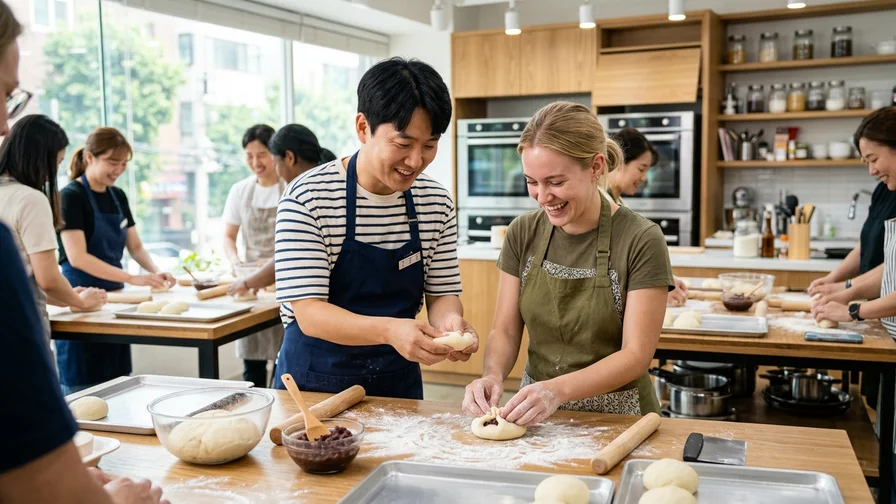
- Large cities such as Seoul offer one-day baking classes for foreign tourists, with programs to make red bean bread or K-style cakes yourself.
- Searching “Korean baking class” on activity booking platforms like Klook and GetYourGuide lets you check whether the class is conducted in English, read reviews, and make a reservation.
The Future of a Sustainable K-Bakery
As of 2026, the Korean bakery industry is evolving toward valuing health and values, going beyond flavor and style.
Vegan, Gluten-Free, and Rice Bread
- Bakeries that use plant-based ingredients instead of milk, butter, and eggs, or rice flour and almond flour instead of wheat flour, are on the rise.
- Rice-flour bread in particular is a distinctly Korean trend, where policy to revive rice consumption meets demand for gluten-free options. Just as Leesungdang’s red bean bread uses rice-flour dough, it already has roots in the old institutions. For a detailed look at the trend, see the rice-flour bread trend.
Community-Minded Local Bakeries
- Local bakeries that partner with regional farms and use that area’s produce as their main ingredients are drawing attention.
- Seasonal fruit tarts and signature breads made with local specialties contribute to the regional economy while giving travelers a flavor experience possible only in that place.
Korean bakery culture began with the unfamiliar “myeonpo” in Jeongdong in 1884, made the Japanese red bean bread its own, and has now come to the point of exporting “K-bread” back out to the world. If you’re planning to visit Korea, don’t hesitate to open the door of a bakery nearby. In the warmth of freshly baked bread, you’ll discover another appeal of Korean culture. Find more on Come On Korea.
More articles in this topic
- Korean Bread — How Tradition and Modern Tech Created Its Flavor
- Korean Danpatppang — From Nostalgic Treat to K-Dessert Icon
- Korea's Neighborhood Bakeries — The Stories Behind the Local Alley
- A Nationwide Tour of Korea's Most Famous Bakeries
- Rice Flour Bread — Korea's Healthier Take on the K-Bakery Trend