Korea’s Neighborhood Bakeries — The Stories Behind the Local Alley
목차
- Why People Love Neighborhood Bakeries: Spaces Built on Warmth and Memory
- Using Regional Specialties: Developing Signature Items Unique to Each Bakery
- Neighborhood Bakery vs. Franchise: Korea’s Unique Mutual-Growth Policy
- The Philosophy of Bakery Owners: Healthy Bread and the Value of Mutual Growth
- Three Long-Standing Neighborhood Bakeries You Can Visit in Seoul
- Sustainable Neighborhood Bakeries: Their Role in Revitalizing the Local Economy
Quick Summary
- Korea’s neighborhood bakeries are more than just shops; they have long served as gathering spots that neighbors drop by every day, with a culture of regulars and a tradition of sharing at their core.
- Many develop signature items using regional specialties such as Gangwon potatoes or Jeju hallabong citrus, supporting local farms and revitalizing alley commerce.
- Since 2013, Korea has run a policy limiting new openings by large corporate franchise bakeries (now a voluntary cooperation agreement, valid through August 2029), which is part of why independent bakeries have survived.
- In Seoul, long-running establishments like Taegeukdang (1946), Hyoja Bakery, and Richemont Bakery (1979) are still in operation (confirmed as of June 2026).
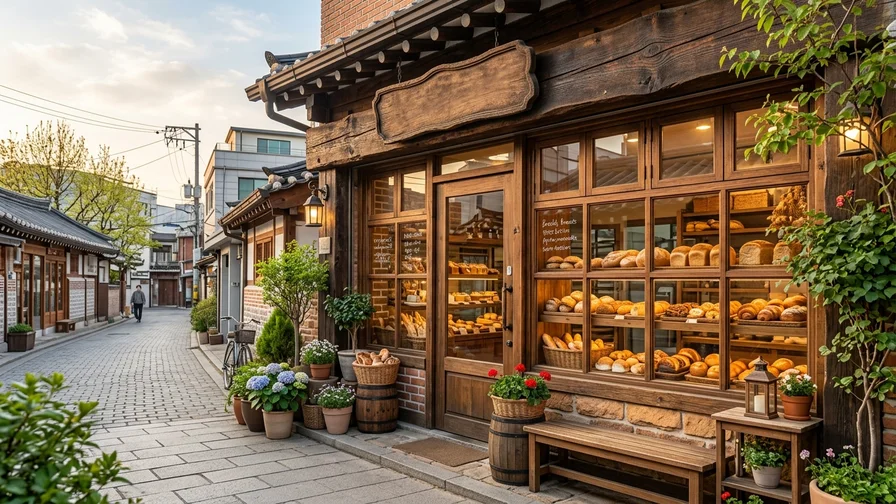
Whether you walk along a busy street in Seoul or down a quiet residential alley, the savory smell of fresh bread is bound to stop you in your tracks. Different from the flashiness of a big franchise, there is a humble but warm glow to the Korean neighborhood bakery. Korea’s bakery culture is drawing attention worldwide, and at its heart are these local shops that breathe in step with their communities. This article looks at how neighborhood bakeries became community hubs, and which verified shops travelers can actually visit. You can also refer to Korean bakery culture.
Why People Love Neighborhood Bakeries: Spaces Built on Warmth and Memory
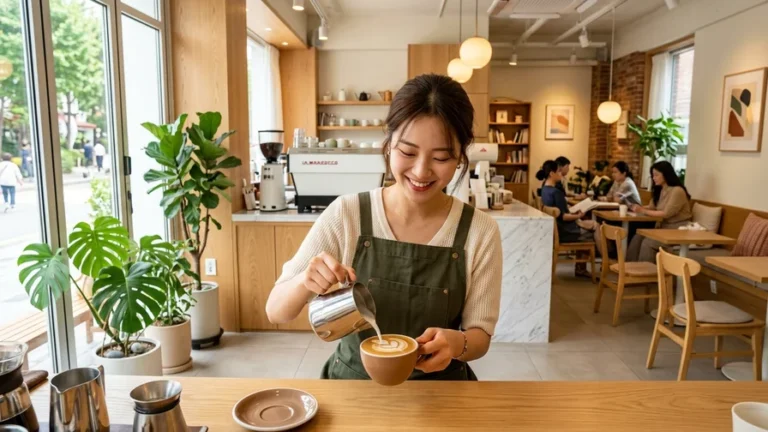
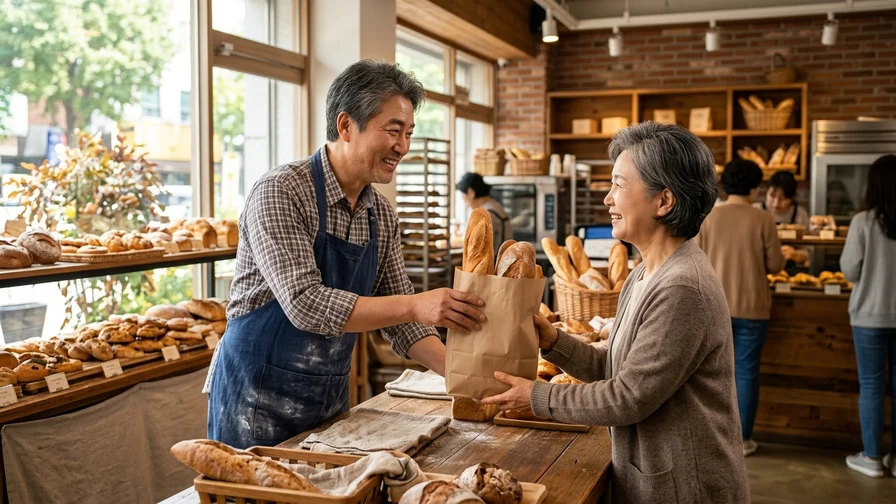
In a Korea filled with franchise bakeries, the secret to why neighborhood bakeries are consistently loved lies in “people” and “stories.” The elderly man who buys a loaf at the same time every morning, the couple ordering their child’s birthday cake, the kids stopping by for an after-school snack: the neighborhood bakery runs alongside these everyday lives.
Bread that Reflects Personal Taste
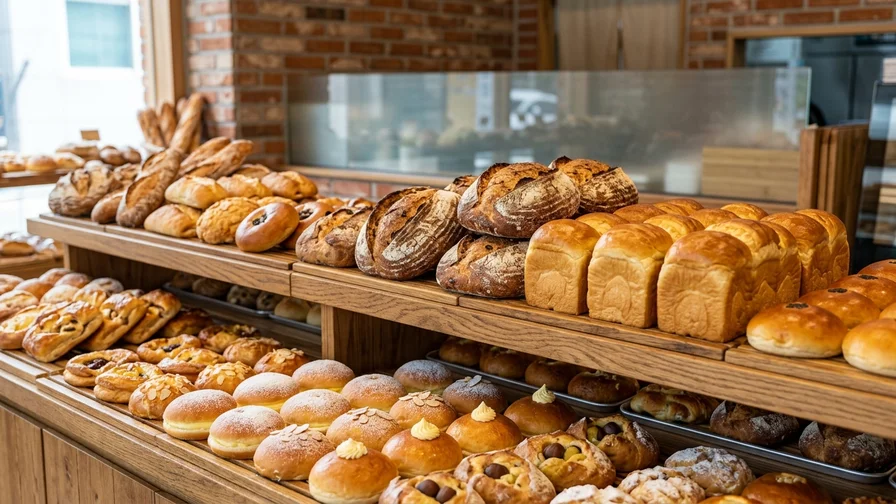
Unlike the standardized bread of a franchise, at a neighborhood bakery you can find bread that carries the owner’s personality and philosophy. Some shops will even accept personal requests like “just a little cream, please,” something only possible at a small shop that remembers a regular’s preferences. Even with a single danpatppang, the red bean bread Koreans love, the sweetness of the bean paste and the texture of the bread vary slightly from shop to shop, so many people swear their own neighborhood bakery makes the best one.
A Friendly Culture of Regulars
A big part of a neighborhood bakery’s appeal is the “culture of regulars.” The owner asks after the customer’s well-being, and the customer tastes the fresh bread and rests for a moment. There is still a culture of jeong (warm-hearted affection) where regulars get an extra piece of bread thrown in, though the atmosphere differs from shop to shop, so it is not a service you can expect everywhere. What is clear is that the older a neighborhood bakery is, the more it has functioned not merely as a place to spend money but as a point of contact where neighbors come to know one another’s faces.
Using Regional Specialties: Developing Signature Items Unique to Each Bakery
A key trend in Korean neighborhood bakeries lately is “local.” Many bakeries use specialties from their own region to create signature items you cannot taste anywhere else. It is a strategy that sharpens the bakery’s competitive edge while breathing energy into the local community.
Gangwon Potato Bread and Jeju Hallabong Bread
A leading example is the potato bread sold at the Gamjabat 📍 cafe in Chuncheon, Gangwon. With a shape that closely resembles a real potato and a chewy texture, it has become a nationwide attraction, using Gangwon’s signature potatoes as the main ingredient and putting the region’s identity right into the bread.
- It is located at 674 Sinsaembat-ro, Sinbuk-eup, Chuncheon-si, Gangwon State. It is about 8 km from Chuncheon Station, too far to walk, so a taxi (around 15 minutes) is the simplest option. For bus routes, it is best to check the Chuncheon city bus information system before setting out.
- It is open daily from 10:00 to 21:00, with last order at 20:30 (as of June 2026).
- The signature original potato bread is 3,300 won. The outside looks like a dirt-covered potato, but inside is a chewy bread filled with real potato mousse. Most foreigners seeing it for the first time mistake it for an actual potato.
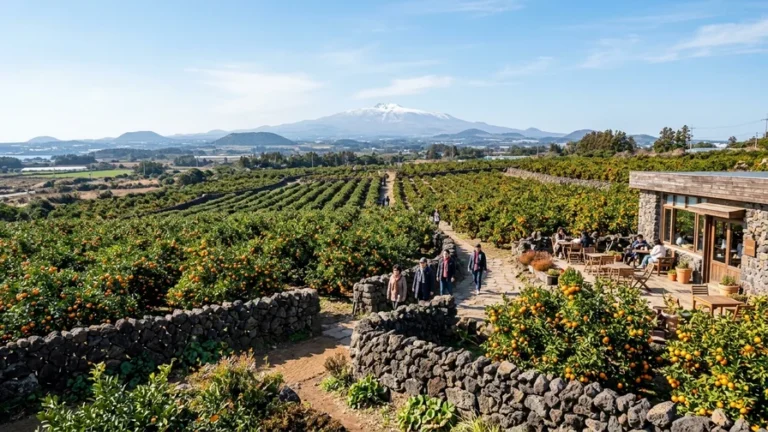
On Jeju Island, you can easily find bread and desserts made with hallabong citrus or Udo peanuts, offering travelers a culinary experience possible only in that region. Behind this kind of original menu development, the advancement of Korean baking techniques plays a big role.
A Model that Thrives Alongside Local Farms
Using regional specialties does not end with developing unique items. It is evolving into a “mutual-growth model” that provides a stable sales channel for local produce and helps boost farm incomes. The bakery receives fresh ingredients, the farm earns steady revenue, and the consumer enjoys healthy, delicious bread: a virtuous cycle.
Editor’s Tip
If you want to find a truly local bakery, take a look around a regional traditional market. Inside and around these markets you will find many bakeries that have held the same spot for decades. They may not be fancy, but you can discover flavors and stories known only to locals. Instead of opening a map and searching “bakery,” another good approach is to ask a local, “Where is the oldest bakery in this neighborhood?”
Neighborhood Bakery vs. Franchise: Korea’s Unique Mutual-Growth Policy
Walk along any street in Korea and you will see Paris Baguette and Tous les Jours signs everywhere, yet a big part of why neighborhood bakeries have survived is the role of policy. It is a small-business protection mechanism unique to Korea and unfamiliar to foreigners.
- In 2013, the Korea Commission for Corporate Partnership designated the bakery sector as a “suitable industry for small and medium businesses,” so corporate franchise bakeries cannot open new stores within a 500 m radius of a neighborhood bakery and can increase their total store count by no more than 2% of the previous year’s annually.
- In 2019, the mandatory designation ended and the system shifted to a “cooperation agreement” voluntarily made between large corporations and self-employed business associations.
- In August 2024, the agreement was extended for another five years, valid through August 2029, though the conditions were eased somewhat: the distance restriction in the greater Seoul area was reduced from 500 m to 400 m, and the new-opening cap was raised from 2% to 5% per year (as of June 2026).
- As a result, the number of Paris Baguette stores grew only about 6.5% over ten years, from 3,220 in 2013 to 3,428 in 2023, and Tous les Jours grew about 5% in the same period. In effect, while the outward growth of corporate bakeries was capped, distinctive neighborhood bakeries and bakery cafes grew by filling the gap.
The debate over this policy is still ongoing: the franchise industry argues it is reverse discrimination, while self-employed associations counter that more protection is needed. Either way, it is clear that Korea’s richly varied bakery ecosystem today was built on this balance.
The Philosophy of Bakery Owners: Healthy Bread and the Value of Mutual Growth
Long-lasting neighborhood bakeries have an owner with a steadfast philosophy. Rather than chasing profit alone, many place greater value on making healthy food and sharing it with neighbors.
The Same-Day Principle and “Baking Times”
Most neighborhood bakeries start their day before dawn. Many insist on dough they ferment themselves and good ingredients instead of factory dough, and the principle of “bread made today is sold only today” is a promise that keeps the trust between shop and customer. Two practical tips worth knowing as a traveler:
- Baking times differ by shop. Popular breads come out of the oven at set times several times a day, and that schedule is usually posted on a notice in the shop or on the bakery’s Instagram. If a specific bread is your goal, the most accurate way is to check the shop’s social media or call before visiting.
- Early closing when sold out is common. The more strictly a shop keeps the same-day principle, the more likely it is to simply close when bread runs out before evening. At older shops especially, the shelves are likely to be empty if you go late in the afternoon, so a morning to early-afternoon visit is recommended.
Sharing with Neighbors
Many bakeries practice sharing by donating leftover bread to neighbors in need or to welfare facilities. The most famous example is Sungsimdang 📍 in Daejeon. It began in 1956 as a small steamed-bun shop in front of Daejeon Station, and from its founding it has donated bread every day under the principle of “use up bread made today, and share whatever is left with neighbors.” This philosophy of sharing became the driving force that grew Sungsimdang into a company representing Daejeon, and it has inspired countless neighborhood bakeries. The main store is about a 5-minute walk from Jungangno Station on Daejeon Subway Line 1, and about a 15-minute walk from Daejeon Station.
Three Long-Standing Neighborhood Bakeries You Can Visit in Seoul
Going once beats hearing about it. Here are three neighborhood bakeries in Seoul that have held the same spot for decades and were confirmed to be operating as of June 2026. All three are within easy reach of tourist routes.
Taegeukdang (1946, Jangchung-dong)
Taegeukdang 📍 is often called the oldest bakery in Seoul. It opened in 1946, the year after Korea’s liberation, and has held its current Jangchung-dong location since 1974. With its chandeliers, old-fashioned signage, and classic display cases, the 1970s atmosphere remains intact, making the space itself worth seeing.
- It is right in front of Exit 2 of Dongguk University Station on Subway Line 3 (7 Dongho-ro 24-gil, Jung-gu, Seoul).
- It is open daily from 08:00 to 21:00 (as of June 2026).
- The monaka ice cream, made since 1947, is its signature: an old-style dessert with milk ice cream tucked between crisp wafer-like monaka shells. The apple jam roll cake and the palm-sized gobang castella are also flagship items.
Hyoja Bakery (Seochon, Tongin-dong)
In an alley of Seochon, west of Gyeongbokgung Palace and near Tongin Market, sits Hyoja Bakery 📍. A neighborhood bakery that has held its spot since the 1980s, it became famous as a regular haunt of nearby Blue House (the former presidential office) staff. Even in the middle of a tourist area, it thoroughly maintains the feel of a “neighborhood shop.”
- It is about a 10-minute walk from Exit 2 of Gyeongbokgung Station on Subway Line 3, heading toward Tongin Market (54 Pirundae-ro, Jongno-gu, Seoul).
- It is open Tuesday to Sunday from 08:00 to 20:20 and is closed on Mondays, with early closing when bread sells out (as of June 2026).
- Its cornbread is a round corn bread developed in-house, filled with a special sauce of corn, onion, and carrot mixed together. As a flagship item that sells hundreds a day, it is often gone by late afternoon.
Richemont Bakery (1979, Seongsan-dong)
Richemont Bakery Seongsan Main Store 📍 is reachable from the Hongdae area. An authentic confectionery house run across generations since it opened in 1979, it is known as the shop of a master craftsman of Korean confectionery.
- It is about a 15-minute walk from Hongik University Station on Subway Line 2 and the Airport Railroad (86 World Cup buk-ro, Mapo-gu, Seoul), and is also accessible by bus from Mangwon Station or Mapo-gu Office Station.
- It is open from 08:00 to 22:00 and is closed on Tuesdays (as of June 2026).
- The chestnut loaf, baked with whole sweetly-simmered chestnuts embedded in it, is a Korean bakery steady-seller and a Korean-style bakery item rarely seen abroad. The Gongju chestnut pie and the cream puff bread are also longtime favorites.
Sustainable Neighborhood Bakeries: Their Role in Revitalizing the Local Economy
The influence a single small neighborhood bakery has on its community is greater than you might think. Distinctive bakeries revive local economies and even play a part in reshaping a city’s landscape.
The Revival of Alley Commerce
When a distinctive neighborhood bakery spreads by word of mouth, a quiet alley that once saw little foot traffic starts to come alive. As visitors who came for the bakery also use the surrounding shops, the entire alley commercial district benefits. It is a sustainable urban-regeneration model where a community creates an attractive space on its own, without large-scale capital.
The “Bakery Pilgrimage” that Draws Tourists
The “bakery pilgrimage” (bread + pilgrimage), a journey in search of famous bakeries across the country, has become a firmly established travel trend in Korea. As more travelers go all the way to distant cities just to eat one particular bread, neighborhood bakeries have become important tourism resources. Two leading pilgrimage spots (as of June 2026):
- PNB Pungnyeon Bakery 📍 (Jeonju, 1951) is known for its handmade choco pie, a substantial dessert filled with strawberry jam and fresh cream instead of marshmallow and coated in chocolate, completely different from the factory version. The main store is at 180 Paldal-ro, Wansan-gu, Jeonju, about a 10-minute walk from the Hanok Village, open daily from 08:00 to 22:00.
- Lee Sung Dang 📍 (Gunsan, 1945) is the oldest bakery in Korea. Its two signature items are danpatppang (red bean bread) and yachaeppang (vegetable bread), the latter being a Korean-style fried-bread filled with finely chopped vegetables tossed in mayonnaise sauce. Open daily from 08:00 to 21:30, about a 15-minute taxi ride from Gunsan Station.
If you want to seriously tour the signature bakeries of each city, check out the regional courses in the nationwide bakery pilgrimage. A single well-grown neighborhood bakery is raising a region’s brand value and creating new tourism demand.
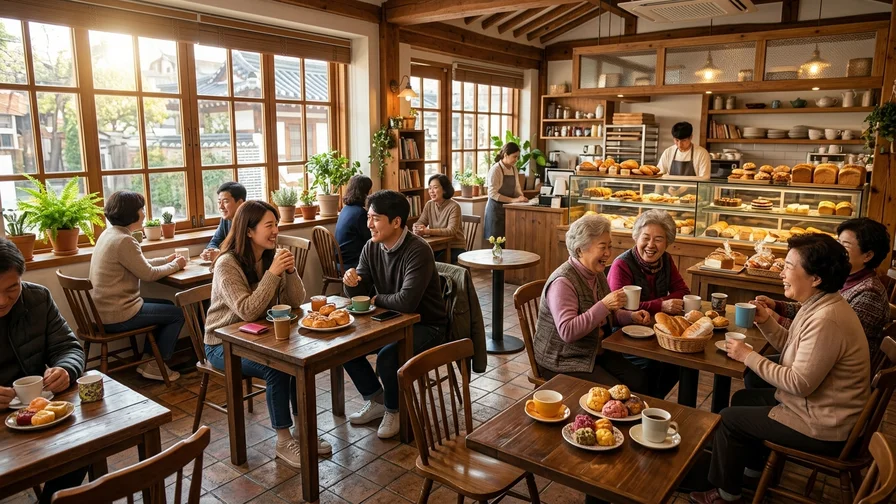
The Korean neighborhood bakery is now evolving into a space that sells not just the taste of bread but warm relationships and local value. If you travel to Korea, try stopping by a small bakery near your accommodation instead of a big franchise; you may feel Korea’s “jeong,” warmer than the bread itself. When looking for a hidden bakery, the safe approach is to search “bakery” on a map app and then check whether there are recent-dated reviews to confirm it is still open, since smaller shops close and relocate more often. For a broader look at everything about K-bakery, check out Korean bakery culture.