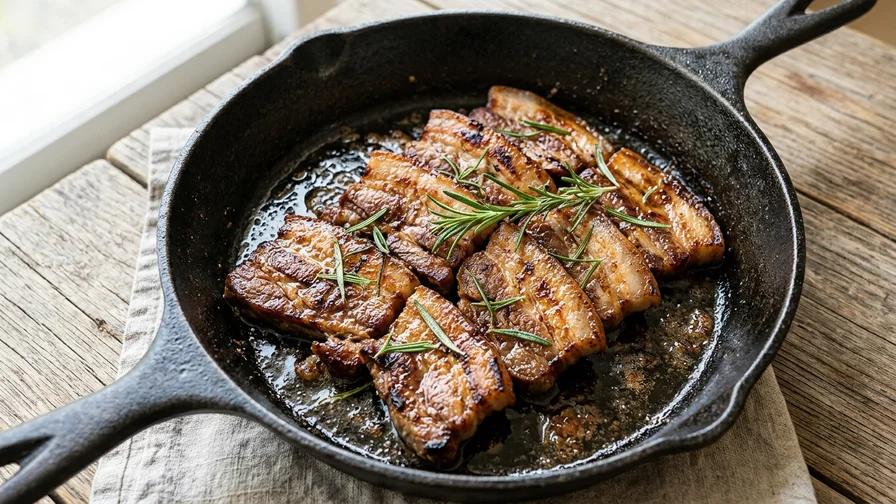
How to Pick Real Jeju Black Pork and 7 Steps to Eat It Right
목차
- The Essentials
- What Makes Jeju Black Pork Different? The Secret Behind the Flavor
- Which Cut to Choose: Ogyeopsal and Pork Neck
- How to Eat It Properly with Meljeot
- Where to Eat: The Best Jeju Black Pork Belly Restaurants and Black Pork Street
- Pricing and Reservation Tips
- A Guide to Buying Top-Grade Black Pork: From Markets to Butcher Shops
- Exploring Jeju Black Pork Meal Kits and Processed Foods
- Recommended Black Pork Gifts and Shipping Tips
- Frequently Asked Questions
The first meal that comes to mind the moment you land in Jeju is, without a doubt, Jeju Black Pork Belly (제주 흑돼지 오겹살, Jeju heukdwaeji ogyeopsal). Taking a single bite of a thick-cut piece of grilled Five-layer Pork Belly (오겹살, ogyeopsal) dipped deep into bubbling Salted Anchovy Dip (멜젓, meljeot) (a salty anchovy dipping sauce) is the moment it truly feels like you’ve arrived in Jeju. But once you’re actually here, there are so many restaurants that it’s easy to feel lost about where to go, how to order, and how to eat it properly. This single guide has you covered — from how to choose your cut to the order in which to dip into Salted Anchovy Dip, plus Black Pork Street 📍, restaurants by region, pricing and reservation tips, and even how to take some home — so first-timers to Jeju Black Pork Belly can enjoy it without a single misstep.
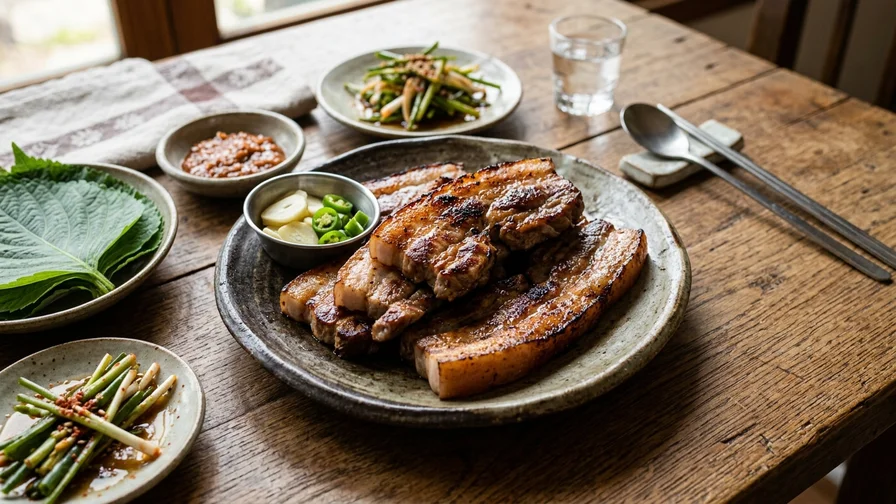
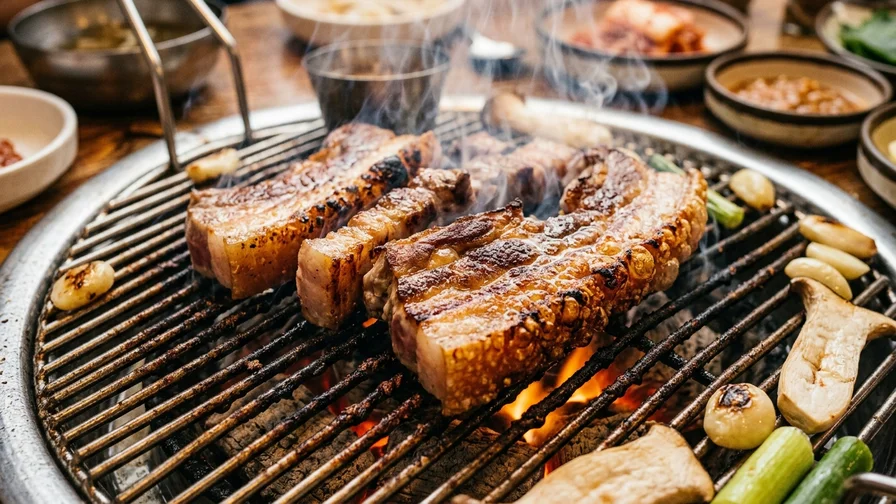
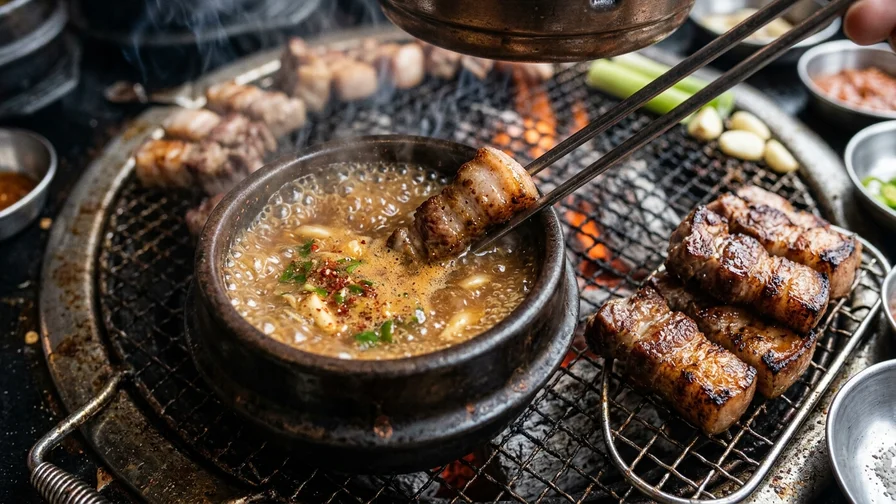
On Jeju, even a single bite of pork carries the island’s history and the scent of the sea.
The Essentials
- Jeju black pork isn’t grilled as plain pork belly but as Five-layer Pork Belly with the skin still on — and that chewy skin and rich, nutty aroma are the whole point.
- You dip the thick-cut, grilled meat into bubbling Salted Anchovy Dip and finish the meal with kimchi stew — that’s the Jeju way.
- One serving of Five-layer Pork Belly (about 200g) runs around 20,000 won (roughly $15–18), and charcoal- or briquette-grill specialists can reach about 23,000 won per person (roughly $20) (as of writing; prices may change).
What Makes Jeju Black Pork Different? The Secret Behind the Flavor
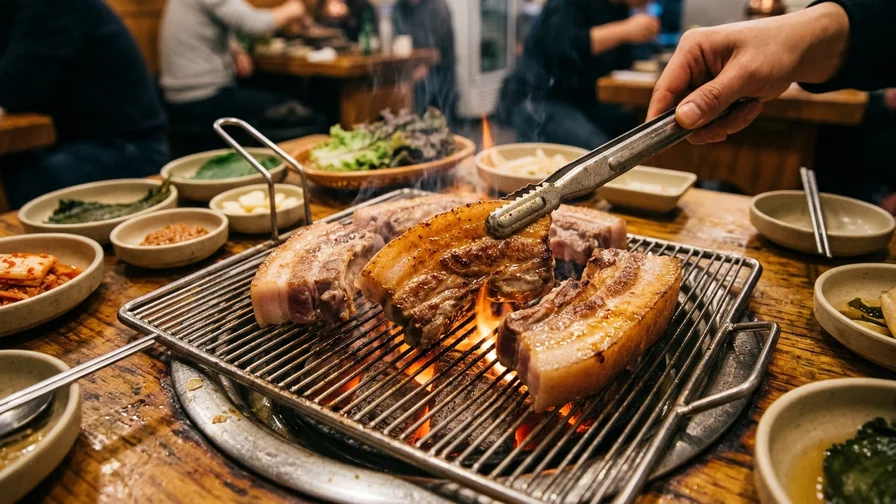
The biggest difference between mainland pork belly and Jeju Black Pork Belly is the skin. Black pork is grilled with the skin still attached, making it “ogyeopsal,” which means “five layers.” Just one bite of well-grilled skin reveals a wonderfully chewy texture. Because the fat has a high melting point, it doesn’t burn easily even over high heat, and a deep, nutty aroma rises up as it grills.
People often mistakenly assume that “Jeju black pork is a special breed in itself,” but the black pork sold in restaurants and butcher shops is usually an improved black pig crossbred with breeds like Berkshire or Duroc. It’s different from the pure native breed that’s protected and raised as a natural monument. So rather than reading too much into phrases like “purebred native pig,” it’s enough to simply check for the “Jeju-grown” label on the menu and the origin labeling. Jeju black pork is raised in modern facilities in a clean environment, and it shows its true worth when cut thick and grilled over charcoal.
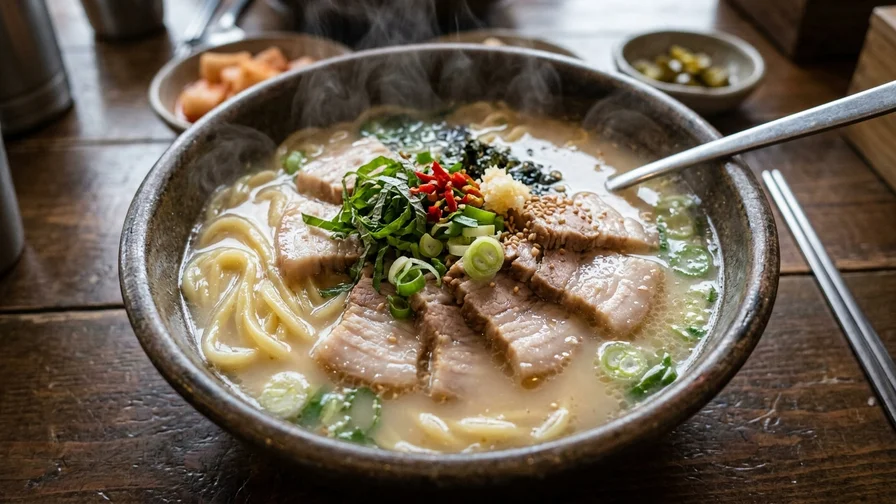
This deep flavor is also tied to the food culture of Jeju’s people. In the old days, families on Jeju raised pigs within the traditional “dottongsi” (a combined pigsty-and-toilet) culture, and pork was a prized ingredient that never missed a feast or a major occasion. That rich, nutty flavor carries straight into soups as well — you can feel the power of black pork in the deep broth of Jeju soul foods like Jeju Pork Noodle Soup (고기국수, gogi-guksu) (pork noodle soup).
Local Tip
At ogyeopsal grill specialists, the staff often grill the thick cuts of meat for you. The key tip here is to wait until the skin turns golden brown and takes on a caramel-like, chewy texture. This is widely known to be the moment when ogyeopsal is at its most delicious.
Which Cut to Choose: Ogyeopsal and Pork Neck
When you visit a Jeju black pork specialist, the unfamiliar cut names can be a little confusing, but for grilling you only need to remember two. The first is ogyeopsal, pork belly with the skin still on. With layers of fat and lean meat woven together, plus the chewiness of the skin, it’s the very essence of Jeju black pork belly. The second is Pork Shoulder (목살, moksal) (pork neck), which is leaner and more tender — a great fit for anyone who finds rich, fatty meat too heavy.
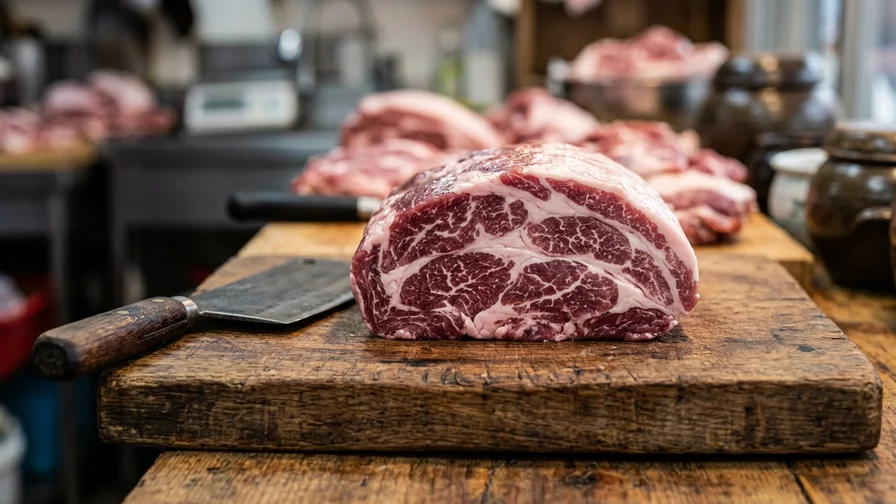
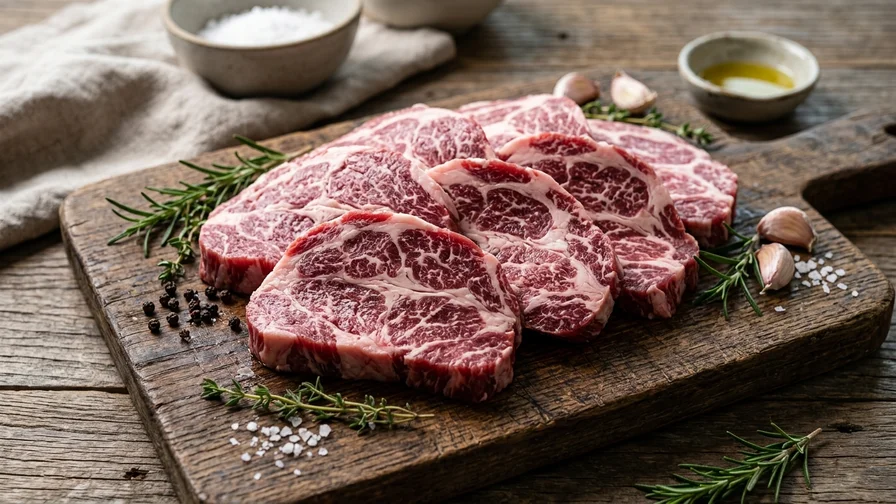
Beyond those, Pork Collar Cut (가브리살, gabeurisal) (pork collar) and Pork Jowl (항정살, hangjeongsal) (pork jowl) are also delicacies. Pork Collar Cut is a tender cut between the Pork Shoulder and the loin, so it practically melts in your mouth, while Pork Jowl comes from the pork jowl and has an appealingly springy texture. If it’s your first time, I recommend ordering ogyeopsal and Pork Shoulder together and comparing them. When ordering, saying “Ogyeopsal i-inbun juseyo” (two servings of ogyeopsal, please) works, and at places that sell by 100g, saying “100g-ssik juseyo” makes it easy to adjust portions. Among some famous old establishments, there are places that only sell by the “geun” — a unit meaning 600g — rather than by individual serving. For two people, “Heuk-dwaeji han-geun juseyo” (one geun of black pork, please) is a good starting point.
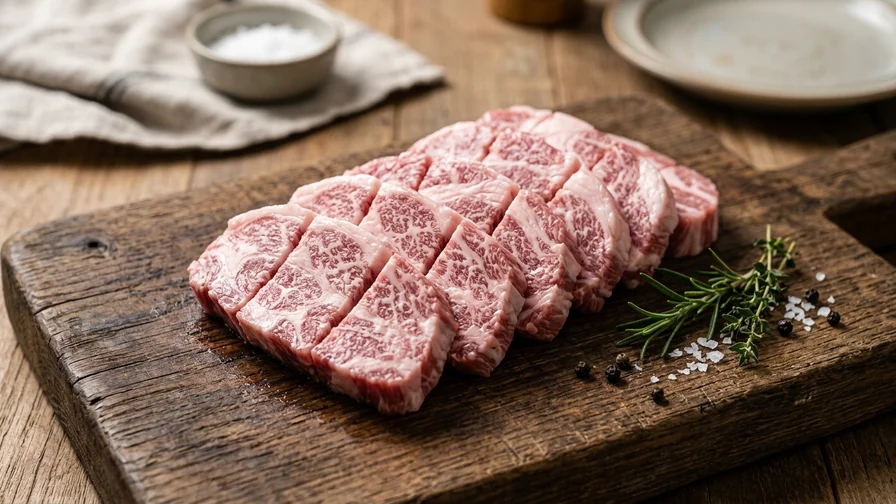
Cultural Tip: It’s important to know that most Korean BBQ restaurants have a minimum order rule. Typically, your group will be expected to order at least one serving of meat per person. For example, a party of two should order a minimum of two servings. This is a standard practice in Korea, so it’s a good idea to confirm when ordering.
How to Eat It Properly with Meljeot
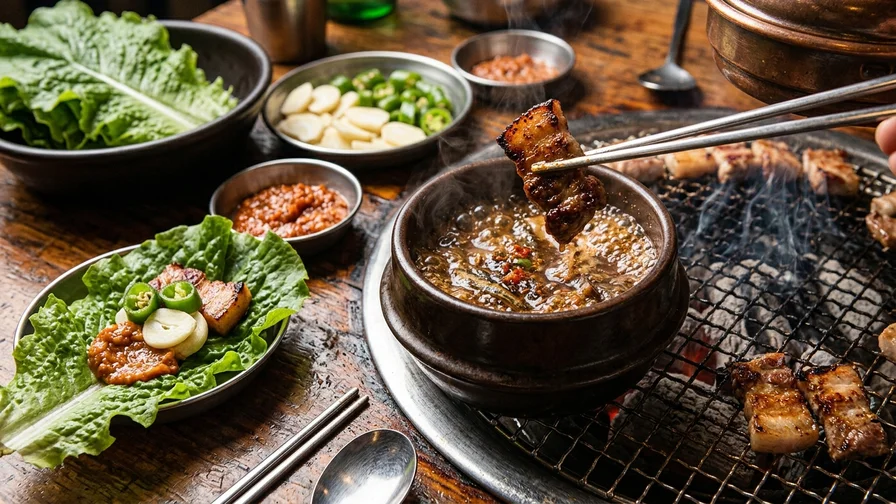
The crowning touch of Jeju black pork belly is meljeot. Meljeot is the Jeju word for fermented anchovy sauce, and it’s served bubbling away in a small dish or on one side of the grill. It’s salty and intensely savory, so when you dip the thick-cut, grilled meat right in, the saltiness and nutty richness come together beautifully. The aroma may feel strong at first, but this fermented umami is the heart of Jeju-style ogyeopsal, so be sure to give it a try at least once.
Here’s how to eat it like a local. (1) While the staff grills the meat for you, there’s no need to pick up the tongs — just wait. Many Jeju meat specialists have the staff grill and cut the meat with scissors for you (though some are self-grill). (2) Once the skin turns chewy and the meat is golden, pick up a piece and dip it into the bubbling meljeot. (3) Place the meat on a lettuce or perilla leaf with ssamjang, garlic, and Seasoned Scallion Salad (파절이, pajeori) (seasoned scallion salad), then wrap it all into one bite as a Lettuce Wraps (쌈, ssam) (lettuce wrap). (4) To finish, polish off a bowl of rice with a kimchi stew loaded with plenty of pork, and you’re set. That said, the kimchi in kimchi stew often contains saeu-jeot (fermented shrimp). If you have a shellfish allergy to things like shrimp or crab, be sure to confirm before ordering by asking, “I kimchi-e saeu-jeot deureoganayo?” (Does this kimchi have fermented shrimp in it?)
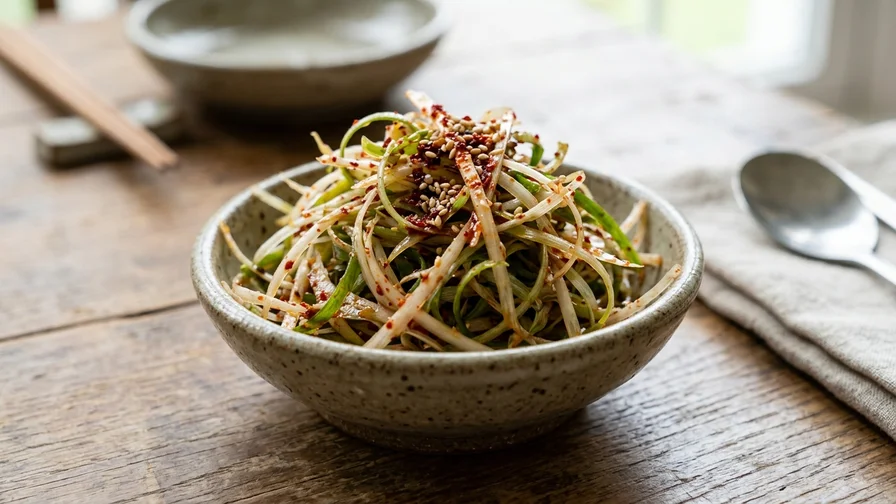
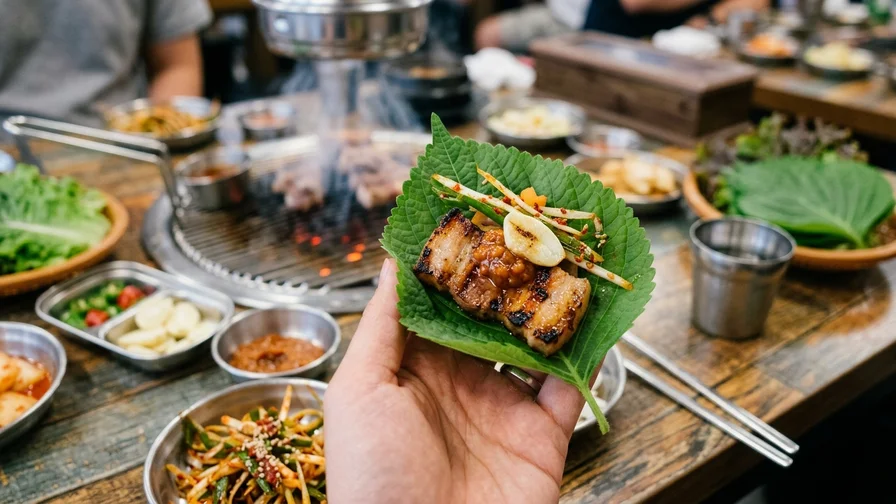
For a drink to cut through the richness of the meat, local Jeju beverages pair wonderfully. A glass of Hallasan soju or a crisp Jeju wit ale are the classic choices. If soju feels like too much, beer or makgeolli are also great options. Of course, alcohol is entirely optional — sparkling water alone is plenty to enjoy the meal.
One note: since meljeot is a fermented anchovy sauce, anyone with a fish allergy should be careful. You can also enjoy the meat with salt or ssamjang instead of meljeot — just ask the staff. Also, black pork is 100% pork, so it won’t suit those who avoid pork for religious or dietary reasons. Please keep that in mind.
Safety Note on Cross-Contamination: For those with a pork allergy or who avoid pork for religious (e.g., Halal, Kosher) or personal beliefs, please be aware that Korean BBQ, where all food is cooked on a communal grill, presents a high risk of cross-contamination. Grilling vegetables or other items on the same surface while your party cooks pork may not be safe. We recommend contacting the restaurant in advance to ask if separate cooking tools or spaces can be provided, or choosing an alternative dish.
Worth Knowing
If the meljeot feels too salty, try asking them to add a little chopped Cheongyang chili pepper or minced garlic while it’s bubbling. The spicy aroma rounds out the saltiness nicely. And for that final kimchi stew, rather than mixing it into your rice, the real way is to spoon up the broth and eat it together with the meat.
Where to Eat: The Best Jeju Black Pork Belly Restaurants and Black Pork Street
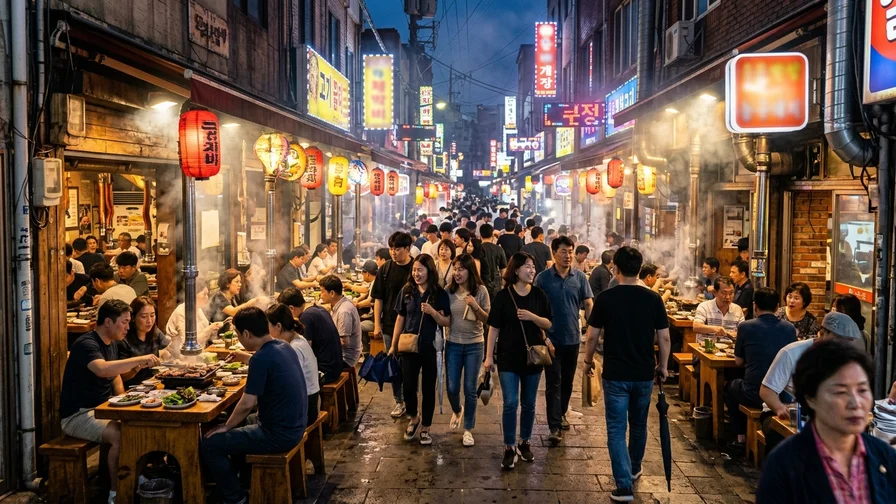
Jeju is famous for its Black Pork Street. The restaurants cluster around the alleys near Tapdong Plaza and Chilseong-ro in Ildo 1-dong, Jeju City. That said, the best Jeju black pork restaurants aren’t only on this street — they’re scattered all over the island in areas like Nohyeong, Yeon-dong, and Aewol, so it’s best to choose one that fits your itinerary. Below, we’ll introduce a few vetted restaurants along with their locations (hours and prices may change, so check Google Maps before visiting).
Donsadon 📍 — A popular black pork specialist at 3086-3 Nohyeong-dong, Jeju City. The signature dishes are thick-grilled ogyeopsal and pork neck. Evenings can mean long waits, so we recommend going right after opening or for an early dinner. Nohyeong-dong is a short drive from Jeju Airport and easy to reach with the Kakao T taxi app.
Heukdwaejiga Inneun Punggyeong 📍 — Located at 7-8 Jingunnam 4-gil, in the Yeon-dong area, it’s easy to get to from the bustling New Jeju district. Its signature dish is ogyeopsal with that chewy skin fully intact, and the clean, tidy atmosphere makes it a comfortable choice for families too.
Donhyanggi 📍 — Located at 30 Gwandeok-ro 15-gil, Geonip-dong, Jeju City. Geonip-dong is close to Jeju Harbor and Dongmun Market, making it a great stop for a meal after browsing the market. The nutty aroma of charcoal-grilled ogyeopsal is its charm.
Montrak 📍 — At 1388-3 Geonip-dong, Jeju City, it’s in the same Geonip-dong area as Donhyanggi, so it’s easy to pair with a harbor-side itinerary. You can enjoy thick-cut black pork in a casual atmosphere that’s great for going out with friends.
Childonga 📍 — Located at 7779 Iljuseo-ro, Jeju City. It’s known for ogyeopsal richly infused with the aroma of briquette or charcoal grilling, and its strength is a menu set up so you can compare cuts side by side.
Hwarosanghoe 📍 — Located on the first floor of 74 Wollang-ro, Jeju City. With a grill-it-yourself-over-the-brazier style, it suits anyone looking for ogyeopsal with a real char-grilled flavor. Being on the ground floor makes it easy to access, too.
Dottori-heukdwaeji 📍 — Located at 1258 Gueom-ri, Aewol-eup, Jeju City, it pairs perfectly with a drive along the Aewol coast. Public transit in Aewol is a bit inconvenient, so we recommend a rental car (foreigners need an International Driving Permit; it can’t be issued after arriving in Korea, so prepare it in your home country before departure) or a taxi. It’s a good match for anyone who wants to enjoy black pork in a quiet setting.
One travel tip. Kakao T, the taxi app widely used in Korea, often requires a Korean phone number and a domestically issued card to sign up and pay, making it hard for short-term foreign travelers to use. Instead, if you flag down an empty taxi on the street, most accept card payment, and you can also call a taxi in Jeju through global ride-hailing apps (like Uber).
Getting to Black Pork Street isn’t hard. From Jeju International Airport to Black Pork Street (the Tapdong and Chilseong-ro area) is about 10–15 minutes by taxi, costing roughly 6,000–9,000 won (about $5–7) (transit cards and card payment accepted). For the exact real-time route, searching “Jeju Airport → Black Pork Street” on Naver Map or Google Maps will show bus numbers and intervals together. If you’re taking a city bus, entering your starting point the same way to check the real-time route is the most accurate approach.
Street stalls in traditional markets and long-running old establishments not infrequently accept only cash or ask for a bank transfer, so it’s safe to keep a little cash on hand. Some places don’t have English menus, so using Google Translate or the menu photos on Google Maps makes ordering much smoother. Modern restaurants and franchises mostly accept cards and mobile payments, so prepare accordingly.
Pricing and Reservation Tips
The price range for Jeju black pork belly is generally around 20,000 won (roughly $15–18) for one serving of ogyeopsal (about 200g). Charcoal- or briquette-grill specialists can climb to about 23,000 won per person (roughly $20). Some places let you order by 100g (in the 6,000–7,000 won range, about $5–6), which is handy when you want to compare cuts in smaller amounts. Keep in mind these figures are as of writing and can change by season and venue, so it’s wise to confirm before visiting.
- Some popular spots don’t take reservations, so evening waits can be long. Aiming for right after opening or an early dinner (5–6 p.m.) means shorter waits.
- For 2–4 people, it’s good to order a serving each of ogyeopsal and pork neck to compare the flavors of different cuts.
- For finishing dishes like kimchi stew or soybean paste stew, ordering just 1–2 to match your group size is plenty.
- When the line is long, a realistic move is to take a number ticket and wait at a nearby café, or to aim for a weekday evening.
A Guide to Buying Top-Grade Black Pork: From Markets to Butcher Shops
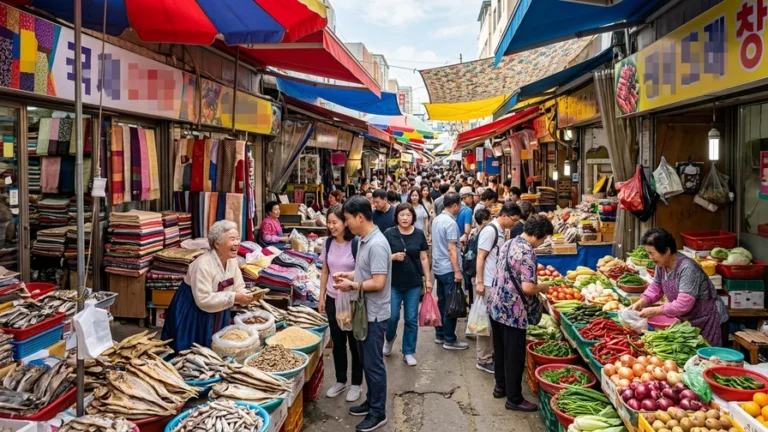
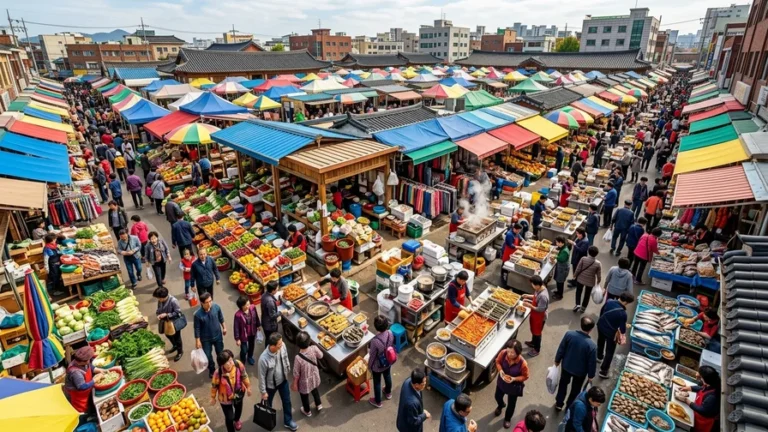
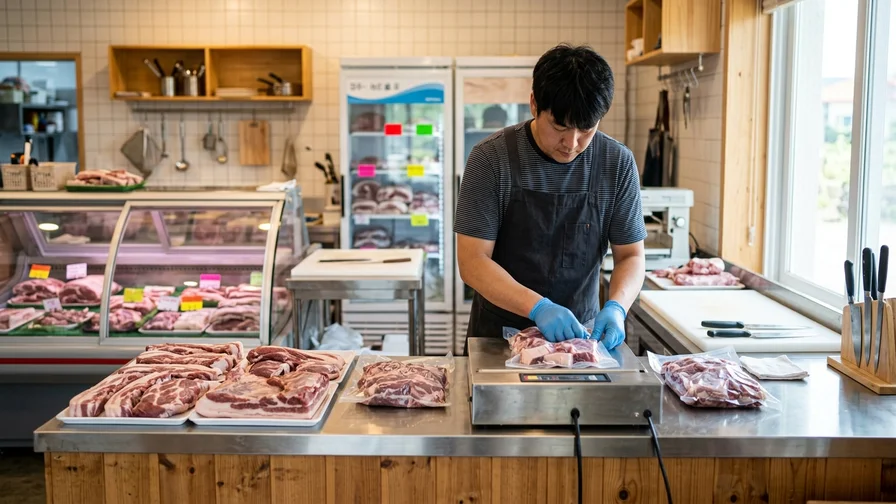
If you want to buy Jeju black pork belly and grill it yourself at your accommodation, it helps to know where to get fresh meat. The most accessible spot is Dongmun Market. As Jeju’s signature traditional market in Ildo 1-dong, Jeju City, you can buy fresh black pork ogyeopsal and pork neck by the cut at its butcher section. Many market stalls are cash-focused, so prepare cash, and if English is difficult, you can just point to the cut with a photo or your finger.
The tips for picking good meat are simple. For ogyeopsal, it looks best when the lean and fat layers are clearly distinct and the skin is smooth. Rather than meat that’s overly dark or soaking wet, a vivid pinkish-red color with a surface that’s just moist is fresh. Checking for the “Jeju-grown” origin label at a butcher shop or market is reassuring. It’s hard to point to a certification mark and declare “if you see this, it’s definitely the real thing,” so checking for the Jeju-grown label on the menu and origin labeling is enough.
When buying, asking “Jingong pojang haejuseyo” (please vacuum-seal it) helps preserve freshness during transport, and it’s good to ask for an ice pack too. That said, this fresh meat is meant for domestic transport — like grilling it at your Jeju accommodation. Most countries treat raw meat and vacuum-sealed meat as quarantine items and prohibit bringing them in, so if you’re planning to take some home, it’s safer to consider the processed souvenirs in the next section.
Exploring Jeju Black Pork Meal Kits and Processed Foods
If you want to recreate the taste of Jeju black pork belly at home, meal kits and processed foods are the answer. These days, you can find a variety of products — ogyeopsal meal kits that come with seasonings and meljeot sauce, black pork sausages, black pork jerky, black pork tteok-galbi (grilled patties), and more. Many are shelf-stable or delivered refrigerated, making them a great way to recall the taste of Jeju even after your trip.
These processed foods are easy to buy from official online shops that gather Jeju’s agricultural, livestock, and seafood products. That said, the exact seller URLs can change over time, so we recommend confirming a verified official channel before using it. You can also see and choose black pork processed foods in person at Dongmun Market or at specialty-product shops near the airport. Processed meats like sausages and jerky are often restricted from being brought on international flights too, so if you plan to take them home, check the quarantine regulations of your country before departure.
If you’d like to learn more about the rich flavor of Jeju black pork, comparing the various processed foods made from Jeju-grown black pork — raised in modern facilities in a clean environment — can be a fun pursuit too.
Recommended Black Pork Gifts and Shipping Tips
If you want to gift the taste of Jeju to someone special, processed souvenirs are the realistic choice. Raw meat and vacuum-sealed fresh meat face tricky international shipping and quarantine, but shelf-stable processed goods have a higher chance of clearing customs. Products like black pork jerky, black pork sausages (refrigerated), seasoned retort-pouch items, and black pork canned goods make for safe gift choices.
If you’re sending to someone within Korea, it’s also possible to ship fresh meat and meal kits by refrigerated or frozen courier. In that case, the key is to pack plenty of ice packs and choose fast delivery. However, to send to someone living abroad, most countries restrict bringing in meat and processed livestock products, so it’s safer to check the recipient country’s quarantine regulations first. It’s common for shipments blocked at customs to end up discarded.
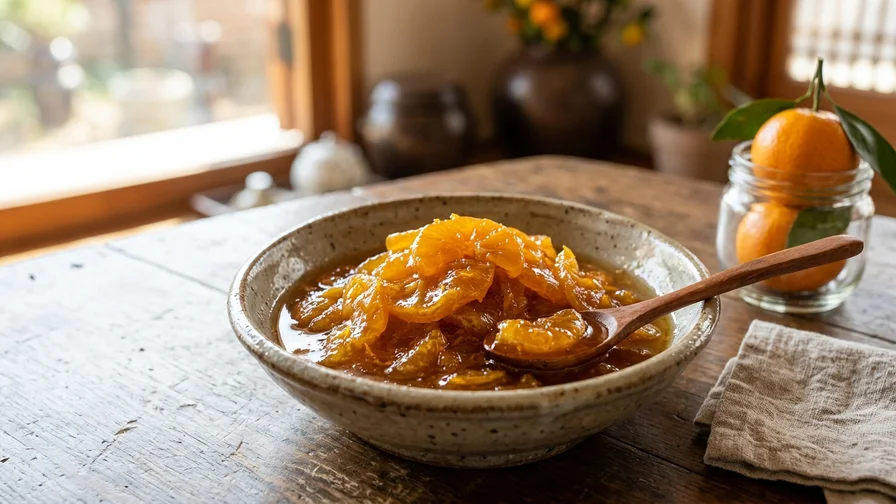
Keep some gift-wrapping tips in mind, too. For refrigerated products, schedule delivery for a date when the recipient can receive it right away, and for shelf-stable processed goods, bundling them with other Jeju specialty souvenirs like Jeju Tangerine Syrup (감귤청, gamgyul-cheong) (tangerine syrup) or chocolate makes for a lovely gift set. Adding a small souvenir with the scent of Jeju next to the black pork products lets the recipient feel the atmosphere of a Jeju trip too.
Frequently Asked Questions
How is Jeju black pork belly different from regular pork belly?
The biggest difference is the skin. Ogyeopsal is grilled with the skin still on, adding a chewy texture, and its higher fat melting point means it doesn’t burn easily while delivering a deep, nutty aroma. Regular pork belly often has the skin removed.
Do I have to eat the meljeot?
Meljeot is the heart of Jeju-style ogyeopsal, so it’s well worth trying at least once. It’s a fermented anchovy sauce so the aroma can be strong, but when you dip the meat into meljeot that’s been simmered for umami, the salty-savory and nutty flavors are fantastic. If you have a fish allergy, you can substitute salt or ssamjang.
Can I just walk in without a reservation?
Some popular spots don’t take reservations, so evening waits can be long. Aiming for right after opening or an early dinner means shorter lines. Many places are walk-in by default, so it’s best to visit with some time to spare.
Can I take black pork home to my country?
Most countries treat raw meat, vacuum-sealed meat, and processed meat products as quarantine items and prohibit or restrict bringing them in. Buying fresh meat is meant for domestic use — like grilling it at your Jeju accommodation — and for gifts, it’s safer to consider shelf-stable processed souvenirs.
Take the appeal of Jeju black pork belly you’ve learned today and experience a thick, juicy piece dipped in meljeot for yourself on your next Jeju trip. If you save the locations of the restaurants you want to visit on Google Maps and check their hours before you go, even a first-time route will feel a lot more reassuring.
Related Articles Worth Reading
- Jeju Local Food Roadmap, 9 Flavors from Black Pork to the Haenyeo Table
- How to Eat Jeju Gogi Guksu, the Island's Soul-Food Pork Noodle Soup
- How to Enjoy Jeju Mulhoe, Jari-mulhoe and Hanchi-mulhoe
- How to Find and Savor a Jeju Haenyeo Meal Set by the Sea
- Jeju Omegisul Brewing, Tasting Foxtail-Millet Traditional Liquor
- Jeju Abalone Dishes and 6 Top Spots, Eaten Like a Local
- Jeju Tangerine and Hallabong, Orchard Cafes and Tangerine Picking
- Enjoy Jeju Cutlassfish Like a Local, Galchi-jorim and Galchit-guk
- 8 Must-Try Bites at Jeju Dongmun Market's Night Market
📍 Locations verified — The 8 places featured in this guide were confirmed on Google Maps for their real location and address (Donsadon (Main Branch), 흑돼지가 있는 풍경, Black Pork Street, Donhyanggi, 몬트락, 칠돈가 and 2 more). Hours and details can change, so check before you visit.