8 Must-Try Bites at Jeju Dongmun Market’s Night Market
목차
In Short
- Dongmun Traditional Market 📍 opened right after Korea’s 1945 liberation and is Jeju’s largest and oldest permanent market, with the street food scene buzzing most from late afternoon into the night.
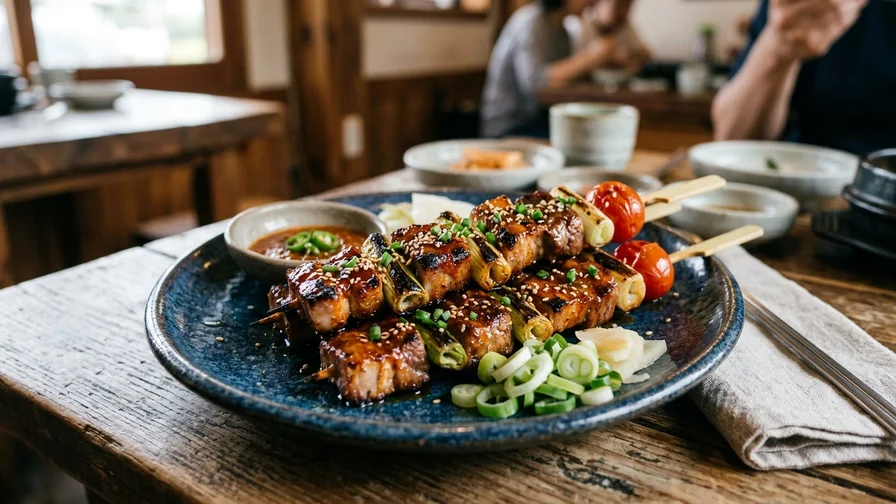
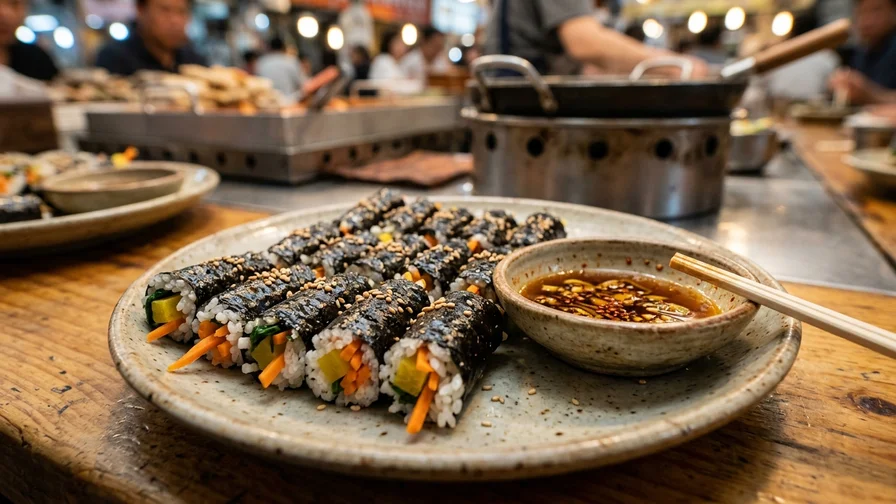
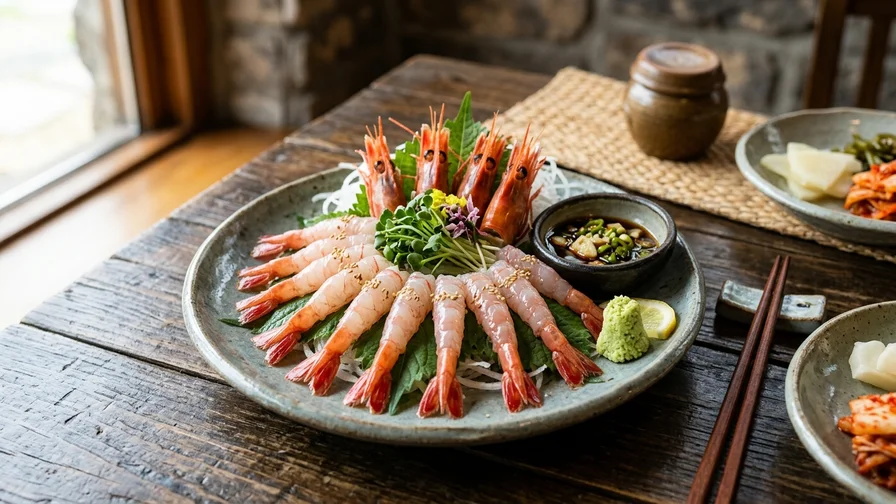
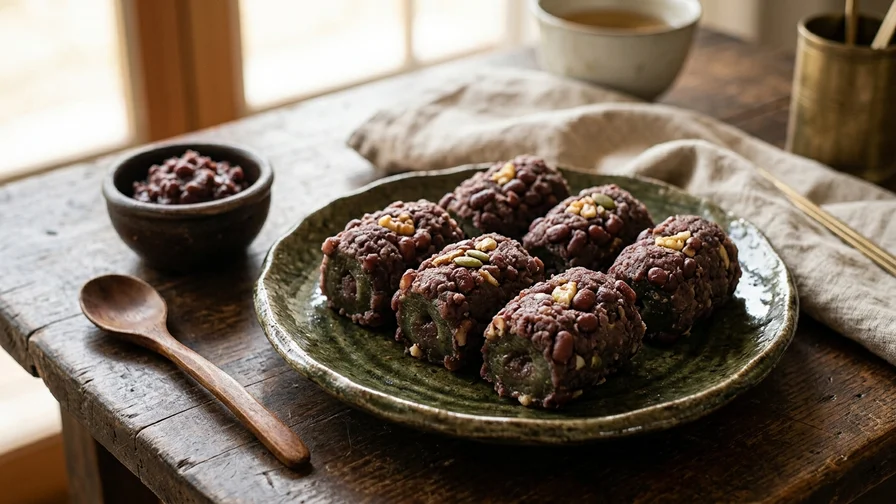
- Jeju Dongmun Market street food like Black Pork Skewer (흑돼지 꼬치, heukdwaeji-kkochi), Mini Seaweed Rice Rolls (마약김밥, mayak-gimbap), Raw Sweet Shrimp (딱새우회, ttaksaeu-hoe), and Omegi Rice Cake (오메기떡, omegi-tteok) are all gathered in one place, so a single loop lets you taste the flavors of Jeju.
- Many small stalls take cash only, so bring Korean won in cash, and since English menus are rare, it’s easiest to just point at the food on display to order.
- If you follow a vegetarian, halal, or kosher diet, street food often mixes in meat, seafood, or pork fat, so ask “Does this contain meat or seafood?” and also check whether pork is handled with the same utensils.
If you could eat at just one spot on a Jeju trip, I’d recommend Dongmun Traditional Market 📍. Jeju Dongmun Market street food packs the island’s flavors—from black pork to fresh seafood—into a single alley. The highlight is the night market that unfolds around Gate 8 at dusk, where the smell of sizzling oil and the lively crowds whet every visitor’s appetite. So that even first-time foreign visitors won’t get lost, we’ve put together 8 must-try foods, tips for enjoying the night market, how to get there, and payment advice.
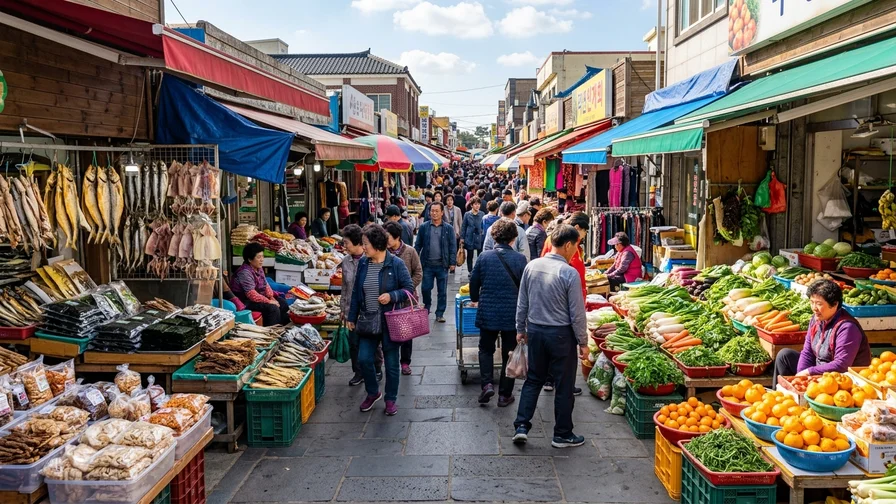
The Story of Dongmun Market, Jeju’s Largest Traditional Market
Dongmun Traditional Market 📍 opened right after Korea’s 1945 liberation and is the oldest permanent market on Jeju. Right next door is Dongmun Fish Market 📍, brimming with live fish, cutlassfish, and tilefish, so the two markets effectively flow together into one giant food complex. It sits in the old downtown of Jeju City (Dongmun-ro 4-gil, Gwandeok-ro), about a 15-minute drive from Jeju International Airport and roughly a 10-minute walk from the seaside hotels.
The permanent market opens daily from around 8 a.m. until 8–9 p.m. (subject to change; confirm before visiting). By day it’s a neighborhood grocery spot for vegetables, fruit, and dried seafood, but come late afternoon the mood transforms completely. Street food stalls light up along every alley, and tourists and locals mingle in an energetic buzz. What stands out is that this isn’t just a tourist attraction—it’s a living kitchen that has fed the people of Jeju for nearly 80 years. Even a single bite carries the weight of those years.
8 Must-Try Jeju Dongmun Market Street Foods
Here are 8 foods worth seeking out at the market. Prices vary a little by stall and can change, so double-check the price marked on the display.
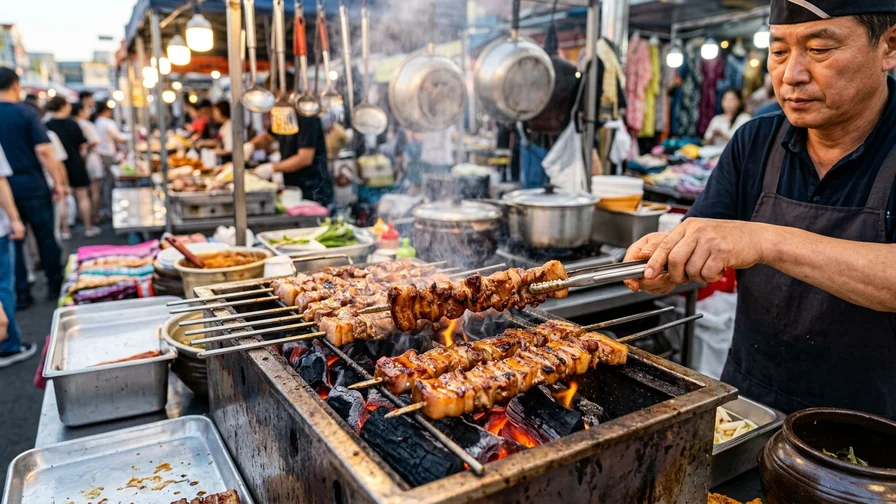
1. Black Pork Skewers
Now that you’re in Jeju, start with the Black Pork Skewer. These are skewers of Jeju black pork cut into hearty chunks and given a smoky char over charcoal or a torch—one bite is crispy outside and bursting with juices inside. Many stalls offer a marinated version and a salt-grilled version, and they usually run about 5,000–7,000 won per skewer (roughly $4–5, subject to change). The line is longest right when they come off the grill, but that’s exactly when they taste best. Note that the black pork sold here isn’t the rare native heritage breed but an improved Jeju black pork breed, so just checking the menu for the “Jeju-grown” label is enough.
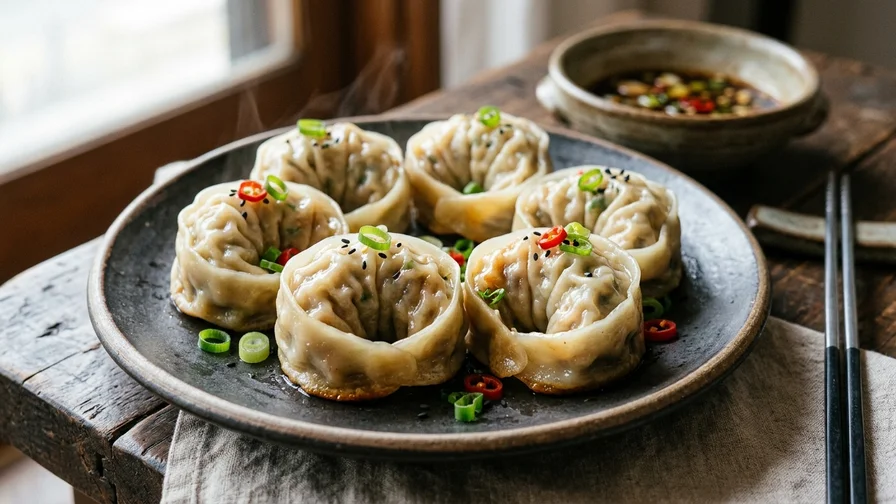
2. Black Pork Dumplings
Right beside the skewers, the steaming Black Pork Dumplings (흑돼지 만두, heukdwaeji-mandu) are too good to miss. Filled with minced Jeju black pork, chives, and tofu, they’re steamed or pan-fried to order. A plate usually goes for about 5,000–8,000 won (roughly $4–6, subject to change), and they’re perfect for warming your hands on a cold winter evening. The soy dipping sauce contains soybeans, so check ahead if you have a soy allergy.
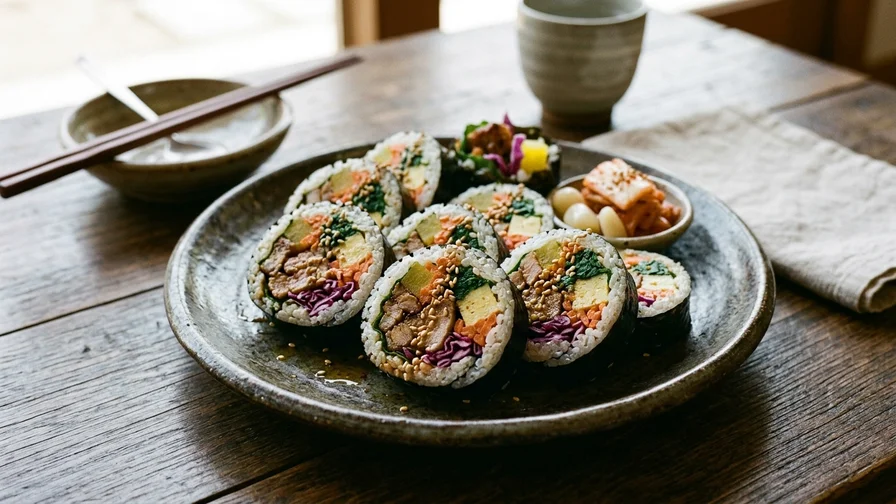
3. Mayak Gimbap, Black Pork Gimbap, and Abalone Gimbap
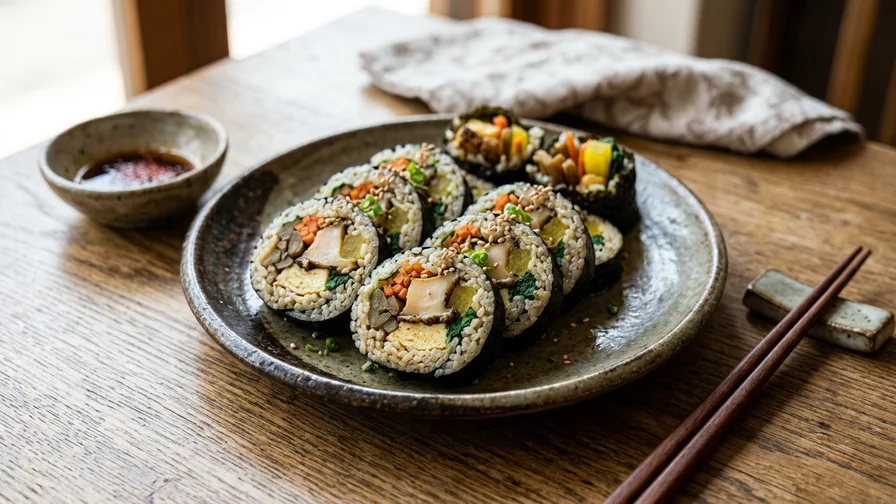
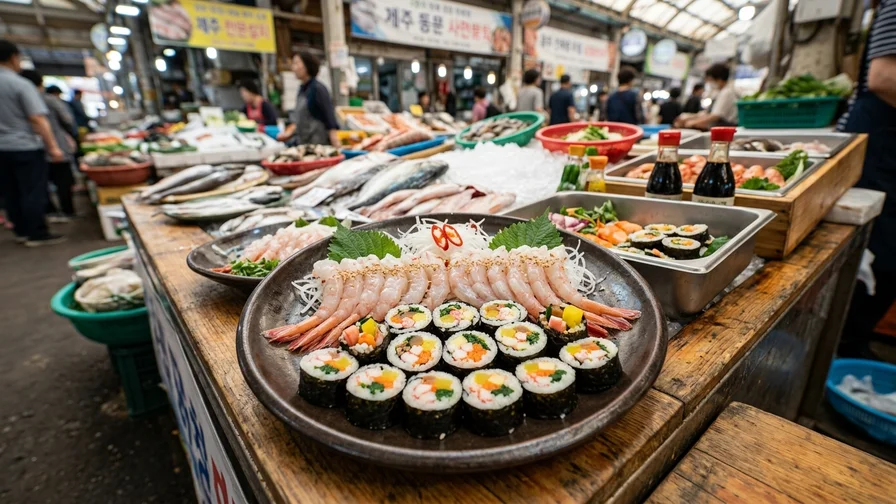
Mini Seaweed Rice Rolls are small seaweed rice rolls named “mayak” (literally “narcotic”) because they’re so addictively delicious. Rolled bite-sized with pickled radish and carrot and dipped in a mustard-soy sauce, they’re mild enough to suit foreign palates well. True to Jeju, many stalls line them up alongside Black Pork Gimbap (흑돼지김밥, heukdwaeji-gimbap) and Abalone Gimbap (전복김밥, jeonbok-gimbap). At about 3,000–6,000 won a roll (roughly $2–5, subject to change), they’re easy on the wallet and great to eat on the go as you wander the market. Note that gimbap may contain sesame and soybeans.
4. Ttaksaewoo Sashimi (Raw Spiny Shrimp)
Raw Sweet Shrimp is the hidden star of Dongmun Market. Ttaksaewoo (spiny shrimp) are small, hard-shelled shrimp from Jeju’s waters, with sweet, springy flesh. At Uri Susan 📍 in the seafood section, a small portion starts at around 10,000 won (roughly $7–8, subject to change), open daily from 10 a.m. to 10 p.m. They peel and serve them raw on the spot, and dipping them lightly in wasabi-soy sauce rather than chojang (sweet-and-spicy red pepper sauce) brings out the sweetness even more. Shrimp are crustaceans, so anyone with a crustacean allergy should avoid them. Wild shrimp are usually plumpest and most flavorful from spring through summer (timing may vary).
5. Whole Cutlassfish and Braised Cutlassfish
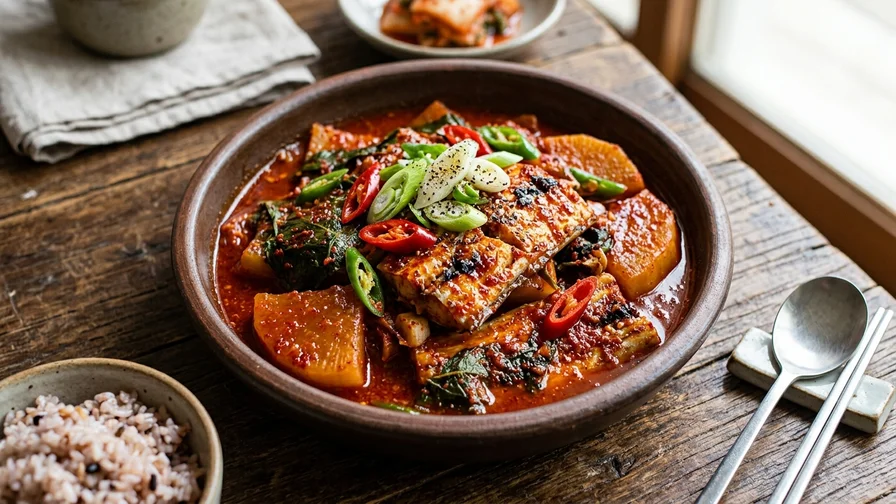
If you’re craving the taste of the sea, head to one of the long-standing local stalls serving grilled whole cutlassfish or Braised Hairtail (갈치조림, galchi-jorim). A signature Jeju dish, the big silvery cutlassfish is grilled whole or braised spicy with radish. Cutlassfish is a fish, so be careful if you have a seafood allergy, and eat slowly since there are small bones to pick out. This is more of a sit-down meal than a one-handed street snack, so it’s great to share when you have company.
6. Omegi Tteok
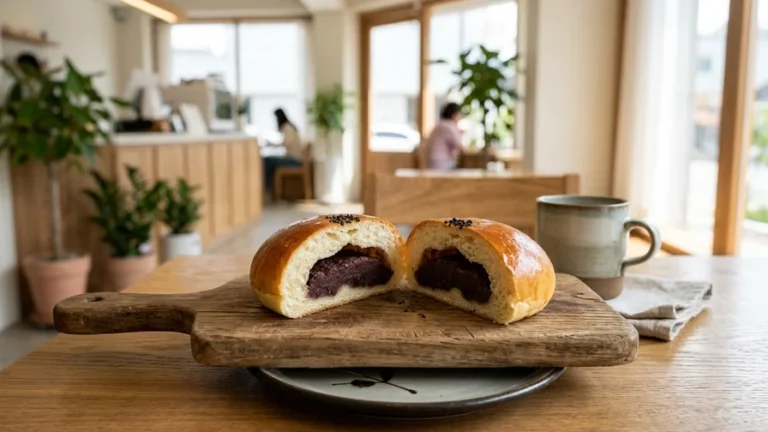
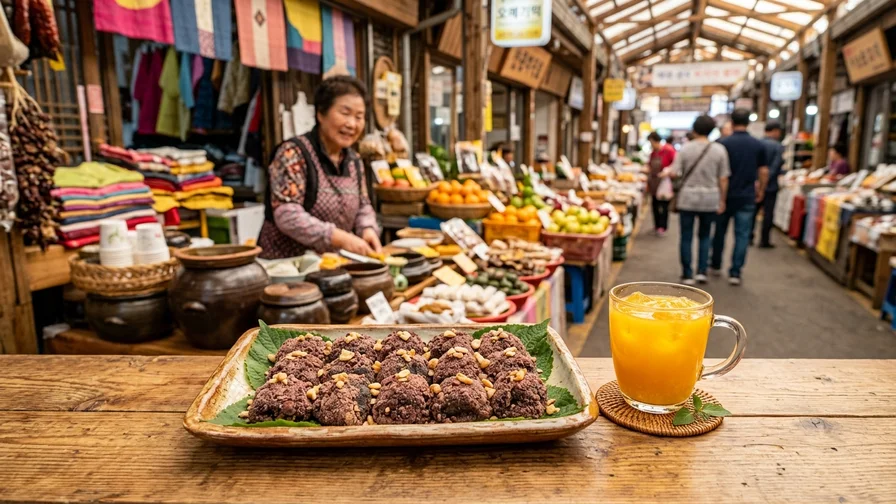
Omegi Rice Cake is a traditional rice cake made from Jeju’s chajo (a glutinous millet-like grain) and coated thickly in red bean. The nutty red bean outside and the chewy cake inside come together so that a single bite is both filling and sweet. Dongmun Market O-Bok Tteokjib 📍, at 10 Dongmun-ro 2-gil, is well known—usually open weekdays from 7:30 a.m. to 8 p.m. and Sundays from 8 a.m. to 6 p.m. (hours may vary by day). Omegi Rice Cake runs around 1,500–2,500 won each (roughly $1–2). This one is especially good in autumn and winter, when the seasonal red beans are at their best. The cakes are sometimes dusted with sesame, so check if you have an allergy.
7. Modakchigi, Dakgangjeong, and Hoeguksu
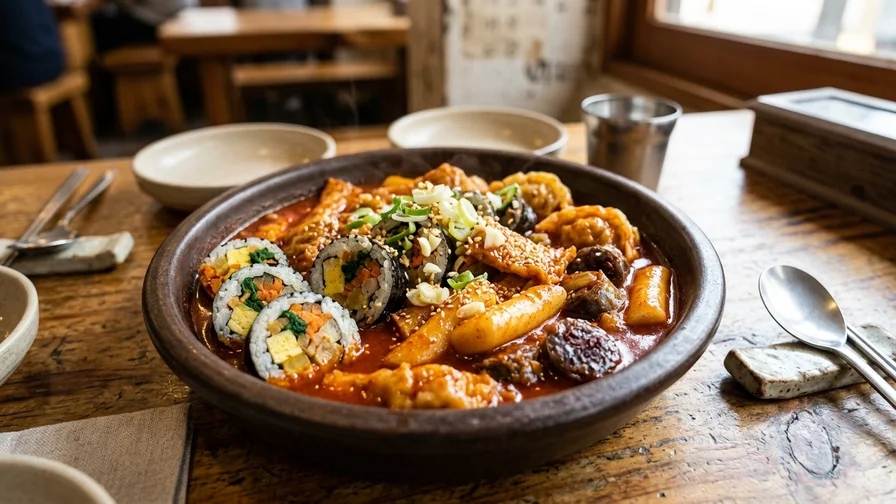
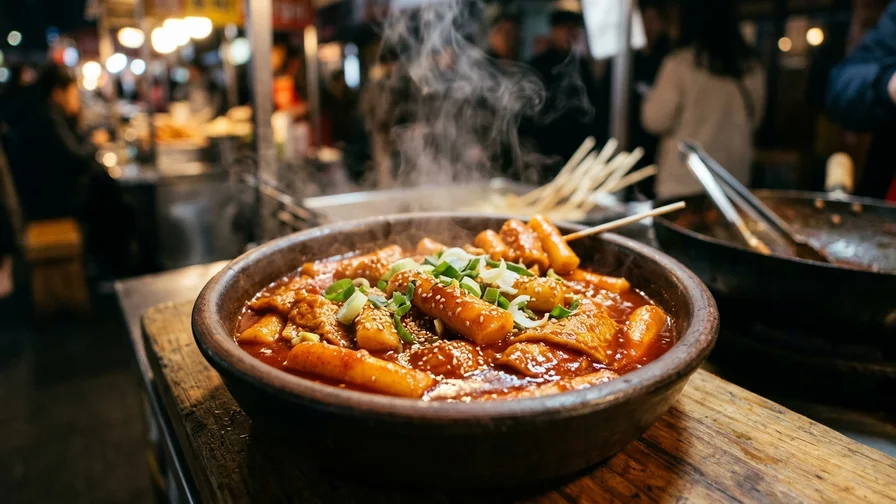
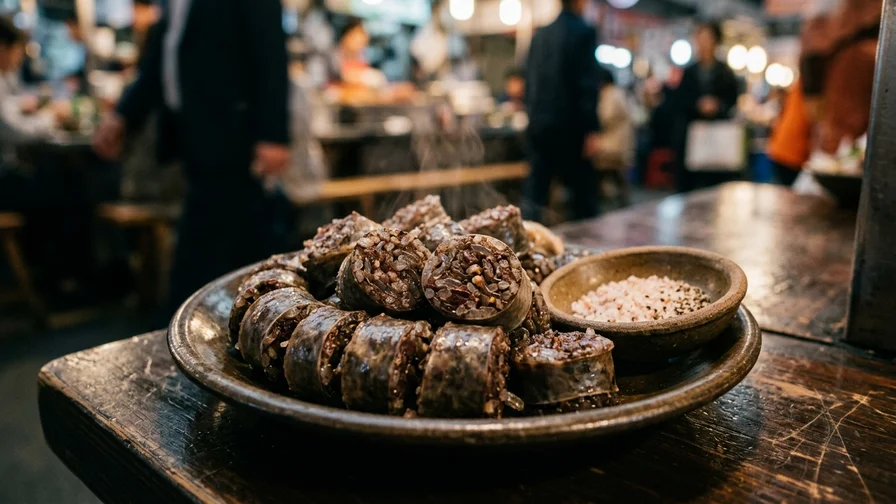
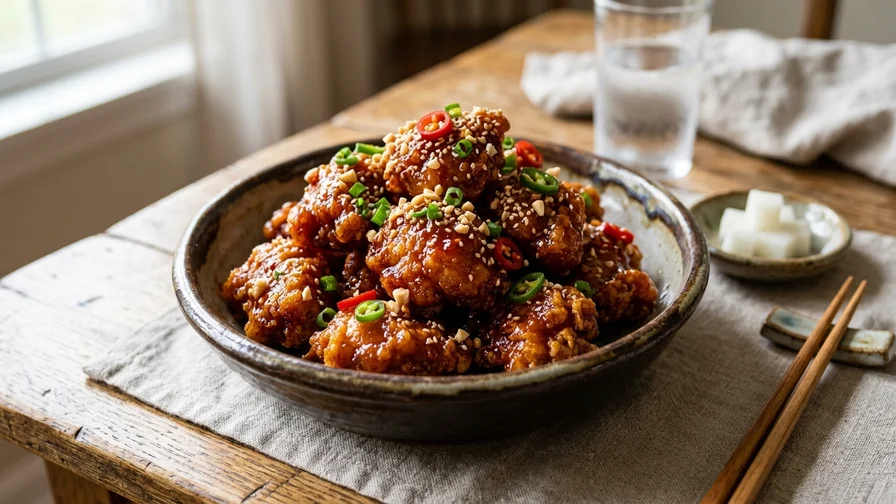
Jeju Mixed Snack Plate (모닥치기, modakchigi) is a Jeju-style mixed snack platter that gathers dishes like Spicy Rice Cakes (떡볶이, tteokbokki), fritters, savory pancakes, and Korean Blood Sausage (순대, sundae) (Korean-style sausage of pig intestine stuffed with glass noodles, vegetables, and blood, then steamed) onto a single plate. It’s perfect when you’re on your own and want to try a little of everything. Crispy Sweet Crispy Fried Chicken (닭강정, dak-gangjeong) (sweet-and-spicy fried chicken bites) is great to carry in a cup and snack on. They sometimes top it with crushed peanuts, so ask them to leave it off if you have a peanut allergy. And the tangy, mixed Raw Fish Noodles (회국수, hoe-guksu)—noodles tossed with raw white fish like flounder, vegetables, and a sweet-and-spicy sauce—revives your appetite on a hot day. Prices run about 8,000–12,000 won for a plate of Jeju Mixed Snack Plate (roughly $6–9) and around 5,000 won for a cup of Sweet Crispy Fried Chicken (roughly $4, subject to change).
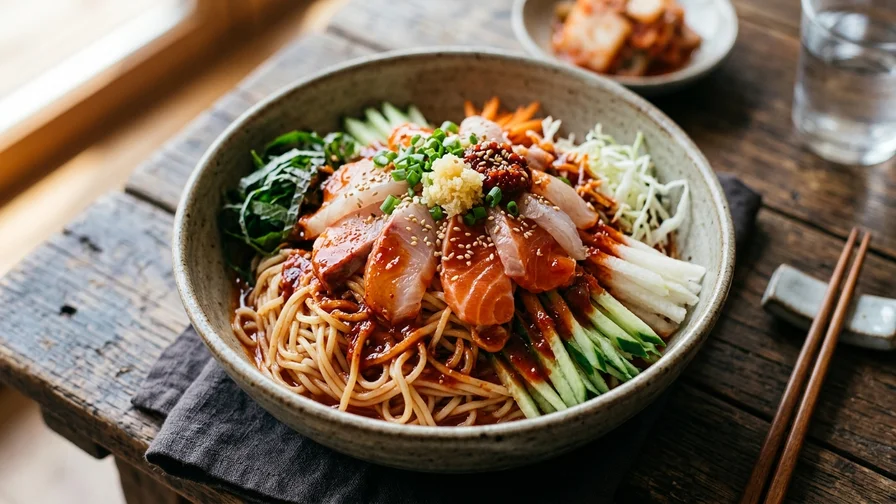
8. Hallabong Juice and Peanut Ice Cream
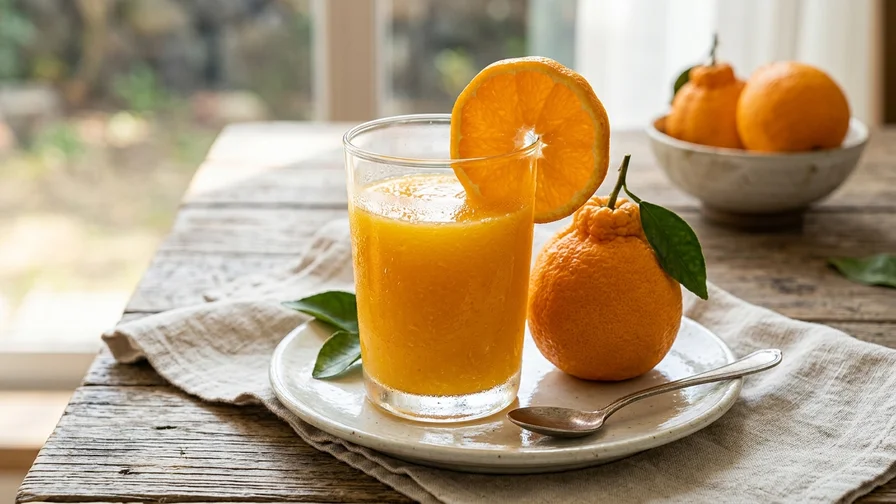
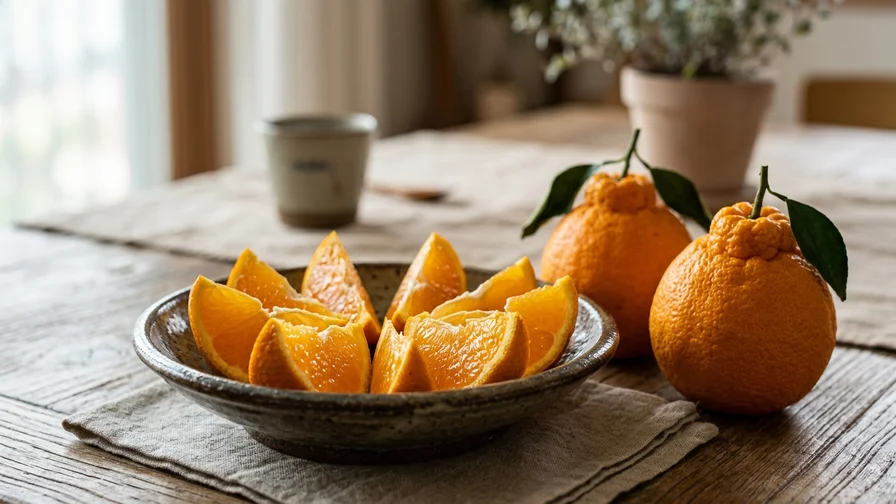
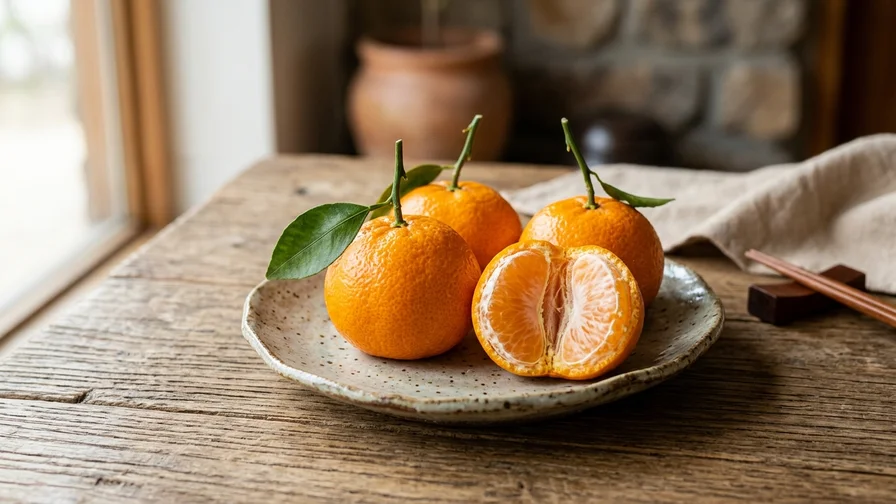
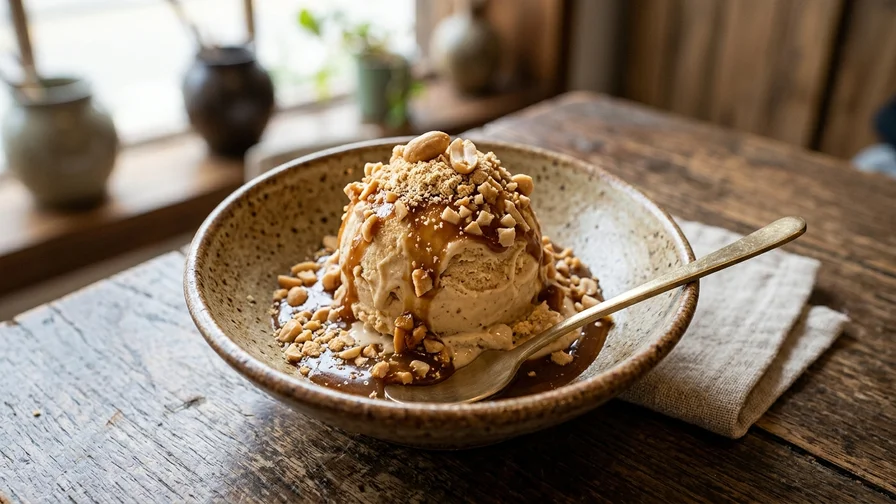
After all that salty, rich food, finish on a refreshing note. Hallabong Juice (한라봉 주스, Hallabong-juseu), pressed fresh from Hallabong Citrus (한라봉, Hallabong)(a bumpy-topped variety of Jeju Tangerine (감귤, gamgyul)), is sweet and tangy—ideal for cleansing the palate. Peanut Ice Cream (땅콩 아이스크림, ttangkong-aiseukeurim) made with peanuts from Udo Island is a popular dessert, with nutty peanut bits in every bite. Both run about 3,000–6,000 won (subject to change), and the Peanut Ice Cream contains tree nuts (peanuts), so avoid it if you have a nut allergy. It’s usually made with milk or cream, so be cautious if you avoid dairy.
| Food | Approx. Price | What Makes It Special |
|---|---|---|
| Black Pork Skewer | 5,000–7,000 won | Fire-charred Jeju black pork |
| Mini Seaweed Rice Rolls | 3,000–6,000 won | Bite-sized, mustard-soy sauce |
| Raw Sweet Shrimp | From about 10,000 won | Sweet raw Jeju shrimp |
| Omegi Rice Cake | 1,500–2,500 won each | Traditional millet-and-red-bean cake |
| Hallabong Juice | 3,000–6,000 won | Refreshing palate cleanser |
Prices may vary by stall and season, so check the display markings.
Enjoying the Night Market
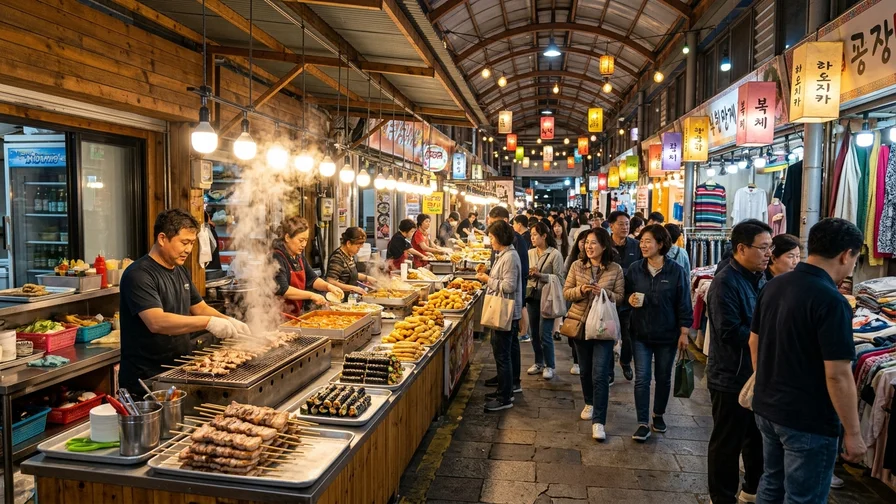
Once the sun sets, the night market opens near Gate 8 of Dongmun Traditional Market. The start time shifts with the season—around 6 p.m. in winter and 7 p.m. in summer—and runs late into the night (confirm exact times before visiting). Food booths line both sides of the narrow aisles, and the crowds packed between steaming pots and grills give it a festival atmosphere.
The night market gets crowded, so worry less about pickpockets and more about bumping into people. Wear your bag in front and keep both hands free—it’s easier to hold a skewer and snap photos. A good route is to start at the entrance with a black pork skewer, fill up on gimbap and ttaksaewoo sashimi, then finish with omegi tteok and Hallabong Juice. The right way to enjoy the night market is to taste a little from several spots rather than filling up at one booth.
Insider Tip
To get the most out of the night market, eat a light dinner first. Sharing one skewer, one roll of gimbap, and a plate of ttaksaewoo sashimi with companions, you can easily take on five different bites. Also, the popular booths have the longest lines around 7–8 p.m., so arriving just 30 minutes early makes things much more relaxed. Prepare a mix of 10,000-won and 1,000-won bills in advance, and you can eat your way through quickly without worrying about change.
How to Get There and Opening Hours
Dongmun Traditional Market is about a 15-minute drive from Jeju International Airport and roughly a 10-minute walk from the seaside hotels in Jeju City, making it very easy to reach. For first-time foreign visitors, we recommend the following.
- Taking a taxi from the airport or downtown is simplest. That said, the Kakao T app often requires a Korean phone number and a domestically issued card to sign up and pay, so it can be tricky for short-term travelers. Line up at the airport taxi stand or hail a taxi on the street, and tell the driver “Dongmun Market” or show your Google Maps screen. The fare from the airport to the market is roughly 6,000–9,000 won (about $5–7, subject to change).
- If you take the bus, search “Jeju Airport → Dongmun Market” on Naver Maps or Google Maps for exact routes and real-time schedules. It shows the right bus number, interval, and fare for your departure time in real time, so it’s the most accurate. You can ride Jeju city buses with a transit card.
- If you’re driving a rental car, foreign visitors must obtain an International Driving Permit in their home country before departure. It cannot be issued after arriving in Korea. There are public parking lots around the market, but they often fill up on weekend evenings, so it’s more relaxing to park a little farther away and walk over.
As for opening hours, the permanent market runs daily from around 8 a.m. to 8–9 p.m., and Dongmun Fish Market 📍 is open from 9 a.m. to 8 p.m. (subject to change). The street food and night market are liveliest from late afternoon into the night, so we recommend visiting after 5 p.m. Many Korean markets and old shops don’t take phone reservations or handle English well, so it’s reassuring to double-check the location and hours on Google Maps before you set out.
Prices and Payment Tips
The two most common hurdles when enjoying Jeju Dongmun Market street food are payment and language. Knowing them ahead of time means no surprises.
- Many small stalls don’t take cards and accept only cash (Korean won). Bring a generous mix of 10,000-won and 1,000-won bills, and you can eat your way through quickly without worrying about change. Some seafood shops like Uri Susan and the rice-cake shops may accept cards or mobile payments (it varies by shop).
- English menus and English service are limited. Pointing at the food on display, or saving and showing a photo of what you want to eat in advance, is the fastest and most accurate way. Pointing Google Translate’s camera at the menu instantly translates the Korean, which is handy.
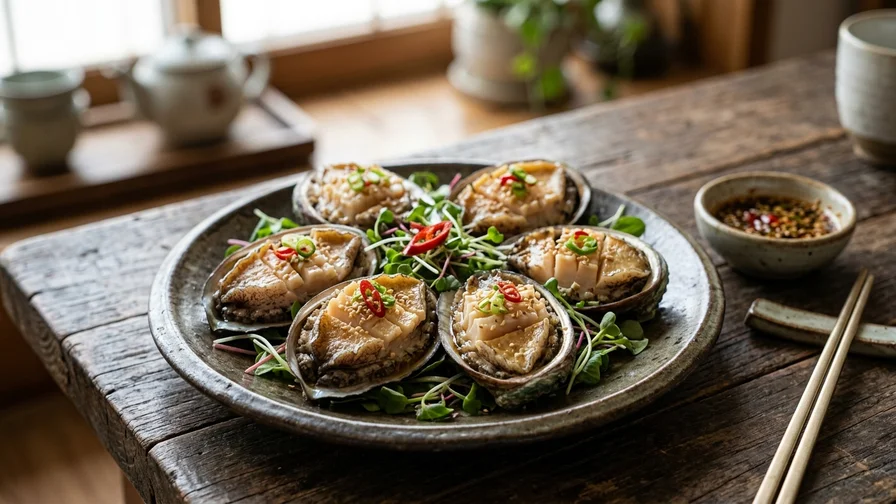
- Ttaksaewoo and shrimp are crustaceans, Abalone (전복, jeonbok) is a mollusk, and cutlassfish is a fish. Crustaceans and mollusks are different allergens, so having a crustacean allergy doesn’t necessarily mean you must avoid mollusks too. Gimbap, rice cakes, and skewer marinades may contain sesame or soybeans (soy sauce), so check before ordering if you have related allergies. Since utensils are shared, factor in cross-contamination if your allergy is severe.
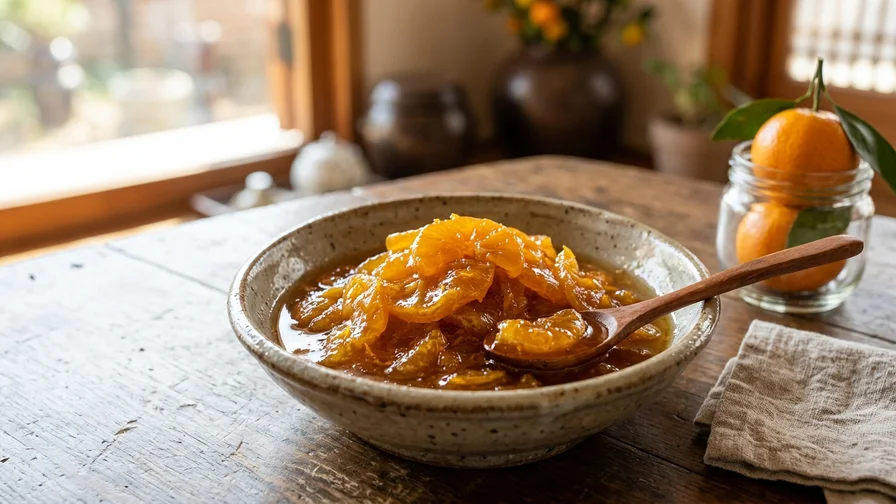
- If you’d like to buy Jeju specialty rice cakes or dried seafood as souvenirs, note that fresh seafood, fresh fruit (such as Jeju Tangerine and Hallabong Citrus), and vacuum-packed meat (especially pork products like black pork jerky, which most countries ban most strictly) are restricted by quarantine and hard to take home. I’d recommend shelf-stable processed souvenirs like Tangerine Syrup (감귤청, gamgyul-cheong), dried seafood, and yanggaeng (sweet bean jelly).
This kind of variable information can change over time, so it’s best to double-check display prices and whether a shop is open before making any large purchase.
Frequently Asked Questions
When is Dongmun Market street food at its liveliest?
From late afternoon into the night is the busiest. The night market starts near Gate 8 around 6 p.m. in winter and 7 p.m. in summer and runs late into the night (times may vary). We recommend visiting after 5 p.m.
Can I pay by card?
Many small stalls accept only cash (Korean won). It’s good to bring a mix of 10,000-won and 1,000-won bills, though some seafood shops and rice-cake shops may accept cards or mobile payments.
There’s no English menu—how do I order?
Just point at the food on display or show a photo of what you want to eat. Pointing Google Translate’s camera at a Korean menu translates it instantly, which is convenient.
Is it okay if I have a seafood allergy?
Ttaksaewoo and shrimp are crustaceans, Abalone is a mollusk, and cutlassfish is a fish. Crustaceans and mollusks are different allergens, so confirm exactly which type of allergy you have—and you can always choose seafood-free options like black pork skewers or mayak gimbap.
The smoky aroma of black pork skewers met in a market alley, the sweetness of ttaksaewoo shrimp, the red bean coating of omegi tteok—taste the Jeju Dongmun Market street food you learned about today on your next trip. Save Dongmun Market on Google Maps before you go, and double-check the night market’s hours to make the most of it.
Related Reads on This Topic
- Jeju Local Food Roadmap, 9 Flavors from Black Pork to the Haenyeo Table
- How to Eat Jeju Gogi Guksu, the Island's Soul-Food Pork Noodle Soup
- How to Enjoy Jeju Mulhoe, Jari-mulhoe and Hanchi-mulhoe
- How to Find and Savor a Jeju Haenyeo Meal Set by the Sea
- Jeju Omegisul Brewing, Tasting Foxtail-Millet Traditional Liquor
- How to Pick Real Jeju Black Pork and 7 Steps to Eat It Right
- Jeju Abalone Dishes and 6 Top Spots, Eaten Like a Local
- Jeju Tangerine and Hallabong, Orchard Cafes and Tangerine Picking
- Enjoy Jeju Cutlassfish Like a Local, Galchi-jorim and Galchit-guk
📍 Locations verified — The 4 places featured in this guide were confirmed on Google Maps for their real location and address (Dongmun Traditional Market, Dongmun Fish Market, Uri Susan, O-Bok Tteokjib). Hours and details can change, so check before you visit.