Korean Seaweed (Gim) — From Crispy Side Dishes to Gimbap
Contents
On the Korean table, gim (laver or dried seaweed) is as much a staple as a bowl of rice. This thin, black sea vegetable shows up everywhere as a side dish, a snack, and a cooking ingredient, and today it ranks as Korea’s number-one seafood export.
Key Facts at a Glance
- History: The widely accepted account holds that Kim Yeo-ik of Taein-do in Gwangyang first succeeded in cultivating gim around 1640 (the 18th year of King Injo’s reign during the Joseon Dynasty). It is considered the earliest known case of farmed seaweed in the world.
- The name: A folk legend says the word “gim” comes from Kim Yeo-ik’s surname (though this is not a confirmed etymology).
- Today’s growing regions: South Jeolla Province (Goheung, Jindo, Wando, Haenam, Sinan) accounts for roughly 78% of national production, while the best-known processing brands hail from Gwangcheon (Hongseong) and Daecheon (Boryeong) in South Chungcheong Province.
- Exports: In 2023, gim became the first Korean seafood product to surpass 1 trillion won in annual exports, then set a new record of USD 1.13 billion in 2025 (per the Ministry of Oceans and Fisheries).
- Types: Seasoned laver (a rice side dish), seaweed flakes (a topping), fried seaweed crisps (a snack), dried laver (for gimbap), and gim snacks.
- Reference date: Prices and hours are accurate as of June 2026.
History of Gim: From a Chestnut Branch to the “Black Semiconductor”
Gim appears in Joseon-era records under the name “haeui” (海衣, meaning “clothing of the sea”). It was recorded as a regional specialty in two state-compiled geographical surveys from the 15th and 16th centuries, the Gyeongsangdo Jiriji and the Sinjeung Dongguk Yeoji Seungnam. The latter in particular lists it as a local product of Taein-do in Gwangyang-hyeon, in Jeolla Province (present-day Gwangyang). In other words, Koreans have been eating gim for at least 500 years.
As for the beginnings of cultivation rather than mere gathering, the prevailing theory credits Kim Yeo-ik (1606–1660). The story goes that Kim, who settled on Taein-do in Gwangyang after the Manchu invasion of 1636, noticed around 1640 (the 18th year of King Injo’s reign) that gim was growing on a chestnut branch that had washed ashore. He then succeeded in cultivating it by planting tree branches and bamboo poles in the tidal flats. The legend continues that this haeui was served at the royal table, and when the king asked its name, he decreed it be called “gim” after the surname of the man who made it. That said, this origin of the name is an orally transmitted legend rather than a documented etymology.
- Gwangyang Gim Sisikji (the birthplace of gim cultivation): A heritage site honoring Kim Yeo-ik, designated South Jeolla Provincial Monument No. 113 in 1987. It includes a gim history hall showing the origins of the seaweed, an artifact exhibition gathering old gim-production tools, and the Inhosa shrine and Yeongmojae hall.
- Address: 57-6 Gimsisikji 1-gil, Gwangyang-si, South Jeolla Province (Taein-dong) — Gwangyang Gim Sisikji
- Visiting: Since opening hours aren’t separately posted, it’s best to call ahead (061-760-8370) before visiting. For details, see the official Gwangyang City culture and tourism page.
Today the main gim-producing region is South Jeolla Province. The southern coastal areas of Goheung, Jindo, Wando, Haenam, and Sinan together account for roughly 78% of national gim production (based on the 2025 harvest). The Seocheon and Boryeong areas of South Chungcheong have also long been growing regions, and the Gwangcheon Gim (Gwangcheon-eup, Hongseong-gun, South Chungcheong) and Daecheon Gim (Boryeong, South Chungcheong) you commonly see in supermarkets are brands that earned their reputation as masters of processing and distribution rather than as growing areas.
Its export record is impressive enough to have earned gim the nickname “black semiconductor.” According to the Ministry of Oceans and Fisheries, gim exports reached USD 790 million (about 1.03 trillion won) in 2023, the first time a single Korean seafood item topped 1 trillion won in annual exports, with shipments reaching 124 countries. In 2025, exports set yet another record high at USD 1.13 billion. Compared with 2010 (USD 110 million), that’s nearly a tenfold increase over 15 years. It also means there’s a good chance you can find the gim you tried on your trip at your local supermarket back home.
Types of Gim
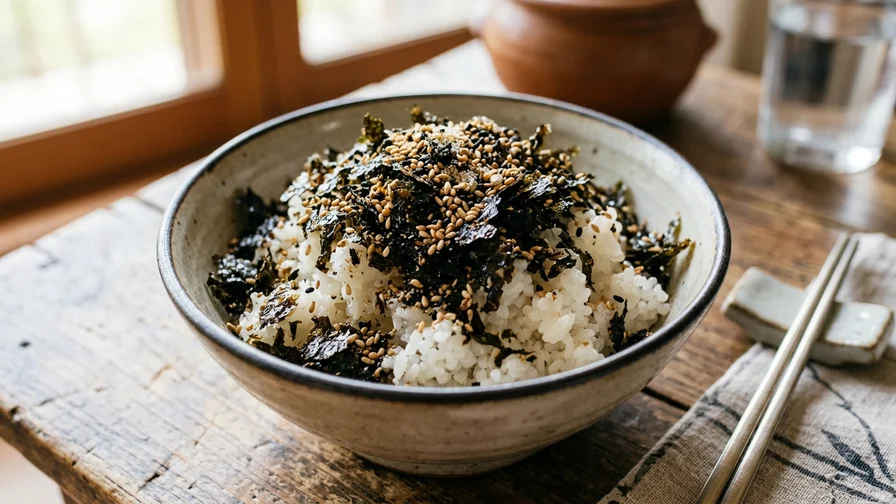
At Korean supermarkets and markets you’ll find gim products in several forms. Each has a different taste and use, so you can pick according to your preference and purpose. The prices below are approximate ranges as of June 2026.
Seasoned Laver (Jomi-gim)
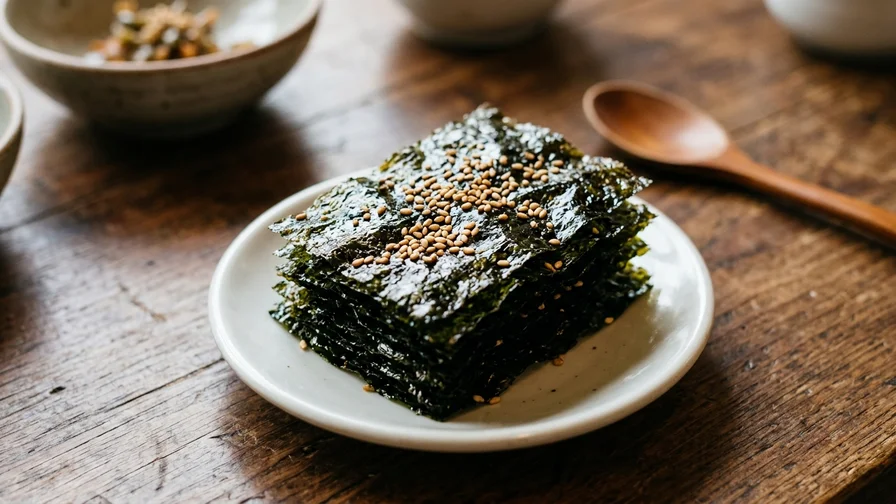
This is the kind you’ll see most often. Thin sheets of gim are brushed with sesame oil or perilla oil, sprinkled with salt, and roasted. It has a savory, slightly salty flavor and is mainly used as a side dish to wrap around plain white rice. It’s frequently served as a complimentary side at restaurants.
- Use: Rice side dish, a simple drinking snack
- Characteristics: Thin and crisp, with visible oil and salt crystals on the surface
- Price: 1,000–2,000 won per pack of about 8 sheets
Seasoned Seaweed Flakes (Gim-jaban)
A side dish made by crumbling gim and stir-frying it with oil, salt, sugar, and sesame seeds. It’s sweeter and saltier than seasoned laver, with a distinctly crunchy texture. It’s sprinkled over rice and mixed in, or used as an ingredient for rice balls (jumeok-bap).
- Use: A topping for bibimbap, rice balls, and fried rice
- Characteristics: Comes in finely crumbled form, evenly coated with seasoning
- Price: 2,000–4,000 won per 50g pack
Fried Seaweed Crisps (Gim-bugak)
A traditional snack made by coating gim with a glutinous-rice paste, drying it, and deep-frying it. It’s crisp and savory like a cracker, and thanks to the rice paste it’s thicker and chewier than ordinary gim. Originally made and eaten at temples and noble households in the Namdo (Jeolla) region, it’s now sold as a premium snack or drinking accompaniment at markets and department stores nationwide.
- Use: Snack, drinking accompaniment
- Characteristics: Thick and very crisp, with a strong savory fried flavor
- Price: 4,000–7,000 won per 50g pack
Dried Laver, or Gimbap Laver (Mareun-gim or Gimbap-gim)
This is gim that has only been dried, without seasoning. It’s mainly used to make gimbap, and tends to be thicker and tougher than seasoned laver. It can also be lightly toasted and dipped in soy sauce.
- Use: Gimbap, toasted gim
- Characteristics: Unseasoned, so you can taste the natural flavor of the gim; deep black color
- Price: 2,000–3,500 won per pack of 10 gimbap sheets
Gim Snacks
These are products that process gim into a modern snack form. They’re often made with almonds or coconut, or flavored with wasabi, fire-chicken (buldak) spice, and more. Easy to find at convenience stores and supermarkets, they make a great snack while traveling.
- Use: Snack, casual gift
- Characteristics: A range of flavors, bite-sized
- Price: 1,500–3,000 won per pack
| Type | Key Feature | Main Use | Avg. Price |
|---|---|---|---|
| Seasoned Laver (Jomi-gim) | Seasoned with oil and salt; thin and crisp | Side dish for rice | 1,000–2,000 won/pack |
| Seaweed Flakes (Gim-jaban) | Crumbled and stir-fried; sweet and salty | Topping for rice | 2,000–4,000 won/pack |
| Fried Crisps (Gim-bugak) | Coated in rice paste and fried; very crisp | Snack, appetizer | 4,000–7,000 won/pack |
| Dried Laver (Mareun-gim) | Unseasoned; thick and tough | For gimbap | 2,000–3,500 won/10 sheets |
Signature Dishes Using Gim
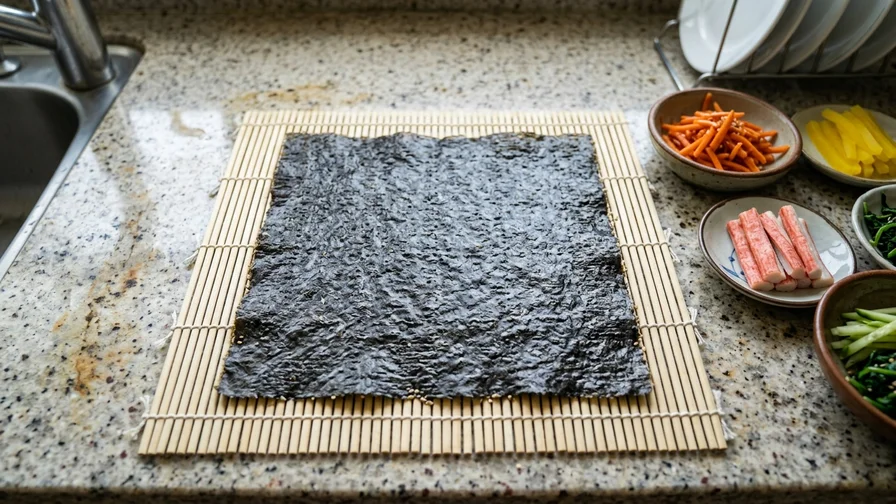
Gimbap
Gimbap is one of Korea’s staple bunsik (light meal) dishes. Rice is spread thinly over a sheet of dried gim, then topped with fillings such as pickled radish, egg, spinach, carrot, and ham, and rolled up. You can easily buy it at specialty shops, markets, and convenience stores. Prices are accurate as of June 2026.
- Vegetable Gimbap (Yachae-gimbap): The most basic gimbap. 3,000–4,500 won.
- Tuna Gimbap (Chamchi-gimbap): Made with tuna and mayonnaise for a rich, savory taste. 4,000–5,500 won.
- Cheese Gimbap (Cheese-gimbap): Made with cheddar cheese for a salty, mellow flavor. 4,000–5,500 won.
- Mayak Gimbap (“Narcotic” Gimbap): A specialty of Gwangjang Market in Seoul. About half the size of regular gimbap, with simple fillings of just pickled radish, carrot, and spinach, but the key is dipping it in a tangy mustard sauce. The name “mayak” (narcotic) is a nickname referring to how addictive it is. 3,000–4,000 won per serving. There are several gimbap stalls in the market, with two of the most notable being Monyeo Gimbap 📍, which has been in business since 1975 and is considered the original, and Wonjo Nude Cheese Gimbap 📍, which wraps its rolls in cheese instead of gim.
Other Gim Dishes
- Gim-guk (Seaweed Soup): A soup made with gim as the main ingredient. Unlike miyeok-guk (brown seaweed soup), it has a clear, refreshing taste, and it’s mostly enjoyed in coastal regions.
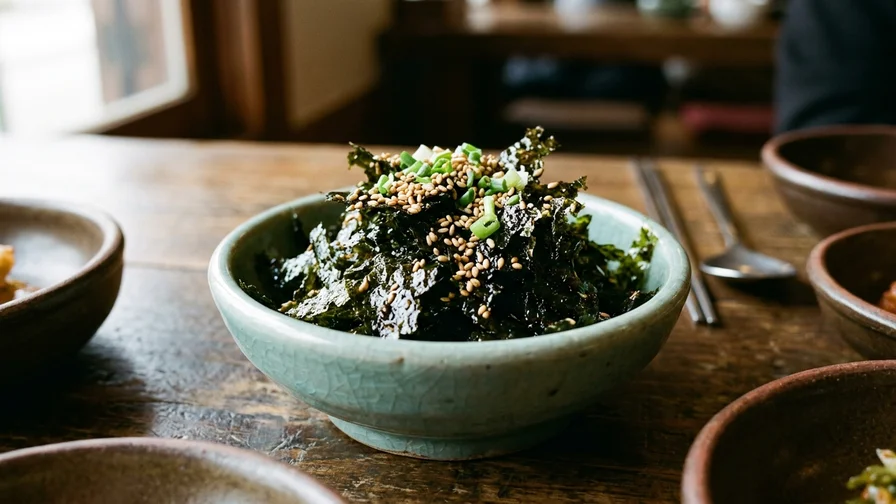
- Gim-muchim (Seasoned Seaweed Salad): A side dish made by lightly toasting and crumbling dried gim, then tossing it with soy sauce, sesame oil, green onion, garlic, and more.
- Gim-jaban Jumeok-bap (Seaweed Flakes Rice Ball): Made by mixing warm rice with seaweed flakes and sesame oil, then shaping it into rounds. Popular as a quick meal or lunchbox item.
Where to Buy Korean Gim?
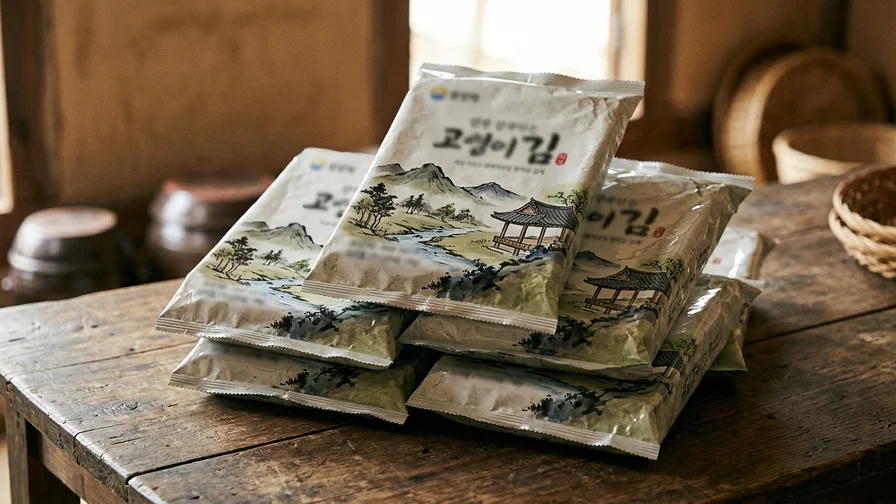
You can buy gim easily anywhere in Korea, but the product selection and prices vary by location. It’s a good idea to choose your shopping spot based on the purpose of your trip.
1. Large Supermarkets
Large supermarkets such as E-mart, Lotte Mart, and Homeplus carry the widest variety of gim. The range runs from gift-packaged products to large value packs.
- Pros: Easy to compare multiple brands, fixed prices, and tasting events at some stores
- Recommended products: Gift sets from regional processing brands like Gwangcheon Gim and Daecheon Gim, as well as mass-market brand products like Yangban Gim (Dongwon F&B)
- Price range: 8,000–15,000 won for a bundle of 16 packs of seasoned laver, and 20,000–50,000 won for gift sets (as of June 2026)
2. Traditional Markets
Markets are a great place to buy gim while soaking up the local atmosphere. At dried-goods shops, you can taste and choose from gim of different origins recommended directly by the vendor.
Jungbu Market (Seoul)
Seoul’s largest dried-seafood market, often called “Korea’s number-one dried-goods hub.” Located between Namdaemun Market and Dongdaemun Market (Ojang-dong, Jung-gu), it’s a wholesale market where gim, brown seaweed, anchovies, dried pollack, and other dried goods from across the country arrive first, so the quality-to-price ratio is excellent. Although it’s wholesale-focused, retail purchases are possible too.
- Getting there: A 3 to 5-minute walk from Exit 7 of Euljiro 4-ga Station (Subway Lines 2 and 5; verified October 2026) — Jungbu Market, Seoul
- Hours: Generally 3 a.m. to 6 p.m., closed Sundays (varies by shop, as of June 2026). Given that it’s a wholesale market, it’s liveliest in the morning.
- Notes: You can buy gim by origin and grade in bulk at low prices, and box gift-packaging is common. Shop hours aren’t separately posted, so it’s best to check on-site before visiting.
Mangwon Market (Seoul)
A market popular with locals, where alongside a variety of food you can buy snacks like gim and fried seaweed crisps at the dried-goods shops.
- Getting there: A 5-minute walk from Exit 2 of Mangwon Station (Subway Line 6) — Mangwon Market
- Notes: Well suited for buying small-packaged gim, fried seaweed crisps, and other snacks amid the atmosphere of a food market.
Jagalchi Market (Busan)
Korea’s largest seafood market. The dried-goods wholesale section on the east side of the market sells a variety of dried products including gim, brown seaweed, and dried anchovies. The Gijang area of Busan is especially famous as a producer of brown seaweed and kelp, so it’s a good place to buy gim bundled together with those as gifts.
- Getting there: A 5-minute walk from Exit 10 of Jagalchi Station (Busan Subway Line 1) — Jagalchi Market
- Notes: A wide range of dried goods, and you can buy gim alongside other seaweeds like brown seaweed and kelp.
3. Duty-Free Shops
Airport and downtown duty-free shops sell elegantly packaged gim products as gifts. They’re handy when you need to buy a gift right before departure.
- Pros: Premium packaging, well-known brands in stock, convenient at departure
- Main brands: Mostly brands with high recognition among foreigners, such as Gwangcheon Gim and Daecheon Gim
- Cons: Prices may be higher than at supermarkets or markets
Additional Information for Travelers
Gift Recommendations
If you’re looking for gim to give to foreign friends or family, the Gwangcheon Gim or Daecheon Gim brands are good picks. Gwangcheon Gim is based in Gwangcheon-eup, Hongseong-gun, South Chungcheong, and Daecheon Gim in Boryeong, South Chungcheong; both are renowned gim-processing names with strong quality and recognition. Korean-style seasoned laver, brushed with sesame or perilla oil and salted, has a savory taste different from Japanese nori, which makes it popular with foreign visitors. Gift sets made up of several small packs are also great for sharing.
Allergy Information
Some seasoned laver products may contain shrimp powder to enhance the flavor. If you have a shellfish allergy, be sure to check the ingredients list on the back of the package for “shrimp” (or “새우”).
Nutritional Information
Dried gim is a low-calorie food with a high protein-to-weight ratio, and it contains vitamin A and B vitamins (especially B12), as well as minerals like iodine. That said, a single sheet weighs around 2g, so the amount eaten at once is quite small; it’s more accurate to think of it as a light, healthy snack rather than a “superfood.” Just keep two things in mind. Seasoned laver has added oil and salt, so eating a lot increases your sodium intake, and if you’re limiting iodine for thyroid conditions or other reasons, it’s safest to consult a doctor before eating seaweed.
Transportation and Information for Travelers
If you use a taxi app to get to the markets, Kakao T supports registration of overseas-issued credit cards and offers an English interface, and there’s also k.ride, a ride-hailing app designed for foreign travelers. In big cities like Seoul and Busan, Uber works too. The idea that “foreigners can’t use Korean taxi apps” is a thing of the past (as of June 2026).
If you have questions or need help during your trip, you can use the 1330 Korea Travel Helpline. Operated by the Korea Tourism Organization, it provides travel information 24/7, year-round, in multiple languages including Korean, English, Japanese, and Chinese. Within Korea, just dial 1330, or you can also chat through the “1330 Korea Travel Helpline” app.
Start with restaurant seasoned laver, then figure out your preference with convenience-store snacks
If Korean gim is new to you, start by trying the seasoned laver that comes as a complimentary side dish at restaurants. Next, pick up small packs of different gim snacks at a convenience store to figure out your preference. Once you’ve found a type you like, it’s most economical to buy products in bulk for gifts or for yourself at a large supermarket or traditional market. At market dried-goods shops in particular, vendors often offer samples, so you can taste before you decide.