12 Korean Side Dishes You’ll Meet at a Korean Restaurant, Explained for Visitors
Contents
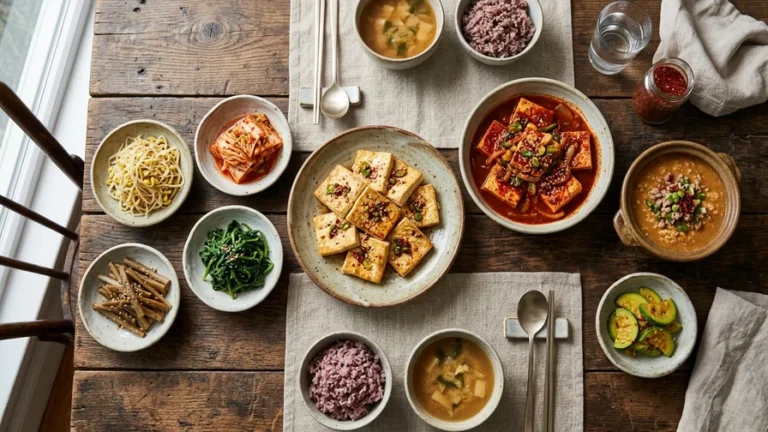
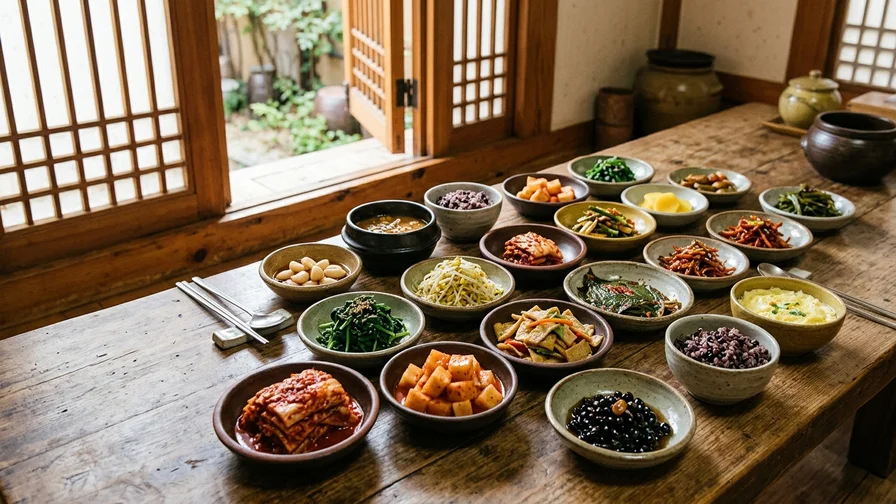
At a Korean restaurant, ordering a single main dish usually comes with several small side dishes (banchan) served for free, and most of them can be refilled. This guide rounds up the 12 most common Korean side dishes (banchan) you’ll see on the table, covering their flavors and ingredients, how to order and ask for refills, and key points for vegetarians and people with allergies. Print it out or save it, and you can use it as-is at an actual restaurant.
Understanding Korea’s Banchan Culture
Banchan are a core part of a Korean meal. They refer to the small dishes served alongside the main components: rice, soup, and stew. The lineup keeps changing depending on the restaurant and the season, but a handful of staple side dishes are almost always on the table. The price of the banchan is generally included in the cost of the main dish.
- Baekban: Meaning “white rice,” this is a meal made up of rice, a soup or stew, and three to five basic side dishes. It usually costs around 8,000–15,000 KRW per person (as of June 2026).
- Hanjeongsik: A formal course meal that comes with rice, soup, and stew along with more than 10 to 20 side dishes and entrees. Prices range widely, from 20,000–50,000 KRW or more per person (as of June 2026).
A Closer Look at 12 Classic Korean Side Dishes
Below are the 12 side dishes you’ll most often encounter at a Korean restaurant. Check each one’s characteristics, main ingredients, and flavor intensity, and use it as a reference during your meal.
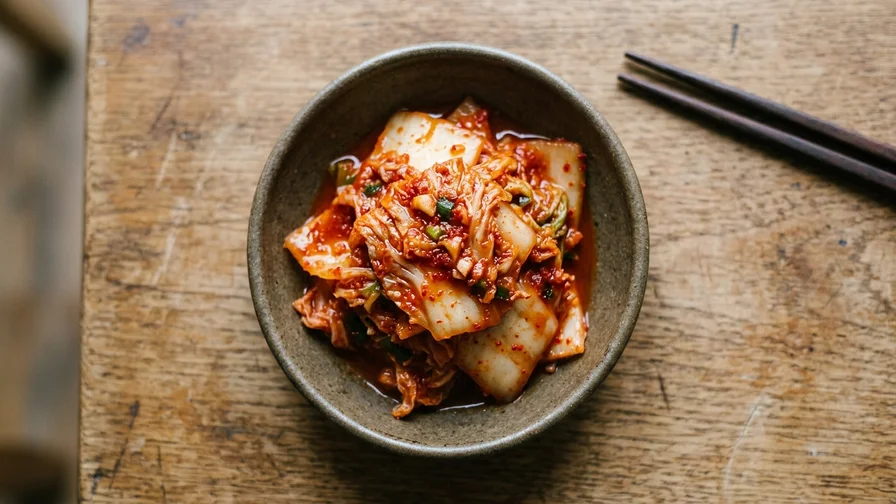
1. Kimchi
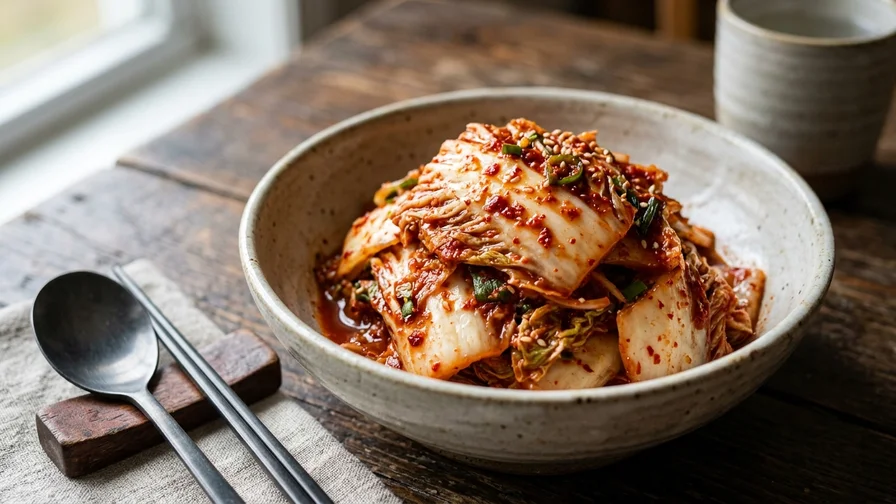
Korea’s most common side dish and its best-known fermented food. Napa cabbage is salted, then coated in a seasoning made of chili powder, garlic, ginger, and salted seafood, then left to ferment. It’s crisp and refreshing, spicy and salty, with a sourness that develops during fermentation.
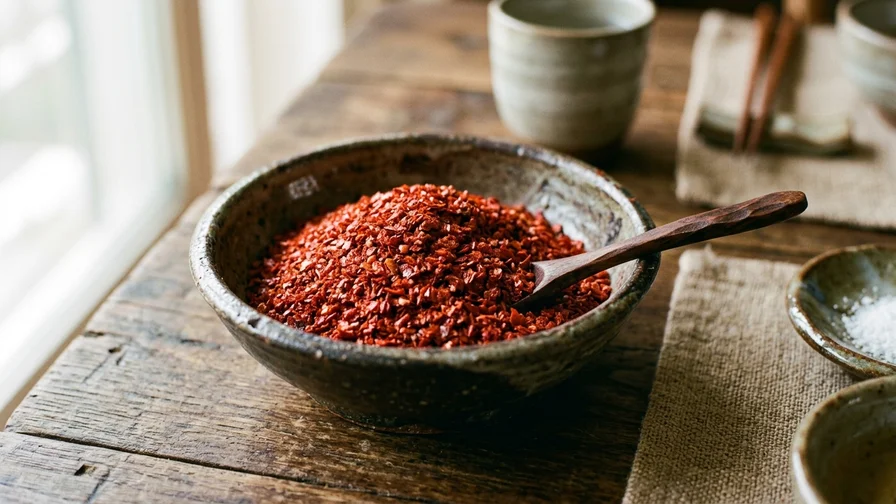
- Main ingredients: Napa cabbage, chili powder, garlic, ginger, salted seafood (salted shrimp, salted anchovy, etc.)
- Flavor intensity: Spicy ★★☆, Salty ★★☆, Sour ★★☆
- Vegetarian note: Most versions contain salted seafood, so they are not vegetarian. Some restaurants serve vegan kimchi, but it’s uncommon.
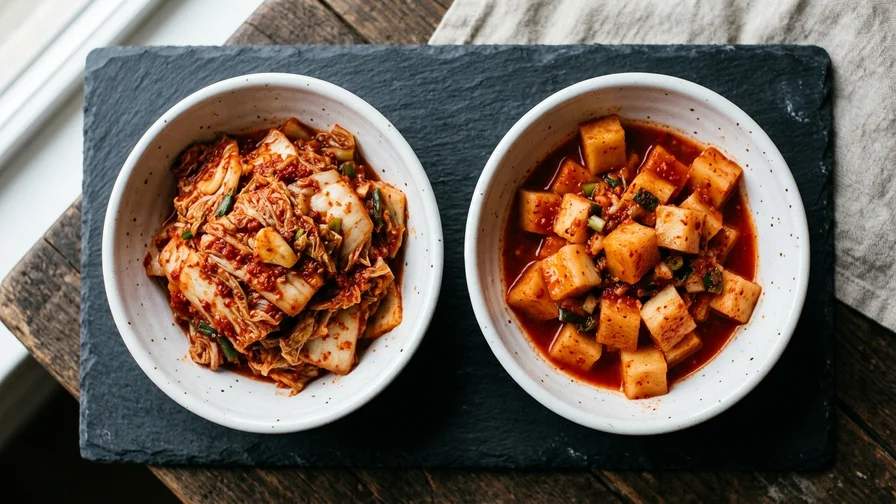
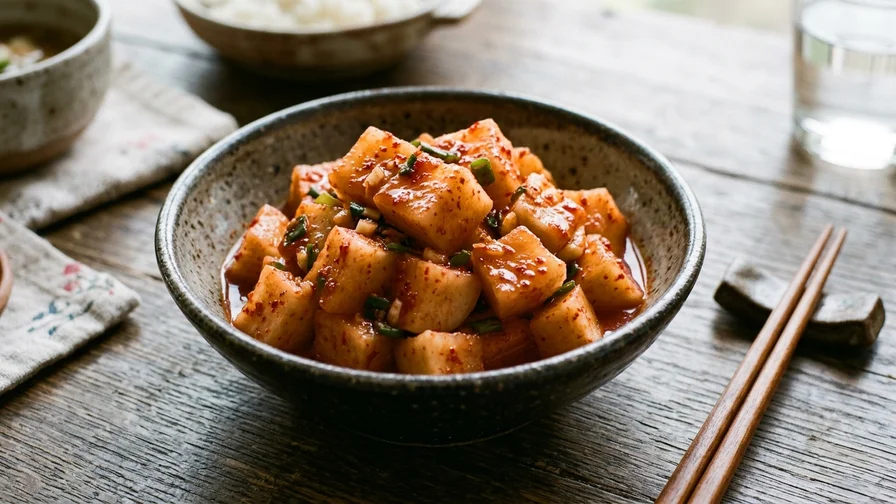
2. Kkakdugi
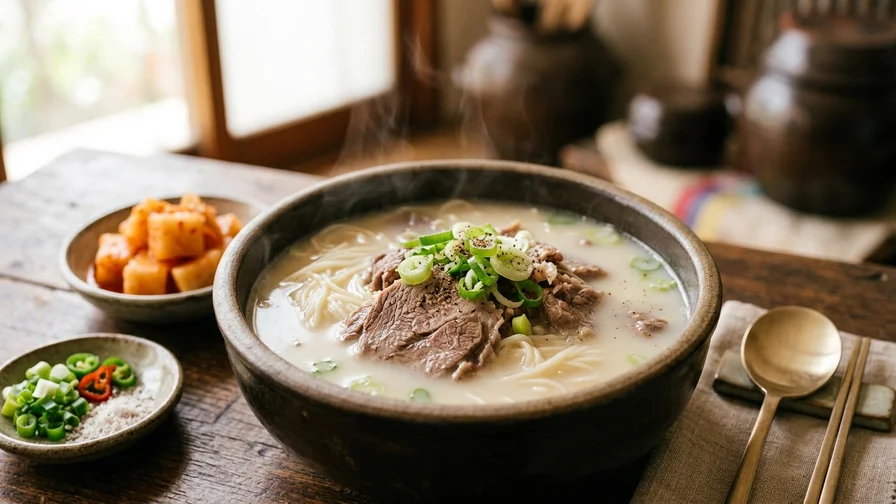
A radish kimchi made by cutting radish into cubes and seasoning it much like kimchi. It has a firmer, crunchier texture than cabbage kimchi. It often comes alongside clear broth dishes like seolleongtang (milky ox-bone soup) and gomtang.
- Main ingredients: Radish, chili powder, garlic, salted seafood
- Flavor intensity: Spicy ★★☆, Salty ★★☆, Sweet ★☆☆
- Vegetarian note: Like kimchi, it usually contains salted seafood, so it’s not vegetarian.
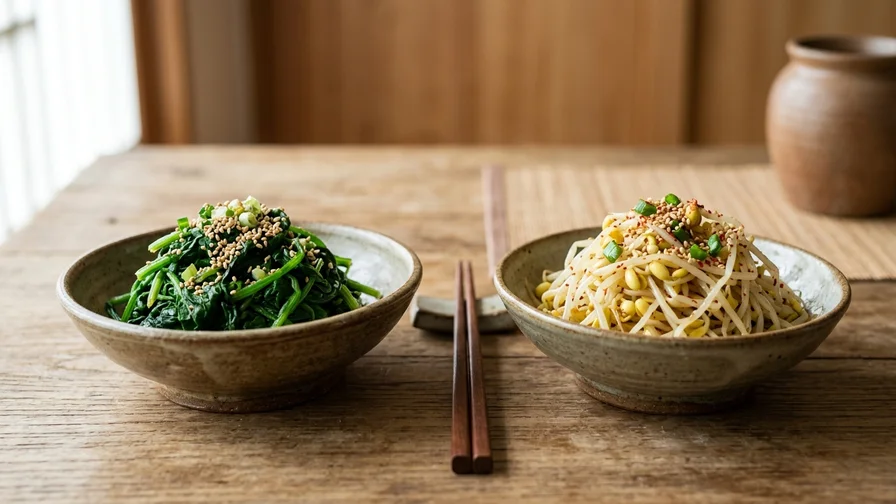
3. Sigeumchi-namul
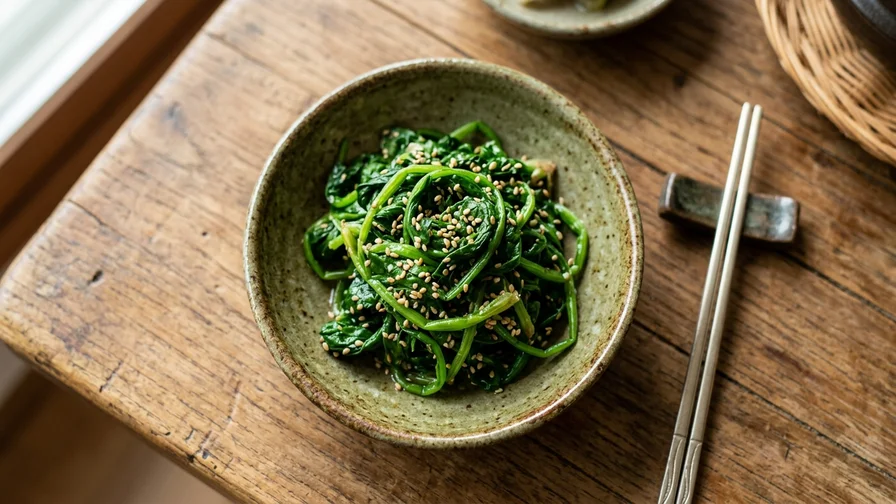
A side dish of blanched spinach tossed with salt, minced garlic, and toasted sesame oil. It’s soft and nutty, making it a great match for spicy dishes.
- Main ingredients: Spinach, sesame oil, garlic, salt, sesame seeds
- Flavor intensity: Spicy ☆☆☆, Salty ★☆☆, Nutty ★★★
- Vegetarian note: Mostly vegetarian, though some places add a little anchovy fish sauce for umami. Strict vegetarians should check.
- Allergy note: Contains sesame.
4. Kongnamul-muchim
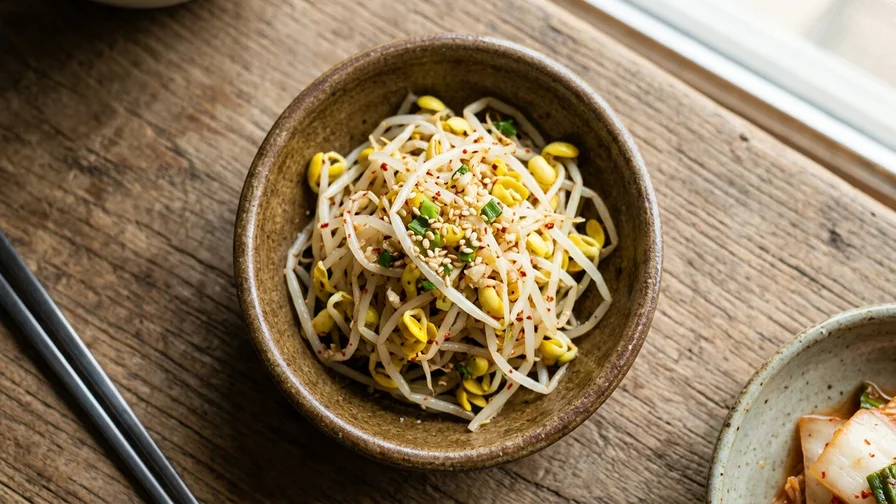
A side dish of boiled soybean sprouts tossed in seasoning. It has a crunchy texture and can be made spicy with chili powder or kept mild with just salt and sesame oil.
- Main ingredients: Soybean sprouts, garlic, sesame oil, salt (or chili powder, soup soy sauce)
- Flavor intensity: (mild version) Spicy ☆☆☆, Salty ★☆☆ / (spicy version) Spicy ★☆☆, Salty ★★☆
- Vegetarian note: Mostly vegetarian.
- Allergy note: Take care if you have a soy allergy. It may also contain sesame.
5. Myeolchi-bokkeum
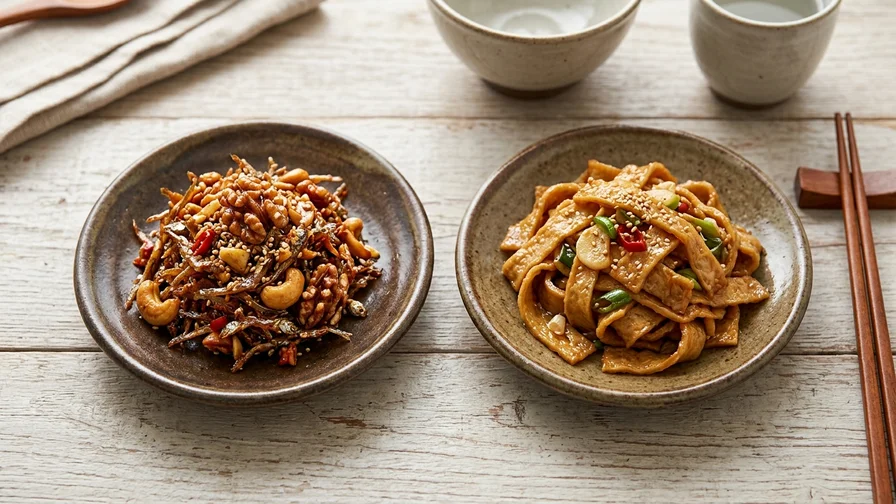
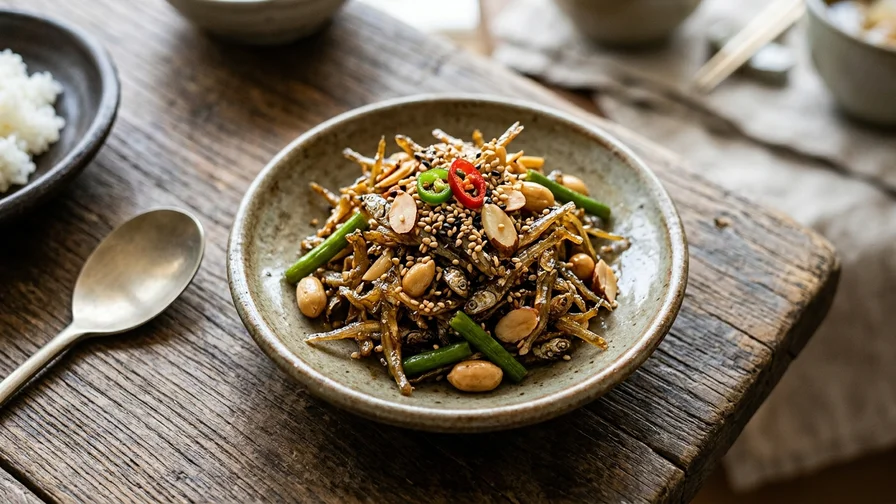
A side dish of small anchovies stir-fried in a soy sauce or chili paste glaze. It’s salty and sweet, and is sometimes made with nuts (almonds, walnuts) or green chilies. Since the fish are eaten whole, bones and all, it’s high in calcium.
- Main ingredients: Baby anchovies, soy sauce, sugar (or oligo syrup), cooking oil, nuts (optional)
- Flavor intensity: Spicy ☆☆☆, Salty ★★★, Sweet ★★☆
- Vegetarian note: Fish is the main ingredient, so it’s not vegetarian.
- Allergy note: May contain nuts.
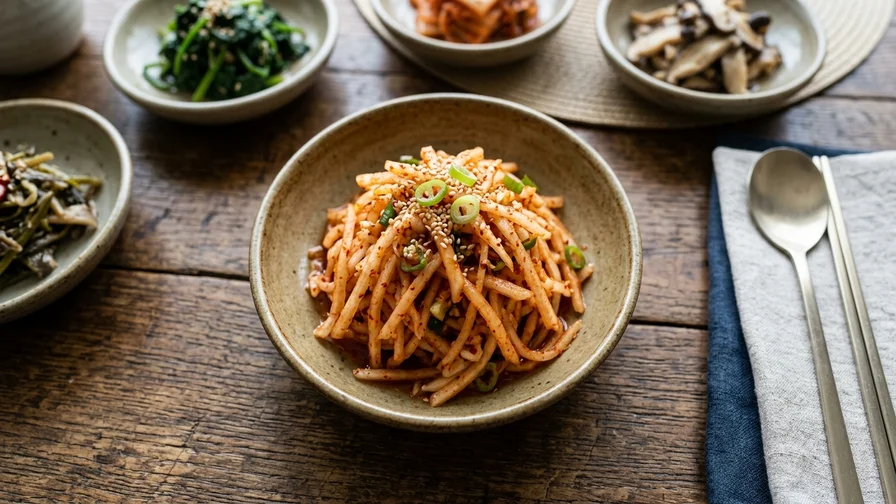
6. Mu-saengchae
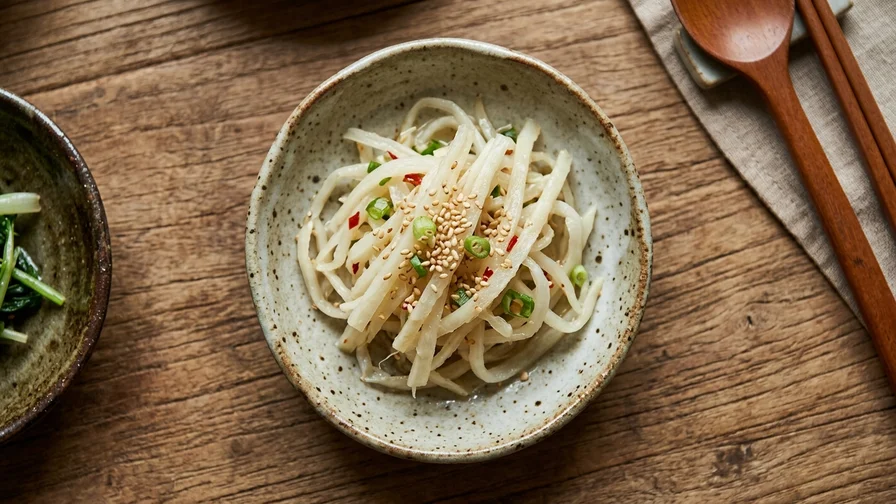
A side dish of radish cut into thin strips and tossed with chili powder, vinegar, and sugar for a sweet, tangy, and spicy flavor. It’s also a common ingredient in bibimbap and works as an appetizer that whets the palate.
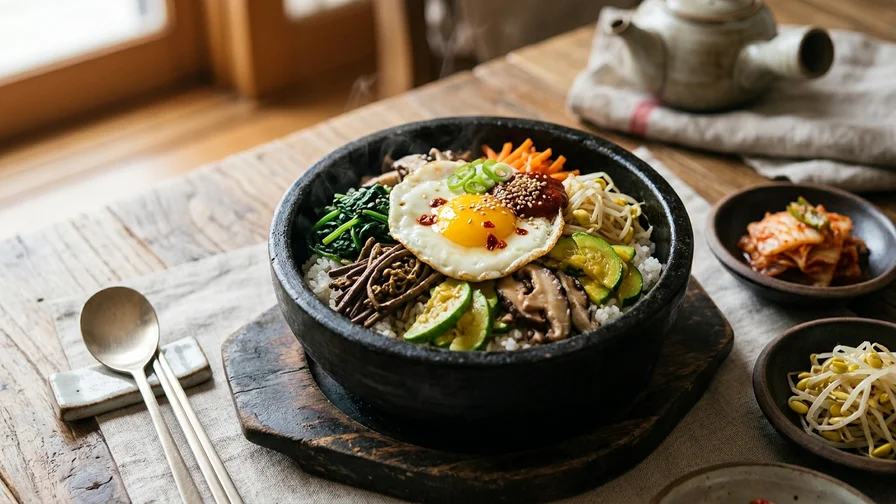
- Main ingredients: Radish, chili powder, vinegar, sugar, garlic
- Flavor intensity: Spicy ★☆☆, Salty ★☆☆, Sour ★★☆, Sweet ★☆☆
- Vegetarian note: Mostly vegetarian, though some restaurants add salted seafood, so it’s worth checking.
7. Doraji-namul
A namul made from bellflower root that’s been prepped to remove its bitterness, then stir-fried or tossed with salt and perilla oil. It has a distinctive bitter taste and aroma.
- Main ingredients: Bellflower root, perilla oil, garlic, salt, sesame seeds
- Flavor intensity: Spicy ☆☆☆, Salty ★☆☆, Bitter ★☆☆
- Vegetarian note: Mostly vegetarian.
- Allergy note: Contains sesame.
8. Gim-jaban
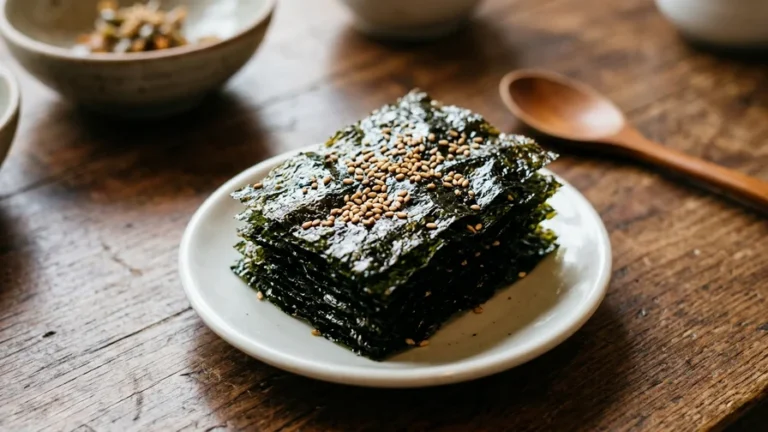
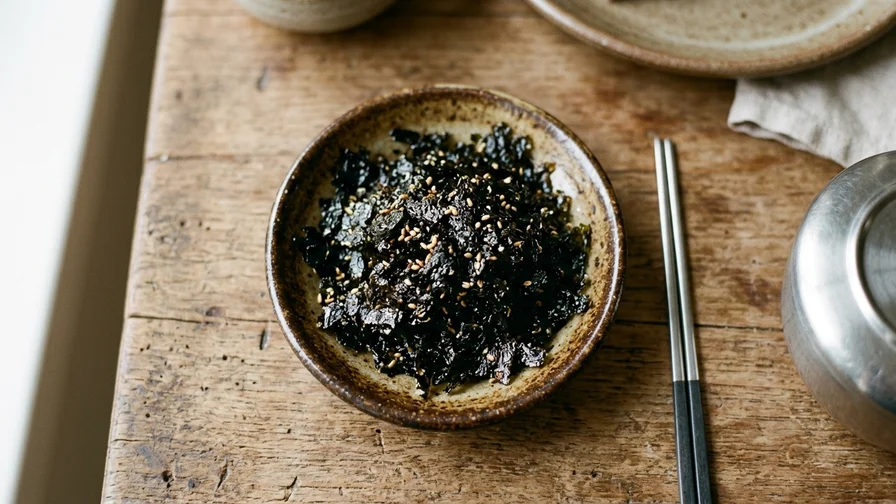
A side dish made by stir-frying finely cut gim (dried seaweed) with oil, salt, sugar, and sesame seeds. Crispy, salty, and sweet, it’s perfect sprinkled over rice. We cover how gim became a regular fixture on the Korean table separately in our piece on Korean gim side dishes.
- Main ingredients: Seaweed, cooking oil, salt, sugar, sesame seeds
- Flavor intensity: Spicy ☆☆☆, Salty ★★☆, Sweet ★★☆
- Vegetarian note: Mostly vegetarian, though some products may contain anchovy powder.
- Allergy note: Contains sesame.
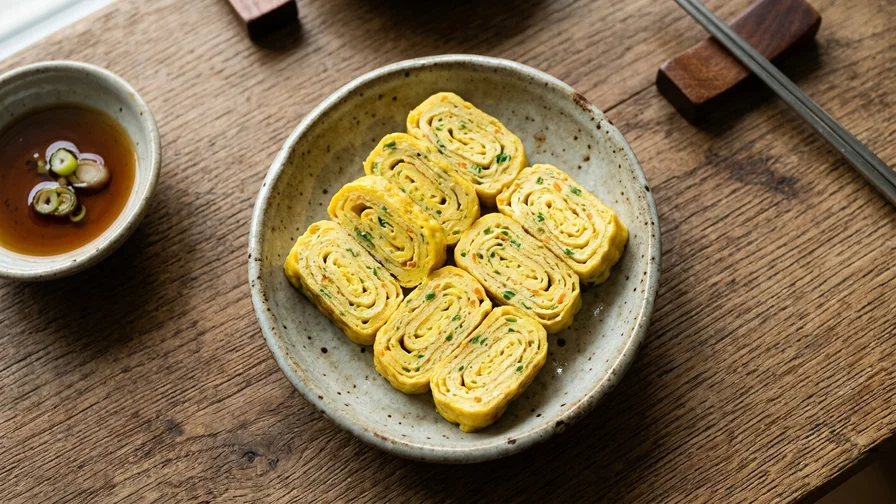
9. Gyeran-mari
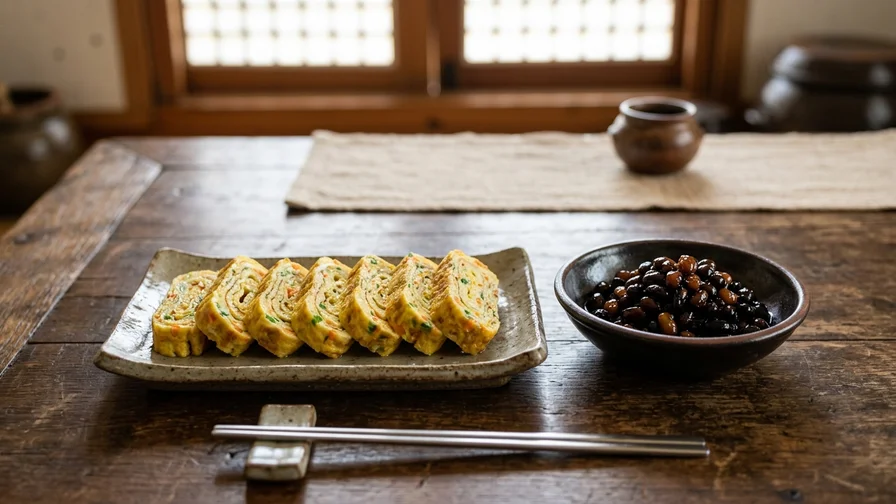
A dish made by adding finely chopped vegetables (carrot, scallion, onion, etc.) to beaten eggs, frying it thin, and rolling it into multiple layers. It’s soft and mild, making it a favorite for all ages, including children.
- Main ingredients: Eggs, chopped vegetables, salt
- Flavor intensity: Spicy ☆☆☆, Salty ★☆☆
- Vegetarian note: Suitable for lacto-ovo vegetarians. Not suitable for vegans.
- Allergy note: Egg is the main ingredient.
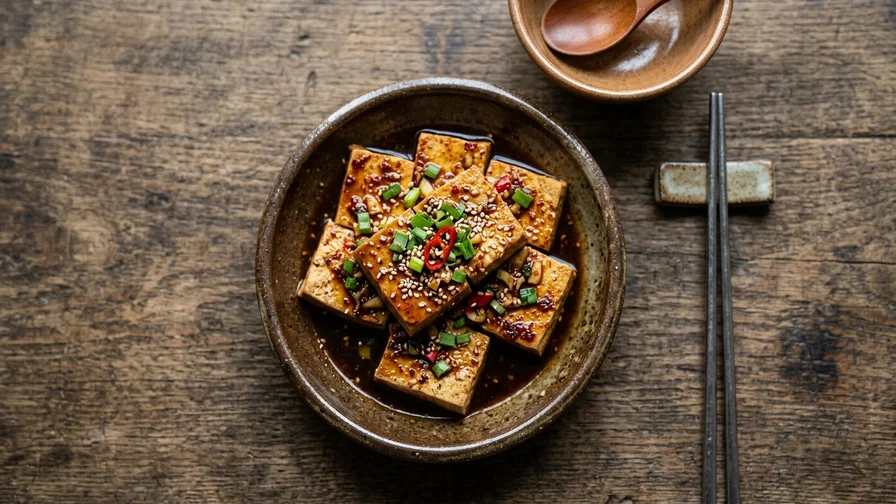
10. Dubu-jorim
A side dish of tofu sliced flat, pan-fried in oil, then simmered with a sauce of soy sauce, chili powder, and garlic. It features soft tofu with a salty, spicy glaze. We’ve gathered tofu side dishes more broadly, including pan-fried tofu, soft tofu, and chilled tofu dishes, in our guide to Korean tofu side dishes.
- Main ingredients: Tofu, soy sauce, chili powder, garlic, scallion
- Flavor intensity: Spicy ★☆☆, Salty ★★☆
- Vegetarian note: Mostly vegetarian, though the sauce sometimes uses anchovy stock.
- Allergy note: Take care if you have a soy allergy.
11. Eomuk-bokkeum
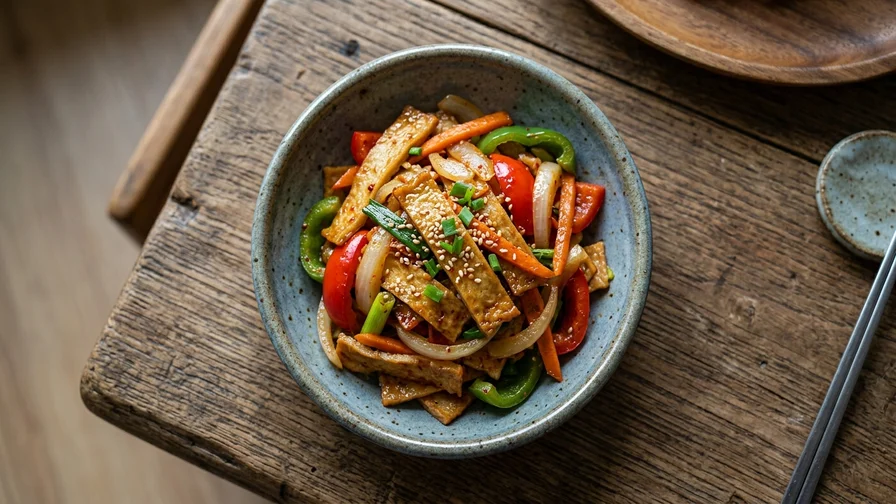
A side dish of fish cake stir-fried with vegetables like onion and carrot in a soy sauce seasoning. It’s chewy with a sweet and salty flavor.
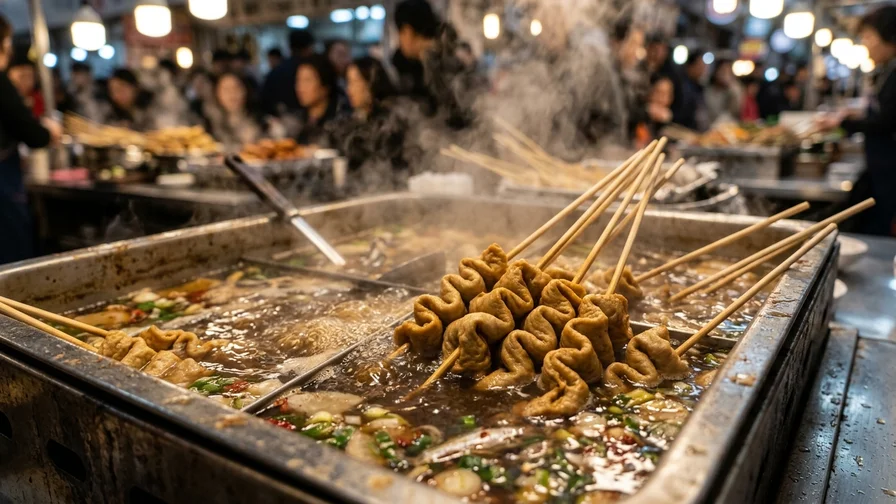
- Main ingredients: fish cake (fish paste), soy sauce, sugar (or oligo syrup), onion
- Flavor intensity: Spicy ☆☆☆, Salty ★★☆, Sweet ★★☆
- Vegetarian note: The main ingredient is fish, so it’s not vegetarian. It also contains wheat flour, so it’s a concern for those avoiding gluten.
12. Kkaennip-jangajji
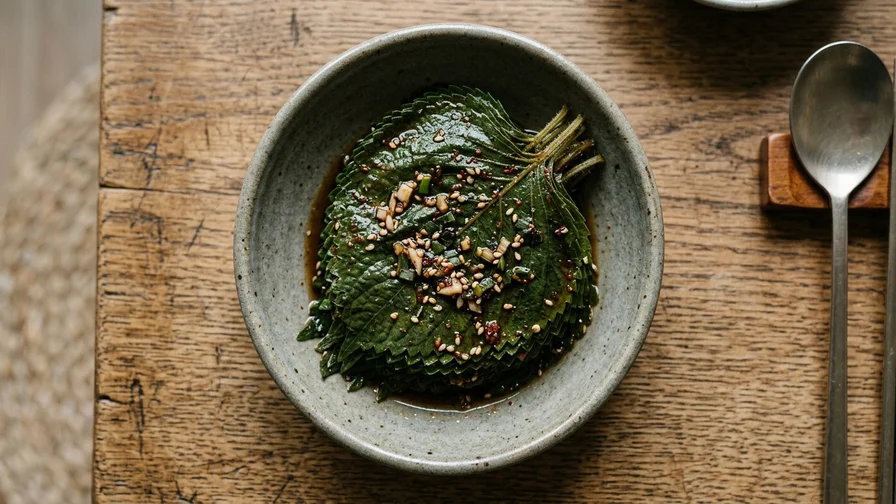
A preserved side dish made by marinating perilla leaves in a soy sauce seasoning. It has the strong, distinctive aroma of perilla and a salty taste, and is great wrapped around a bite of rice. Perilla is a plant in the mint family; it looks similar to Japanese shiso but has a different aroma.
- Main ingredients: Perilla leaves, soy sauce, garlic, chili powder
- Flavor intensity: Spicy ★☆☆, Salty ★★★
- Vegetarian note: Mostly vegetarian, though the seasoning sometimes uses anchovy fish sauce.
A Practical Guide to Eating at a Korean Restaurant
How to Order and Get Banchan Refills
At a Korean restaurant, it’s customary to order one main dish per person. Once you order your main, the side dishes come out automatically. If there’s a side dish you’d like more of, don’t hesitate to ask the staff. Most restaurants refill it for free.
- Getting the staff’s attention: Quietly raise your hand or call out “Jeogiyo” (excuse me). Many restaurants also have a call button on the table.
- Asking for a refill: Point to the side dish you want and say “Igeo deo juseyo.” It means “Please give me more of this.”
- Self corner: Some restaurants have a self-serve corner where you help yourself to the side dishes. In that case, just take as much as you’ll eat.
Don’t leave banchan behind
Refills are free, but it’s best to ask only for as much as you’ll actually eat. In Korea, leaving food behind is seen as wasteful. We recommend tasting a little at first and asking for refills mainly of the dishes you enjoy.
Notes for Vegetarians and People with Allergies
Korean food can contain animal-based ingredients that aren’t visible. In particular, fermented seafood and anchovy broth are widely used to add umami to a range of dishes, including kimchi, namul, and stews.
| Diet type | Cautions and notes |
|---|---|
| Likely vegetarian-friendly side dishes | seasoned spinach, seasoned soybean sprouts, seasoned bellflower root, spicy radish salad, rolled omelet (lacto-ovo), braised tofu. (Note: The safest approach is to ask the staff whether salted seafood or anchovy broth was used.) |
| Non-vegetarian side dishes | kimchi, cubed radish kimchi (contains salted seafood), stir-fried anchovies (fish), stir-fried fish cake (fish). |
| Major allergens |
|
If you’re a strict vegetarian or have a specific food allergy, you can ask the staff before ordering using a translation app or the phrases below.
- Vegetarian: “Jeoneun chaesikjuuija-imnida. Gogi-na haesanmul, jeotgal-i deureogaji aneun banchan-euro juseyo.” (“I am a vegetarian. Please give me side dishes without meat, seafood, or salted seafood.”)
- Allergy: “Jeoneun [allergy ingredient] allereugi-ga isseumnida. Ppaejuseyo.” (“I’m allergic to [allergy ingredient]. Please leave it out.”)
Dining Alone
Not every Korean restaurant welcomes solo diners. Korean BBQ and dak-galbi (spicy stir-fried chicken) restaurants in particular usually require ordering at least two portions. If you’re traveling solo, the types of places below are easy to manage.
- Baekban-jip: Set up for single-portion meals.
- Gukbap-jip: Serve dishes of rice in soup, mostly sold by the single portion.
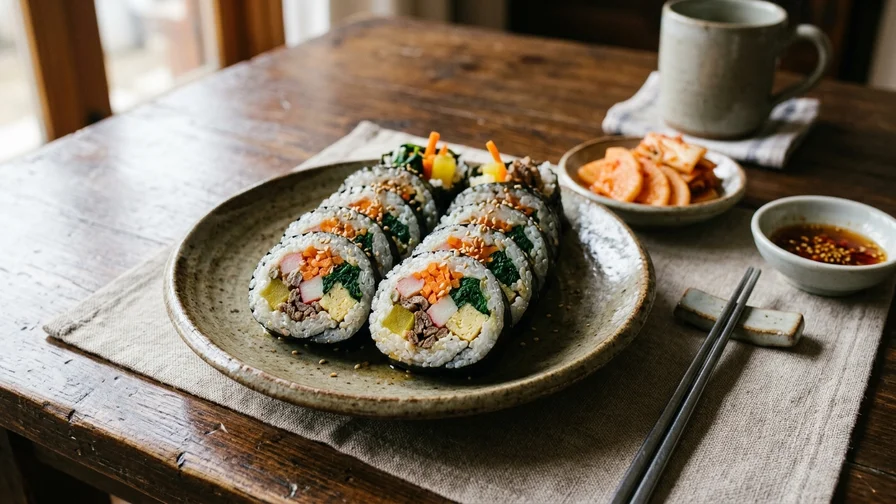
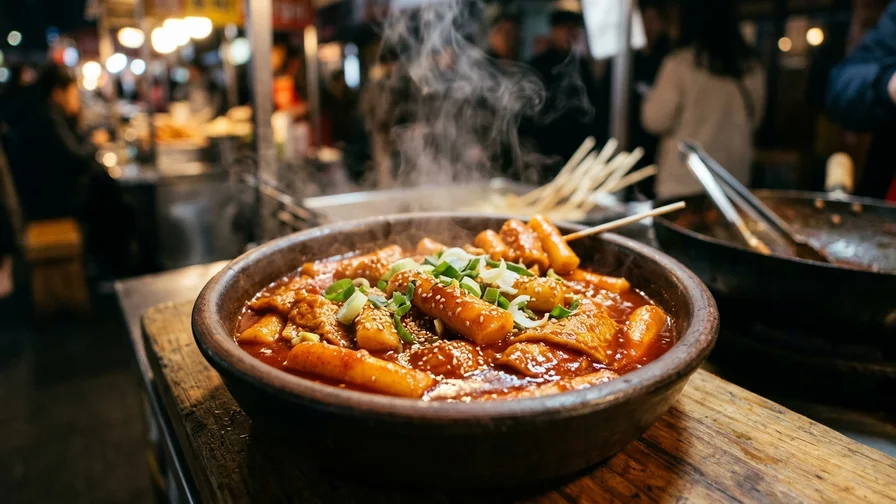
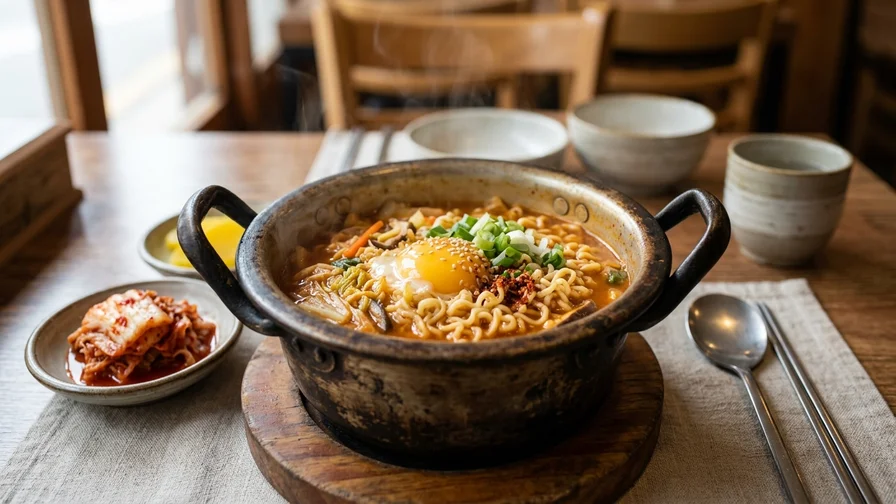
- Bunsik-jip: Sell light meals by the single portion, such as gimbap, tteokbokki, and ramyeon.
Recommended Places to Experience Banchan (Seoul)
Below are places where you can sample a variety of side dishes and that are easy for international travelers to visit. Prices and hours are as of June 2026, so double-check on Google Maps or official channels before you go.
1. Tosokchon Samgyetang
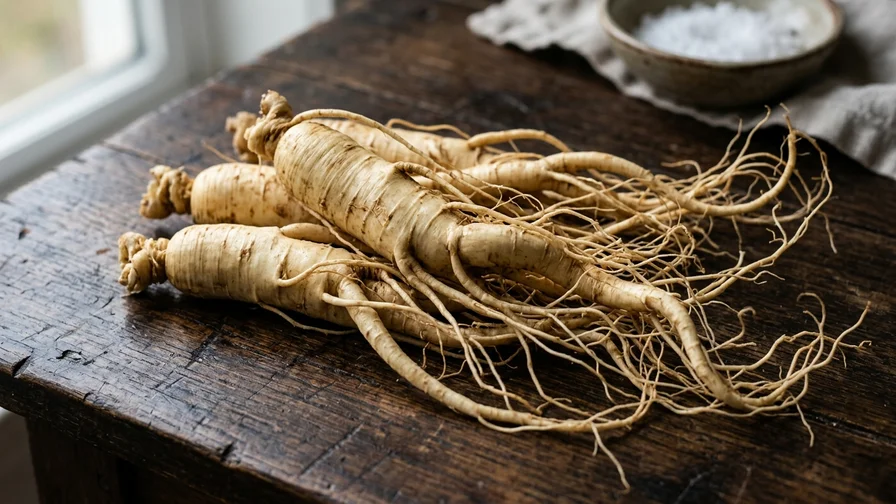
Tosokchon Samgyetang 📍 is a samgyetang (chicken stewed with ginseng) specialist in Seochon, west of Gyeongbokgung Palace. It opened in 1983 and is known as a favorite of a Korean president. The cubed radish kimchi and cabbage kimchi served alongside are especially well regarded. The number of side dishes isn’t large, but you can enjoy solid, no-frills banchan that pair well with the main dish.
- Address: 5 Jahamun-ro 5-gil, Jongno-gu, Seoul
- Price range: Samgyetang from 20,000 KRW per person (as of June 2026)
- Hours: Daily 10:00–22:00 (subject to change; check before visiting)
2. Tongin Market Dosirak Cafe
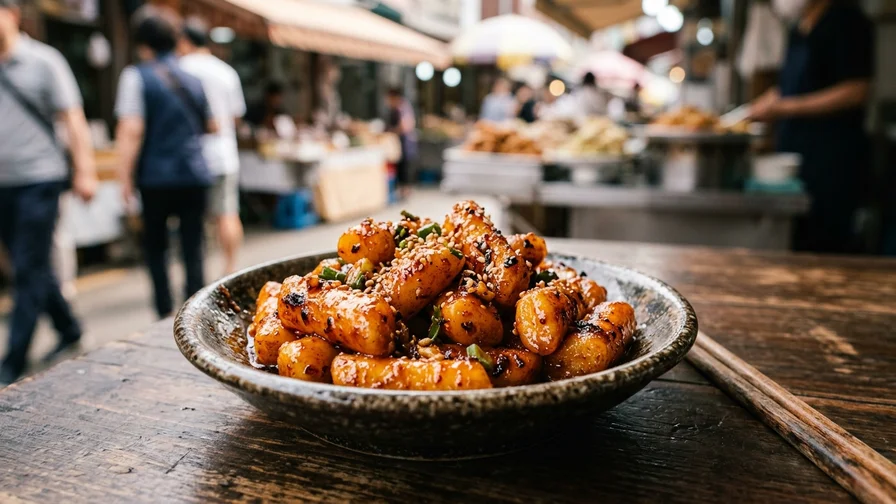
A five-minute walk from Tosokchon, this is a banchan experience course inside Tongin Market. You buy brass yeopjeon coins (500 KRW each) at the cafe, then walk around the market’s participating shops, using the coins to pick out side dishes and snacks to fill your lunchbox. You can choose small portions of various banchan like oil tteokbokki For tips on buying side dishes at a market or a banchan shop, see our more detailed coverage in Korean side dish shops.
- Address: 18 Jahamun-ro 15-gil, Jongno-gu, Seoul
- Operating hours: Weekdays 11:00–16:00 (coin sales until 15:00), weekends 11:00–17:00 (sales until 16:00) (as of June 2026)
- Closed: Every Tuesday and the third Sunday of each month
3. Saemaeul Sikdang
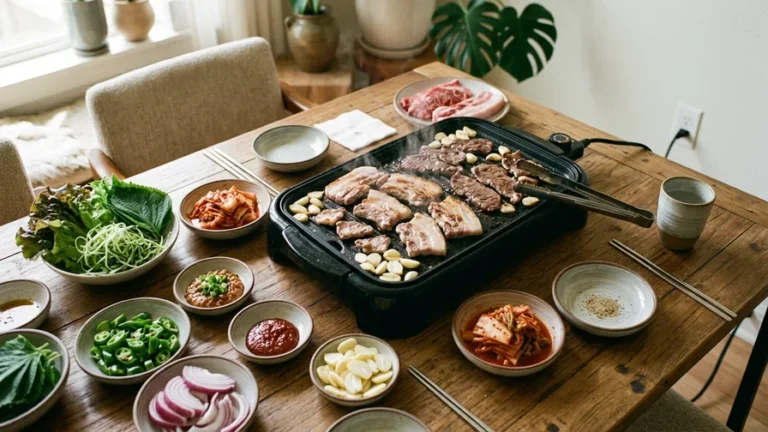
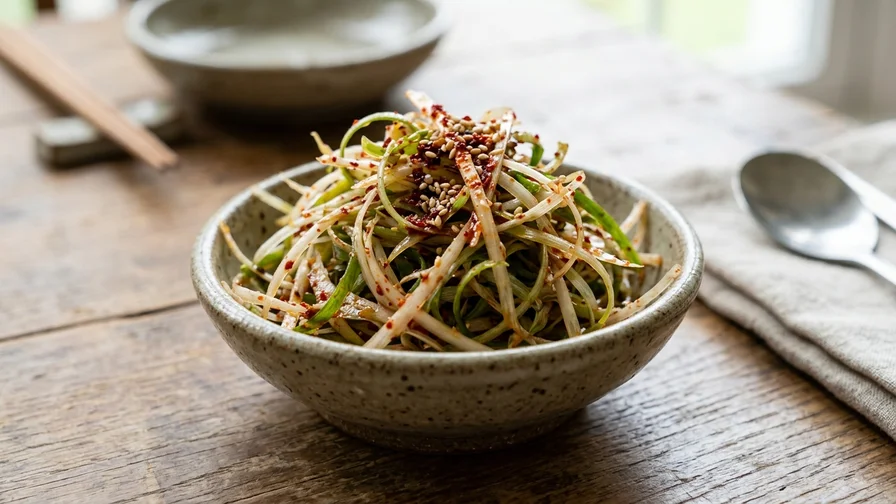
Saemaeul Sikdang 📍 is a TheBornKorea franchise specializing in Korean grilled pork (BBQ). Along with the meat, you get basic side dishes like pajeori (seasoned scallion salad), kimchi, and marinated perilla leaves. With many branches across Seoul, it’s easy to get to.
- Address: Multiple locations across Seoul (Hongdae, Gangnam, Myeongdong, etc.)
- Price range: Yeoltan bulgogi from 10,900 KRW per person (as of June 2026; varies by branch; usually a minimum of two portions)
Extra Information for Travelers
Transportation and Navigation
In Korea, Google Maps works well for public transit directions, but walking and car navigation are inaccurate due to restrictions on exporting map data. We recommend also using the Naver Map or Kakao Map app. Both support an English version.
For taxis, you can hail one with the Kakao T app. It lets you register foreign-issued credit cards (Visa, Mastercard, JCB, AMEX) if the card name matches the account holder, but sign-up requires identity verification, so signing up with an overseas phone number may not work. The global travelers’ app k.ride (kride.kakaomobility.com) supports automatic card payment and is simpler for visitors (verified October 2026). Uber is available in major cities like Seoul as well. Of course, you can also flag down a taxi on the street, and every taxi accepts card payment.
If You’d Like to Make Banchan at Home
Key ingredients like gochugaru (Korean chili flakes), toasted sesame oil, perilla oil, soy sauce, and doenjang (fermented soybean paste) can be found abroad at Korean markets like H Mart, Asian grocery stores, and online shops. Gochugaru has a different flavor profile from regular chili powder or cayenne, so it’s best not to substitute it. If you don’t have perilla oil, sesame oil will give you a similar nuttiness. If you’d like to learn hands-on while traveling, there are banchan-making classes for international visitors all over Seoul. For ideas on adapting banchan to your own cuisine, like kimchi tacos and bibimbap bowls, see K-food fusion.
When You Need Help: The 1330 Tourist Interpretation Hotline
If communication breaks down or you have a question while traveling, calling 1330 connects you to the tourist interpretation service run by the Korea Tourism Organization. It supports a range of languages, including English, Japanese, and Chinese, 24 hours a day. If you need interpretation while ordering at a restaurant, handing the phone to the staff to set up a three-way interpretation also works.