Korean BBQ at Home — Choosing Pork Cuts and Grilling Them Right
Shopping and grilling like a local is a different experience from eating out at a restaurant. Start by checking whether your accommodation already has BBQ equipment, then pick up everything, including the vegetables for ssam, at one large supermarket.
Key Takeaways
- Equipment: An electric grill or a portable gas burner with a grill plate, plus tongs and scissors are a must
- Recommended cuts: For beginners, samgyeopsal (pork belly); for a leaner option, moksal; and for special occasions, Hanwoo beef
- Where to buy: You can get everything in one stop at a large supermarket (E-mart, Homeplus, Lotte Mart)
- Budget guide: For two people, 600g of samgyeopsal + vegetables for ssam + sauces + one bottle of soju = roughly 25,000–35,000 KRW
- Information basis: Prices in this article are as of June 2026, with currency conversions based on 1 USD = approximately 1,500 KRW
Korean BBQ at Home: Choosing Cuts and Grilling Them Right
1. Preparing the BBQ Equipment
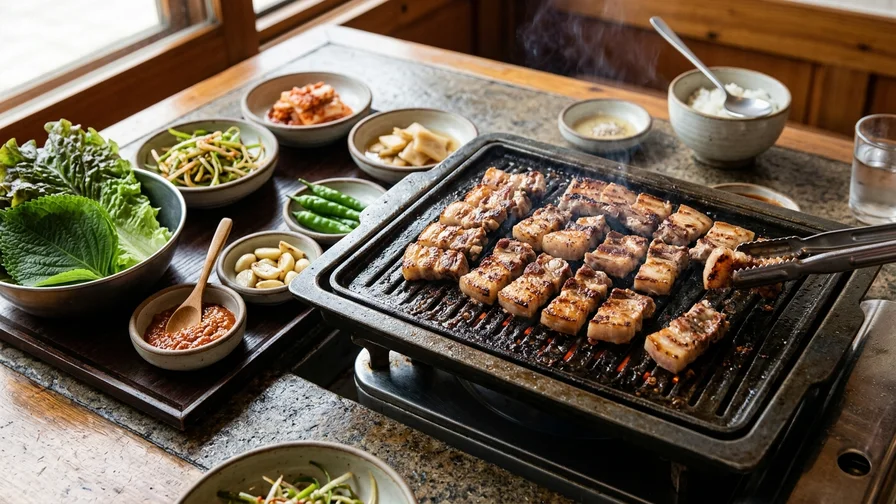
First, check whether your accommodation already has BBQ equipment. If not, you can buy it at a large supermarket, Daiso, or online stores. The two most common types of home equipment are as follows.
- Electric Grill: Many models are smokeless, producing little smoke. They are easy to use and relatively comfortable indoors, making them the safest bet for an accommodation. Prices range from 50,000 KRW (about $33) to 100,000 KRW (about $67).
- Portable Gas Stove and Grilling Pan: The most common combination in Korean households. You place a grilling pan on a portable gas burner. A pan that drains fat toward the center works best. A burner, grill pan, and butane gas together cost around 30,000 KRW (about $20) to 60,000 KRW (about $40).
Safety First
Three rules to always follow when using a portable gas burner. (1) Never put a grill plate or wide pan larger than the burner on top. The radiant heat can overheat the butane canister and cause an explosion. This is a recurring type of accident in Korea. (2) Open a window for ventilation. In an enclosed space, continued combustion builds up carbon monoxide. Smoke can also set off your accommodation’s fire alarm, so ventilation is essential. (3) Detach and store the spent butane canister away from the burner, and never line up two burners side by side.
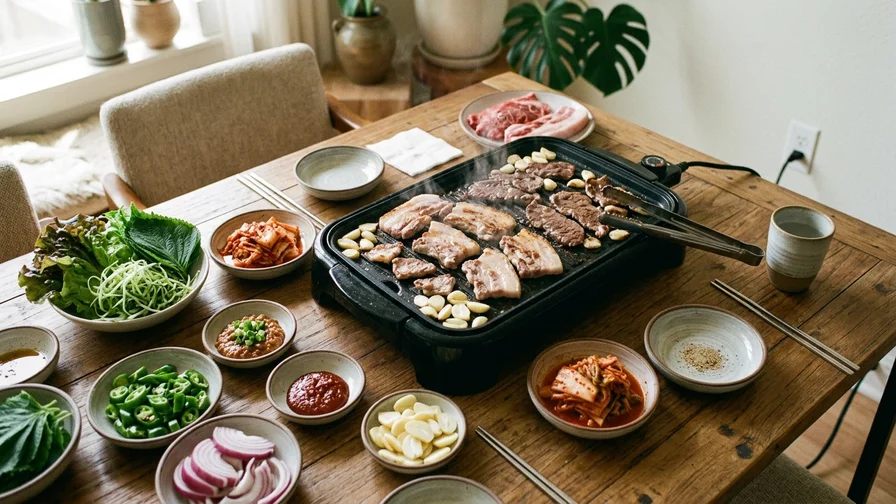
The essential tools for grilling and cutting meat are tongs and kitchen scissors. In Korea, it is common to grill the meat in large pieces and then cut it with scissors once it is cooked. These two items are usually already in the accommodation’s kitchen, or you can buy them cheaply at a supermarket.
2. Choosing the Meat: Cuts, Characteristics, and Prices
The butcher section at a supermarket displays a variety of cuts. The most popular and most foolproof options are below. As a rule of thumb, plan on 250–300g per adult. Prices are as of June 2026, and you can check average retail prices for livestock products on the Korea Institute for Animal Products Quality Evaluation (EKAPE) livestock price information (verified 2026-10-20).
Pork (Dwaejigogi)
The most beloved meat in Korean BBQ. It is reasonably priced and tastes excellent.
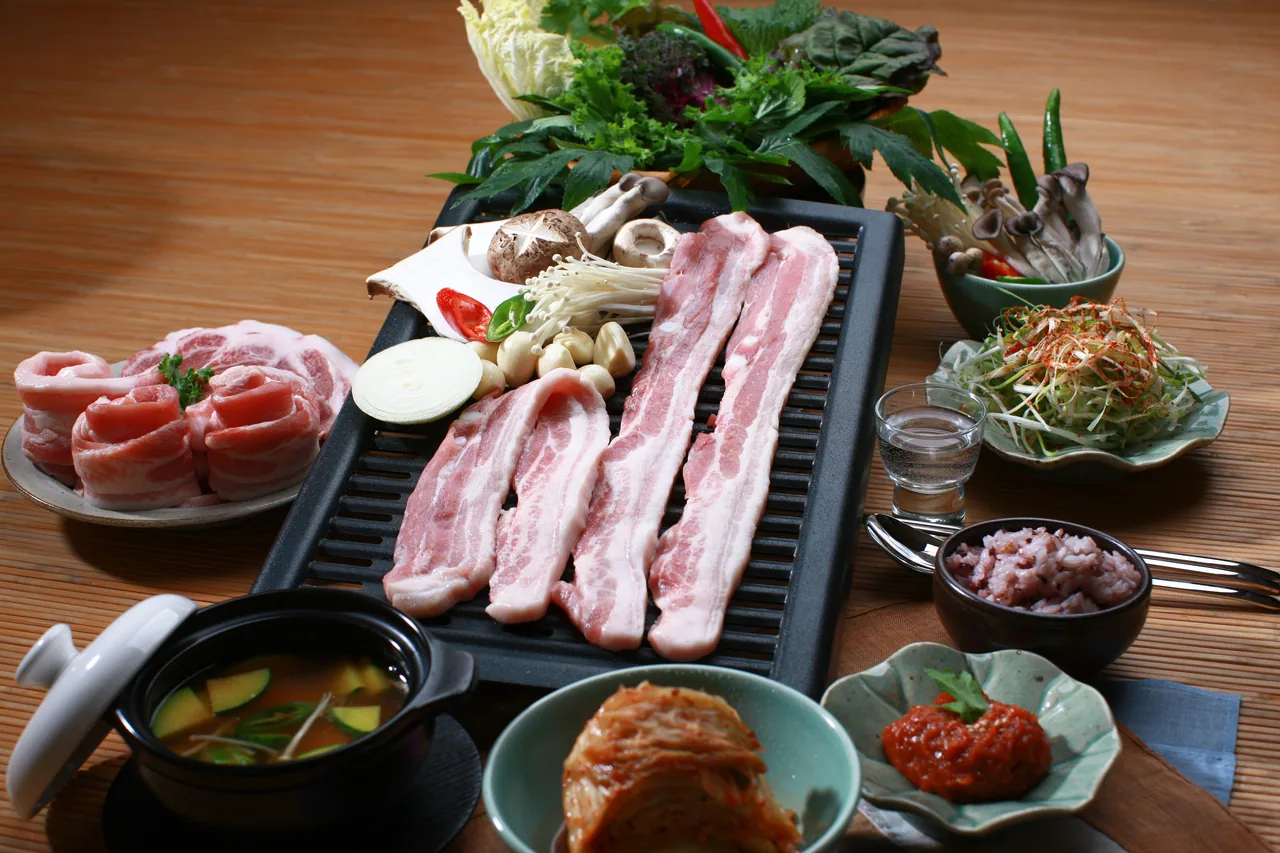
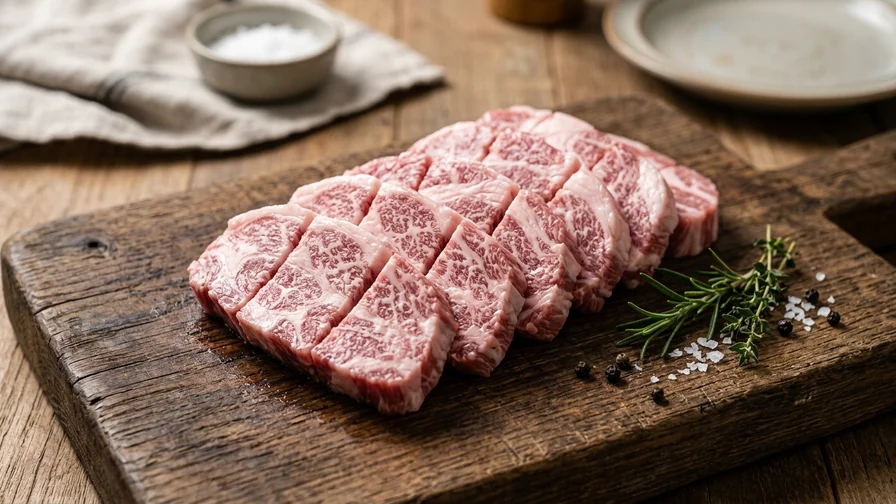
- samgyeopsal (Pork Belly): Named for the three layers of fat and lean meat. It is Koreans’ favorite cut, known for its rich, savory fat. People often grill kimchi or garlic in the fat that renders out.
- Price: 2,500–4,000 KRW per 100g (about $1.70–$2.70). It varies by brand and thickness
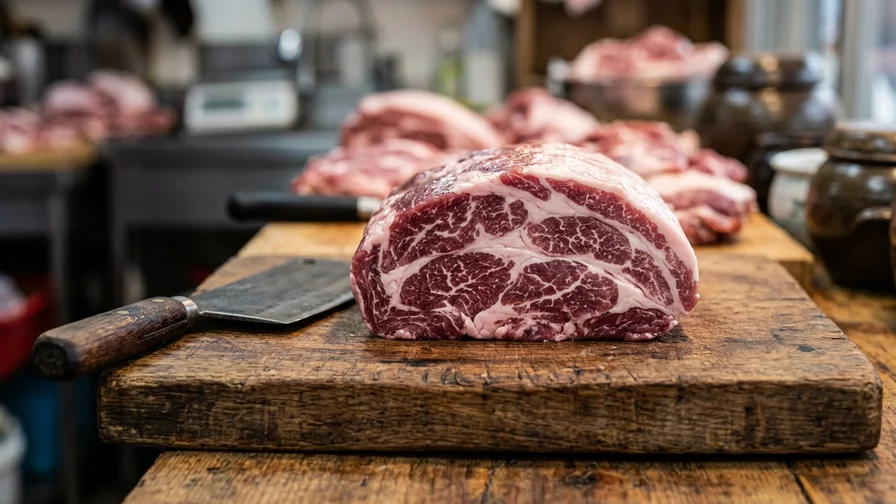
- moksal (Pork Collar / Pork Shoulder): Has less fat and more lean meat than pork belly. It is leaner with a satisfying chew, making it a good fit for those who prefer less fatty meat.
- Price: 2,500–3,500 KRW per 100g (about $1.70–$2.30)
- hangjeongsal (Pork Jowl): Cut from the pig’s neck, with fat marbled evenly throughout for a chewy texture. It is a specialty cut that yields only a small amount per animal, so it costs a bit more than other cuts.
- Price: 4,000–6,000 KRW per 100g (about $2.70–$4.00)
Beef (Sogogi)
Choose this for a special occasion or a more upscale BBQ. In particular, Hanwoo, the native Korean breed of cattle, is managed under a marbling-based grading system and offers outstanding quality.
- Hanwoo Deungsim (Loin, a cut that spans what English speakers call ribeye and sirloin): Richly marbled, juicy, and tender. To enjoy the natural flavor of the beef, it is best dipped lightly in just salt. Hanwoo prices vary widely by grade (1++, 1+, 1, 2, 3).
- Price (grade 1++): 12,000–20,000 KRW per 100g (about $8–$13). It varies greatly depending on supermarket sales, department stores, and specialty shops
- Chadolbaegi (Thinly Sliced Beef Brisket): Very thinly sliced beef brisket. It is fatty and savory, and cooks the moment it hits the grill. Be careful, as it turns tough if grilled too long.
- Price: It varies widely by origin. Imported runs 3,000–5,000 KRW per 100g (about $2–$3.30), while Hanwoo chadolbaegi runs 8,000 KRW or more per 100g (about $5.30)
3. Where to Buy Meat and Ingredients
Large Supermarkets
Large supermarkets like E-mart, Homeplus, and Lotte Mart are the most convenient. You can pick the cut and amount you want at the butcher counter, and get everything you need for BBQ in one go: vegetables for ssam, sauces, kimchi, and alcohol. Most are required to close on the second and fourth Sundays of the month, so check whether they are open before a Sunday visit (it varies by region, as of June 2026).
Jeongyukjeom (Local Butcher Shop)
If you want the finest Hanwoo, a visit to a neighborhood butcher is the way to go. You can ask them to slice it to your preferred thickness, and a high-turnover shop often has fresher meat than a supermarket. Just look for a sign that says “Hanwoo specialist.” A butcher is especially handy for solo travelers, since unlike a supermarket’s pre-packed portions, you can simply ask for a small amount like 200–300g.
Show This at the Butcher
“삼겹살 300그램, 구이용으로 썰어 주세요”
Samgyeopsal sambaek geuraem, gu-i-yong-euro sseoreo juseyo
= “Pork belly 300 grams, sliced for grilling, please.”
Just swap in the name of any cut and it works (moksal, hangjeongsal, deungsim).
Online Shopping
With Coupang’s Rocket Fresh or Market Kurly, you can have fresh meat and ingredients delivered by early the next morning. However, these require a Korean mobile number and a domestic payment method, which makes them impractical for short-term travelers. For a short stay, supermarkets and butcher shops are the answer.
Sourcing Ingredients Outside Korea
This is a sourcing guide for those reading from outside Korea who want to recreate it at home.
- Pastes (gochujang, doenjang, ssamjang): You can find major brands like CJ Haechandle, Chung Jung One, and Sempio at Korean and Asian grocery stores. In the US, Korean chains like H Mart carry them, and elsewhere most Asian grocery stores and global online shops stock them too.
- Substitutes: If you cannot find doenjang, you can substitute Japanese miso (red miso is the closest), though it is sweeter and milder than doenjang. If you cannot find gochujang, you can approximate it by mixing miso with fine gochugaru (or red pepper flakes) and honey. Vinegar-based hot sauces like Sriracha differ in texture and flavor and do not work as a substitute.
- Meat: For pork belly, just ask the butcher for “skin-off pork belly, sliced 5mm thick.” For chadolbaegi, the thin brisket slices for shabu-shabu at an Asian grocery store are the same thing.
- Perilla leaves: Korean grocery stores sell them as “perilla leaves” or “sesame leaves.” “Sesame leaves” is just a common label and does not refer to sesame leaves; they are perilla leaves. Japanese shiso is a different variety of the same plant species, so its aroma differs, but it is the closest substitute. If you cannot find any, lettuce alone is plenty.
4. Preparing Side Dishes and Sauces
Korean BBQ is not just about the meat; it is enjoyed alongside a variety of sides. These keep the flavors in balance.
Making Your Own Ssamjang
You can buy ready-made ssamjang at a supermarket, but mixing your own tastes fresher. Just combine the ratios below.
| Ingredient | Ratio | Description |
|---|---|---|
| doenjang (Soybean Paste) | 2 | The savory base |
| Gochujang (Red Chili Paste) | 1 | Adds a spicy kick |
| Dajin Maneul (Minced Garlic) | 1 | A sharp, pungent aroma and flavor |
| Chamgireum (Sesame Oil) | 1 | A nutty aroma |
| Kkae (Sesame Seeds) | 0.5 | Nuttiness and texture |
Put all the ingredients in a small bowl and stir well with a spoon, and you are done. You can add a little sugar or oligosaccharide syrup to taste. A note for anyone with allergies: doenjang and store-bought ssamjang are based on soybeans, and some products contain wheat, so check the allergen labeling on the package.
Optional: Soy Marinade for Bulgogi-Style Grilling
Salt-grilling fresh meat is the standard, but if you want marinated meat like bulgogi, the standard ratio is below. It is based on 600g of beef (thin loin or chuck for bulgogi) or pork (moksal).
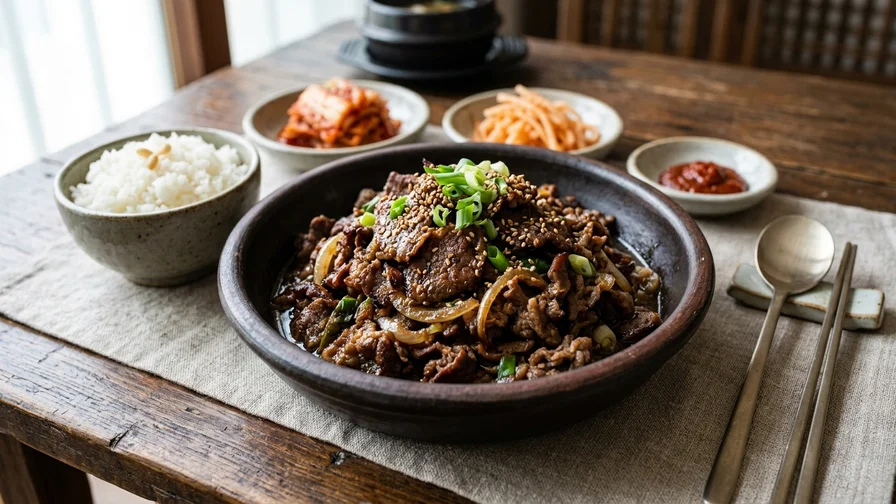
- 6 tbsp soy sauce, 2 tbsp sugar, 4 tbsp pear juice (grate 1/4 of a pear; if unavailable, substitute apple or a store-bought pear drink), 1 tbsp minced garlic, 1 tbsp sesame oil, a pinch of pepper, and diagonally sliced scallions
- Marinating time: at least 30 minutes; beef can be refrigerated overnight. If you use kiwi instead of pear, its protein-digesting enzyme is strong, so do not go beyond 30 minutes or the meat will turn mushy
- Marinated meat burns easily because of the sugar, so grill it over medium heat
Basic Side Dishes
Just pick up the items on the list below at the supermarket.
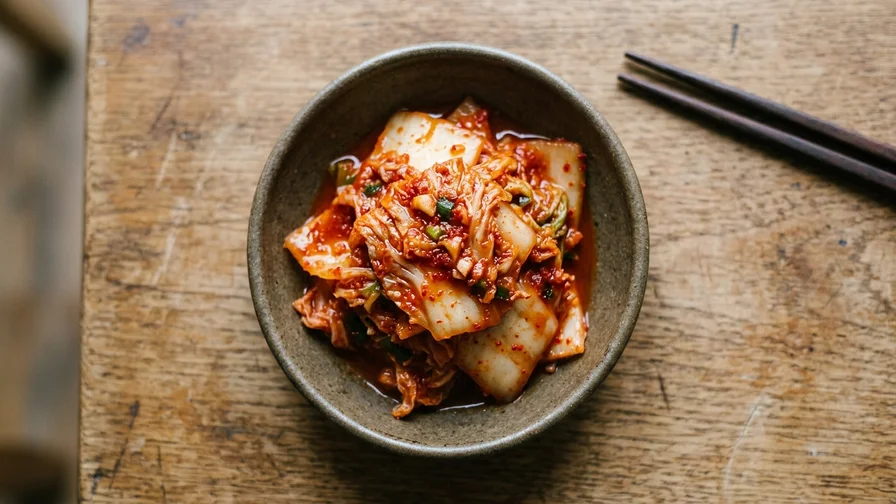
- kimchi (Kimchi): Grilling it in the pork fat doubles the flavor. Most store-bought kimchi contains fermented seafood (jeotgal), so if you have a seafood allergy or are vegetarian, look for products labeled “vegan kimchi.”
- Sangchu (Lettuce) and Kkaennip (Perilla Leaves): Essential ingredients for “ssam,” where you wrap the meat.
- Saeng Maneul (Raw Garlic): Thinly slice it to add to your ssam, or grill it on the pan.
- Pachae Muchim (Seasoned Scallion Salad): Shredded scallions tossed with gochugaru, soy sauce, vinegar, sugar, and sesame oil. It cuts through the richness of the meat. Supermarkets sometimes sell shredded scallions and the seasoning sauce as a set.
Gireumjang, which pairs well with beef
Another dipping sauce for the meat is “gireumjang.” Pour sesame oil into a small dish, add a little salt and pepper, mix, and you are done. It pairs especially well with beef.
5. How to Grill: A Step-by-Step Guide
For the best flavor, the order and method of grilling matter.
- Meat Preparation: Take refrigerated meat out 30 minutes before grilling and let it come to room temperature. This reduces the temperature difference between the inside and outside of the meat, helping it cook evenly.
- Preheating the Grill: Heat the grill or pan thoroughly over high heat. Putting the meat on a hot surface keeps the juices in and gives the surface a crisp finish.
- Grilling Pork:
- Place the samgyeopsal or moksal on the heated pan. You should hear a sizzle.
- Over high heat, cook one side for about 1 minute to sear and coat the surface.
- Lower to medium heat and cook for another 2–3 minutes until the bottom turns golden.
- Flipping the meat only once and cooking the other side for 2–3 minutes is the Korean standard. Flipping too often leaves no time for the surface to brown.
- Once both sides are cooked, cut it into bite-sized pieces with scissors. If the cut surface of the pork is still pink, cook it a bit more.
Grill just 2–3 pieces at a time
Do not put too much meat on the pan at once. The pan temperature drops sharply, and instead of grilling, the meat ends up steaming. It is best to grill just 2–3 pieces at a time.
Grilling Special Cuts
- Chadolbaegi: Because it is very thin, put it on a piping-hot pan, flip within 10–15 seconds, and eat it right away. When the color changes, that is your cue to eat.
- Hanwoo Deungsim: Unlike pork, the key is not to overcook it. Grilling it over high heat for just 30 seconds to 1 minute per side, to a medium-rare with the redness barely cooked off, is the most tender and delicious.
6. How to Make a ‘Ssam’ and What to Drink
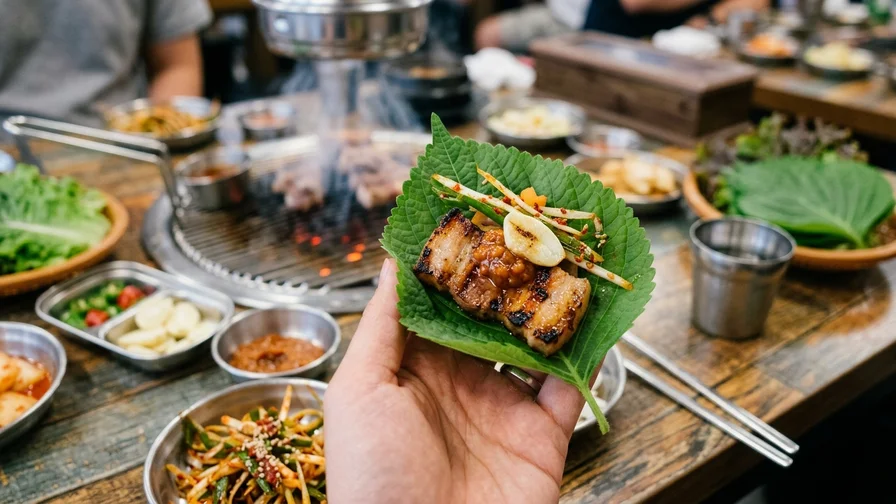
Korean BBQ comes together with “ssam,” wrapping the meat and other ingredients in a leaf and eating it in one bite.
- Place 1–2 lettuce leaves on your palm, or set a perilla leaf on top of the lettuce.
- Dip a well-grilled piece of meat in ssamjang or gireumjang and place it on top.
- Add whatever sides you like on top, such as grilled garlic, seasoned scallion salad, or grilled kimchi.
- Wrap it well so the ingredients do not fall out, and pop it in your mouth. The Korean way is to eat ssam in a single bite rather than nibbling at it.
Local Alcohol Pairing
In Korea, grilled meat and a drink are practically a single set. Just add them to your cart in the supermarket’s alcohol section (prices as of June 2026).
- Soju: The national partner of samgyeopsal. It cleanly washes away the richness. One bottle (360ml) costs 1,200–1,500 KRW (about $1) at a supermarket, or around 2,000 KRW at a convenience store.
- Maekju (Beer): A safe choice. “Somaek,” a mix of soju and beer, is a classic of Korean group dinners; the basic ratio is roughly 1 part soju to 3 parts beer in a beer glass.
- Non-drinkers: Sparkling water or cider (which in Korea refers to a Sprite-style soda) is a non-alcoholic option that cuts through the richness.
7. Extra Information for Travelers
Transportation Information
If you have a lot of bags after shopping at the supermarket, a taxi is convenient. The Kakao T app lets you register overseas-issued cards (Visa, Mastercard, American Express, JCB) as a payment method (verified October 2026), but sign-up requires SMS verification and some overseas SIMs do not receive the code. If verification or card registration fails, after hailing a ride you can choose the Pay to driver option and pay with cash or a foreign credit card when you get out. There is also k.ride, Kakao Mobility’s app for foreigners that lets you sign up and use auto-payment with an overseas phone number and overseas card (as of June 2026). For short, base-fare distances, you can also just flag down an empty taxi on the street.
Dietary Restrictions
Muslim readers will find it hard to get halal-certified meat at ordinary large supermarkets; in Seoul, you can buy halal beef and chicken at the halal grocery and butcher shops around the Seoul Central Mosque in Itaewon. Whether to worry about cross-contamination from grilling pork on the same pan is for you to judge by your own standards. If you are vegetarian, you can enjoy the same format of Korean BBQ by grilling tofu or mushrooms (king oyster, shiitake) with the same equipment, ssam, and ssamjang combination.
Tourist Information Support
For questions during your trip, such as supermarket locations or transportation, you can call the 1330 Korea Travel Helpline operated by the Korea Tourism Organization (dial 1330, or +82-2-1330 from abroad). It operates 24 hours a day in multiple languages, including English, Japanese, and Chinese.
Disclaimer
You can check average retail prices for livestock products on the Korea Institute for Animal Products Quality Evaluation (EKAPE) livestock price information (verified 2026-10-20), and prices of everyday goods on the Korea Consumer Agency’s Cham Price. For supermarket hours and mandatory closing days, checking the official website of the specific branch before your visit is the most accurate.
Some photos © Korea Tourism Organization (KOGL Type 1)