How to Find and Savor a Jeju Haenyeo Meal Set by the Sea
목차
- The Short Version
- What Exactly Is a Haenyeo Meal? The Taste of a Life Shaped by the Sea
- Gifts from the Sea: The Main Ingredients of a Jeju Haenyeo Meal
- How to Eat It the Right Way
- Where to Find a Haenyeo Meal: The Special Places to Eat
- Prices and Tips
- The Wisdom and Flavor of the Haenyeo Community: The Story Held in the Meal
- Frequently Asked Questions
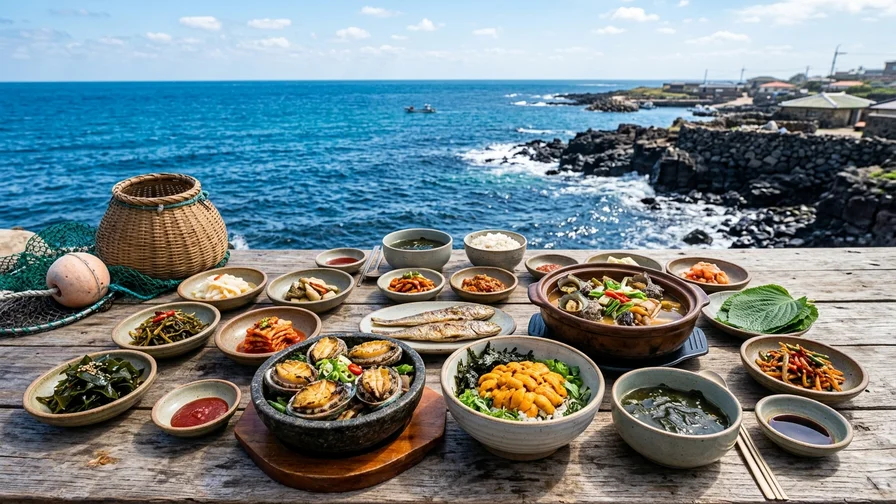
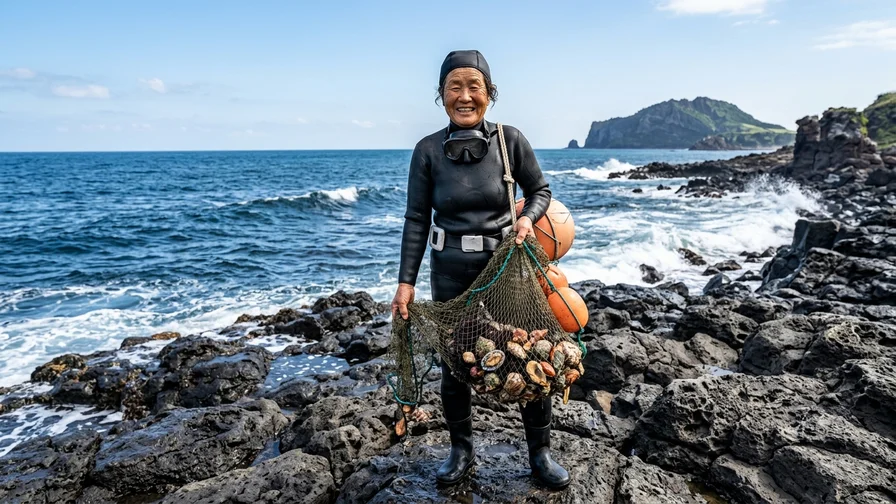
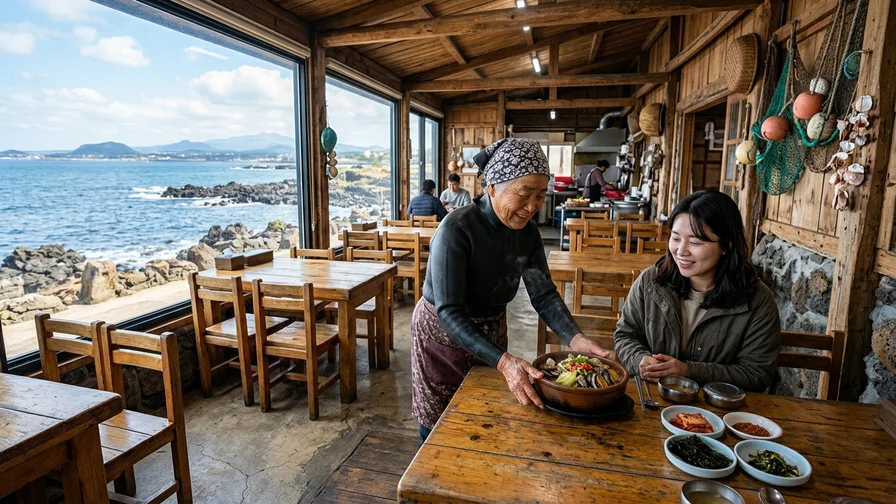
On Jeju, there is a kind of meal where the sea decides the menu before any restaurant sign does. This is the Jeju haenyeo meal. The haenyeo are Jeju’s women divers who plunge into the sea without any oxygen gear to harvest seafood, and the meal is a full table set with whatever they pulled up by hand that very day. In truth, this is far more than a simple seafood set menu, it is the centuries-long labor and livelihood of a whole community laid right out on the dishes. With this one article, even a first-time visitor can follow along and understand what a Jeju haenyeo meal is, what appears on the table, how to eat it, and where to find it.
The Short Version
- A Jeju haenyeo meal is a full table built from seafood the haenyeo catch themselves, served in the Korean style with a bowl of rice, a soup, and several side dishes laid out together.
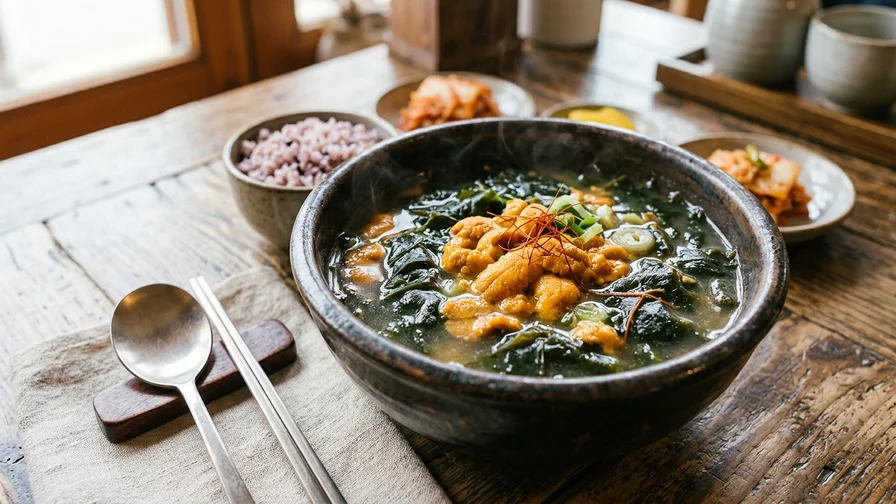
- Sea Urchin Seaweed Soup (성게미역국, seonge-miyeokguk), Abalone Porridge (전복죽, jeonbok-juk), and bomal (top shell) porridge are easygoing starter dishes for first-timers, while sea squirt, sea cucumber, and raw horned turban are for the more adventurous eater with an unfamiliar palate.
- Haenyeo Houses are scattered across the coastal villages, so a rental car is the easiest way to reach them. Porridges and soups generally run from 10,000 to 15,000 won, but prices can change, so it is best to check before you go.
What Exactly Is a Haenyeo Meal? The Taste of a Life Shaped by the Sea
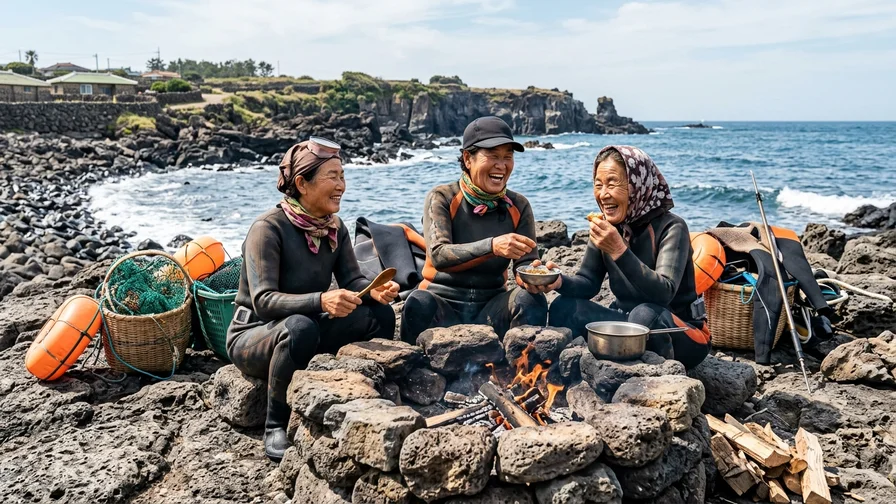
To understand a Jeju haenyeo meal, you first need to know who the haenyeo are. The haenyeo are Jeju’s women divers who go under the sea on a single breath, with no air tanks or oxygen gear, to harvest seafood such as Abalone (전복, jeonbok), turban shells, and Sea Urchin (성게, seonge). That dangerous, demanding work is so distinctive that Jeju haenyeo culture was inscribed on the UNESCO list of Intangible Cultural Heritage of Humanity in 2016. A haenyeo meal is precisely the table that these divers set with the seafood they caught themselves.
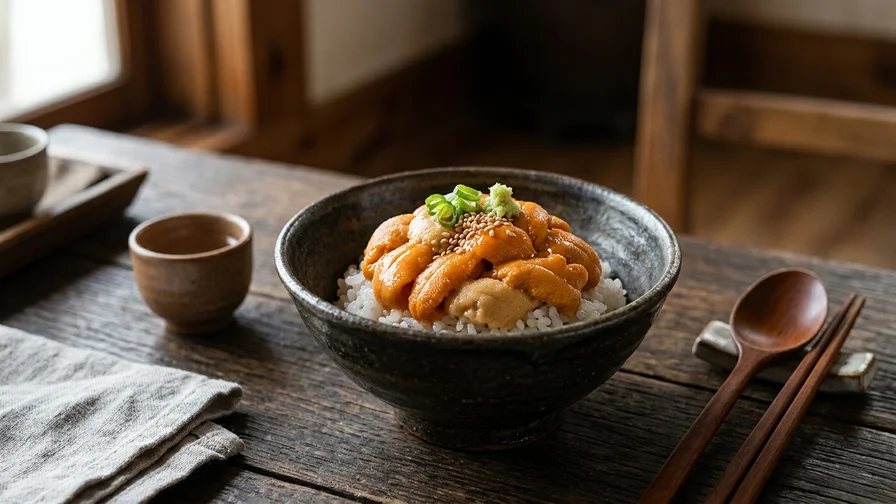
There is one thing worth knowing up front as an international reader. A Korean meal is not a single-plate course where just one main dish is served. It is a spread where a bowl of rice, a soup, and several side dishes (banchan) are laid out together. The haenyeo meal works the same way, so you do not just get a single porridge or soup, you get it surrounded by an array of seasonal side dishes. Look a little closer and you will see that this very abundance is a trace of a community that once shared what it gathered from the sea.
For Koreans, this is not just a meal but food that calls to mind a mother’s labor and devotion. Behind it lies the lives of Jeju women who could not survive on farming alone on this barren volcanic island and so had to turn to the sea. That is why, when a haenyeo meal arrives, you find yourself thinking about the story held within it, well beyond its freshness.
Gifts from the Sea: The Main Ingredients of a Jeju Haenyeo Meal
Most of what goes onto a Jeju haenyeo meal is wild-harvested. That means the menu shifts with the weather, the season, and whether diving was even possible that day. In winter or during spawning seasons, some seafood may drop off the list entirely, so it helps to know in advance that even at the same restaurant the spread can differ a little from one visit to the next.
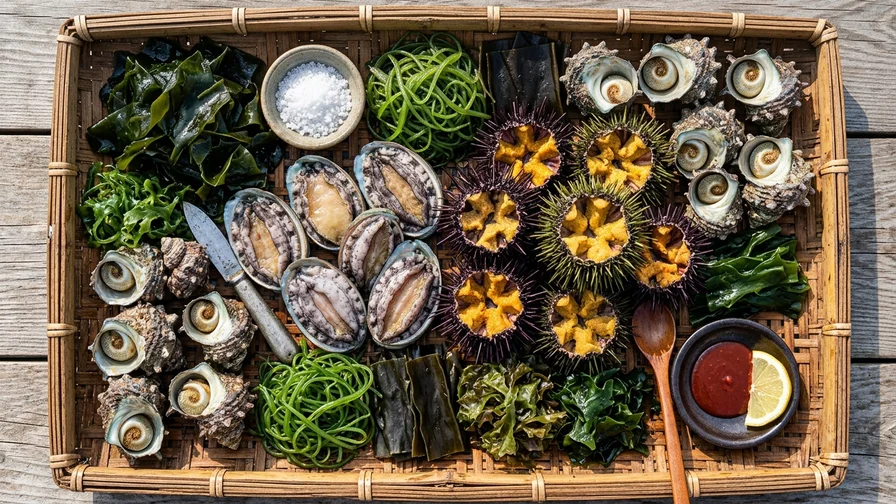
The seasonal seafood that typically appears includes the following.
- Sea Urchin is at its peak in summer and, with its deep oceanic aroma and nutty sweetness, is prized as a restorative ingredient.
- Abalone is fairly easy to find year-round and is used widely in porridge or grilled.
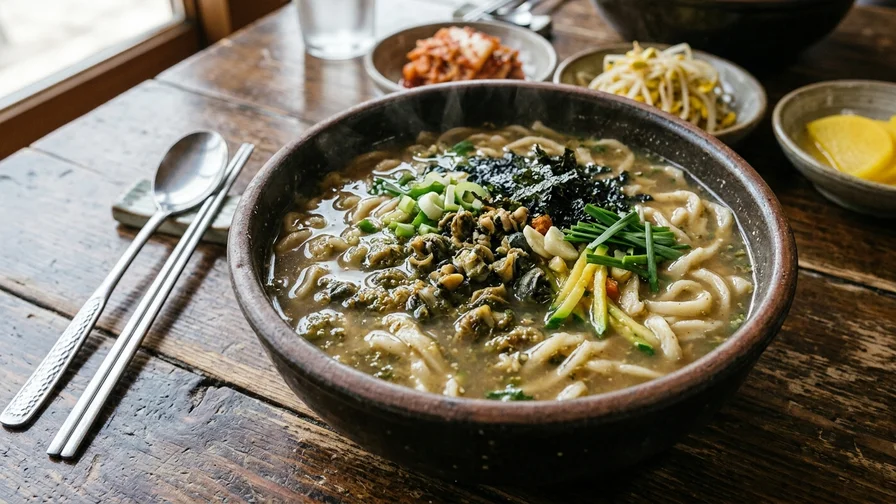
- Bomal is a tiny top shell about the size of a fingernail that lends a savory broth when added to porridge or knife-cut noodles.
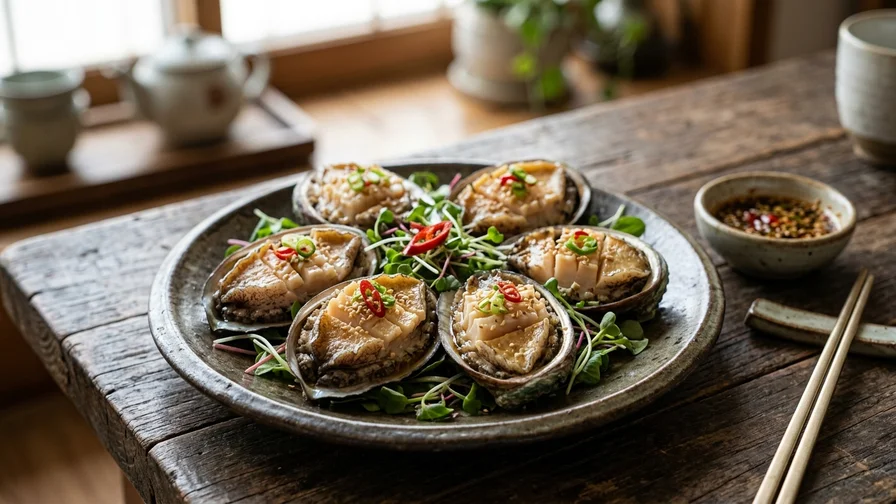
- Horned turban shell has a notably chewy texture, so it is enjoyed grilled or raw.
- Sea cucumber and sea squirt have such distinctive aroma and texture that opinions tend to split on them.
- Octopus and seaweed are blanched or simmered into soups and turn up all over the table.
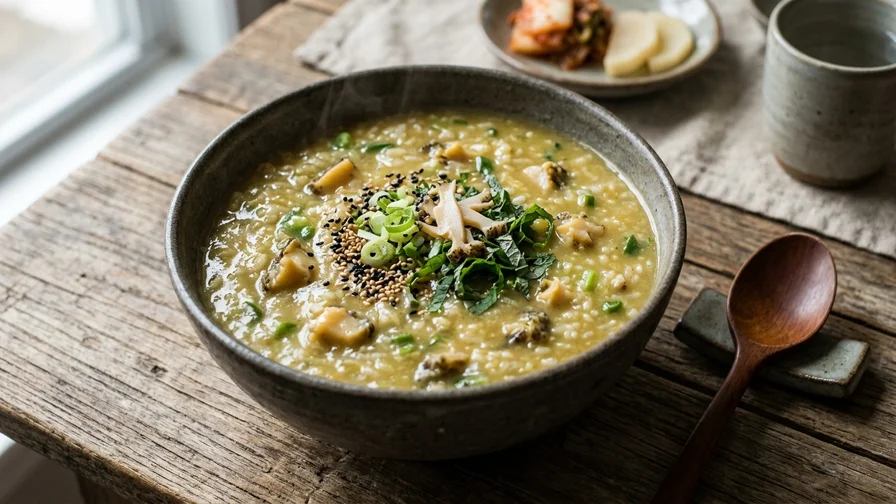
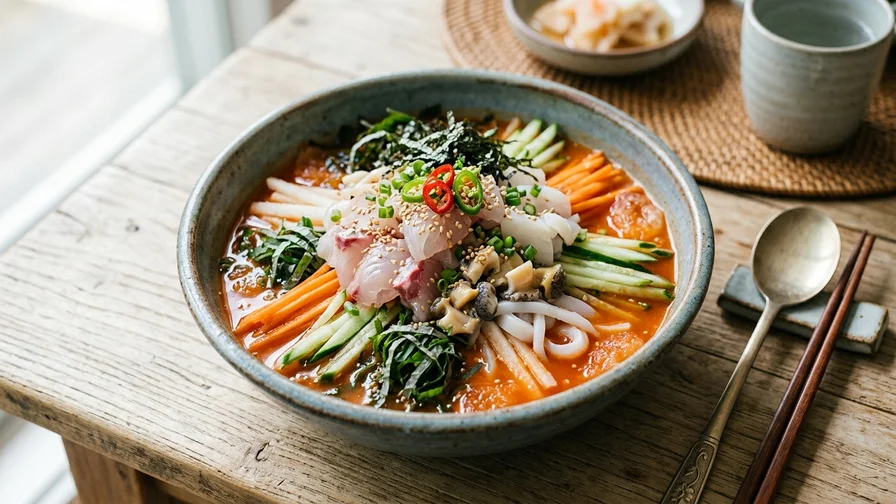
Seeing what dishes these ingredients become gives you a clear sense of how wide-ranging a haenyeo meal can be. The most familiar is Sea Urchin Seaweed Soup, a seaweed soup simmered with Sea Urchin. In Korea, seaweed soup itself is a well-loved restorative dish eaten after childbirth and on birthdays, and adding sea urchin makes the broth even richer and nuttier. Abalone Porridge is made by simmering rice slowly with the Abalone innards included, which gives it a soft greenish tint, and this color is perfectly normal, so there is no need to be put off by it. Bomal porridge and Sea Snail Knife-cut Noodles (보말칼국수, bomal-kalguksu) bring out the savory depth of the little top shells, horned turban comes grilled or raw, and beyond those, Cold Raw Fish Soup (물회, mulhoe) and Seafood Earthen Pot Stew (해물뚝배기, haemul-ttukbaegi) often appear as well.
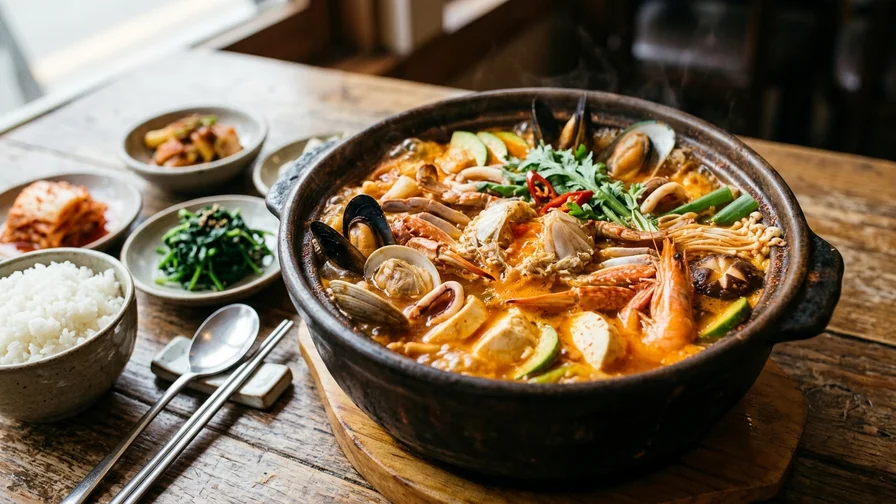
First Time Trying It: Starter Dishes and Adventurous Picks
If you are not used to seafood, it pays to be a little careful with your menu choices. The friendly porridges and soups, that is, Sea Urchin Seaweed Soup, Abalone Porridge, and bomal porridge, are mild in aroma and gentle in texture, so even first-timers eat them without hesitation. Sea squirt, sea cucumber, and raw horned turban, on the other hand, have such pronounced aroma and texture that it is safer to file them under adventurous picks. If you are unsure of your own taste, start with a warm bowl of porridge and then sample the unfamiliar ingredients in small bites from the accompanying side dishes.
Allergy and Dietary Notes
Since this is directly tied to your health, let me be precise about the categories. Abalone, turban shell, and bomal are mollusks, sea urchin is an echinoderm, and shrimp and crab are crustaceans. The three carry different allergens, so having a crustacean allergy does not necessarily mean you must avoid mollusks, and the reverse is true as well. That said, anyone with a mollusk allergy should be careful with dishes containing abalone, turban shell, or bomal. Also, the broths for seaweed soup and porridge may contain anchovy or other seafood. Because seafood is the main ingredient, a haenyeo meal does not suit vegetarian or vegan diets, and Haenyeo Houses and old-style eateries carry no halal or kosher certification, so anyone with strict dietary requirements should keep this in mind.
A Word on Pronunciation and Ordering
Sea urchin seaweed soup is seong-ge-mi-yeok-guk, abalone porridge is jeon-bok-juk, and Sea Snail Knife-cut Noodles is bo-mal-kal-guk-su.
To order, you can say “seong-ge-mi-yeok-guk hana juseyo” (one sea urchin seaweed soup, please) or “jeon-bok-juk du geureut juseyo” (two bowls of abalone porridge, please). If spicy food is a concern, rest assured that haenyeo dishes are generally not spicy.
How to Eat It the Right Way
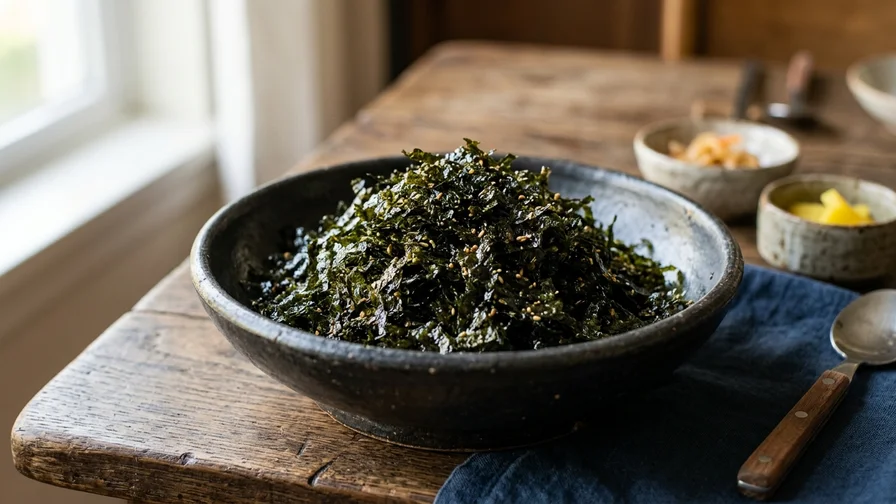
The method is surprisingly simple, but knowing it makes the flavors come alive. Sea urchin seaweed soup needs no special handling, just spoon it up as it is. Porridge is fine on its own, but a light sprinkle of Dried Seaweed Flakes (김가루, gimgaru) or a few drops of sesame oil deepens the nutty flavor. For first-timers, here is the order: first taste a spoonful of porridge plain, then sprinkle the Dried Seaweed Flakes served alongside on top, and finally drizzle two or three drops of sesame oil, stir lightly, and spoon it up.
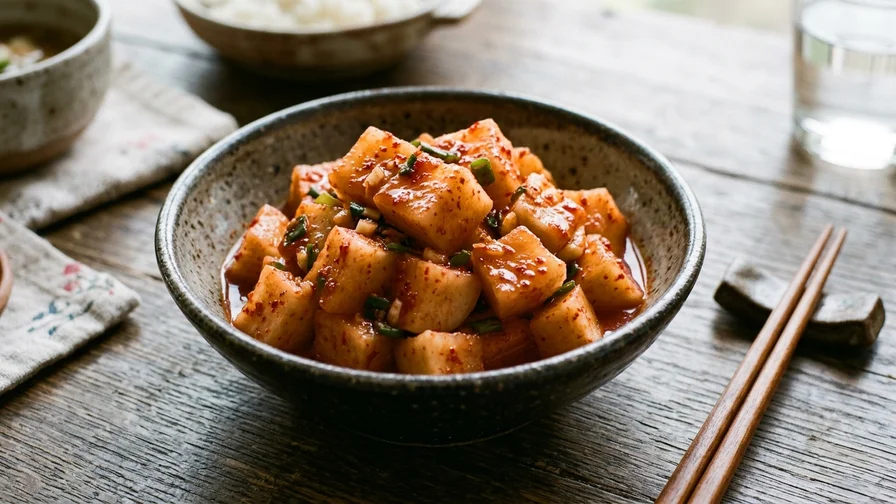
Grilled horned turban is the dish that confuses visitors most. It comes grilled in the shell, and there is a particular way to get the meat out. Insert a skewer or toothpick into the opening of the meat and slowly turn it clockwise, and the spiral of meat slides out in one piece. If you yank it out in a hurry it will break off midway, so the trick is to twist it free. The kimchi or Cubed Radish Kimchi (깍두기, kkakdugi) served on the side cuts through the richness of oily dishes or heavy broths, so alternating between them keeps things nicely balanced.
Editor’s Tip
If the porridge feels too thick, you can ask a staff member for a little warm water or broth to thin it to your liking. And because the ingredients are wild-caught, asking the staff what is best that day may earn you a recommendation that is not even on the menu.
Where to Find a Haenyeo Meal: The Special Places to Eat
The places that serve a Jeju haenyeo meal fall broadly into the Haenyeo Houses and haenyeo villages along the coast, and dining venues that come with a performance. They are scattered along the shoreline, so which one is nearest depends on where you stay along your route. Below are some verified spots you can find on a map. The individual names are listed here only as guidance, so confirm directions through the map links.
- The closest option to the airport is Dodu Haenyeo House 📍 near Dodu Port. It is open from 10:00 to 20:00 with a break from 15:30 to 17:00, so it may be closed if you go right after lunch; it is best to time your visit to avoid that window.
- If you want to combine it with a coastal drive, there is the Aewol Haenyeo House 📍 on the Aewol coastal road. It runs from 10:00 to 19:00, closed on Tuesdays, and porridges and soups such as abalone porridge run in the 10,000-won range (about 8 to 10 dollars).
- Over in the east around Seongsan, Seopjikoji Haenyeo Bapsang 📍 opens daily from 10:00 to 19:30. It pairs nicely with a scenic coastal walk.
- Siheung Haenyeo House 📍 in Siheung-ri, Seongsan, is open daily from 07:00 to 20:00, so its long hours make it easy to stop by early in the morning or late in the day, and prices are moderate.
- If you want a dining experience where the haenyeo themselves perform and share their stories, Haenyeo Kitchen, Jongdal branch 📍 in Jongdal-ri, Gujwa, is something special. It runs Thursday through Sunday from 12:00 noon to 8:00 in the evening as a reservation-only performance dining venue with separate pricing, so check ahead.
Opening hours and closing days at these places can change, so before you go it is safest to search the venue name on Google Maps and save the latest information and location. Many traditional Haenyeo Houses and old-style eateries have no English menu or English-speaking service, so pointing at photo menus or using Google Translate and the menu photos on Google Maps will make things much easier.
Tips for Solo Visits and Payment
If you are traveling alone, many places let you order single dishes such as sea urchin seaweed soup or abalone porridge as a one-person serving. That said, full haenyeo meal sets sometimes require a minimum of two people, so it helps to check single-dish prices and whether solo orders are accepted from the photo menus on Google Maps in advance. Also, traditional market stalls and older Haenyeo Houses commonly do not take cards and require cash only or bank transfer. Bank transfers require a Korean bank account, which makes them hard for foreigners to use, so it puts your mind at ease to bring plenty of cash. Modern restaurants and dining venues generally accept cards and mobile payments.
Getting There: Reaching the Haenyeo Houses Scattered Along the Coast
Haenyeo Houses are dotted along the coastline, so if you want to visit several, a rental car is by far the easiest option. To drive in Jeju as a foreigner you need an International Driving Permit, which must be issued back home before you leave; it cannot be obtained after you arrive in Korea, so be sure to sort it out before departure. The taxi app KakaoT often requires a Korean phone number and a domestically issued card to sign up and pay, so it can be difficult for short-term foreign travelers to use. In that case, use the taxi ranks at the airport or hail one on the street, and the surest way to navigate is to search the destination name on Google Maps and follow it. The Dodu Port area is a short drive from Jeju Airport, so it works well as a first or last meal of the trip.
Prices and Tips
Prices vary by dish and by restaurant, but you can set a rough benchmark. Porridges and soups such as sea urchin seaweed soup and abalone porridge generally run from 10,000 to 15,000 won (about 7 to 12 dollars). Full haenyeo meal sets with an array of seafood cost more, and performance dining like Haenyeo Kitchen has separate pricing and requires reservations. All prices can change with the season and the market, so check before you go.
- Go in summer, when sea urchin is in season, and the aroma and sweetness of the sea urchin seaweed soup are at their best.
- Because the ingredients are wild-caught, some menu items may drop off on days when rough weather kept the divers out, so if you are after a particular dish, check whether the place is open and read reviews on Google Maps beforehand, or, if calling in Korean feels daunting, ask your accommodation staff to confirm for you to be safe.
- Haenyeo Houses and haenyeo villages can change their hours and menu depending on diving conditions, so confirming whether they are open via Google Maps before you set out helps you avoid a wasted trip.
- Bring a fair amount of cash and keep in mind that there may be no English menu, and you will feel much more at ease once you are there.
One more thing: it is best to put aside any idea of taking live seafood such as abalone or turban shell back to your home country. Most countries restrict or ban the import of live and aquatic products under quarantine rules. For souvenirs, it is safer to choose shelf-stable processed goods with a higher chance of clearing customs, such as dried fish or dried seaweed products.
The Wisdom and Flavor of the Haenyeo Community: The Story Held in the Meal
The real depth of a Jeju haenyeo meal lies in the people standing behind the food. After diving, the haenyeo would gather at the bulteok, a windbreak shelter by the shore, to thaw their frozen bodies by the fire and share their stories. This small space, where they passed on their experience by telling who gathered what and where and how the sea had been that day, was the very heart of the haenyeo community. In truth, this was not just a rest but a safety net that kept them watching out for one another in a dangerous sea, and a school of knowledge.
Look a little closer and you will see that the spirit of sharing on the haenyeo table grew straight out of this bulteok culture. The attitude of not hoarding for oneself but sharing the harvest together, and the restraint of taking only as much as the sea gave that day, is reflected right there on the table. That is why, when a haenyeo meal arrives, you taste not only the freshness of the seafood but the breath of a community that has lived alongside a wild sea.
The place where you can hear this story most vividly is the performance dining mentioned earlier. It is a setting where a haenyeo shares her own life in person and serves a table set with that day’s seafood. Once you have heard, in a real human voice, how the food came to be, a single spoonful of the same porridge arrives with an entirely different weight.
Frequently Asked Questions
Do I need to reserve a haenyeo meal in advance?
Ordinary Haenyeo Houses and haenyeo villages generally welcome walk-ins. Performance dining like Haenyeo Kitchen, however, ties the seating to the show, so a reservation is required. Since the ingredients are wild-caught and the day’s menu can change, if there is a particular dish you absolutely want to eat, it is safest to confirm by phone or Google Maps before you visit, wherever you go.
I can’t handle spicy food. Will I be okay?
The signature haenyeo dishes, sea urchin seaweed soup, abalone porridge, and bomal porridge, are generally not spicy, so even those who find spicy food difficult can enjoy them comfortably. Seasoned dishes like Cold Raw Fish Soup can be spicy, so when ordering you can ask “an maepge haejuseyo” (please make it not spicy) or simply stick to porridges and soups.
Are there any dishes for vegetarians?
Because seafood is the main ingredient and the broths for the soups and porridges often contain anchovy or other seafood, a haenyeo meal does not suit strict vegetarian or vegan diets. There may be seaweed-based side dishes, but cross-contamination is possible, so if you keep your diet strictly, it is best to look into other options as well.
Is it awkward to go alone?
Single dishes such as sea urchin seaweed soup or abalone porridge can be ordered as a one-person serving at many places, so dining solo is not much of a burden. That said, full haenyeo meal sets with an array of seafood sometimes require a minimum of two people, so check whether solo orders are accepted and what single-dish prices are from the photo menus on Google Maps in advance.
A Jeju haenyeo meal is a table that holds the sea, the labor, and the time spent sharing all in a single bowl. Before you open the door of a Haenyeo House on your next trip to Jeju, save the dishes and the route introduced here on Google Maps and check that the place is open. If you are curious about the big picture of a Jeju food trip, you can continue on to the full Jeju local food guide, and you can find more Korea travel stories with more information at Come On Korea. The next time that bowl is set before you, one more layer of the story beyond the sea will reveal itself.
Related Reads on This Topic
- Jeju Local Food Roadmap, 9 Flavors from Black Pork to the Haenyeo Table
- How to Eat Jeju Gogi Guksu, the Island's Soul-Food Pork Noodle Soup
- How to Enjoy Jeju Mulhoe, Jari-mulhoe and Hanchi-mulhoe
- Jeju Omegisul Brewing, Tasting Foxtail-Millet Traditional Liquor
- How to Pick Real Jeju Black Pork and 7 Steps to Eat It Right
- Jeju Abalone Dishes and 6 Top Spots, Eaten Like a Local
- Jeju Tangerine and Hallabong, Orchard Cafes and Tangerine Picking
- Enjoy Jeju Cutlassfish Like a Local, Galchi-jorim and Galchit-guk
- 8 Must-Try Bites at Jeju Dongmun Market's Night Market
📍 Locations verified — The 5 places featured in this guide were confirmed on Google Maps for their real location and address (Dodu Haenyeo House, Aewol Haenyeo House, Seopjikoji Haenyeo Bapsang, Haenyeo Kitchen (Jongdal), Siheung Haenyeo House). Hours and details can change, so check before you visit.