Black Sesame Meets Hallabong — Korea’s Hottest Fusion Desserts
목차
The trend of Korean fusion desserts, where traditional Korean ingredients are paired with global sweets like cakes, donuts, and lattes, keeps growing. Menus built around distinctly Korean flavors such as heukimja (black sesame), injeolmi (soybean-powder rice cake), and hallabong (a Jeju citrus) are drawing attention at cafes and bakeries all over Seoul. This article pulls together the key ingredients and menus, basic recipes you can make at home (with overseas substitutes), and verified cafe information all in one place.
Key Ingredients and Menus in Korean Fusion Desserts
At the heart of Korean fusion desserts is the idea of adding a Korean flavor to a familiar Western dessert format. Here are the main ingredients, their signature menus, and average price ranges.
Heukimja (Black Sesame)
Heukimja is made by grinding black sesame seeds, giving it a nutty, fragrant character. Mixed into cream or batter, it turns a deep gray and tastes much like nuts. In Korea it has traditionally been used in rice cakes and porridge.
- Black Sesame Cream Latte (Heukimja Cream Latte): A coffee drink topped with a sweet, nutty black sesame cream over an espresso shot. The cream texture varies by cafe, ranging from thick to silky. Prices run about 5,500 to 7,500 won (roughly $3.70 to $5.00).
- Black Sesame Cake (Heukimja Cake): A cake made with sponge and cream containing black sesame powder. It comes in many forms, including cheesecake, gateau, and chiffon. Around 7,000 to 10,000 won per slice (roughly $4.70 to $6.70).
- Other menus: Black sesame macarons, black sesame ice cream, black sesame croissants, and more.
Injeolmi (Roasted Soybean Powder Coated Rice Cake)
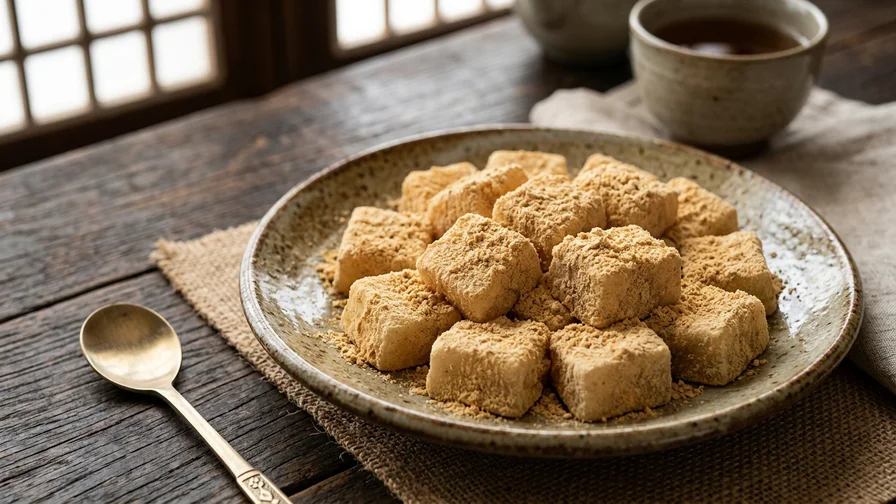
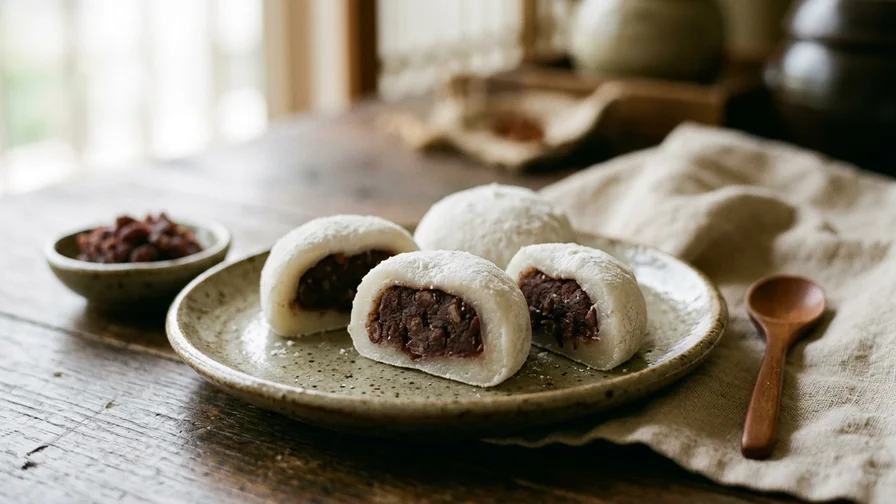
injeolmi is a glutinous rice cake coated in roasted soybean powder. It’s known for the nutty flavor of the powder and the chewy texture of the rice cake, and desserts make use of either the powder or that chewiness. A cafe tour focused on this rice cake is covered in more depth in Injeolmi and Korean Dessert Cafes.
- injeolmi Toast (Injeolmi Toast): Rice cake tucked between slices of grilled bread, finished with soybean powder, honey, and almonds. The chewy rice cake plays off the crisp bread. Prices are 6,000 to 9,000 won (roughly $4.00 to $6.00).
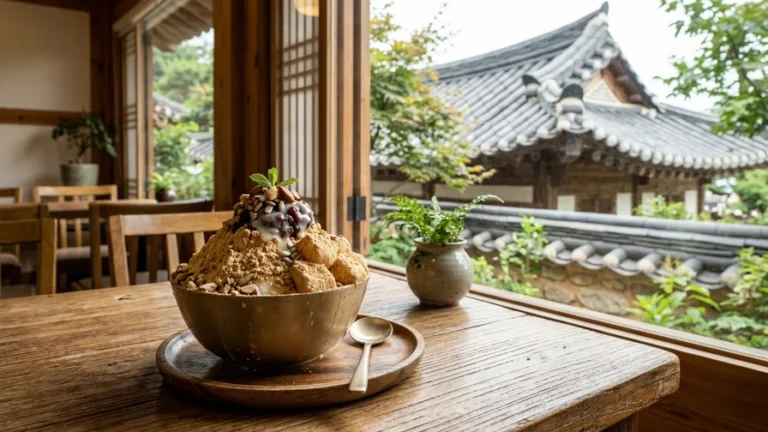
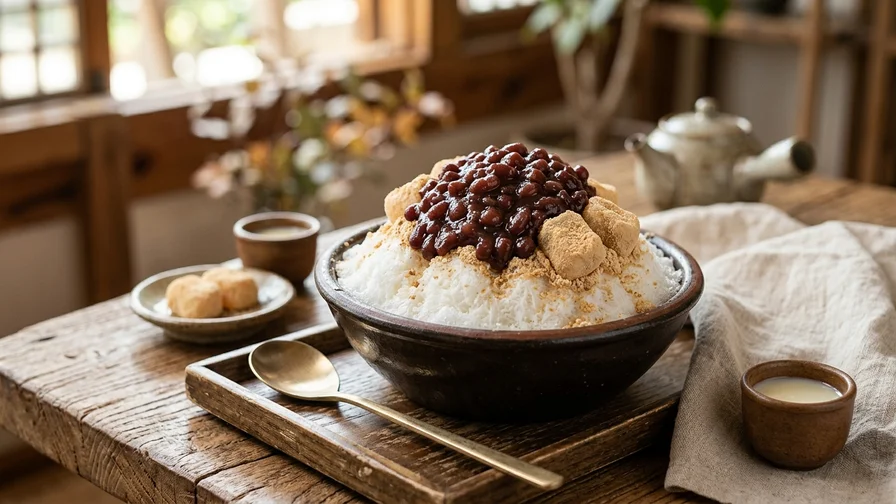
- injeolmi Bingsu (Injeolmi Bingsu): A classic summer dessert of finely shaved ice topped with rice cake, soybean powder, condensed milk, and nuts. Franchise versions start at 9,900 won per serving, while independent cafes and hotels can climb past 16,000 won (roughly $6.60 to $10.70, as of June 2026).
- injeolmi Cream Latte/Bread: There are also coffee and bread menus that bring the nutty soybean flavor into the cream.
Hallabong (Jeju Citrus)
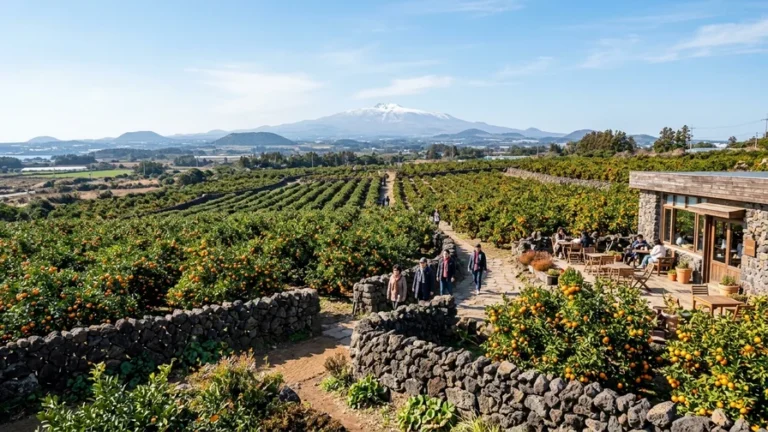
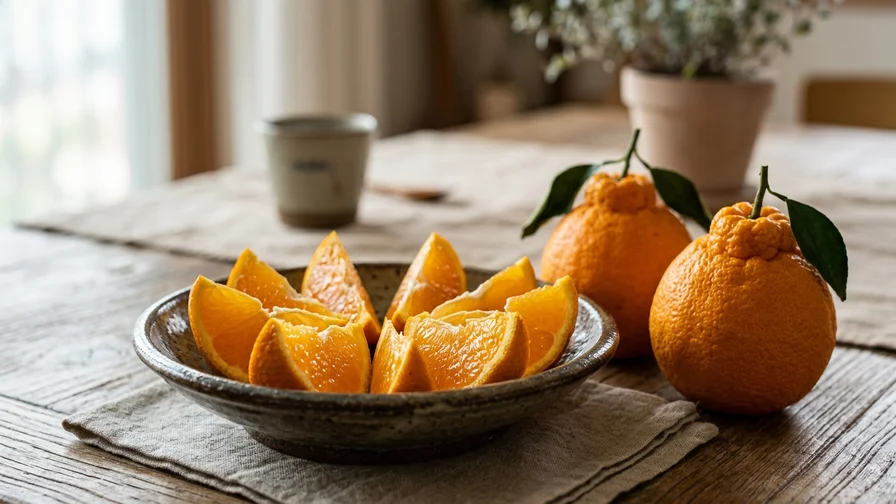
hallabong is a citrus fruit native to Jeju Island. It’s sweeter and more aromatic than a regular orange, with a thicker peel. Both the flesh and a syrup made from the peel are used in desserts.
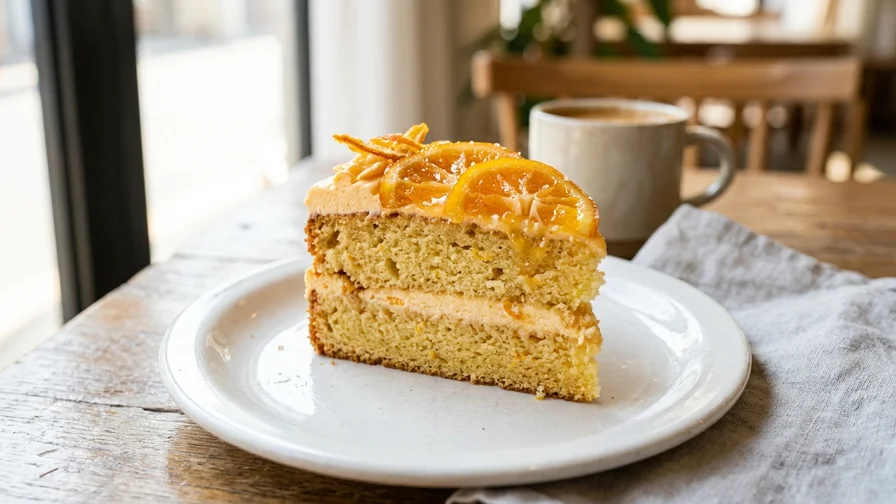
- hallabong Cake/Tart (Hallabong Cake/Tart): Topped with the fruit or jam, or with the zest mixed into the cream for a bright, fresh aroma. Around 7,000 to 10,000 won per slice (roughly $4.70 to $6.70).
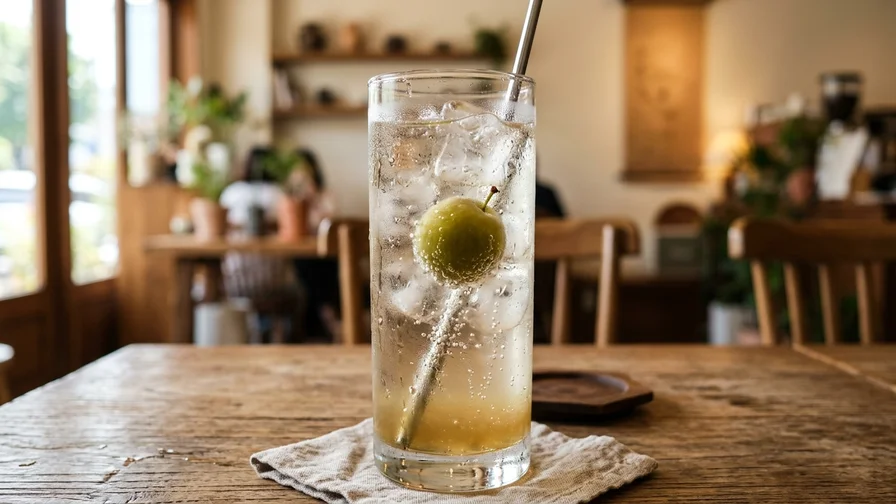
- hallabong Ade/Tea (Hallabong Ade/Tea): A drink that blends the citrus syrup with sparkling water or still water. Especially popular in summer. Prices are 6,000 to 8,000 won (roughly $4.00 to $5.30).
Other Key Ingredients
Beyond black sesame, injeolmi, and hallabong, a range of Korean ingredients show up in desserts.
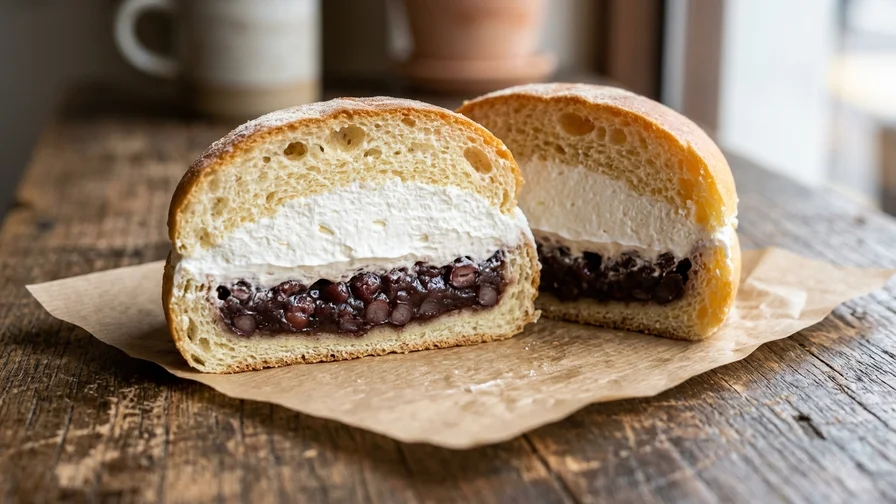
- Danpat (Sweet Red Bean Paste): A paste made by simmering boiled red beans with sugar. Widely used in bread, bingsu, and cakes. Red bean cream buns run 4,000 to 6,000 won (roughly $2.70 to $4.00).
- Misugaru (Roasted Grain Powder): A finely ground powder of several roasted grains such as brown rice, barley, and beans. Once a health drink mixed into water or milk, it now also comes as a latte or frappe. A misugaru latte is 5,500 to 7,500 won (roughly $3.70 to $5.00).
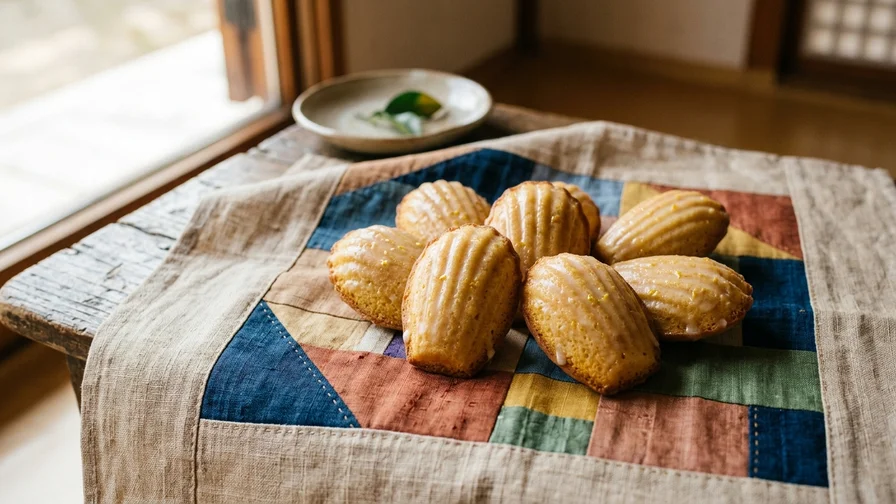
- Yuja (Citron): A citrus fruit with a fresh, slightly bitter taste. Made into a syrup for tea or ade, or used in madeleines and cakes.
- Maesil (Green Plum): A sweet-and-tart fruit. Steeped into a syrup and enjoyed as an ade or tea. A green plum ade is 5,000 to 7,000 won (roughly $3.30 to $4.70).
| Menu | Average Price (KRW) | Average Price (USD, approx.) | Features |
|---|---|---|---|
| Black Sesame Cream Latte | 5,500 ~ 7,500 won | $3.70 ~ $5.00 | Nutty, sweet cream coffee |
| injeolmi Toast | 6,000 ~ 9,000 won | $4.00 ~ $6.00 | Chewy rice cake meets crisp bread |
| injeolmi Bingsu | 9,900 ~ 16,000 won | $6.60 ~ $10.70 | Summer seasonal, nutty soybean powder |
| hallabong Cake | 7,000 ~ 10,000 won | $4.70 ~ $6.70 | Bright citrus aroma |
| Red Bean Cream Bun | 4,000 ~ 6,000 won | $2.70 ~ $4.00 | Sweet red bean and soft cream |
| Misugaru Latte | 5,500 ~ 7,500 won | $3.70 ~ $5.00 | Hearty, nutty grain drink |
Prices are as of June 2026, and the USD figures are reference values converted at roughly 1,500 won to the dollar.
Basic Korean Fusion Dessert Recipes to Make at Home
All of the recipes below can be made with ingredients available at Korean supermarkets or Asian grocery stores abroad. First, here are the English names of the key ingredients and their overseas substitutes.
- Chapssal-garu = glutinous rice flour or sweet rice flour (Mochiko in the US, brands like Erawan in Southeast Asia). It’s a completely different ingredient from regular rice flour, so always check for the “glutinous/sweet” label.
- Soybean powder (roasted) = roasted soybean powder. Japanese kinako works as an almost identical substitute.
- Heukimja = black sesame. Use the powder or a paste (black sesame paste, common at Chinese grocery stores).
- Misugaru = misugaru, roasted multigrain powder. Available at Korean markets and on Amazon.
- Pat-anggeum = sweet red bean paste. Can be swapped for Japanese-style anko.
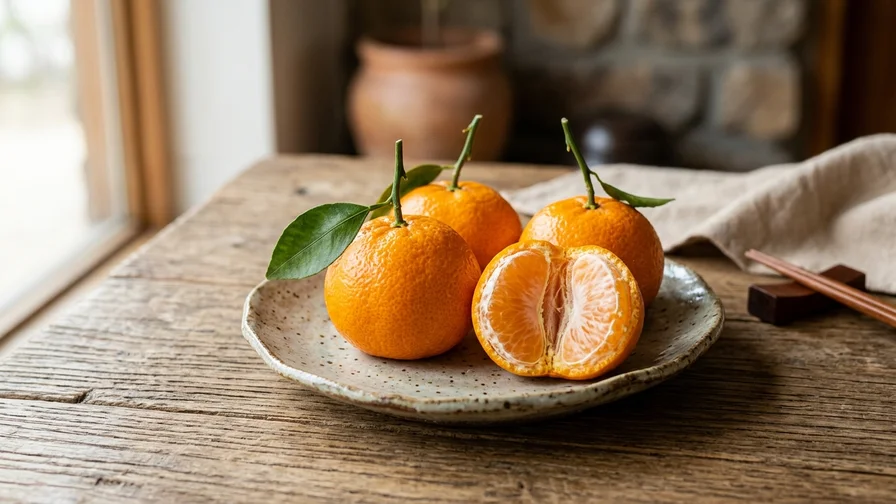
- hallabong: Abroad, the same variety (Shiranui) is sold in the US as Sumo Citrus. If unavailable, substitute mandarins or oranges.
- Yuja-cheong = yuja-cheong (citron tea marmalade). Exported in jars as “Korean citron tea.”
Microwave Injeolmi (about 15 minutes)
- Ingredients: 100g glutinous rice flour (about 1 cup), 160ml water, 2 tbsp sugar, a pinch of salt, 5 tbsp soybean powder.
- In a heatproof bowl, combine the rice flour, sugar, and salt, then pour in the water and stir until smooth with no lumps.
- Cover loosely with plastic wrap and microwave (at 700W) for 2 minutes.
- Take it out, stir and knead with a moistened spatula, then heat again for 1 minute to 1 minute 30 seconds. It’s done once the whole dough turns translucent.
- Turn it out onto a board dusted with soybean powder, let it cool slightly, then cut into bite-sized pieces and coat with the powder.
Burn warning: Freshly cooked glutinous rice dough is near boiling hot inside, and steam rushes out all at once when you lift the wrap. Open the wrap away from your face and never touch the dough with bare hands. Cut it only after it has cooled a little.
Injeolmi Toast (about 10 minutes)
- Ingredients: 2 slices of bread, 5 to 6 pieces of store-bought rice cake, a little butter, 1 tbsp honey, 1 tbsp soybean powder, sliced almonds (optional).
- Microwave refrigerated or frozen rice cake for 10 to 20 seconds to soften it.
- Melt butter in a pan, place one slice of bread, spread the rice cake over it, and cover with the other slice.
- Grill over low heat for 2 to 3 minutes per side, pressing gently with a spatula. It’s done when the rice cake stretches softly.
- Cut in half, drizzle with honey, and finish with soybean powder and almonds.
Misugaru Latte (5 minutes)
- Ingredients: 3 tbsp misugaru (about 25 to 30g), 200ml milk, 1 tbsp honey, ice.
- Put everything in a shaker or blender and mix, and you’re done. Misugaru settles easily, so shake it well.
- Use soy or oat milk instead of dairy milk for a vegan version.
Black Sesame Cream Latte
- Cream: Whip 100ml heavy cream with 1 tbsp condensed milk and 1 tbsp black sesame powder, just until it reaches a slightly pourable consistency.
- Fill a glass with ice and 150ml milk (add an espresso shot if you like), top with the cream, and finish with a dusting of black sesame powder.
Homemade Injeolmi Bingsu
- Base: Mix 400ml milk with 3 tbsp condensed milk, pour flat into a zip-top bag, and freeze for at least 4 hours.
- Break the frozen base by hand and blend it, or scrape it with a fork into a snowy texture.
- Top with soybean powder, rice cake pieces, condensed milk, and nuts for a cafe-style injeolmi bingsu.
Storage Tips: Don’t Refrigerate Rice Cakes
Rice cakes (injeolmi, chapssal-tteok) should not be refrigerated. The staling (hardening) of rice starch happens fastest at refrigerator temperatures (0 to 5°C), so they can go stiff within half a day. Keep the amount you’ll eat that day at room temperature, and wrap any leftovers individually in plastic and freeze them right away to store for 2 to 4 weeks. Thaw at room temperature before eating, or microwave for 10 to 20 seconds, and the just-made texture comes back almost completely. Black sesame cream and the milk bingsu base are best consumed the same day.
Korean Desserts for Special Diets
Options for travelers following special diets such as gluten-free or vegan are also on the rise.
Gluten-Free: Rice Flour Bread
More bakeries are making bread and cakes with Korean rice flour instead of wheat flour. Rice flour bread is known for a chewier texture. Rice loaf bread and rice cakes run a bit higher than ordinary bread, around 7,000 to 10,000 won (roughly $4.70 to $6.70). That said, if you have celiac disease or a serious gluten sensitivity, there’s a caveat: even “rice bread” often contains some wheat flour or is made in a kitchen that also handles wheat products. Always check for “100% rice flour” or “dedicated gluten-free” labels and ask the staff to confirm.
Vegan and Vegetarian
There are choices for vegan travelers too. You can order a black sesame latte or misugaru latte made with soy or oat milk instead of dairy. Traditional rice cakes are mostly made from grains and soybean powder alone, so they’re generally vegan-friendly, but toppings of honey or dairy cream are sometimes added, so it’s safest to double-check with the staff before ordering.
Recommended Korean Dessert Pairings for Travelers
First-Time Travelers
If Korean desserts are new to you, here are the most approachable, low-risk pairings. A black sesame cream latte with injeolmi toast is a go-to pairing that lets you experience nutty and sweet, soft and chewy all at once.
Summer Visitors
Korea’s summer (June to August) is hot and humid. This is the time for cool desserts. injeolmi bingsu is a classic summer dessert that cools you down, while a hallabong ade or green plum ade is great for quenching thirst.
Allergy Notes
Korean desserts often use nuts and certain grain powders. In particular, black sesame (sesame) and injeolmi (soybean powder is soy, and the toppings are nuts) can trigger reactions in people with sesame, soy, or nut allergies. If you have a related allergy, be sure to check the ingredients with the staff before ordering. Misugaru is also a blended powder of various grains and beans, so checking its ingredients is a must.
Recommended Areas for Korean Dessert Cafes
Certain Seoul neighborhoods are packed with cafes leading the Korean fusion dessert trend. Here are the characteristics of each area and verified flagship cafes. For more cafes, see 6 Seoul Dessert Cafes. All operating hours are as of June 2026, and it’s best to recheck on Instagram or Naver Map right before you visit.
Anguk, Insadong, Ikseon-dong
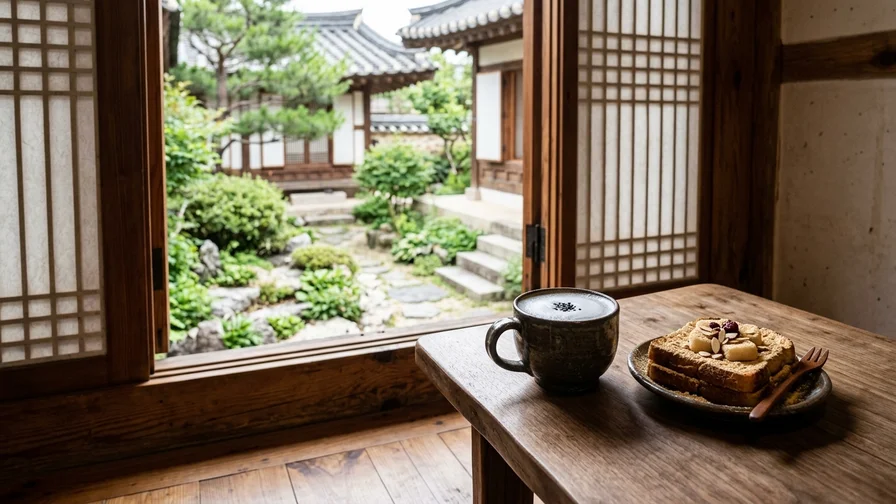
Located between Gyeongbokgung Palace and Changdeokgung Palace, this area has many cafes converted from traditional hanok houses. It’s the best area to enjoy desserts made with Korean ingredients like mugwort, red bean, and injeolmi in a traditional atmosphere.
Editor’s tip: This area gets very crowded on weekends and holidays. To cut down on wait times, a weekday morning visit is recommended. Note, though, that opening hours vary widely by cafe: Onion Anguk opens at 7 a.m. on weekdays, but Seoul Coffee Ikseon opens at 11, and Bubing at 1 p.m.
- Cafe Onion Anguk 📍
- Features: A large bakery cafe that keeps the hanok structure intact. Pandoro and salt bread are the signatures, and the experience of sitting on the wooden veranda in the hanok courtyard is the real draw.
- Address: 5 Gyedong-gil, Jongno-gu, Seoul
- Hours: Mon–Fri 07:00–22:00, Sat–Sun 09:00–22:00
- Getting there: 2 to 3 minutes on foot from Exit 3 of Anguk Station (Subway Line 3)
- Seoul Coffee (Ikseon) 📍
- Features: A hanok cafe recreating the atmosphere of 1980s Seoul. Injeolmi tiramisu and red-bean-butter toast are the signatures, and there are traditional drinks like sweet pumpkin sikhye too, making it a textbook example of the Korean-ingredient fusion desserts this article is about.
- Address: 33-3 Supyo-ro 28-gil, Jongno-gu, Seoul
- Hours: Daily 11:00–22:00 (last order 21:40)
- Getting there: 3 minutes on foot from Exit 4 of Jongno 3-ga Station (Subway Lines 1, 3, 5)
- Cheongsudang 📍
- Features: A garden-style cafe in the hanok alleys of Ikseon-dong. The mugwort souffle castella is the signature, a classic Korean fusion dessert that grafts Korean mugwort onto a Western castella.
- Address: 31-9 Donhwamun-ro 11na-gil, Jongno-gu, Seoul
- Hours: Daily 10:30–20:00 (last order 19:30)
- Getting there: About 3 minutes on foot from Exit 4 or 6 of Jongno 3-ga Station
- Bubing 📍
- Features: A shop specializing in single-serving patbingsu. With a short menu of classic patbingsu plus seasonal fruit bingsu, it’s a great spot for properly experiencing a bowl of bingsu.
- Address: 3-4 Bukchon-ro 7-gil, Jongno-gu, Seoul
- Hours: 13:00–18:00 (last order 17:30), closed every Monday
- Getting there: About 5 minutes on foot from Exit 2 of Anguk Station
Seongsu-dong
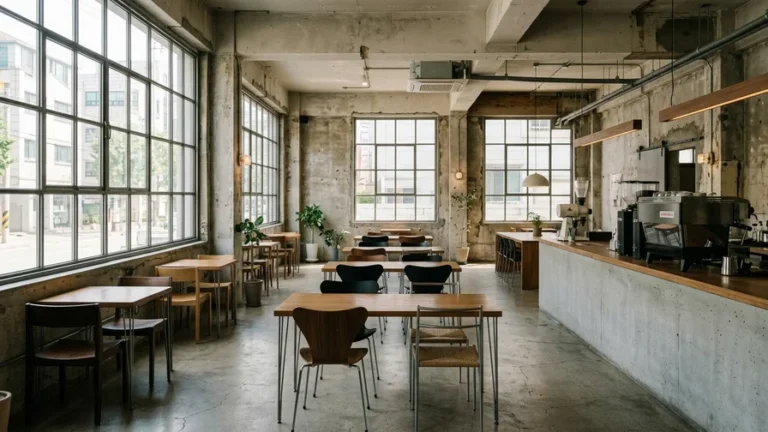
Once an industrial district, Seongsu-dong has transformed into an area full of galleries, select shops, and trendy cafes. It has many large cafes converted from old buildings, and new dessert pop-ups open every season, making it the fastest place to catch the latest twists on Korean fusion desserts.
- Seoul Angmusae 📍
- Features: A flagship Seongsu dessert cafe with lines for its kouign-amann and cinnamon rolls. The menu itself leans toward European pastries rather than Korean fusion, but it’s a benchmark of the Seongsu dessert scene and well worth adding to a dessert tour route. Seating is fairly spacious, from the basement level up to the second floor.
- Address: 3 Seoulsup 9-gil, Seongdong-gu, Seoul
- Hours: Daily 08:00–23:00
- Getting there: 6 minutes on foot from Exit 5 of Seoul Forest Station (Suin-Bundang Line), or 8 minutes from Exit 8 of Ttukseom Station (Line 2)
Yeonnam-dong, Mangwon-dong
Right next to the Hongdae district, these areas are packed with small but distinctive independent bakeries and cafes. They’re neighborhoods where you’re more likely to find experimental, original Korean fusion desserts than at large franchises.
- Yeonnam Bangagan 📍
- Features: A cafe with a “bangagan” (mill house) concept set in a converted old house. The signature sesame latte builds on a misugaru base, tops it with cream, and finishes with a drizzle of finely ground sesame and sesame oil, a prime example of the grain-fusion drinks covered in this article. It doubles as a goods shop, so there’s fun to be had just browsing.
- Address: 34 Donggyo-ro 29-gil, Mapo-gu, Seoul
- Hours: Daily 12:00–21:30 (last order 21:00)
- Getting there: About 8 minutes on foot from Exit 3 of Hongik Univ. Station (Line 2, Gyeongui-Jungang Line, Airport Railroad)
Korean Dessert Menus at Global Chains
If you’re short on time to visit independent cafes, you can also experience Korean desserts at the coffee chains found everywhere in Seoul. These stores develop and sell signature menus made exclusively for the Korean market.
- Starbucks: Releases seasonal drinks using Jeju specialties (hallabong, yuja, mugwort, and more) or food items made with rice.
- Paul Bassett, A Twosome Place: Often sell lattes and cakes made with black sesame or mugwort, either as regular or seasonal items.
Chain menus change periodically, so it’s a good idea to check the brand’s mobile app or website for the currently available items before you visit.
Additional Information for Travelers
Transportation and Navigation
Seoul’s public transit is highly efficient, and all the cafes recommended in this article are within a 10-minute walk of a subway station. You can use Google Maps for directions, but in Korea, Naver Map or Kakao Map provides more accurate real-time transit information and walking routes. For taxis, the Kakao T app supports registering overseas-issued credit cards, and there’s also k.ride, an English app for foreign travelers that lets you hail rides without a Korean phone number (as of June 2026). The Uber app also works in Seoul as is.
Payment
Most cafes and bakeries accept overseas credit cards such as Visa and Mastercard. That said, some small shops or places near traditional markets only take cash, so it’s handy to keep a small amount of Korean won (KRW) on hand.
Emergency Contacts and Tourist Information
If you need help while traveling, call the tourist information line at 1330, where you can get assistance in English, Japanese, Chinese, and other languages 24 hours a day. For the latest details like cafe hours or closing days, checking the official Instagram or the business listings on Naver Map or Kakao Map before your visit is the most reliable approach.