Speaking for the Voiceless — How K-Legal Dramas Expose Social Injustice
목차
Key Takeaways
- K-legal and crime dramas are a genre that tackles social injustice head-on—chaebol corruption, an unequal justice system, the realities faced by the marginalized. Every title cited in this article is a real drama, listed with its broadcaster (platform) and year.
- Each work targets a distinct real-world issue: “Stranger” (collusion between politics and prosecutors), “Vincenzo” (chaebol corruption), “Extraordinary Attorney Woo” (disability and prejudice), “Juvenile Justice” (juvenile crime), “D.P.” (abuse within the military), and “The Glory” (school violence).
- We look—without exaggeration—at real cases where these dramas accelerated social debate (an official statement from the Ministry of National Defense, a renewed controversy over the age of criminal responsibility, a rise in reported school-violence victimization), while also examining the gap between drama and reality.
If the world of law and justice in K-dramas is new to you, we recommend starting with our overview of the broader social messages in K-legal and crime dramas.
K-Legal and Crime Dramas: A Mirror Held Up to Society
What captivates audiences around the world about K-legal and crime dramas isn’t just their gripping case-by-case plotting. At their core lies a sense of realism that comes from boldly bringing the problems Korean society has actually lived through onto the screen. Of course, dramas are fiction laced with dramatic exaggeration, but the roots of their conflicts often connect directly to events viewers have seen in the news—placing the audience not as mere spectators, but as people grappling with the issues alongside the characters.
Chaebol Corruption: The Dark Connections
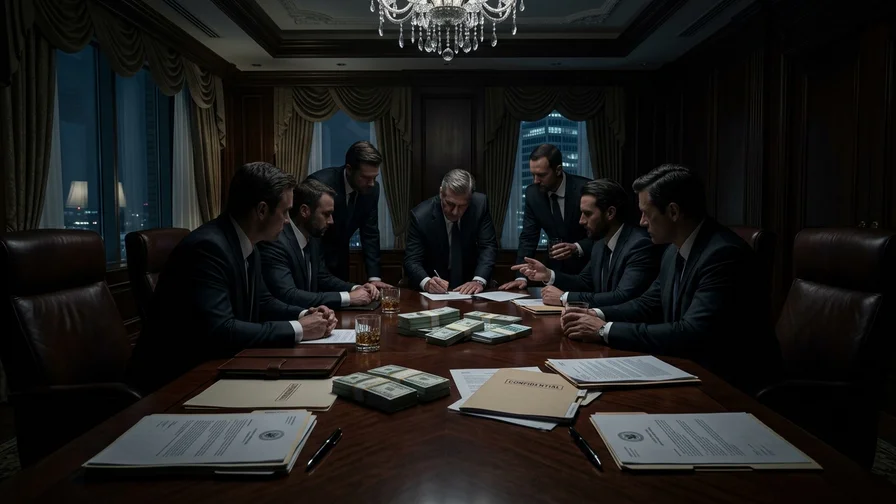
Chaebol (Korea’s family-run conglomerate) corruption is a staple of K-dramas, but it rarely stops at simple villainy. Through devices like the arrogance of those who try to place themselves above the law, the shadowy ties linking politics and the legal world, and illegal succession schemes to pass wealth down through generations, these dramas show how power-driven corruption sickens the entire system—not just individual greed.
- “Stranger” (tvN, 2017–2020): A pursuit thriller that begins with the murder of a prosecutor’s “sponsor” and digs into the collusion between big business and the prosecution. It’s credited with elevating the genre’s capacity for social critique to a new level.
- “Vincenzo” (tvN, 2021): The series puts the systematic corruption of the fictional conglomerate “Babel Group” and the legal cartel that protects it front and center. With a dark-hero narrative that punishes evil with evil, it tackles the weighty theme of holding economic power accountable while staying thoroughly entertaining.
An Unequal Justice System
These dramas confront head-on the perception—captured in the Korean saying “innocent if rich, guilty if poor”—that the law doesn’t apply with equal weight to everyone. Justice that wavers in the face of money and power, long-standing legal-world customs like favoritism toward former colleagues now on the bench, and the pressure of massive organizations trying to bury the truth: these are the genre’s recurring sources of conflict. Where “Squid Game” (Netflix, 2021) depicted class disparity through the allegory of a survival game, legal and crime dramas address the same issue of inequality on the more grounded stages of the courtroom and the investigation. Viewers feel a vicarious satisfaction watching the protagonist fight against injustice, while also coming to naturally empathize with the cause of judicial reform.
The Suffering of the Marginalized
Placing the voices of those who suffer under social prejudice and discrimination at the heart of each case is another important role this genre plays. The real-world issue each work targets is clearly defined.
- “Extraordinary Attorney Woo” (ENA, 2022): Through the eyes of a lawyer on the autism spectrum, it casts a different light on social prejudice and discrimination against people with disabilities in each case.
- “Juvenile Justice” (Netflix, 2022): From the perspective of a juvenile court judge, it deeply explores the system for minors below the age of criminal responsibility and the hidden side of youth crime.
- “D.P.” (Netflix, 2021, 2023): Through the eyes of a Deserter Pursuit unit chasing down soldiers who have gone AWOL, it exposes violence and abuse within the military.
- “The Glory” (Netflix, 2022–2023): A revenge drama in which a victim of school violence grows up and seeks out her former abusers. It relentlessly portrays the scars that school violence leaves across an entire life.

Watching Power Held Accountable and Justice Vicariously Served
One of the defining draws of K-legal and crime dramas is that they deliver moments of “justice served” that are hard to experience in real life. As corrupt power-holders face the judgment of the law and wronged victims are cleared of false accusations, viewers feel an intense sense of catharsis. More than simple satisfaction, it’s a response that reflects a yearning for a just society.
Satisfying Payoffs and Viewer Empathy
The refreshing, cathartic payoff that lands a clean blow against a frustrating reality has become this genre’s formula for success. When the protagonist brings down a vast force of evil through ingenious strategy and dogged persistence, viewers cheer as if it were their own victory. This emotional synchronization is proof of how accurately the drama captures real-world injustice. As times change, so too does the kind of justice viewers want to see—be sure to also read about how the genre’s social-critique elements have strengthened over the course of its evolution.
The Birth of the Righteous Protagonist
The protagonists of K-legal and crime dramas are never just lawyers or investigators. They are sometimes idealists who stand against an enormous system with the feeling of throwing an egg at a rock, and embodiments of obsessive determination who stake everything to pursue the truth. The image of a protagonist who agonizes amid the dilemma between ideals and reality yet stands by the weak to the very end moves us deeply—and plants the hope that “I wish there were people like that in our society too.”
The Social Questions and Debates These Dramas Raise
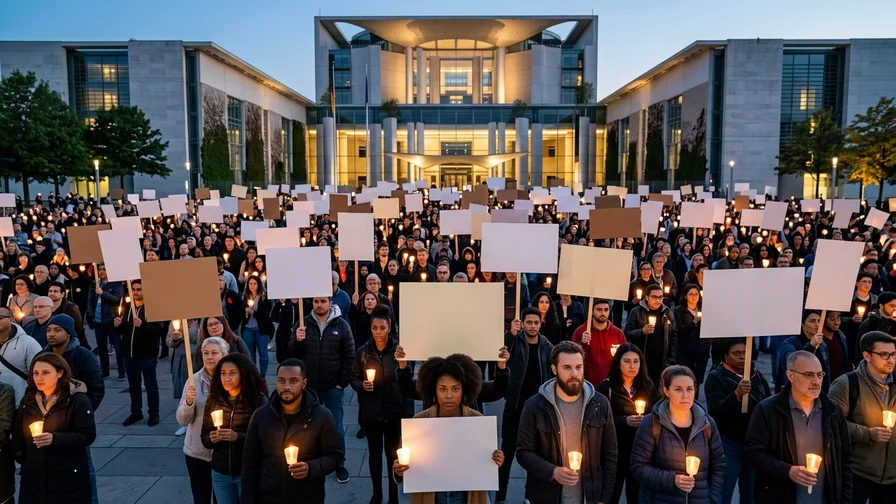
Recent K-legal and crime dramas have moved beyond the binary clash of good versus evil to bring complex, sensitive subjects that society must grapple with together to the surface. Rather than offering pat answers, they pose sharp questions, creating a public forum where viewers think and debate for themselves.
Human Rights, the Environment, and Minority Issues
Where dramas once focused mainly on murder and corruption cases, the K-legal and crime dramas of 2026 keep broadening their scope. Contemporary challenges—corporate cover-ups of industrial accidents, environmental pollution, dating violence, digital sex crimes—are emerging as central subjects. By posing fundamental questions about the direction society should take, rather than simply resolving a single case, they show that the genre’s function of exposing social injustice in K-legal and crime dramas is growing ever more sophisticated.
When Law and Ethics Collide
The law is not perfect, and its measures cannot resolve every ethical dilemma. Representative questions include: “Is it acceptable to become another evil in order to punish evil?” and “When the procedural justice and the substantive justice of the law collide, which should take priority?” By placing their protagonists on these ethical boundary lines, these dramas force viewers to keep asking themselves, “What would I choose if I were in their shoes?”
Editor’s Tip
If you want to enjoy K-legal and crime dramas on a deeper level, watch with an eye for how the verdicts and investigative procedures on screen differ from the real legal system. For example, dramas often feature a prosecutor dramatically revealing surprise new evidence in court for effect, but in actual Korean trials, evidence is generally shared beforehand under disclosure procedures. Spotting these differences becomes another way to appreciate the dramatic devices behind how K-legal and crime dramas critique social injustice.

K-Legal and Crime Dramas: A Cultural Force Driving Social Change
K-legal and crime dramas have come to wield a cultural power that sets the social agenda and shapes public opinion. That said, we should be wary of exaggerations like “a single drama changed the law”—what can actually be verified are cases where a drama pushed an already-existing awareness of a problem into the center of public debate.
- Right after “D.P.” premiered (September 2021): Its depiction of military abuse caused such a stir that the Ministry of National Defense issued an official statement that “the barracks environment is changing”—the social ripple was that large. Discussion of improving human rights in the military spread into the political agenda. While it didn’t lead directly to legislation like a “D.P. Act,” it stands as a prime example of turning military issues into a topic of living-room conversation.
- After “Juvenile Justice” premiered (2022): The debate reignited over the age threshold for minors below the age of criminal responsibility (those aged 10 to under 14, subject to protective measures rather than criminal punishment), and that same year the Ministry of Justice set up a body to review the matter. Still, this discussion predates the drama, and opposition—from bodies like the National Human Rights Commission—was significant, so it’s more accurate to see the drama as a catalyst that accelerated public debate rather than the cause of legislation.
- After “The Glory” premiered (2023): A string of revelations about celebrities’ histories of school violence followed, and the 2023 school-violence survey recorded its highest victimization-response rate in a decade. Analysts suggest this reflected not so much an increase in actual harm as the drama creating an atmosphere in which victims felt able to speak about their experiences.
Of course, dramas can’t solve every social problem. But simply by bringing the voices of the marginalized—voices that might have been buried in the dark—out into the open, and by making us confront social injustice we had failed to recognize, their role carries more than enough meaning. K-legal and crime dramas will continue to capture the most urgent voices of their time and keep asking, again and again, what justice truly means.
In all these ways, K-legal and crime dramas resonate deeply with society on many fronts. If you’d like to dig deeper into the genre’s overall appeal and social messages, check out K-legal and crime dramas. You can find more K-drama and film coverage at Come On Korea.