Chasing Justice — The Ideals and Realities Behind K-Crime Dramas
목차
As of 2026, legal and crime dramas remain one of the most consistently beloved genres in K-dramas. The breathless plotting and sharp social commentary are part of the draw, but what truly moves viewers are the characters who agonize in the name of law and justice. When “Stranger” (Secret Forest) was named one of the New York Times’ “Best International TV Shows of the Year” in 2017, it was the strength of its characters—not just the cases—that earned the honor. These figures refuse to be boxed into a simple good-versus-evil binary, constantly wavering on the border between ideals and reality. In this article, we analyze the justice-seeking characters in Korean legal and crime dramas, grounded in actual shows and the actors who brought them to life. If you’re curious about the broader characteristics of K-legal and crime dramas, take a look there first.
Key Takeaways
- A wide range of character types: From a prosecutor incapable of feeling emotion (Hwang Si-mok in “Stranger”) to a genius lawyer on the autism spectrum (“Extraordinary Attorney Woo”) to a former mafia lawyer (“Vincenzo”)—characters with different professions and beliefs each pursue justice in their own way.
- Multidimensional inner conflict: The way they grapple with the tension between legal justice, personal ethics, and the logic of powerful organizations makes them three-dimensional and pulls viewers in.
- The power of human storytelling: Growing by turning past wounds into fuel, bonding and clashing with colleagues—this human dimension is the core of what creates such deep empathy.
Analyzing the Types of Legal Professionals in K-Crime Dramas
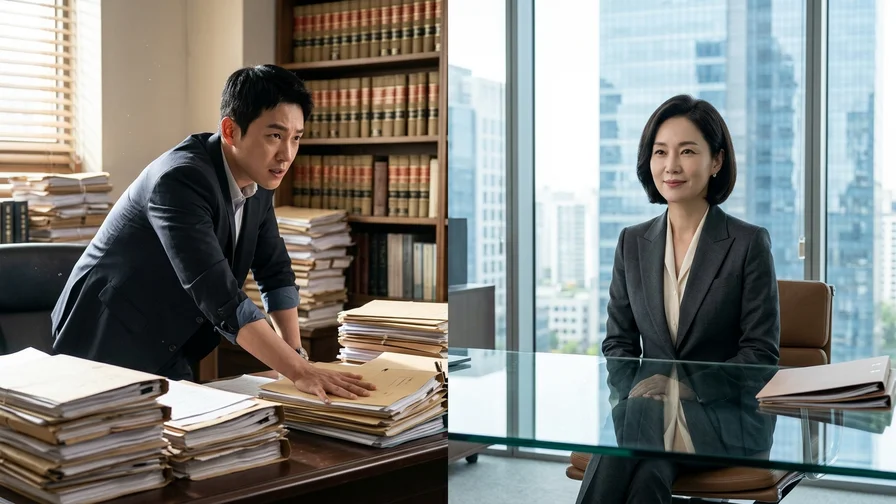
The greatest appeal of K-legal and crime dramas lies in their multidimensional characters that break free of stereotypes. Let’s start with an at-a-glance overview of representative figures by profession—judges, prosecutors, lawyers, and detectives.
| Character | Actor | Show (Air date) | Profession / Position |
|---|---|---|---|
| Hwang Si-mok | Cho Seung-woo | Stranger (tvN, 2017) | Prosecutor — a solitary investigative prosecutor written as incapable of feeling emotion |
| Han Yeo-jin | Bae Doona | Stranger (tvN, 2017) | Police lieutenant — a warmhearted, justice-driven violent crimes detective |
| Woo Young-woo | Park Eun-bin | Extraordinary Attorney Woo (ENA, 2022) | Lawyer — a genius rookie attorney on the autism spectrum |
| Vincenzo Cassano | Song Joong-ki | Vincenzo (tvN, 2021) | Lawyer — a former consigliere (dedicated legal advisor) for the Italian mafia |
| Kang Yo-han | Ji Sung | The Devil Judge (tvN, 2021) | Judge — the presiding judge of a nationwide, audience-participation live courtroom show |
| Park Cha-oh-reum | Go Ara | Miss Hammurabi (JTBC, 2018) | Judge — an idealistic, fiery first-year judge |
The Fiery Prosecutor vs. the Cool-Headed Lawyer
This is the most classic contrast, yet it remains as powerful as ever.
- The fiery type: Unable to stand by in the face of injustice, this type charges toward the substantive truth—sometimes even bypassing proper procedure. They take on entrenched power and deliver a satisfying catharsis, but they suffer just as many setbacks.
- The pinnacle of the cool-headed type is Hwang Si-mok (Cho Seung-woo) in “Stranger”: A prosecutor written as incapable of feeling emotion who digs into corruption within the prosecution using nothing but facts and logic. At the opposite extreme from the fiery type, he embodies one of the most weighty depictions of justice. For show details, see the official tvN page.
- The spectrum of lawyers is broad, too: Woo Young-woo (Park Eun-bin) in “Extraordinary Attorney Woo” is a by-the-book attorney who fights with legal reasoning and precedent as her weapons. At the other end stands Vincenzo Cassano (Song Joong-ki) in “Vincenzo”—true to his roots as a mafia consigliere, he is the type who sweeps away evil with evil from outside the bounds of the law.
- The collisions and collaborations between these opposing types serve as the core narrative engine of K-legal and crime dramas.
The Idealist vs. the Realist
Differing views on law and justice form another important axis that distinguishes these characters. The show that depicts this dynamic most honestly is “Miss Hammurabi” (JTBC, 2018), written by Moon Yoo-seok, a former sitting judge.
- The idealist: The type who believes the law can deliver justice and tries to uphold principle in any situation. Park Cha-oh-reum (Go Ara), the rookie judge in “Miss Hammurabi,” is the archetype—even the official character description calls her an “idealistic, fiery first-year judge.” Her pure convictions sound an alarm within the system, but she repeatedly runs up against the wall of reality.
- The realist: The type who accepts the law’s imperfections, chooses the lesser evil, and crosses lines when needed. In the same show, presiding judge Han Se-sang takes on this axis as “a realist who knows the weight of the world,” while the principled elite judge Im Ba-reun acts as the counterweight between the two.
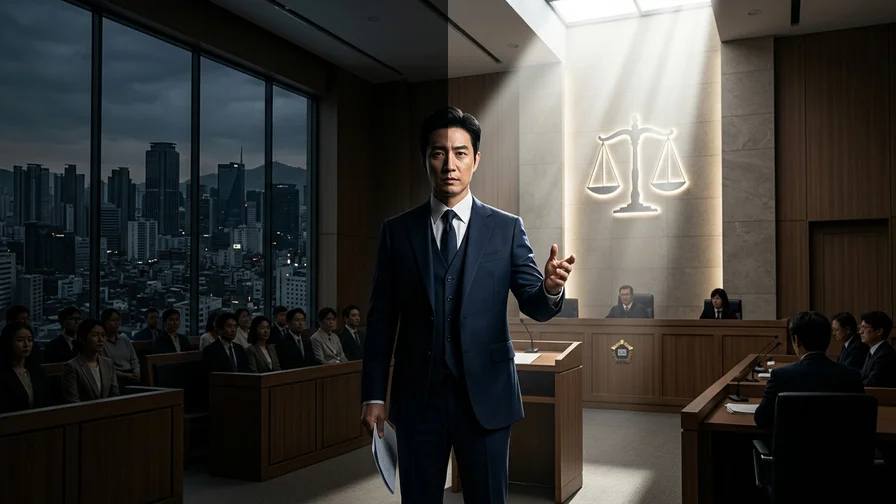
- A case pushed to the extreme: Kang Yo-han (Ji Sung) in “The Devil Judge” (tvN, 2021). In a fictional dystopia, he is a judge who passes sentence on evildoers through a nationwide audience-participation courtroom show—a character who pushes the question “What if the law cannot deliver justice?” to its limit. Intriguingly, this show, too, came from the pen of writer Moon Yoo-seok.
- Most protagonists in K-legal and crime dramas struggle somewhere between these two leanings, growing through the process of finding their own answers.
Between Justice and Ethics: The Characters’ Inner Conflicts
The reason K-legal and crime dramas linger so deeply is that they don’t stop at showing how cases get solved—they delicately portray the internal storms the characters endure along the way. In a reality that can’t be measured by the yardstick of law alone, these figures find their convictions and choices put to the test again and again.
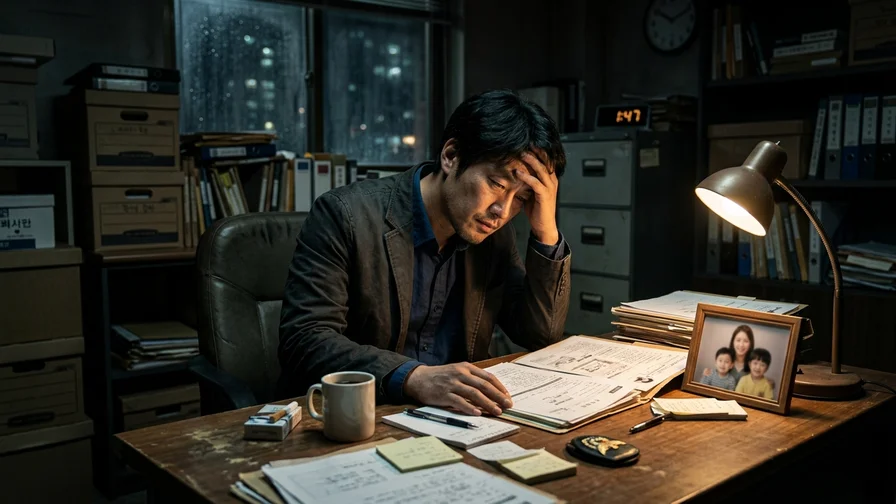
Personal Conviction vs. Organizational Logic
- Protagonists belonging to massive organizations—the prosecution, the police, large law firms—are frequently placed in situations where their personal sense of justice collides with the interests of the institution. Whether to obey an unjust order from “the top brass” or to resist according to conscience is a recurring dilemma.
- “Stranger” is the textbook example of this dynamic—as the prosecutor (Hwang Si-mok) and the police officer (Han Yeo-jin, Bae Doona) are placed in positions where they must expose the shameful secrets of their own organizations, the clash between organizational logic and personal conscience drives the entire season.
- Compliance is safe but forces you to turn a blind eye to justice; resistance is just but risks the isolation of being branded a “whistleblower.” It’s a universal dilemma any working person can relate to, so it resonates across borders.
- The way this kind of anguish has evolved aligns with the evolution of the K-legal and crime drama genre as a reflection of changing times.
Legal Justice vs. Moral Justice
- The law is the minimum morality required for social order, but it cannot answer every dilemma. When confronting villains who slip through legal loopholes or defendants with heartbreaking backstories, these characters fall into deep anguish.
- Is the realization of “legal justice” the same as “moral justice”? This question becomes a central theme running through entire shows. “The Devil Judge” takes this very gap as its starting premise.
- The ethical code of the Korean Bar Association, which real Korean lawyers follow, sets the standard for professional ethics—but the characters in these dramas wrestle with their own human anguish in the spaces between the lines, searching for answers of their own.
Character Stories That Add Human Appeal
The reason viewers are so passionate about these characters is precisely that they aren’t flawless heroes. Their human side—wounded, wavering, growing—breathes life into them.

Past Trauma and Growth Arcs
- Many protagonists turn the wounds of their past into the driving force of their present. Prosecutor Young Eun-soo (Shin Hye-sun) in “Stranger” is a prime example—a haughty trainee prosecutor from a prestigious family who is in fact driven by the private motive of restoring her fallen father’s honor. This complexity, a blend of a sense of justice and personal desire, makes her far more three-dimensional than the simple “fiery rookie” archetype.
- Vincenzo in “Vincenzo” is a man who returns to Korea after being betrayed by his organization—a structure in which a private motive of revenge ends up leading to the downfall of a great evil.
- “Extraordinary Attorney Woo” is the pinnacle of the growth arc rather than the trauma type—a narrative about establishing herself as a lawyer one step at a time within the condition of being on the autism spectrum. Park Eun-bin won the Grand Prize (Daesang) in the TV category at the Baeksang Arts Awards for the role.
- The growth arc of confronting and overcoming one’s past self through new cases delivers both catharsis and hope.
Editor’s Tip
If you want to enjoy K-legal and crime dramas on a deeper level, pay attention to why the protagonist fixates so intensely on a particular case, and how their past story connects to their present actions. Beyond simply guessing the culprit, there’s a richer pleasure in watching one person’s coming-of-age drama unfold. Hunting for fragments of the past hidden within the dialogue is its own special kind of fun.
Solidarity and Conflict with Colleagues
- It’s hard to stand against a vast evil alone—there’s always a comrade by the protagonist’s side.
- The model example is the Hwang Si-mok–Han Yeo-jin duo in “Stranger.” Bound by trust despite belonging to different organizations (prosecution and police) and having opposite temperaments (cold versus warm), they paint an ideal picture of cooperation between police and prosecutors.
- At times they clash fiercely over differences in belief, but the way they ultimately join forces again before the shared goal of “delivering justice” is what creates the most moving moments.
- Respect and conflict with seniors, a sense of responsibility toward juniors, competition and recognition with rivals—this rich web of relationships is a key element that makes the drama feel full.
How Real Legal Professionals and Investigators See the Drama Characters
So how closely do these on-screen portrayals resemble reality? The best reference points are works written by authors who were actual judges—Moon Yoo-seok, the writer of “Miss Hammurabi” and “The Devil Judge,” drew on his career as a sitting judge to capture the atmosphere inside the courthouse, making his works a benchmark for gauging the distance between drama and reality.
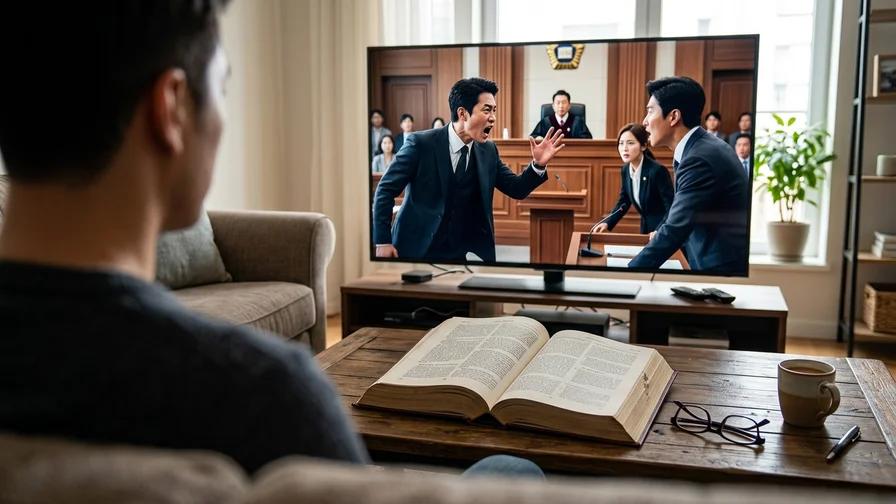
- The parts that lean toward exaggeration: Scenes of a prosecutor roaming crime scenes and going on stakeouts like a detective, or a lawyer single-handedly gathering all the evidence, are largely dramatic devices for entertainment. Real investigation and trial work are a world of division of labor and procedure.
- The realistic parts: Depictions of all-night shifts, grueling workloads, mountains of case files, and pressure from the organization aren’t far from the truth. Nor are the dilemma of empathizing with a victim’s pain while also having to protect a suspect’s rights, and the professional weight of knowing that a single verdict can change a person’s life.
Beyond the Screen: The Path to Becoming a Legal Professional in Korea
Here’s one piece of background knowledge that makes these dramas even more interesting—Korea’s system for training legal professionals changed dramatically in the late 2000s (as of June 2026).
- In the past: The structure was to pass the Judicial Examination—a national exam with virtually no educational requirements—and then go through the Judicial Research and Training Institute to become a judge, prosecutor, or lawyer. The “exam-prep student” characters in older dramas come from this era.
- The transition: In 2009, American-style law schools (graduate schools of law) opened at 25 institutions nationwide, and the Judicial Examination was abolished after its final administration in 2017.
- Today: The only path to becoming a legal professional is to enter law school with a four-year bachelor’s degree plus the Legal Education Eligibility Test (LEET), complete the three-year program, and then pass the Bar Examination.
- You can’t become a judge right away: Under the “unified legal profession” system currently in effect, you must first qualify as a lawyer and accumulate a certain period of legal experience before being appointed a judge. The fresh-out-of-school rookie judge character now belongs more to the picture of the old system’s era.
- A drama detail: Woo Young-woo’s setup as someone who “graduated top of her class at Seoul National University Law School and then joined a large law firm” precisely reflects the current system’s course. Just from a character’s backstory, you can read the era a show is set in.
In the end, the justice-seeking characters in Korean legal and crime dramas are not merely working professionals—they are a self-portrait of all of us, setting out to find our own justice in an imperfect world. Following Hwang Si-mok’s silence, Woo Young-woo’s single step, and Park Cha-oh-reum’s straight-ahead drive, you naturally end up asking yourself, “What is justice?” That, perhaps, is why we keep getting drawn into this genre. If you’d like to explore the world of K-legal and crime dramas more deeply, take a look at K-legal and crime dramas.