National Park Trekking in Korea, Reservations, Closures and Shelters
목차
- Entry fees and parking: what’s free and what isn’t
- Trails that need a reservation
- Mountain shelter bookings, if you’re doing an overnight
- Trail closures and the fire-prevention season
- Where foreign visitors get stuck, and how to get around it
- Final checks before you go: app and safety
- Picked your mountain? The detailed guides
- Frequently asked questions (FAQ)
Key takeaways
- Korea’s national parks are free to enter. What you actually need to plan ahead are reservations, trail closures, and shelters.
- Hallasan’s summit and a few protected trails require an advance reservation, but the booking site is different from one mountain to the next.
- Mountain shelters used for overnight ridge hikes are 100 percent reservation-only, and slots open about two weeks before your date on a first-come basis.
- Foreign visitors often get stuck at the identity-verification step, so this guide includes practical workarounds.
- Which mountain and which route to climb is handed off to the individual mountain guides. This article covers the rules and bookings.
Korea’s national parks are easy for foreign hikers in one sense: you can reach many of them by public transport, and entry is free. What actually trips people up is not the terrain but the paperwork, the reservations and closures. This article gathers, in one place, which mountains need a reservation, where you book it, and exactly where foreign visitors run into trouble. To choose the mountain itself first, start with Hiking Mountains in Korea, How to Pick Your First Peak.
Entry fees and parking: what’s free and what isn’t
Let’s settle the money question first, because it’s good news. Getting into the mountains costs nothing.
- National park entry fees were abolished in 2007, so every national park in Korea is now free to enter.
- The temple cultural-heritage fees that used to cause friction were also waived from May 2023 with government support, so you rarely pay anything on the trail itself.
- Parking lots, however, are paid. Rates vary by park and lot, so check ahead if you are driving.
- Extras such as cable cars, shuttle buses, and overnight shelter stays are charged separately.
Trails that need a reservation
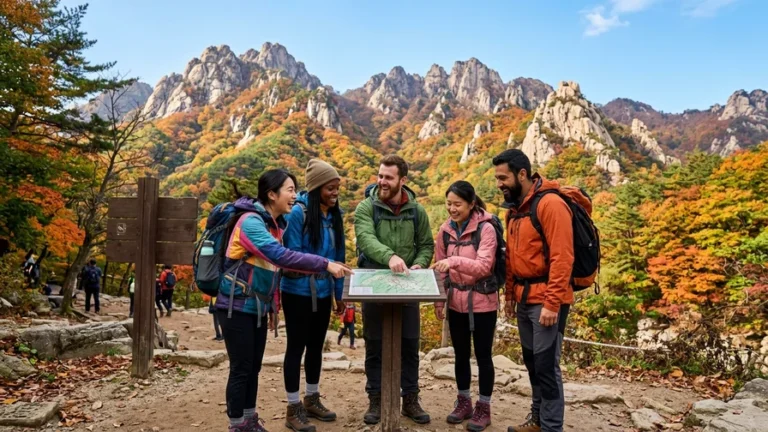
The thing foreign visitors miss most often is the trail reservation system. On a few popular summit routes, showing up without a booking means being turned away at the gate. The key point is that the booking site differs by mountain.
- Hallasan’s Baengnokdam summit can only be reached via the Seongpanak or Gwaneumsa routes, and both require an advance reservation. Seongpanak is capped at 1,000 hikers a day and Gwaneumsa at 500.
- Hallasan bookings are not handled by the national park service but by the Jeju Province Hallasan reservation system. Slots open about a month before your climb on a first-come basis, and it offers a foreign-language interface.
- Routes that do not go to the Baengnokdam summit, such as Witse Oreum, Yeongsil, or Eorimok, need no reservation.
- Sections capped for conservation, like Bukhansan’s Uiryeong trail and Jirisan’s Nogodan, are reserved separately through the Korea National Park Service (KNPS) system.
| Park | Advance reservation | Booking site |
|---|---|---|
| Hallasan (Baengnokdam) | Required (Seongpanak, Gwaneumsa) | visithalla.jeju.go.kr |
| Bukhansan | Uiryeong trail only | reservation.knps.or.kr |
| Jirisan | Some protected sections (e.g. Nogodan) | reservation.knps.or.kr |
| Seoraksan | Usually not (watch closure season) | reservation.knps.or.kr |
| Naejangsan | Not needed | N/A |
The table reflects normal conditions. Fire-prevention seasons or special closures can change things, so confirm the official notice once more before you set out.
Mountain shelter bookings, if you’re doing an overnight
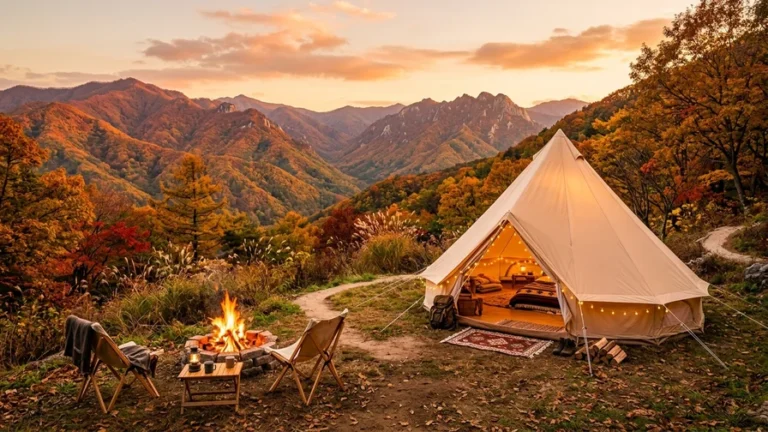
For a day hike, you can ignore shelters entirely. But for a route like the Jirisan traverse, where you sleep on the ridge, the shelter booking is half the battle.
- The parks with overnight shelters are Jirisan, Seoraksan, Deogyusan, and Sobaeksan. Hallasan’s Jindallaebat and Witse Oreum shelters are rest stops only, with no overnight stay.
- Shelters are 100 percent reservation-only through the KNPS booking system. There is no walk-up ticketing.
- Slots usually open two weeks before your date on a first-come basis, and weekends and the autumn foliage season sell out almost the moment booking opens. Popular dates are sometimes run by lottery.
- Many shelters provide only blankets and drinking water, and rules on cooking gear and packing out your trash are strict.
Editor’s tip
If you’re planning an overnight on Jirisan or Seoraksan, lock in the shelter before you fix the route. If the shelter falls through, the whole traverse plan collapses with it. Secure the bed first, then build the route around it.
Trail closures and the fire-prevention season
Korean mountains have a fire-prevention season in spring and autumn, when some ridges and high trails close. Plenty of people show up without knowing and get turned back at the gate.
- The spring fire-prevention season runs roughly from February to mid-May. In 2026 it was moved earlier, from January 20 to May 15.
- The autumn season usually runs from November 1 to December 15.
- Most trails stay open during these periods, but high-elevation and ridge sections are restricted. Seoraksan, for example, closes high routes from March 4 to May 15 in spring 2026.
- Night hiking is restricted on many sections from sunset to sunrise for safety. Start too late and you may be blocked from entering at all.
- Entering a closed section can bring a fine, so check the official closure status the day before you go.
Where foreign visitors get stuck, and how to get around it
This is the part that deserves an honest answer. Korea’s national park booking system is not yet fully friendly to foreign visitors.
- The KNPS system has a foreigner page (reservation.knps.or.kr/foreigner), but it is still in beta and parts of the guidance are incomplete.
- The biggest barrier is identity verification. Sign-up and booking often require a Korean mobile number for verification, so short-term visitors struggle to finish the process alone.
- The Hallasan system has relatively better foreign-language support, so if Baengnokdam is your goal, try visithalla.jeju.go.kr first.
So the realistic workarounds are these.
- Ask a Korean friend, a local guide, or your accommodation host to book for you. Both shelters and trail reservations can be made on your behalf.
- Long-term residents with a Korean ID card and phone number can book directly in their own name.
- Plan around routes that need no reservation. Many summits, like Bukhansan’s Baegundae, are doable in a day with no booking, so you can still have a full hike.
- For Hallasan summit reservations, you can ask directly at 064-713-9953 (weekdays 9:00 a.m. to 5:30 p.m.).
Final checks before you go: app and safety
- Install the official KNPS app, National Park Hiking Info, for real-time weather, trail closure status, and route details in one place.
- Numbered location markers are posted along the trails. If you get lost or hurt, give that number to 119 and your location is pinpointed instantly.
- Plan to finish your descent before sunset, and stick to designated trails only.
- Pack out all your trash and never feed wildlife.
Picked your mountain? The detailed guides
Once the reservations and rules are sorted, get the actual routes and access from each mountain’s own guide. Trailhead transport, distances and times per route, and the one view you shouldn’t miss are all covered mountain by mountain.
- Bukhansan Hiking by Subway — a city mountain reachable by subway, the Baegundae route. No reservation, doable in a day, ideal for a first hike.
- Seoraksan Hiking from Sokcho — from the cable car up to Daecheongbong and the Gongnyong Ridge.
- Jirisan Hiking — Nogodan to Cheonwangbong, the home of the overnight shelter traverse.
- Hallasan Hiking — up to the Baengnokdam crater via Seongpanak and Gwaneumsa, reservation required.
- Naejangsan Autumn Hiking — a top autumn-foliage mountain, with car-free access.
If getting to the trailhead by public transport feels daunting, see Reach Korean Mountains by Public Transport, No Car Needed, and for recovery afterward, Post-Hike Recovery in Korea.
Frequently asked questions (FAQ)
Q. Do I pay an entry fee at national parks?
No, entry is free. Parking is paid, though, and cable cars or overnight shelter stays cost extra.
Q. Can foreign visitors make trail and shelter reservations?
In principle yes, but verification often needs a Korean mobile number, so doing it alone can be hard. The realistic options are to have someone book on your behalf or to choose routes that need no reservation.
Q. Where do I reserve the Hallasan Baengnokdam summit?
Not through the national park service, but through Jeju Province’s Hallasan reservation system (visithalla.jeju.go.kr). Slots open about a month ahead on a first-come basis.
Q. Are there mountains I can summit without a reservation?
Yes. Bukhansan’s Baegundae is doable in a day with no booking, and outside the closure seasons, Seoraksan and Naejangsan also have many routes you can enjoy without one.
Q. Can I hike in winter?
You can, but icy sections and closures are common, so check the official closure status and gear rules before you go.
Put the map away for a moment: sort out the reservations and closures in advance, and Korea’s national parks are very manageable for foreign hikers. For the bigger picture of hiking here, continue with Hiking Mountains in Korea, How to Pick Your First Peak, and browse more on Come On Korea.
Related reads in this series
- Hiking Mountains in Korea, How to Pick Your First Peak
- Bukhansan by Subway from Seoul — Baegundae Route and How to Get There
- Seoraksan from Sokcho — Cable Car to Daecheongbong Peak
- Reach Korean Mountains by Public Transport, No Car Needed
- Hot Springs After Hiking — Recovery Spots Near Korea's Peaks
- Jirisan Hiking — Trails and Access from Nogodan to Cheonwangbong
- Hallasan Hiking to Baengnokdam via Seongpanak and Gwaneumsa
- Naejangsan Autumn Hiking by Train, Seoraebong and Sinseonbong
- Sobaeksan Hiking — Shortest Route to Birobong Peak and the Azalea Ridge
- Baekdudaegan Mountain Range, Korea's Spine and One Hike