Seoraksan from Sokcho — Cable Car to Daecheongbong Peak
목차
- Seoraksan hiking at a glance
- Getting there: from Sokcho to Seoraksan
- Walking the trails: cable car, Ulsanbawi, Daecheongbong
- What you’ll find on Seoraksan: Sinheungsa, Ulsanbawi, Heundeulbawi
- Safety, seasons, and a gear checklist
- After the descent: wrapping up with Sokcho food
- FAQ: common questions about Seoraksan hiking
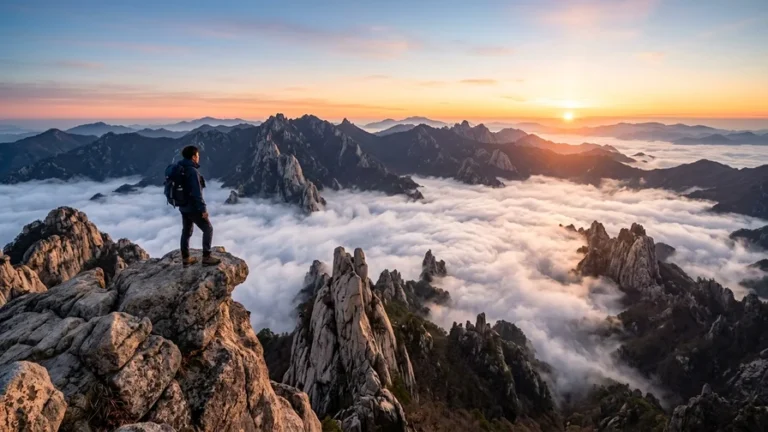
Look up from the streets of Sokcho and the first thing you notice is a soaring granite ridge. That mountain is the stage for Seoraksan 📍 hiking: Seoraksan itself. In fact, anyone traveling along Korea’s east coast tends to stop and stare at this view at least once. This guide is built so that a first-time visitor to Korea can read just this one article and actually climb Seoraksan, covering everything from transport to trails to what to eat once you come back down, all focused in depth on this single mountain.
This article is written by the Come on Korea editorial team. Look a little closer and Seoraksan turns out to be more than just a hiking course: it weaves together Silla-era temples and dramatic rock scenery, so nature and culture greet you the entire way. For a comprehensive guide to trekking Korea’s famous mountains, see our pillar article.
Quick summary
- Seoraksan is one of Korea’s signature mountains, located in Sokcho, Gangwon State, with its highest peak, Daecheongbong, reaching 1,708 m above sea level.
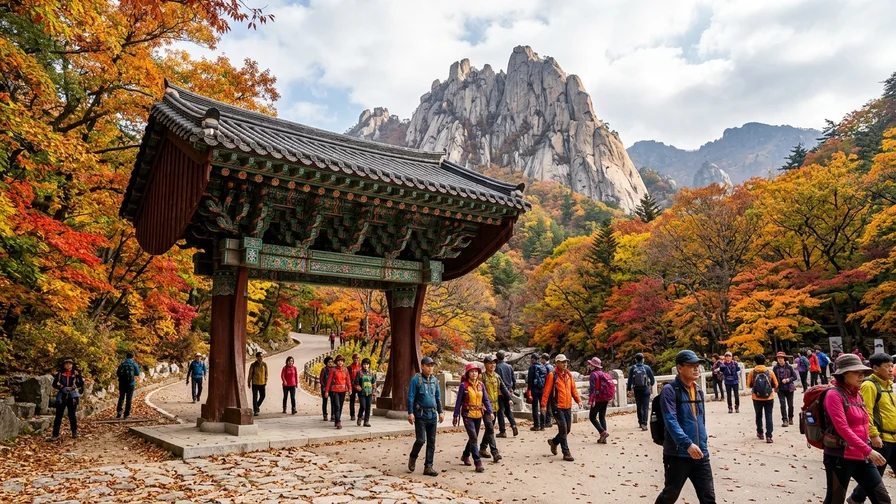
- For scenery without the physical strain, take the Gwongeumseong 📍 cable car; for a proper climb, choose the Ulsanbawi 📍 trail or the Daecheongbong Osaek route.
- From Seoul, take a bus from Dong Seoul Bus Terminal to Sokcho, then hop on Sokcho city bus 7 or 7-1 and start at Seoraksan Sogongwon (the park’s main gateway).
Seoraksan hiking at a glance
Here are the basics you’ll want to know first when planning your Seoraksan hiking trip, laid out in a table. Seoraksan is so large that distance and difficulty vary widely from trail to trail. The Gwongeumseong cable car lets you reach granite scenery with almost no walking, Ulsanbawi is an intermediate climb, and the Daecheongbong Osaek route is for advanced hikers. Choosing your trail in advance to match your fitness and schedule makes the day’s logistics far simpler. Koreans treat this almost as common knowledge: remember that Seoraksan can feel like a completely different mountain depending on which trailhead you start from.
| Category | Details |
|---|---|
| Location | Seoraksan, Sokcho, Gangwon State |
| Highest peak | Daecheongbong, 1,708 m |
| Gwongeumseong cable car | Sogongwon to Gwongeumseong (700 m elevation), about 10 minutes, round-trip ticket |
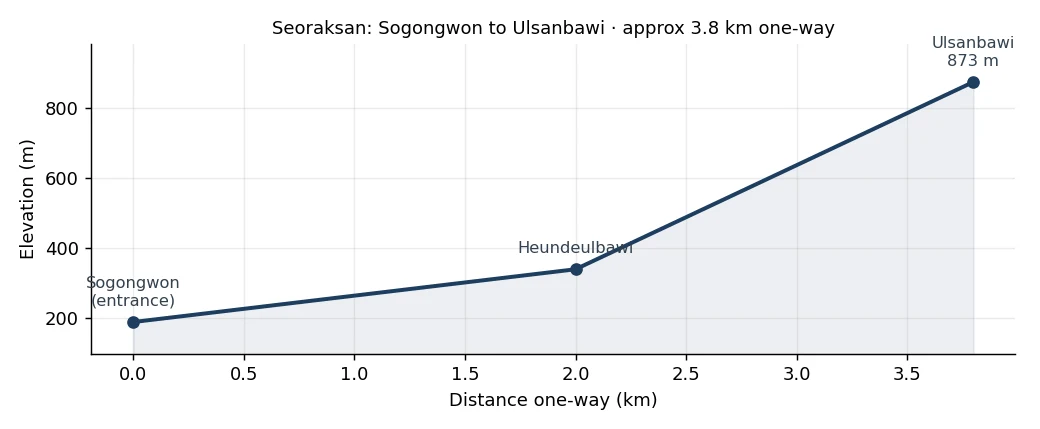
| Ulsanbawi trail | About 7.6 km round trip, roughly 4 hours, moderate difficulty |
| Daecheongbong Osaek route | 5.0 km one way, about 4–5 hours, advanced difficulty |
| Best season | Some of the earliest autumn foliage in Korea (mid-October), fresh greenery in late spring, snowscapes in winter |
🧭 Which trail to choose, and a logistics note
The cable car and the Ulsanbawi trail both start from Seorak-dong’s Sogongwon, so the logistics are simple and it’s easy to loop back to your starting point. The Daecheongbong Osaek route, on the other hand, begins at a trailhead (Osaek) far from Sogongwon in the southern part of Seorak, so transport is entirely different. If you’re aiming for Daecheongbong as a day trip, check buses toward Osaek (Yangyang) in advance; for something lighter, the cable car and Ulsanbawi combination from Sogongwon is the convenient choice.
The Gwongeumseong cable car has near-fixed fares: 16,000 won round trip for adults, 12,000 won for children, and free for kids under 36 months (as of 2026, with same-day on-site ticketing and no advance booking required).
Operating status: The cable car may or may not run on a given day depending on weather (strong winds in particular), so check operating hours at the top of sorakcablecar.co.kr (the official Seorak Cable Car site) on the day of your visit. Only round-trip tickets are sold; there are no one-way tickets.
What changes by season isn’t the cable car fare but rather the national park parking fees and facility charges, so it helps to think of them separately. Confirm exact prices through the official Seorak Cable Car notice before you set out. Saving the Seoraksan map in advance makes it easier to plan your route.
💰 How to budget your costs and schedule
Entry to Seoraksan National Park itself is free, but if you come by car, the Sogongwon parking lot costs about 4,000 won per day, charged separately from the cable car fare. On foliage-season weekends, the Sogongwon lot often fills before 9 a.m., and if you arrive later you’ll have to park in a lower lot and come up by shuttle or on foot, so an early arrival is the answer. Your schedule depends on the trail. The cable car and Ulsanbawi are easily a Sokcho day trip, but Daecheongbong Osaek realistically calls for a pre-dawn start or an overnight in Sokcho. For a daily budget, count on a Seoul–Sokcho round-trip bus (check the booking site), the 16,000-won cable car round trip, plus meals: roughly 60,000–80,000 won per person works out comfortably.
Getting there: from Sokcho to Seoraksan
The gateway to Seoraksan hiking is Sokcho. From Seoul, the most common option is to take a Sokcho-bound bus from Dong Seoul Bus Terminal. Express buses run about 14 times a day and take roughly 2 hours 30 minutes, while intercity buses run about 34 times a day and reach Sokcho in about 2 hours when nonstop. One thing to note: Sokcho’s express bus terminal and intercity bus terminal are in separate locations, so when buying tickets, be sure to confirm which terminal you’ll arrive at.
Once you reach Sokcho, take Sokcho city bus 7 or 7-1 to Seoraksan Sogongwon (in Seorak-dong). This bus drops you right at the Sogongwon entrance, where Sinheungsa Temple 📍, the Gwongeumseong cable car station, and the trailheads for Ulsanbawi and Daecheongbong are all gathered in one spot, which is very convenient. Exact times and fares can change, so search ahead in the Bustago app or Naver Map for “Dong Seoul Terminal → Sokcho” and “Sokcho Terminal → Seoraksan Sogongwon.” One tip: English isn’t widely understood by bus drivers or at ticket windows, so it helps to have your destination pulled up on screen, and in Naver Map or the Bustago app you’ll get more accurate results by searching in Korean (such as “설악산소공원”) rather than English.
Editor’s tip It’s a good idea to book intercity bus tickets in advance through the Bustago or TmoneyGO app. On foliage-season weekends, Sokcho-bound buses sell out early, so securing your seat a few days ahead and fixing your return bus time too will give you plenty of room for the actual hike.
For the Daecheongbong Osaek route, meanwhile, the trailhead at Osaek is in the southern part of Seorak, far from Sogongwon, so transport is completely different. You’ll need to take an intercity bus toward Osaek from Sokcho or go via Yangyang, and if no bus times line up you’ll have to take a taxi, so check ahead if you’re doing it as a day trip.
Overnight stay and rough budget — The intercity bus from Seoul (Dong Seoul Bus Terminal) to Sokcho takes about 2 hours 30 minutes and runs frequently (the first bus departs around 6 a.m.). If you want to start your climb early in the morning from Osaek or Seorak-dong, staying overnight in Sokcho or Seorak-dong the night before makes for easier logistics. The cable car is 16,000 won round trip for adults; check the Seoul–Sokcho intercity bus fare and Sokcho city bus fare in a bus app before you go.
Walking the trails: cable car, Ulsanbawi, Daecheongbong
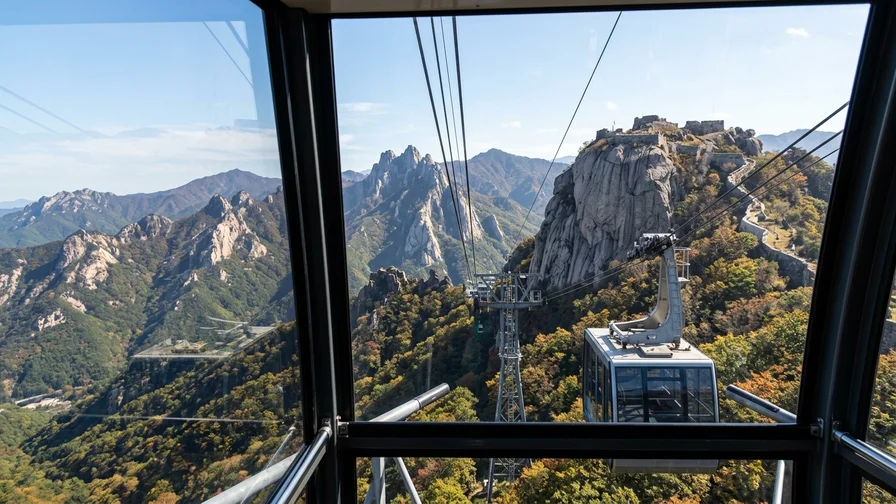
The appeal of Seoraksan hiking is that you can choose among three kinds of climbs to match your fitness level. The lightest option is the Gwongeumseong Cable Car. It carries you from Sogongwon up to the 700 m point at Gwongeumseong in about 10 minutes, and only round-trip tickets are sold. A short walk from the cable car’s upper station brings you to a scenic viewpoint where Ulsanbawi and the Manmulsang rock formations unfold. With almost no physical demand, it’s very popular with families and anyone with sensitive knees.
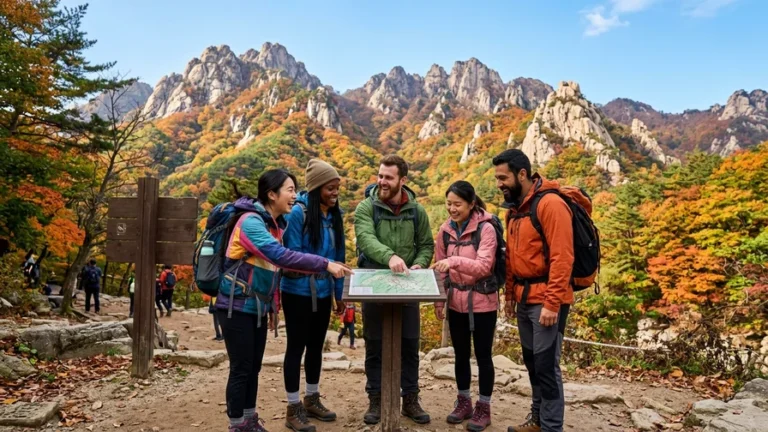
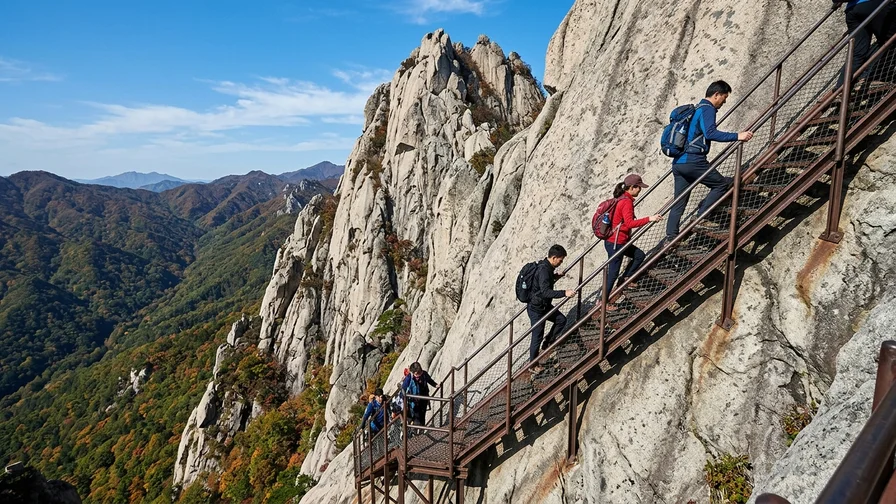
If you want a proper climb, the Ulsanbawi Trail is the top pick. Running from Sogongwon past Sinheungsa, then through Heundeulbawi and Gyejoam to the summit area of Ulsanbawi, it’s 3.8 km one way, about 7.6 km round trip, and takes roughly 4 hours for the full loop (about 2 hours one way). Look a little closer and the real challenge begins after Heundeulbawi. The steep steel staircase of roughly 800 steps just before Ulsanbawi is the toughest stretch of this trail, and once you stand at the summit, around 873 m, the East Sea and Sokcho’s cityscape spread out before you.
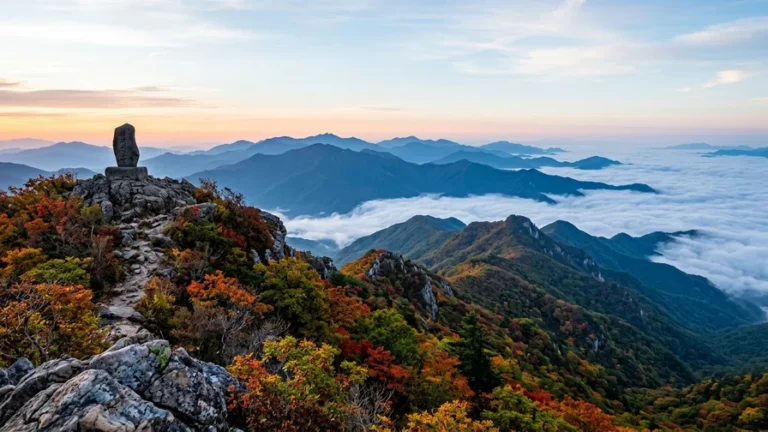
If you want to stand on Seoraksan’s very summit, there’s the Daecheongbong Osaek Trail. Starting from the Namseorak Visitor Center (Osaek), it climbs to Daecheongbong at 1,708 m over 5.0 km one way, taking about 4–5 hours: the shortest yet most demanding route. The distance is short, but it’s a steep uphill from start to finish, so pacing your energy is essential. Behind that lies terrain that forces you to gain over 1,000 m of elevation in a short distance, which makes it a serious challenge even for experienced hikers.
🚡 Cable car is on-site ticketing only, and it stops in high winds
The Gwongeumseong cable car can’t be booked online and is available only by same-day on-site ticketing. On weekends or during foliage season you may wait several hours even after buying a ticket, so going early in the morning is best. Operations can also halt without warning when winds pick up, so confirm the running status at the official Seorak Cable Car website or the ticket office before you head out. For reference, the new Osaek cable car opening in 2026 is a completely separate facility from Gwongeumseong, and its upper station (1,430 m) does not connect to Daecheongbong or any hiking trail, so you cannot reach Daecheongbong by cable car. Daecheongbong can only be reached on foot.
⚠️ The Osaek route is a steep climb from start to finish
The Daecheongbong Osaek route is short only in distance: from the trailhead to the summit, relentless steep stairs go on endlessly with almost no open views to break things up, demanding plenty of stamina and patience. It’s hard on the knees, so hiking poles and a knee brace are practically essential, and knee injuries are especially common on the way down, so take your time descending. If you’re a beginner, don’t push it; start with the cable car or the Ulsanbawi trail instead.
⏰ The Osaek route has set entry hours
The Namseorak Visitor Center (Osaek), where you start the climb to Daecheongbong, has entry hours that vary by season. In winter (November to March) it admits hikers from 4 a.m. to 11 a.m., and in summer (April to October) from 3 a.m. to noon. Past those times you’ll be turned away at the entrance regardless of wildfire controls, so if you’re aiming for Daecheongbong, plan an early-morning start to arrive before the cutoff. Even though the distance is short, the up-and-down takes a long time, so an early departure is also tied to your safety.
What you’ll find on Seoraksan: Sinheungsa, Ulsanbawi, Heundeulbawi
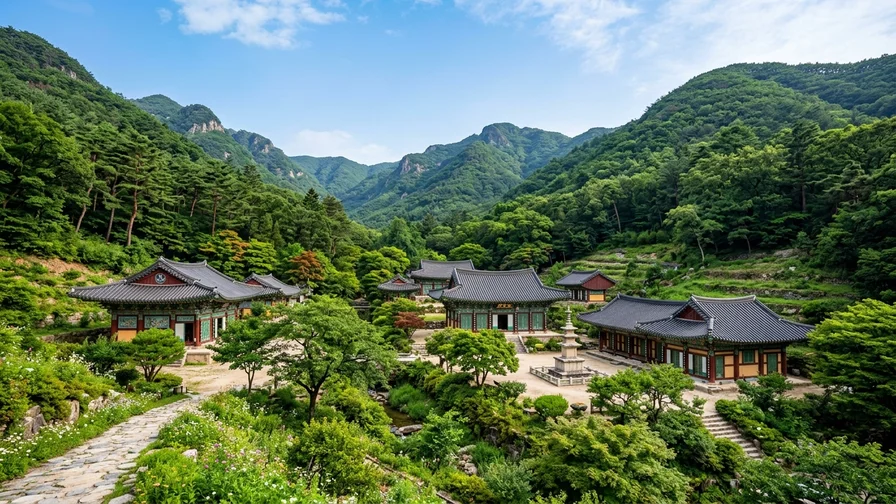
Seoraksan hiking isn’t a climb through scenery alone; it’s a walk alongside long-standing culture. Heading from Sogongwon toward Ulsanbawi, the first place you reach is Sinheungsa Temple. Located at 1137 Seoraksan-ro, Sokcho, Gangwon State, this venerable mountain temple was founded in the Silla era, and a massive bronze seated Buddha sitting with the mountain at its back makes a striking impression. For Koreans, this isn’t simply a tourist spot but a kind of starting point to gather one’s thoughts before climbing.
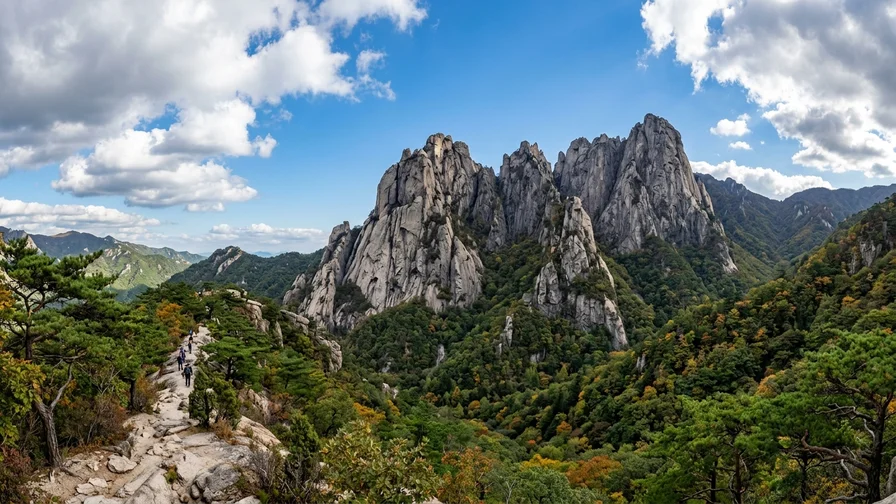
Past Sinheungsa, the trail opens into granite scenery. Its crowning sight is Ulsanbawi, a massive rock ridge of six peaks lined up like a folding screen, looking from afar like a single fortress wall. Legend has it the name Ulsanbawi comes from an old tale of a rock traveling from Ulsan in Gyeongsang Province toward Geumgangsan that settled here in Seoraksan instead. Knowing this place-name legend, the sheer presence of the cliffs you view from the summit area feels quite different.
On the way up to Ulsanbawi you’ll also pass Heundeulbawi. This large round rock seems to rock when pushed by hand yet never rolls away, which is how it got its name, and it’s a well-loved spot where people give it a push and snap a photo. Knowing the origin of the name and giving it a push yourself makes it that much more fun.
Safety, seasons, and a gear checklist
The stretch that demands the most attention on a Seoraksan hike is the steel staircase just before Ulsanbawi. With roughly 800 steps, this section is steeply pitched and quite exposed underfoot, so packing gloves helps in case your hands get cold or you start to slip. The Daecheongbong Osaek route is steep right from the start, so don’t push your pace right after setting off; pacing your energy evenly is the key.
It also pays to know the seasonal hazards in advance. High-elevation areas like Daecheongbong in winter are especially dangerous due to ice and strong winds, so crampons are essential, and trail sections are frequently closed under snow and ice. Always check local weather and trail closures before you set out. There are restrooms at Sogongwon and the Sinheungsa entrance, but none along the ridge or near the summit, so it’s best to use them at the trailhead first, and we recommend carrying at least 1 liter of drinking water per person.
- Pack non-slip gloves for the steel-staircase section on Ulsanbawi.
- Bring crampons as a must for winter high-elevation hikes.
- Fill at least 1 liter of drinking water per person at the trailhead.
- Use the restrooms at Sogongwon and the Sinheungsa entrance beforehand.
🔥 Entry is restricted during spring and autumn wildfire-watch periods
During the spring (typically March to May) and autumn (November to December) wildfire-watch periods, Korea’s national parks fully close major high-elevation trails, including the one to Daecheongbong. International travelers often go unaware of this rule and end up turning back at the entrance, so if you’re planning a hike during these periods, be sure to check the closed sections and dates on the Korea National Park Service website in advance.
Don’t count on resupply along the ridge — The Jungcheong Shelter ended overnight operations in 2023 and became a shelter only, and shops and sales at national park shelters are shrinking for the sake of the environment (cup noodle sales, among others, have stopped). Pack plenty of water and snacks at the trailhead, and carry all your trash back out.
After the descent: wrapping up with Sokcho food
The way to wrap up a Seoraksan hike is with Sokcho food. Sokcho is a port city famous for dakgangjeong (sweet-and-spicy fried chicken), mulhoe (cold raw fish soup), and Abai sundae (Hamgyeong-style blood sausage), so it’s a great place to refuel after coming down.
- Manseok Dakgangjeong 📍 (in the central market) serves sweet-and-spicy fried chicken that’s a must on any Sokcho trip. Order it boneless for easy eating; it keeps its crunch even when cooled, making it a great snack for the bus home.
- Bongpo Meoguri-jip 📍 (in Yeongrang-dong) is known for its signature mulhoe, fresh seafood in a tangy chilled broth that goes down refreshingly after a tiring hike.
- Dancheon Restaurant 📍 (in Abai Village) is a third-generation old establishment famous for Abai sundae carrying the home cooking of Hamgyeong-do displaced families, along with sundae-gukbap (blood-sausage soup) and gajami hoe-naengmyeon (cold noodles with raw flounder).
- 2-dae Songrim Sundae-jip 📍 (in Abai Village) is a second-generation old establishment where you can try veggie-packed Abai sundae alongside ojingeo sundae (squid stuffed sausage) coated in egg.
- Deungdae Grilled Fish 📍 (in Abai Village) lets you build a hearty spread with a grilled-fish set browned over real charcoal, paired with squid sundae.
- Kim Yeong-ae Sundubu 📍 (in Haksapyeong) serves handmade sundubu (soft tofu) from Seoraksan’s Haksapyeong tofu village, mild and warming, which is especially welcome after coming down on a cold day.
Most places take both card and cash, but market stalls and older establishments sometimes prefer cash, so keeping a little on hand puts your mind at ease. Dakgangjeong shops like Manseok pack to go and make a great snack for the bus back, while mulhoe and sundae spots can have lines at mealtimes, so arriving slightly off-peak cuts down the wait.
FAQ: common questions about Seoraksan hiking
Q. We have almost no hiking experience. Can I still enjoy Seoraksan?
Yes. With the Gwongeumseong cable car you can see the scenery of Ulsanbawi and Manmulsang with almost no walking. It’s the best fit for families or anyone for whom a strenuous climb is a stretch.
Q. Which is harder, the Ulsanbawi trail or the Daecheongbong Osaek route?
The Daecheongbong Osaek route is advanced and far tougher, with a steep uphill the entire 5 km one way. The Ulsanbawi trail is intermediate and relatively manageable once you get past the steel-staircase section.
Q. Is Seoraksan hiking possible in winter too?
It is, but high elevations are dangerous with ice and strong winds, so crampons are essential, and sections are frequently closed under snow and ice. Always check trail closures before you set out.
Q. How do I get from Sokcho to Seoraksan Sogongwon?
Take Sokcho city bus 7 or 7-1 and get off at Seoraksan Sogongwon. Sinheungsa, the cable car, and the hiking trailheads are all gathered there.
Seoraksan is the most striking famous mountain on Korea’s east coast, blending a massive granite ridge with old mountain temples. Before you set out, check seats on the Sokcho-bound bus in the Bustago app and the city-bus times to Seoraksan Sogongwon in Naver Map, and review the local weather as well, and you’ll be on much surer footing. For more on hiking in Korea, browse more on Come On Korea, and follow the full picture of trekking the country’s famous mountains with the Hiking Mountains in Korea, How to Pick Your First Peak.
Related reads in this series
- Hiking Mountains in Korea, How to Pick Your First Peak
- Bukhansan by Subway from Seoul — Baegundae Route and How to Get There
- National Park Trekking in Korea, Reservations, Closures and Shelters
- Reach Korean Mountains by Public Transport, No Car Needed
- Hot Springs After Hiking — Recovery Spots Near Korea's Peaks
- Jirisan Hiking — Trails and Access from Nogodan to Cheonwangbong
- Hallasan Hiking to Baengnokdam via Seongpanak and Gwaneumsa
- Naejangsan Autumn Hiking by Train, Seoraebong and Sinseonbong
- Sobaeksan Hiking — Shortest Route to Birobong Peak and the Azalea Ridge
- Baekdudaegan Mountain Range, Korea's Spine and One Hike