Gyeongju UNESCO World Heritage (1995, 2000)
Contents
- Gyeongju Historic Areas: Understanding the Five Zones
- Day 1: Downtown Walking Course (Daereungwon, Cheomseongdae, Donggung Palace and Wolji Pond)
- Day 2: Bus Course (Bulguksa, Seokguram)
- Bulguksa Temple in Detail
- Seokguram Grotto in Detail
- Hwanglidan-gil and 3 Nearby Restaurants
- Transport Guide
- Practical Tips for International Travelers
- Seasonal Travel Tips
- Frequently Asked Questions (FAQ)
As the former capital of the Silla Kingdom (57 BC–935 AD), Gyeongju is home to two of Korea’s UNESCO World Heritage sites. The first is the Seokguram Grotto and Bulguksa Temple (Seokguram Grotto and Bulguksa Temple, official UNESCO listing page), inscribed in 1995 as Korea’s very first World Heritage entry, and the second is the Gyeongju Historic Areas (Gyeongju Historic Areas, official UNESCO listing page), inscribed in 2000.
- Core route: Day 1 is a walking tour of downtown sites like Daereungwon and Cheomseongdae; Day 2 focuses on the outlying Bulguksa and Seokguram, reached by bus.
- Transport info: From KTX Gyeongju Station (the former Singyeongju Station) into town, then city buses No. 10, 11, and 12 connect to Bulguksa and Seokguram.
- Cost highlights: Bulguksa, Seokguram, and Daereungwon all became free as admission fees were abolished in May 2023. The only paid items are the interior of Cheonmachong tomb and Donggung Palace and Wolji Pond (3,000 KRW per adult each).
- Information basis:
Gyeongju Historic Areas: Understanding the Five Zones
The Gyeongju Historic Areas were inscribed as a UNESCO World Heritage Site in 2000 in recognition of the density and excellent preservation of Silla relics. It is divided into five zones, each with distinct characteristics.
- Namsan Zone: Concentrated with Buddhist relics and nicknamed the “open-air museum.” Rock-carved Buddhas, stone pagodas, and temple sites are scattered across the entire mountain.
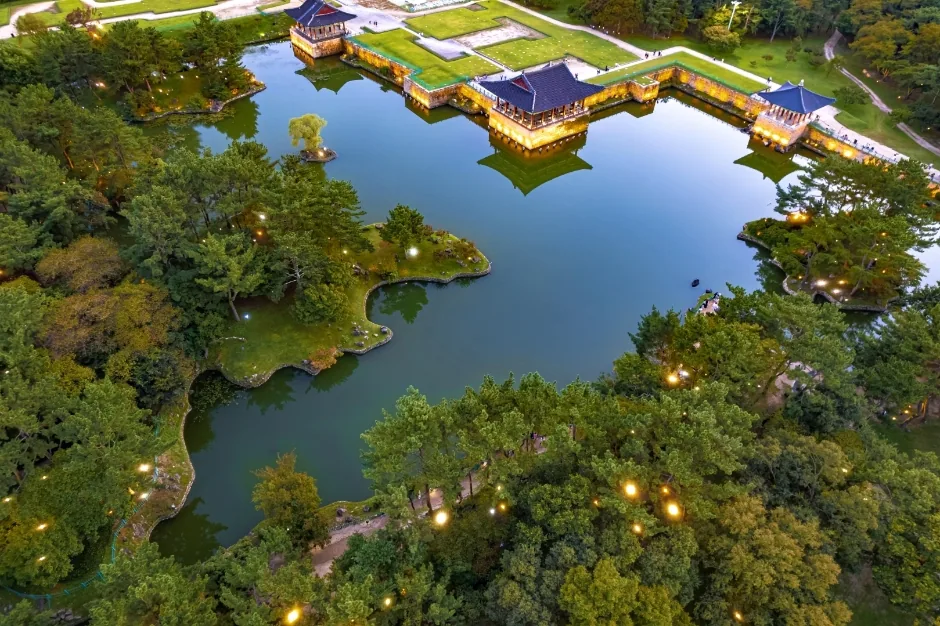
- Wolseong Zone: The Silla royal palace site, built along a crescent-moon-shaped terrain. It includes Cheomseongdae, Gyerim, and Donggung Palace and Wolji Pond.
- Daereungwon Zone: A cluster of tombs for Silla kings, queens, and nobles. It is home to Cheonmachong, the only tomb you can enter.
- Hwangnyongsa Zone: The site of Hwangnyongsa, the largest Silla temple, and Bunhwangsa Temple. Today only the building foundations remain.
- Sanseong Zone: Includes Myeonghwalsanseong Fortress, a key defensive structure for the capital, Seorabeol.
Day 1: Downtown Walking Course (Daereungwon, Cheomseongdae, Donggung Palace and Wolji Pond)
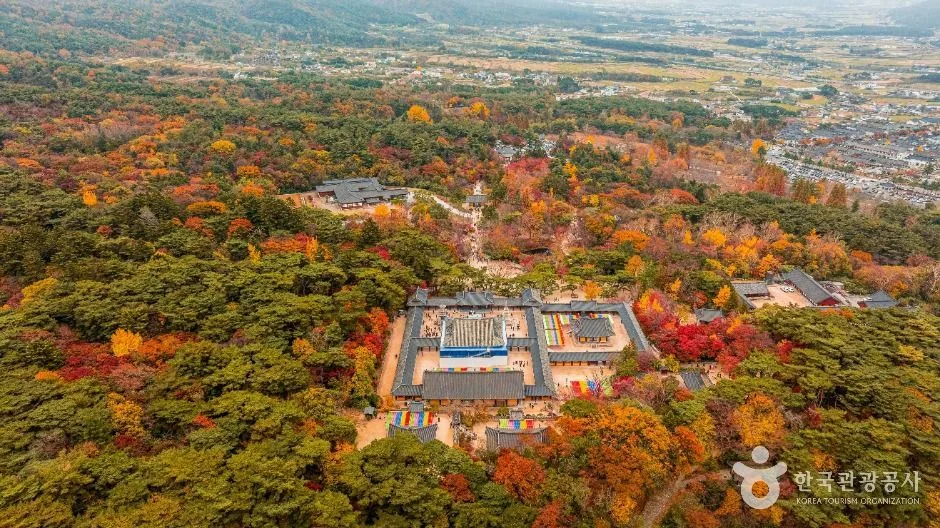
Day 1 begins at KTX Gyeongju Station and covers a walking tour of the densely clustered downtown sites, including Daereungwon, Cheomseongdae, and Donggung Palace and Wolji Pond. The sites are close to one another, just a 5–20 minute walk apart, so getting around is easy.
| Time | Activity | Details |
|---|---|---|
| 10:00 | Arrive at Gyeongju Station and head downtown | About 2 hours 5–15 minutes from Seoul Station by KTX. From the bus stop in front of the station, take a regular bus No. 50, 51, or 70 (every 10–15 minutes) and get off at the “Gyeongju Express Bus Terminal” or “Jungang Market” stop (about 25–30 minutes, 1,500 KRW). With a lot of luggage, a taxi takes about 20 minutes and costs around 15,000–17,000 KRW (as of June 2026). |
| 10:40 | Tour Daereungwon and Cheonmachong | Allow about 1.5 hours. Admission to Daereungwon is free (fees abolished in May 2023). Only the interior of Cheonmachong charges a separate fee of 3,000 KRW per adult (about $2.3), 09:00–22:00. Cheonmachong is the only tomb you can enter, and its highlight is the exhibit recreating where the gold crown and the Heavenly Horse painting were excavated. The walking paths between the tombs are well maintained. |
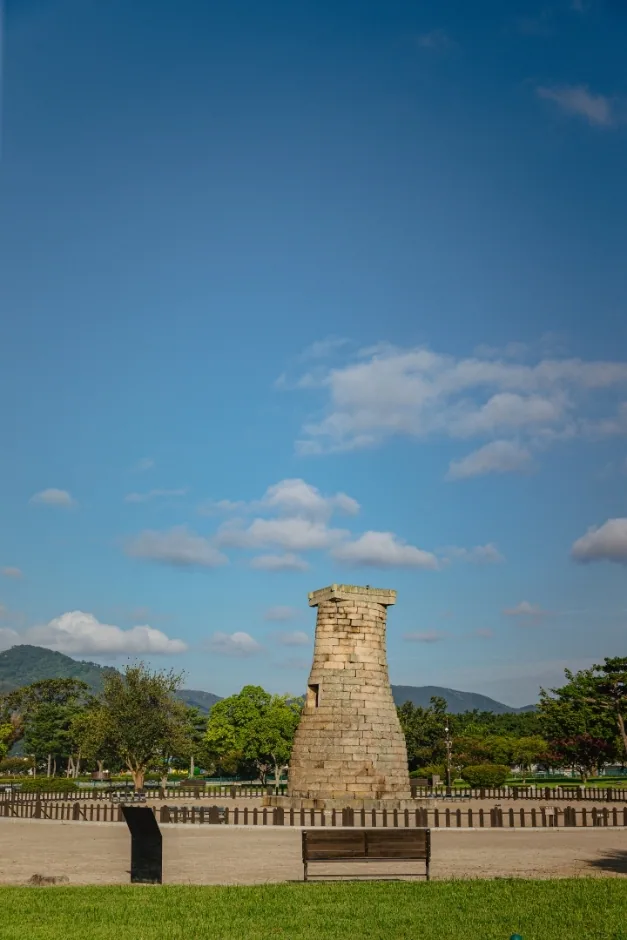
| 12:10 | Visit Cheomseongdae | A 5-minute walk from the main gate of Daereungwon. The oldest surviving astronomical observatory in East Asia, built in the 7th century. Height 9.17 m. Admission is free. Allow about 30 minutes. |
| 12:40 | Lunch (Hwanglidan-gil) | A 10-minute walk from Cheomseongdae to Hwanglidan-gil, a street packed with a variety of restaurants serving Korean and Western food, plus cafés. You can try traditional Korean set meals at Dosolmaeul 📍, or pork ssambap (grilled pork with leaf wraps) at Jeongnok Ssambap 📍 beside the Daereungwon stone wall. |
| 14:00 | Visit Donggung Palace and Wolji Pond | About a 35–40 minute walk (roughly 2.7–3 km) from Hwanglidan-gil, or about 20 minutes (1.5 km) on foot from Cheomseongdae (verified October 2026). The site of a detached Silla royal palace, used for banquets. Admission is 3,000 KRW per adult (about $2.3), 09:00–22:00 (last ticket sale 21:30). Allow about 1 hour. Each ticket is good for a single entry, so seeing it both day and night means paying twice. Since the night view is the main draw, if your schedule is tight it’s a reasonable choice to skip the daytime visit and go only in the evening. |
| 15:00 | Visit Gyeongju National Museum | Right next to Donggung Palace and Wolji Pond. A comprehensive collection of Silla artifacts. Permanent exhibitions are free, 10:00–18:00 (extended night opening 18:00–20:00 every Saturday from March to October); closed on January 1, Lunar New Year’s Day, and Chuseok day, with the exhibition halls also closed on the second Monday of March, June, September, and December (outdoor areas stay open) (Gyeongju National Museum official site). (verified 2026-10-20) The Divine Bell of King Seongdeok (the Emille Bell) in the outdoor bell pavilion is the largest surviving bell in Korea — a piece worth the trip on its own. Allow about 1.5 hours. |
| 17:00 | Hotel check-in | Accommodation in Hwanglidan-gil or central downtown Gyeongju is convenient for the evening route. |
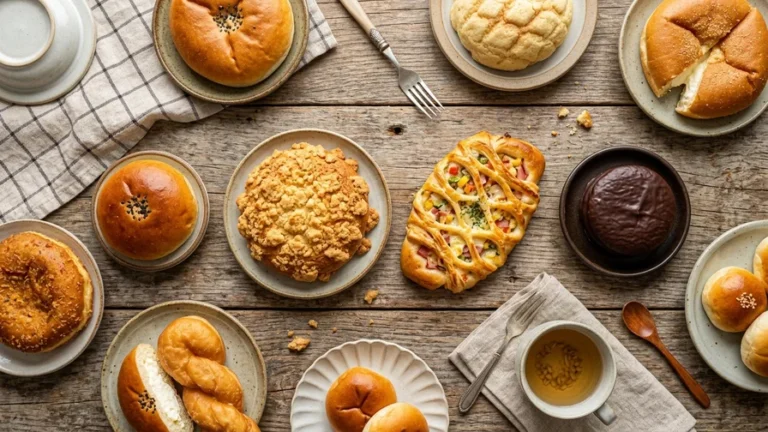
| 19:00 | Dinner and an evening stroll along Hwanglidan-gil | After dinner, try Gyeongju’s famous snacks like ten-won bread and Hwangnam bread. Pick them up at Gyeongju Face Bread (Hwanglidan-gil) 📍 or Silla Myeongga Hwanglidan-gil Flagship (Gyeongju bread & chal-bori barley bread) 📍. |
| 20:30 | Night lighting at Cheomseongdae and Donggung Palace and Wolji Pond | Both spots are famous for their nighttime lighting. Donggung Palace and Wolji Pond is open until 22:00, but ticket sales close at 21:30, so arrive before then. The area around Cheomseongdae is a free, open lawn where you can stroll and enjoy the view freely. It has a completely different atmosphere from the daytime. |
Day 2: Bus Course (Bulguksa, Seokguram)
On Day 2, take a bus from downtown Gyeongju to Bulguksa and Seokguram in the mountainous area to the east. These two sites were Korea’s first UNESCO World Heritage inscription in 1995 and represent the pinnacle of Silla Buddhist art. Since there is travel time involved, an early morning start is recommended.
- 09:00 | Depart hotel → head to Bulguksa
- Transport: Take city bus No. 10 or No. 11 from the stops around the Gyeongju Express Bus Terminal or Jungang Market.
- Travel time: About 35–45 minutes
- Get off at: the “Bulguksa” stop
- Fare: Flat city-bus fare of 1,500 KRW for adults, 1,450 KRW with a transit card (as of June 2026). T-money transit cards accepted.
- Note: Buses No. 10 and 11 run the same loop in opposite directions, and both stop at Bulguksa. Both routes start and end at the Hwanglidan-gil public parking lot and each runs 28 times a day, so the gap between buses on one route can be 30 minutes or more (verified October 2026). You can check real-time arrival info with a map app like Kakao Map.
- 09:45 | Tour Bulguksa
- Time required: About 1.5 hours
- Admission: Free (fees abolished on May 4, 2023; previously 6,000 KRW per adult)
- Hours: Mar–Sep 09:00–18:00, Feb and Oct 09:00–17:30, Nov–Jan 09:00–17:00 (last admission, open year-round, Bulguksa official site)
- Key sights: Dabotap and Seokgatap pagodas, the Cheongungyo and Baegungyo bridges, and Daeungjeon Hall
- 11:15 | Bulguksa → head to Seokguram
- Transport: Take bus No. 12 from the bus stop across from the Bulguksa parking lot. It is the only public transport to Seokguram.
- Frequency: Roughly every 60 minutes on weekdays, so service is infrequent. It’s most efficient to check the timetable posted at the Bulguksa stop as soon as you arrive and plan your visit around it. The timetable can also be checked at the Gyeongju Traffic Information Center.
- Travel time: About 20 minutes (climbing the mountain road)
- Fare: Same as city buses, 1,500 KRW (1,450 KRW with a transit card)
- 11:40 | Tour Seokguram
- Time required: About 1 hour (including a 10-minute walk from the ticket office to the grotto)
- Admission: Free (since May 2023, admission to state-designated cultural heritage has been waived under the revised Cultural Heritage Protection Act)
- Hours: Mar–Sep 09:00–18:00, Feb and Oct 09:00–17:30, Nov–Jan 09:00–17:00 (last admission, open year-round, Seokguram official site)
- Note: The main Buddha statue is protected behind a glass wall; you cannot enter the interior and view it only from outside. Photography is prohibited.
- 13:00 | Lunch
- There are few restaurants near Seokguram. It’s best to take bus No. 12 back down to the Bulguksa entrance for a meal. Korean restaurants are clustered along Bobul-ro and the Bulguk new-town area near Bulguksa. Try grilled bulgogi ssambap at Yusujeong Ssambap 📍 (closed Wednesdays), mushroom bulgogi hot pot at Jeonju Sigol Bapsang 📍, or grilled mackerel and seafood hot-stone bibimbap at Gyeongchunjae 📍 (open 08:00–16:00, closed Tuesdays).
- 14:30 | Return to downtown Gyeongju and Gyeongju Station
- From the Bulguksa stop, take bus No. 10 or 11 back to downtown Gyeongju.
- From downtown Gyeongju to Gyeongju Station, use bus No. 50, 51, or 70 (about 25–30 minutes).
- After 15:30 | Depart Gyeongju Station
- Take the KTX to Seoul or another destination.
Bulguksa Temple in Detail
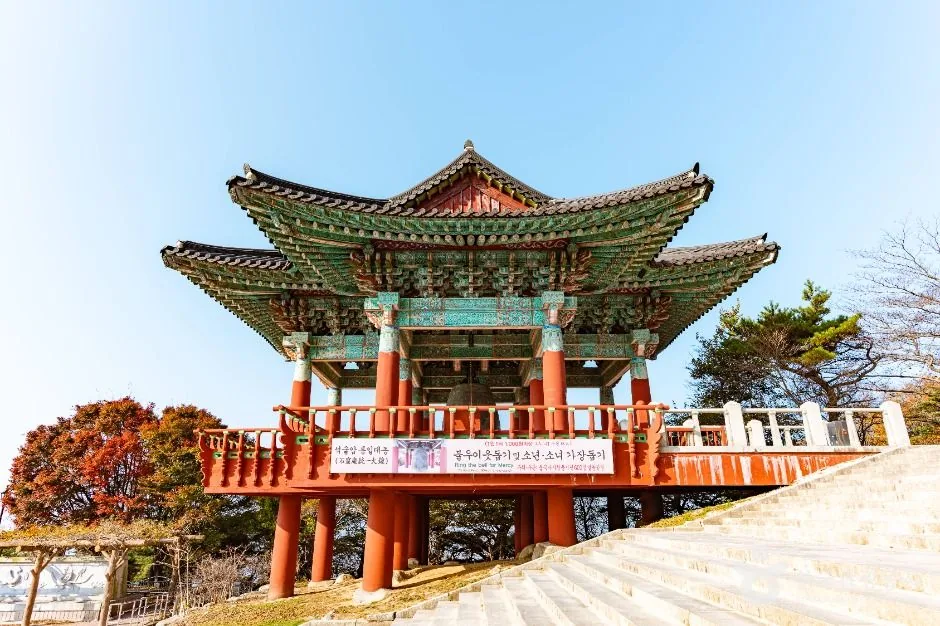
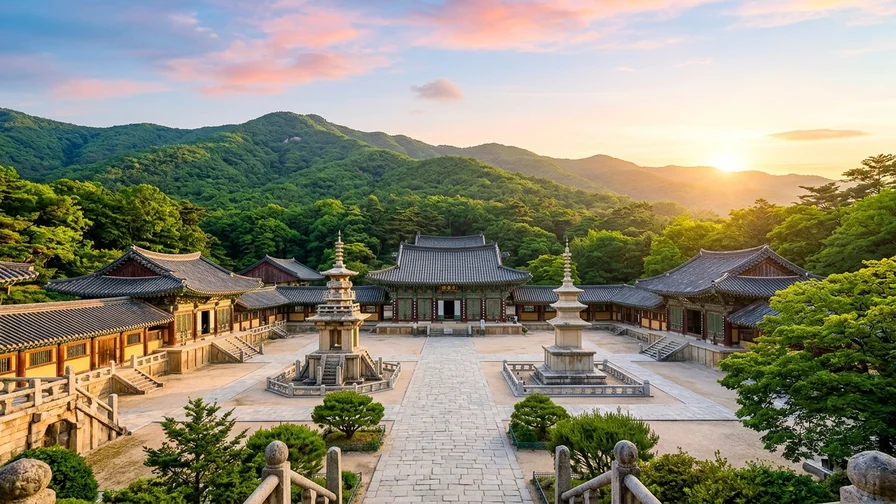
Construction of Bulguksa began in 751, during the reign of Silla’s King Gyeongdeok, led by Kim Daeseong. Architecturally, it is regarded as a realization of the Buddhist ideal world on earth. Since May 2023, admission has been abolished and it is free to visit. Its main structures are as follows.
- Cheongungyo and Baegungyo Bridges: Bridges connected to Jahamun Gate of Daeungjeon Hall. Below the bridge symbolizes the world of ordinary people, and above it the world of the Buddha. The 33 steps represent the 33 heavens of Buddhism.
- Dabotap and Seokgatap Pagodas: Two stone pagodas facing each other east and west in the front courtyard of Daeungjeon Hall. Dabotap (east) is ornately decorated, while Seokgatap (west) embodies simple, balanced beauty. Seokgatap is also famous for the legend of “Muyeongtap (the pagoda without a shadow).” Dabotap is the very pagoda engraved on the front of the 10-won coin, so if you have one, compare it with the real thing.
- Daeungjeon Hall: The central hall enshrining Sakyamuni Buddha. The current building was reconstructed in 1765 after being destroyed during the Imjin War (the 1592 Japanese invasions).
Seokguram Grotto in Detail
Seokguram is an artificial granite grotto temple built into the mid-slope of Tohamsan Mountain. Like Bulguksa, it was founded by Kim Daeseong. It is a structure that combines architecture, mathematics, geometry, and religion.
- Structure: It consists of an antechamber (front room) and a main chamber, connected by a corridor. At the center of the main chamber sits Bonjonbul (the principal Sakyamuni Buddha statue), 3.48 m tall.
- The main Buddha: By tradition it was designed so that the light of the sunrise over the East Sea would strike the urna (the white tuft) on its forehead. It has well-balanced body proportions and a merciful expression. Although you view it through a glass wall, the key viewing point is the carefully designed line of sight, set so that when you stand directly in front, your eyes meet the Buddha’s at the same level.
- Construction technique: The domed ceiling is precisely assembled from hundreds of stones. A scientific principle was applied to keep the temperature and humidity constant by channeling groundwater to flow behind the walls and ceiling. Today, to preserve it, a glass wall seals the interior and an artificial ventilation system is in operation.
Hwanglidan-gil and 3 Nearby Restaurants
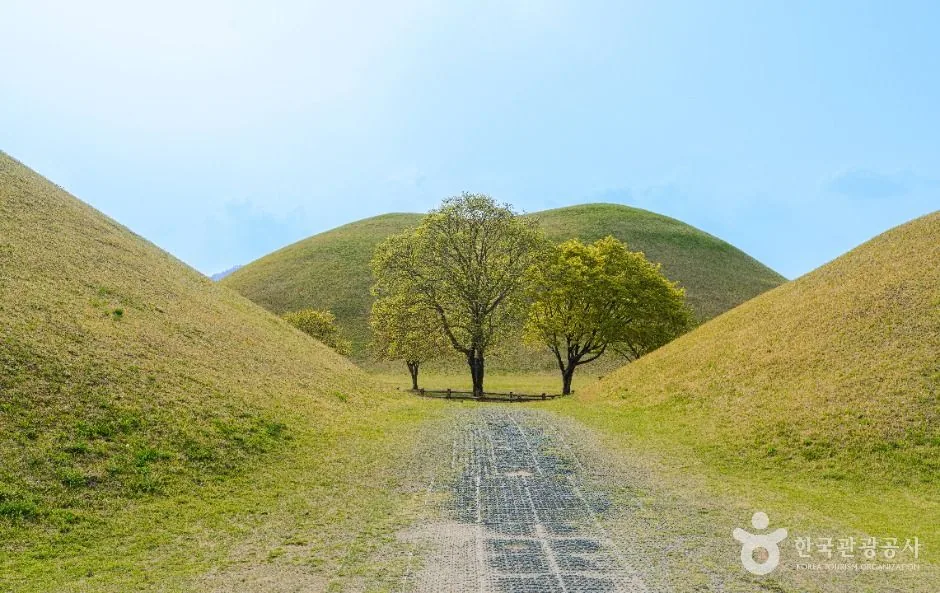
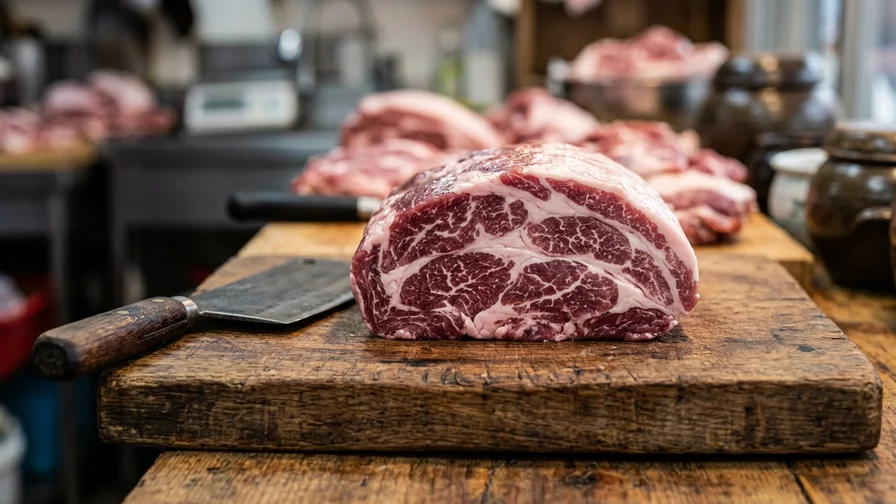
Hwanglidan-gil is an alleyway next to Daereungwon, gathering restaurants, cafés, and shops in renovated old hanok houses, making it very popular with young travelers. Deeper into the alleys are several barbecue restaurants serving grilled pork like samgyeopsal (pork belly) or Pork Shoulder (목살, moksal). Below are 3 verified, real restaurants in and around Hwanglidan-gil (as of June 2026).
- Dosolmaeul 📍
- Menu: A traditional Korean set meal — braised fish, soybean-paste stew, leaf wraps, savory pancakes, and side dishes all served at once, in a countryside-table style.
- Highlights: A restaurant set in a 140-year-old hanok, long loved by locals. Break time 15:00–17:00, closed Tuesdays and Wednesdays.
- Address: 8-13 Sonhyoja-gil, Gyeongju-si, Gyeongsangbuk-do
- Jeongnok Ssambap 📍
- Menu: Pork ssambap and beef bulgogi ssambap — seasoned pork or beef wrapped in lettuce and other leaf greens, a Korean staple. Unlimited refills of leaf greens at the vegetable bar.
- Highlights: Right next to the Daereungwon stone wall. More than 10 side dishes, served with ureong ssamjang (a soybean-paste dip made with freshwater snails). Break time 16:00–17:00.
- Address: 48 Gyerim-ro, Gyeongju-si, Gyeongsangbuk-do
- Silla Myeongga Hwanglidan-gil Flagship (Gyeongju bread & chal-bori barley bread)
- Menu: Gyeongju bread and chal-bori barley bread — thin-dough pastries filled with red-bean paste, Gyeongju’s signature snack.
- Highlights: Not a restaurant, but ideal for takeaway. Next to the flagship store there is also a hands-on program for making chal-bori barley bread.
- Address: 1035-2 Poseok-ro, Gyeongju-si, Gyeongsangbuk-do
Besides these, in front of Bulguksa there is You’re Around 📍, a café known for its jambon-beurre sandwiches, and near the Samneung tombs at Namsan there is Ureong-gaksi Ssambap 📍, which specializes in ssambap with freshwater-snail soybean-paste dip (closed Mondays, about a 10-minute drive from downtown). For restaurants near Bulguksa, see the Day 2 lunch entry.
Transport Guide
KTX (High-Speed Rail)
This is the fastest way to get from Seoul to Gyeongju. It takes about 2 hours 5–15 minutes from Seoul Station to Gyeongju Station. Gyeongju Station was renamed from “Singyeongju Station” through December 2023, so it is the same station referred to as Singyeongju Station in older maps or signage. Standard-class fares are 49,300 KRW (about $38, as of June 2026), varying by booking time and seat type. Booking in advance is recommended on weekends and public holidays. Gyeongju Station is about 10 km from downtown Gyeongju, so you’ll need a city bus or taxi.
Express Bus
From the Seoul Express Bus Terminal (Seoul Gyeongbu) to the Gyeongju Express Bus Terminal takes about 3 hours 30 minutes, with roughly 11 departures a day. Fares are 24,700 KRW for standard, 36,700 KRW for premium (udeung), and 47,700 KRW for top-tier Premium (verified October 2026), cheaper than the KTX, and the terminal is located in the city center, making it convenient to get around on arrival. You can book at the KOBUS official site.
City Bus
This is the main means of transport within Gyeongju. The fare is a flat 1,500 KRW in cash for adults, or 1,450 KRW with a transit card (as of June 2026), and a T-money or Cashbee transit card is the most convenient option. Board at the front, tag the card reader, and exit through the rear door. Stops at major attractions often have English announcements. You can check routes and real-time locations at the Gyeongju Traffic Information Center.
Practical Tips for International Travelers
The 1330 Korea Travel Helpline
Whenever you have a question or need help during your trip, dial 1330 on your phone to use the 24-hour tourist information service run by the Korea Tourism Organization. It supports multiple languages, including English, Japanese, and Chinese.
- Taxi-hailing apps: Kakao T offers an English interface, but some features may require Korean phone-number verification. If you can’t hail a ride, the surest option is to board directly at the taxi stands in front of Gyeongju Station, the express bus terminal, or Bulguksa.
- Rental cars: A rental car is a great choice for traveling freely around the outskirts of Gyeongju. Just be sure to bring an International Driving Permit (IDP).
- Payment: Most restaurants, shops, and attractions accept credit cards. However, you’ll need cash for city-bus fares, street food, and small markets, so it’s wise to keep some Korean won (KRW) on hand.
- Checking information: Admission fees and operating hours are subject to change. Before visiting, the most accurate sources are the official Gyeongju Culture & Tourism website or each site’s management office.
Seasonal Travel Tips
- Spring (April): Gyeongju is famous for its cherry blossoms. The blossoms around Bomun Lake at the Bomun Tourist Complex and along the Daereungwon stone-wall path are especially beautiful. This season draws very large crowds.
- Autumn (late October – early November): The fall foliage around Bulguksa and Tongiljeon Hall is beautiful. The pleasant weather makes it the best time for a walking trip.
Frequently Asked Questions (FAQ)
- Q1: Is one day enough for a trip to Gyeongju?
- A: It’s possible if you only see the key sites — Bulguksa, Seokguram, and Daereungwon — but it makes for a very tight schedule. To see the downtown sites plus Bulguksa and Seokguram at a relaxed pace, we recommend at least a 2-day trip.
- Q2: Can you visit all the downtown Gyeongju sites on foot?
- A: Most downtown sites — Daereungwon, Cheomseongdae, Donggung Palace and Wolji Pond, the Gyeongju National Museum, and Hwanglidan-gil — are within a 20-minute walk, so a walking tour is entirely feasible. Only Bulguksa and Seokguram require a bus.
- Q3: How do I pay the bus fare?
- A: You can pay cash (1,500 KRW for adults), but a transit card like T-money (1,450 KRW) is the most convenient. Transit cards can be purchased and topped up at convenience stores.
- Q4: Is there good English signage at the major attractions?
- A: Yes, the major UNESCO World Heritage attractions have well-placed signs in English, Japanese, and Chinese. At places like the Gyeongju National Museum, multilingual audio guides are available to rent.
- Q5: Should I book the KTX or attraction tickets in advance?
- A: KTX seats can sell out on weekends and public holidays, so booking in advance is safer. Bulguksa, Seokguram, and Daereungwon are free, so no ticket is needed at all, while tickets for Cheonmachong and Donggung Palace and Wolji Pond can usually be bought on the spot without waiting.
- Q6: Is admission to Seokguram and Bulguksa really free?
- A: Yes — since May 4, 2023, a change in government policy (the revised Cultural Heritage Protection Act) has waived admission to both Seokguram and Bulguksa. Daereungwon also opened for free around the same time. However, some historic sites managed by the city of Gyeongju, such as the Cheonmachong interior exhibition hall and Donggung Palace and Wolji Pond, do charge admission (3,000 KRW per adult each). Policies may change, so it’s best to confirm before visiting.
Some photos © Korea Tourism Organization (KOGL Type 1)
Related reads in this series
- 17 UNESCO World Heritage Sites in Korea
- Haeinsa Janggyeong Panjeon & Tripitaka Koreana (UNESCO 1995)
- Jongmyo Shrine (UNESCO 1995)
- Changdeokgung Palace & Secret Garden (UNESCO 1997)
- Andong Hahoe & Gyeongju Yangdong Villages (UNESCO 2010)
- Namhansanseong Fortress (UNESCO 2014)
- Baekje Historic Areas (UNESCO 2015)
- Sansa, 7 Buddhist Mountain Temples in Korea (UNESCO 2018)
- Bangudae Petroglyphs (UNESCO 2025)