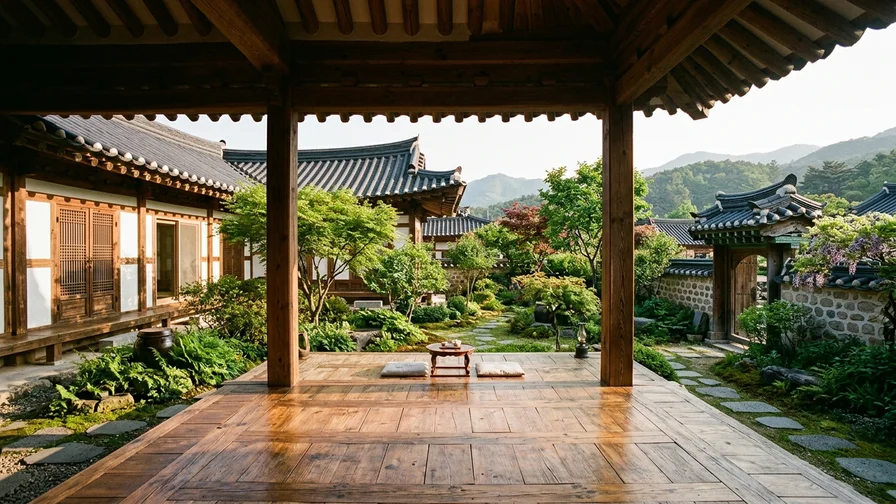
Spending a Night in a Hanok in Bukchon, Jeonju and Andong
목차
A hanok is a traditional Korean house built with natural materials such as wood, earth, and stone, topped with a tiled roof. A hanok stay refers to spending one or more nights in one of these traditional homes. This article covers the transportation, lodging, prices, itineraries, and dining information you’ll need to book and visit a hanok stay in three regions: Bukchon in Seoul, Jeonju, and Andong. Rates and operating details were verified as of June 2026.
What to Know Before Booking a Hanok Stay
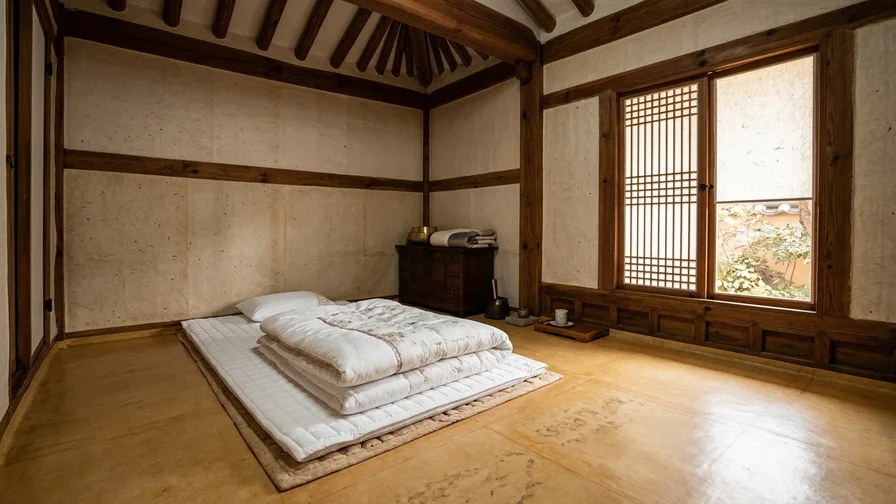
The Structural Features of a Hanok
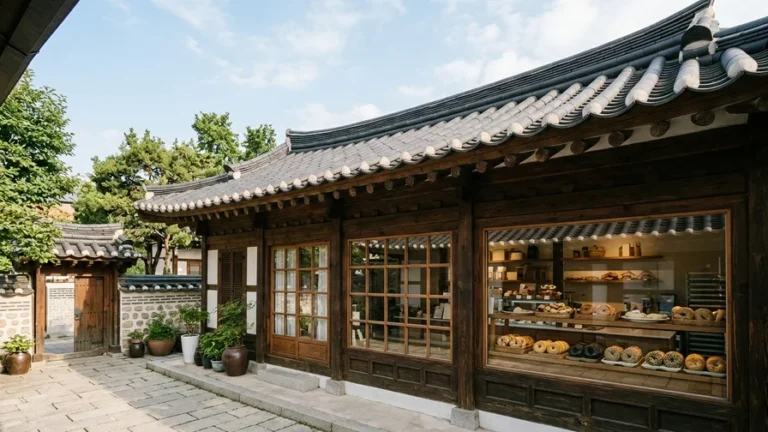
- Ondol: An underfloor heating system. In the traditional method, a fire lit in a furnace (agungi) sends hot air through passages (gudeul) beneath the floor, warming the entire room. Modern hanok mostly use hot-water boilers, but the principle of a warm floor is the same. It’s the foundation of a floor-seated lifestyle where you take off your shoes indoors.
- Madang: The central courtyard between buildings. It provides light and ventilation, with rooms connected around it.
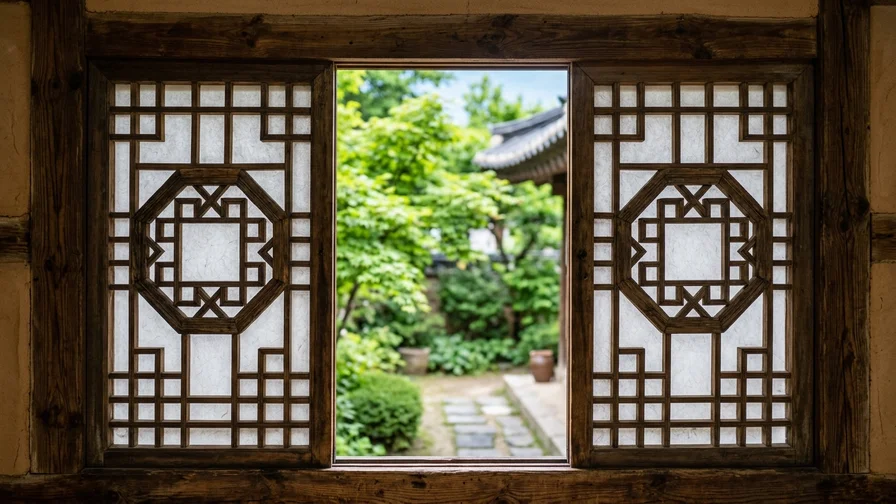
- Hanji: Traditional Korean paper made from mulberry bark. Applied to windows and doors, it softens incoming light and regulates humidity. It tears easily, so handle it with care.
- Cheoma: The part of the roof that extends well beyond the walls. In summer it blocks the high sun to keep the house cool, while in winter it lets the low sun reach deep inside.
Bedding and Bathrooms — Setting Your Expectations Before Booking
- Most hanok stays provide floor mattresses (yo) and quilts (ibul) instead of beds. The floor may feel hard, so if you really need a bed, be sure to check for one before booking.
- Bathrooms and showers are mostly remodeled in a modern style. That said, some spaces are small, or several rooms may share a bathroom. In older heritage houses, the bathroom may even be in a separate annex.
- On the booking page, always confirm whether it’s a “Private bathroom” or a “Shared bathroom.”
- In winter, the hanji windows may let in a slight draft near the window. The ondol floor, however, stays plenty warm.
How to Book Your Stay
- Airbnb, Booking.com: The most accessible platforms. They offer multilingual support and easy payment with overseas credit cards, and the abundance of reviews makes it easier to choose a place.
- Seoul Hanok Portal: Run directly by the Seoul Metropolitan Government, hanok.seoul.go.kr provides a list of verified hanok stays in the Seoul area. Bookings are often handled through each property’s own website or by phone.
- Check for “Hanok Experience Business” registration: Under Korea’s Tourism Promotion Act, there is a registered “Hanok Experience Business” (hanok cheheom-eop) system administered by district offices. The surest way to filter out unverified accommodations is to check whether a place is registered. In Seoul, you can search registered properties through the Seoul Tourism Organization’s Seoul Stay (stay.visitseoul.net). The Korea Tourism Organization’s “Korea Quality” certification mark serves the same purpose.
- Yeogi Eottae, Yanolja: Korea’s largest lodging apps, but they are Korean-language based and often require Korean mobile phone verification, which can be a barrier for foreign travelers.
- MyRealTrip: Offers English-language service and overseas card payment for select properties.
Hanok Stay Etiquette
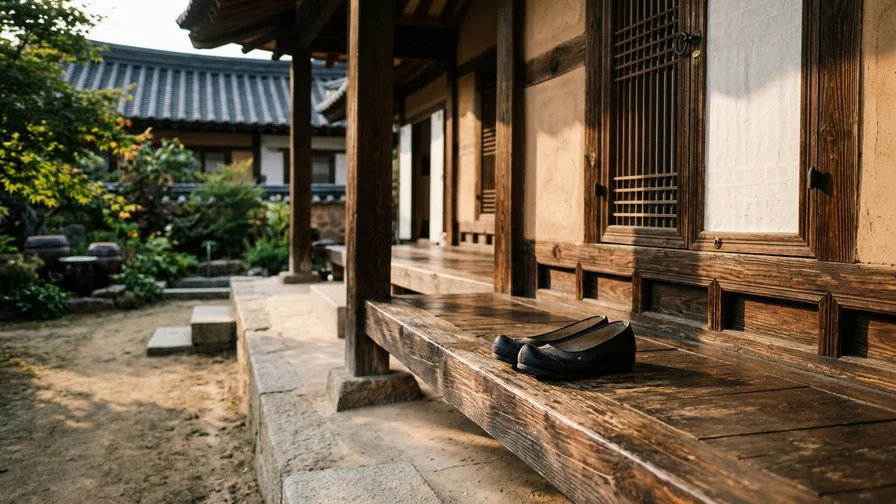
- Take off your shoes: You must always remove your shoes before entering a room. The same applies when stepping up onto the daecheongmaru (a wooden-floored hall).
- Mind the noise: A hanok is a wooden building with rooms clustered around the courtyard, so soundproofing is weak. Especially after 9 p.m., keep loud conversation in the courtyard or rooms to a minimum.
- Be careful with the hanji doors: The hanji applied to doors tears easily if you press hard with a finger or touch it with something sharp. Grip the wooden door frame when opening and closing.
- No smoking: Because of the fire risk to wooden buildings, the entire interior is a no-smoking zone.
Transportation Tips for International Travelers
- Hailing a taxi: In Korea, the “Kakao T” app is the go-to choice. Since 2024 it supports overseas credit card registration and offers “k.ride,” an app for foreign travelers, so even short-term visitors without a Korean phone number can use it. In major cities like Seoul, the Uber app also works. You can also flag down an empty taxi on the street or ask your accommodation host to call one for you.
- 1330 Korea Travel Helpline: If you have questions or need help during your trip, dial 1330. It offers 24-hour assistance in English, Japanese, Chinese, and other languages.
Seoul Bukchon: Urban Traditional Experience
Highlights and Who It’s For
Bukchon is Seoul’s signature hanok-dense neighborhood, located between Gyeongbokgung Palace and Changdeokgung Palace. Being in the city center, it’s extremely accessible, with plenty of tourist attractions, great restaurants, and cafés nearby. Many of the accommodations have English-speaking staff, making it the best fit for international travelers experiencing a hanok stay for the first time. If you’re curious about traditional gardens like the Secret Garden of Changdeokgung, take a look at the aesthetics of Korean gardens as well.
Recommended Accommodations and Price Range
| Property Name | Per Night (for 2) | Features | Google Maps Search |
|---|---|---|---|
| Rakkojae Seoul | approx. 300,000 – 500,000 KRW | A luxury hanok hotel with 130 years of history, an ochre sauna, traditional breakfast, and excellent English support | View on map |
| Bukchonmaru Hanok Guesthouse | approx. 100,000 – 180,000 KRW | Korea Quality certified, perched on a hill between Bukchon’s 2nd and 3rd Views, simple Korean breakfast, and a hanok terrace with night views | View on map |
* Prices vary by season and booking platform (as of June 2026).
For other Bukchon accommodations, we recommend choosing from the hanok stay list on Seoul’s official Seoul Hanok Portal. Only registered properties verified by the city are listed, making it safer than personal blogs or outdated lists.
Suggested 2-Day, 1-Night Itinerary
Day 1
- 14:00 | Arrive at Anguk Station and store your luggage: Exit at Anguk Station Exit 2 or 3 on Seoul Subway Line 3. If it’s before check-in, you can leave your bags in the station lockers.
- 14:30 | Late lunch: We recommend mandu-guk (a clear soup with dumplings) at Kkangtong Mandu 📍. About 12,000 KRW per person. Break time is 15:30–17:00 and it’s closed on Sundays, so plan your timing. If it’s a Sunday, Bukchon Son Mandu (Bukchon branch) 📍 (10:00–21:00) is an alternative.
- 16:00 | Check in to your hanok: Unpack and take a short rest on the ondol floor and in the courtyard.
- 17:00 | Stroll through Bukchon Hanok Village: Walk along the Bukchon 8 Views of Bukchon Hanok Village. The view of hanok rooftops looking down from the hill at 31 Gahoe-dong is famous. This is a residential area where people actually live, so keep quiet.
- 19:00 | Dinner: Head to Samcheong-dong for sujebi (hand-torn dough soup) and potato pancake at Samcheongdong Sujebi 📍. A long-standing eatery in business since 1982, open 11:00–21:00, about 10,000–12,000 KRW per person.
- 20:30 | Take in the night view: Enjoy Seoul’s nightscape over a cup of tea at a rooftop café along the Samcheong-dong café street.
Day 2
- 08:30 | Breakfast: Have breakfast at your accommodation, or scones and coffee at nearby Café Layered (Anguk branch) 📍 (08:00–22:00).
- 10:00 | Tour Gyeongbokgung: Visit Korea’s largest palace, Gyeongbokgung. Admission is 3,000 KRW for adults. It’s closed every Tuesday, so plan accordingly. The Royal Guard Changing Ceremony runs daily except Tuesdays at 10:00 and 14:00 for about 20 minutes and is free to watch (as of June 2026).
- 12:00 | Check out and store luggage: Leave your bags at the accommodation or use the Anguk Station lockers.
- 12:30 | Lunch and a visit to Insadong: Head to Insadong, a street of traditional crafts and souvenirs. For lunch, try Kkot, Bab-e Pida 📍 — a Korean restaurant serving dishes made with organic ingredients, selected as a Michelin Bib Gourmand. Its signature dish is kkotbap (bibimbap topped with seasonal wild greens), and it also offers vegetarian courses. Lunch service is 11:30–15:00, starting at about 20,000 KRW per person.
- 14:00 | Head to your next destination.
How to Get There
From Incheon International Airport (ICN), take the Airport Railroad (AREX) to Seoul Station, transfer to Line 1, change to Line 3 at Jongno 3-ga Station, and get off at Anguk Station. Alternatively, take Airport Limousine Bus 6011, which drops you right at the Anguk Station stop (roughly every 25 minutes). Either way takes about 70–90 minutes.
Jeonju Hanok Village: Center of Gastronomy and Culture
Highlights and Who It’s For
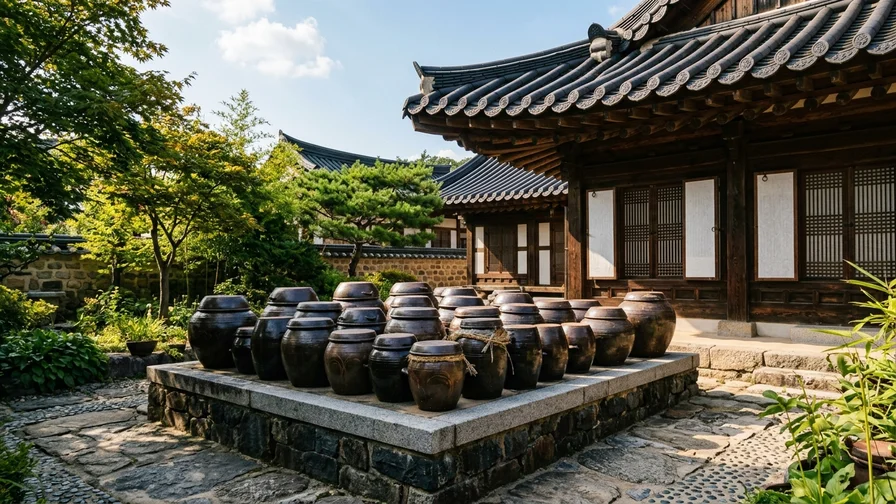
Jeonju is a city famous for Korean food culture, especially bibimbap. Jeonju Hanok Village is the country’s largest hanok district, with around 700 hanok, offering plenty to enjoy such as street food, hanbok experiences, and traditional crafts. It’s recommended for travelers who love a lively atmosphere and enjoy a food-focused trip.
Recommended Accommodations and Price Range
| Property Name | Per Night (for 2) | Features | Google Maps Search |
|---|---|---|---|
| Hagindang | from approx. 290,000 KRW | The oldest heritage house in Jeonju Hanok Village, designated a cultural property, KTO Heritage Stay certified, a guesthouse built in palace architectural style | View on map |
| Wangyijimil Hanok Hotel | from approx. 220,000 KRW | A large-scale hanok hotel on the village’s outskirts (11 buildings, 64 rooms), opened in 2018, with excellent amenities | View on map |
| Sarangnamu Hanok Pension | approx. 80,000 – 150,000 KRW | Located in Gyo-dong within the hanok village, a 5-minute walk to Omokdae and the Confucian school, 10 minutes to Gyeonggijeon and Jeondong Cathedral | View on map |
| Hanji Kkuljam | from approx. 50,000 KRW | A great-value two-story hanok with a garden and terrace, self-service luggage storage, set slightly off the main street for a quiet stay | View on map |
* Prices vary by season and booking platform (as of June 2026).
Suggested 2-Day, 1-Night Itinerary
Day 1
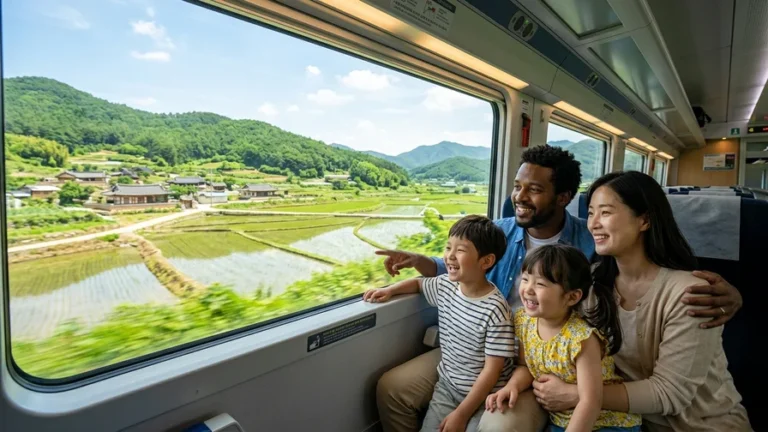
- 13:00 | Arrive at Jeonju Station or the bus terminal: The KTX arrives at Jeonju Station and express buses at the Jeonju Express Bus Terminal. It’s about a 10-minute taxi ride to the hanok village (7,000–8,000 KRW). City buses such as 79, 119, and 999 run toward the hanok village and take about 25 minutes.
- 13:30 | Lunch: Try the renowned Jeonju bibimbap institutions Gajok Hoegwan 📍 (10:30–21:00, open daily, home of Jeonju’s No. 1 culinary master) or Hanguk-jip 📍, which has been serving bibimbap since 1952 (09:50–21:00). Bibimbap is about 15,000 KRW per person.
- 15:00 | Check in to your hanok: Unpack and take a short rest.
- 16:00 | Hanbok experience and a visit to Gyeonggijeon: Rent a hanbok at a rental shop in the hanok village. A basic hanbok for 2 hours runs about 10,000–20,000 KRW, varying by shop. In your hanbok, visit Gyeonggijeon, which enshrines the royal portrait of Yi Seong-gye, the founding king of the Joseon Dynasty (admission 3,000 KRW for adults).
- 18:00 | Street-food tour: Popular bites include the shrimp dumplings at Daurang 📍, the baguette burger (a street snack of bulgogi and vegetables on a baguette) at Gilgeoriya 📍, and the octopus skewers at Mungangjeong 📍.
- 20:00 | Omokdae night view: Climb up to Omokdae, which overlooks the hanok village, and enjoy the nighttime view of the hanok rooftops.
Day 2
- 09:00 | Breakfast: Have kongnamul gukbap (a hangover-friendly rice soup with bean sprouts) at Waengi-jip 📍. The Jeonju style is notable for the poached egg (suran) served alongside it. About 8,000–10,000 KRW per person. It opens early in the morning, but hours change often, so it’s best to check before visiting.
- 10:30 | Visit Jeondong Cathedral and Pungnammun Gate: Tour the Romanesque-style Jeondong Cathedral and Pungnammun Gate, the south gate of Jeonju’s fortress.
- 12:00 | Check out and buy souvenirs: We recommend the handmade choco pies from Jeonju’s famous PNB Pungnyeon Bakery 📍 as a souvenir.
- 13:00 | Head to your next destination.
How to Get There
From Seoul, the KTX takes about 1 hour 40 minutes from Yongsan Station to Jeonju Station, with a standard seat costing 34,600 KRW (as of June 2026). By express bus, it takes about 2 hours 40 minutes from Central City Terminal to the Jeonju Express Bus Terminal.
Andong Hahoe Village: A Living UNESCO World Heritage
Highlights and Who It’s For
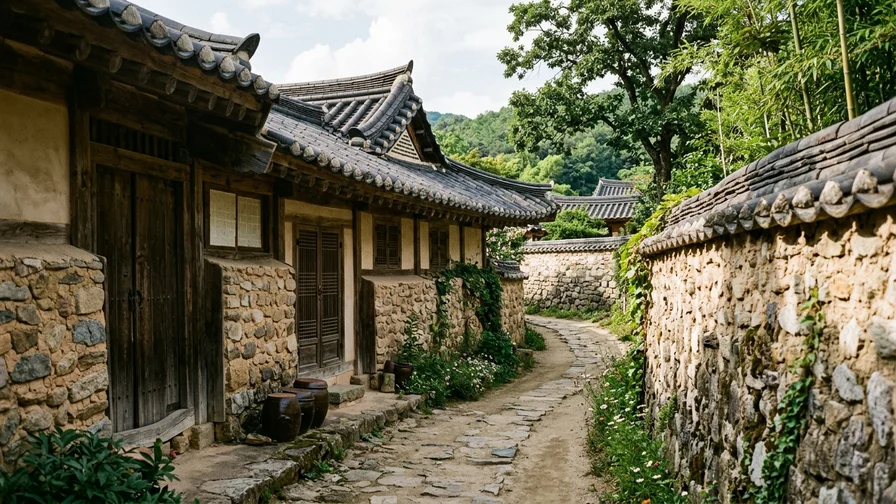
Andong Hahoe Village is a clan village of the Pungsan Ryu family, a UNESCO World Heritage Site (inscribed in 2010) where centuries-old hanok are preserved in their original form and residents still live. Unlike more commercialized hanok villages, it lets you deeply experience the atmosphere of heritage houses and traditional Confucian culture. It’s ideal for travelers seeking genuine rest in a quiet, historic setting. For other villages with a similar feel, see 7 traditional Korean villages.
Recommended Accommodations and Price Range
Most accommodations within Hahoe Village are guesthouses (minbak) run by actual residents. The facilities are modest, but you can have the special experience of spending a night in a heritage house. Prices vary widely, from about 50,000 to 150,000 KRW for two (as of June 2026; upscale options like Rakkojae cost more). For guesthouses, be sure to confirm whether the bathroom is shared before booking. Bookings are often made through the guesthouse information page of the official Andong Hahoe Village site, hahoe.or.kr, or by contacting individual properties directly, with some also listed on Airbnb.
- Bukchondaek: A large heritage house designated as a National Folklore Cultural Property (officially named Hwagyeongdang). It well preserves the structure of a traditional aristocratic home and can also be booked through Booking.com and other sites.
- Rakkojae Hahoe: An upscale hanok stay opened within Hahoe Village in 2009 by Seoul’s Bukchon Rakkojae. It consists of a tiled-roof main house near the village ferry dock and a riverside thatched-roof annex, with every room featuring a private bathroom and an ochre sauna.
It’s essential to check availability and the booking method on the official website before your visit.
Suggested 2-Day, 1-Night Itinerary
Day 1
- 14:00 | Arrive at Andong Station or the bus terminal: Andong Station and the Andong terminal are right next to each other. From the stop in front, take city bus 210 to Hahoe Village (about 40 minutes, fare 1,500 KRW, as of June 2026). On weekends and holidays, the Express 2 bus also runs. You can check intervals in real time on Andong’s bus information system at bus.andong.go.kr. A taxi is also possible, but at over 20 km the fare adds up, so it’s best to confirm in advance using the estimated-fare feature in the Kakao T app.
- 15:00 | Arrive at Hahoe Village and check in: Buy an admission ticket (5,000 KRW for adults) at the ticket office, then check in at your accommodation inside the village. Viewing hours are 09:00–18:00 in summer and 09:00–17:00 in winter (October–March), with last entry at 16:30.
- 16:00 | Explore Hahoe Village: Take a leisurely stroll through the village. Chunghyodang and Yangjindang are the representative heritage houses. It’s also nice to make a wish at Samsindang, home to a 600-year-old zelkova tree.
- 18:30 | Dinner: Sample Andong’s local cuisine at the Hahoe Market food street near the village entrance. The salted mackerel (Andong gan-godeungeo, mackerel salted and grilled) set at Hahoe Restaurant 📍 is about 30,000 KRW for two, and the Andong jjimdak (soy-braised chicken) at Solbat Restaurant 📍 is about 38,000 KRW per chicken. The village’s shops and restaurants close early, so don’t dawdle over dinner.
- 20:00 | Rest in your heritage house: Savor the village’s quiet evening and a night sky full of stars.
Day 2
- 09:00 | Breakfast: Have the simple breakfast provided by your accommodation or eat at a village restaurant.
- 10:00 | The view from Buyongdae: The panorama of Hahoe Village seen from Buyongdae, the cliff across the river, is the highlight. The ferry crossing the river is sometimes suspended depending on the water level and season, so check whether it’s operating that day with the Hahoe Village information center (054-852-3588). If the ferry isn’t running, you can take a roughly 10-minute detour by car or taxi toward Hwacheon Seowon.
- 11:30 | Visit the Hahoe Mask Museum: At the Hahoe Mask Museum near the village entrance, see the Hahoe masks used in the Hahoe Byeolsingut Talnori (mask dance) along with masks from around the world. Admission is free (as of June 2026).
- 12:30 | Check out and have lunch: After checking out, have lunch at the food street by the village entrance.
- 14:00 | Visit Byeongsan Seowon: About a 15-minute drive from Hahoe Village, Byeongsan Seowon is a Joseon-era Confucian academy included in the UNESCO World Heritage “Seowon, Korean Neo-Confucian Academies” (inscribed in 2019). Its architectural beauty in harmony with nature is outstanding. Public transit is limited, so you’ll need a taxi or your own car.
- 16:00 | Head to Andong Station.
How to Get There
From Seoul’s Cheongnyangni Station, the KTX-Eum takes about 2 hours to Andong Station, with a standard seat costing 25,100 KRW (as of June 2026). From the East Seoul Bus Terminal, it takes about 2 hours 50 minutes by bus to Andong.
Comparing Hanok Stays by Region and a Final Selection Guide
| Category | Seoul Bukchon | Jeonju Hanok Village | Andong Hahoe Village |
|---|---|---|---|
| Accessibility | Excellent (city-center location) | Good (KTX and bus connections) | Moderate (train/bus plus a city-bus transfer) |
| Price Range | High | Mid to varied | Low to mid |
| Foreign-Language Support | Excellent | Moderate | Limited |
| Nearby Attractions | Palaces, museums, shopping, restaurants | Food, hanbok experiences, crafts | Historic sites, natural scenery |
| Atmosphere | Refined and touristy | Lively and commercial | Quiet, traditional, historic |
Editor’s Tip: For Your First Hanok Stay
If you’re visiting Korea for the first time or it’s your first hanok stay, we recommend Seoul Bukchon above all. It’s highly accessible from Incheon Airport, and most accommodations have English-speaking staff, so communication is no trouble. It also has the advantage of letting you travel efficiently in a short time, with major attractions like Gyeongbokgung and Insadong within walking distance. After experiencing the basic structure and culture of a hanok in Bukchon, trying a hanok in a regional city like Jeonju or Andong on your next trip will let you appreciate the differences even more deeply.
Related Reads on This Topic
- 7 Korean Traditional Villages Where Hanok and Crafts Live On
- A Day Shaping Clay at the Pottery Villages of Icheon and Gwangju
- Strolling Korea's Gardens, the Beauty of Biwon, Anapji and Soswaewon
- Dye Your Own with Korean Natural Dyeing, from Indigo to Persimmon
- Brew Your Own Korean Traditional Alcohol, From Makgeolli to Soju