A Templestay Day, From Pre-Dawn Service to Baru Gongyang
A templestay is a program where you stay at a Korean Buddhist temple — anywhere from a single day to a few weeks — and follow the daily routine of a practitioner exactly as it is. This article breaks down the typical schedule of the most common one-night, two-day experiential program, activity by activity. Let’s be clear about one thing first: the times below are only a general range. Wake-up times, service times, and program structure can shift by 30 minutes to an hour depending on the temple, the season, and the day of the week. Always treat the confirmed itinerary on your chosen temple’s booking page as the final reference.
The Standard One-Night, Two-Day Templestay Daily Schedule
Below is the basic framework of the one-night, two-day experiential program that many Korean temples follow. The listed times are representative examples, and the actual times and activity lineup vary from temple to temple. Here’s a breakdown of the details and rules of each activity, in chronological order.
Day 1: Arrival, Settling In, and the Evening Service
The first day is about getting used to the temple environment and learning basic etiquette. You experience how the temple closes out its day through the evening service.
14:00 – 15:00: Check-in and Room Assignment
When you arrive at the temple, head first to the temple’s administrative office (jongmuso, 宗務所) or the dedicated templestay reception desk. This is where they verify your booking and where you pay the participation fee. After that, you’ll receive the key or access instructions for your assigned lodging (bangsa, 房舍) and be given the training clothes (often called “temple clothes”) you’ll wear throughout the program. The training clothes are usually loose-fitting gray tops and pants that are comfortable to move around in. Change into the provided clothes and head to the gathering point by the designated time.
- Duration: 60 minutes
- Location: Administrative office or templestay reception, assigned lodging
- What to bring: Booking confirmation, ID, participation fee
15:30 – 17:00: Orientation and Temple Tour
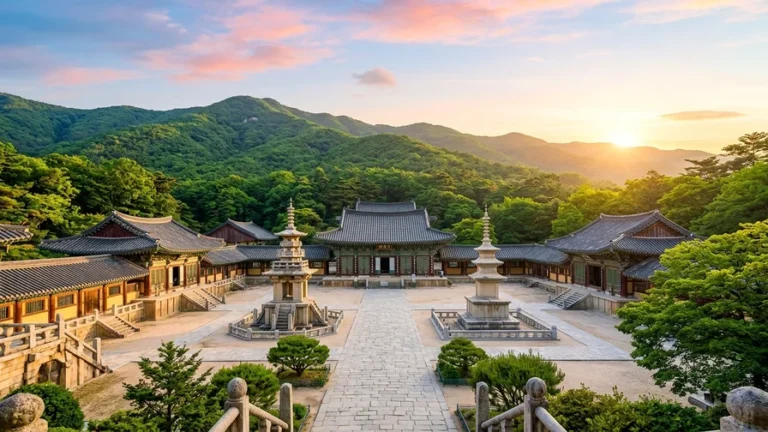
The orientation begins under the guidance of the program’s monk or the instructing dharma teacher. During this time, you’ll be briefed on overall daily life: the full one-night, two-day itinerary, the basic rules within the temple, dining (gongyang) etiquette, how to use the restrooms, and more. You’ll learn the most essential forms of etiquette — gapjang (合掌, palms pressed together) and banbae (半拜, half bow). Once the orientation ends, you’ll tour the temple’s main halls (jeon-gak, 殿閣, Dharma halls). You can hear explanations of the role of each building, such as Daeungjeon Hall and Geungnakjeon Hall, and the Buddha statues enshrined within them.
- Duration: 90 minutes
- Location: The dedicated templestay education hall or auditorium, temple grounds
- Key things you’ll learn: Gapjang (joining palms), dining etiquette, how to move around the temple
17:30 – 18:10: Evening Meal
You’ll have dinner at the temple dining hall (gongyanggan). Temple cuisine is vegetarian, using no meat or fish, and as a rule it also excludes the osinchae (五辛菜) — the five pungent vegetables: garlic, green onion, chives, wild chives, and asafoetida. It’s often served buffet-style, and a key rule is “zero leftovers”: take only as much as you’ll eat and don’t leave anything behind. During the meal you observe silence (mugeon, 默言) — how strictly silence is applied differs by temple, with some keeping it only during meals and the pre-dawn hours, and others encouraging it throughout your entire stay. After eating, you wash your own dishes and return them to their place. For more on what temple vegetarian food is like, see Temple Cuisine and Baru Gongyang.
- Duration: 40 minutes
- Location: Dining hall
- Rules: Observe silence, don’t leave food behind, wash your own dishes
18:20 – 19:00: Evening Buddhist Service
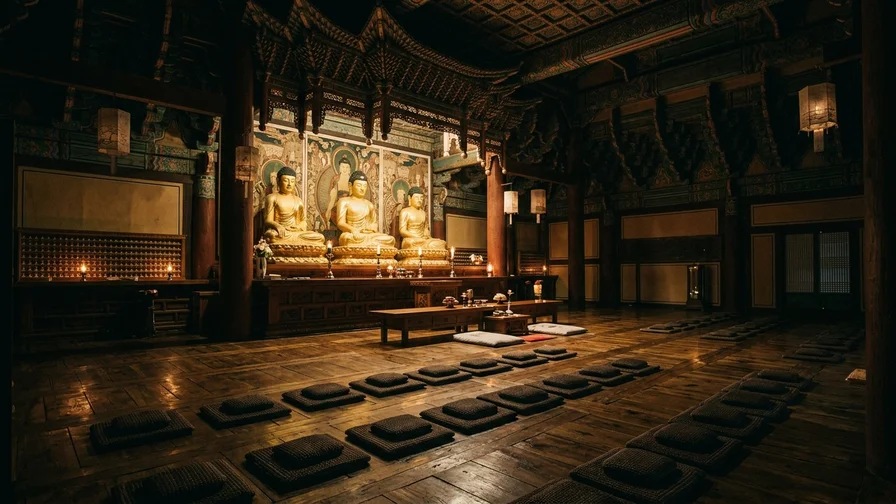
You’ll attend the evening service, the ritual that brings the temple’s day to a close. It takes place in the Dharma Hall (beopdang, 法堂), where monks and devotees gather to chant the sutras aloud and bow to the Buddha. Templestay participants usually sit in the back and watch quietly, or you may follow along with the gapjang and bows as you were taught. This is the time when the sound of the wooden gong (moktak) and the chanting fill the Dharma Hall.
- Duration: 40 minutes
- Location: Main Dharma halls such as Daeungjeon
- Participant’s role: Watch quietly or join in the service
19:30 – 21:00: Evening Program
Each temple runs its own distinctive evening program. The most common activities are as follows.
- 108 Bows: A practice of bowing 108 times, meant to humble oneself and repent the 108 worldly afflictions. It usually takes about 30 minutes to an hour. It can be physically demanding, but focusing on your breath while repeating the movements can have a meditative effect. If your knees aren’t in good shape, you can substitute seated meditation (jwaseon, 坐禪) for the bows — just let the instructing dharma teacher know before you begin.
- Chadam (Tea Conversation with a Monk): A time to drink tea and talk with a monk. You can freely ask questions and hear answers on a wide range of topics — Buddhist teachings, life concerns, Korean culture, and more. It usually lasts 30 minutes to an hour. Thinking ahead about what you’d like to ask makes the time far more rewarding — for details, see Tea Conversation with a Monk and Meditation.
- Chamseon (Zen Meditation): Also called jwaseon (坐禪). It’s the practice of sitting in correct posture, observing your breath, and quieting the mind. The traditional approach at meditation halls combines 50 minutes of seated meditation with 10 minutes of walking meditation (haengseon, 行禪), but many temples keep it shorter than this in programs for the general public.
22:00: Bedtime
This is the time to head to bed after all the official activities are over. Lights-out time falls between 9 and 10 p.m. depending on the temple. It’s a good idea to sleep early to prepare for the very early wake-up the next day. The lodging is usually in shared, gender-separated rooms. If you need private space, check at the time of booking whether a single or double room option is available.
Editor’s tip: The early wake-up is the hardest part for many international travelers. Bringing the sleep mask you normally use can help you fall asleep early. Setting out the clothes and toiletries you’ll use the next day before bed lets you move without scrambling in the predawn dark.
Day 2: Pre-Dawn Service, Baru Gongyang, and the Closing
The second day is when you rise in the early predawn hours to open the temple’s morning, experience its most symbolic rituals, and then get ready to return to everyday life.
04:00 – 04:30: Wake-up and Wash-up
You wake to the sound of doryangseok (道場釋) — a monk circling the temple while striking the wooden gong. The times of doryangseok and the pre-dawn service vary by temple, usually falling between 3 and 4:30 a.m. — the exact time is given in your booking confirmation email or at orientation. Within about 30 minutes of waking, finish washing up and getting dressed, and get ready to head to the Dharma Hall where the pre-dawn service is held.
- Duration: 30 minutes
- Preparation: Move quickly so you’re not late for the service
04:30 – 05:40: Pre-Dawn Buddhist Service
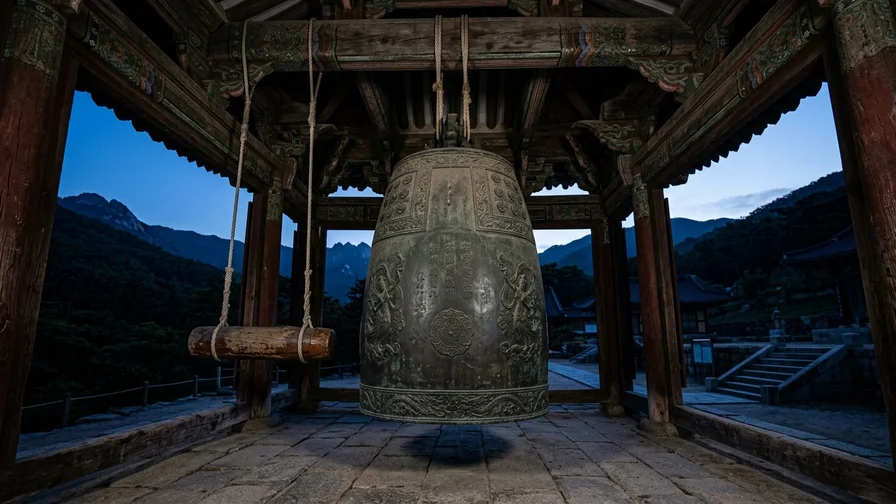
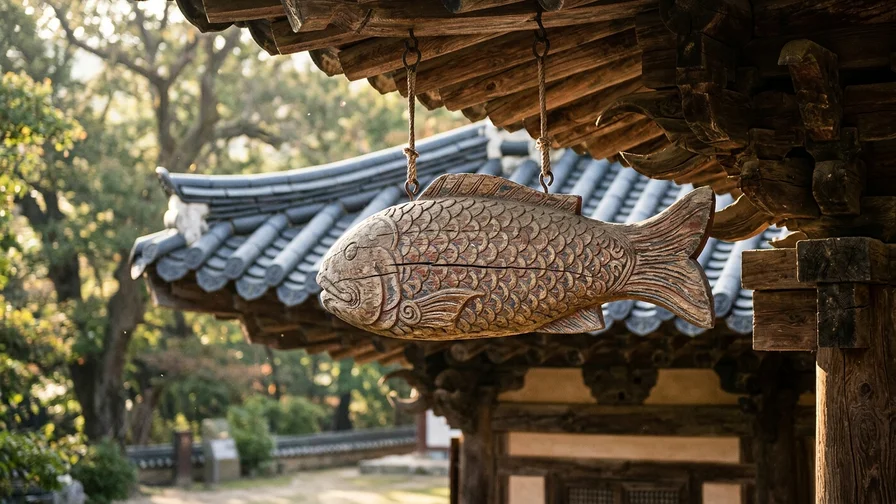
This is the most solemn ritual, opening the day. The pre-dawn service begins with the sounding, in turn, of the Four Dharma Instruments (samul, 四物). Sounding all four carries the meaning of praying that every being in the world attains enlightenment. The order in which they are struck varies by temple — for example, Tongdosa and Beomeosa strike them in the order Dharma drum, wooden fish, cloud-shaped gong, then bell, while Haeinsa and Songgwangsa go Dharma drum, bell, wooden fish, then cloud-shaped gong.
- Beomjong (Dharma Bell): Struck to save beings suffering in hell.
- Beopgo (Dharma Drum): Struck for beings that live on land, including all four-legged animals — because the drum is made of leather.
- Mogeo (Wooden Fish): Struck for all life that lives in the water. Since fish are said to keep their eyes open even while sleeping, it also serves as a reminder to practitioners to stay ever awake.
- Unpan (Cloud-shaped Gong): Struck for beings that fly through the sky and souls that wander in the void.
Once the samul ritual ends, the service continues inside the Dharma Hall. The full pre-dawn service lasts roughly 30 minutes to an hour — it varies by temple and by that day’s order of ceremony. As with the evening service, participants may watch from the back or join in the bows.
06:00 – 07:00: Breakfast or Baru Gongyang
Breakfast is conducted in one of two ways, depending on the temple or program.
- Regular meal: As with the evening meal, you eat buffet-style in the dining hall.
- Baru Gongyang (Formal Monastic Meal): This is a chance to experience the monks’ traditional way of eating firsthand. It’s often done as a group program, and depending on the temple it may be replaced by a regular meal. The baru (鉢盂) is a monk’s set of bowls, consisting of four bowls in descending order of size: the eosi baru (rice), the guk baru (soup), the cheongsu baru (water), and the chan baru (side dishes).
Baru Gongyang Step-by-Step
| Step | Activity | Explanation |
|---|---|---|
| 1. Unfolding the baru | Lay out the four nested bowls in order in front of you. | Everyone acts in unison, in time with the sound of the bamboo clapper (jukbi). |
| 2. Receiving the food | Receive the clear water (cheongsu) first, then rice, soup, and side dishes in turn. Adjust the amount to only what you’ll eat. | Leaving food behind is strictly forbidden. |
| 3. The meal (gongyang) | Eat in complete silence. Take care not even to make scraping sounds against the bowls. | A time to reflect on the preciousness of food and the toil of the farmers. |
| 4. Cleaning the bowls | When the meal is over, clean the remaining bowls with the scorched-rice water (sungnyung, or warm water) received in the water bowl and a piece of pickled radish. | No detergent is used, so it’s a way that doesn’t pollute nature. |
| 5. Drinking the water | Drink the water used to clean the bowls (cheongsu, 淸水). | It carries the meaning of cherishing food down to the very last drop. |
| 6. Putting the baru away | Stack the cleaned bowls in order as they were at the start and wrap them in cloth. | The entire process is carried out in time with the instructing dharma teacher’s signals. |
07:30 – 09:00: Ullyeok (Communal Work)
Ullyeok refers to the temple community all working together. Templestay participants are usually assigned simple tasks such as sweeping leaves on the grounds or pulling weeds in the vegetable garden. Moving the body through labor is regarded as another form of practice. Depending on the program, some temples run this as free time without ullyeok.
- Duration: 60 to 90 minutes
- Location: Temple grounds
- Activities: Cleaning, weeding, and the like
09:30 – 10:30: Morning Program
As the final program, one of the activities below is usually held.
- Pohaeng (Walking Meditation): A time to meditate while walking slowly along the forest paths or trails around the temple. Focusing on your steps and your breath, you can experience becoming one with nature.
- Chadam (Tea Conversation): If you didn’t do it the previous evening, you have tea time with a monk in the morning. You share your impressions of the one-night, two-day experience and ask any questions you had.
11:00: Hoehyang (Closing Ceremony)
Hoehyang means “to transfer merit,” and it’s the time to wrap up the entire templestay. Participants write reflections or briefly share their experiences with one another. You return the training clothes you were given, gather your personal belongings, and tidy up your lodging. Once all the steps are done, everyone returns to their own daily life.
Extra Information for International Travelers
Rules of Temple Life
- Dress: Wearing the provided training clothes is the norm. Refrain from personal clothing that is too short or too revealing. Comfortable sneakers are a must.
- Mobile phones: Phone use is prohibited during all programs — services, meals, meditation, and so on. Some temples ask you to store your phone in a separate locker at check-in.
- If the pre-dawn service feels like too much: Just choose the “Relaxation type” program. With the relaxation type, all activities including the pre-dawn service are optional, so it’s fine to sleep in. Even with the experiential type, many temples will understand if you skip an activity when you’re not feeling well, but given the spirit of the program, it’s worth joining at least once — the air of a mountain temple at dawn is something you can only experience at a templestay.
- Cost: The one-night, two-day experiential type usually runs from KRW 70,000 to 120,000 per person depending on the temple (as of June 2026), and the relaxation type is often cheaper. The exact amount is specified on each temple’s booking page. Reservations can be made on the official templestay sites eng.templestay.com (English) or templestay.com (Korean). For the full booking process, see How to Book a Templestay.
Getting There
Most of the famous temples sit in the mountains, away from city centers, so it’s important to check transportation in advance. Each temple’s page on the official templestay site has a “Directions” section, so be sure to check it after booking.
- Public transportation: The most recommended option. Search for your destination temple’s name on Google Maps or Naver Map to check bus or train routes. Having the temple’s name and address ready in Korean is useful when asking for directions on the ground. For example, Tongdosa Temple (108 Tongdosa-ro, Habuk-myeon, Yangsan-si, Gyeongsangnam-do) is served by intercity buses to Tongdosa Sinpyeong Bus Terminal that run more than 20 times a day from Busan Central Bus Terminal (connected to Nopo Station on Subway Line 1), and from the terminal it’s about a 30-minute walk to the temple grounds along the Mupunghansong-gil pine forest path. Intercity bus timetables can be looked up in English at Bustago (bustago.or.kr).
- Taxi: Kakao Mobility’s app for foreigners, K.Ride (k.ride), lets you sign up with a Google or Apple account without a Korean phone number and pay with an overseas-issued card, and the Kakao T and Uber apps can also be used in Korea (as of June 2026). However, empty taxis are scarce around mountain temples, so you may not be able to hail one when heading back — asking the administrative office for a local call-taxi number is the surest bet.
- Rental car: You can use a rental car if you have an International Driving Permit (IDP). Be aware that the roads to the temple may be narrow and parking space may be limited.
- Tourist information: If you need help, call the foreign-language tourist information line at 1330, where you can get support in various languages including English, Japanese, and Chinese.
A templestay is the experience of living communally according to set rules and a set schedule. If you go in understanding the meaning of each activity from this schedule and prepared for it, you’ll be able to take part in the program far more comfortably, even in an unfamiliar setting.