How to Enjoy Jeju Mulhoe, Jari-mulhoe and Hanchi-mulhoe
목차
What to Know First
- Jeju Cold Raw Fish Soup (물회, mulhoe) is a summer specialty made by mixing raw fish or seafood and vegetables into a cold Soybean Paste (된장, doenjang) (fermented soybean paste) broth, served with ice cubes floating on top.
- There are two signature versions: Damselfish Cold Soup (자리물회, jari-mulhoe), sliced bones and all for a nutty, chewy bite, and Squid Cold Soup (한치물회, hanchi-mulhoe), with julienned squid that is soft and springy.
- Damselfish Cold Soup and Squid Cold Soup generally run from about 11,000 to 13,000 won, and summer is their peak season (jari from May to August, hanchi from late June to September).
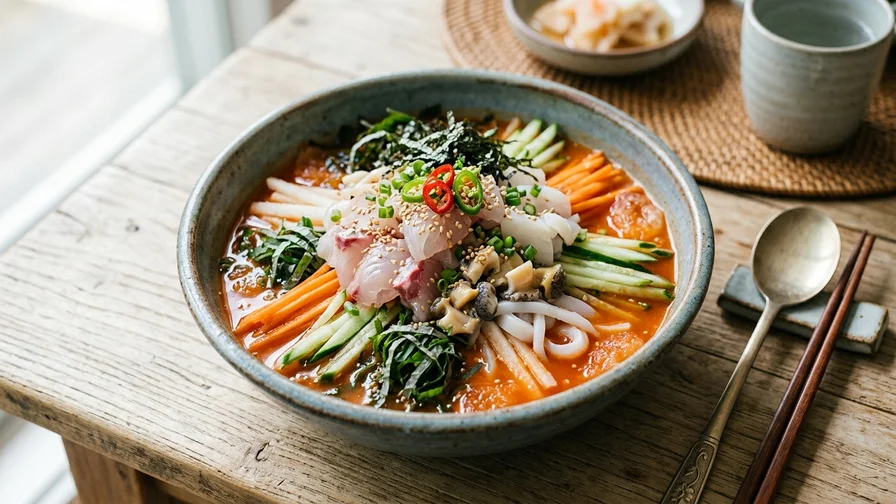
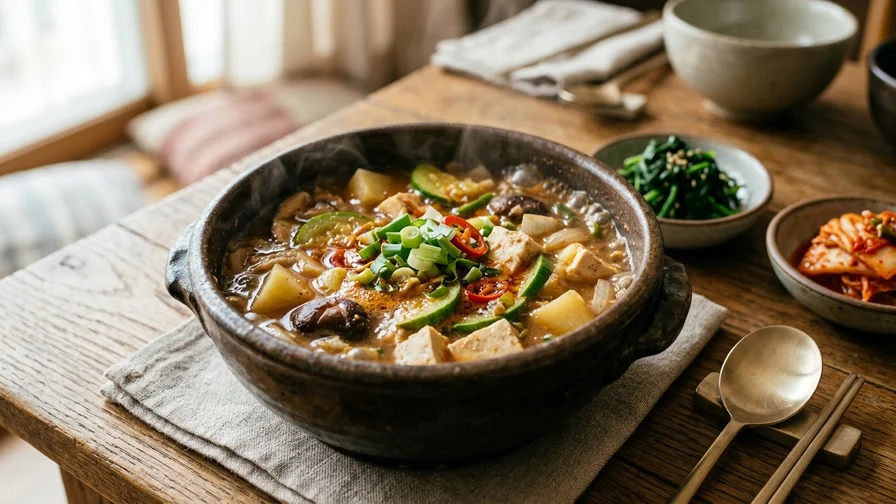
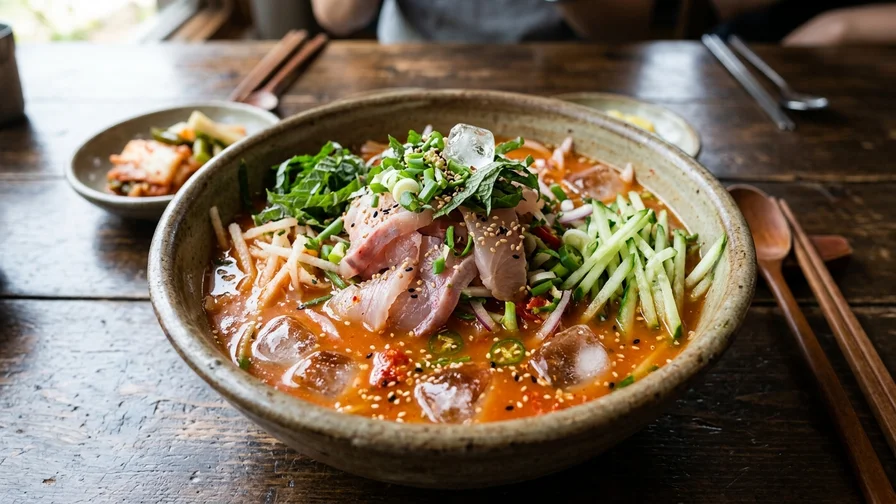
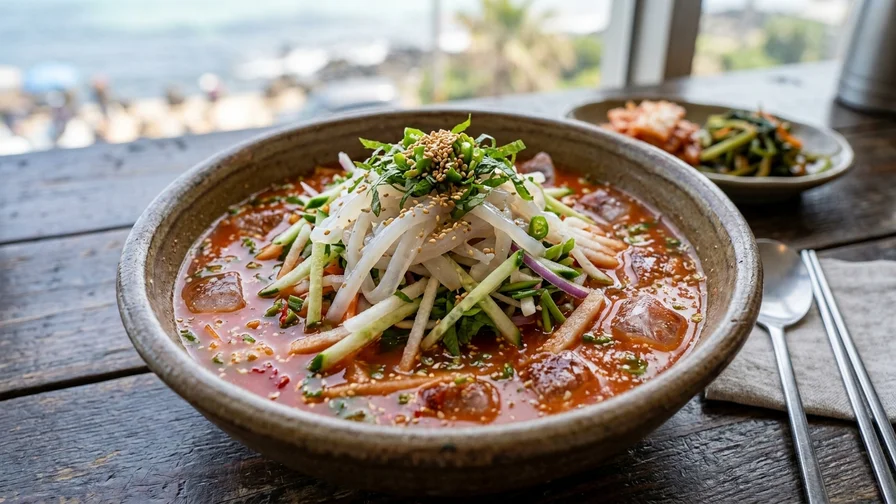
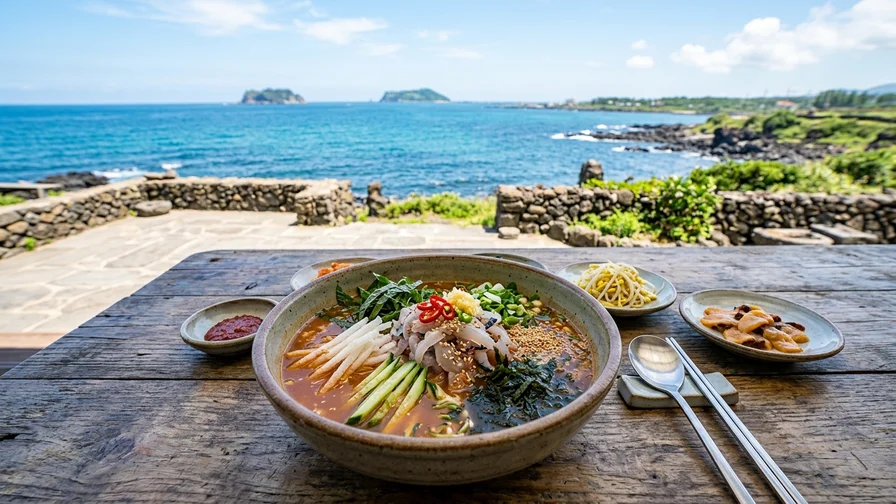
Of everything on a Jeju summer table, Cold Raw Fish Soup is a top summer pick. On a sweltering afternoon, when the heat just won’t let up, one bowl of chilled Soybean Paste broth with ice bobbing on top is enough to bring your appetite back. With this one guide, even a first-time visitor to Jeju can tell the difference between Damselfish Cold Soup and Squid Cold Soup, gauge the season and the price, and even decide which neighborhood and which atmosphere to eat in before heading to the restaurant.
What Exactly Is Mulhoe?
🥣 Expecting a red broth? Jeju uses a Soybean Paste base
On the Korean mainland, Cold Raw Fish Soup is usually red, spicy, and sweet-and-sour with a gochujang (red chili paste) base. Traditional Jeju mulhoe, however, is built on doenjang (fermented soybean paste), giving it a savory, hearty depth. Depending on the shop, some use only doenjang while others blend in a little gochujang. So if you came expecting a bright red broth and meet the fermented flavor of doenjang instead, don’t be surprised. That savory character is exactly what makes Jeju-style mulhoe distinctive.
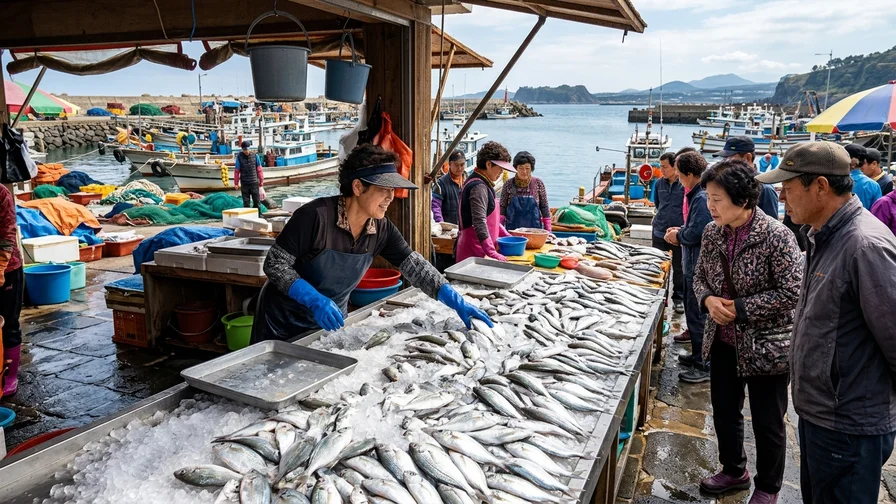
Mulhoe is a Jeju summer dish in which fish or seafood is mixed with vegetables in a cold seasoned broth and eaten refreshingly chilled. It is said to have started with the fishermen and haenyeo (Jeju’s female free-divers) who needed a quick, cooling meal while working at sea on hot days. With no fire involved—just freshly caught fish sliced up, seasoned, and topped with water—it was the most sensible meal you could put together under the blazing sun.
The heart of Jeju-style mulhoe is its doenjang base. Unlike the chogochujang (vinegared chili paste) base common on the mainland, Jeju cooks dissolve doenjang into the broth and add just a touch of gochujang, creating a savory, mellow yet refreshing soup. Instead of the tangy-sweet kick of the mainland version, the deep flavor of fermented soybeans comes through first. Julienned vegetables like cucumber, perilla leaves, and onion go in, and ice cubes are floated on top to keep it cold. Take one spoonful and the chilled broth slides down your throat, melting the heat away in an instant.
One important point for anyone with dietary restrictions: the main ingredients are raw fish and seafood, not pork or beef. Both jari-mulhoe and hanchi-mulhoe are built around fish, squid, vegetables, and soybean-based doenjang, so no pork or beef goes in. Allergens, however, vary by dish. Jari-mulhoe centers on fish, while hanchi-mulhoe centers on hanchi, a type of squid (mollusk), so avoid them respectively if you have a fish or mollusk allergy (neither dish contains crustaceans such as shrimp or crab). Because the broth is doenjang-based, those with a soy allergy cannot have it without the broth, so it is not recommended. Since many kinds of seafood are handled in the same kitchen, let the staff know in advance if you are sensitive to cross-contamination. Finally, since raw fish and squid are the stars, the dish is not suitable for vegetarians or vegans, and if you keep halal or kosher, keep in mind that these are not certified kitchens.
Jari-mulhoe or Hanchi-mulhoe: Which to Choose
🧭 First time? How to pick your dish
Hanchi-mulhoe has no bones at all and is tender and chewy like squid, making it the safest and most enjoyable choice if mulhoe is new to you. Jari-mulhoe, on the other hand, suits the adventurous eater who wants the texture of biting into bone and the deep, traditional flavor of Jeju. If you can’t decide where to begin, ease in with hanchi-mulhoe.
🦴 A heads-up on the small bones in jari-mulhoe
Jari-mulhoe is prepared “sekkosi” style, with the jari damselfish chopped finely, bones and all, so it contains edible soft bones. If the texture of biting into bone is unfamiliar to you, chew slowly and thoroughly so you don’t hurt your teeth, and if it feels like too much, go for the boneless hanchi-mulhoe instead. The nutty crunch of these small bones is part of jari-mulhoe’s charm, but it isn’t for everyone.
The two pillars of Jeju mulhoe are jari-mulhoe and hanchi-mulhoe. They differ quite a bit in texture and overall impression, so choose based on your taste and the time of year and you won’t go wrong.
Damselfish Cold Soup (Jari-mulhoe) uses jari damselfish chopped finely with the bones still in. That gives it a nutty, chewy quality, with the distinctive crunch of bone as you bite. This bone texture is both the charm of jari-mulhoe and the part that can feel unfamiliar to newcomers. If you’re picturing soft sashimi, even one bite might make you go, “Oh, a crunch?”—so knowing about it ahead of time actually makes it more fun. Jari is in season from spring into summer, roughly May to August.
Squid Cold Soup (Hanchi-mulhoe) uses julienned hanchi. Hanchi is a type of squid—the flesh is soft and springy with a subtle sweetness. Since there’s no bone to bite through, it’s a relatively easy starting point even for those not used to the texture of raw seafood. Hanchi is in season from late June to September, so it’s at its best in the height of summer.
Beyond these two, some places also serve abalone mulhoe or sea urchin mulhoe. If it’s your first time, start with the tender hanchi-mulhoe, and if you want to experience Jeju’s true character, take on the jari-mulhoe. If there are two or more in your group, the most rewarding approach is to order both bowls and share them side by side.
Jari-mulhoe vs. Hanchi-mulhoe at a Glance
| Category | Jari-mulhoe | Hanchi-mulhoe |
|---|---|---|
| Main ingredient | Jari damselfish (bones in) | Hanchi squid (julienned) |
| Texture | Nutty, chewy, with a bone crunch | Soft and springy |
| Season | May–August | Late June–September |
If Cold Raw Fish Feels Unfamiliar
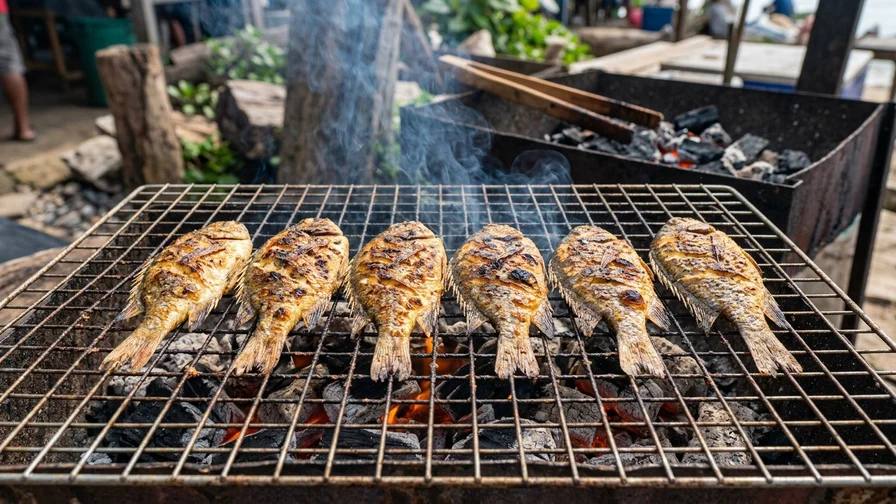
If a dish of raw fish in cold broth is new to you, you might hesitate. But mulhoe is surprisingly approachable, even for those who aren’t used to eating fish uncooked. The doenjang broth, the vegetables, and the ice come together so that the refreshing, savory flavor hits you before any fishiness does. When the summer heat has killed your appetite, it’s the kind of restorative treat that you’ll find yourself finishing to the last drop.
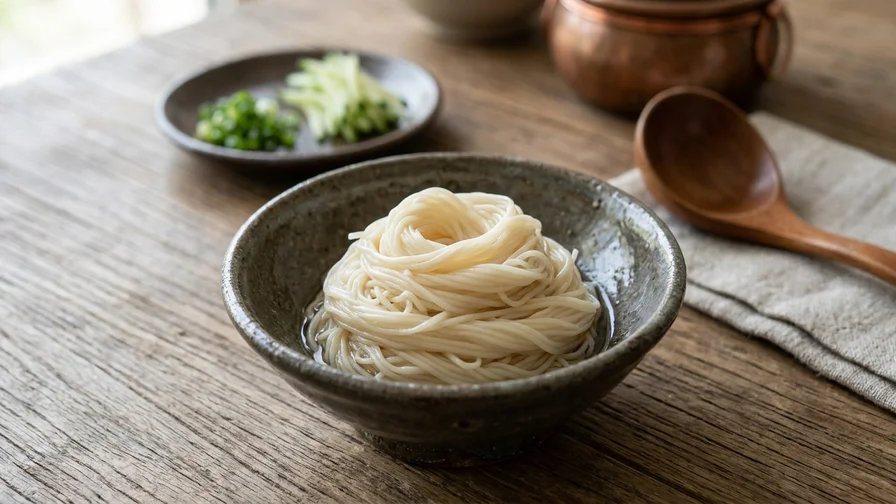
Just two things to know before you go. First, the bone texture of jari-mulhoe. Jari is a small fish, so it’s sliced with the bones in—that gentle crunch is normal and a sign of freshness. Second, the broth is very cold. It’s served with floating ice, so cold enough to make your teeth tingle, but in the heat that chill is exactly the point. If you prefer something softer, start with hanchi-mulhoe, and finish off with rice or Thin Wheat Noodles (소면, somyeon) (thin wheat noodles) mixed in to make it more filling and to soften the raw impression considerably.
How to Eat It Properly
Rather than digging in the moment your bowl arrives, the key with mulhoe is to mix it thoroughly first. Use your spoon to stir broadly from bottom to top so that the doenjang seasoning settled at the bottom blends evenly with the fish and vegetables on top. Do this and every spoonful comes balanced in seasoning and ingredients.
- Once it’s served, mix the seasoning and ingredients thoroughly from bottom to top, then enjoy it cold, broth and all.
- If it tastes a little bland, add a bit of the gochujang or doenjang on the table to suit your taste.
- If you want it spicy, stir in a small amount of the minced seasoning (dadaegi) for extra heat.
If you’re torn between adding rice or Thin Wheat Noodles, go with rice when you want a hearty meal and Thin Wheat Noodles when you want to slurp it down cool. If you want more noodles, many places will give you a larger portion if you say Double Portion (곱빼기, gopbaegi) (Gopbaegi, an extra-large serving). It’s often not written in English on the menu, so it helps to remember the pronunciation.
A Local Note
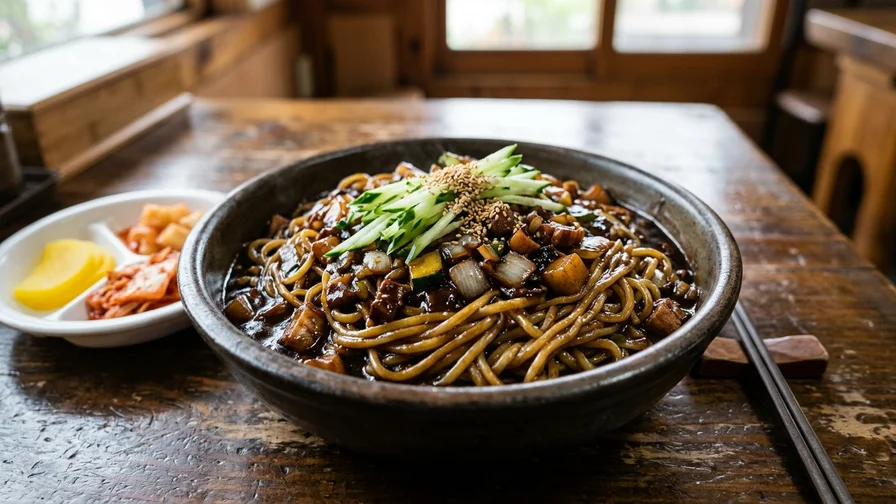
Local tip — When eating jari-mulhoe, taste just the broth on its own for the first few minutes, then mix in about half a bowl of cold rice later. As the rice soaks up the chilled doenjang broth, it gains a satisfying heartiness almost like a cold soybean soup. If the bones in jari-mulhoe feel daunting, start with the soft hanchi-mulhoe and add just a chopstickful of jari on the side to experience the texture.
Cold Broth: Enjoy It in This Order
Mixing rice into a cold broth with floating ice may feel unusual, but once you know the order, you can enjoy it refreshingly to the very end.
- First mix it well with the seasoning, then fish out the sliced fish and vegetables to enjoy the ingredients on their own.
- Around the middle, add somyeon and loosen it so you can slurp it down like a cold noodle dish.
- At the end, mix in cooled rice and eat it by the spoonful. Many shops cool the rice in advance to keep the broth’s cold temperature intact.
Where to Eat
Jeju mulhoe is spread out evenly, from Jeju City near the airport down to the southern coastal villages. Each neighborhood has its own atmosphere, so pick one that fits your route. In the table below, tap a name to open the map, so save the spots you like right away.
Jeju City (near the airport) — Great for a quick stop right after you land or before you leave. With easy access in town, it’s convenient to reach without a car and is a relaxed neighborhood for your first or last meal.
Bomok, Seogwipo (Bomok) — A small harbor village known as the home of jari-mulhoe. With the atmosphere of eating right by the sea, this is the place to go if you want to fully appreciate the nutty flavor of jari damselfish. Every year in early summer (usually between late May and June), the Bomok Jari Damselfish Festival is held at Bomok Harbor. The exact dates change each year, so check that year’s schedule on the Seogwipo City website before you visit.
Gongcheonpo, Namwon (Gongcheonpo) — A quiet seaside village with the calm vibe of a place locals visit. It’s a good match when you want to enjoy a bowl in peace, away from the bustle of the main tourist areas.
Moseulpo (Moseulpo) — A harbor town in the southwest of Jeju, with the lively energy of a working fishing port. With brisk trade in fresh seafood, it’s a great place to expect freshness, and restaurants cluster around Moseulpo Harbor. It fits nicely into your route when traveling the western area around Sanbangsan Mountain.
Travel time guide: From Jeju Airport, restaurants in downtown Jeju City are 10–20 minutes by car; Bomok in Seogwipo and Gongcheonpo in Namwon take over an hour; and Moseulpo in the southwest is about 1 hour 10–20 minutes away. Check each restaurant’s closing time in advance and factor round-trip travel time into your itinerary.
One thing worth keeping in mind is transportation. Jeju City is close to the airport and easy to reach even by bus, but the southern coastal villages like Bomok, Gongcheonpo, and Moseulpo have infrequent public transit, which can be inconvenient for a first-time visitor. If you’re aiming for these areas, a rental car (foreigners need an International Driving Permit; it cannot be issued after you arrive in Korea, so be sure to obtain it in your home country before departure, and bring the IDP, your original home-country license, and your passport when picking up the car) or the taxi app Kakao T is the more practical option. That said, foreigners often can’t sign up for or hail rides on Kakao T without a Korean phone number or Korean card, so getting a Korean number with a USIM or eSIM at the airport right after arrival makes things much smoother. Empty taxis rarely pass through the outlying harbors, so it’s safest to arrange your return taxi before your meal, and if you plan to hit two or three southern villages, a rental car is essentially a must.
Hours and closing days vary by shop and can change with the season, so if you’re traveling far, it’s safest to check before you go. Famous places like Sunoginae Myeongga often have walk-in lines with no reservations, and Korean waitlist apps (Tabling, Catch Table) can be tricky for foreigners to sign up for. Some places don’t have an English menu, so checking on Google Maps whether they’re open that day and reading the reviews beforehand can save you a wasted trip.
| Restaurant | Area | Highlights |
|---|---|---|
| Sunoginae Myeongga 📍 | Jeju City (near the airport) | Became known after being featured on TV; reportedly run by a haenyeo (Jeju female free-diver). Damselfish Cold Soup and Squid Cold Soup |
| Eojinine Hoetjip 📍 | Bomok, Seogwipo | A long-running recipe that captures the original flavor of old-style Cold Raw Fish Soup |
| Gongcheonpo Sikdang 📍 | Namwon, Seogwipo | Soybean Paste-based Jeju-style Cold Raw Fish Soup with a variety of seafood |
| Gamsuchon 📍 | Samyang, Jeju City | A local favorite with lines out front, great value (about 11,000 won each) |
| Manseon Sikdang 📍 | Moseulpo, Seogwipo | A long-established Damselfish Cold Soup spot at Moseulpo Harbor |
| Sageori Sikdang 📍 | Moseulpo, Seogwipo | Near Hamo Harbor, known for its Damselfish Cold Soup |
Price and Seasonal Tips
Prices are relatively reasonable. As of 2026, jari-mulhoe and hanchi-mulhoe generally run from about 11,000 to 13,000 won (roughly 8–10 US dollars, depending on the exchange rate), while abalone mulhoe and sea urchin mulhoe tend to be a bit higher because of ingredient costs. Prices vary by season, catch, and year, so treat these as a guide only. Also, small fishing-village eateries in Bomok, Gongcheonpo, and Moseulpo not infrequently take cash only or don’t accept foreign-issued cards, so withdraw around 20,000 won in cash per person in town beforehand.
- Summer (roughly June to August) is mulhoe season, when ingredients are freshest and the restaurants are at their liveliest.
- Jari is in season from May to August and hanchi from late June to September, so timing your visit accordingly gives you the best flavor.
- Going during quieter times, such as just before the lunch rush or in the late afternoon, makes it easier to get a seat without waiting.
- On weekends and during peak-season lunch, popular spots can form lines, so it’s best to shift your visit slightly off-peak.
If you want to buy jari damselfish or hanchi at a Jeju market and try to recreate the dish at home, the fish market is freshest early in the morning. Dissolve a small amount of doenjang, add a little gochujang, mix in julienned cucumber, onion, and perilla leaves, then pour in ice water—and you’ve got the basic framework of Jeju-style mulhoe. This one really has to be made with in-season ingredients to bring out that refreshing chill.
Frequently Asked Questions
Is Jeju mulhoe spicy?
Not very. The Jeju style is doenjang-based, so the savory, mellow flavor is at the center, with only a little gochujang. If you’d like more heat, stir in some of the minced seasoning on the table little by little.
Do you really bite into bones in jari-mulhoe?
Yes, it contains small bones with a gentle crunch. Chew slowly and thoroughly to enjoy the nutty flavor, and if the texture is too much, choose the boneless hanchi-mulhoe.
I’m uneasy about raw fish—are there alternatives?
Mixing in rice or somyeon noodles softens the raw impression considerably. We also recommend starting with hanchi-mulhoe, which is softer than jari. If you have a seafood allergy, check the ingredients before ordering.
When is it at its best?
In summer. Jari is in season from May to August and hanchi from late June to September, so this is when they’re freshest and most flavorful.
How much does it cost?
Both jari-mulhoe and hanchi-mulhoe generally run from about 11,000 to 13,000 won. Prices can vary depending on the season and the catch.
Jeju mulhoe is the most honest kind of comfort in a bowl for travelers worn out by the heat. Before you set off for the restaurant, save its location on your map and double-check the hours, and you’ll find your cool, refreshing meal without a wasted trip. For more Korea travel information, see more on Come On Korea. The taste of Jeju you’ve discovered today—be sure to experience it for yourself on your next trip.
Related Reads on This Topic
- Jeju Local Food Roadmap, 9 Flavors from Black Pork to the Haenyeo Table
- How to Eat Jeju Gogi Guksu, the Island's Soul-Food Pork Noodle Soup
- How to Find and Savor a Jeju Haenyeo Meal Set by the Sea
- Jeju Omegisul Brewing, Tasting Foxtail-Millet Traditional Liquor
- How to Pick Real Jeju Black Pork and 7 Steps to Eat It Right
- Jeju Abalone Dishes and 6 Top Spots, Eaten Like a Local
- Jeju Tangerine and Hallabong, Orchard Cafes and Tangerine Picking
- Enjoy Jeju Cutlassfish Like a Local, Galchi-jorim and Galchit-guk
- 8 Must-Try Bites at Jeju Dongmun Market's Night Market
📍 Locations verified — The 6 places featured in this guide were confirmed on Google Maps for their real location and address (Sun Oak's Myeongga Sashimi Restaurant, Eojin's Hoejib, Gongcheonpo Sikdang, 감수촌, Manseon Sikdang, 사거리식당). Hours and details can change, so check before you visit.