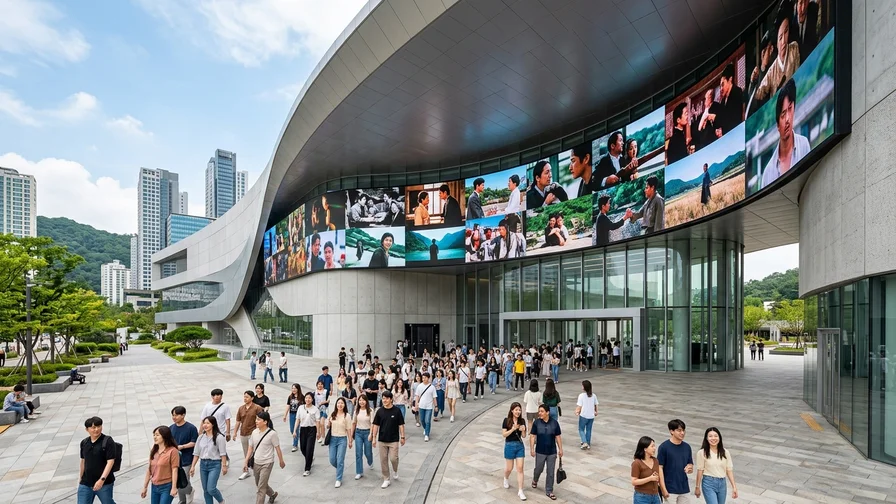
Behind the Scenes at Korea’s Film Museums, Iconic Props and Posters
목차
Key Takeaways
- The Korean Film Museum 📍 in Sangam-dong, Seoul, is a free museum run by the Korean Film Archive — it walks you through the history of Korean cinema in chronological order, and the Cinematheque KOFA in the same building screens classic films for free.
- The Busan Museum of Movies 📍 in Busan’s old downtown lets you try filmmaking firsthand across 30 hands-on stations — adults pay 10,000 KRW, and it’s especially great for families with kids.
- The Jeonju Film Studios 📍 is a working, secured production facility where actual filming takes place, so it is not open to the public at all times — you can only enter during open-day events or pre-arranged tours, so confirming whether you can visit is essential.
- The hours and fees in this article are based on each institution’s official website as of June 2026 — we recommend double-checking right before you head out.
Behind every scene where Korean cinema is celebrated on the world stage lie decades of filmmaking craft, the hands of the crew, and the memories of audiences. In this article, we guide you in visitor-friendly form to the Korean film museums and studios where you can walk behind those scenes yourself. If you’re curious about more themes, discover a variety of unique museums in Korea.
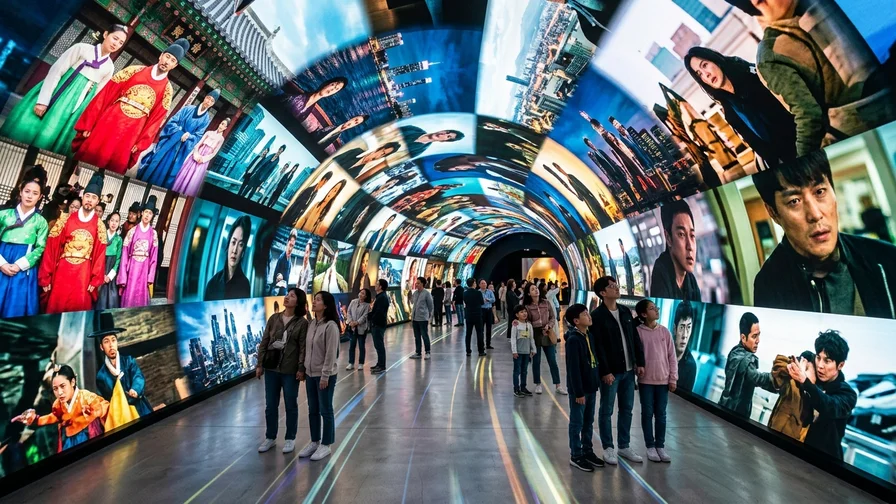
Visitor Information at a Glance
The three sites have completely different characters — Seoul is a free history museum, Busan is a paid hands-on center, and Jeonju is an active studio that isn’t always open. The table below is based on official websites as of June 2026.
| Museum | Location and hours | Time needed |
|---|---|---|
| Korean Film Museum 📍 | 1F, Korean Film Archive, 400 World Cup buk-ro, Mapo-gu, Seoul. Tue–Sat 10:30–19:00 (last entry 30 minutes before closing), closed Sundays and Mondays. Also closed Jan 1, the Lunar New Year and Chuseok holidays, Jan 18 (founding anniversary), and May 1. Free. | About 1–2 hours |
| Busan Museum of Movies 📍 | 12 Daecheong-ro 126beon-gil, Jung-gu, Busan. 10:00–18:00, ticketing closes at 17:00. Closed Mondays (if a Monday is a public holiday, closed the following day), and on Jan 1 and the days of Lunar New Year and Chuseok. Adults 10,000 KRW. | About 1.5–2 hours |
| Jeonju Film Studios 📍 | 125-14 Wonsangnim-gil, Wansan-gu, Jeonju-si, Jeonbuk State. Not open at all times — visits only possible during open-day events or pre-arranged tours. Inquire with the operations office at 063-222-0244. | Varies by event |
For Koreans, places like these are less about simply viewing exhibits and more like learning labs where you get hands-on with how films are made. That’s why they draw an unusually high number of family visits and student groups.
How to Get There (Transit)
Transit is one of the trickiest parts for international travelers. We’ve laid it out so you can follow the exact exit numbers and bus numbers.
- Korean Film Museum (Sangam, Seoul): About a 15-minute walk from Exit 9 of Digital Media City (DMC) Station on the Airport Railroad. If you arrive via Subway Line 6 or the Gyeongui–Jungang Line, it’s about a 5-minute bus ride from in front of Exit 2 of Digital Media City Station — take bus 171, 271, 470, 673, 710, 771, 7711, 7715, etc., and get off at the Nuri Dream Square / MBC stop. From Susaek Station on the Gyeongui–Jungang Line, it’s about a 10-minute walk through the underground passage. From Incheon Airport, the Airport Railroad connects directly to Digital Media City Station with no transfer. If you drive, you can park free for 2 hours by giving your license plate number to the information desk when you visit the museum.
- Busan Museum of Movies: About a 5-minute walk from Exit 5 of Jungang Station on Subway Line 1, and also within walking distance of Nampo Station. From Gimhae Airport, take the Busan–Gimhae Light Rail to Sasang Station, then transfer to Subway Line 2 and Line 1 and get off at Jungang Station. Because parking is scarce in the old downtown, public transit is recommended.
- Jeonju Film Studios: It’s on the outskirts of Jeonju, so a taxi or your own car is the realistic option. However, as noted again below, it isn’t a facility that’s open at all times, so confirming whether you can visit (063-222-0244) comes before figuring out transit. From Incheon Airport to Jeonju, the usual route is an airport bus or KTX (transferring at Iksan).
Renting a car in Korea — an International Driving Permit (IDP) is required: To rent a car in Korea, foreign travelers must bring an International Driving Permit (IDP) issued in their home country before departure, along with their home country driver’s license and passport. Korea cannot issue an IDP to foreigners, and you cannot rent with only your home license. Check in advance with your home country’s automobile association whether your IDP is recognized in Korea.
Editor’s Tip
Starting in Seoul, passing through Jeonju, and heading down to Busan makes for a natural route, but since you can only enter Jeonju Film Studios when there’s an open event, confirm that first before planning your itinerary. The fact that the Korean Film Museum is closed on both Sundays and Mondays is the detail international travelers most often miss.
What to See: Korean Film Museum Exhibition Highlights
This section is the heart of the article. Because the three sites each have a different feel, we’ll point out where to see what, the way a docent might whisper a tip.
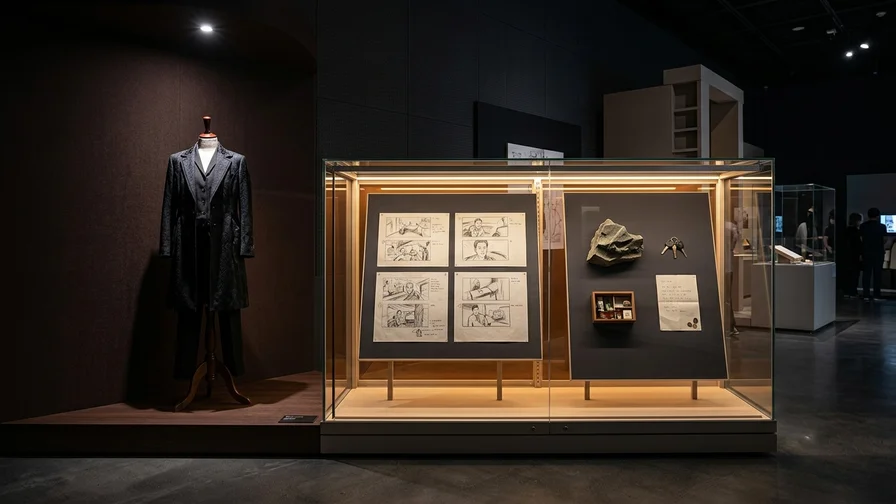
Korean Film Museum
The layout follows the history of Korean cinema in chronological order — the permanent exhibition is divided into 12 sections that run from the early 1900s to recent works. Since it’s operated by the Korean Film Archive, the density of preserved material is high, and it suits anyone who wants to seriously read the flow of Korean cinema.
The one piece you absolutely must see is the early Film Projector (영사기, yeongsagi)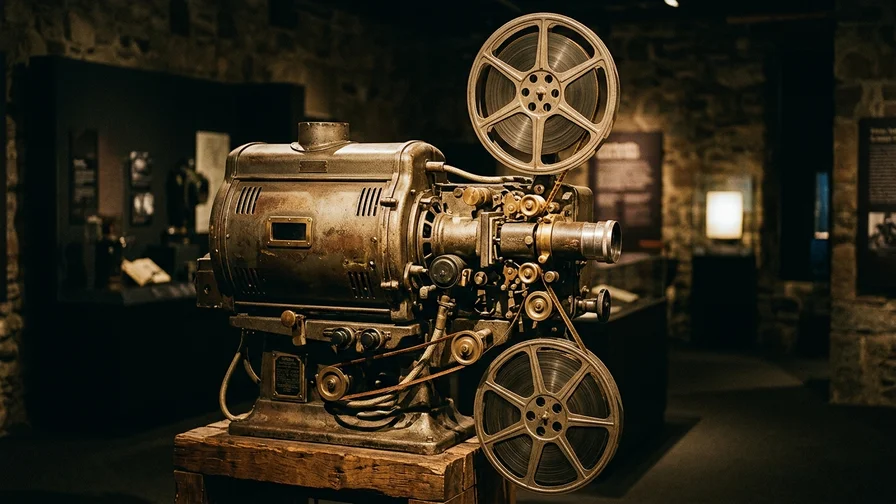 area. It’s a 35mm projector donated by the old Korea Theater in Daegu, and as the largest item among the exhibits, it has a strong presence by its sheer appearance alone. Standing before this heavy metal projector and imagining how the film passed light frame by frame, anyone born in the digital age will feel for the first time, as if grasping it by hand, that “film was originally a physical movement of light and celluloid.”
Here’s a summary of the other things worth seeing.
- A wall of old movie posters — the handwritten typefaces and bold colors convey the spirit of that era exactly as it was.
- Cameras, film cans, costumes, and props actually used in filming — you can examine up close the details that flashed by on screen.
- Media tables — you can search for and listen to major works, directors, actors, posters, and film music by era.
A bonus in the same building, Cinematheque KOFA — the screening hall inside the Korean Film Archive shows classic, art, and independent films from Korea and abroad, free of charge for all sessions. You can check the schedule on the official screening schedule page. Pairing a museum visit with a film makes a half-day course for movie fans (as of June 2026).
Busan Museum of Movies
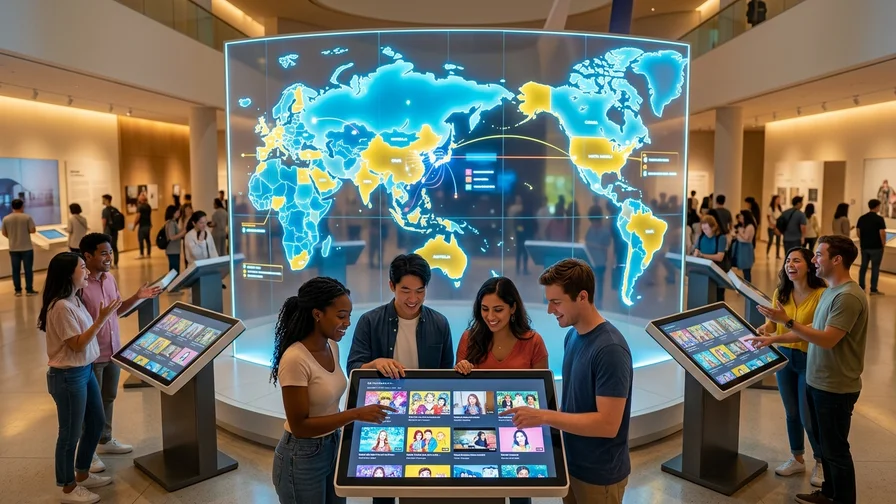
True to its name, this is a place that emphasizes “experience” — its layout runs through 30 hands-on stations across 9 themes, focusing less on preservation and more on touching, moving, and learning the principles of filmmaking with your body. It’s especially great to visit with kids.
The one thing you absolutely must see is the experience area dealing with sound. At the Sound Studio you see how movie sound effects are made, and at the Cine Record Studio you add music and effects to footage — and you’ll instantly understand that a film’s sound isn’t recorded live on set but is meticulously crafted by someone’s fingertips. A docent would tell you to head to this corner first.
Beyond that, you can become the lead in front of a composite background at the chroma key studio, dodge incoming bullets at the time-slice studio, and tackle a film-knowledge quiz corner. The Cine Museum at the end of the tour uses 8 spaces to show the history of the film industry that has unfolded with Busan as its backdrop — a fitting finale for the city of the Busan International Film Festival (BIFF). It’s the moment you switch from being an audience member staring at the screen to someone who makes the screen, so even adults end up lingering surprisingly long.
Jeonju Film Studios
An honest heads-up is needed here. Jeonju Film Studios is a working production facility and secured site with the J1 and J2 indoor studios and an outdoor set of about 48,000 square meters, so it isn’t a place where you buy a ticket and walk in like a museum.
- Public access is limited to open-day events held by the city of Jeonju or pre-arranged tour programs — the first open day in June 2025 ran studio tours and filming experiences, and regular openings are reportedly still under review.
- If you want to visit, check the announcements on the official website or first ask the operations office (063-222-0244) whether tours are possible — showing up unannounced means a wasted trip.
- During open events, you can tour the period-drama street sets and the studio interiors with staff guidance and hear stories about past productions filmed there — because you can even see the structures outside the camera’s angle, it’s the experience that most clearly shows how a film “makes a space perform.”
If it’s hard to plan your trip around the studio, the Jeonju Cinema Street is an alternative in Jeonju — as the hub of the Jeonju International Film Festival (JIFF), it’s home to the Jeonju Digital Independent Cinema, which screens independent and art films.
Hands-On Programs to Try Yourself
The charm of this course is that it doesn’t end with just viewing. That said, program names, prices, and reservation requirements change with operations, so we’ll outline only the broad framework.
- Busan Museum of Movies — experiences like chroma key filming, time-slice, and the Sound Studio are built into the viewing route, so you enjoy them with just your admission ticket, no separate reservation. Only special programs may carry an extra fee.
- Jeonju Film Studios — there have been cases where expert-guided studio tours and filming experiences were run during open-day events. Checking the official announcements for season-by-season programs is essential.
- Korean Film Museum — docent-guided exhibition tours take reservations for the following month at the start of each month, and audio guides and an exhibition-guide robot also operate. Groups of 10 or more are advised to reserve in advance.
Each station doesn’t take long, but doing several in a row can add an hour or two to your total visit time.
Places to Visit Nearby
If it feels like a shame to leave right after the museum, strolling around the surrounding neighborhood is part of the joy of travel.
- Sangam, Seoul — the Digital Media City area is a neighborhood packed with broadcasting and media companies, with well-kept walking paths and cafés, and you can walk all the way to Haneul Park to enjoy some downtime with views of the Han River. Given the office district, instead of standalone old eateries, a realistic choice for a meal is the dining floor on basement level 1 of Nuri Dream Square (a lunch district for office workers with baekban set meals, noodles, and more).
- Busan’s old downtown — Bosu-dong Book Alley, Yongdusan Park, and Jagalchi Market are all within walking distance. Three dining picks — 18beon Wandangjip 📍 is an old eatery that has walked the single path of wandang (a clear-broth dish with thin-skinned bite-sized dumplings floating in it) since 1948, Halmae Gaya Milmyeon 📍 is a flagship old eatery for milmyeon (Busan-style cold noodles made with wheat-flour noodles), and Wonjo Busan Jokbal 📍 is famous in the Bupyeong-dong jokbal (braised pig’s trotters) alley for its cold trotter platter served with a jellyfish salad.
- Jeonju — pairing it with the studios or Cinema Street, a course strolling the Jeonju Hanok Village feels natural. Three dining picks — Hanguk-jip 📍 is a century-old shop for Jeonju bibimbap (Jeonju’s signature dish of vegetables and raw beef mixed with gochujang) that opened in 1952, Veteran Kalguksu 📍 is an old eatery in the Hanok Village for kalguksu (a noodle dish of thick hand-cut noodles simmered in a rich broth) and dumplings, and Waengi-jip 📍 is a flagship old eatery for kongnamul gukbap (a hangover-friendly rice soup boiled with bean sprouts).
Official websites at a glance (as of June 2026):
- Korean Film Museum (Mapo, Seoul): koreafilm.or.kr/museum — Tue–Sat 10:30–19:00, closed Sundays and Mondays, free.
- Busan Museum of Movies: busanbom.kr — 10:00–18:00 (ticketing closes 17:00), closed Mondays, adults 10,000 KRW.
- Jeonju Film Studios: jeonjustudio.or.kr — not open at all times; for open events and tours, inquire with the operations office at 063-222-0244.
Frequently Asked Questions (FAQ)
Q. How much is admission?
The Korean Film Museum is free, and the Busan Museum of Movies is 10,000 KRW for adults (a combined ticket with the Trick Eye Museum in the same building is 12,000 KRW for adults). For Jeonju Film Studios, fees vary by open event, so check the announcements. Special exhibitions or some hands-on programs may carry an extra fee (as of June 2026).
Q. Is photography allowed?
Photography for personal records is generally allowed, but some exhibits or special shows may restrict it. Follow the on-site notices or staff guidance.
Q. Is there English information?
Major exhibits often come with multilingual information, and the hands-on corners are visually structured, so the language barrier is relatively low. If you need detailed commentary, ask before your visit whether English materials are available.
Q. How much time should I set aside for a visit?
About 1–2 hours per site is enough to look around comfortably. It runs longer if you do a lot of hands-on activities. If you also watch a film at Cinematheque KOFA, plan on half a day for Sangam.
Q. Is it okay to go with children?
The Busan Museum of Movies in particular, being hands-on focused, suits families with children well. The Korean Film Museum also gets many family visitors.
On-site payment guide: National and public museums are mostly free, but paid hands-on facilities often accept overseas-issued credit cards (VISA, Mastercard) and Korean transit cards (such as T-money). Some small ticket booths or souvenir corners take cash only, so it’s reassuring to keep some small bills, like 5,000 and 10,000 KRW notes, on hand.
The screen always shows only the polished result, but that polish stands on the metallic clatter of a projector, the nail marks of a set, and sound effects made by someone’s hands. Once you walk through these spaces, the next time you watch that scene, you’ll see an extra layer of context. Before you set off, check the hours and closing days on the official websites one more time, and save the locations on your map in advance. If you’re curious about more themed museums, we recommend exploring the full Pillar guide through more information on Come On Korea.
Related Reads on This Topic
- Hands-On Themed Museums in Korea, from Money to Retro Games
- The History of Money at the Korea Money Museum
- The Korean Embroidery Museum and Joseon Women's Art in Colored Thread
- Make Korea's Thousand-Year Hanji Paper by Hand at the Hanji Museum
- Korea Retro Game Museums, Drop a Coin for the 8-Bit Arcade