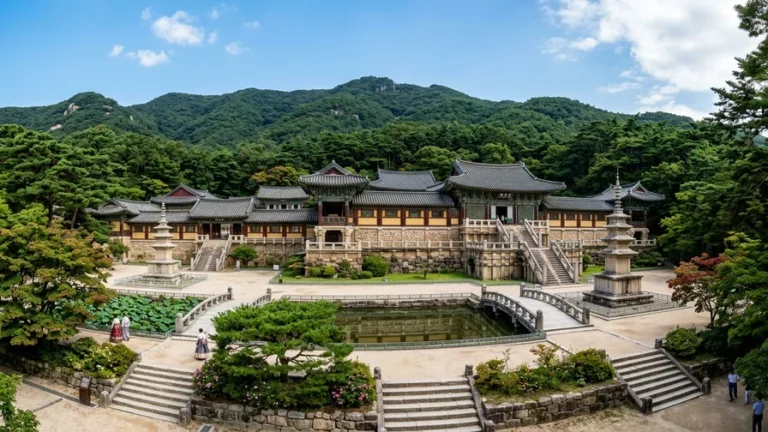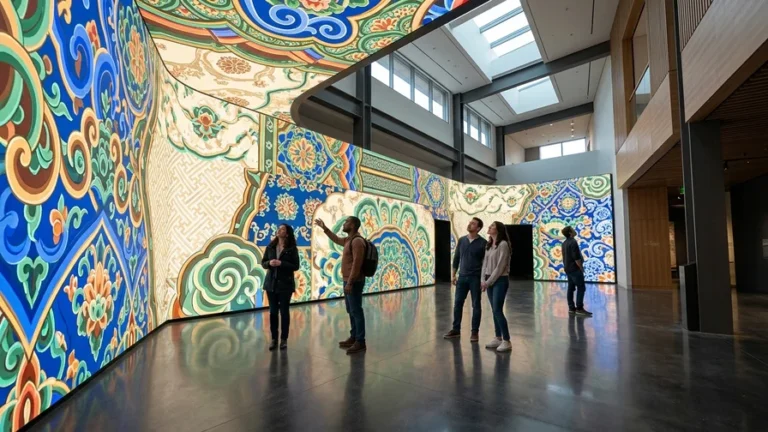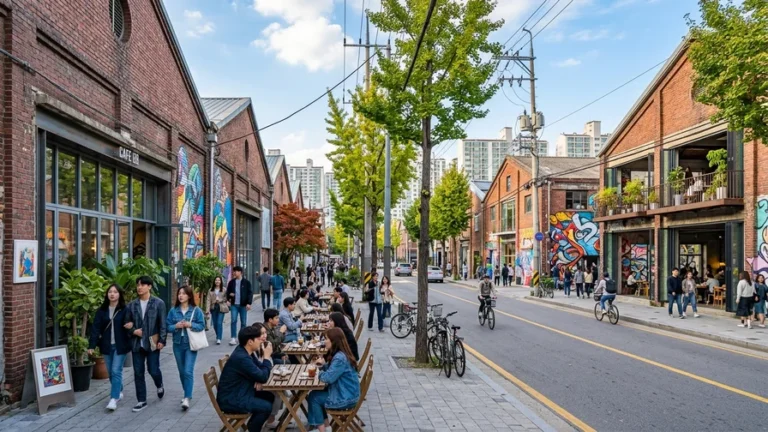
7 Korean Traditional Villages Where Hanok and Crafts Live On
Contents
For each village, the history, layout, transport, admission fees, and recommended routes are detailed enough that you can actually follow them on the ground. From Bukchon in the heart of Seoul to the UNESCO World Heritage sites of Hahoe and Yangdong, all the way to Naganeupseong with its fully preserved fortress walls, each has a completely different character, so pick the ones that fit your itinerary and tastes. Fees and timetables are accurate as of June 2026; it’s worth double-checking each official site before you set out.
Before You Go: Information Common to All Korean Traditional Villages
Neighborhood-style and paid villages differ in how and when you can enter.
- Neighborhood-style villages where people actually live, like Bukchon and Jeonju, have streets that stay open 24 hours. By contrast, Hahoe, Yangdong, Oeam, and Naganeupseong are paid villages you enter through a ticket booth, so they have set entry hours. The museums and experience halls inside generally run from 09:00 to 18:00.
- Most villages offer Hanok Stay accommodation. Prices range widely depending on the facilities and scale, from about 50,000 won to over 300,000 won per night. You can book through online lodging platforms or each hanok’s own website. Recommended stays and booking tips for each village are gathered separately in Spending a Night in a Hanok in Bukchon, Jeonju and Andong.
- You’ll find plenty of Hanbok Rental shops near the entrances of the tourist-oriented hanok villages. The going rate is usually around 10,000 to 20,000 won for two hours (as of June 2026).
- Getting Around:
- Kakao T supports overseas-issued credit cards and an English interface, and there’s also the k.ride app made for foreign travelers. In major cities like Seoul, Uber works too. The notion that “foreigners can’t use taxi apps” is well out of date.
- The 1330 Travel Hotline run by the Korea Tourism Organization operates 24 hours and provides interpretation in English, Japanese, Chinese, and more. When transport leaves you stuck, just dial 1330 from any phone.
- Bukchon in particular has had legally restricted visiting hours in some areas since November 2024 (see the Bukchon section below).
1. Bukchon Hanok Village, Seoul
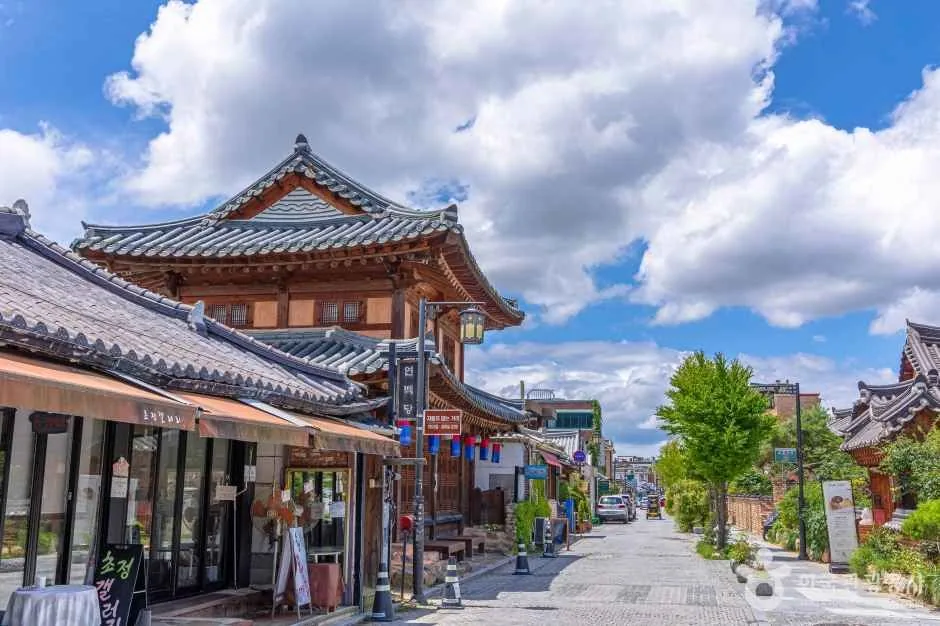
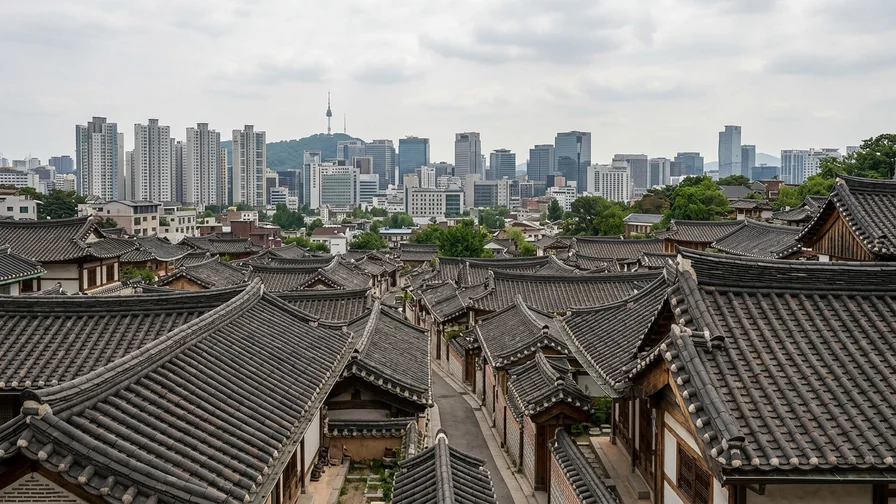
Set between Gyeongbokgung, Changdeokgung, and Jongmyo, Bukchon Hanok Village is a traditional hanok residential area with around 900 hanok packed together. The neighborhood’s bones go back to the yangban (aristocratic) quarters of the Joseon era, but most of the hanok you see today were built as urban hanok in the 1920s and 30s. Sitting in the very center of downtown Seoul, it’s the most accessible of all these villages, and from the sloping lanes you can see the modern city layered beyond the tiled rooftops.
| Category | Details |
|---|---|
| Address | Around Gyedong-gil, Jongno-gu, Seoul (search ‘Bukchon Hanok Village’ on Google Maps) |
| Hours | The streets themselves are always open. However, in the core area around Bukchonro 11-gil (Gahoe-dong 31), tourist access is restricted to 10:00–17:00 (in effect since November 2024, as of June 2026) |
| Admission | Free |
| Key Features | A cluster of hanok in the city center, with residents living there, offering views of Seoul’s past and present at once |
| Official Site | hanok.seoul.go.kr (Seoul Hanok Portal) |
Tourist access is limited to 10:00–17:00: As a measure against overtourism, Jongno-gu designated the area around Bukchonro 11-gil as a specially managed zone (red zone) starting November 2024. Tourists may only pass through from 10 a.m. to 5 p.m., and since March 2025 fines (around 100,000 won) are actually being imposed on violators. It has become a neighborhood you can no longer visit at night for that quiet, atmospheric alley shot (as of June 2026).
How to Get There
- It’s a 5–7 minute walk from Exit 2 of Anguk Station on Line 3. Take Exit 2 and walk up along Bukchon-ro. There are signposts at the entrance to each lane, so there’s no risk of getting lost.
Recommended Route and Highlights
- It’s worth starting at the Bukchon Culture Center on Gyedong-gil near Anguk Station Exit 3, where you can pick up a free map. The center building itself, a converted hanok, is the first sight worth seeing.
- The Bukchon 8 Views are eight scenic viewpoints. Rather than hitting all of them, it’s more efficient to focus on the most famous Gahoe-dong 31 hill (Views 5, 6, and 7). That classic photo of downtown Seoul rising beyond the tiled roofs is taken right here. Just remember this is the very restricted-access zone mentioned above, so go before 17:00.
- Tucked throughout the lanes are small workshops and museums dealing in knotwork, embroidery, and folk painting. A good example is the Gahoe Minhwa Museum, which specializes in folk painting (closed Mondays). If you’re interested in ceramics, you could broaden your route to the pottery villages of Icheon and Gwangju, about an hour from Seoul.
Experiences and Lodging
There are plenty of hanok guesthouses within Bukchon. Given the downtown location, prices tend to run higher than in other regions. Hanbok rental shops cluster around Anguk Station, and the workshops run paid hands-on programs by advance reservation.
Nearby Restaurants and Cafés
- Café Onion Anguk 📍 is a bakery café in a converted hanok. Its signature is the pandoro, a pastry piled with a mountain of powdered sugar. It opens at 07:00 on weekdays, making it a good stop for an early breakfast before touring the village.
- Hwangsaengga Kalguksu 📍 is a specialist in kalguksu (hand-cut wheat noodles simmered in a beef-bone broth) right in the heart of Bukchon. Its handmade dumplings are also well known. The spot has been listed in the Michelin Guide Bib Gourmand.
- Downtowner Anguk 📍 is a gourmet burger joint right in front of Anguk Station Exit 2. The avocado burger is the signature. It makes a quick, satisfying meal while sightseeing.
Respecting the access hours gets you halfway there: Bukchon is residents’ home turf before it’s a tourist site. A ‘quiet tourism’ campaign is underway, so keep conversation to a low voice and aim your camera at the alley scenery rather than people. Simply respecting the access hours (10:00–17:00) gets you halfway there.
2. Jeonju Hanok Village
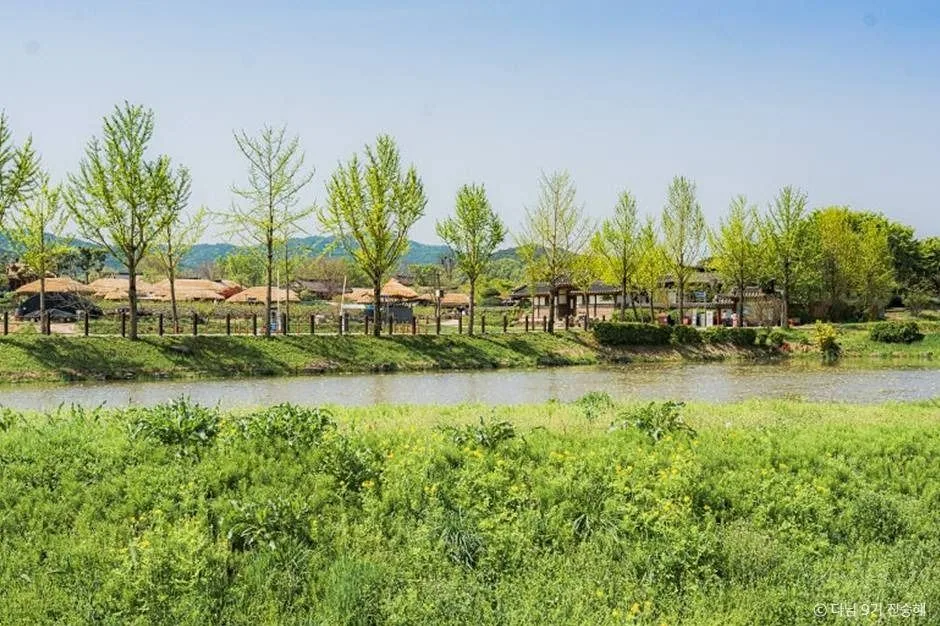
Jeonju Hanok Village in Jeonju, North Jeolla Province, is a large-scale village gathering around 700 hanok. It carries historical weight as a place where Koreans deliberately built hanok and lived together to counter the expansion of Japanese commercial districts during the colonial era. Today it’s Korea’s flagship tourist-oriented hanok village, with the best developed food, lodging, and experiences.
| Category | Details |
|---|---|
| Address | Around 99 Girin-daero, Wansan-gu, Jeonju, North Jeolla (search ‘Jeonju Hanok Village’ on Google Maps) |
| Hours | Open year-round, 24 hours (shops and facilities are generally 10:00–19:00) |
| Admission | Free (only certain facilities such as Gyeonggijeon charge a fee) |
| Key Features | Bibimbap and street food, hanbok experiences, with sights like Gyeonggijeon and Jeondong Cathedral all close together |
| Official Site | hanok.jeonju.go.kr |
How to Get There
- Arrive at Jeonju Station by KTX, then take a city bus such as No. 999 (a tourist route toward the hanok village) from the stop in front of the station for about 25 minutes and get off at the ‘Jeondong Cathedral / Hanok Village’ stop. A taxi takes about 15 minutes and runs 8,000–10,000 won (as of June 2026).
- From the Jeonju Express Bus Terminal and Intercity Bus Terminal, the simplest option to the hanok village is a 10–15 minute taxi (around 7,000–8,000 won). There are many city bus routes, so just search on Kakao Map or Google Maps using ‘Jeondong Cathedral’ as your stop.
Recommended Route and Highlights
- Gyeonggijeon Shrine enshrines the portrait (eojin) of Taejo Yi Seong-gye, who founded the Joseon Dynasty. Admission is 3,000 won for adults. Open 09:00–20:00 (last entry 19:00) from June to August, 09:00–19:00 (last entry 18:00) from March to May and September to October, and 09:00–18:00 (last entry 17:00) from November to February (verified 2026-10-20). The one thing you must see is the Taejo portrait in the Royal Portrait Museum, the only official portrait that still conveys the likeness of Joseon’s founding king. The lush bamboo-forest path is also a photo spot.
- Jeondong Cathedral is a Romanesque-style cathedral completed in 1914. It’s the first building to catch your eye at the entrance to the hanok village. Sitting directly across from Gyeonggijeon, it makes for an efficient route.
- Omokdae is a pavilion atop a hill, the best spot to take in the panorama of the hanok village’s tiled rooftops at a glance. It’s about a 10-minute walk from Gyeonggijeon.
- Along the main Taejo-ro street, snack stalls line up selling octopus skewers, baguette burgers, and handmade dumplings. As for Jeonju’s famous baked goods, the handmade choco pies from PNB Pungnyeon Bakery are renowned.
Experiences and Lodging
Jeonju Hanok Village is one of the places with the most hanok lodging in Korea, offering a wide range of price points. There are so many rental shops you could call the whole village one giant hanbok experience zone, and visitors strolling in hanbok have become part of the scenery here.
Nearby Restaurants
- Hanguk-jip 📍 is a long-established restaurant serving Jeonju bibimbap (Jeonju’s signature rice dish mixed with vegetables and gochujang) since 1952. Its signature is the bibimbap topped with seasoned raw beef.
- Gajok Hoegwan 📍 opened in 1973 and is run by a designated holder of the intangible cultural heritage skill for Jeonju bibimbap. A full spread of bibimbap served in brassware sets the benchmark for the flavor.
- Veteran Kalguksu 📍 is a long-running snack eatery that has operated inside the hanok village since 1977. It’s famous for its thick kalguksu loaded with perilla powder and for jjolmyeon (chewy noodles tossed in a spicy-sweet sauce).
Arrive on a weekday morning for breathing room: On weekends and public holidays it gets crowded enough to make walking difficult. If you can, going on a weekday, and arriving in the morning at that, gives you the most breathing room.
3. Andong Hahoe Folk Village
Hahoe Village in Andong, North Gyeongsang Province, was inscribed in 2010, together with Yangdong Village in Gyeongju, on the UNESCO World Heritage list (‘Historic Villages of Korea: Hahoe and Yangdong’, inscription No. 1324). It’s a single-clan village where the Pungsan Ryu family has lived for some 600 years, and the way the Nakdong River wraps around the village in an ‘S’ shape is the origin of its name (Hahoe, 河回, meaning ‘river return’). It’s also the birthplace of Ryu Seong-ryong, the chief minister during the Japanese invasions of the 1590s.
| Category | Details |
|---|---|
| Address | 40 Hahoejongga-gil, Pungcheon-myeon, Andong, North Gyeongsang (search ‘Hahoe Folk Village’ on Google Maps) |
| Hours | Summer (Apr–Sep) opens 09:00, last entry 17:30 / Winter (Oct–Mar) last entry 16:30 (as of June 2026) |
| Admission | Adults 5,000 won, teens 2,500 won, children 1,500 won. Parking, the shuttle bus, and the Hahoe Mask Museum are free |
| Key Features | UNESCO World Heritage, residents still living there, regular Hahoe Byeolsingut Talnori performances, riverside scenery |
| Official Site | hahoe.or.kr |
How to Get There
- From the stop at Andong Terminal next to Andong Station, bus No. 210 runs directly to Hahoe Village (changed from the former No. 246 in the 2022 route reform). It runs about 12 times a day at roughly hourly intervals, takes 40–50 minutes, and costs 1,500 won cash like a regular city bus (as of June 2026). Check the latest timetable on Andong’s bus information system at bus.andong.go.kr.
- It’s about 20 km and around 30 minutes from Andong Station. By the meter, expect to pay in the mid-to-upper 20,000-won range. If the bus times don’t line up, a taxi is the realistic alternative.
- The ticket booth and the village are more than 1 km apart, but ticket holders can ride a free shuttle bus.
Recommended Route and Highlights
- At the performance ground near the village entrance, the Hahoe Byeolsingut Talnori, an intangible-heritage mask dance, is staged. From March to December it runs daily Tuesday through Sunday, 14:00–15:00, and in January and February on Saturdays and Sundays at 14:00, with free admission (as of June 2026; check the official site for the schedule). It centers on humor and satire, so you can laugh along even without knowing Korean.
- Chunghyodang, Ryu Seong-ryong’s head house, and Yangjindang, the home of his older brother Ryu Un-ryong, are the landmark old houses in the village center. Both are designated Treasures.
- Buyongdae Cliff is the best viewpoint, looking down on the entire ‘S’-shaped river bend from atop the cliff across the water. The official Andong tourism page still lists a ferry as the way across the river, but whether it is running is not published, so plan on the driving route: about 7 km around toward Hwacheon Seowon (a 10-minute walk from the parking lot to the top). A temporary bridge or ferry route does sometimes operate, so it’s worth confirming with the village tourist information line (054-852-3588) before visiting (verified October 2026).
- The Samsindang sacred tree is a 600-year-old zelkova in the village center. It’s a place where people pray for the village’s well-being, densely hung with slips of paper bearing written wishes.
Experiences and Lodging
Some of the old houses in the village run hanok homestays. The facilities aren’t exactly modern, but sleeping inside an actual World Heritage site is an experience you won’t find elsewhere. Bookings are mostly handled by phone.
Nearby Restaurants
Andong’s local restaurants gather at Hahoe Market beside the ticket booth. The three signature dishes are Andong jjimdak (chicken braised in a soy-based sauce with glass noodles), salted grilled mackerel (mackerel cured in salt and grilled), and heotjesatbap (a vegetable bibimbap served in the style of ritual ancestral foods).
- Solbat Restaurant 📍 has a set menu letting you try jjimdak and salted mackerel at once, which is efficient for solo or two-person travelers.
- Hahoe Restaurant 📍 has the salted mackerel set as its signature. White rice and a savory slice of mackerel: that’s the whole story of the combination.
- Andong-jip 📍 lets you order various jeon (savory pancakes) à la carte alongside jjimdak and salted mackerel.
Andong is also the home of Andong soju, a distilled liquor. If you’re interested in traditional spirits, take a look at Makgeolli, Cheongju, and Soju Brewing Experiences as well.
Allow three to four hours: Hahoe Village is large, so set aside at least 3–4 hours, or half a day if you include Buyongdae. Building your itinerary around the Byeolsingut performance time (14:00) keeps your route tidy.
4. Gyeongju Yangdong Folk Village
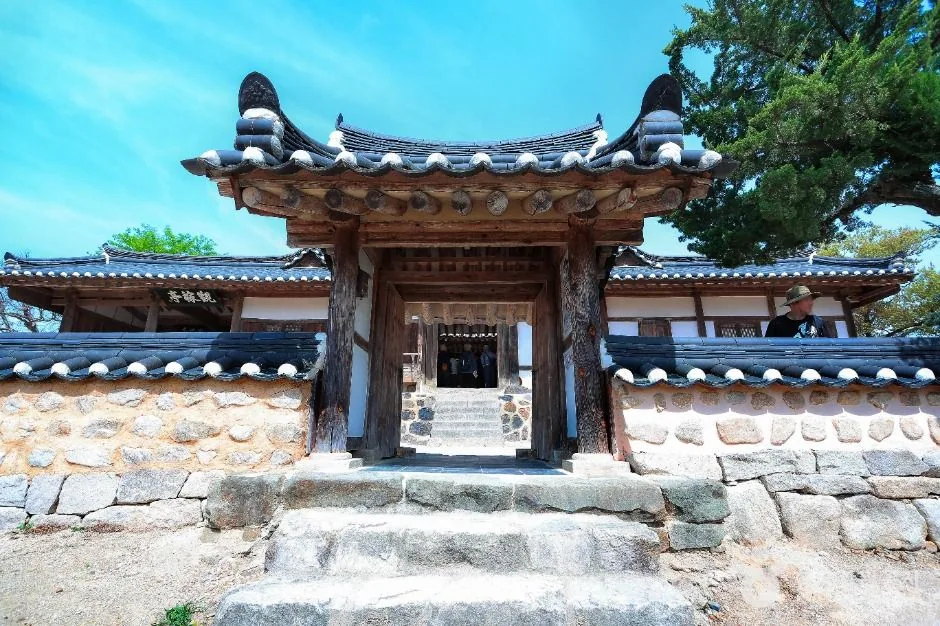
Yangdong Village in Gyeongju, North Gyeongsang Province, is inscribed on the UNESCO World Heritage list alongside Hahoe Village. It’s a village where the Wolseong Son and Yeogang Yi families have lived together for about 500 years. The Joseon-era yangban village layout, with tiled aristocratic houses set high on the hillside and thatched cottages down below, survives here like a textbook illustration.
| Category | Details |
|---|---|
| Address | 134 Yangdongmaeul-gil, Gangdong-myeon, Gyeongju, North Gyeongsang (search ‘Yangdong Folk Village’ on Google Maps) |
| Hours | Summer (Apr–Sep) 09:00–19:00 (ticketing closes 18:00), Winter (Oct–Mar) 09:00–18:00 (ticketing closes 17:00), open year-round (as of June 2026) |
| Admission | Adults 4,000 won, teens 2,000 won, children 1,500 won |
| Key Features | UNESCO World Heritage, a village layout in harmony with the mountains, well-preserved old houses |
| Official Site | yangdongvillage.or.kr |
How to Get There
- Take bus No. 203 from in front of the Gyeongju Intercity Bus Terminal. It takes 40–60 minutes. The intervals average around 100 minutes, which is very long, so checking the timetable is essential. Get off not at ‘Yangdong Village entrance’ but at the ‘Yangdong Folk Village’ stop right in front of the village. Since July 2025, Gyeongju city bus fares have been unified at a flat 1,500 won for adults (cash basis), with no distance surcharge.
- The KTX station is Gyeongju Station. It used to be called ‘Singyeongju Station,’ but the name was changed to ‘Gyeongju Station’ in December 2023. From Gyeongju Station, a taxi (about 30 minutes) is the simplest way to Yangdong Village; by bus, you’d have to head into town (the intercity bus terminal) and transfer to No. 203.
Recommended Route and Highlights
Yangdong Village spreads out broadly along a slope. It’s best to grab a map at the entrance ticket booth and plan your route around the main old houses.
- Mucheomdang is the detached hall of the Yeogang Yi head house. A distillation of Joseon architecture, spare yet dignified, it’s designated a Treasure. If you had to pick one house to see in this village, this is unquestionably it.
- Hyangdan is a Treasure-designated house with a distinctive square (ㅁ-shaped) floor plan. The roofline as seen looking up from below the hill is striking.
- Gwangajeong sits atop a hill and is the best pavilion-style house for taking in the panorama of the village and fields.
Experiences and Lodging
Within the village, hands-on programs such as making hangwa (traditional sweets) and pounding rice cakes are run on an irregular basis (confirm in advance). Some old houses also offer lodging.
Dining Information
There are almost no commercial facilities inside or at the entrance of Yangdong Village. Don’t count on finding a restaurant; it’s safer to eat in downtown Gyeongju before heading out or to bring along a simple snack and water. That very ’emptiness’ is part of Yangdong’s appeal.
A quieter, hillier village: If Hahoe Village and Jeonju are ‘tourist destinations,’ Yangdong is closer to a ‘genuine old village.’ It’s ideal for travelers wanting a quiet atmosphere. There are many slopes, so comfortable shoes are a must.
5. Asan Oeam Folk Village
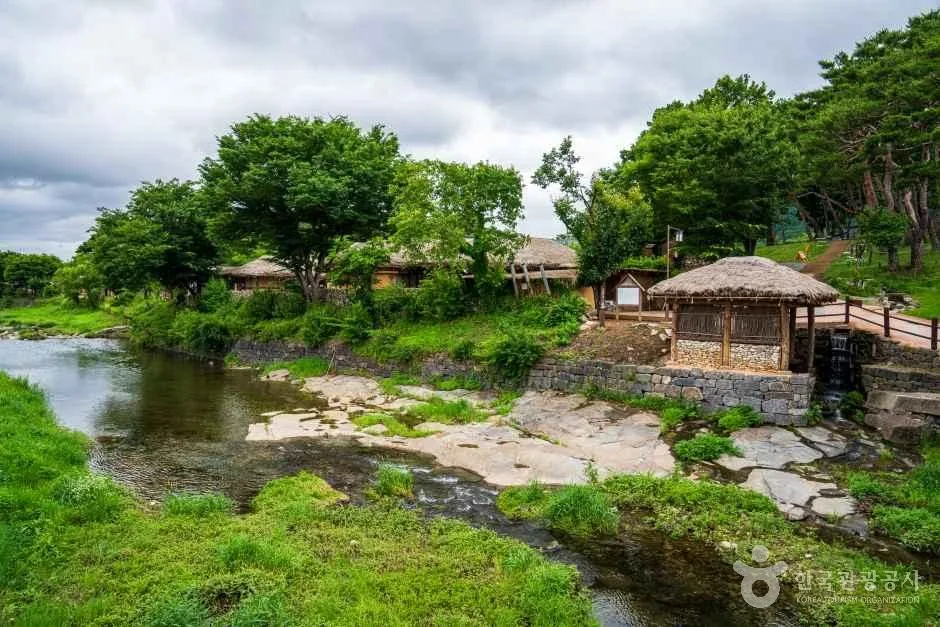
Oeam Folk Village in Asan, South Chungcheong Province, is a clan village where the Yean Yi family has gathered and lived for about 500 years. The entire village is designated a National Folklore Cultural Heritage, and its greatest charm is the more than 5 km of stone-walled lanes weaving between tiled and thatched houses. It’s a folk village that is alive in the most literal sense, with residents still farming and living there today.
| Category | Details |
|---|---|
| Address | 9 Oeammilsok-gil, Songak-myeon, Asan, South Chungcheong (search ‘Oeam Folk Village’ on Google Maps) |
| Hours | 09:00–17:00 (the folklore hall and some facilities are closed Mondays, as of June 2026) |
| Admission | Adults 2,000 won, teens and children 1,000 won |
| Key Features | Stone-walled lanes, an ongoing farming life, traditional food and folk-game experiences |
| Official Site | oeam.co.kr |
How to Get There
- Take the Seoul Metropolitan Subway Line 1 toward its terminus to Onyang Oncheon Station (about 2 hours from Seoul, regular subway fare), then from the stop in front of the station take trunk bus No. 100 or 101 and get off at the ‘Oeam Jeojatgeori (Oeam Folk Village)’ stop. The bus takes about 20–30 minutes. A taxi takes about 15 minutes and costs around 10,000 won (as of June 2026).
Recommended Route and Highlights
Pass the ticket booth and enter the village, and the stone-walled lanes begin. Strolling slowly around the full loop along this path is the standard course. You’ll encounter a waterwheel, a small stream cutting through the village, and old houses named after their former owners’ official titles, like Champan-daek and Byeongsa-daek. If you had to name one scene to see, it’s the inner-village alley where thatched roofs and rice paddies fall into one frame beyond the low stone walls. The archetypal Korean countryside survives here intact.
Experiences and Lodging
Traditional food experiences like making yeot (taffy), pounding rice cakes, and making tofu, along with folk games such as archery and swinging, are actively run (mainly on weekends and during events; check the schedule on the official site). Some houses in the village offer homestays.
Nearby Restaurants
Modest local eateries gather along the market street near the village entrance. A notable example is the Oeam pajeon (a thick Korean savory pancake packed with Asan’s specialty scallions) at Sangjeon 📍. Otherwise, these are small shops selling makgeolli and gukbap, so handling a proper meal around Onyang Oncheon Station is one option.
Best in autumn: Visit in autumn and you’ll see the finest scenery, golden rice paddies blending with the stone-walled lanes. As the only folk village reachable from Seoul by subway alone, it offers the best value for a day trip.
6. Suncheon Naganeupseong Town
Naganeupseong in Suncheon, South Jeolla Province, is the archetype of a planned provincial town from the Joseon era. The fortress wall encircles the entire village, and within it the government office (the old administrative buildings) and the thatched houses are preserved whole. Even now, about 100 households actually live in the thatched houses. This is the only place in Korea where the fortress walls and a living village survive together.
| Category | Details |
|---|---|
| Address | 30 Chungmin-gil, Nagan-myeon, Suncheon, South Jeolla (search ‘Naganeupseong Folk Village’ on Google Maps) |
| Hours | May–Sep 08:30–18:30, Feb–Apr and Oct 09:00–18:00, Jan and Nov–Dec 09:00–17:30 (verified 2026-10-20) |
| Admission | Adults 4,000 won, teens 2,500 won, children 1,500 won |
| Key Features | The only village where fortress walls and thatched houses are preserved together, a living Joseon-era walled town |
| Official Site | suncheon.go.kr/nagan |
How to Get There
- From the stop near the Suncheon Bus Terminal, take bus No. 16, 61, 63, or 68 and get off at the ‘Naganeupseong’ stop (a 1-minute walk). It takes about 50 minutes. The intervals are long, so use the real-time bus search on Kakao Map or Naver Map to time your departure.
- From Suncheon Station, head toward the terminal and transfer to one of the buses above, or take a taxi straight there in about 30–40 minutes.
Recommended Route and Highlights
- Walking the fortress wall is Naganeupseong’s greatest appeal. Strolling atop the roughly 1.4 km wall, you can look down over the entire thatched-roof village. The must-see scene is the cluster of thatched roofs viewed from the wall near the East Gate (Nakpungnu), where the layout of a Joseon-era walled town unfolds like an aerial photograph.
- Provincial government buildings such as the dongheon (the magistrate’s office) and the gaeksa (guesthouse) have been restored, and there’s a small exhibition hall showing the daily life of the time.
- You can walk the maze-like dirt alleys. Since these are homes where residents actually live, take care not to wander into their yards.
Experiences and Lodging
Traditional gugak performances such as gayageum byeongchang and pansori are held regularly, and hands-on programs in weaving, natural dyeing, and woodcraft are also offered. If you’re curious about traditional dyeing, coloring fabric with indigo or persimmon, the principles and where to try it are gathered in Natural Dyeing Experiences. Sleeping in a thatched house inside the walls is an experience you can’t have anywhere else.
Nearby Restaurants
South Jeolla full-course restaurants and cockle-dish eateries gather around the walled town. A representative spot is the cockle set meal (a South Jeolla spread serving cockles steamed, seasoned, in pancakes, and more) at Mihyang Restaurant 📍, and since nearby Beolgyo is a cockle-producing area, November to March is the tastiest season. Inside the walls too, there are a few modest eateries serving barley rice and makgeolli.
Pair it with Suncheon Bay: For a Suncheon trip, the standard move is to bundle it with the Suncheonman National Garden and the Suncheon Bay Wetlands into a single-day course. Cities where you can see a garden, an old village, and a tidal-flat sunset all in one day are rare.
7. Andong Gunja Village
About 20 km from downtown Andong toward Dosan Seowon lies Gunja Village (Ocheon Gunja Village). A clan village where the Yean branch of the Gwangsan Kim family has lived for 600 years, its original site was submerged by the construction of the Andong Dam in the 1970s, so the main old houses and cultural assets were relocated and restored to their current location. The secluded scene of some 20 old houses settled along the waters of Lake Andong is the whole of this village, and its charm.
| Category | Details |
|---|---|
| Address | 29 Gunjari-gil, Waryong-myeon, Andong, North Gyeongsang (search ‘Gunja Village’ or ‘Ocheon Historic Site’ on Google Maps) |
| Hours | Open at all times (apart from hanok-stay guests, interior viewing is recommended during daytime) |
| Admission | Free |
| Key Features | A cluster of relocated and restored old houses along Lake Andong’s waterfront, a quiet and serene atmosphere, premium hanok stays |
| Official Site | gunjari.net |
How to Get There
- From downtown Andong, it’s about 20 km along National Route 35, around 30 minutes by taxi. Expect to pay in the mid-20,000-won range by the meter. It’s fair to say public transport is essentially unusable here, as city buses toward Dosan Seowon run only once or twice a day. If you really want to look into the bus, check the routes toward Waryong-myeon and Dosan Seowon on Andong’s bus information system at bus.andong.go.kr.
- The realistic plan is to bundle it with Dosan Seowon (the academy of the scholar Yi Hwang, a UNESCO World Heritage site) in the same direction and arrange a half-day course by chartered taxi or rental car.
Recommended Route and Highlights
The village is small, so an hour is enough to see it all. The heart of it is the very arrangement of the old houses sitting along the lake. The one house you must see is Takcheongjeong, a private pavilion (byeolseo) from the mid-Joseon period long regarded as the most beautiful of the private pavilions in the Yeongnam region. Hujodang, a detached hall of the head house, bears a name plaque written by Yi Hwang, and the village view looking down from its veranda is the highlight. If you’re curious about the aesthetics of the Korean garden created by pavilions, courtyards, and water, do read The Aesthetics of Korean Gardens (Biwon, Anapji, Soswaewon) as well.
Experiences and Lodging
Some of the old houses in Gunja Village run as hanok stays with guest rooms, such as the Hujodang detached quarters and Eupcheongjeong. There are hardly any commercial experience programs, so it suits travelers who want to stay quietly and feel the passage of time in an old house.
Plan on a taxi or rental car: Since this is the village with the poorest public-transport access, the answer is a taxi or rental-car itinerary that bundles it with Dosan Seowon. The view of Lake Andong in the early morning, with mist rising off the water, is a reward reserved for hanok-stay guests.
Some photos © Korea Tourism Organization (KOGL Type 1)